Lights Off, Look Down!
Ride a glass sub into the ocean’s glowing midnight.
18 pages · Ages 6-7 · EN
Lights Off, Look Down!
Lights Off, Look Down!
For every child who whispers, “What’s down there?”
Down, Down, Down!
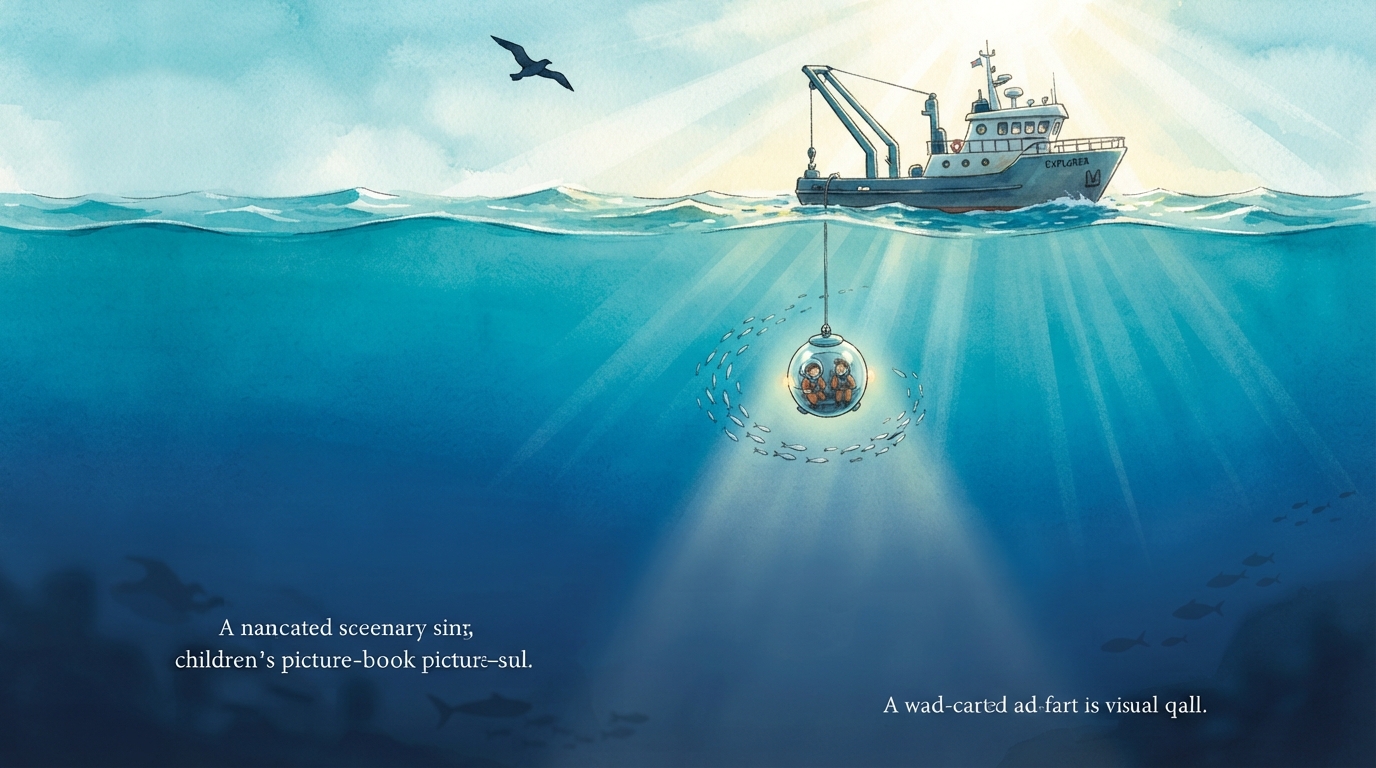
The ocean is not only wide like a blue blanket. It is deep like a tower with floors below floors. Climb into our small submersible, an underwater vehicle, and look down. This is the biggest elevator ride on Earth!
Where Sun Makes Supper
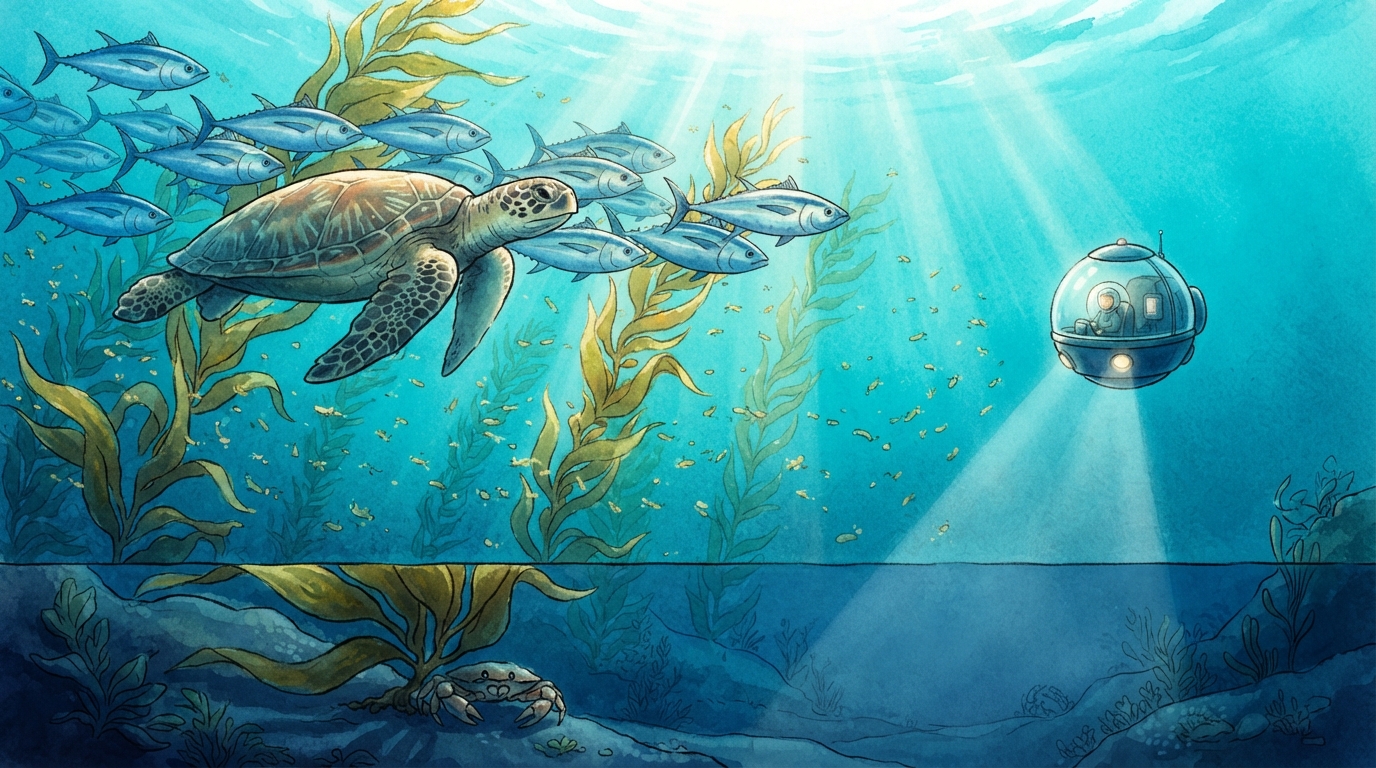
Near the top, sunshine pours into the sea. Green kelp and tiny drifting algae use that light to grow. This light-making food trick is called photosynthesis. It is like plants in a garden catching sunshine for lunch. Where food grows, animals gather. Turtles glide by, tuna zip past, and many smaller creatures swim in this bright, busy neighborhood.
Three Blues Down
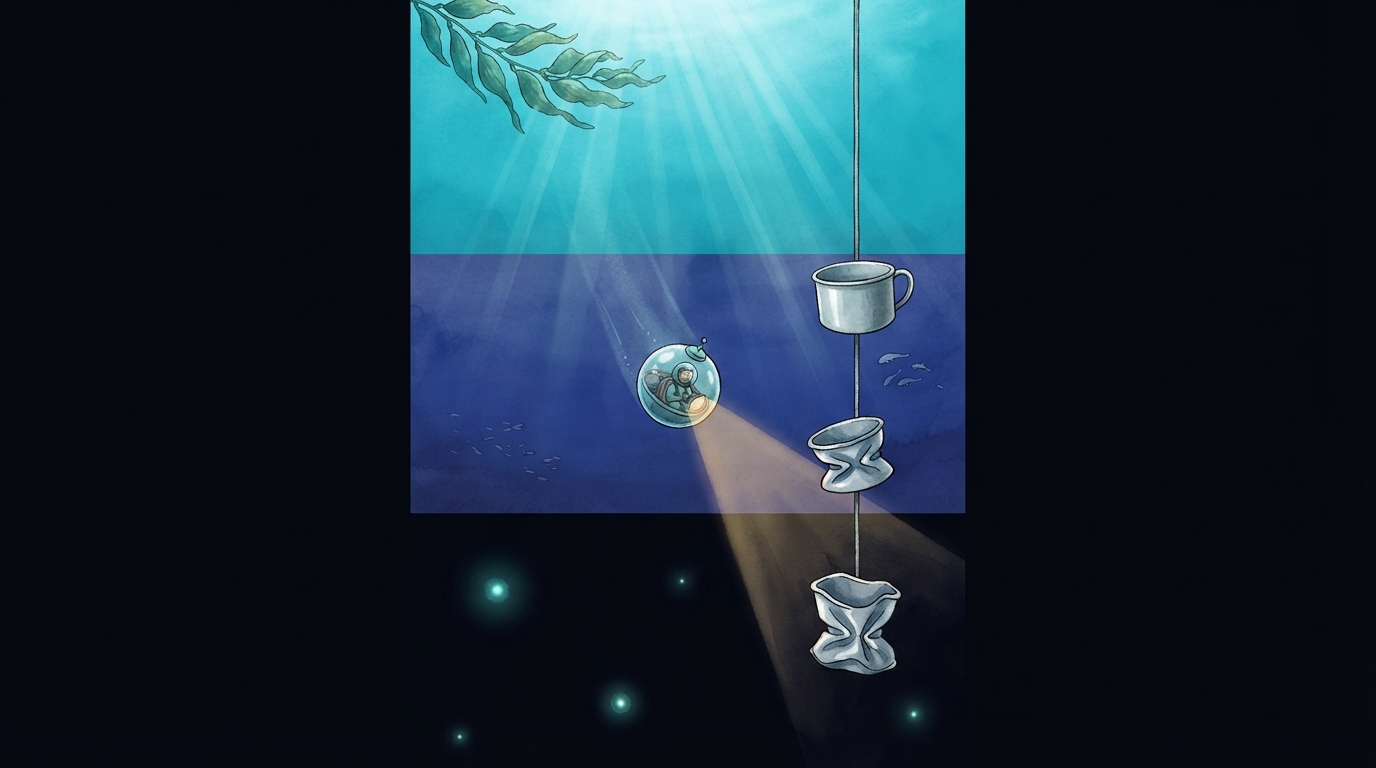
Picture three ocean floors stacked in a giant tower. At the top is the Sunlight Zone. Below it, the Twilight Zone is dim. About ten football fields straight down, the Midnight Zone begins, with no sunlight at all. Meanwhile, water presses from every side. That stronger deep-water squeeze is called pressure. The lower the sub goes, the tougher its walls must be.
The Blue-Violet Hall
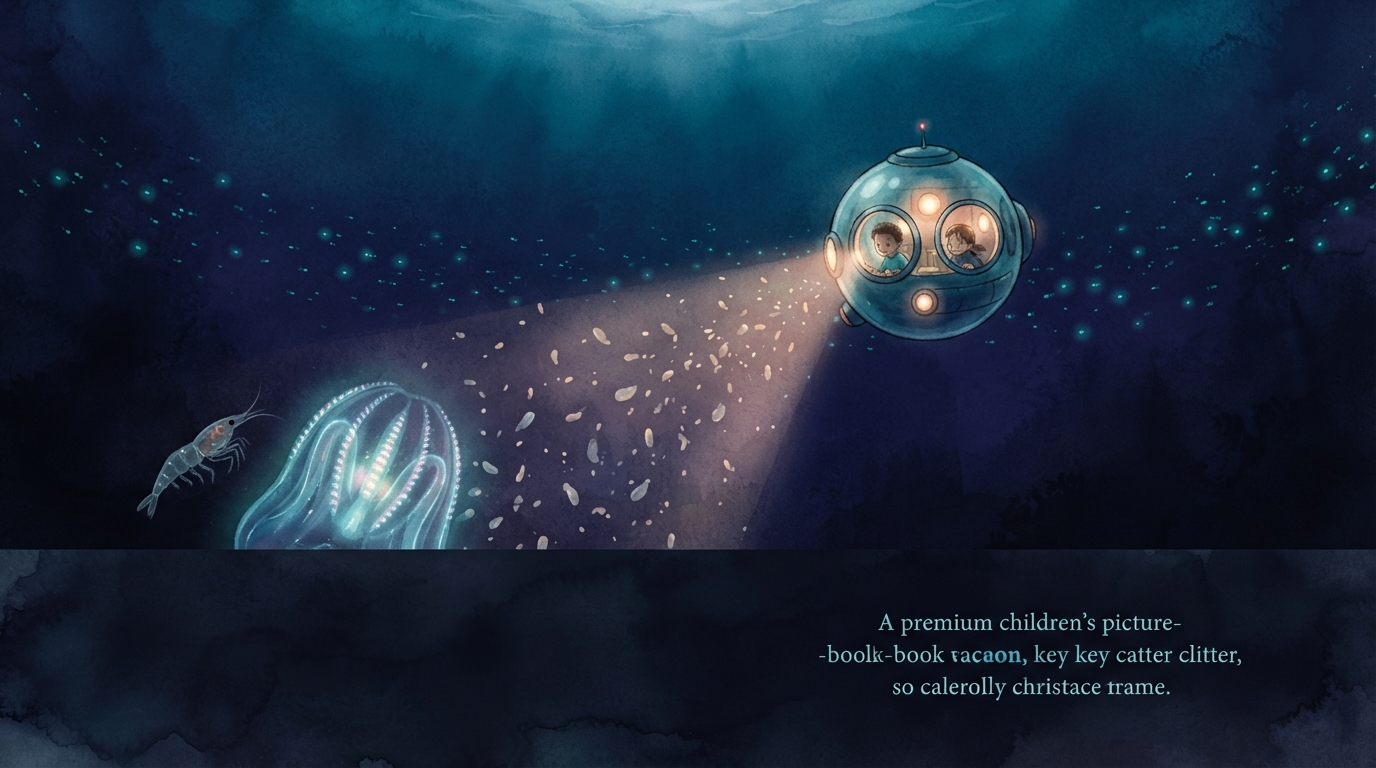
Now the bright surface has faded away. We are in the Twilight Zone, a dim blue-violet hall from about 200 to 1,000 meters down. There is too little light for photosynthesis here. Yet this place is not empty. Tiny crumbs drift down from above, and small animals begin to blink. Many make their own light with real chemistry. That living light is called bioluminescence.
Lights Off… Look!
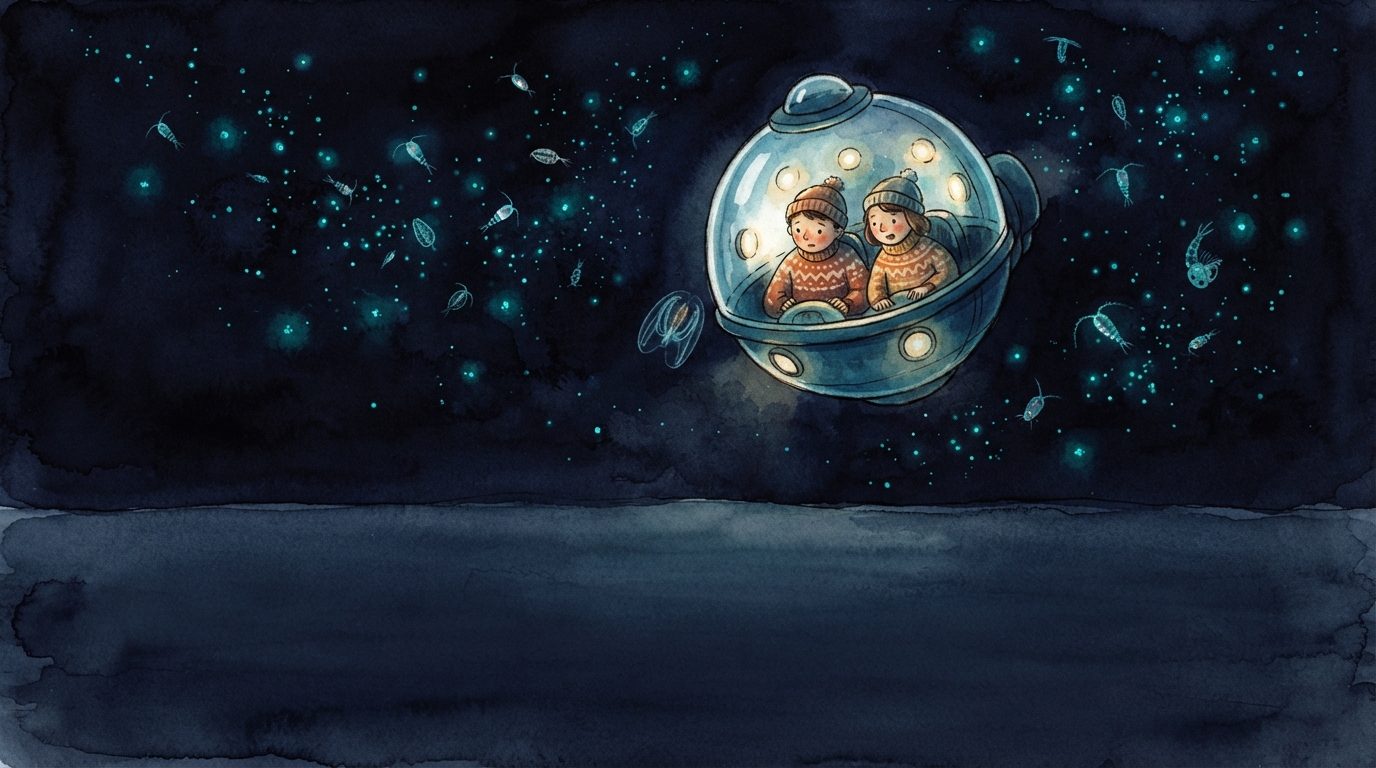
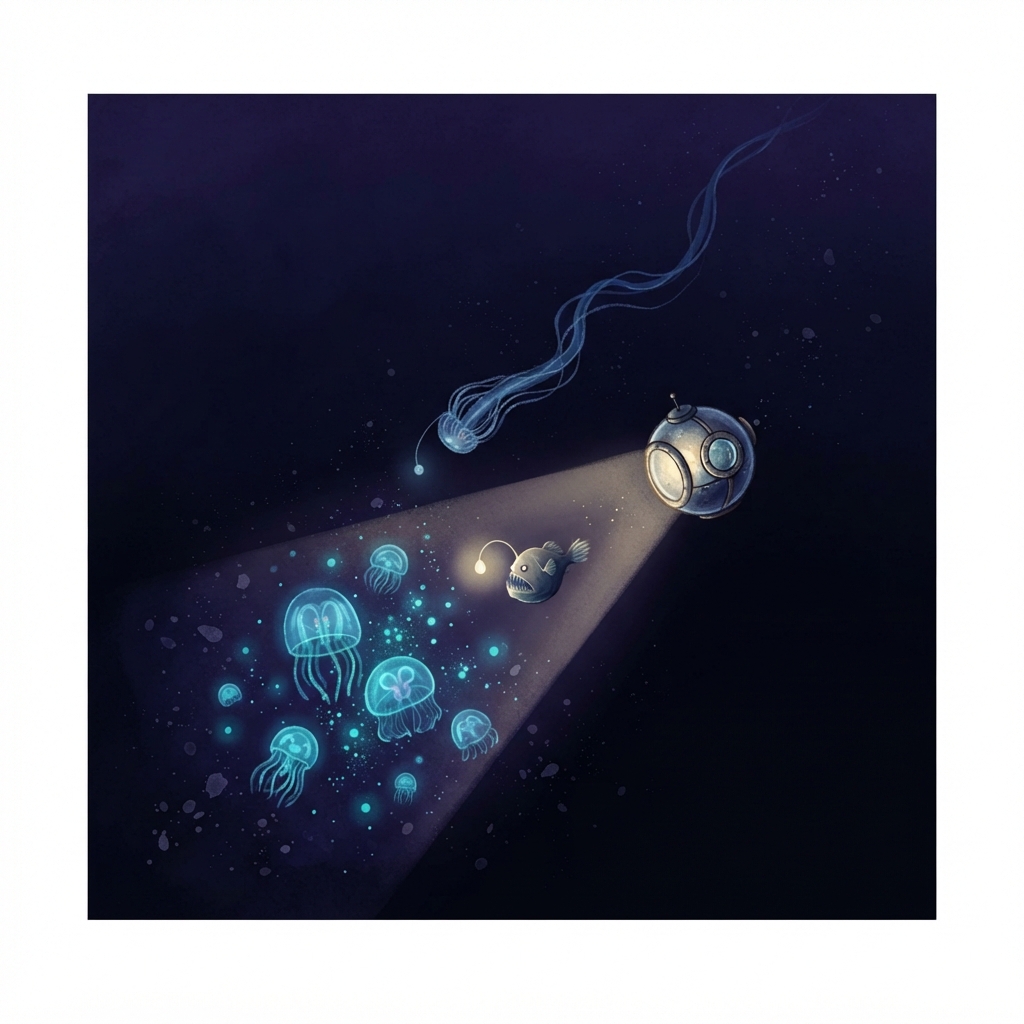
The little sub slips below the last sunbeams. Here begins the Midnight Zone, an ocean place with no sunlight at all. Many people think dark water is empty. Look closely: tiny blue-green sparks blink, drift, and flash. The dark is alive.
A Body Can Make Light
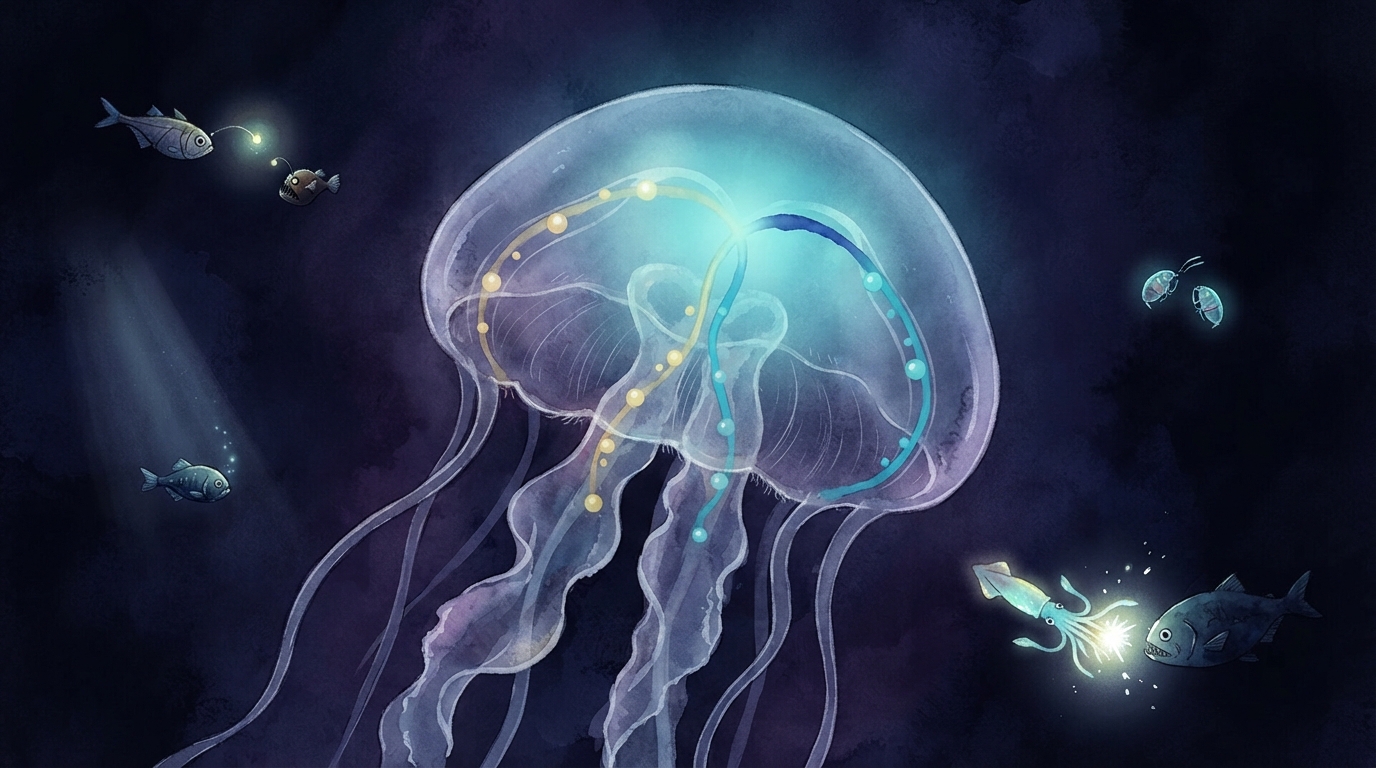
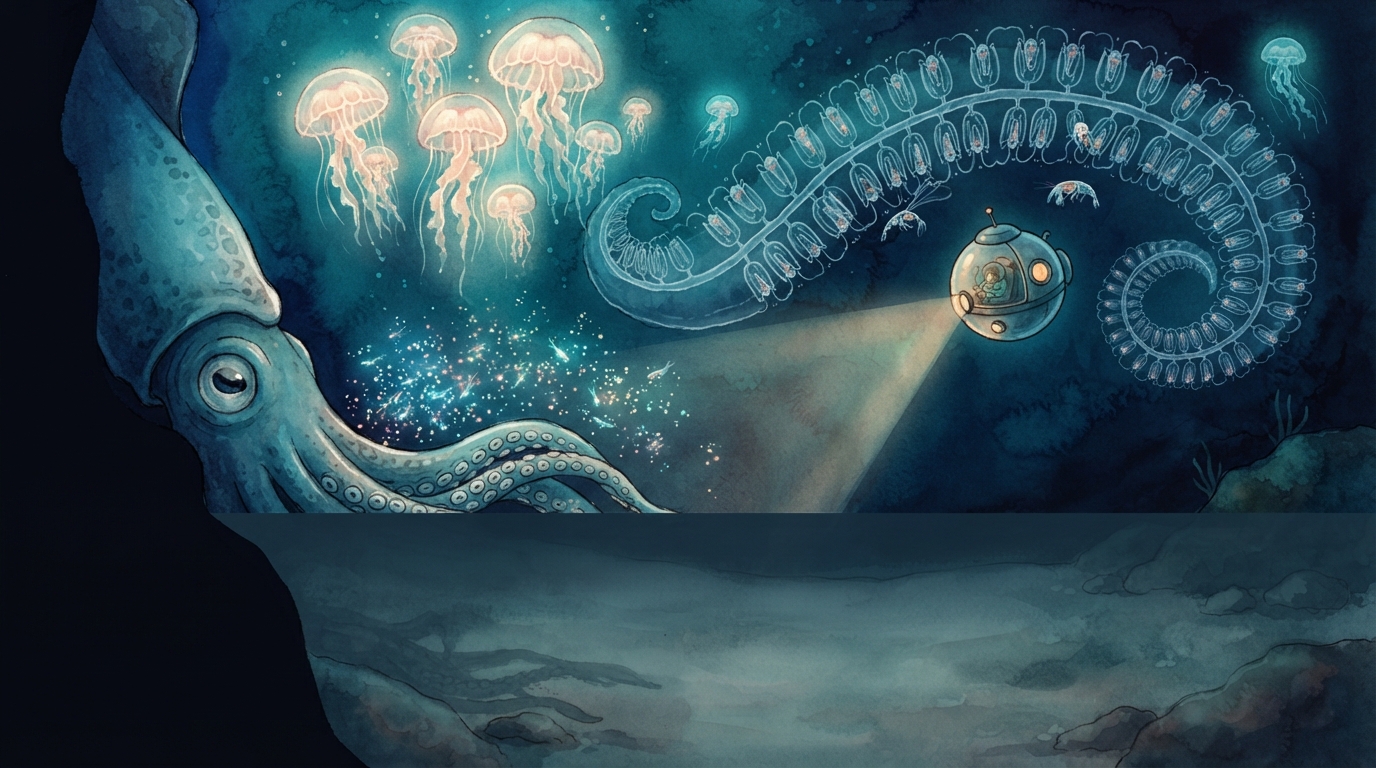
A firefly-like glow can happen under the sea too. Inside some animals, special chemicals meet and make light. This real chemical reaction is called bioluminescence—light made by a living thing. It is not magic. A glow can bring food closer, help an animal hide, warn a hunter away, or send a signal to another animal. One small flash can mean many things.
The Little Lantern Fisher
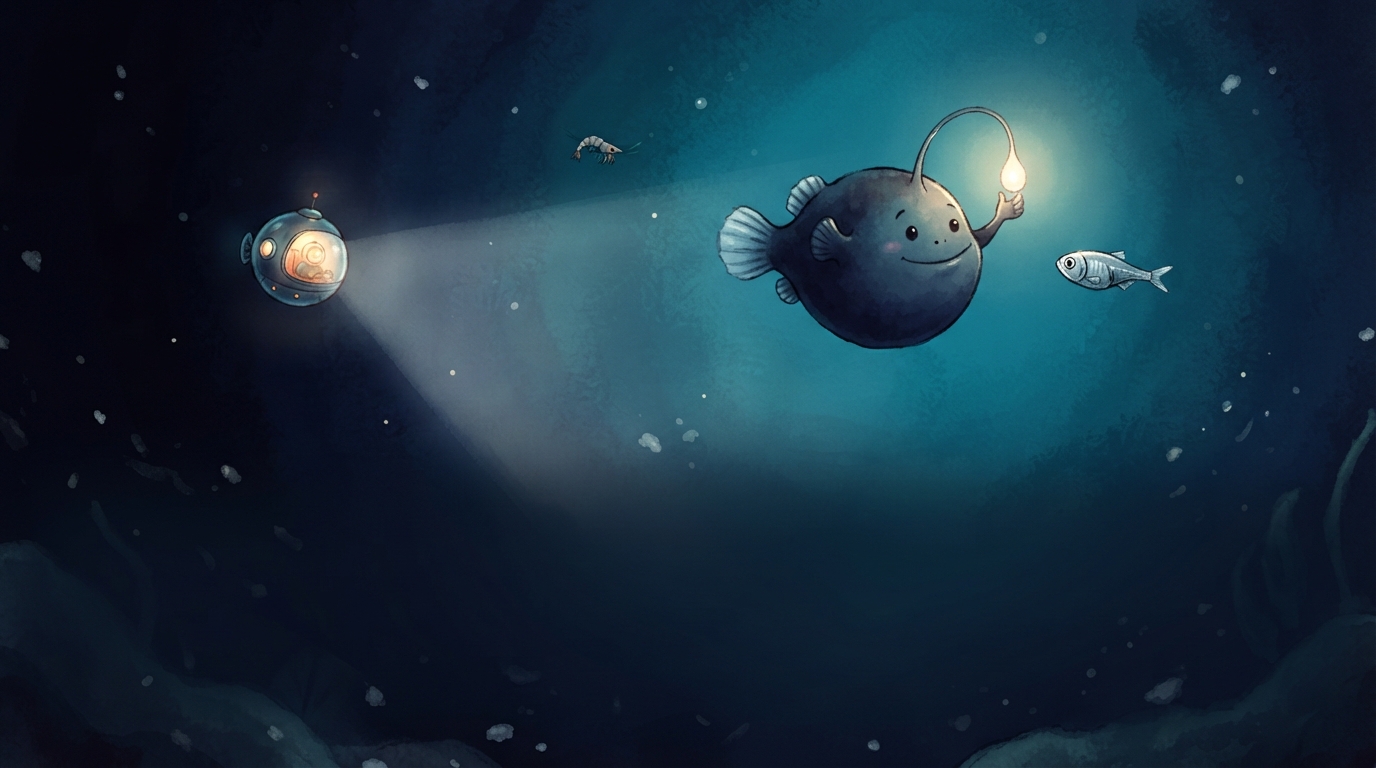
This female anglerfish carries a tiny lamp above her head. In a place where food is hard to find, its glow may bring curious prey close. Then she can catch a meal without racing through the dark. Some anglerfish get help from light-making bacteria—tiny living partners that glow. Anglerfish may look strange, but they are not monsters. They are clever fish built for a difficult, sunless home.
Glow Giants
Snow That Is Not Snow
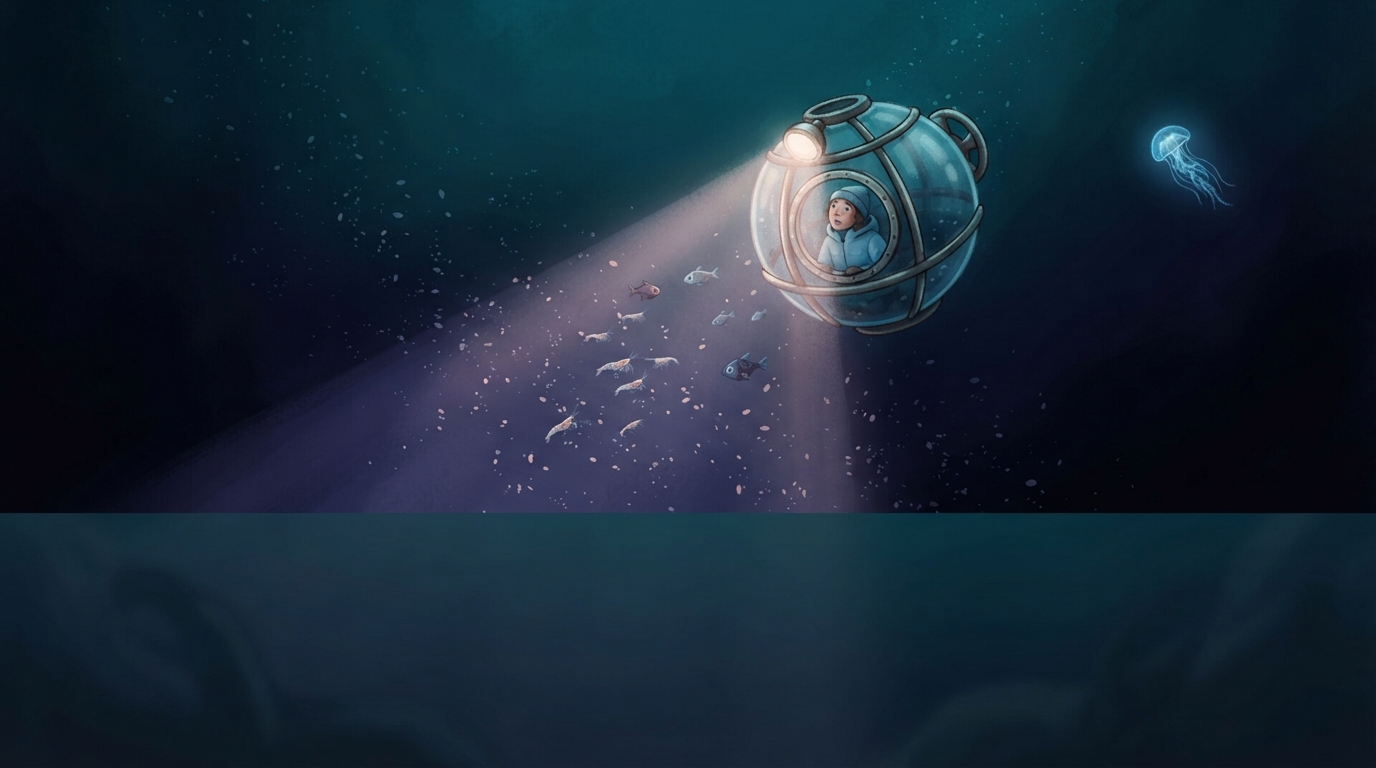
Down here, food often arrives from far above. Tiny crumbs drift through the water, slowly and steadily. They look like snowflakes in a night sky. But these flakes are bits of once-living things. Follow the falling feast, and you will find surprising deep-sea diners.
One Whale, Many Years
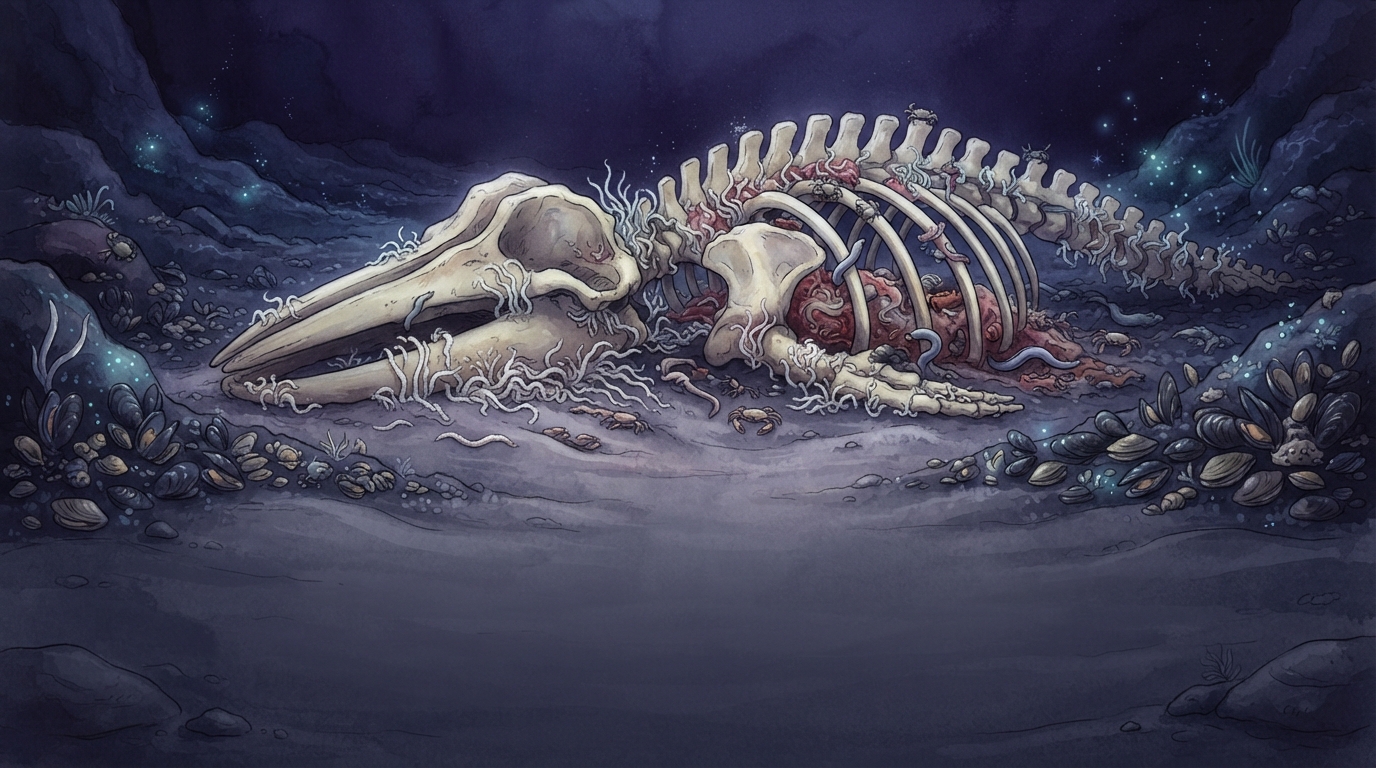
When a whale dies and settles on the seafloor, it can feed a whole neighborhood. This is called a whale fall. First, animals such as hagfish and crabs eat the soft parts. Later, worms, clams, and tiny microbes use what remains, even the bones. One whale’s body can provide food and shelter for years to decades. It is a gentle change: one life helps many other lives continue.
Chimneys Without Sun
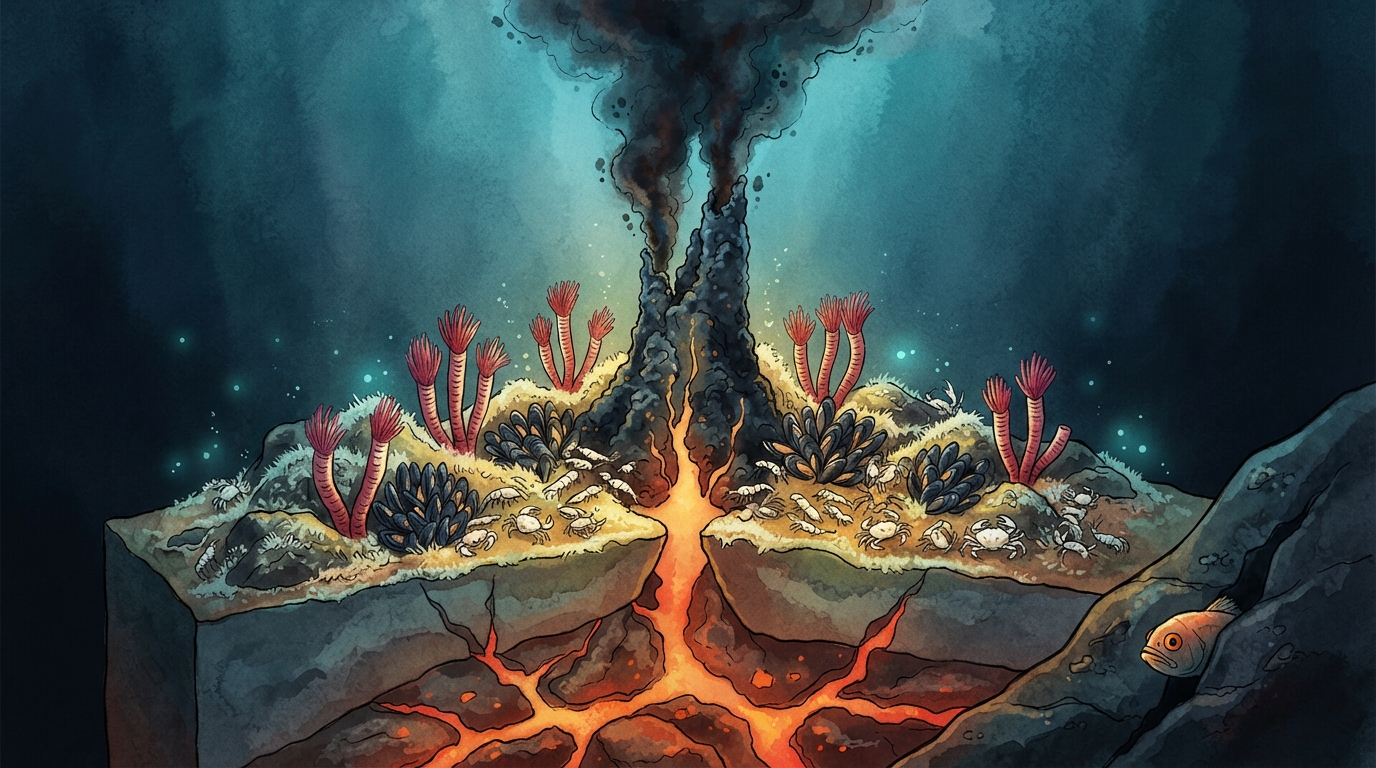
A vent is like a hot spring on the seafloor. Water heated deep below rises out, carrying minerals and chemicals. It can be very hot, while nearby seawater stays cold. At the vent’s base live tiny microbes. They make food from chemicals, not sunshine. This food-making trick is called chemosynthesis. Tubeworms, mussels, shrimp, and crabs depend on these microbes. No sunlight is needed for this busy community.
Back Up With Stars
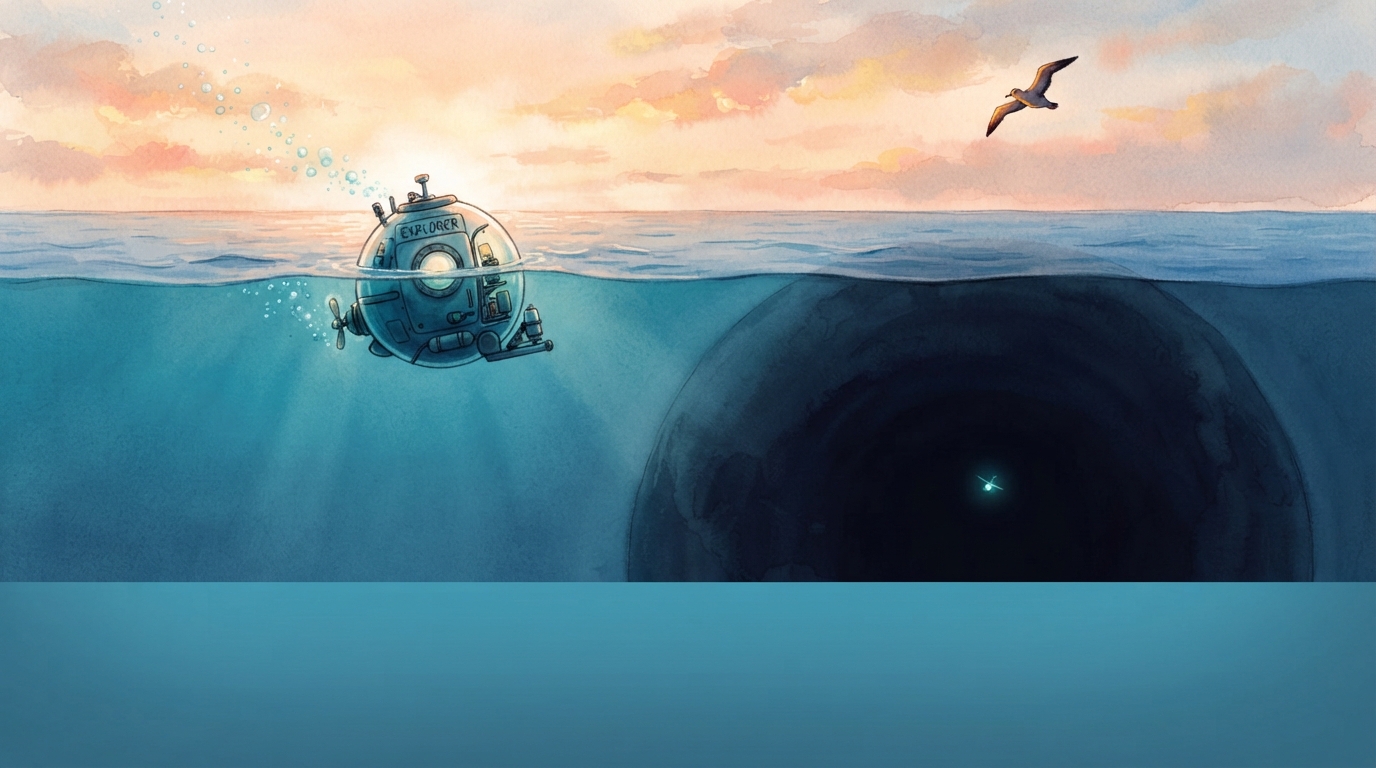
Now the little sub heads home toward dawn. Behind it lies Earth’s biggest living space: the deep ocean. Many people think we know its floor well. Actually, humans have visually surveyed less than 0.001% of the deep-ocean seafloor. That is a very tiny peek at a huge place. So when you look down at dark water, remember: it holds real neighborhoods, glowing lives, and discoveries still waiting.
Check your wonder
New words
Where we looked
We used web research from trusted ocean science groups, including NOAA, WHOI, MBARI, and the Smithsonian, to help make this book.
The end
Now you know the deep sea is dark, deep, and wonderfully alive. You have met glowing neighbors, falling food, and busy vents far below the waves. Keep wondering what new life a submersible may find next!