Mangroves: The Forest Between Land and Sea
Explore breathing roots, salt-smart leaves, fish nurseries, softer waves, trapped mud, and blue carbon in the remarkable forest shaped by tides.
23 pages · Ages 6-7 · EN
Mangroves: The Forest Between Land and Sea
Mangroves: The Forest Between Land and Sea
For children growing up where rivers, roots, and tides meet.
What's inside
Where the Tide Meets Trees A Nursery in the Roots Roots Reshape the Coast Keep the Living Edge Alive
A Forest Floods Twice a Day
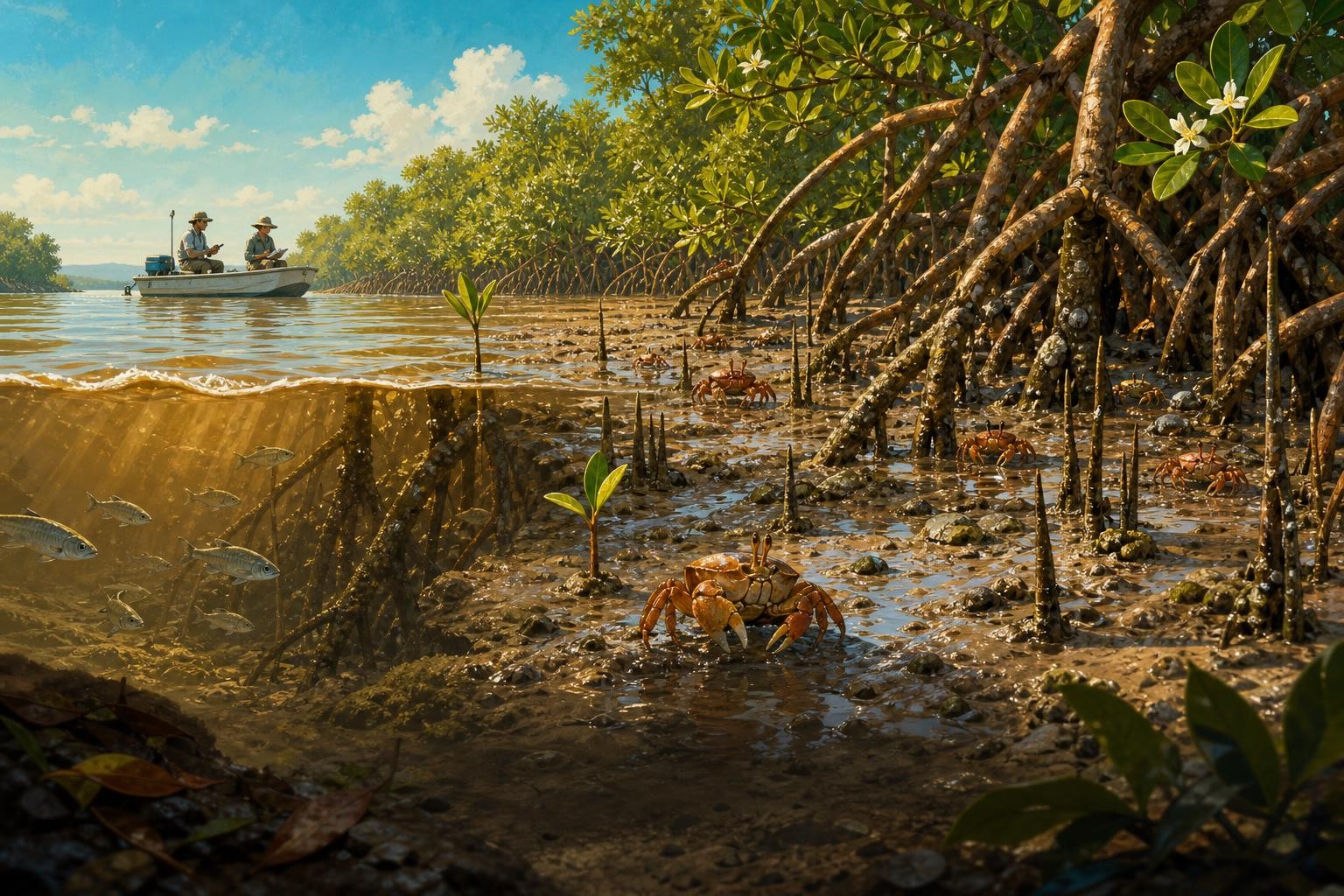
At high tide, seawater winds between the trunks. Hours later, low tide uncovers shining mud and busy roots. Mangroves live in this changing strip between land and sea. Their world is not always wet and not always dry—it keeps time with the tide.
Roots That Reach for Air
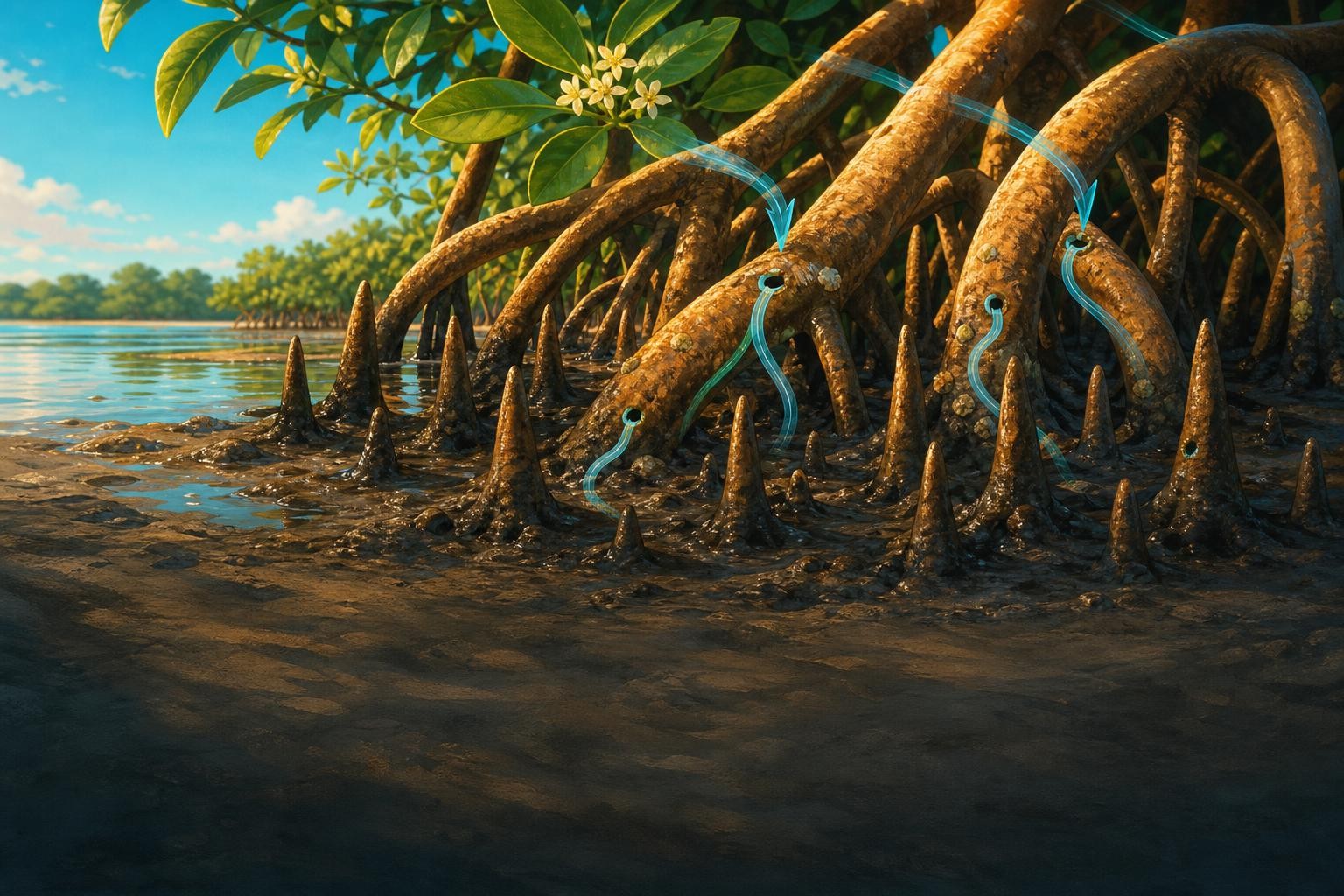
Ordinary roots need oxygen for their living cells, but waterlogged mud holds very little. Some mangroves send arching prop roots above the surface. Others grow upright breathing roots called pneumatophores. Air enters through tiny openings when those roots are exposed.
The Salt Problem
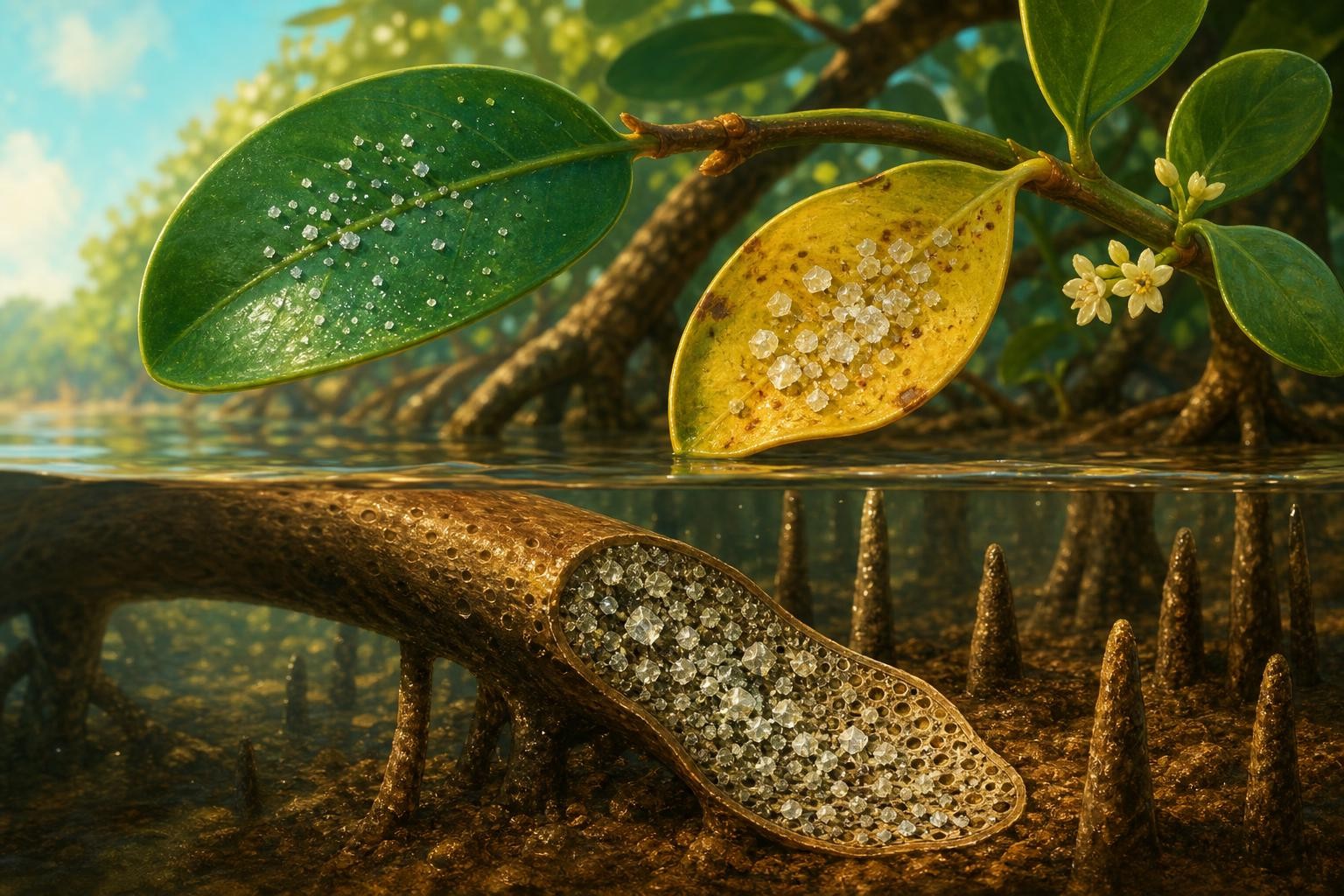
Salt water can pull water out of living cells. Mangroves use several strategies. Some roots block much of the salt. Some leaves release salt through special structures, and some trees store salt in older leaves that later drop. Different mangroves solve the problem differently.
A Seedling That Can Float
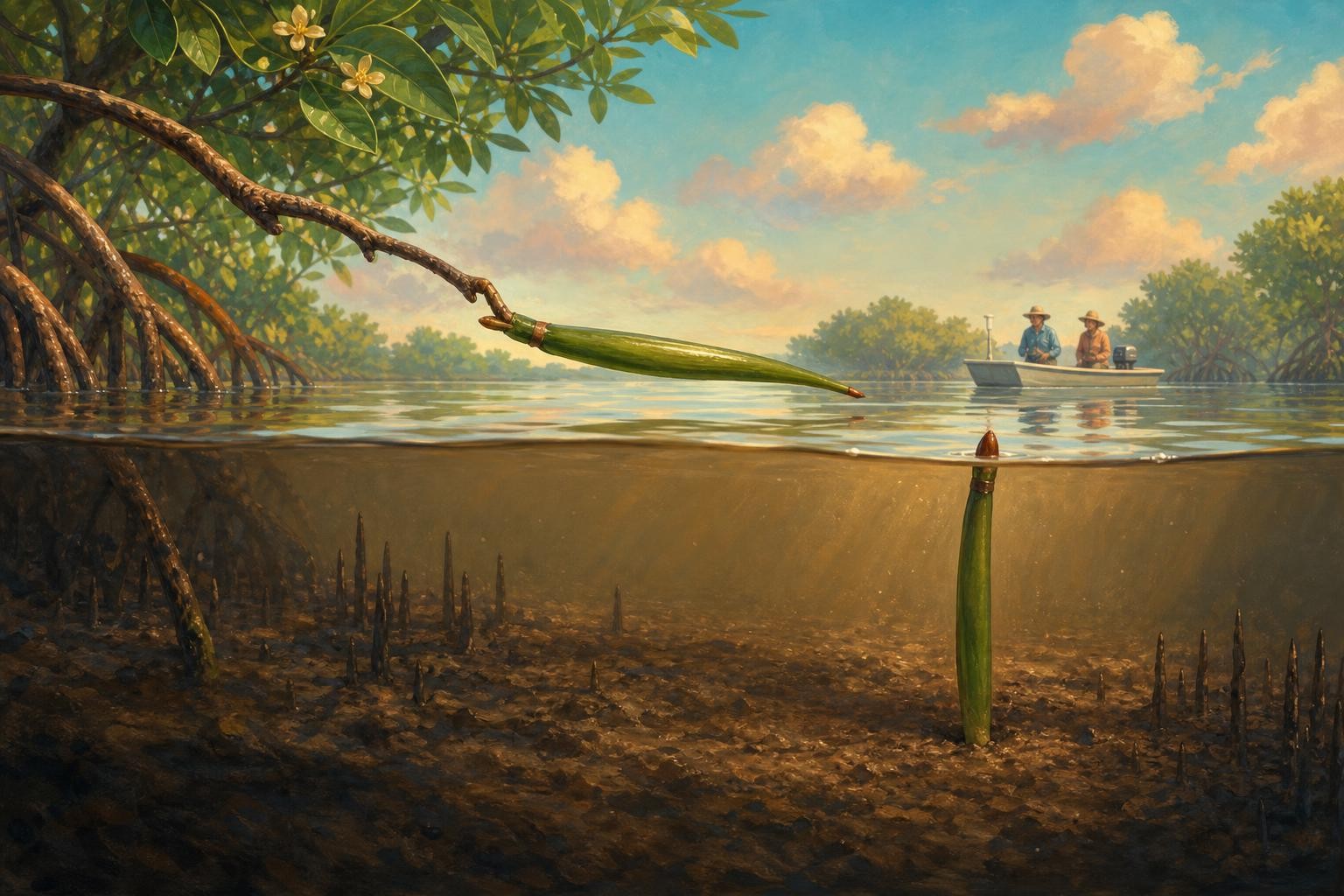
Many mangroves begin a long seedling while it is still attached to the parent tree. When it drops, the seedling can float with the tide. If it reaches suitable soft ground at the right angle, it may lodge, root, and begin a new tree.
The Silver-Fish Maze
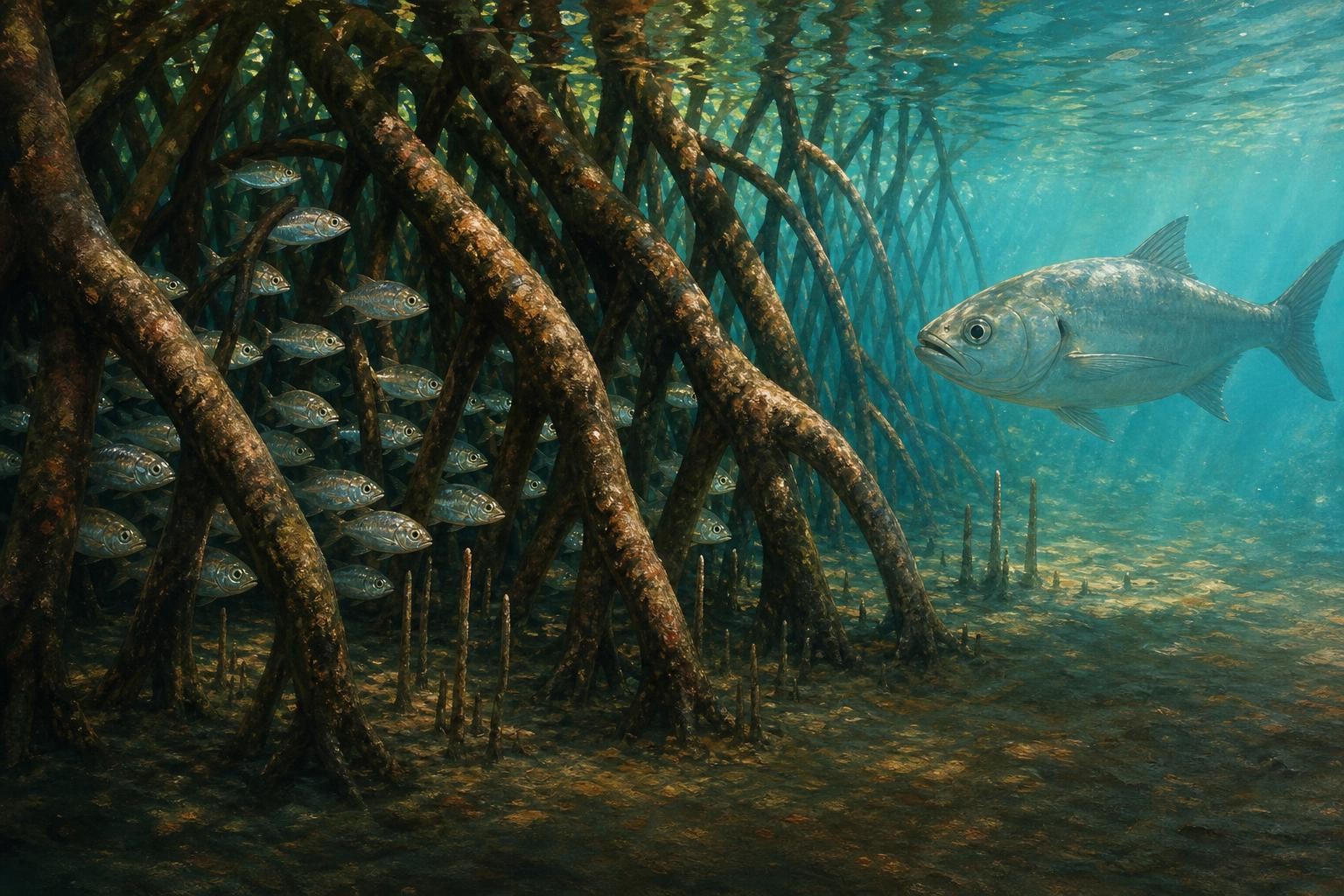
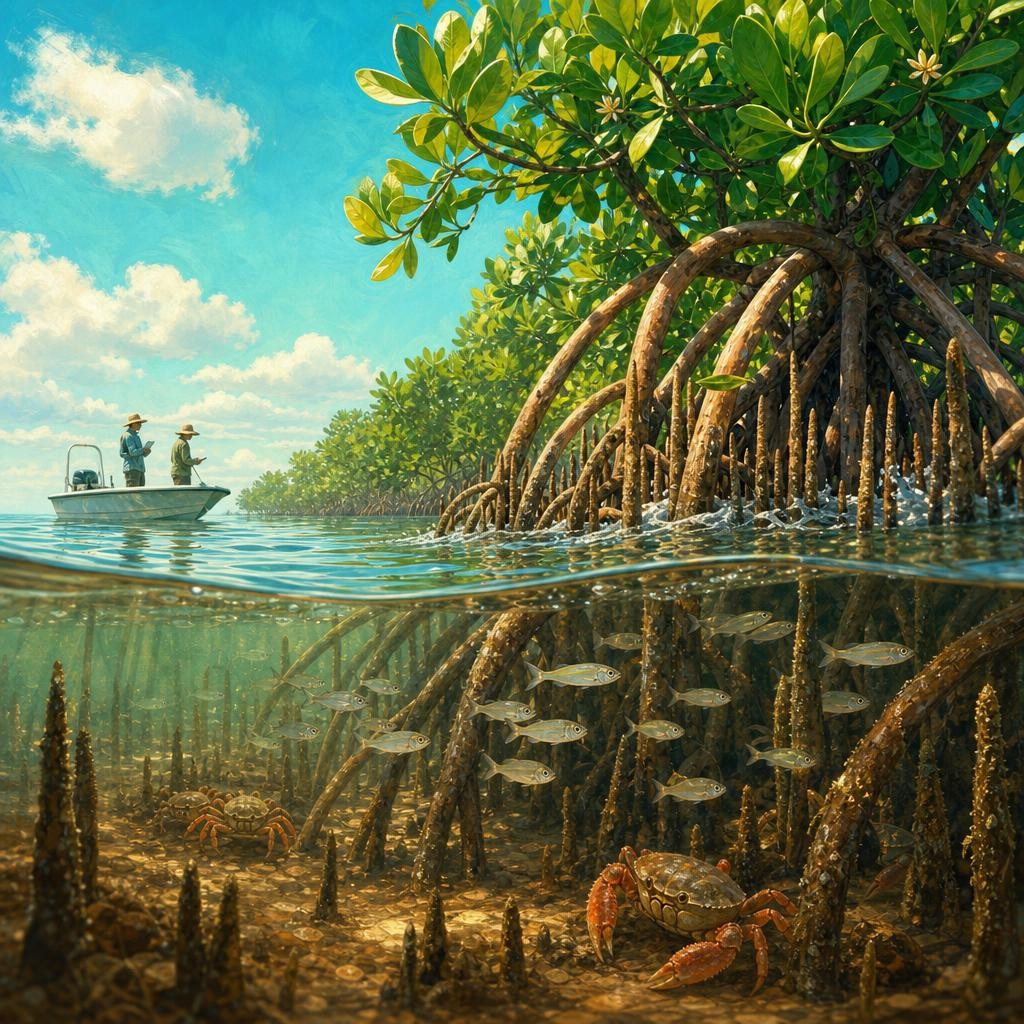
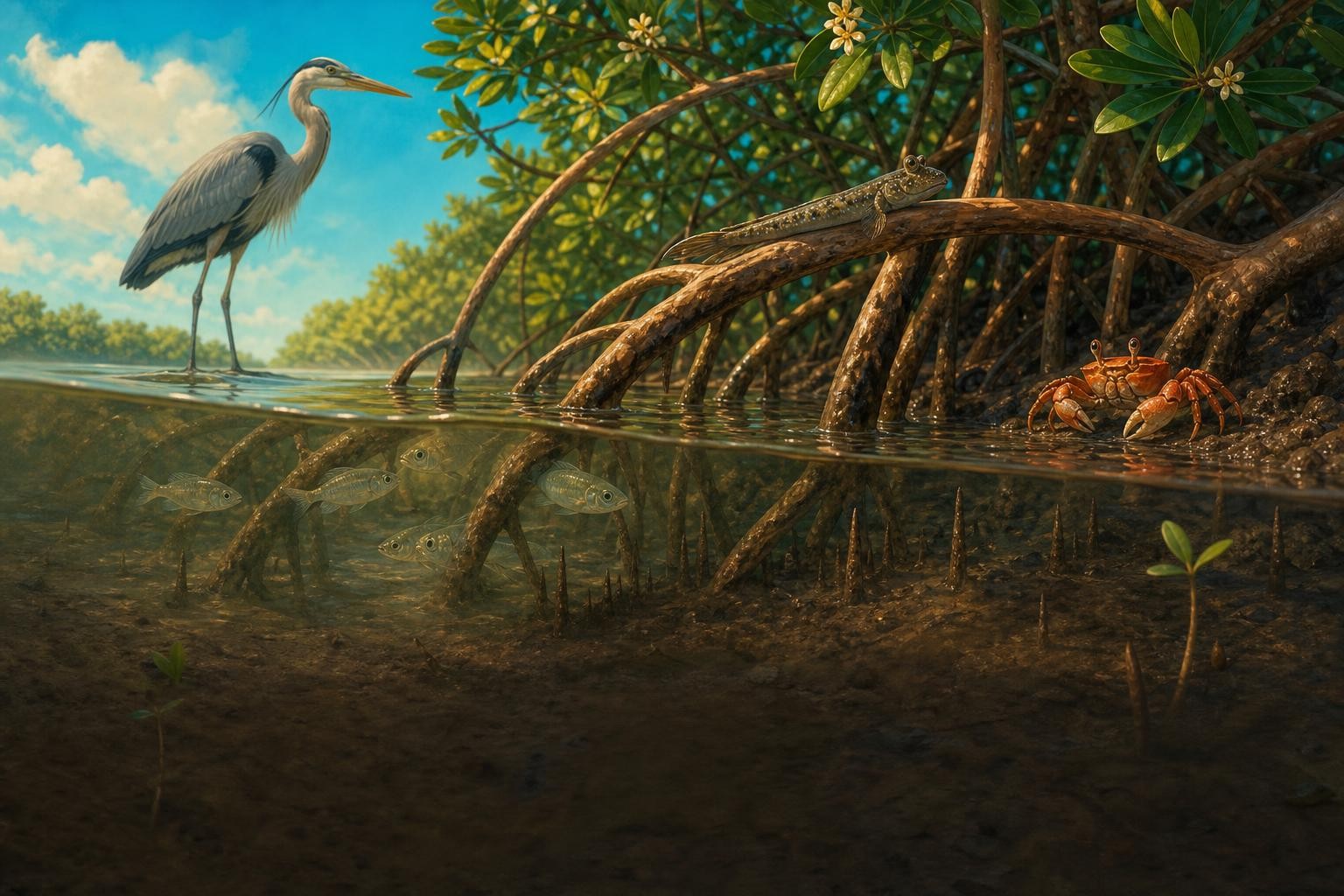
As the tide returns, small silver fish weave between the roots. Large hunters have less room to turn in this living maze. Young fish can find shelter and food while they grow, which is why many mangrove areas are called nursery habitat.
Crabs Clean and Carry
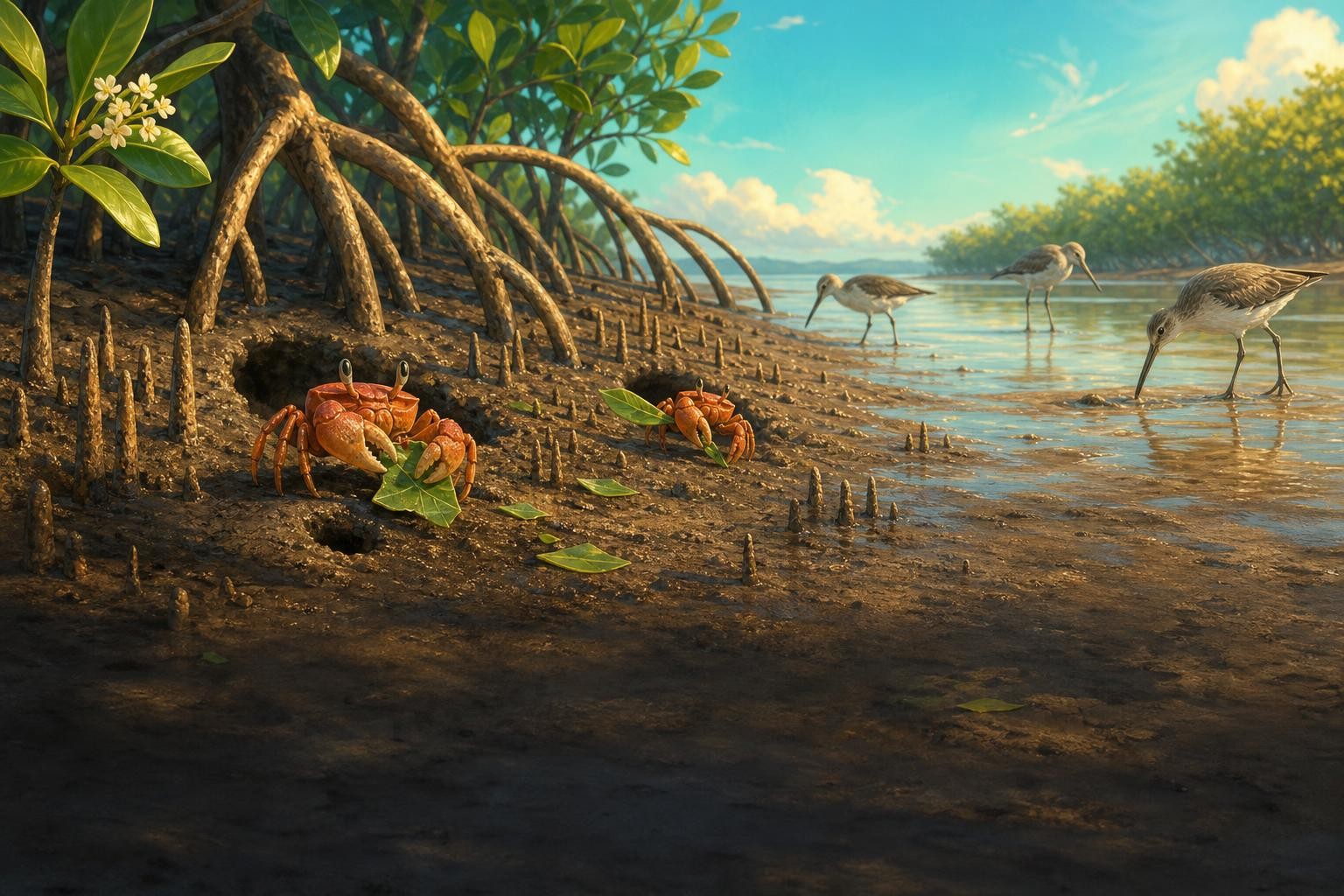
At low tide, crabs hurry across the mud. Some eat fallen plant pieces and tiny organisms. Burrows stir the surface and create spaces in the sediment. The crab is not a janitor with a broom; it is one working part of a busy food web.
Leaves Feed a Hidden Crowd
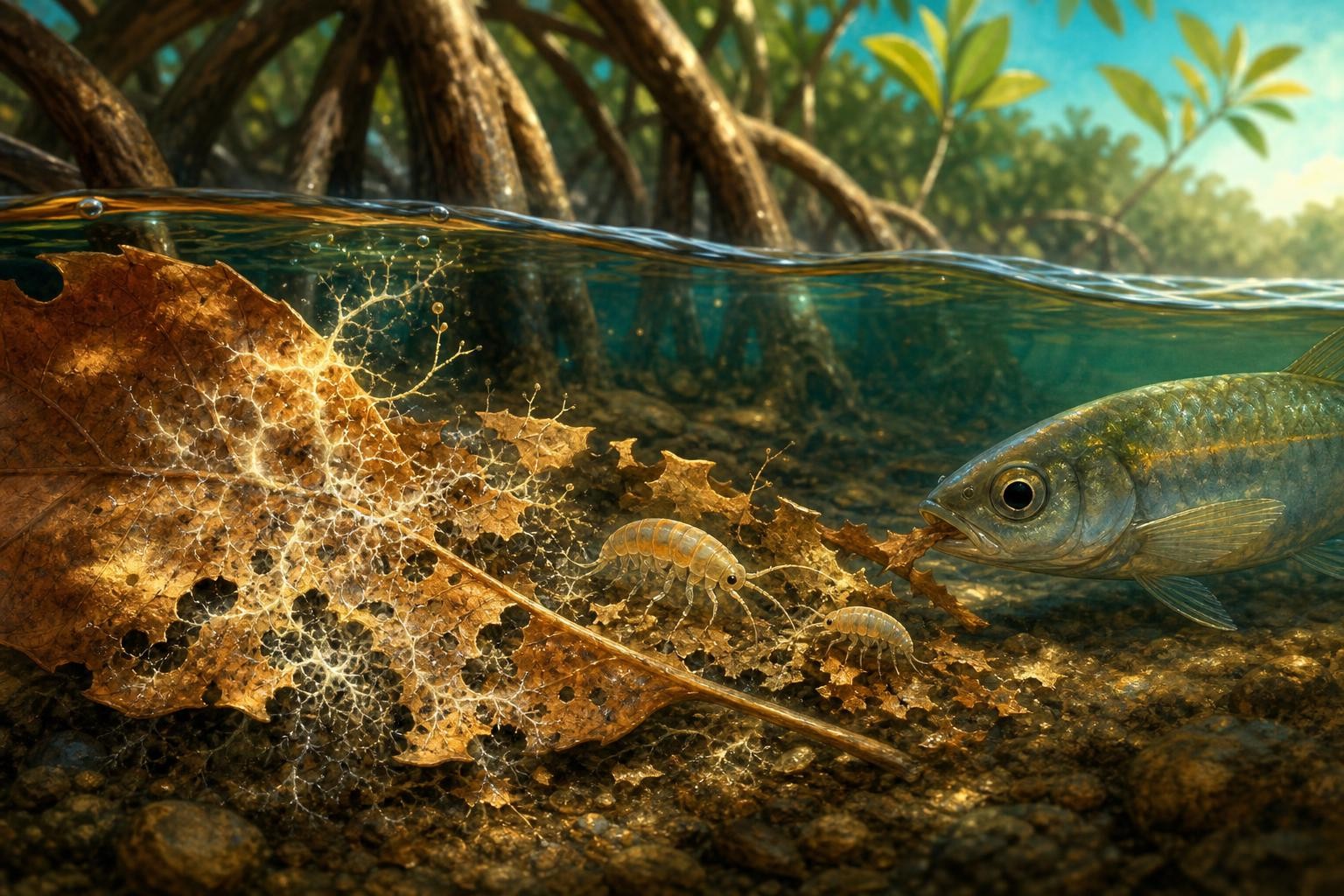
A fallen leaf softens and breaks into smaller pieces. Fungi and microbes help decompose it. Tiny animals eat the fragments and microbes; fish and larger animals eat some of them. Energy from the mangrove can travel through many mouths.
Four Neighbors in the Maze
A Net for Moving Mud
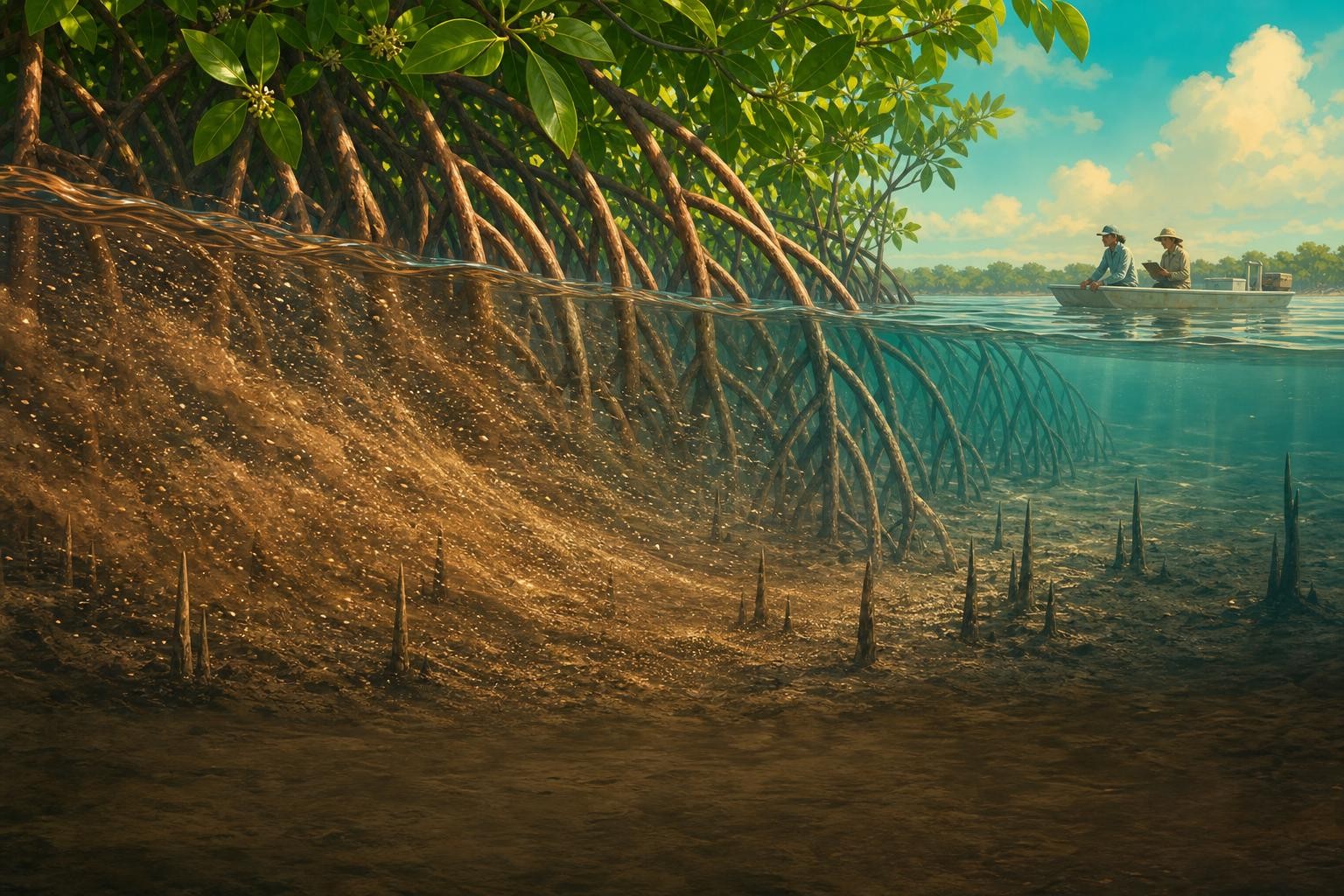
River and tide water carry tiny grains of sediment. When water threads through many roots, it slows. Some grains settle instead of washing straight away. Over time, trapped sediment can build and change the ground around the forest.
Turning One Wave into Many
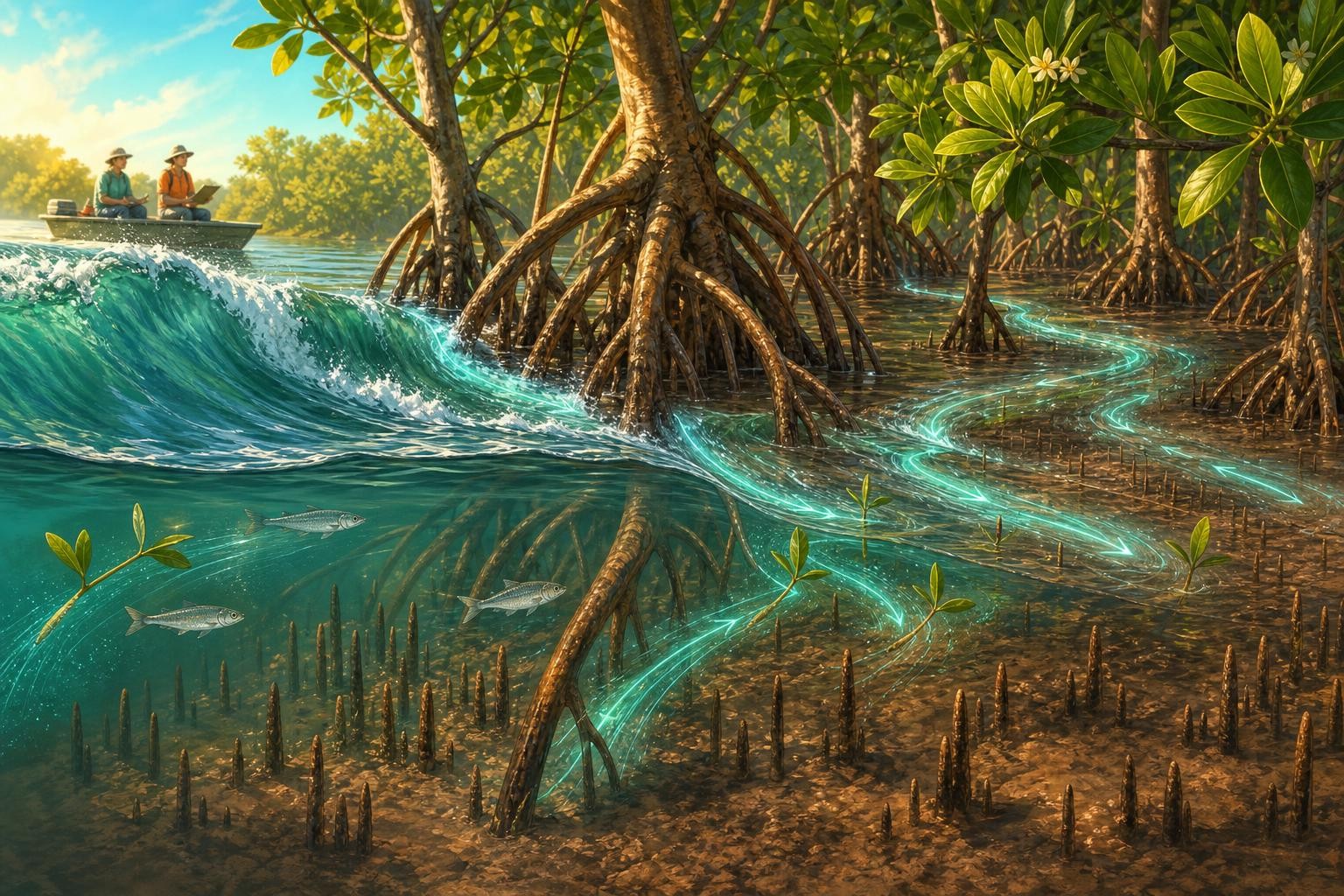
A wave carries energy. Meeting trunk after trunk and root after root creates friction and turbulence, breaking one organized push into many smaller motions. A healthy mangrove belt can reduce some wave energy before it reaches farther inland.
Protection Has Limits
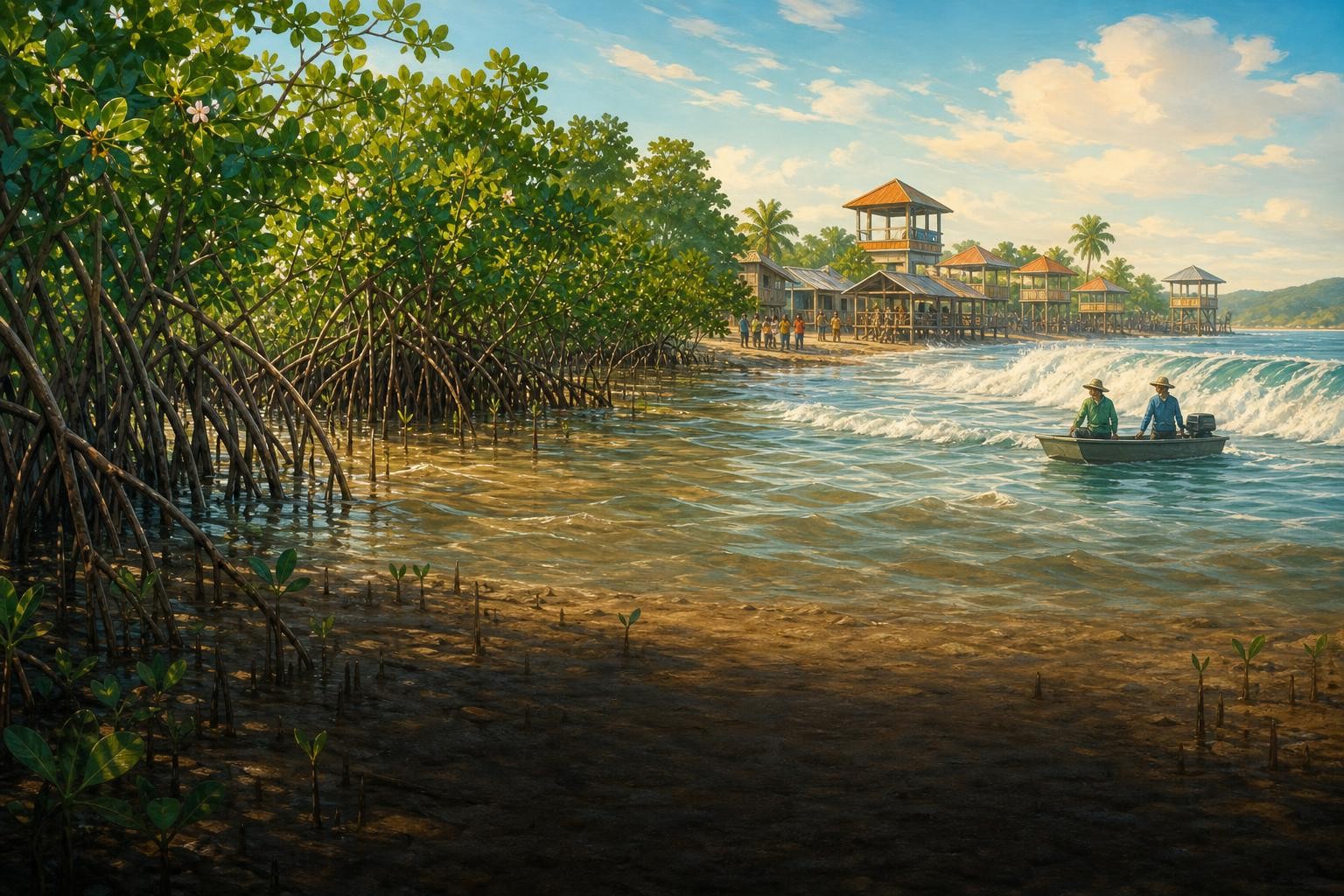
Mangroves can help reduce erosion and some coastal flooding, especially when forests are broad and healthy. But no forest stops every surge. Very large events can damage trees and communities. Mangroves are one protective layer alongside good planning, warnings, and safe buildings.
Blue Carbon Goes Down
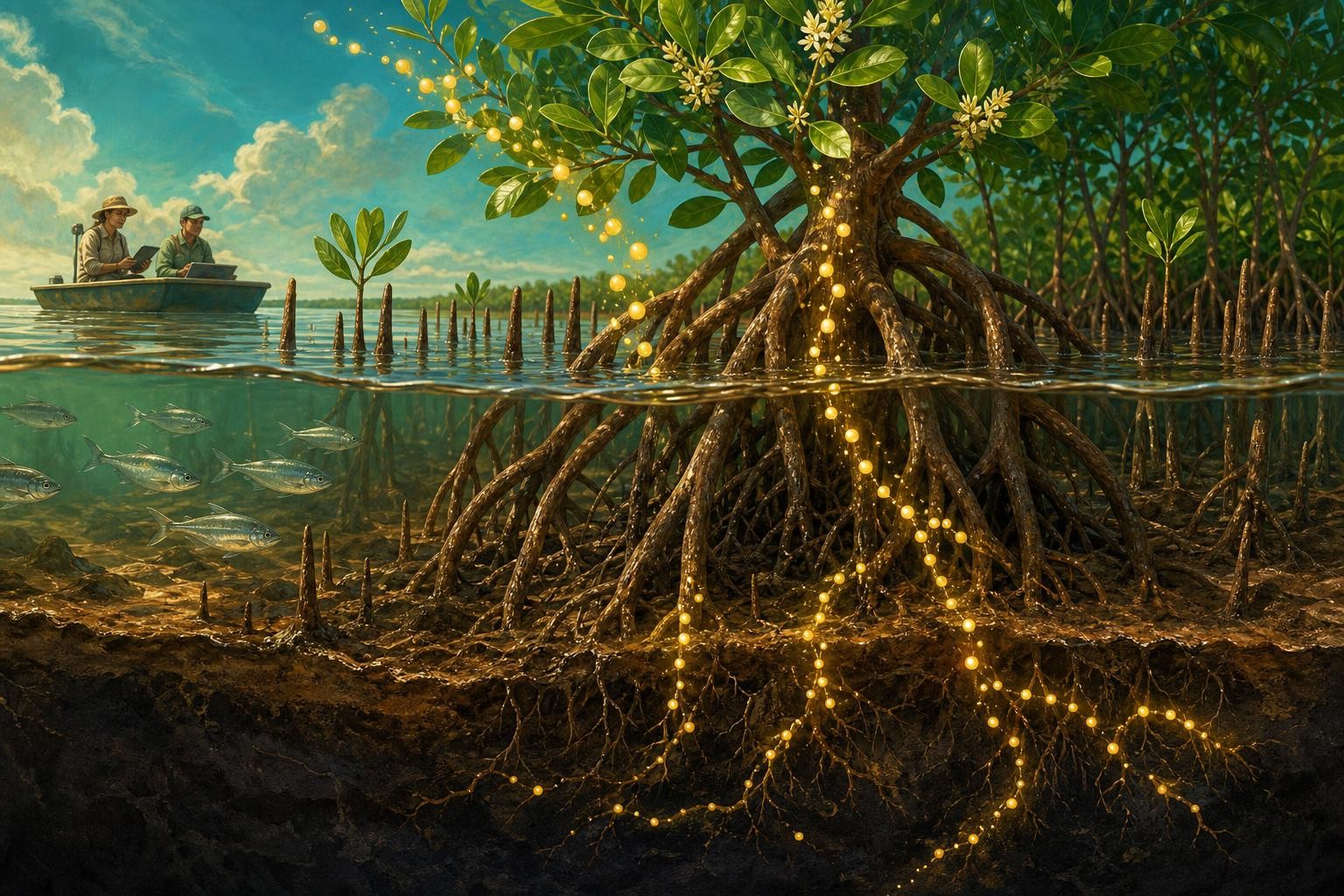
Mangrove leaves take carbon dioxide from the air as they grow. Carbon becomes part of wood and roots. Fallen material can be buried in waterlogged soil, where decomposition is slow. Much mangrove carbon is stored belowground—this coastal storage is called blue carbon.
When the Water Path Is Blocked
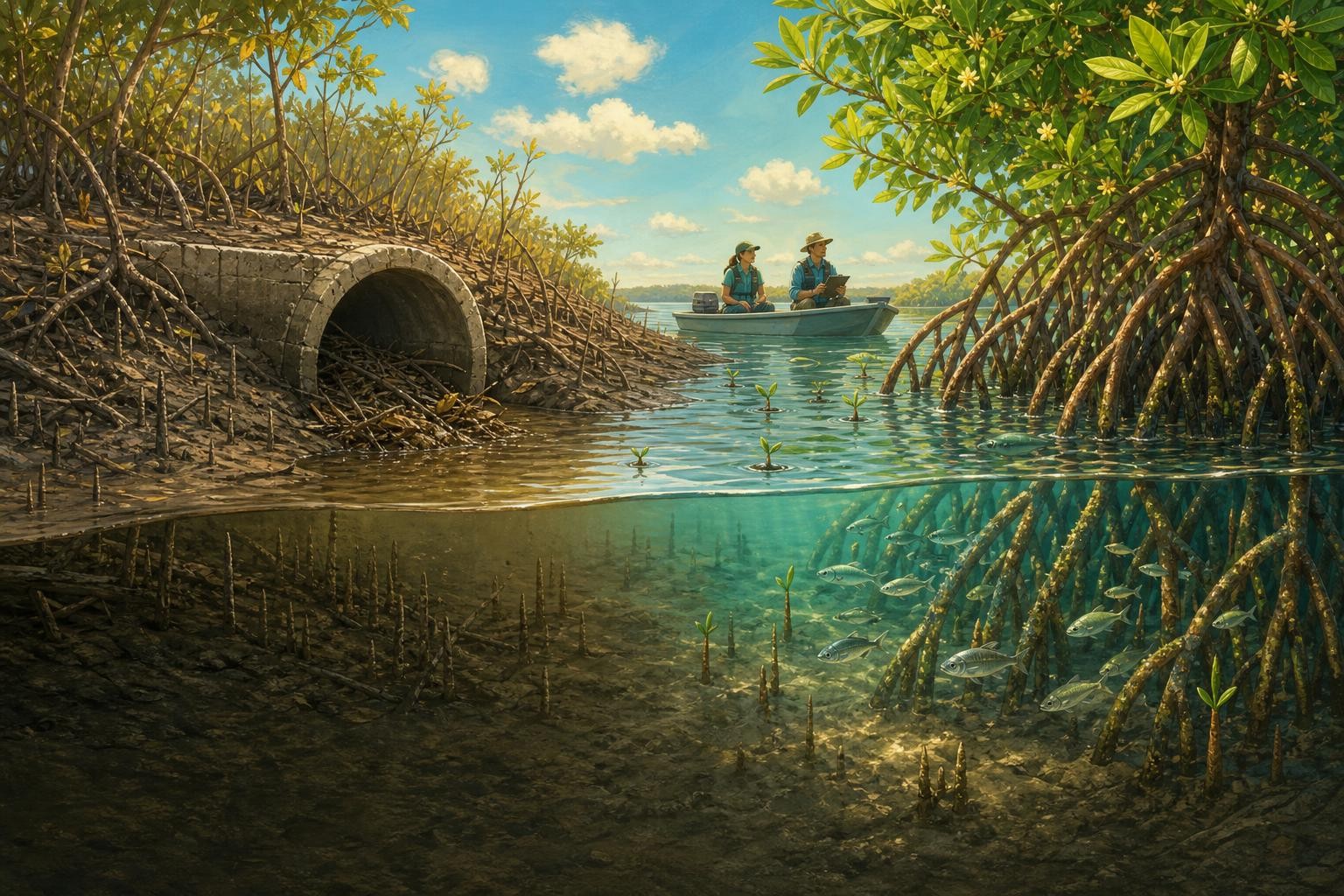
A mangrove forest needs the right flow of fresh and salty water. A blocked creek can leave one area too dry and another flooded too long. Clearing, pollution, and changed coastlines can also damage roots and nursery habitat.
Planting in the Right Place
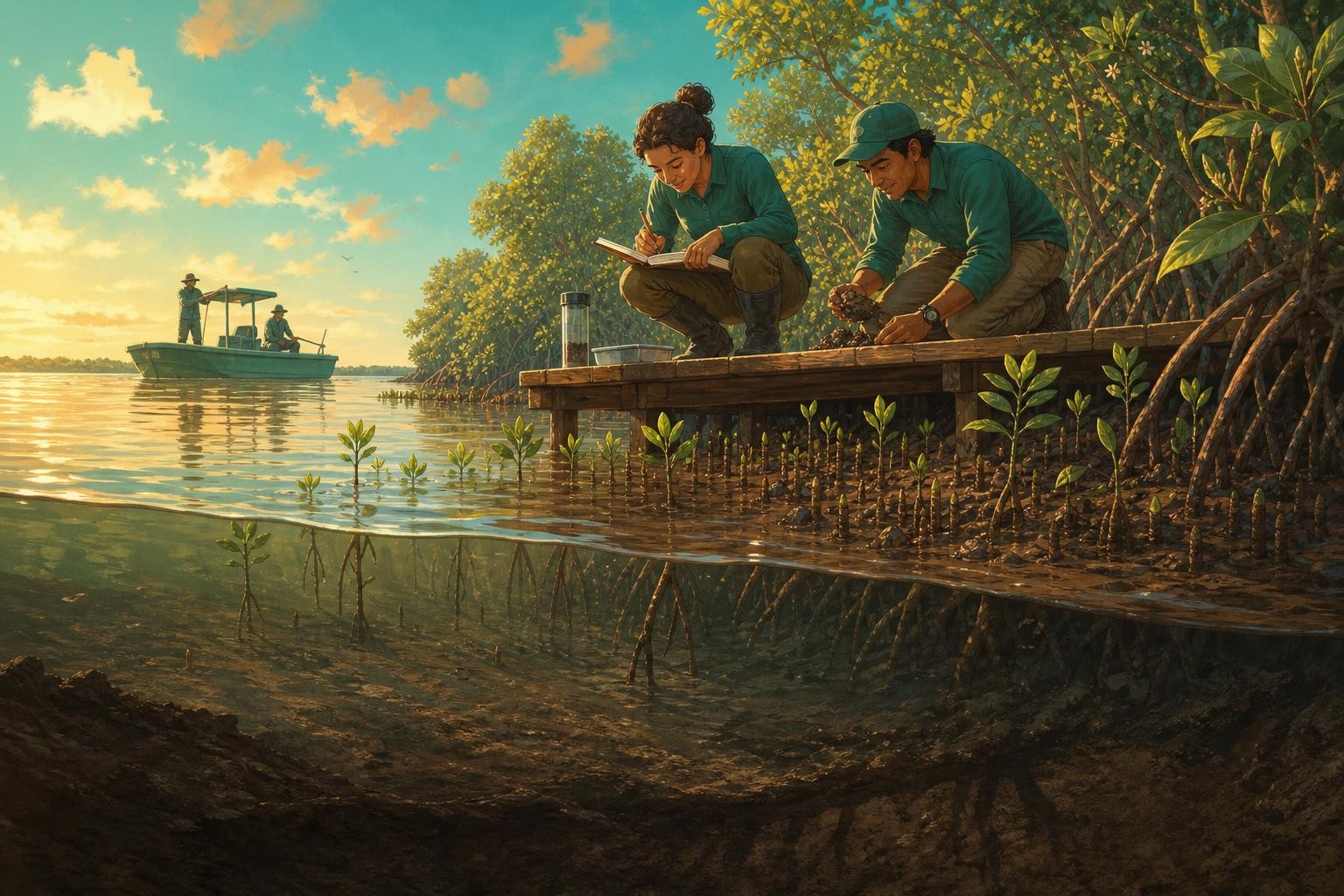
Mangrove planting works best where tides, soil, and species fit. Seedlings placed on the wrong open flat may wash away or fail. Restoration teams first study water movement and natural recovery, then protect or plant where conditions can support a forest.
Look Without Trampling
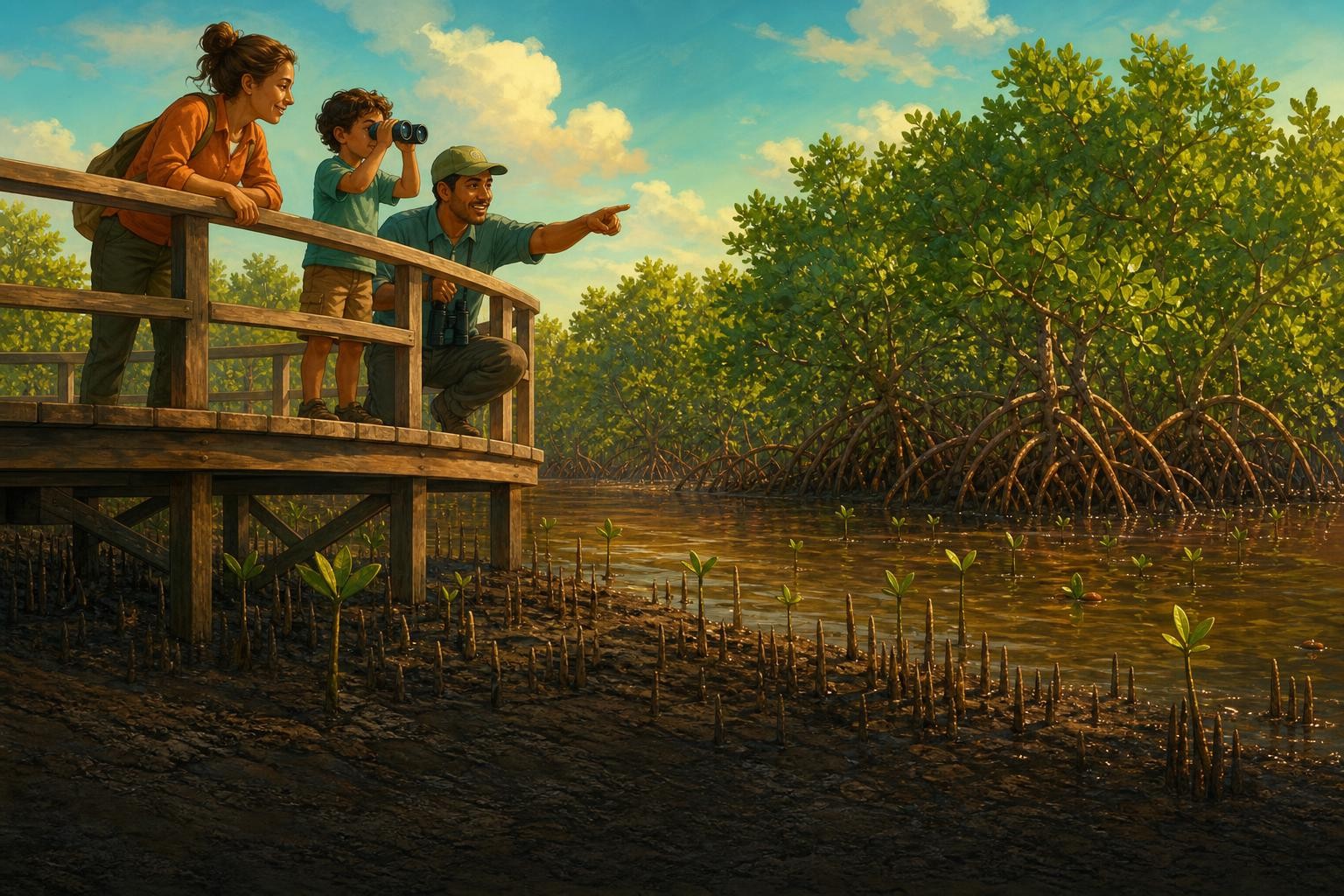
From a boardwalk or guided boat, observers can watch roots, fish, and birds without crushing seedlings or disturbing nests. Binoculars bring the canopy close. A field sketch can record tide height, animal behavior, and changing leaf color.
The Forest Is a Connection
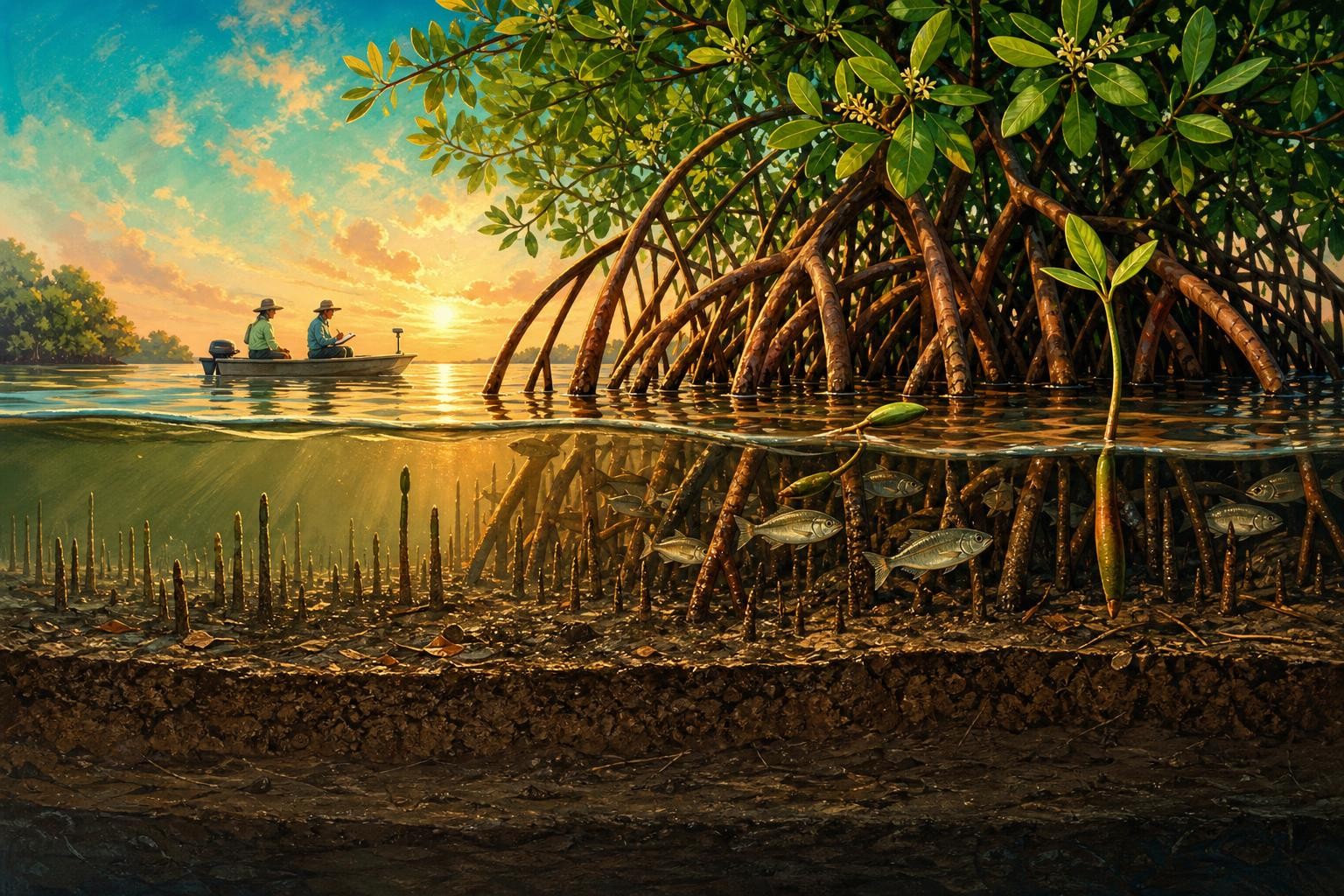
At sunset, the tide rises through breathing roots, fish return to the maze, and carbon remains tucked in dark soil. Mangroves are not just trees beside water. They are a living connection: land to sea, young animals to shelter, waves to roots, and today’s care to tomorrow’s coast.
Check your wonder
New words
Where we looked
Checked against coastal ecology explanations from NOAA Ocean Service, NOAA Fisheries, Smithsonian Ocean, and the U.S. Geological Survey.
The end
You can now read a mangrove forest from roots to canopy: breathing structures, salt strategies, nursery spaces, slower water, settling mud, and carbon-rich soil all move with the tide.