The Mountain That Makes Land
Peek inside a volcano and discover how hot rock builds our world.
18 pages · Ages 6-7 · EN
The Mountain That Makes Land
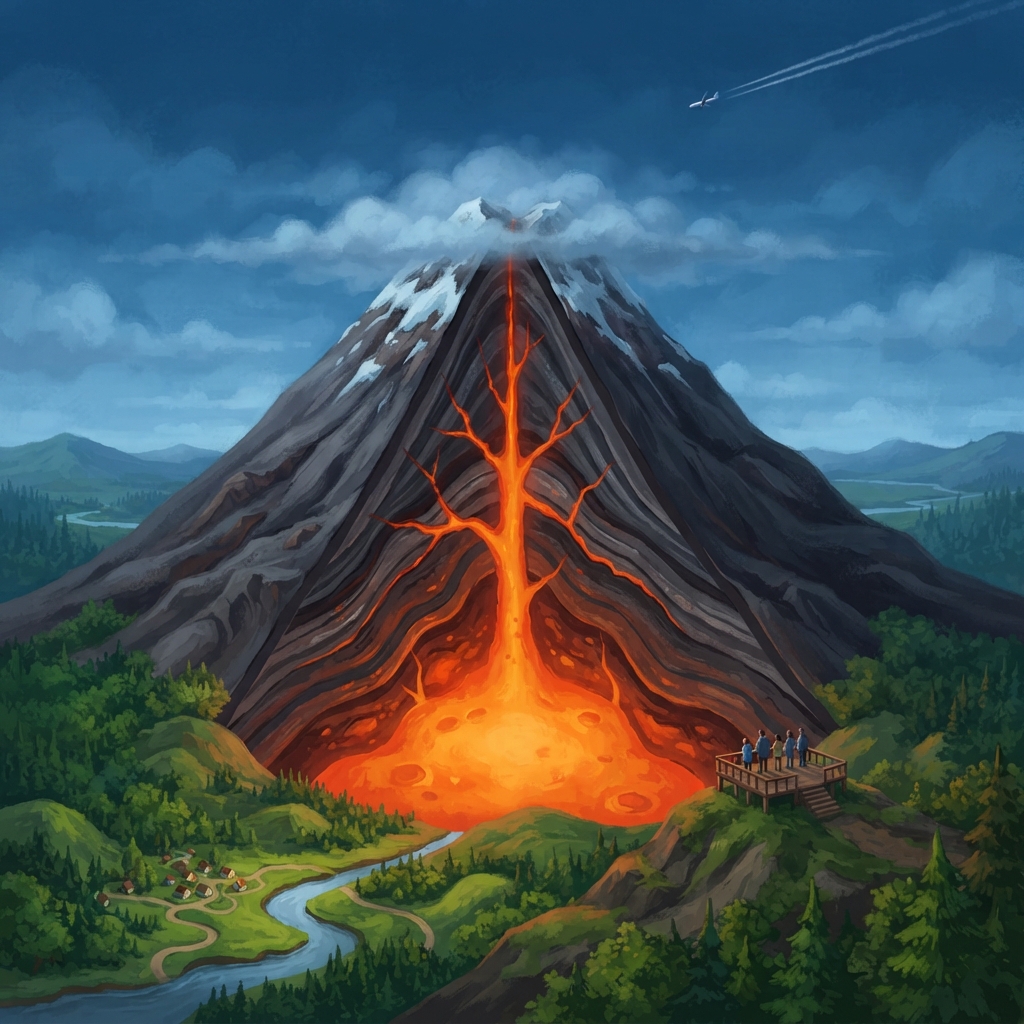
The Mountain That Makes Land
For every child who wonders what the Earth is doing inside.
The Sleeping Giant in Clouds
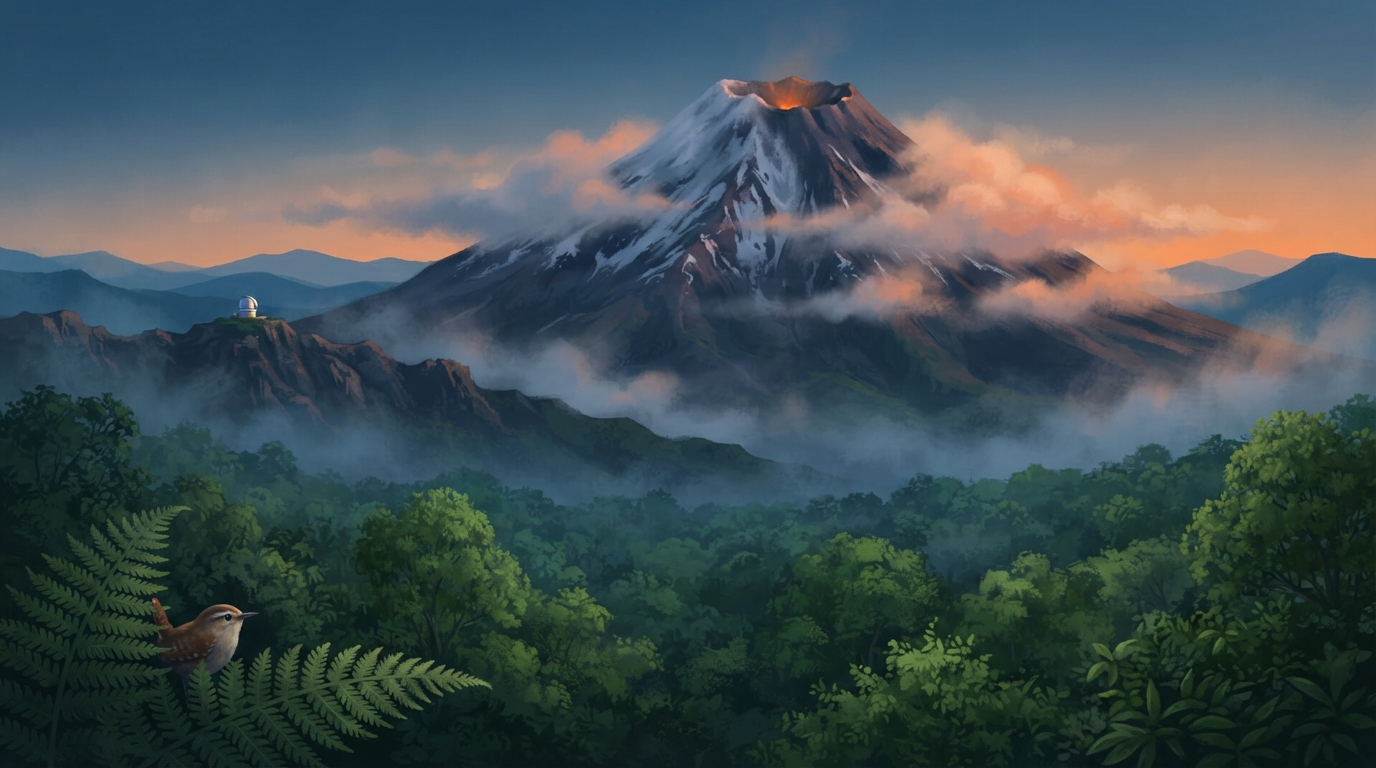
A volcano may look like a quiet mountain. Yet deep inside, it has a hidden route from Earth’s hot rock to the cool sky. Let’s peek beneath its stony coat.
Built Like a Layer Cake
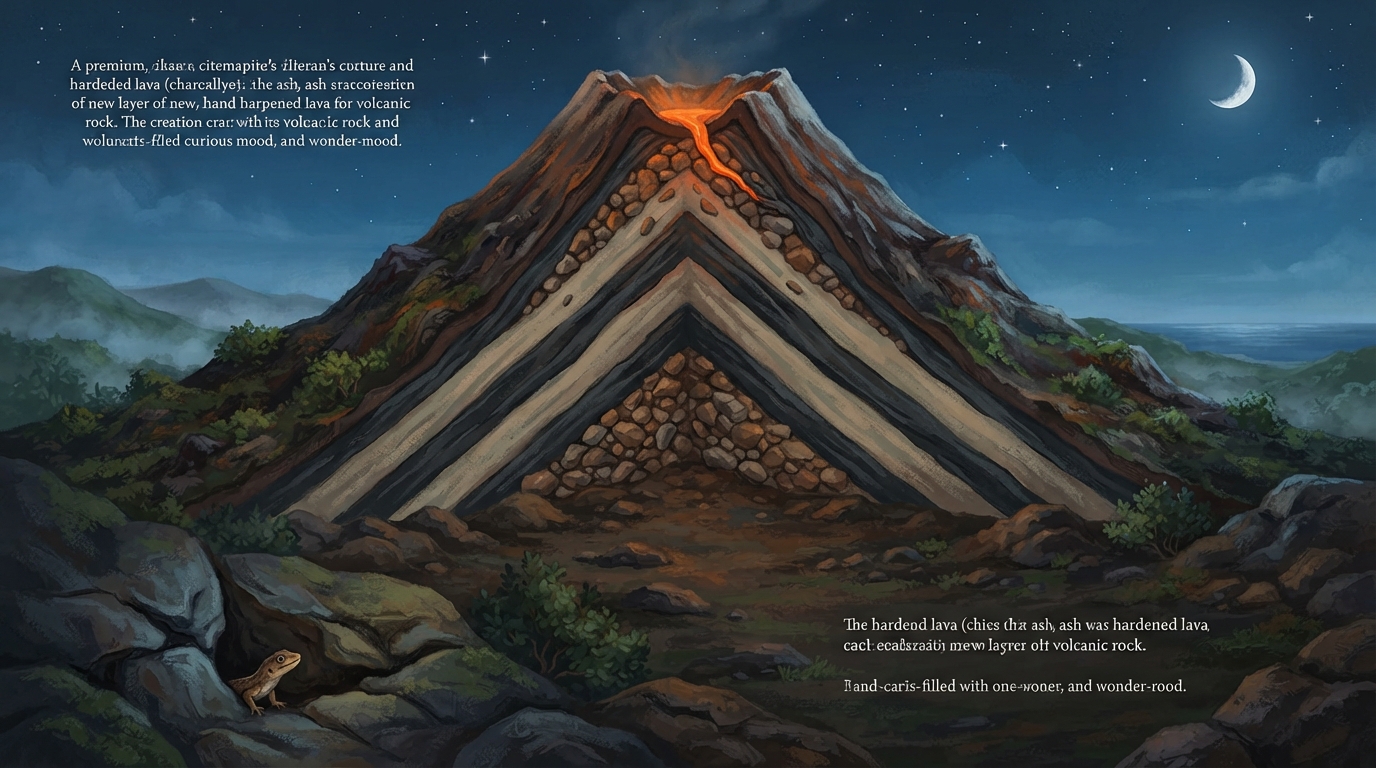
This mountain built itself, one layer at a time. A flow of melted rock can harden into dark stone. Tiny broken bits can settle in pale layers. The melted rock underground is magma; on the surface, it is lava. Lava, ash, and rock pieces stack up again and again. That is why a volcano is not an ordinary folded mountain.
Earth’s Cracked Shell
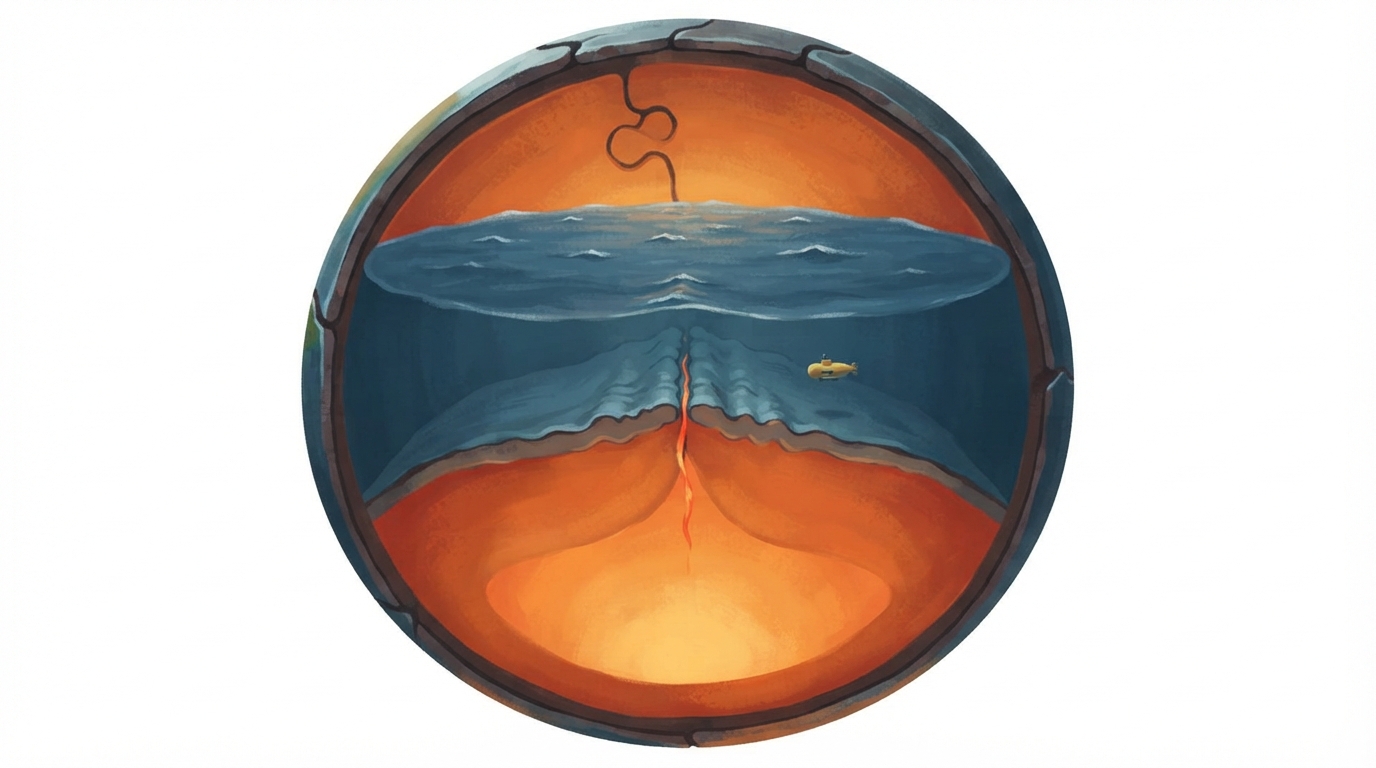
Earth’s outside is a cool rocky skin, like a cracked eggshell. Scientists call it the crust. The crust is split into giant pieces, like puzzle pieces. These tectonic plates move very slowly over hotter rock below. Where plates pull apart, bump together, or slide, cracks can help magma find a route upward. Not every plate edge makes a volcano, but many volcanoes begin near one.
Hot Rock Starts to Rise
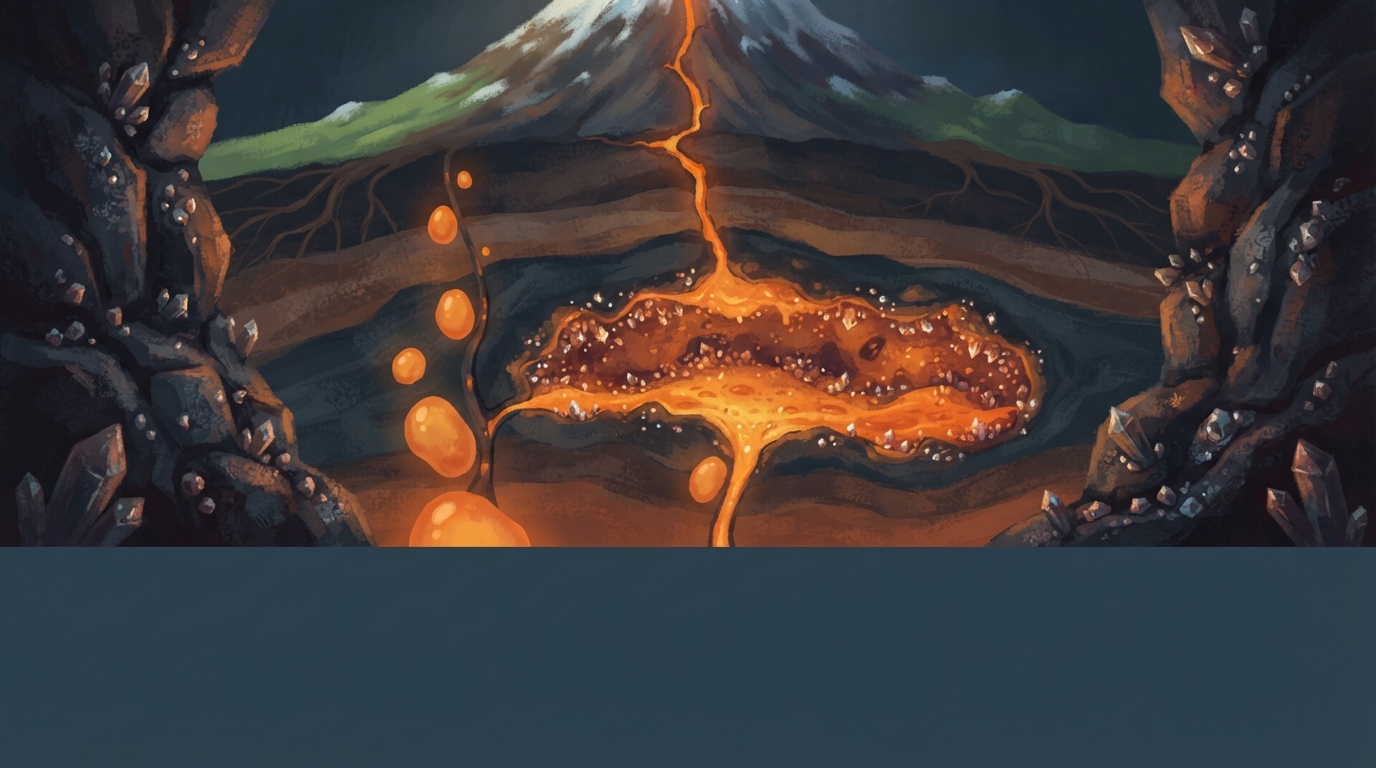
Far below, some rock gets so hot it melts, like wax warming near a lamp. This melted rock is magma. It is lighter than the solid rock around it, so it can slowly rise. Magma may gather in a storage zone beneath a volcano. Do not picture one giant empty cave, though. It is often a thick, hot mixture of melted rock and crystals, called crystal mush.
The Fizzy Bottle Underground
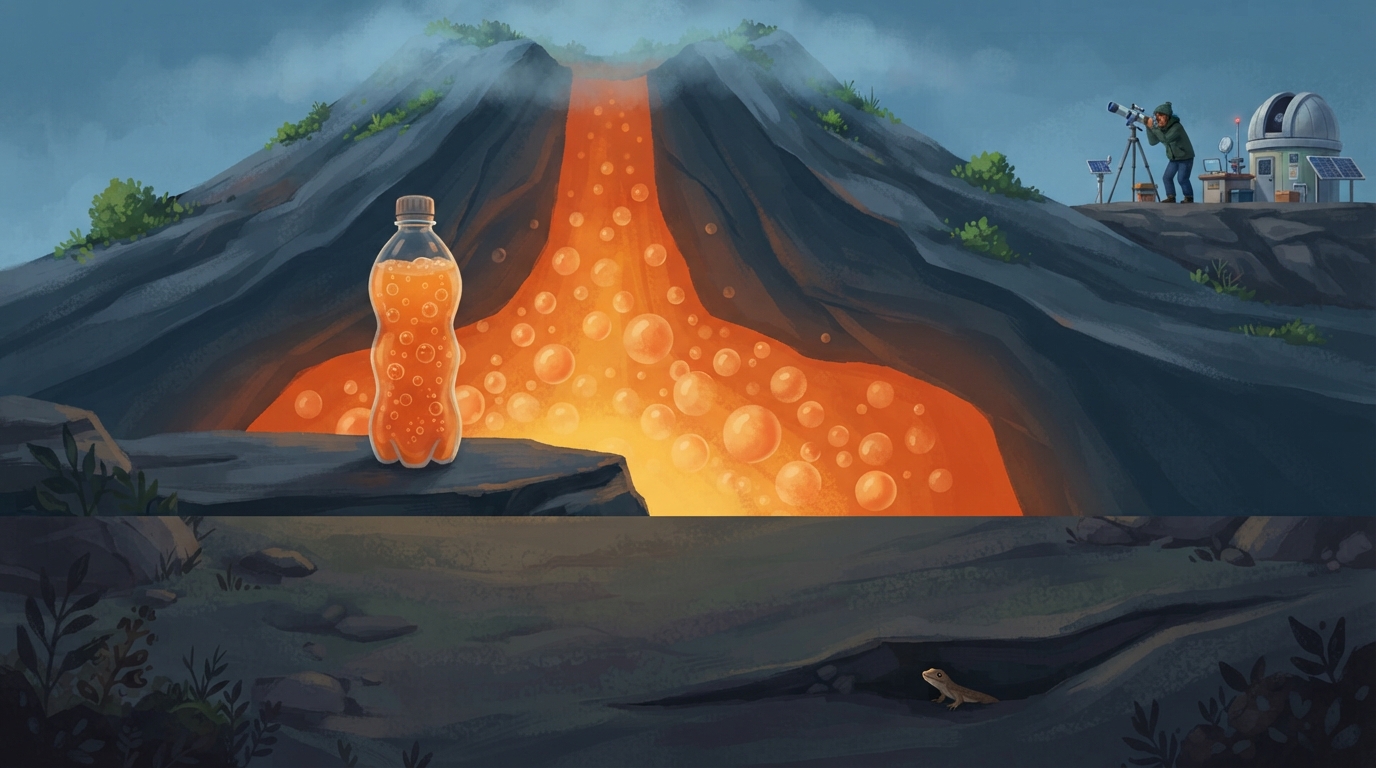
Deep below a volcano, melted rock can hold gas. Think of bubbles trapped in a shaken fizzy drink. As the melted rock rises, the squeeze around it eases. The bubbles grow and push. That push can help start an eruption.
Magma, Then Lava
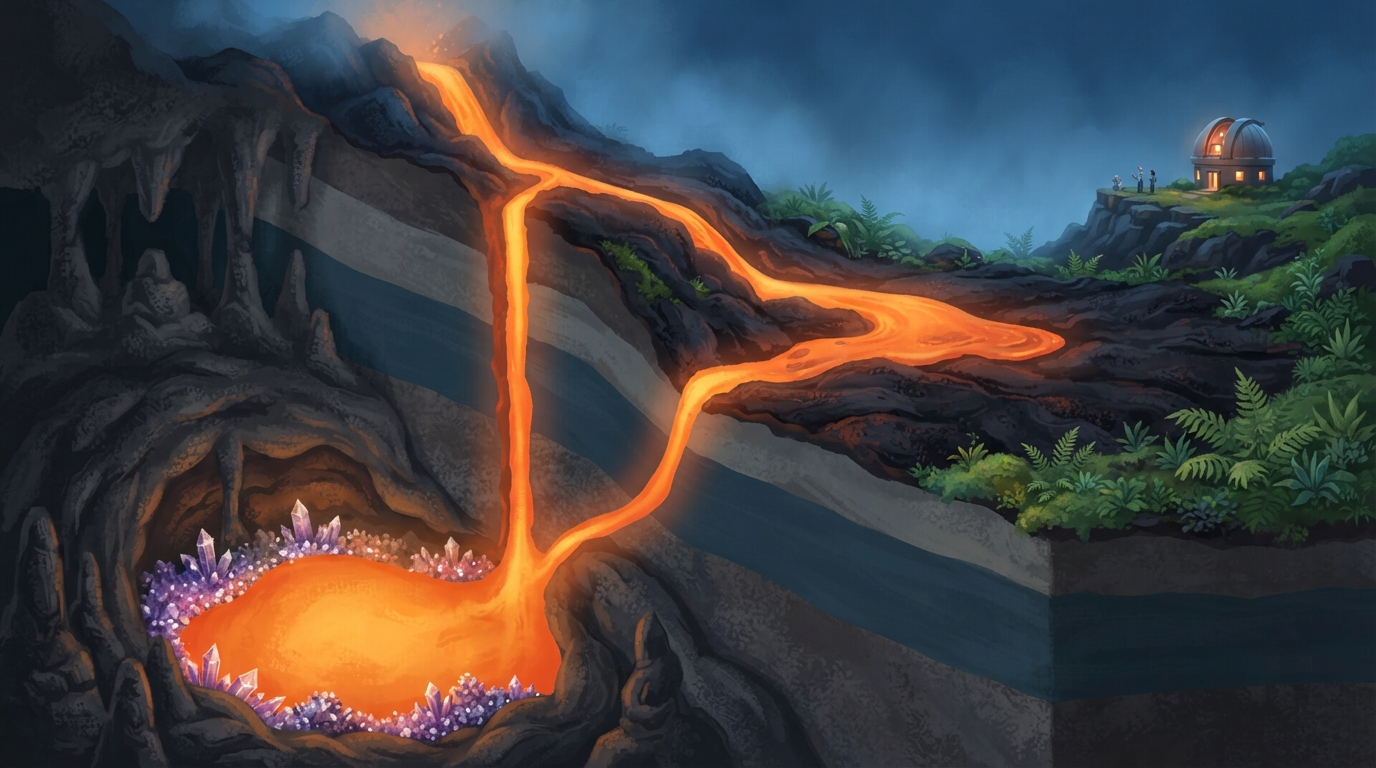
Follow the glowing rock on its trip. Below ground, rock so hot it melts is called magma. It gathers in a magma chamber, which is a storage zone, not always a big empty cave. Magma moves through a crack called a vent. The instant it reaches the surface, its name changes: now it is lava. Same melted rock, new place, new name.
Runny or Sticky?
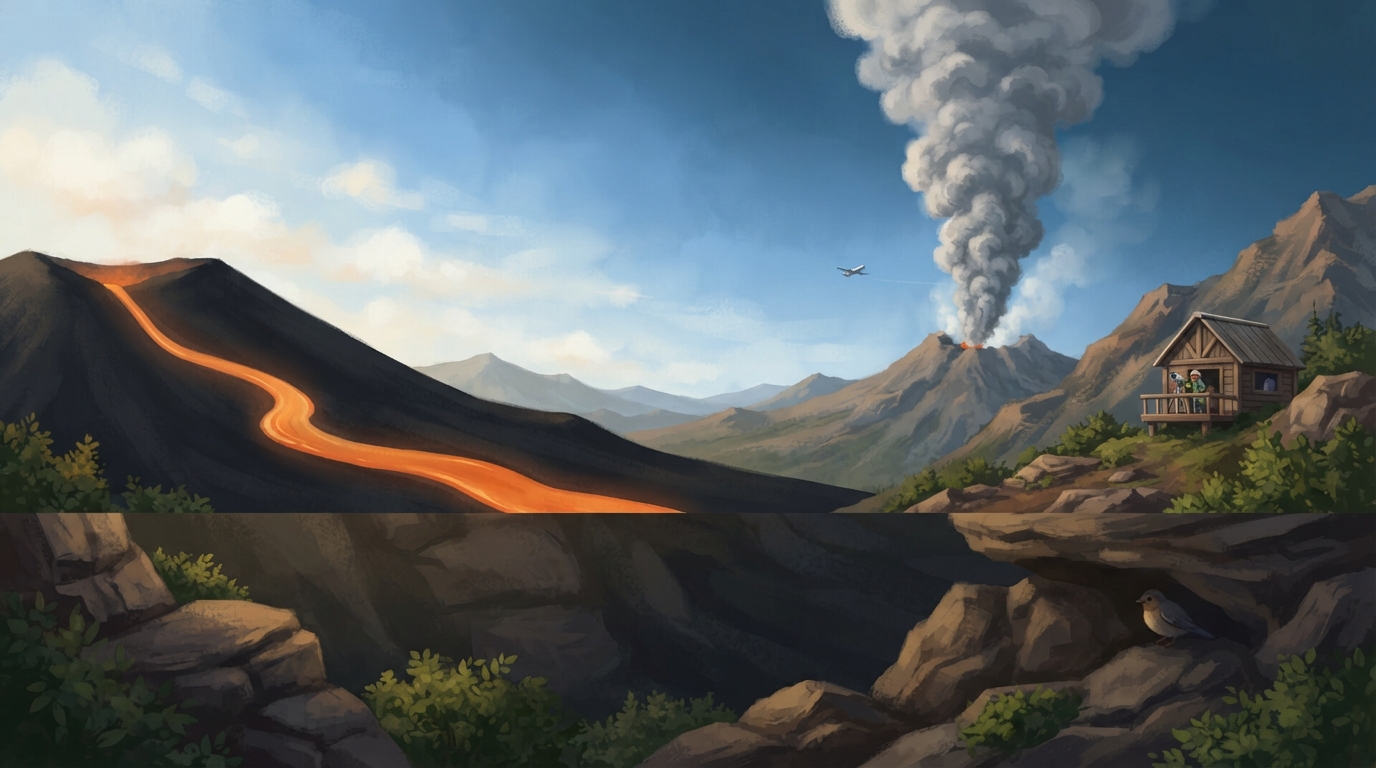
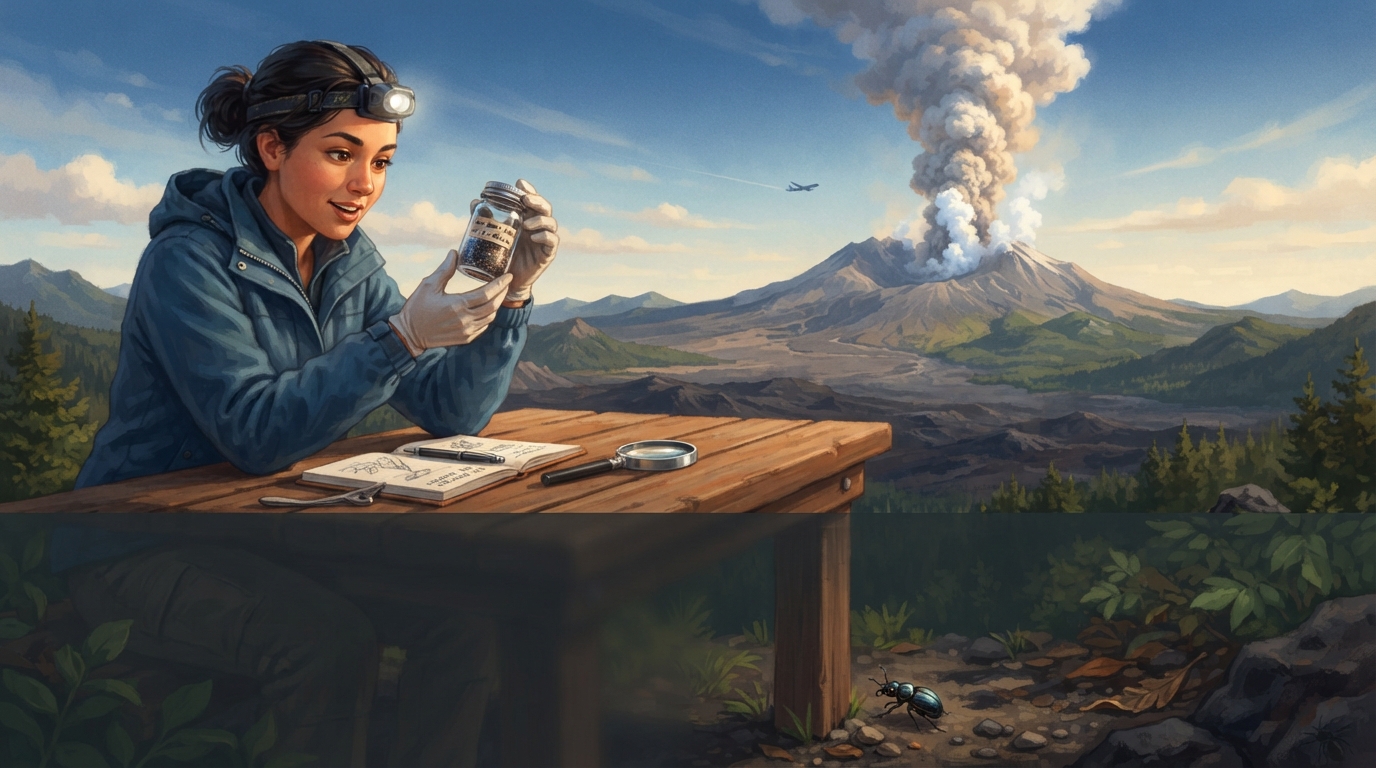
Some melted rock is runny, like warm syrup. Gas bubbles can slip out easily, and lava often pours across the ground. Other melted rock is thick and sticky, like very stiff dough. Its bubbles get trapped. They grow, push, and may burst out with ash. Ash is not soft fireplace fluff. It is gritty dust made from tiny bits of rock, minerals, and glass.
Tiny Ash, Towering Cloud
Dragon-Fire to Black Stone
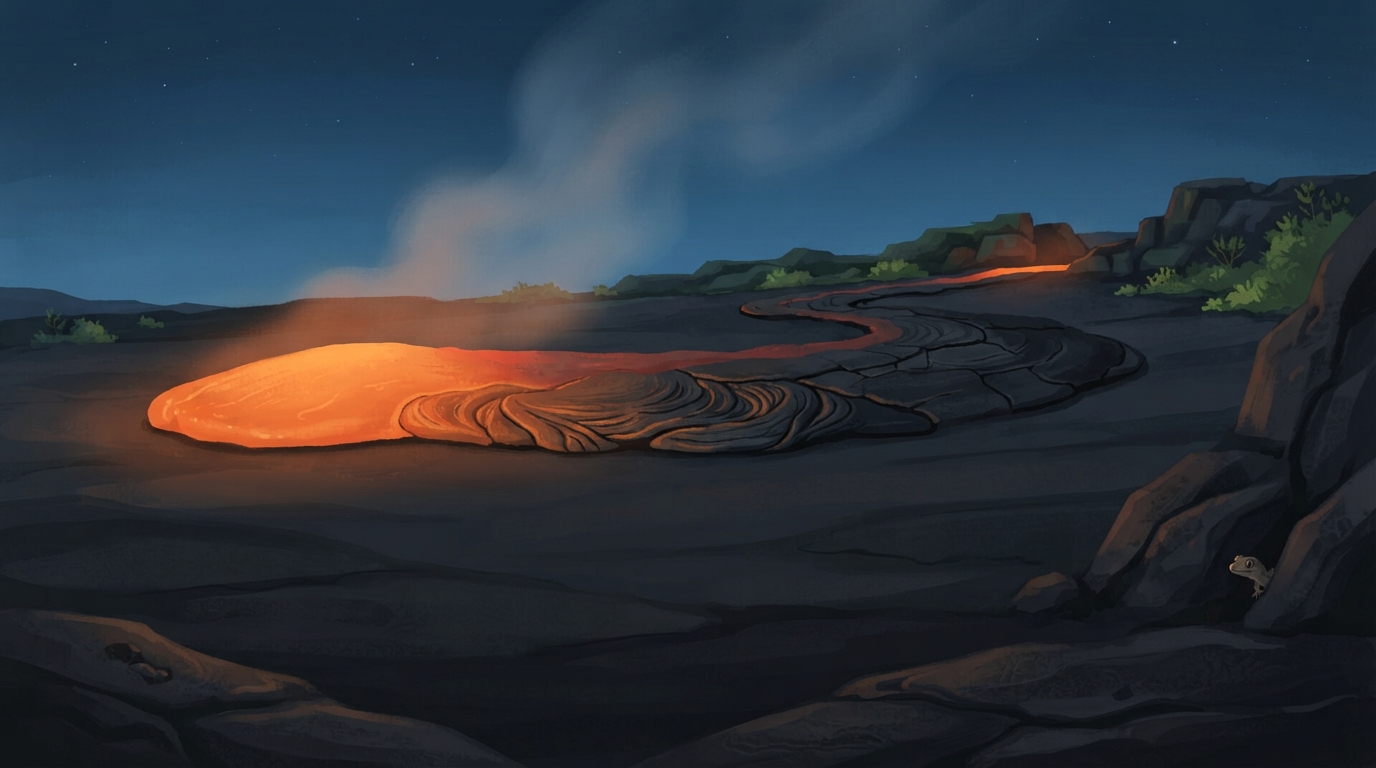
A glowing lava flow may look like fire. But it cools, cracks, and turns into brand-new ground. Follow this amazing builder from orange heat to hard black rock.
Islands, One Pour at a Time
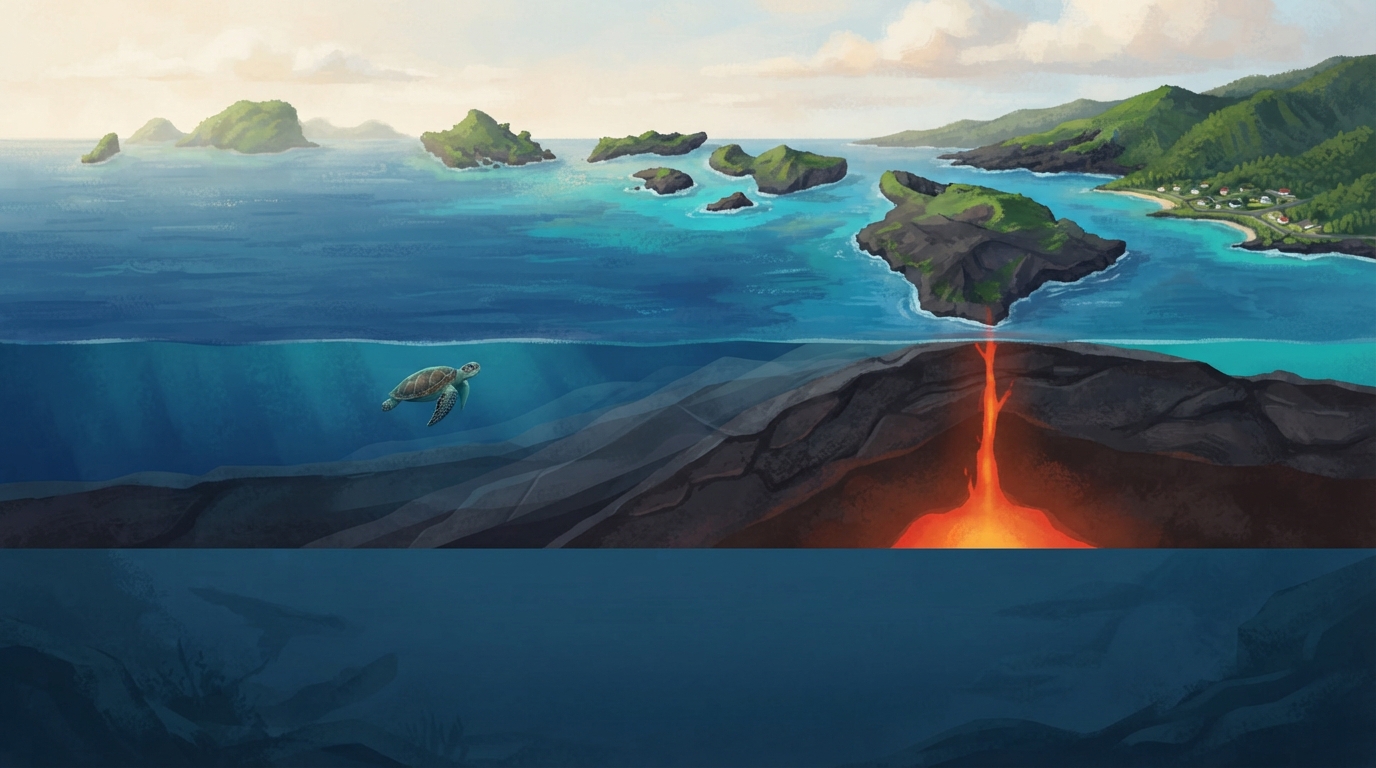
Imagine a giant rocky conveyor belt moving slowly. The Pacific Plate is a huge moving piece of Earth’s outside rock. It passed over a hot spot below, where magma rose again and again. Each volcano added more land. Older islands sit to the northwest. The Island of Hawaiʻi is younger and still growing. These islands are also living homes, with Native Hawaiian names, people, and stories.
Green from Black
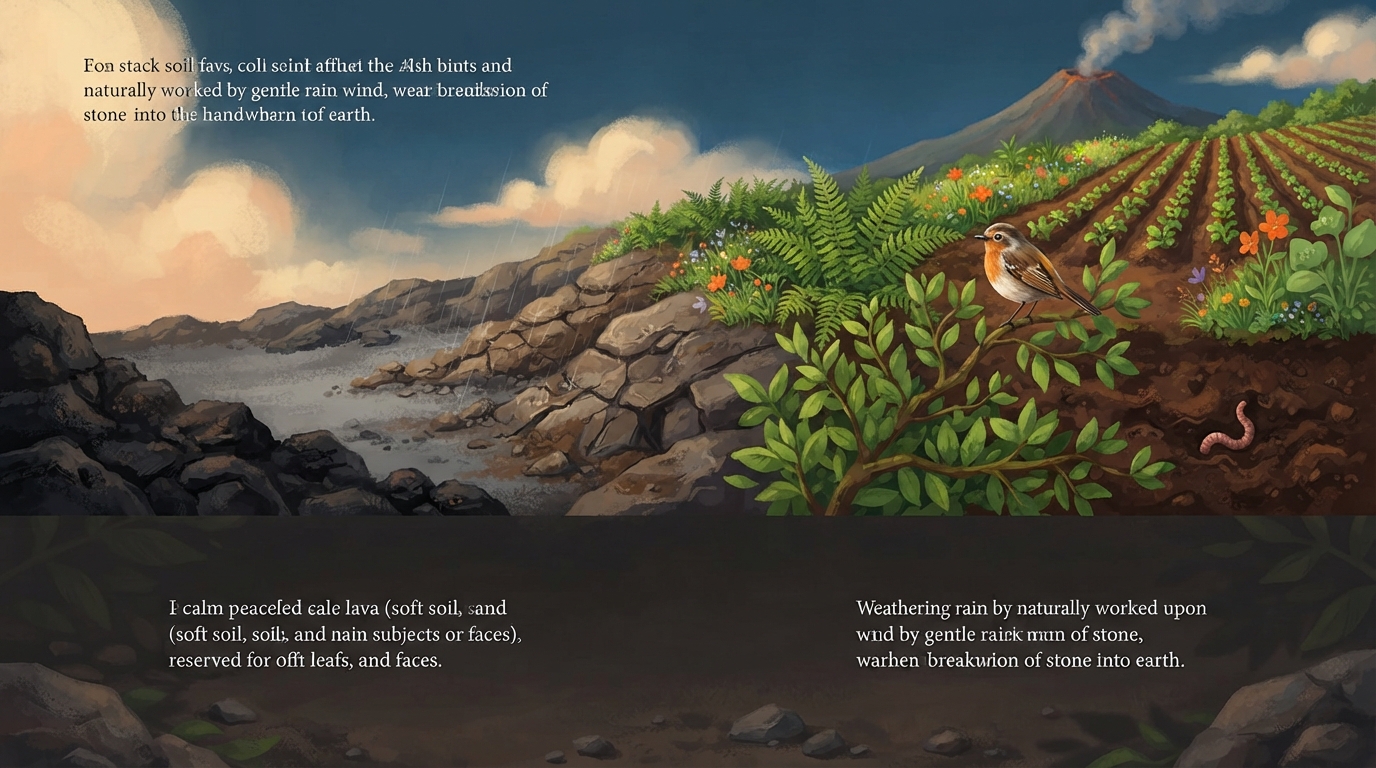
Fresh volcanic rock can seem as empty as a new sidewalk. Rain, wind, and tiny living things slowly break it apart. This is called weathering. Over time, ash and rock can release helpful plant food called nutrients. Soil begins to form, and ferns, flowers, and crops may grow. But fresh ash is gritty rock-and-glass dust, not soft fireplace ash. It can harm living things, so people keep it out of eyes and lungs.
Make a Volcano Layer Stack

Build a paper model to see how many eruptions can make one mountain.
Check your wonder
New words
Where we looked
This book was researched using trusted science information from the U.S. Geological Survey, NOAA, NASA, and the Smithsonian Global Volcanism Program.
The end
Now you know that volcanoes are paths from Earth’s hot inside to its cool surface. They can be powerful, and they can build brand-new land. Keep wondering: what other changes is our busy planet making beneath your feet?