When the Sky Turns On
Follow the Sun’s breath all the way to Earth’s dancing lights.
21 pages · Ages 8-10 · EN
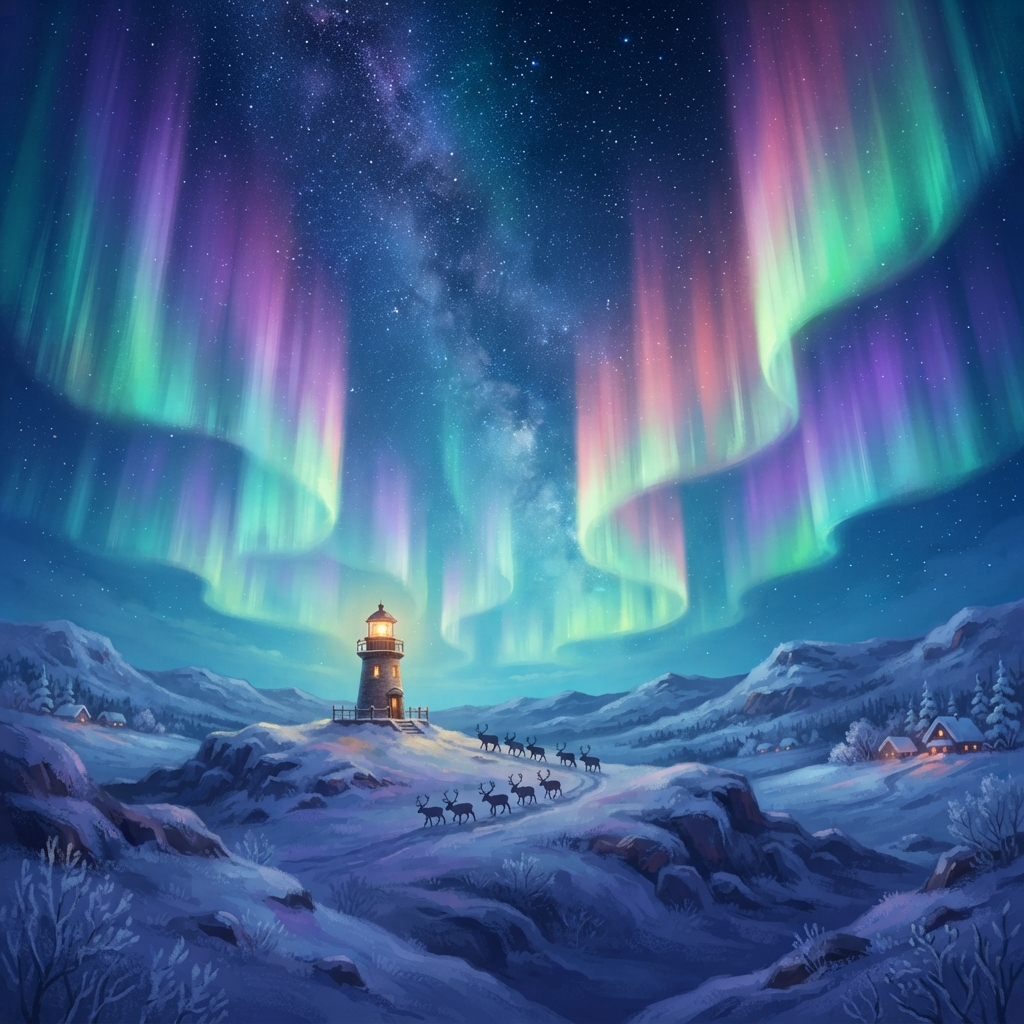
When the Sky Turns On
When the Sky Turns On
For every child who looks up and wonders why.
What's inside
The Sun Sends a Secret The Shield Starts to Glow The Lights Have Many Homes
The Sun Is Not Still
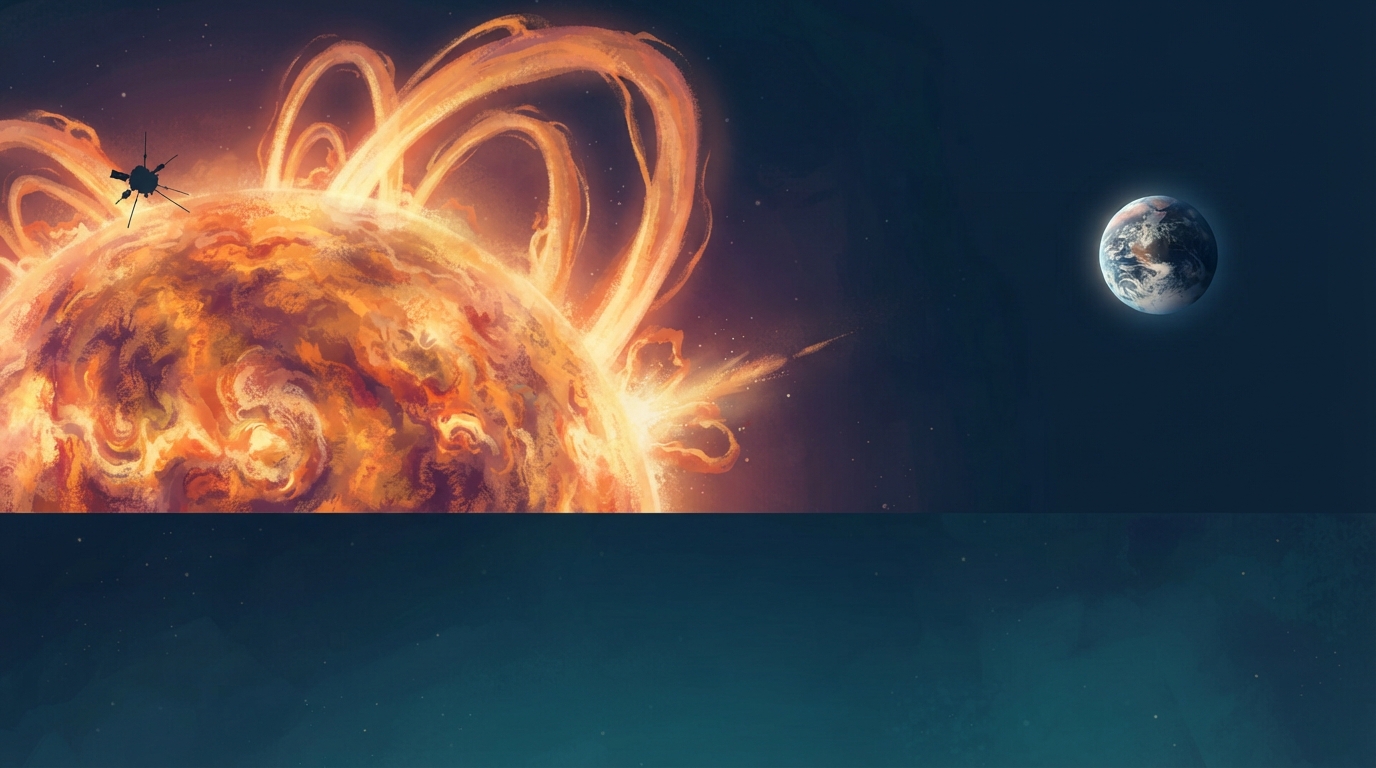
The northern and southern lights begin far from any snowy field—at the Sun. Our star looks calm from Earth, yet its surface twists, boils, and sends material outward. Follow that secret trip, and you will discover why Earth’s sky can glow.
A Wind of Tiny Sparks
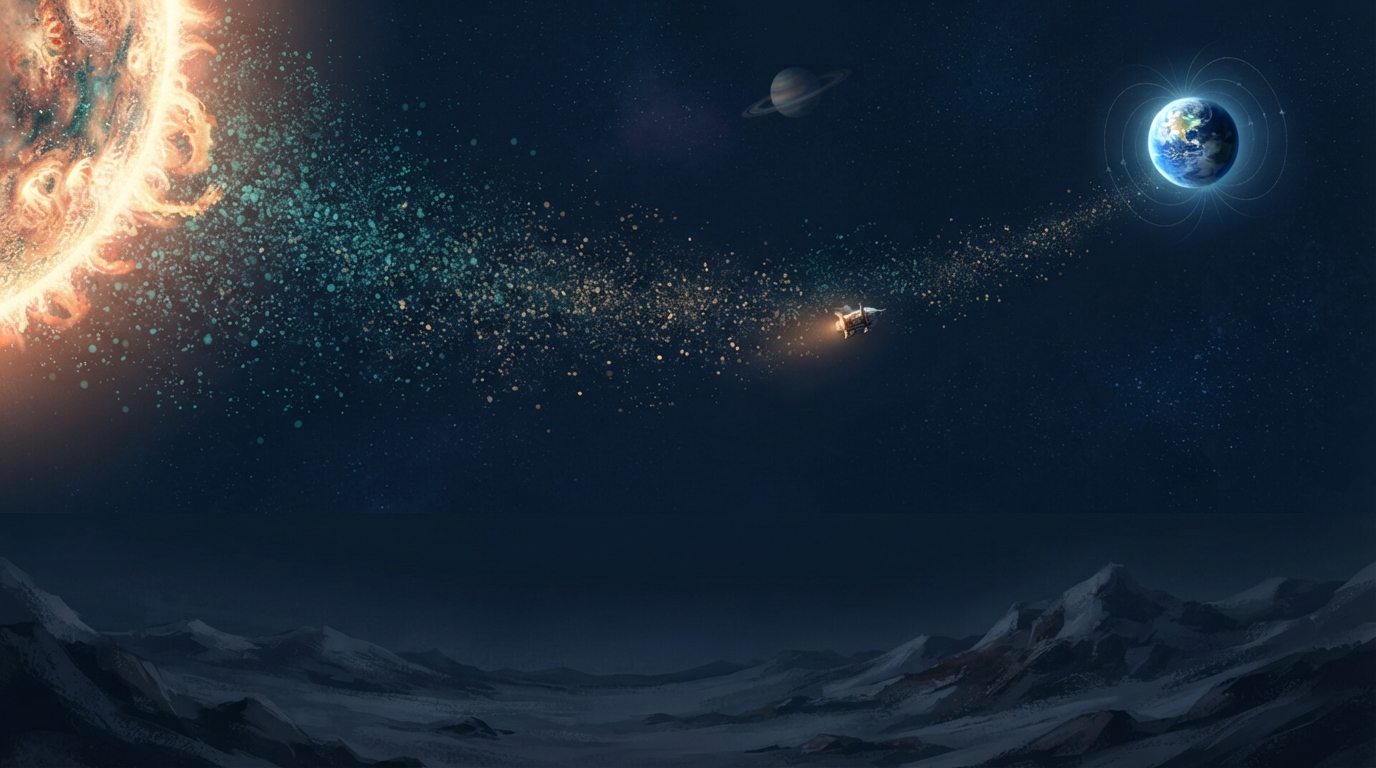
The Sun constantly releases a solar wind. It is not wind like the kind that lifts your hair. It is a stream of charged particles—tiny bits of matter carrying electric charge—flowing through space. Imagine dust blowing from a campfire, except the dust is far too small to see and travels far beyond the planets nearby. This stream spreads in every direction from the Sun. Earth sits inside it all the time. Most days, our planet’s invisible magnetic shield handles the flow quietly.
When the Sun Throws a Storm
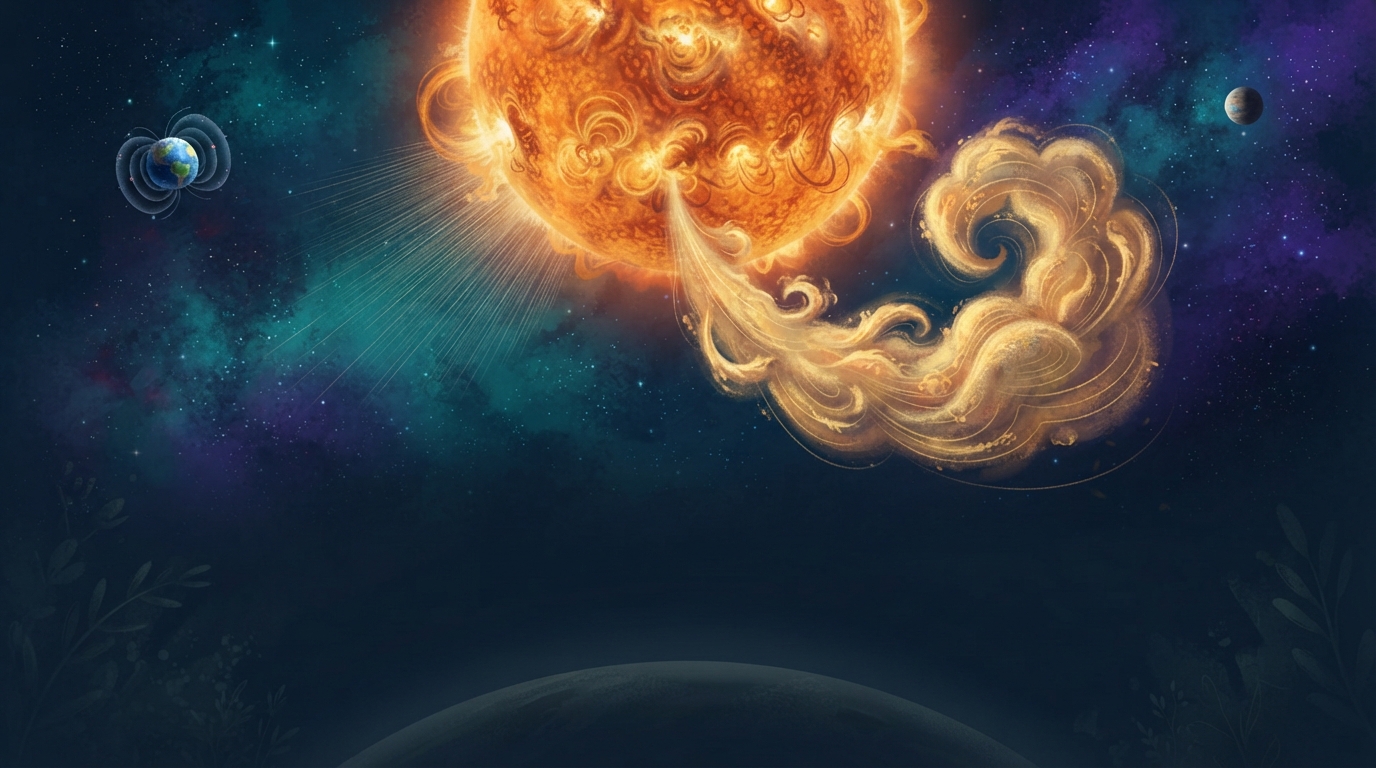
Sometimes the Sun sends much more than its usual solar wind. A giant cloud can blast away from its outer atmosphere. Scientists call it a coronal mass ejection, or CME: a huge moving cloud of plasma, super-hot charged gas, carrying magnetic fields with it. Picture a puff from a dandelion beside a whole armful of seeds released at once. A CME can carry about a billion tons of plasma and move around a million miles per hour. But it does not always aim at Earth. Auroras need solar material and magnetic fields to arrive in just the right way.
Across the Dark to Earth
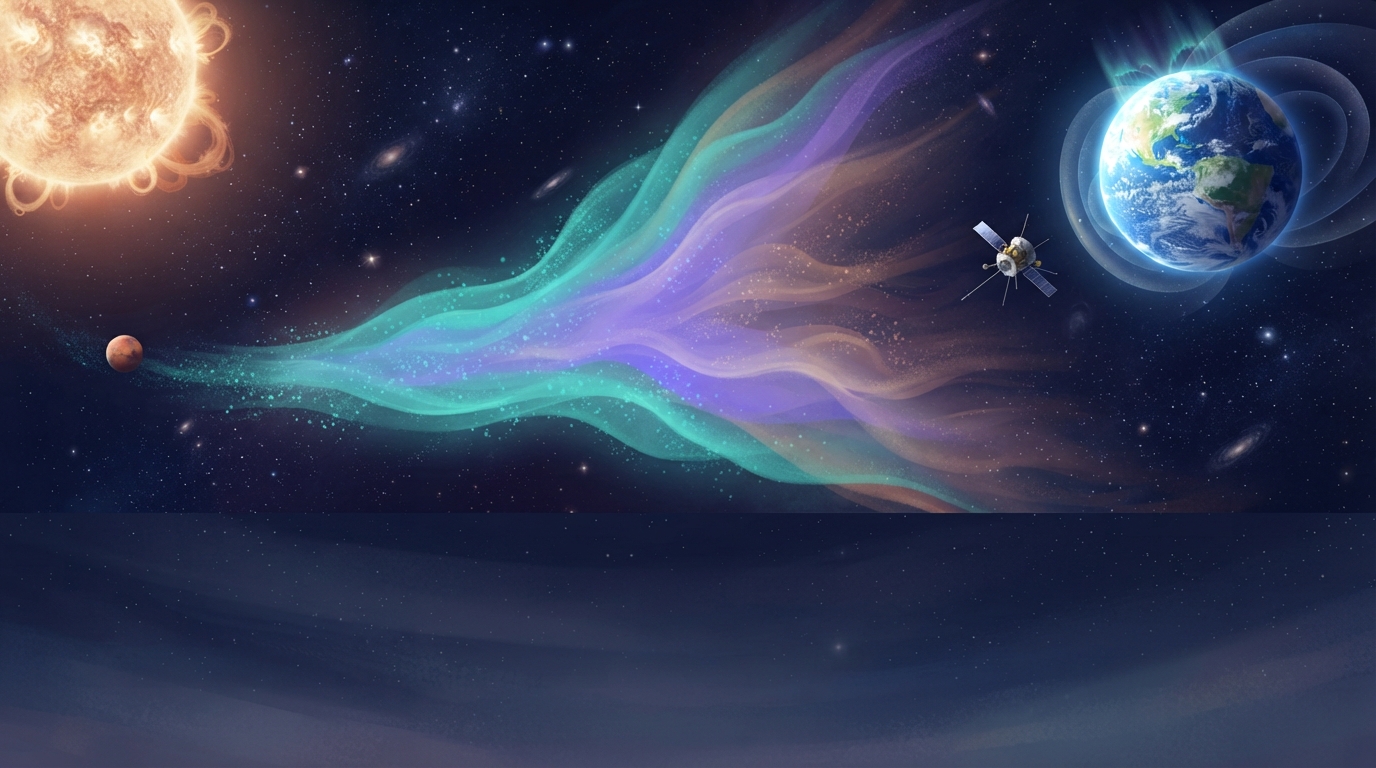
Space is huge, even for fast particles. If a CME heads our way, it may arrive in only a few hours, or it may take about three days. That sounds quick, but imagine racing across the darkness between worlds with no roads at all. The cloud spreads and changes as it travels. Scientists watch the Sun and spacecraft measurements to learn whether a solar storm is likely to meet Earth. So a bright solar eruption does not automatically mean auroras tonight. First, its material and magnetic fields must reach our planet in a helpful arrangement.
Earth’s Invisible Bubble
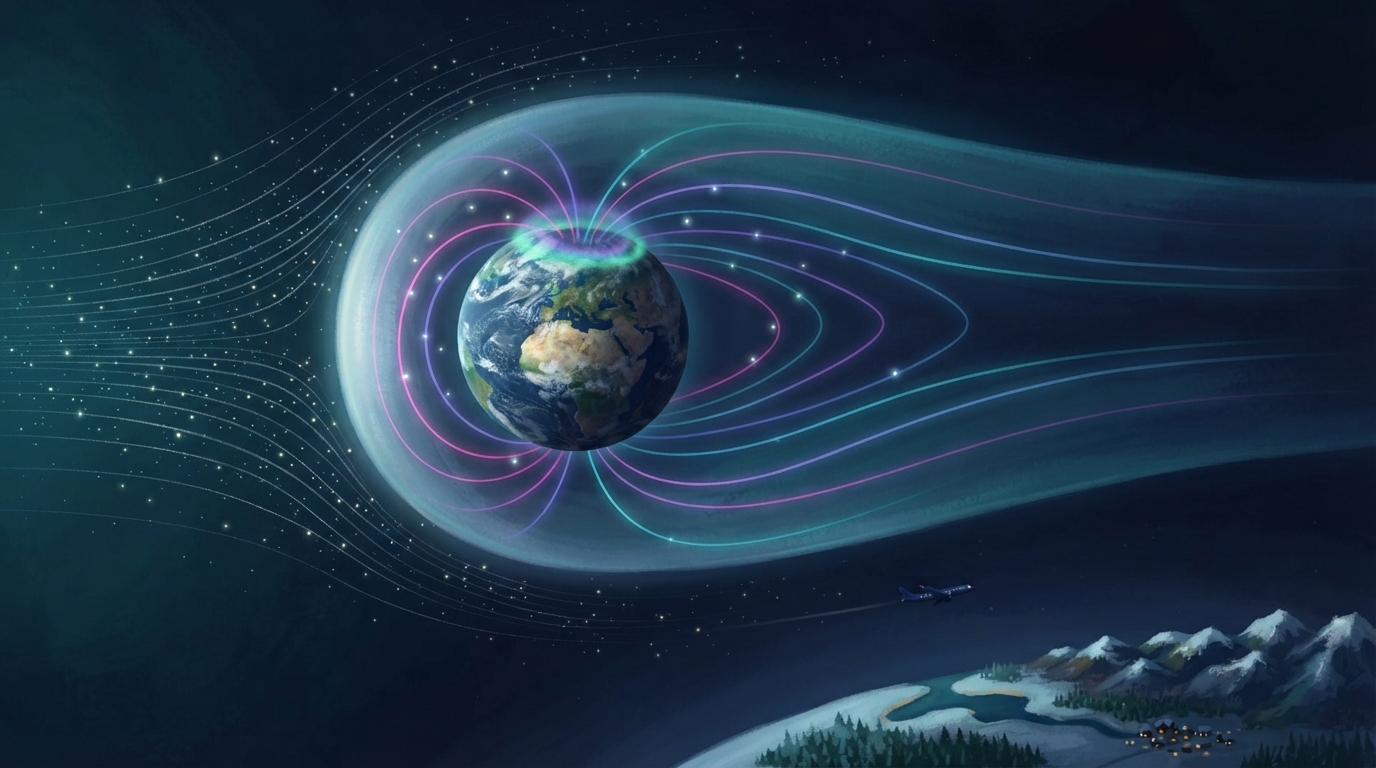
Earth acts a little like a giant bar magnet, but its magnet is invisible. Its magnetic field reaches into space and makes a protective region called the magnetosphere. When solar wind arrives, much of it bends around this bubble, like water splitting around a smooth stone in a stream. On the Sun-facing side, the bubble is squeezed closer to Earth. On the far side, it stretches into a long magnetic tail. This shield does not stop every particle. Later, you will see how some are guided toward the polar skies—high above the ground, never falling onto it.
Where the Shield Has Doorways
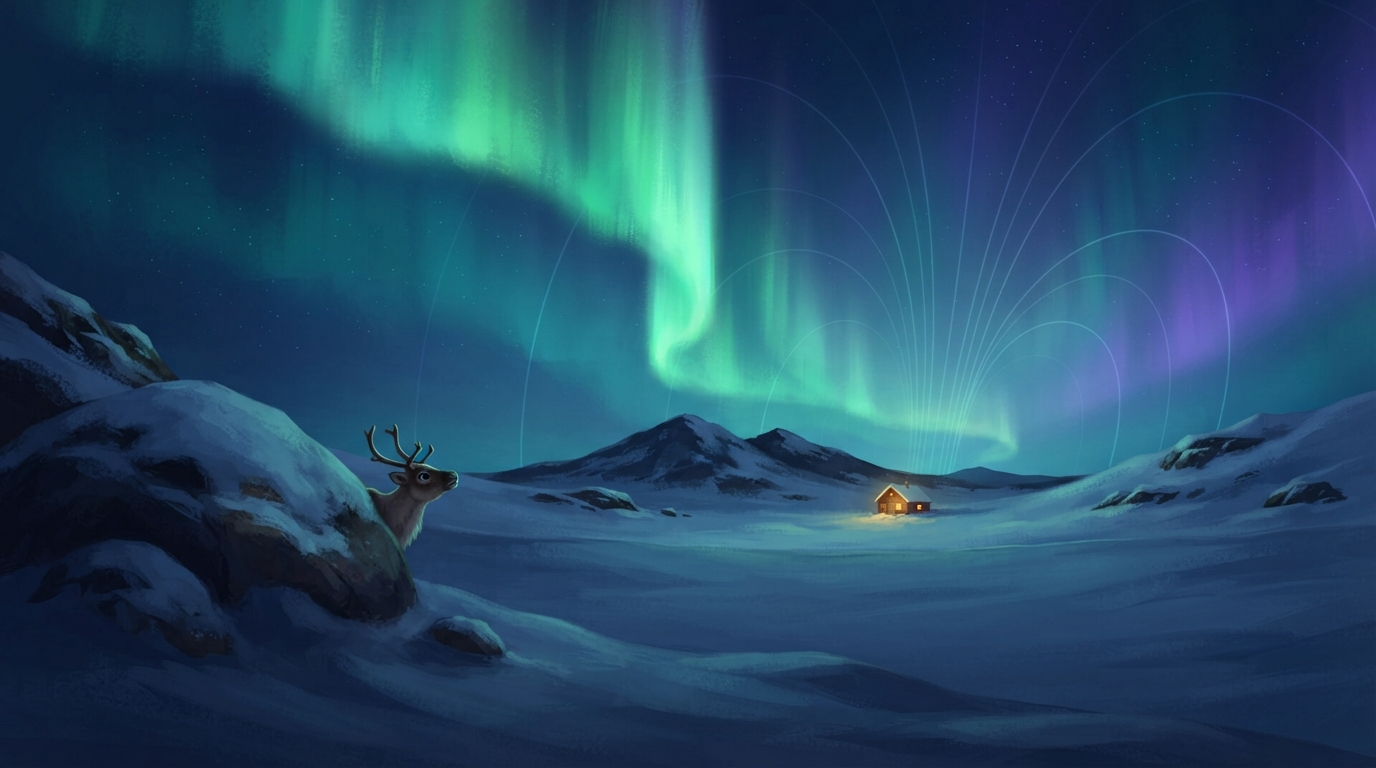
Earth’s magnetic shield is not a solid wall. It is more like a huge invisible set of curving slides in space. Near the magnetic poles, some speedy electrons are guided down those slides. Then the very high air begins to shine. You are about to see why the brightest sky lights gather in rings around our planet’s ends.
Down the Magnetic Slides
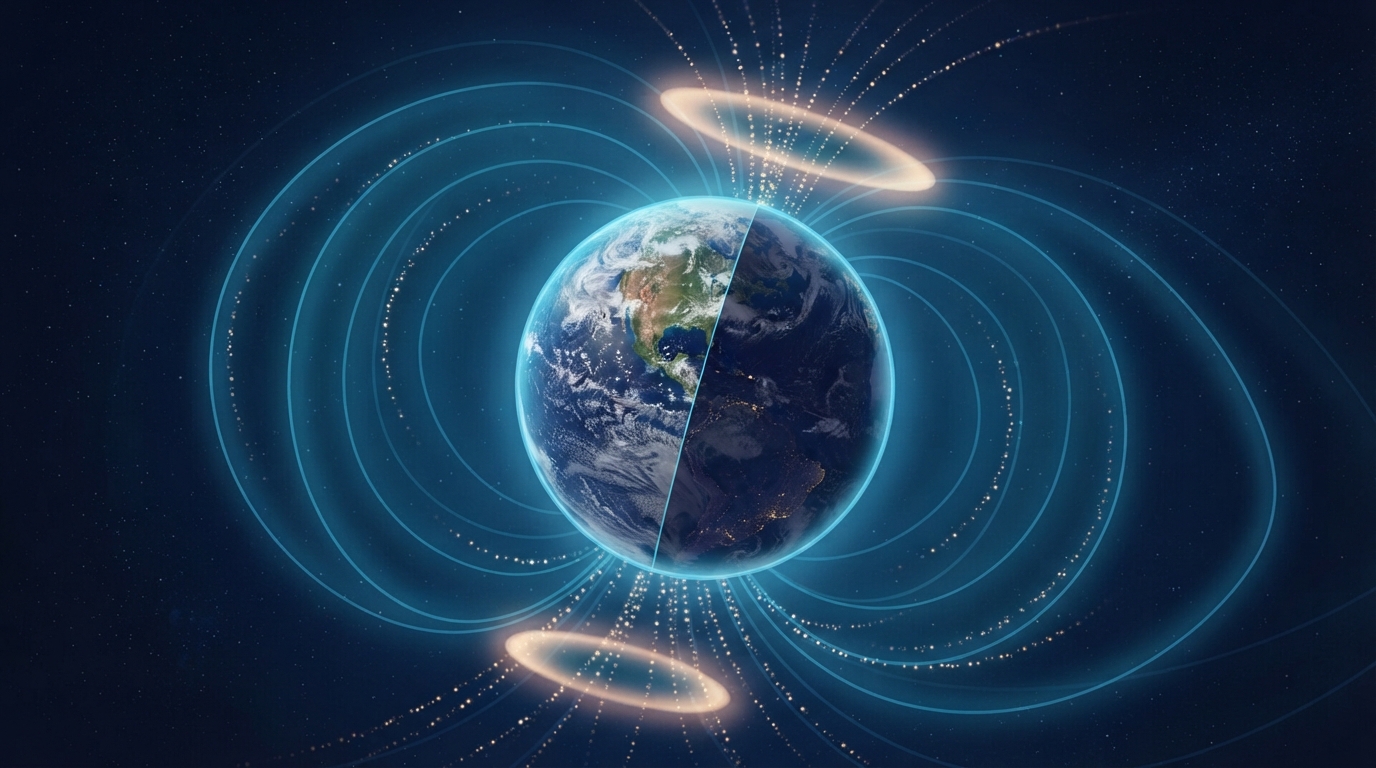
Imagine Earth wrapped in invisible playground slides. These are magnetic field lines: curved paths made by Earth’s magnetism. Energetic electrons, tiny particles carrying electric charge, spiral along them instead of flying straight on. The paths bend toward both magnetic poles. There, many electrons enter the upper atmosphere in broad ring-shaped zones called auroral ovals. So the lights do not happen only at the North Pole. A matching oval circles the south magnetic pole, too.
Crash, Calm, Glow
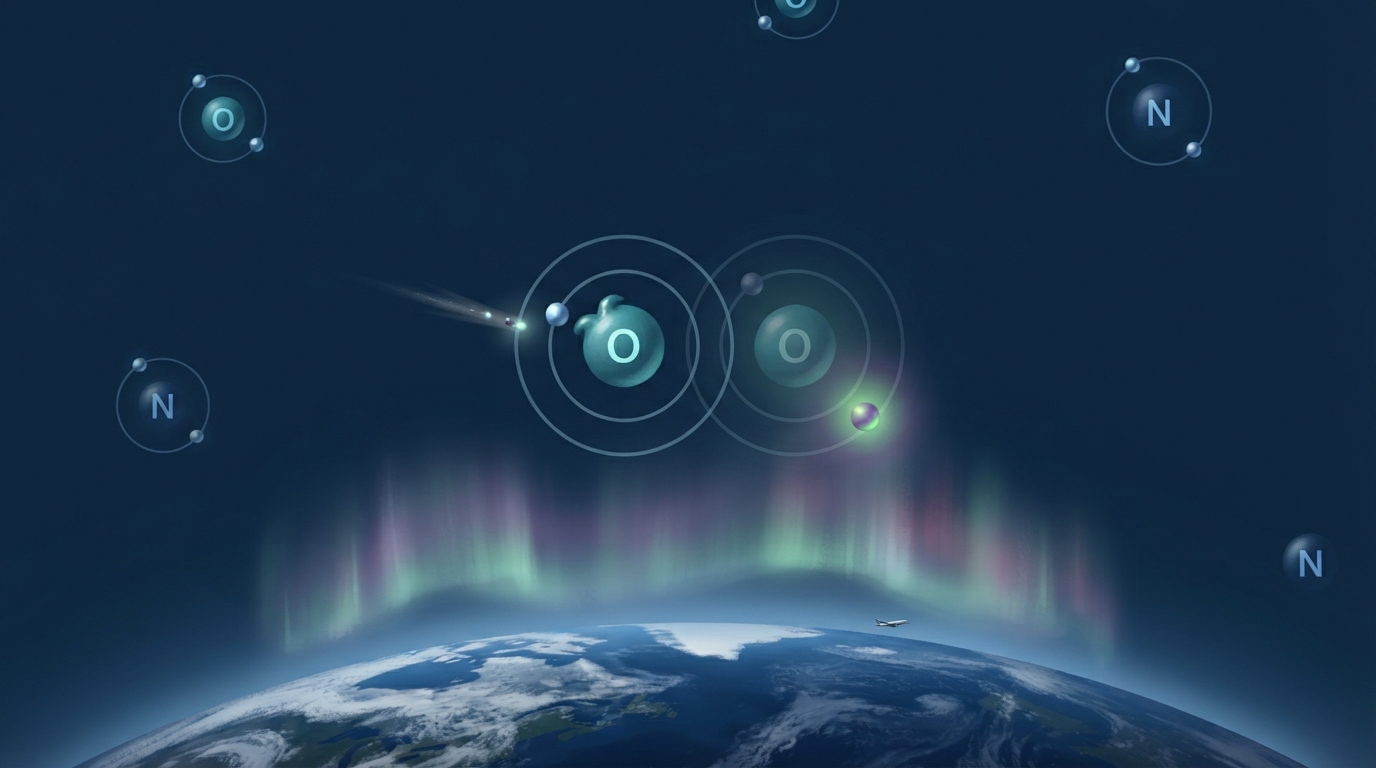
At the end of their magnetic ride, electrons meet the upper atmosphere. An electron can bump into an oxygen or nitrogen atom. That bump gives the atom extra energy, like a shaken bell holding a tiny ring inside. Scientists call this excited. The atom cannot keep that energy forever. As it settles, it releases a speck of light. Countless atoms doing this together make a curtain bright enough for you to see from the ground. The colored particles are not falling down; they are making the air glow.
Why Green Wins

Green is the aurora color you will see most often. It usually comes from oxygen about 100 kilometers above the ground. That is far beyond an airplane’s usual cruising height and near the edge of space. Between roughly 100 and 200 kilometers up, oxygen often has just the right conditions to release green light after an electron collision. Think of the sky as a giant, thin lamp shade: the light is made high inside it, not painted on its surface. The curtain may seem close, but it is astonishingly far overhead.
Red Above, Purple Below
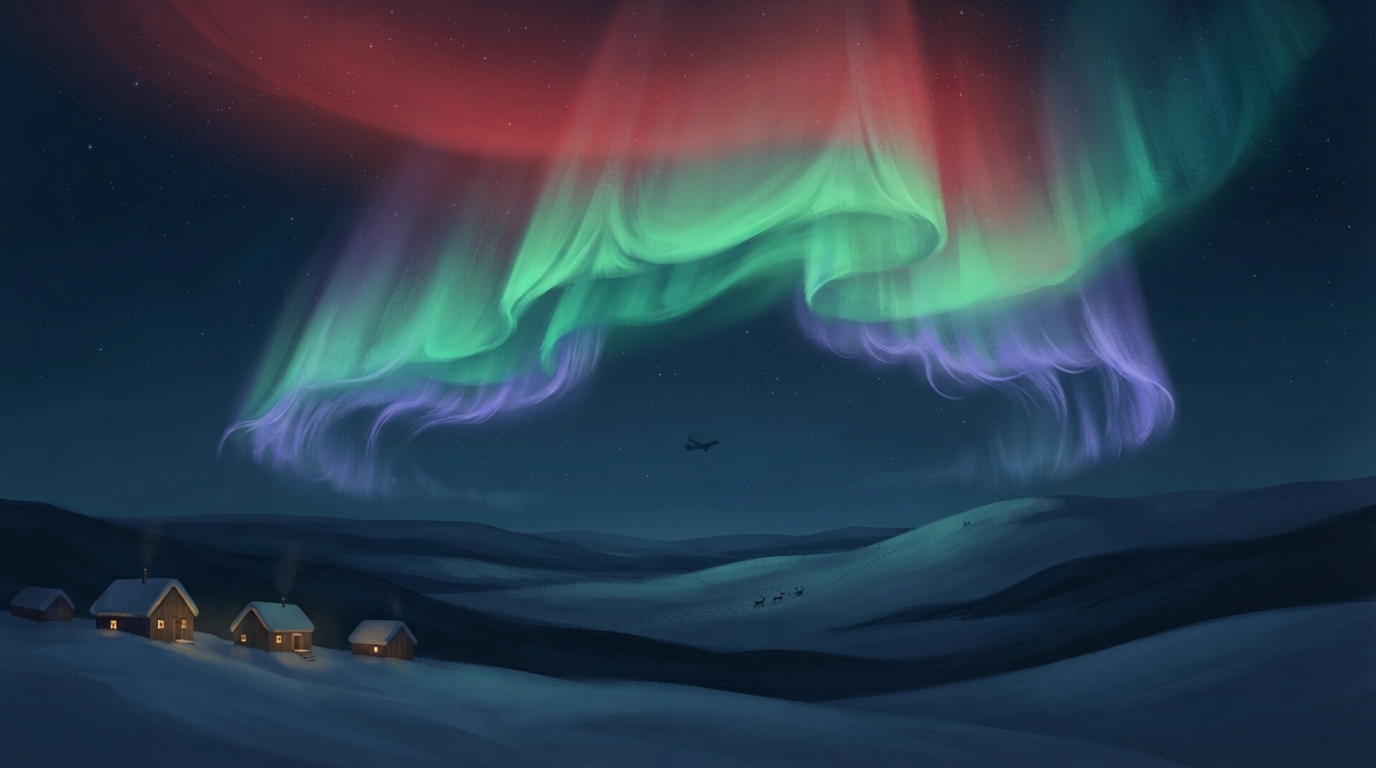
Aurora colors are clues about where the glowing air is. Oxygen higher than about 200 kilometers can make a faint, wide red glow. Lower down in the curtain, nitrogen can add blue and purple. Sometimes these colors blend, like light shining through layers of colored glass. But the gases are not dyed red, green, or purple. Each gas gives off certain colors when excited electrons bump it. Watch a real aurora closely and you may spot a red top, a green middle, and violet-blue fringes below—one sky show, made by different air gases.
Twin Crowns of the Planet
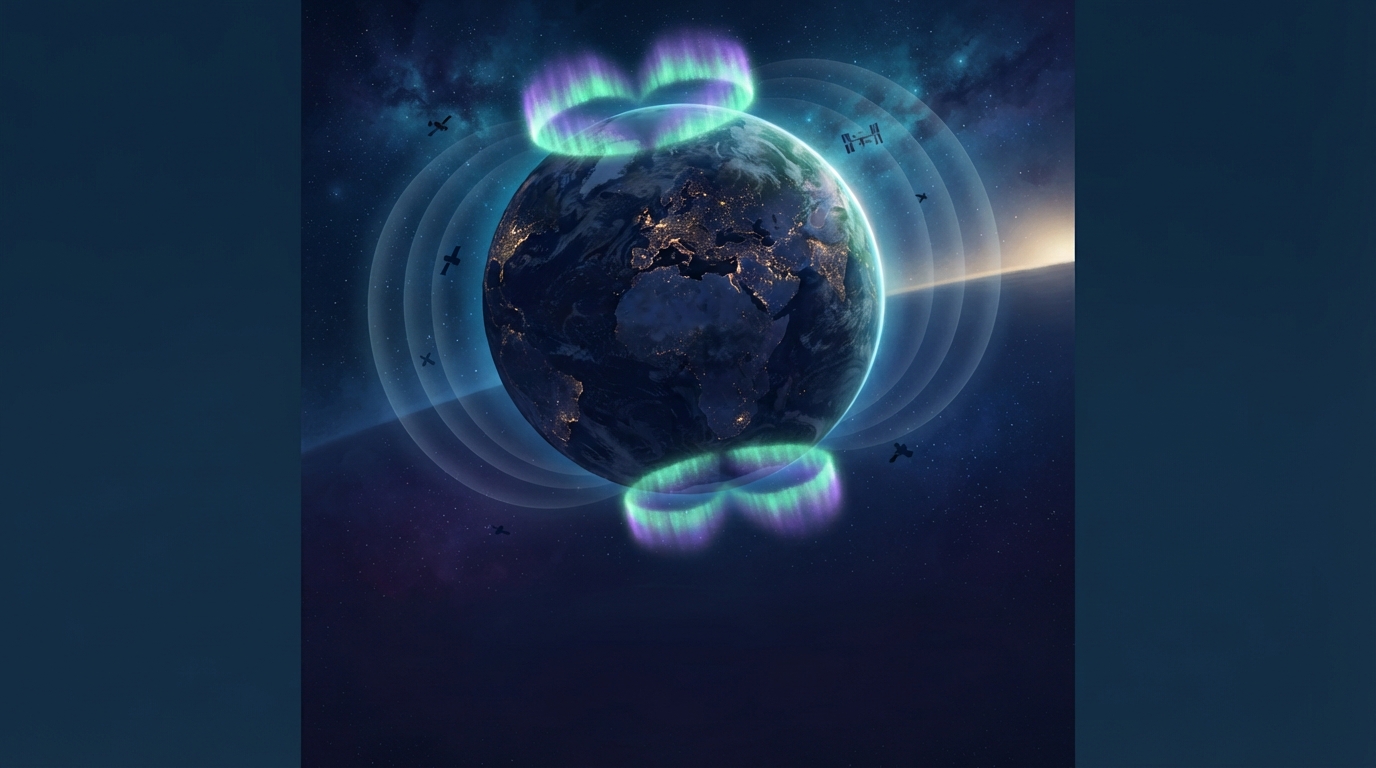
You have followed the lights from the Sun to Earth’s high air. Now zoom far out. Our planet can wear two glowing crowns at once—one around each magnetic pole. You will meet sky stories, visit giant auroras on other worlds, and make your own gentle plan for watching the night.
Fox Fires, Sky Stories
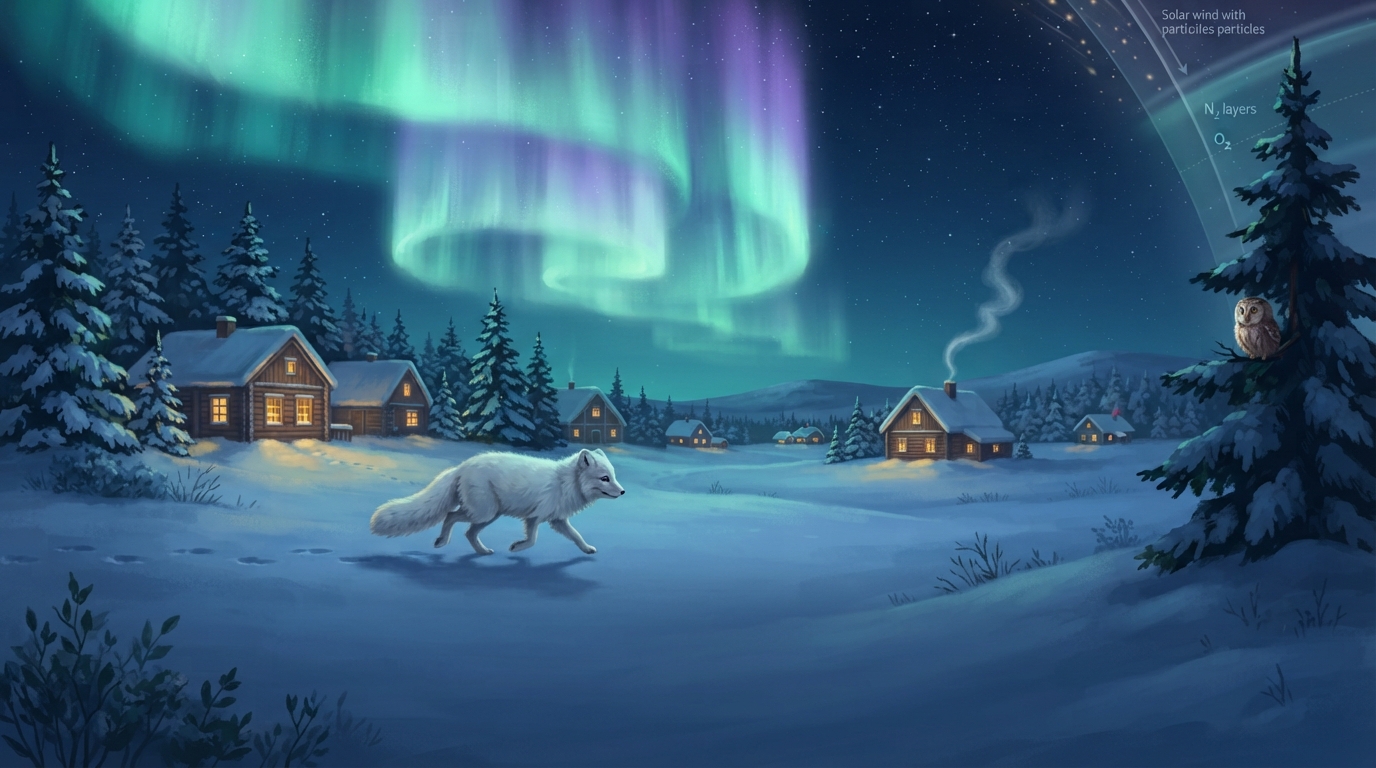
People have watched auroras for a very long time and made stories for their mystery. In Finland, the northern lights are called revontulet, or “fox fires.” One Finnish story says an arctic fox swept its tail across snow or mountains, sending sparks skyward. What a picture to carry into a cold night! Science tells a different kind of story: particles from space bump oxygen and nitrogen high above Earth, making those gases glow. A story shares wonder; science tests how the glow happens. Both begin with people looking up carefully.
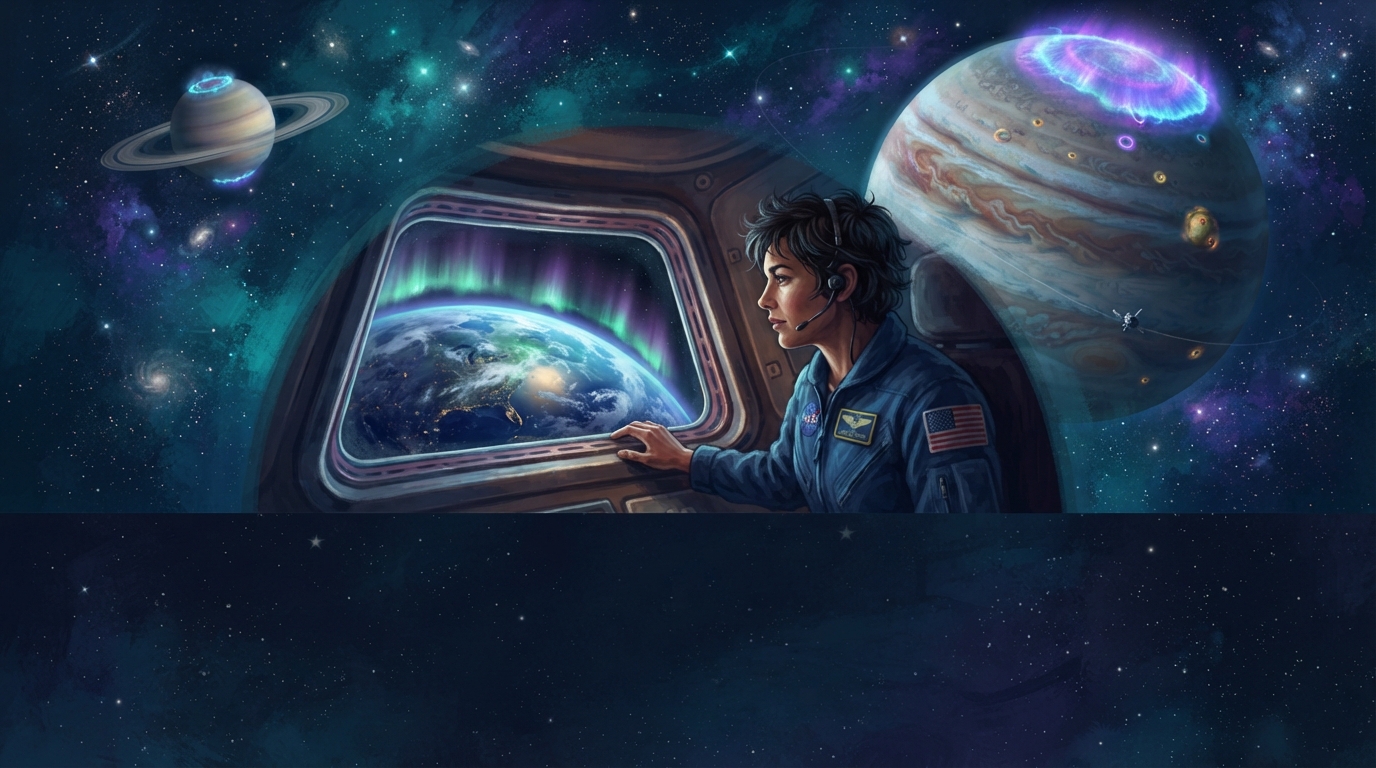
Bigger Lights in the Solar System
How to Catch the Sky Turning On

With an adult, make a warm, patient plan for an aurora-watching night.
Check your wonder
New words
Where we looked
This book was researched using NASA and NOAA science resources, including Space Weather Prediction Center information about the Sun, Earth’s magnetosphere, and auroras.
The end
Now you know that the sky can turn on when the Sun, Earth’s magnetic shield, and our high atmosphere work together. You know those shimmering colors are glowing gases, far above the ground, around both poles. Keep looking up—and keep wondering what invisible forces might be at work overhead.