The baby parenting quiz
Updated · Free · no sign-up · your answers stay on this device
Ten everyday moments with a baby (0 to 12 months). Pick what you would do, then see what the guidance says.
How to
- Pick what you would do. Each moment has four things a parent might do. Tap the one closest to you.
- Read what the guidance says. Right after each answer: what public health and paediatric guidance says, and a link to the page it comes from.
- See your result. Your percentage, what you already do, one or two things worth trying this week, and a storybook for the moment. In a hurry? Skip any moment.
The ten moments, and what the guidance says
Each moment has four things a parent might do. The one the guidance recommends is marked, and under it is what the guidance says and where it comes from.
1. Your six-week-old has fallen asleep in the car seat on the drive home. You are back now, and they look so peaceful.

- Recommended: Lift them out and lay them on their back in the cot in your room.
- Lay them in the cot on their side, in case they bring up some milk.
- Leave them in the car seat by the sofa. Moving them might wake them up.
- Settle them in the cot in their own room, where your noise won’t wake them.
What the guidance says: For every sleep, day and night: on their back, in their own clear, flat cot, in the same room as you for at least the first 6 months. No pillows, duvets, bumpers, loose blankets, soft toys, pods or nests.
Sources: American Academy of Pediatrics, How to Keep Your Sleeping Baby Safe: AAP Policy Explained (11 Sep 2026); NHS, Sudden infant death syndrome (SIDS) (25 Nov 2025)
2. It is 4 a.m. You have just fed your baby on the sofa. They are asleep on your chest, and your eyes keep closing.

- Tuck them among the sofa cushions beside you, so you can both doze.
- Recommended: Lay them on their back in the cot first, then let yourself rest.
- Keep holding them, and scroll your phone to keep yourself awake.
- Lean back with them on your chest. You’ll only close your eyes a minute.
What the guidance says: Never fall asleep with your baby on a sofa or armchair; it is one of the riskiest places for a baby to sleep. If you feel sleepy while holding them, put them on their back in their cot first.
Sources: American Academy of Pediatrics, How to Keep Your Sleeping Baby Safe: AAP Policy Explained (11 Sep 2026); NHS, Sudden infant death syndrome (SIDS) (25 Nov 2025); The Lullaby Trust, Co-sleeping with your baby (3 Aug 2026)
3. It is 3 a.m. Your two-month-old has cried for an hour. Fed, changed, rocked. You feel yourself getting angry.
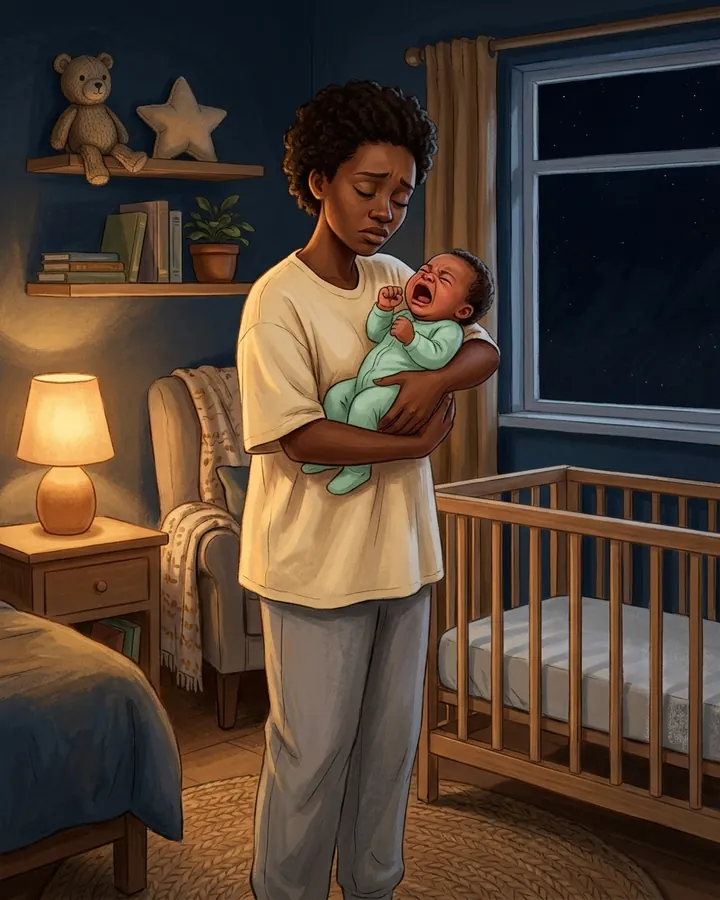
- Keep rocking and jiggling them, even though you are close to snapping.
- Try one more thing yourself: the pram up and down the hall, or a warm bath.
- Recommended: Lay them in the cot on their back, leave the room for ten minutes, then go back.
- Leave your partner asleep, since they have work. Keep going on your own.
What the guidance says: Crying peaks in the early months and is not your fault. If you feel angry, put the baby safely in the cot, step away for about 10 minutes, and call someone. Never shake a baby. If they seem unwell, call your doctor.
Sources: NHS, Soothing a crying baby (22 Apr 2026); American Academy of Pediatrics, Responding To Your Baby's Cries (20 Feb 2025); CDC, About Abusive Head Trauma (16 May 2024)
4. Your three-month-old cries whenever you put them down in the day. A relative warns you will spoil them by picking them up so often.
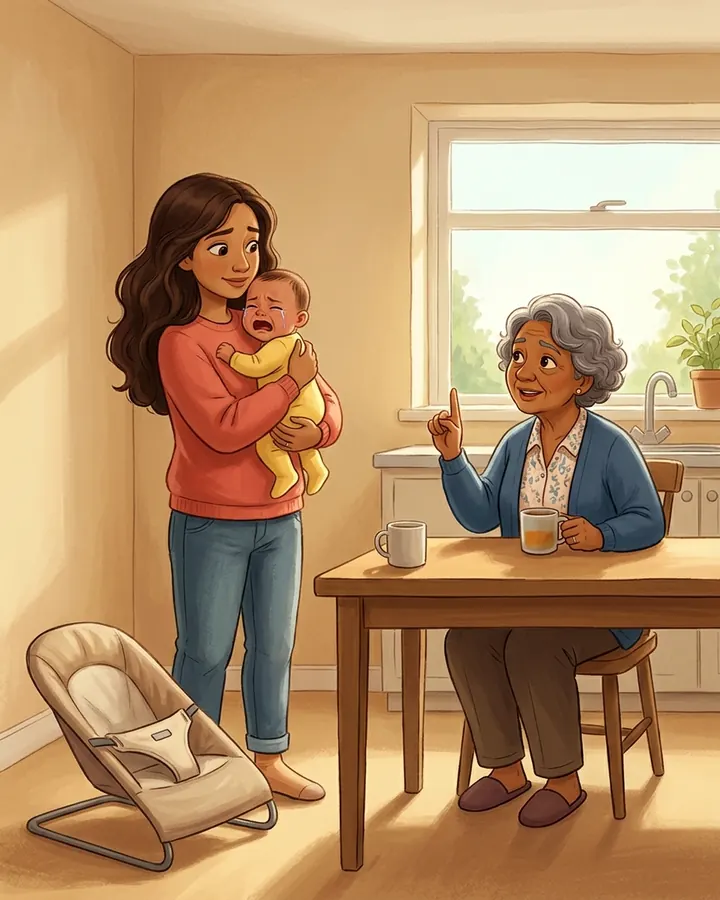
- Cut back on cuddles in the day, so they don’t get too used to being held.
- Try gas drops or gripe water, in case a sore tummy is making them cry.
- Leave them to cry a little longer each time, so they learn to settle.
- Recommended: Keep going to them, and pick them up whenever they need you.
What the guidance says: You cannot spoil a young baby with attention. Babies whose cries are answered quickly tend to cry less overall, and cuddles help them feel secure enough to become more independent.
Sources: American Academy of Pediatrics, Responding To Your Baby's Cries (20 Feb 2025); NHS Best Start in Life, Baby myths and facts (undated page)
5. Your seven-month-old points at the dog, squeals at you, then looks back at the dog.
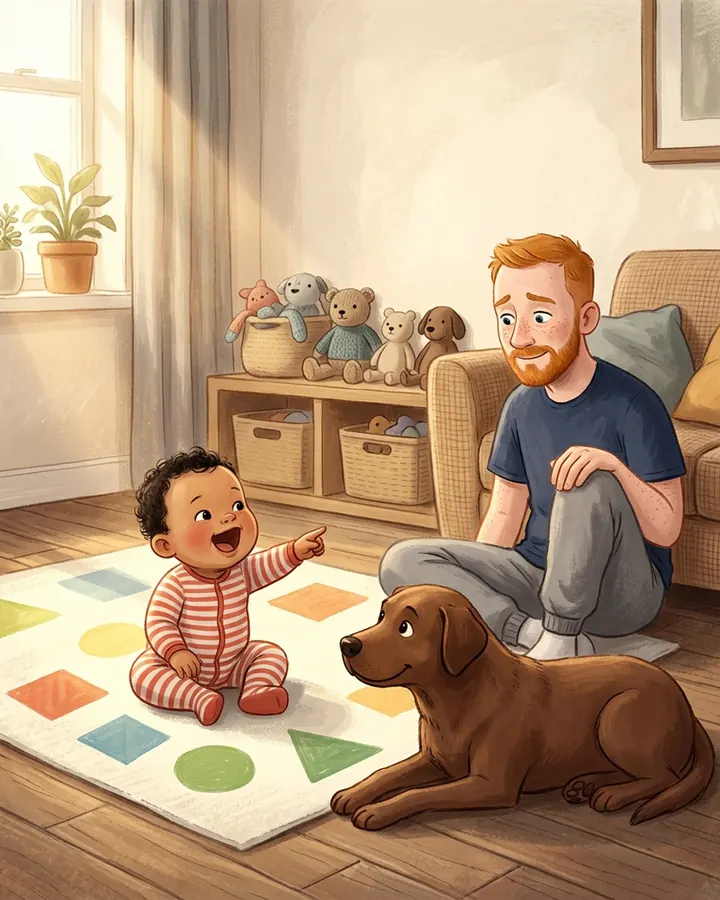
- Smile and say “Mm-hm.” Real chats can wait until they can talk.
- Recommended: Look where they point and say “Yes, a dog!” Then wait for their reply.
- Smile, then finish reading on your phone. You’ll chat properly later.
- Find an animal video later, so they can hear all the animal names.
What the guidance says: When your baby babbles, points or looks at something, answer with eye contact and words, and name what they see. This back-and-forth builds language and the brain long before they can talk.
Sources: Harvard Center on the Developing Child, Serve and Return (undated page); NHS Best Start in Life, First sounds: 0 to 6 months (undated page); American Academy of Pediatrics, Kids & Screen Time: The 5 C's Questions to Ask for Infants (30 Apr 2024)
6. Your four-month-old cannot follow a story yet. Your partner wonders if reading to them is worth it.
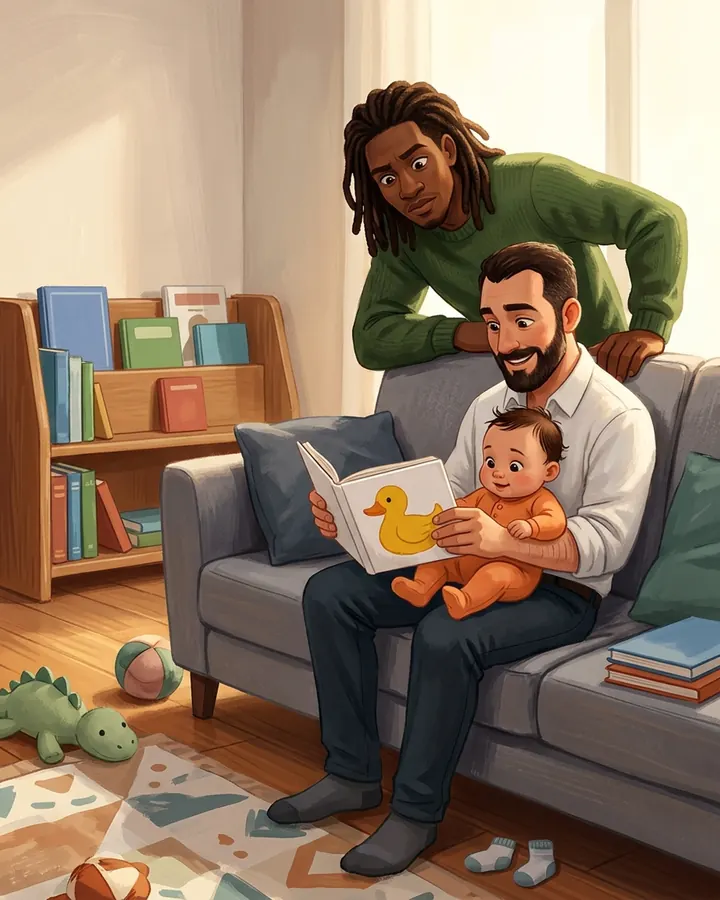
- Recommended: Share a short book every day, baby on your lap, pointing as you go.
- Play them a nursery-rhyme video instead, so they still hear words.
- Read to them at the weekend when there’s time, and skip the busy days.
- Wait until they’re old enough to sit still and follow a story.
What the guidance says: Read together every day from birth, even for a few minutes, with your child on your lap. A printed book you share does more than a screen. If they look away or fuss, stop; it should be fun.
Sources: American Academy of Pediatrics, Beyond Literacy: Shared Reading Starting at Birth Offers Lifelong Benefits (29 Sep 2024); American Academy of Pediatrics, How to Share Books With Your Baby (29 Sep 2024); American Academy of Pediatrics, Brush, Book, Bed: How to Structure Your Child's Nighttime Routine (2 Feb 2024)
7. Your eight-month-old plays on the floor while the TV is on for company. Nobody is really watching it.

- Leave it on low. It’s company, and they’re not really watching it.
- Leave it on, but sit with them and chat about what’s on the screen.
- Recommended: Switch it off, and chat or sing to them while they play.
- Switch to a baby channel, so at least what’s on is made for them.
What the guidance says: Switch screens off when nobody is watching. TV in the background pulls attention from talk and play, and a lot of it is linked with slower language in under-5s.
Sources: Canadian Paediatric Society, Screen time and preschool children: Promoting health and development in a digital world (24 Nov 2022); American Academy of Pediatrics, Kids & Screen Time: The 5 C's Questions to Ask for Infants (30 Apr 2024); UK government, Best Start in Life, Screen time guidance for under 5s (29 Jun 2026)
8. Your four-month-old is waking more at night. A friend says to start solids to help them sleep.

- Stir a little baby cereal into the bedtime bottle to fill them up.
- Start a little baby food now, so they feel fuller and sleep longer.
- Take the night waking as the sign they’re ready, and start this week.
- Recommended: Wait until about 6 months, when they can sit up and pick up food.
What the guidance says: Start solid food at around 6 months, when your baby can sit up and hold their head steady, pick food up to their mouth, and swallow it. Starting early will not help them sleep through the night.
Sources: NHS, Your baby's first solid foods (19 Feb 2026); American Academy of Pediatrics, When Can Babies Start Solid Foods? Readiness & Feeding Tips (23 Jun 2026); American Academy of Pediatrics, Healthy Sleep Habits: How Many Hours Does Your Child Need? (7 Aug 2026)
9. Your six-month-old has no eczema and is enjoying first foods. You feel nervous about trying peanut and egg.
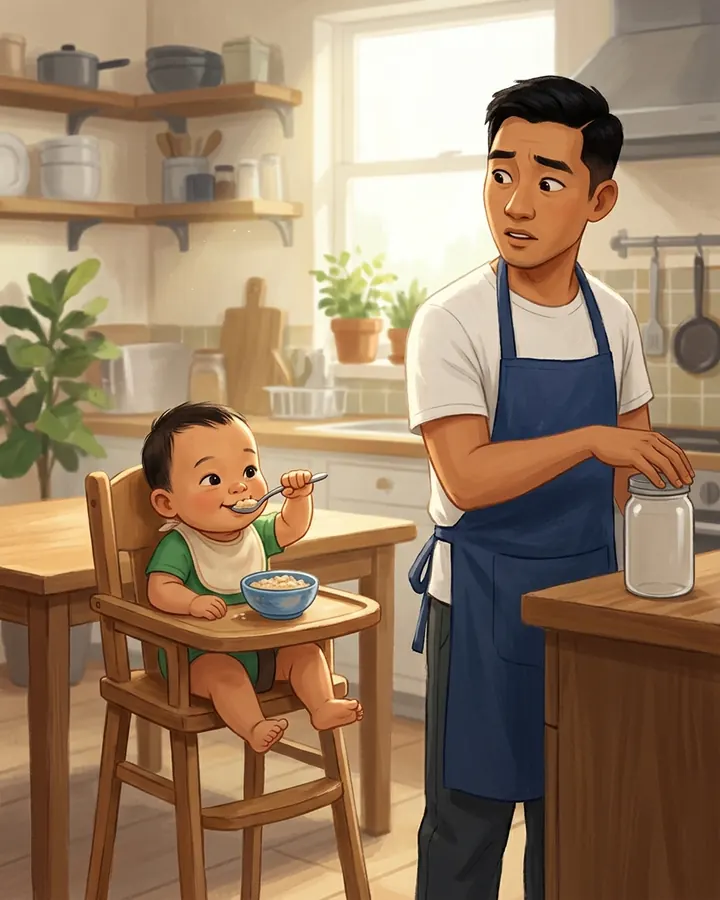
- Recommended: Stir a little smooth peanut butter into porridge, and keep offering it.
- Try egg, peanut and fish together in one meal, to get it over with.
- Give them a little spoonful of peanut butter to try, straight from the jar.
- Wait until after their first birthday, just to be on the safe side.
What the guidance says: From around 6 months, offer egg and peanut (smooth, spread thin or ground) one at a time, and keep offering them. Waiting longer does not prevent allergy. With eczema, a known allergy or allergies in the family, ask your doctor first.
Sources: NHS, Food allergies in babies and young children (22 Oct 2024); American Academy of Pediatrics, When Can Babies Start Solid Foods? Readiness & Feeding Tips (23 Jun 2026); NHS, Foods to avoid giving babies and young children (18 Feb 2026)
10. Your three-week-old fusses after a minute every time you put them on their tummy.

- Skip it for a few weeks. They clearly don’t like it yet.
- If they doze off on their tummy, leave them there. They’re finally settled.
- Do one short go a day, and stop as soon as they start to fuss.
- Recommended: Little and often: a few minutes at a time, on the floor or on your chest.
What the guidance says: Give awake, watched tummy time from the first days, a few minutes at a time, building to at least half an hour a day. It builds the muscles for rolling, sitting and crawling. Sleep is always on the back.
Sources: American Academy of Pediatrics, Back to Sleep, Tummy to Play: Give Your Baby a Safe, Strong Start (8 Sep 2026); NHS, How to keep your baby or toddler active (9 Mar 2023); World Health Organization, To grow up healthy, children need to sit less and play more (24 Apr 2019)
11. Your eight-month-old wakes twice a night. You are exhausted and wondering how to help everyone sleep.

More than one good answer. The AAP suggests putting babies down drowsy and not rushing in at night. NHS advice says babies need their cries answered. A trial found no harm or benefit at age 6 from a sleep programme in infancy.
- Doze with them on the sofa, since that’s the only place they settle.
- A good answer: Wait a few minutes when they stir, then go in if they still need you.
- A good answer: Go to them each time, and settle them with a cuddle or a feed.
- A good answer: Put them down drowsy but awake, so they learn to drift off in the cot.
What the guidance says: There is more than one good way to settle a baby at night, as long as sleep is safe: on their back, in a clear cot, in your room for at least the first 6 months. Choose what suits your family.
Sources: American Academy of Pediatrics, Getting Your Baby to Sleep (4 Jun 2024); NHS Best Start in Life, Baby myths and facts (undated page); Pediatrics (Price and others), Five-year follow-up of harms and benefits of behavioral infant sleep intervention: randomized trial (10 Sep 2012); NHS, Sudden infant death syndrome (SIDS) (25 Nov 2025)
General guidance from the bodies named, not medical advice. For your own child, ask your doctor or health visitor.
How the result works
- Your points: each moment is worth up to 10: 10 for what the guidance recommends, 7 for reasonable, 3 for common but often backfires, 0 for what the guidance says not to do. A moment you skip scores 0.
- Your percentage: your points out of the most you could score, so ten moments at 10 each make 100%.
- The moments you skipped: each with what the guidance recommends, so you still see what helps.
- You already do: the moments you answered as the guidance recommends.
- Worth trying this week: one or two small steps, each with its source.
- Your style, in one line: whether your answers lean warm, firm, both, or a mix.
Where the answers come from
Every answer is scored against public guidance from health and paediatric bodies, and each one links to the page it comes from, with the date printed on that page. Where the bodies disagree, the moment is not scored: it shows “more than one good answer”. Where the evidence is thinner (expert advice or small studies), the answer says so.
Most moments are painted; some show their four choices as words instead.
No doctor or psychologist has checked the quiz; the sources are there so you can read them yourself. General guidance from the bodies named, not medical advice. For your own child, ask your doctor or health visitor.
Questions
Who decides the scores?
The guidance does. Each answer is scored against what public bodies such as the NHS, the American Academy of Pediatrics and the CDC say, and every answer links to its source with the page’s date.
Has a doctor checked this quiz?
No. We wrote it from the published guidance and link every answer to the page it comes from, so you can read it yourself.
Is this medical advice?
No. It is general guidance from the bodies named. For your own child, ask your doctor or health visitor.
What happens to my answers?
They stay on this device. On a quiz a friend shared, only the points per question are sent, with no name and no answers, so the maker sees how friends did.
Why are some topics not scored?
Where the guidance bodies disagree, such as time-outs or sleep training, we show “more than one good answer” instead of a score.
How does making your own work?
Type a few moments and our AI writes the questions from our checked guidance. You choose which to keep, then share a link. Scores still come from the guidance.
Is it free?
Yes. Taking and sharing the quizzes is free with no sign-up. Making your own is one a day without an account and five a day with a free one.
Your answers stay on this device: the quiz is scored in your browser and nothing you pick is sent.
Explore storybooks: free illustrated storybooks in your family's language.
Enable JavaScript to take the quiz.