The preschooler parenting quiz
Updated · Free · no sign-up · your answers stay on this device
Ten everyday moments with a preschooler (3 to 5 years). Pick what you would do, then see what the guidance says.
How to
- Pick what you would do. Each moment has four things a parent might do. Tap the one closest to you.
- Read what the guidance says. Right after each answer: what public health and paediatric guidance says, and a link to the page it comes from.
- See your result. Your percentage, what you already do, one or two things worth trying this week, and a storybook for the moment. In a hurry? Skip any moment.
The ten moments, and what the guidance says
Each moment has four things a parent might do. The one the guidance recommends is marked, and under it is what the guidance says and where it comes from.
1. Your four-year-old sobs because it is time to leave the park. "I hate going home!"

- “Don’t be silly, we come here all the time.” Then head for the gate.
- Start a long talk about feelings right there, while they’re still sobbing.
- Stay another half an hour, so the crying stops and everyone’s happy.
- Recommended: Kneel down: “You’re sad. You love it here.” Then walk home anyway.
What the guidance says: When your child is upset, stay close and give the feeling a name: "You're sad the park is over." Accept the feeling, still hold the limit, and help find a next step once you are both calm.
Sources: CDC, Tips for Noticing and Naming Emotions (Essentials for Parenting Toddlers and Preschoolers) (30 Apr 2026); NHS, Temper tantrums (7 Nov 2022); Clinical Psychology Review (England-Mason and others), Emotion socialization parenting interventions targeting emotional competence in young children: a meta-analysis (20 Jan 2023)
2. You told your five-year-old the tablet goes away if they throw the bricks again. They throw one, watching you.

- Recommended: Put the tablet away for the day, just as you said you would.
- Put the tablet away, then hand it back when they say sorry a minute later.
- “Right, that really is your very last warning.” And carry on cooking.
- Tell them that if they throw one more, there’ll be no birthday party.
What the guidance says: Keep a few clear rules, warn once, and carry out the consequence you named, calmly, every time. Never take away something your child truly needs, such as a meal.
Sources: CDC, Tips for Relying on Routines and Rules (Essentials for Parenting Toddlers and Preschoolers) (30 Apr 2026); American Academy of Pediatrics, What's the Best Way to Discipline My Child? (5 Nov 2018); CDC, How to Use Time-Out (Essentials for Parenting Toddlers and Preschoolers) (30 Apr 2026)
3. You have asked your four-year-old to put their shoes on five times. You are late, and you feel the shout coming.
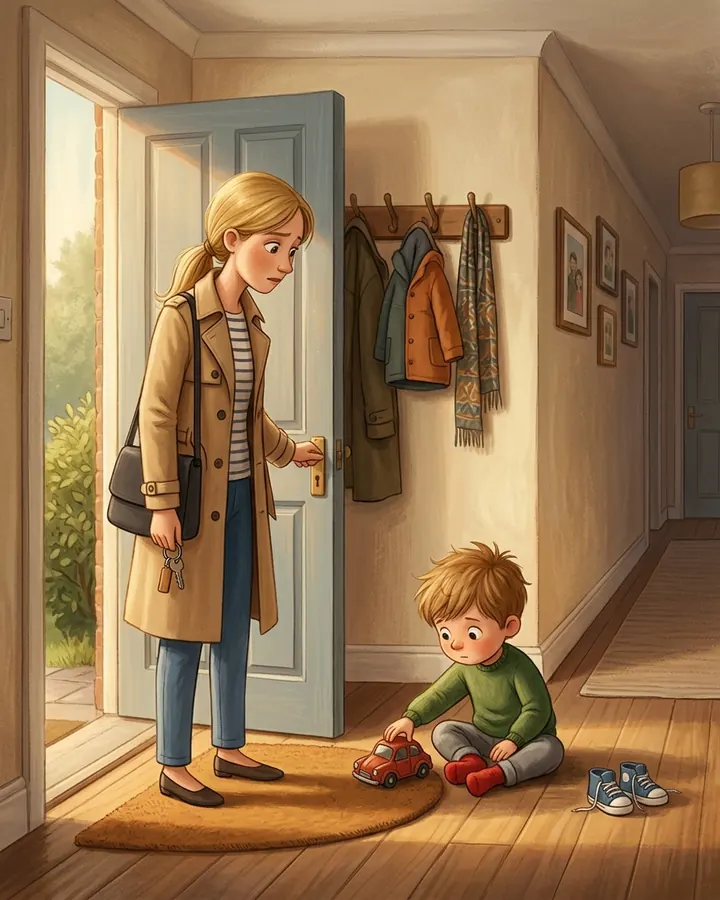
- Raise your voice so they finally hear you: “Shoes on, right now!”
- Give up, and let them go out in their socks. You’re late as it is.
- Recommended: Take three slow breaths, then say firmly: “Shoes on now. I’ll help.”
- Say firmly, right away, still cross: “Shoes on now, or we’re late.”
What the guidance says: Yelling, name-calling and shaming do not work and can harm, even from parents who are warm and loving. When you feel your temper rising, pause and calm down first, then speak quietly and firmly.
Sources: American Academy of Pediatrics, What's the Best Way to Discipline My Child? (5 Nov 2018); American Academy of Pediatrics, Effective Discipline to Raise Healthy Children (policy statement, abstract) (5 Nov 2018); CDC, Tips for Noticing and Naming Emotions (Essentials for Parenting Toddlers and Preschoolers) (30 Apr 2026)
4. Your four-year-old pushes the plate away. "I only want dessert."

- Say “Three more bites and you can have dessert,” to get some veg in.
- Recommended: Say “OK, you don’t have to eat it,” and clear the plate away.
- Tell them they can get down once they’ve eaten a few more bites.
- Make them some toast instead, so they don’t go to bed hungry.
What the guidance says: You decide what, when and where food is served; your child decides whether to eat and how much. Keep offering foods, with no pressure, no bribes and no second meal.
Sources: American Academy of Pediatrics, 10 Tips for Parents of Picky Eaters (26 Apr 2018); NHS, Fussy eaters (13 Nov 2023)
5. Your four-year-old and their six-year-old brother are both pulling at the same toy car, shouting "Mine!"

- Find out who had it first, and send the grabber to their room.
- Give it to the four-year-old. The older one should know better.
- Step straight in and decide who has it for the next ten minutes.
- Recommended: Step in, hear them both out, and help them agree on whose turn it is.
What the guidance says: Let small squabbles play out, but step in when someone is hurt or it is not working. Stay calm, do not take sides, hear each child out, and help them find a fair solution together.
The evidence here is thinner. Advice from the AAP, plus one small trial in which parents trained to mediate saw their 5- to 10-year-olds handle fights better.
Sources: American Academy of Pediatrics, Sibling Relationships: How to Help Your Kids Build Healthy Bonds (6 Apr 2026); American Academy of Pediatrics, What's the Best Way to Discipline My Child? (5 Nov 2018); Child Development (Smith and Ross), Training parents to mediate sibling disputes affects children's negotiation and conflict understanding (May 2007)
6. Your four-year-old wakes at 6:30 every morning, but bedtime has crept later and later, to about 9:30.
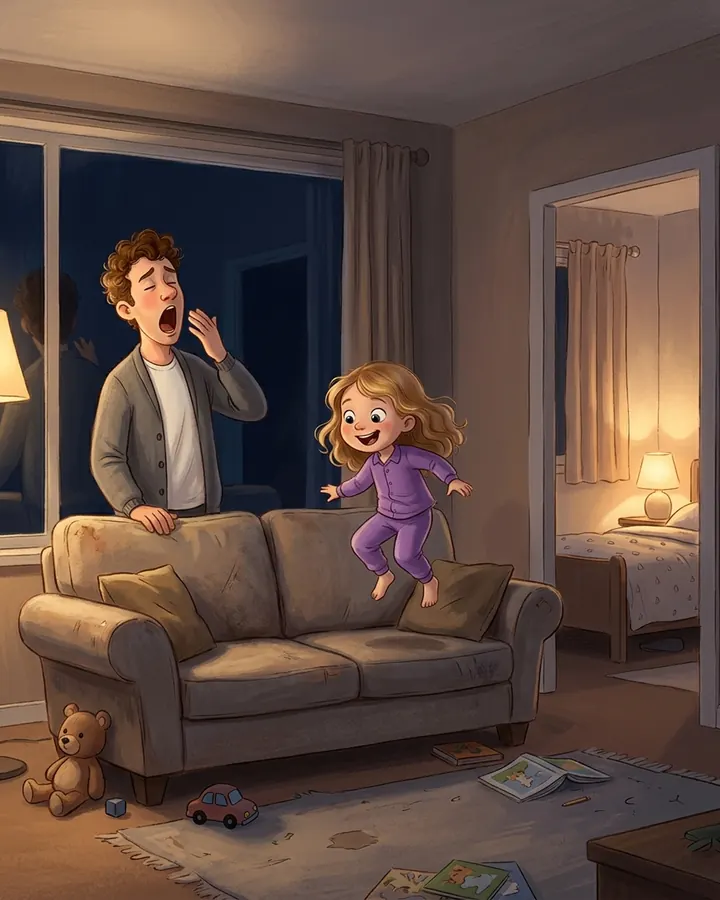
- Recommended: Bring bedtime back to about 7:30, a little earlier each night.
- Make bedtime earlier on weekdays, and let it slide at the weekend.
- Keep the evening classes going. They can catch up on sleep at weekends.
- Let them stay up until they say they’re tired. They’ll sleep better.
What the guidance says: Children aged 3 to 5 need about 10 to 13 hours of sleep a day, naps included, and 6- to 12-year-olds about 9 to 12. Set bedtime by counting back from the time they have to get up.
Sources: CDC, About Sleep (15 May 2024); American Academy of Pediatrics, Healthy Sleep Habits: How Many Hours Does Your Child Need? (7 Aug 2026); NHS, Helping your baby to sleep (28 Jan 2025)
7. Your five-year-old wants to watch videos on your phone while you cook dinner.

- Hand over the phone with short videos playing one after another.
- Recommended: Watch a children’s show with them for a bit, and chat about it later.
- Turn on the parental controls, and leave them to it while you cook.
- Let them pick whatever they like, as long as they stay quiet.
What the guidance says: Watch with your child when you can and talk about what you see. Choose shows made for children, and check what they watch and play. Controls help but are not enough on their own.
Sources: Canadian Paediatric Society, Screen time and preschool children: Promoting health and development in a digital world (24 Nov 2022); UK government, Best Start in Life, Screen time guidance for under 5s (29 Jun 2026); American Academy of Pediatrics, Kids & Screen Time: 5 C's Questions for School-Age Children (30 Apr 2024)
8. At bath time, your four-year-old asks what their private parts are called.

- Say that’s private, we don’t talk about it, and change the subject.
- Tell them they’ll learn the proper words when they’re a bit older.
- Recommended: Tell them the real names, plainly, just as you would for a knee.
- Use the cute family nickname. The real words can feel awkward.
What the guidance says: Use the real names for body parts, teach that they can say no to touches and hugs, and explain that surprises are fine to keep, but any other secret is told to a trusted adult. They will never be in trouble for telling.
The evidence here is thinner. Advice from the AAP, which calls teaching body autonomy a promising approach rather than a proven one.
9. It is bedtime and you are both tired. Your four-year-old brings you a book.

- Recommended: Snuggle up and read it together, even if it’s just for a few minutes.
- Put a story video on for them in bed instead, while you tidy up.
- Read it as fast as you can, with no stopping to look at the pictures.
- Give them a cuddle, say not tonight, and promise a long story at the weekend.
What the guidance says: Read together every day from birth, even for a few minutes, with your child on your lap. A printed book you share does more than a screen. If they look away or fuss, stop; it should be fun.
Sources: American Academy of Pediatrics, Beyond Literacy: Shared Reading Starting at Birth Offers Lifelong Benefits (29 Sep 2024); American Academy of Pediatrics, How to Share Books With Your Baby (29 Sep 2024); American Academy of Pediatrics, Brush, Book, Bed: How to Structure Your Child's Nighttime Routine (2 Feb 2024)
10. Your five-year-old finishes a hard puzzle after lots of tries and shouts "I did it!"

- “Brilliant, you got it right! Every piece in exactly the right place!”
- Recommended: “You kept trying different pieces until they fit. That was hard work!”
- Look up from the cooking and say “Well done, you!” with a big smile.
- “You’re so clever! You’re a real puzzle genius, you know that?”
What the guidance says: Praise the effort, the strategy and the trying, not how clever your child is. Children praised for being smart can start to fear mistakes; noticing effort helps them keep going.
The evidence here is thinner. AAP advice, backed by lab experiments in which 10- and 11-year-olds praised for effort kept trying longer after a hard task than those praised for being smart.
Sources: American Academy of Pediatrics, Perfectionism: How to Help Your Child Avoid the Pitfalls (18 Jun 2024); American Academy of Pediatrics, Age-Appropriate Chores for Children (9 Feb 2024); Journal of Personality and Social Psychology (Mueller and Dweck), Praise for intelligence can undermine children's motivation and performance (Jul 1998); CDC, Tips for Using Praise and Rewards (Essentials for Parenting Toddlers and Preschoolers) (30 Apr 2026)
11. Your four-year-old keeps getting out of bed after lights out. A friend swears by a sticker chart.

More than one good answer. The CDC recommends simple reward charts for young children; the AAP advises against treats in toilet training. A review of 128 experiments found tangible rewards can lower children's own interest in a task.
- A good answer: Use a chart, and let them choose a small new book once it’s full.
- A good answer: Skip the chart, and praise them warmly each morning they stayed in bed.
- A good answer: Try a sticker chart for staying in bed for a few weeks, then phase it out.
- A good answer: Offer an extra story the next night for each night they stay in bed.
What the guidance says: There is more than one good answer. A short sticker chart can help a new habit start, and praise and your time can work as well. Whatever you choose, never take away things a child needs.
Sources: CDC, Tips for Using Praise and Rewards (Essentials for Parenting Toddlers and Preschoolers) (30 Apr 2026); American Academy of Pediatrics, The Right Age to Potty Train (24 May 2022); Psychological Bulletin (Deci, Koestner and Ryan), A meta-analytic review of experiments examining the effects of extrinsic rewards on intrinsic motivation (Nov 1999); American Academy of Pediatrics, What's the Best Way to Discipline My Child? (5 Nov 2018)
General guidance from the bodies named, not medical advice. For your own child, ask your doctor or health visitor.
How the result works
- Your points: each moment is worth up to 10: 10 for what the guidance recommends, 7 for reasonable, 3 for common but often backfires, 0 for what the guidance says not to do. A moment you skip scores 0.
- Your percentage: your points out of the most you could score, so ten moments at 10 each make 100%.
- The moments you skipped: each with what the guidance recommends, so you still see what helps.
- You already do: the moments you answered as the guidance recommends.
- Worth trying this week: one or two small steps, each with its source.
- Your style, in one line: whether your answers lean warm, firm, both, or a mix.
Where the answers come from
Every answer is scored against public guidance from health and paediatric bodies, and each one links to the page it comes from, with the date printed on that page. Where the bodies disagree, the moment is not scored: it shows “more than one good answer”. Where the evidence is thinner (expert advice or small studies), the answer says so.
Most moments are painted; some show their four choices as words instead.
No doctor or psychologist has checked the quiz; the sources are there so you can read them yourself. General guidance from the bodies named, not medical advice. For your own child, ask your doctor or health visitor.
Questions
Who decides the scores?
The guidance does. Each answer is scored against what public bodies such as the NHS, the American Academy of Pediatrics and the CDC say, and every answer links to its source with the page’s date.
Has a doctor checked this quiz?
No. We wrote it from the published guidance and link every answer to the page it comes from, so you can read it yourself.
Is this medical advice?
No. It is general guidance from the bodies named. For your own child, ask your doctor or health visitor.
What happens to my answers?
They stay on this device. On a quiz a friend shared, only the points per question are sent, with no name and no answers, so the maker sees how friends did.
Why are some topics not scored?
Where the guidance bodies disagree, such as time-outs or sleep training, we show “more than one good answer” instead of a score.
How does making your own work?
Type a few moments and our AI writes the questions from our checked guidance. You choose which to keep, then share a link. Scores still come from the guidance.
Is it free?
Yes. Taking and sharing the quizzes is free with no sign-up. Making your own is one a day without an account and five a day with a free one.
Your answers stay on this device: the quiz is scored in your browser and nothing you pick is sent.
Explore storybooks: free illustrated storybooks in your family's language.
Enable JavaScript to take the quiz.