Pip's Surprise Stripes
Learn how Pip the chameleon changes color with tiny skin cells—and why feelings, not blankets, choose the color.
Ages 6-7 - 3 minute lesson - curious - EN
Reviewed for child-safety · gentle by design · How our stories are made
Published 2026-09-07T16:21:34.931317
Quick answer
A chameleon changes color when tiny color cells in its skin stretch wide to show a color or squeeze small to hide it.
Lesson
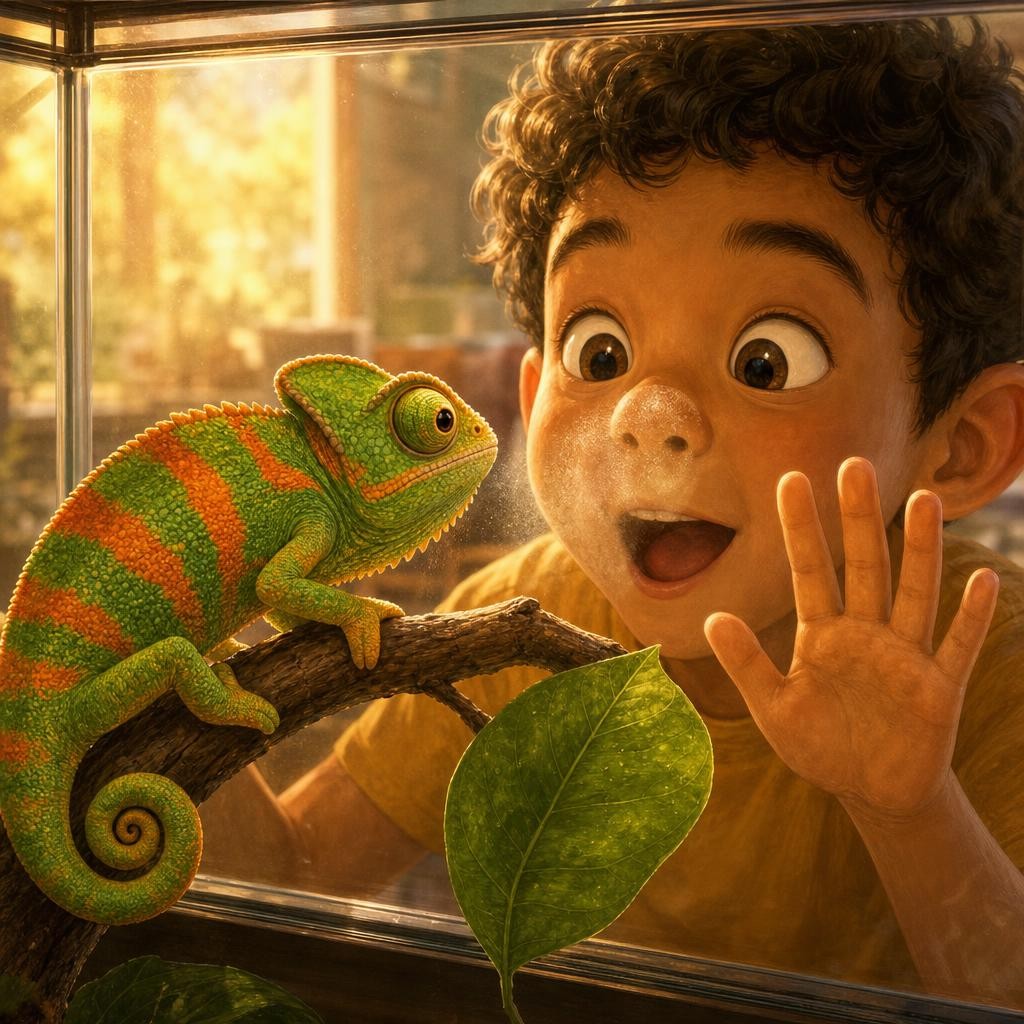
Theo pressed his nose to the glass at Grandpa's house. Inside sat Pip the chameleon, green as a leaf, still as a stone. Theo waved hello, and Pip's skin bloomed with bright orange stripes! Theo gasped. "Grandpa, how did Pip change colors so fast?"
Grandpa smiled and held up his magnifying glass. "Pip's skin is made of cells — tiny living dots, too small to see. Some cells hold color, like tiny stretchy blobs." Theo thought of his stretchy toy at home. When he spreads it flat and wide, he sees lots of its color. When he squishes it into a tiny ball, the color almost hides.
"Pip's color cells work like your stretchy toy," said Grandpa. "When Pip feels calm, the green cells stretch wide and show, and the orange cells squeeze small and hide. When Pip feels excited, the orange cells stretch wide, and the green cells squeeze small." Just then, Grandpa set Pip on a soft red blanket. Theo leaned in close. Would Pip turn red to match the blanket?
No! Pip stayed calm, quiet green, right there on the red blanket. "Pip's cells listen to Pip's feelings, not the blanket," said Grandpa. "The color comes from inside, not outside!" Theo nodded slowly. Quiet green does help Pip hide in leaves — that's called camouflage, hiding by blending in — but Pip can't copy every color like a magic trick. Pip's feelings pick the colors.
"Here's something even wilder," Grandpa whispered. "A chameleon can move each eye in a different direction at the same time — one eye looks up while the other looks behind!" Theo tried it and got dizzy. That night, Theo did a Pip experiment with Dad at the mirror: he made a happy face, then a grumpy face, then a surprised face. His face changed with his feelings — just like Pip's skin does!
Now Theo knows Pip's secret. Tiny color cells stretch wide to show a color and squeeze small to hide it, and Pip's feelings tell them what to do. Calm Pip is green, excited Pip is orange, and no blanket can boss those cells around. Say it with Theo: "The color comes from inside, not outside!"
Lesson scenes
Surprise Stripes!
Theo pressed his nose to the glass at Grandpa's house, where Pip the chameleon sat green as a leaf, still as a stone. Theo waved hello — and Pip's skin bloomed with bright orange stripes! "Grandpa, how did Pip change colors so fast?"
Tiny Stretchy Color Cells
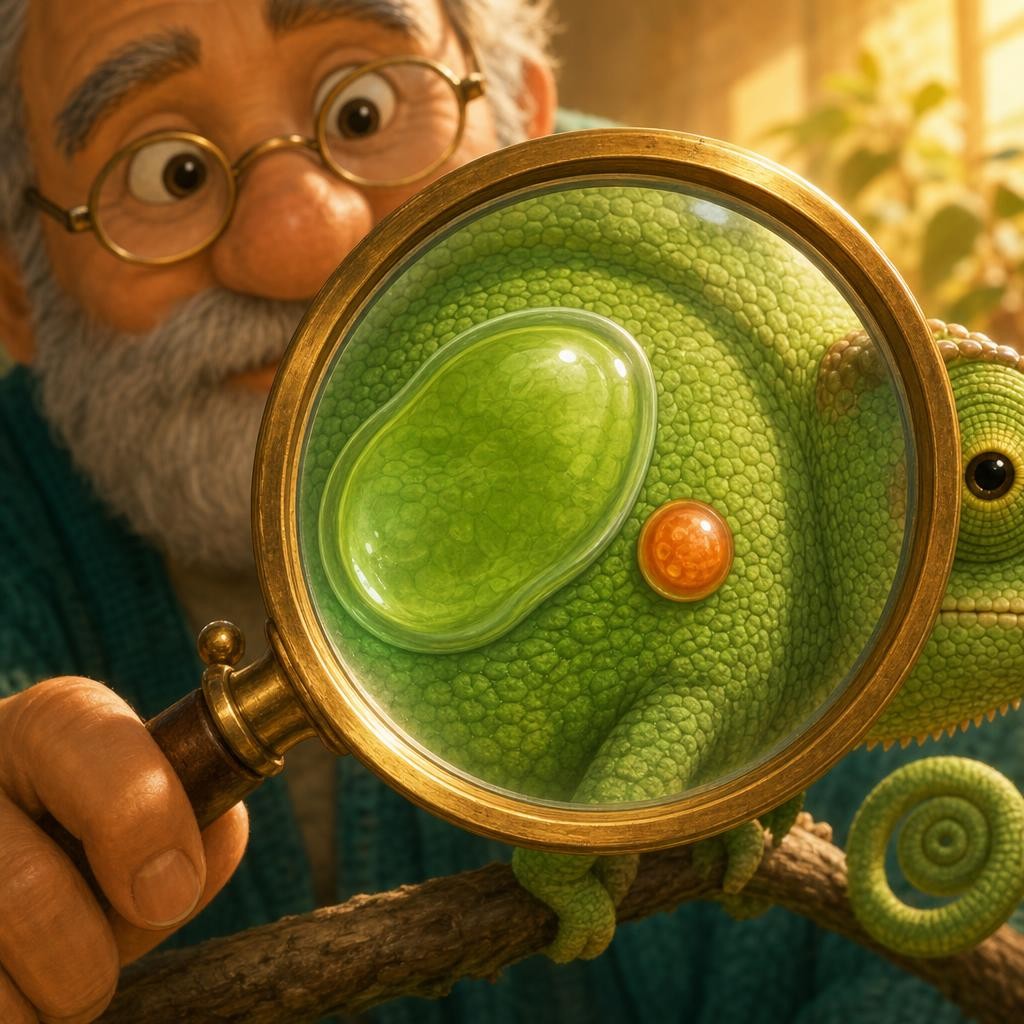
Grandpa held up his magnifying glass. "Pip's skin is made of cells — tiny living dots, too small to see — and some hold color like tiny stretchy blobs." When a blob stretches flat and wide you see lots of its color, and when it squishes into a tiny ball the color almost hides!
Feelings Pick the Colors
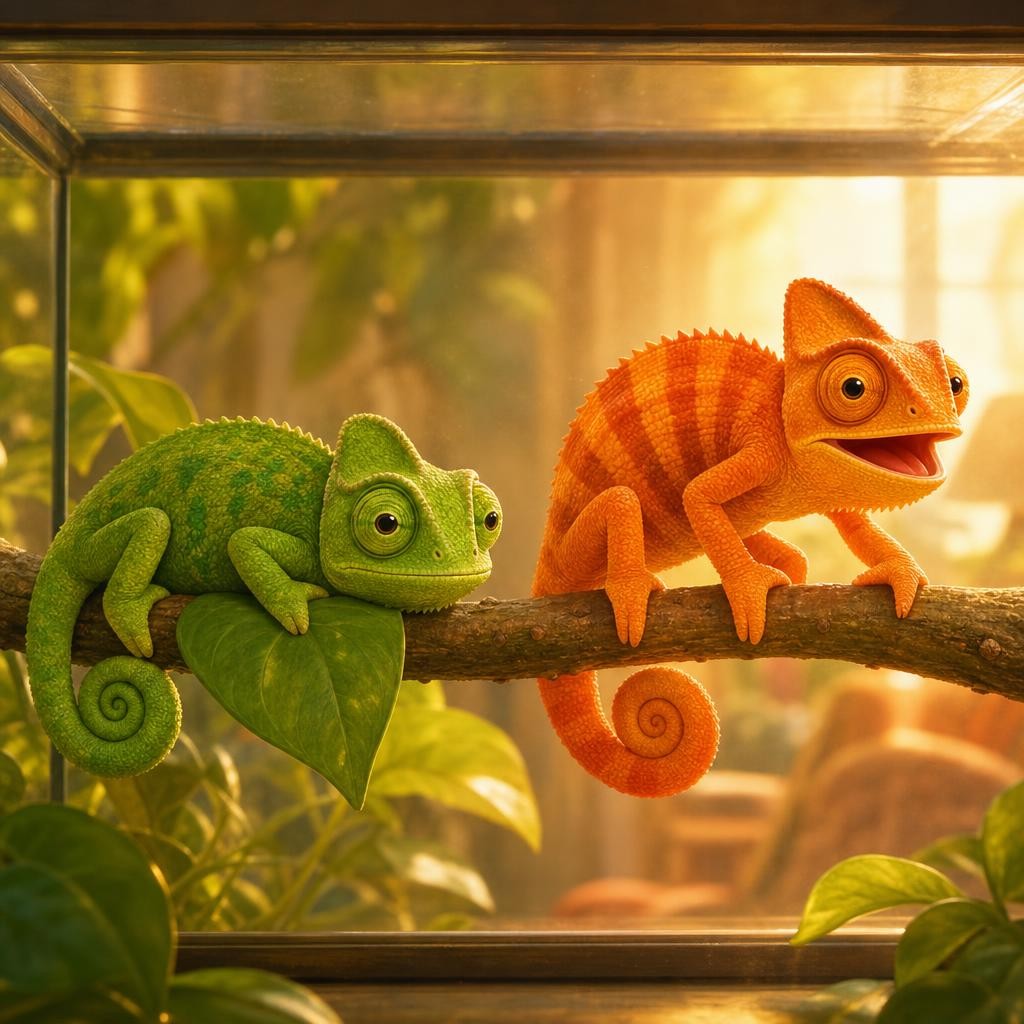
"Pip's color cells listen to Pip's feelings," said Grandpa. When Pip feels calm, the green cells stretch wide and the orange cells squeeze small and hide. When Pip feels excited, the orange cells stretch wide and the green cells squeeze small!
The Red Blanket Test
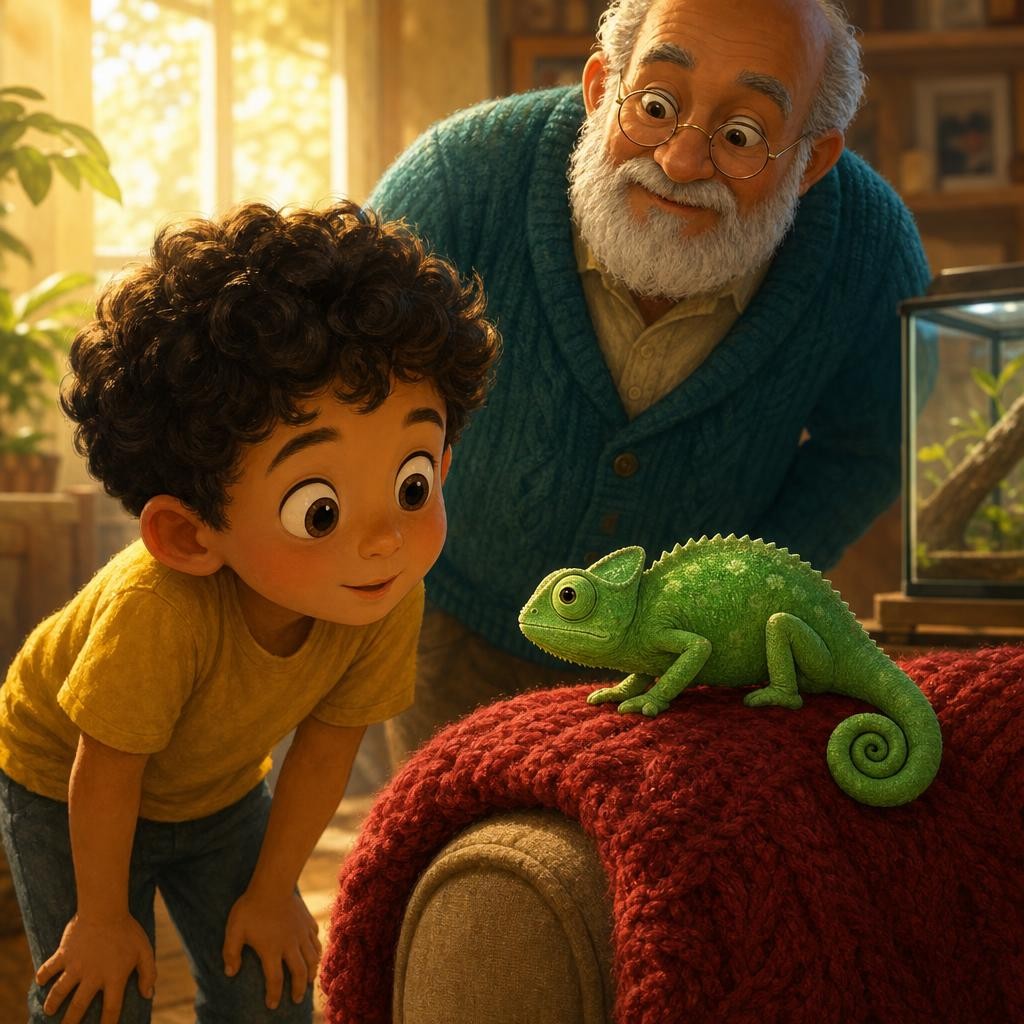
Just then, Grandpa set Pip down on a soft red blanket. Theo leaned in close, holding his breath. Would Pip turn red to match the blanket?
Inside, Not Outside!
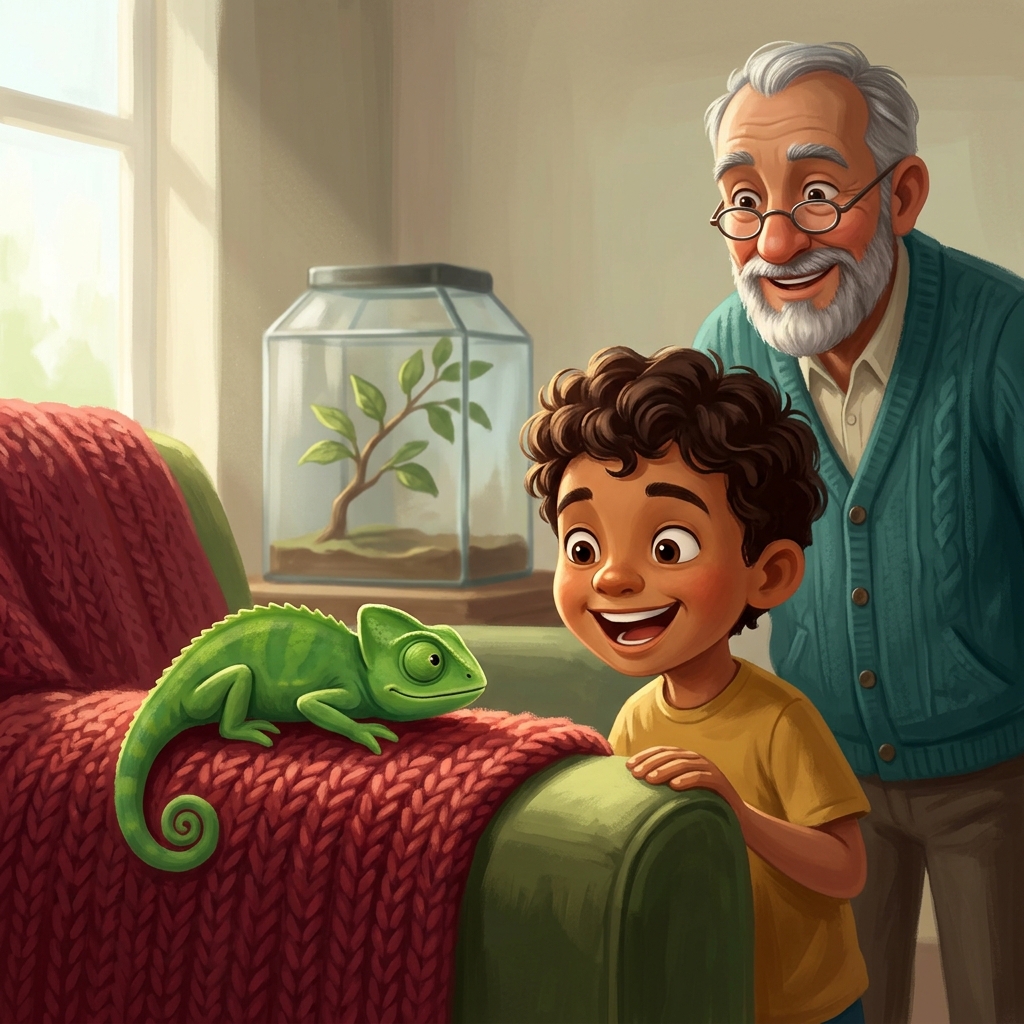
No! Pip stayed calm, quiet green, right there on the red blanket — the color comes from inside, not outside! Quiet green does help Pip hide in leaves — that's called camouflage, hiding by blending in — but Pip's feelings pick the colors, not the blanket.
Theo's Mirror Experiment

Grandpa shared one last wow: a chameleon can point each eye a different way at the same time — one looks up while the other looks behind! That night, Theo tried a Pip experiment at the mirror with Dad: happy face, grumpy face, surprised face — his face changed with his feelings, just like Pip's skin. Say it with Theo: "The color comes from inside, not outside!"
Key takeaways
- Chameleons have tiny color cells in their skin.
- Color cells stretch wide to show color and squeeze small to hide it.
- Pip’s feelings choose the color, not the blanket he sits on.
- Green can help Pip hide in leaves, which is called camouflage.
Mini quiz
- What do Pip's color cells do to show a color?
- What tells Pip's color cells which color to show?
- Where does Pip's color come from?
Common questions
Does Pip turn red on a red blanket?
No. Pip stays calm green because his color comes from inside, not from the blanket.
What color is Pip when he feels excited?
When Pip feels excited, his orange cells stretch wide and orange stripes show.
What is camouflage?
Camouflage means hiding by blending in, like quiet green Pip blending with leaves.
What is another special thing about chameleons?
A chameleon can move each eye in a different direction at the same time.
Read-together tip
After the lesson, make faces in a mirror together—happy, grumpy, surprised—and connect how feelings can show on the outside.