Halloween, Then and Now
Explore Halloween traditions through a gentle illustrated history of turnip lanterns, costumes and neighborhood celebrations. A full book to read or print.
about real things · 23 pages · ages 6–7 · long storybook · EN
Read · Play · Listen · PDF · Print edition · with the Storybook Pass · Make it about your child
Reviewed for child safety · gentle by design · How our storybooks are made
The pages
Halloween, Then and Now
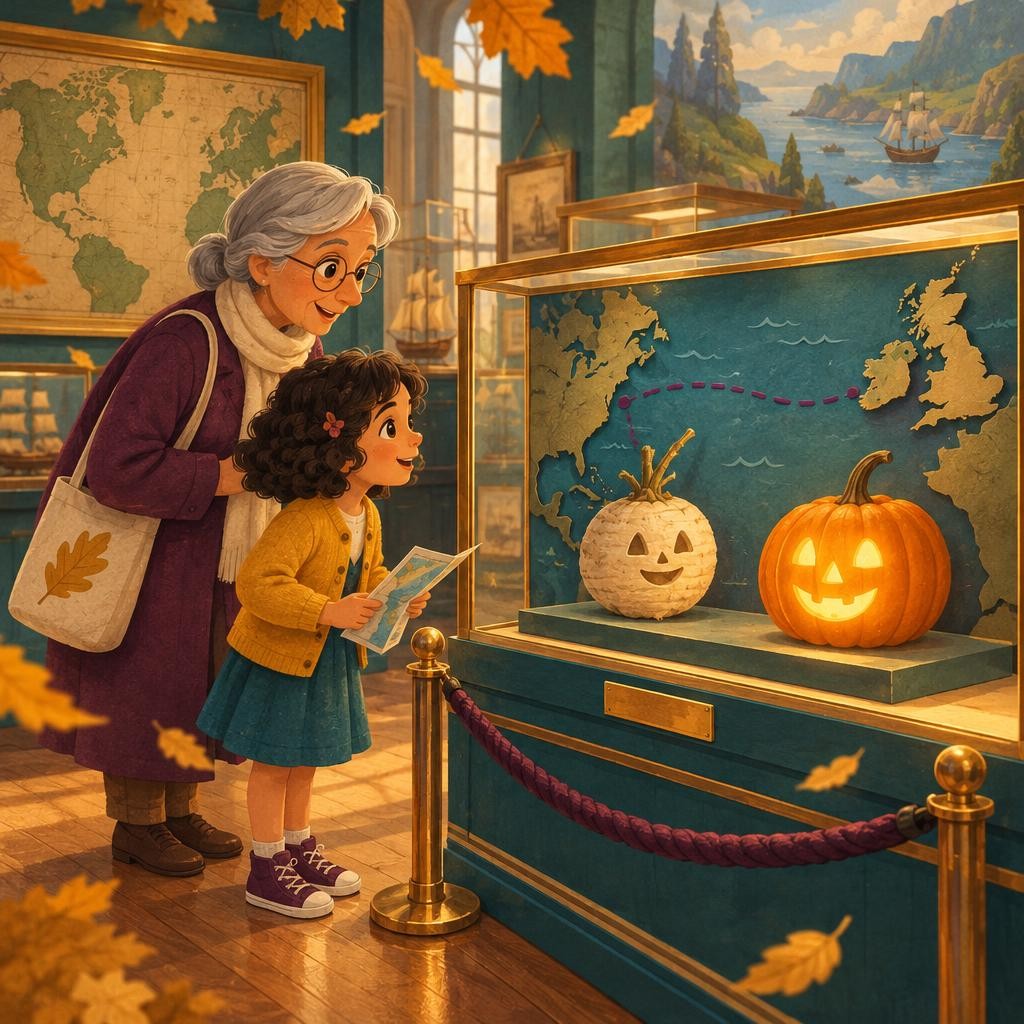
Halloween, Then and Now
For every family who carries a tradition and makes it their own.
What's inside
Autumn Gatherings and a Changing Calendar Lanterns and Costumes on the Move How Families Celebrate Now
Welcome to the Museum of Then and Now
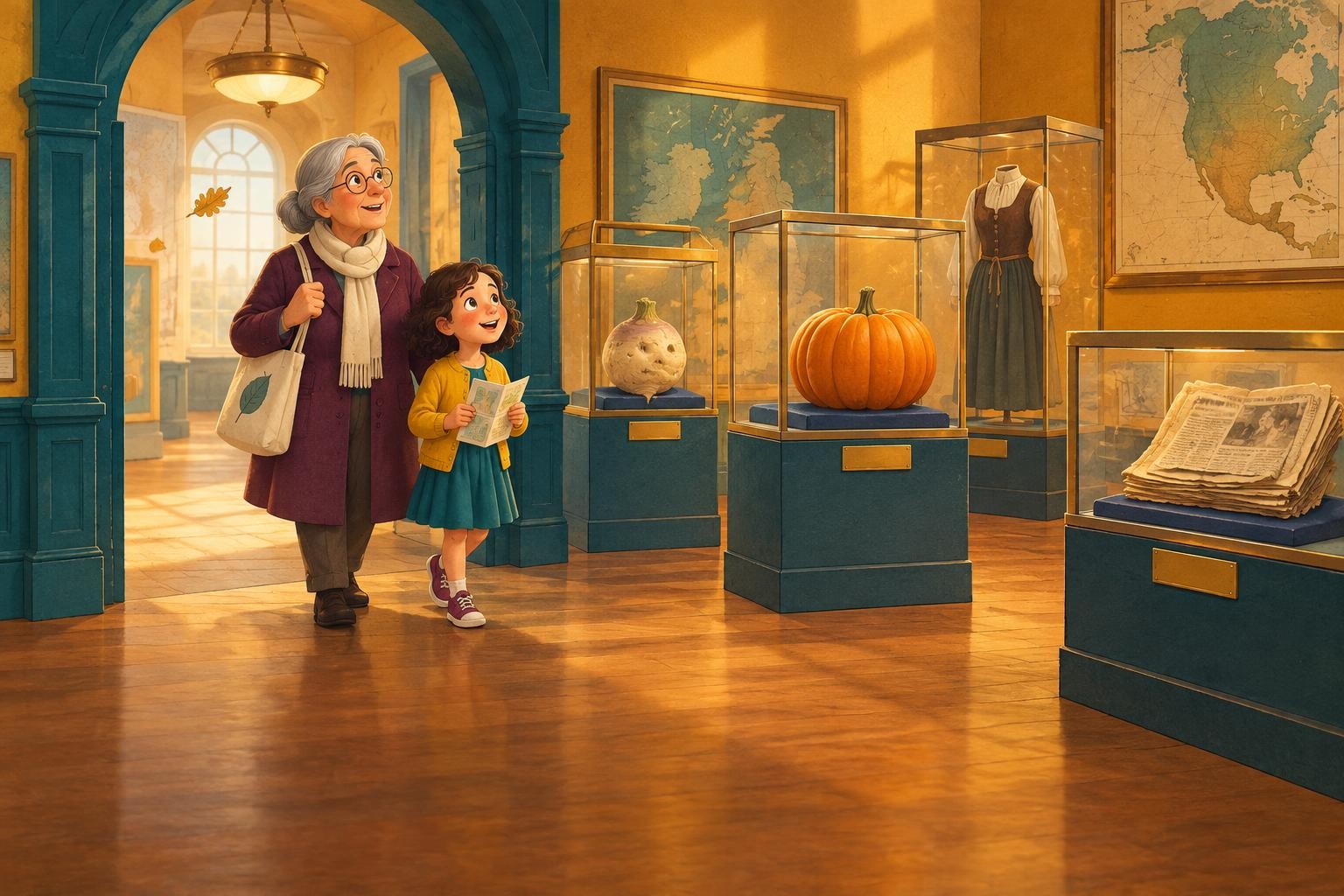
Come on a pretend museum visit with a girl and her grandmother. The walk is make-believe, but every object here is real! Turnips, pumpkins, old newspapers, and costumes are all waiting. Let's discover how Halloween grew and changed, bit by bit.
A Night Deep in Autumn
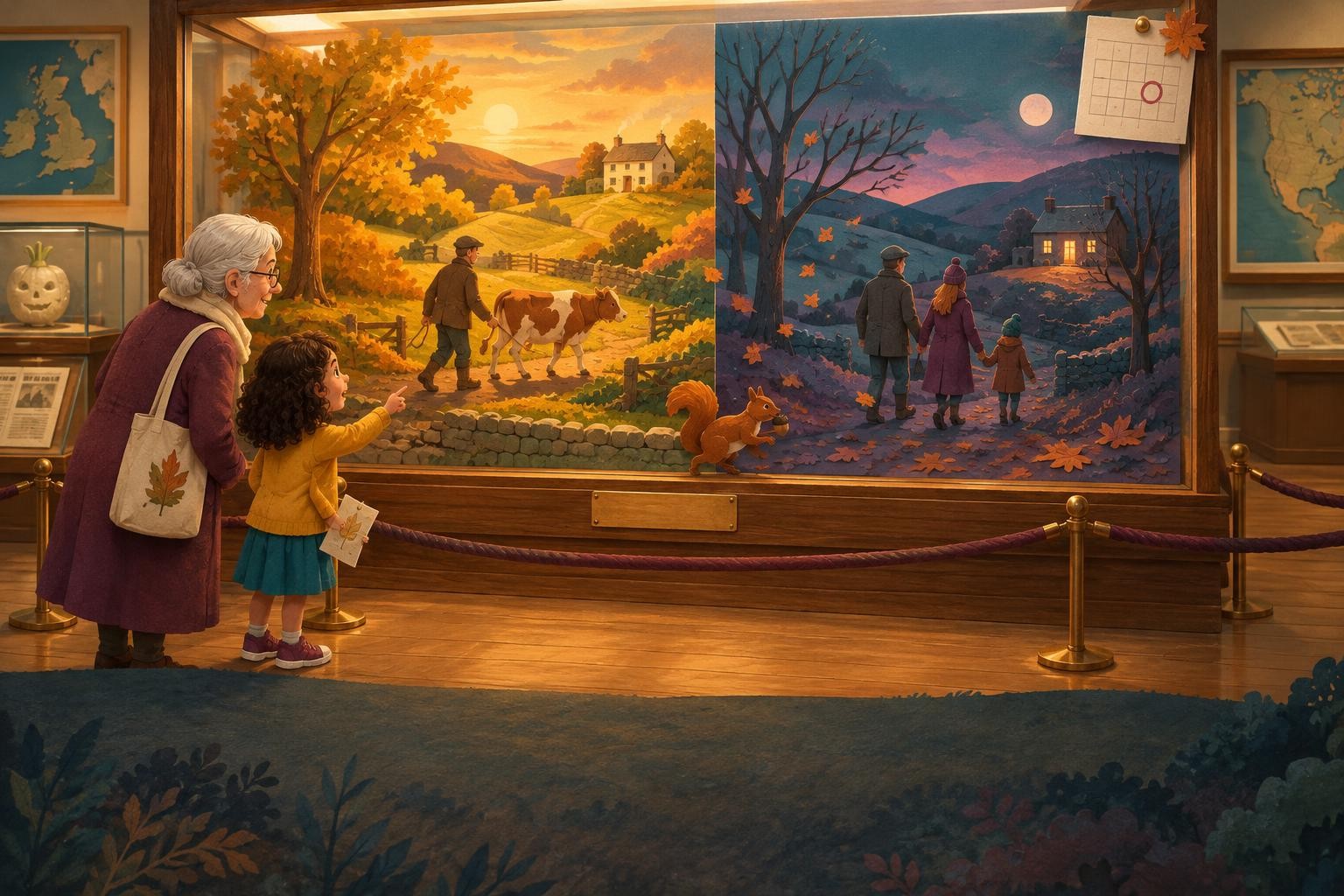
Halloween comes on October 31. By then, autumn is deep. Think about walking home in late October. In many places, the sun sets earlier each week. Evenings grow darker. The air turns chilly, so you zip up your coat. Leaves crunch under your shoes, and many trees stand bare. Long ago, people noticed these changes too. A dark, cool evening felt like a good time to gather indoors with family and neighbors.
Harvest In, Winter on Its Way
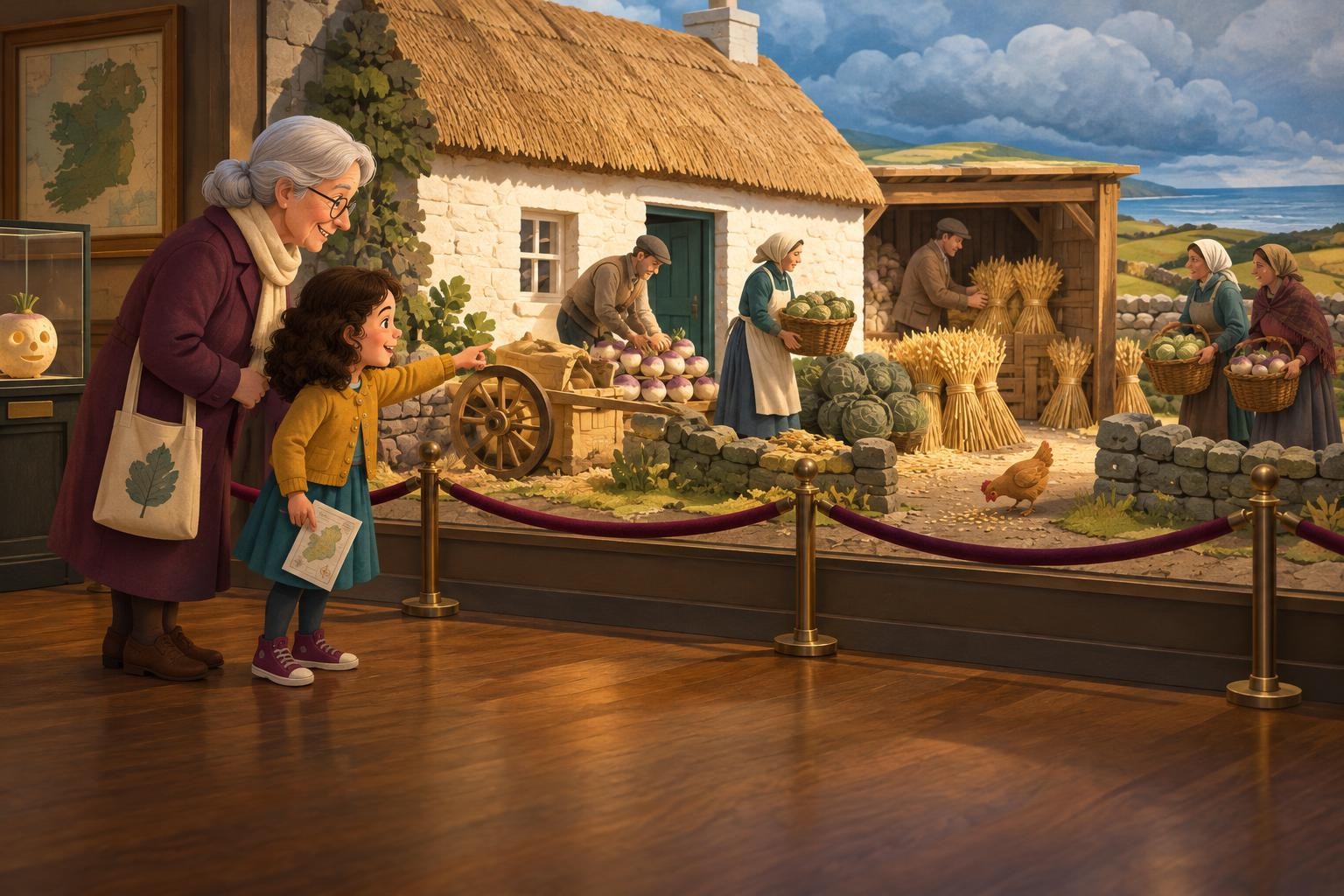
Picture a farm family long ago in Ireland or Scotland. All summer, they grew food. Then came harvest, the time to gather crops from the fields. Turnips, cabbages, and grain went into the shed. Winter was coming! Some people held special gatherings as the seasons turned. One old festival was called Samhain. You say it like "SOW-in." Many people think all of Halloween came from Samhain. Actually, only some roots connect to it.
A Long Name Gets Squeezed Short
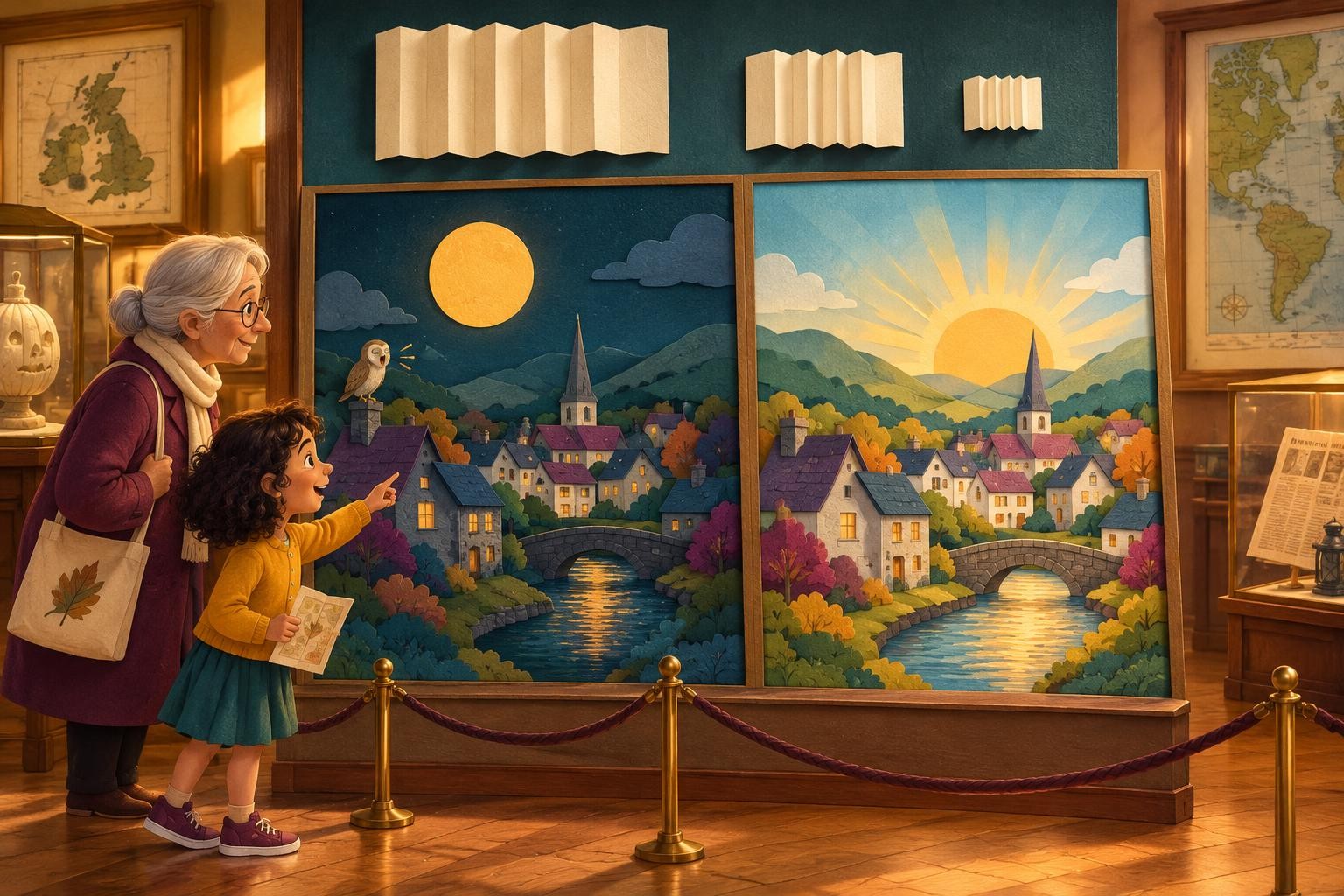
Look at the two days in this picture. November 1 is All Saints' Day. It is a church day to remember very good, holy people called saints. "Hallow" is an old word for saint. "Eve" means the evening before. So October 31 was called All Hallows' Eve. What a mouthful! Over time, people squeezed it shorter, like folding an accordion. It became Hallowe'en. Later, the little mark dropped away. Now we say Halloween.
Halloween Grew Like a Layer Cake
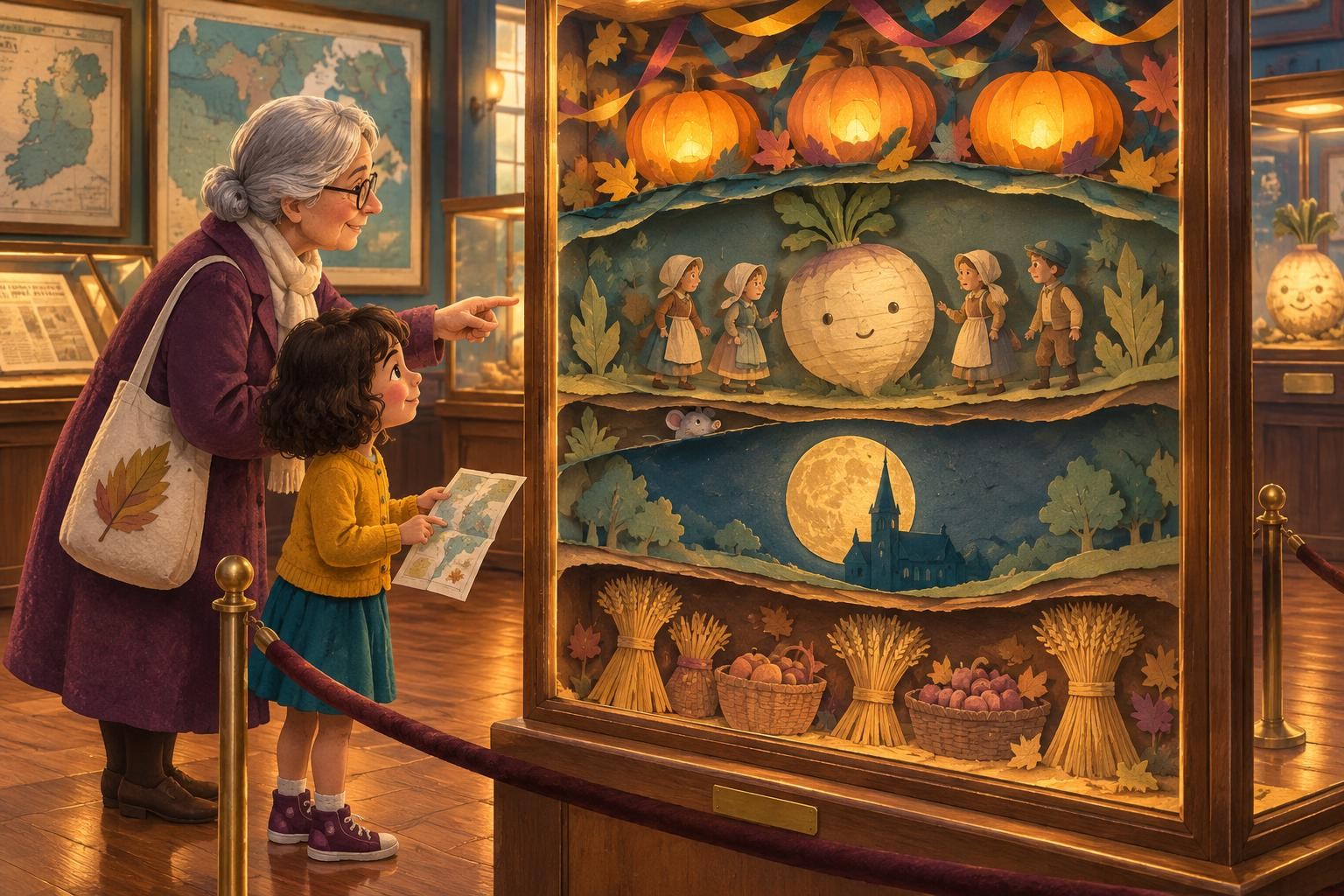
Did Halloween have one birthday? Not really! It grew more like a layer cake. Grandma points to the bottom layer: old autumn harvest gatherings. On top sits the name All Hallows' Eve. Next come turnip lanterns and guising, which means dressing up to visit neighbors. The top layer holds pumpkins and parties. Each layer came at a different time. Something people do again and pass along is a tradition. Traditions pile up and change.
Clues Hiding in Old Newspapers
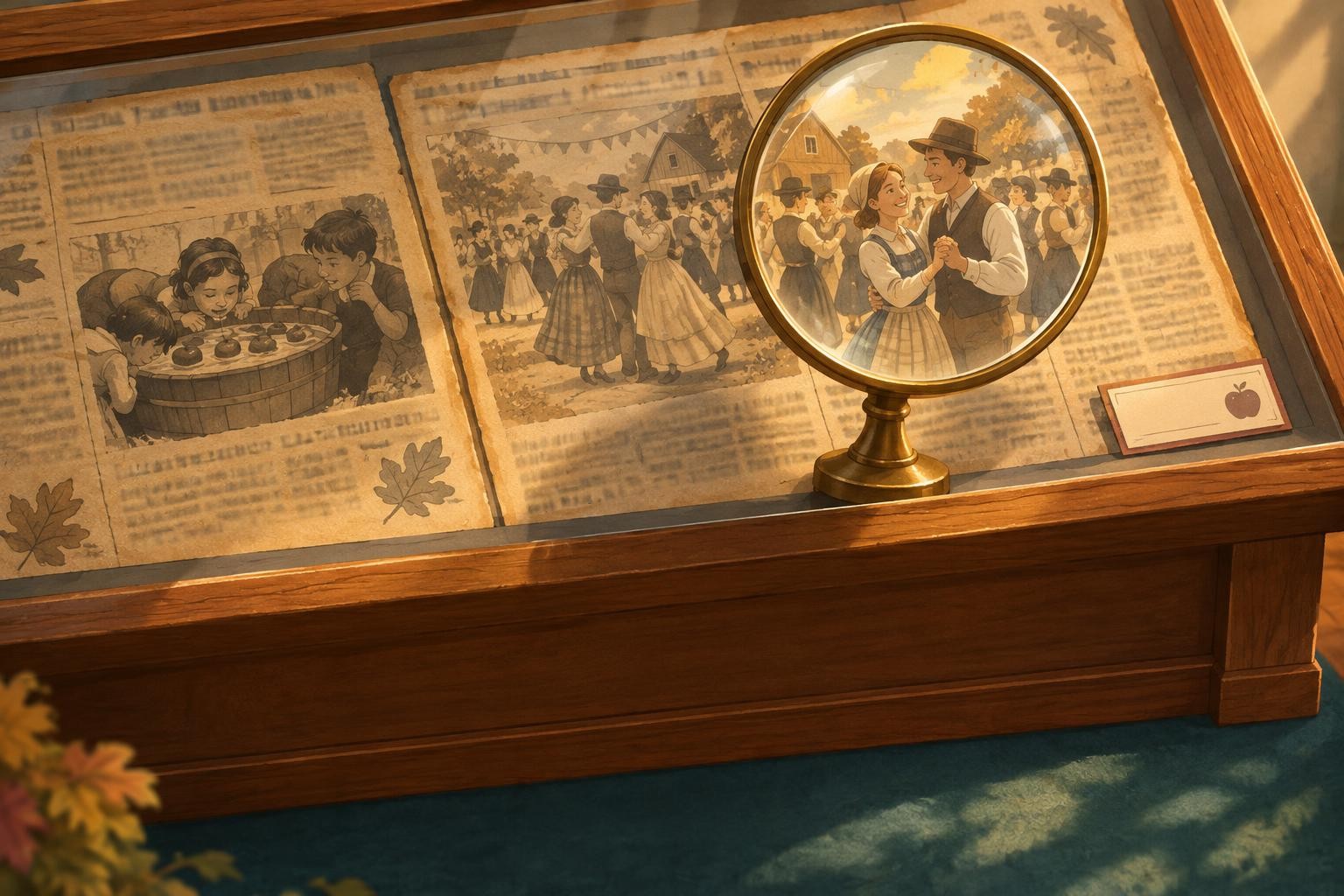
How do we know about Halloween long ago? We look for clues! Old newspapers are great clues. A huge library in the United States, called the Library of Congress, keeps very old papers. Some come from the 1800s. That is more than 100 years ago, back when your great-great-grandparents were young. These papers tell about Halloween stories and parties. A real thing from the past that teaches history is an artifact.
Traditions Can Pack a Suitcase!
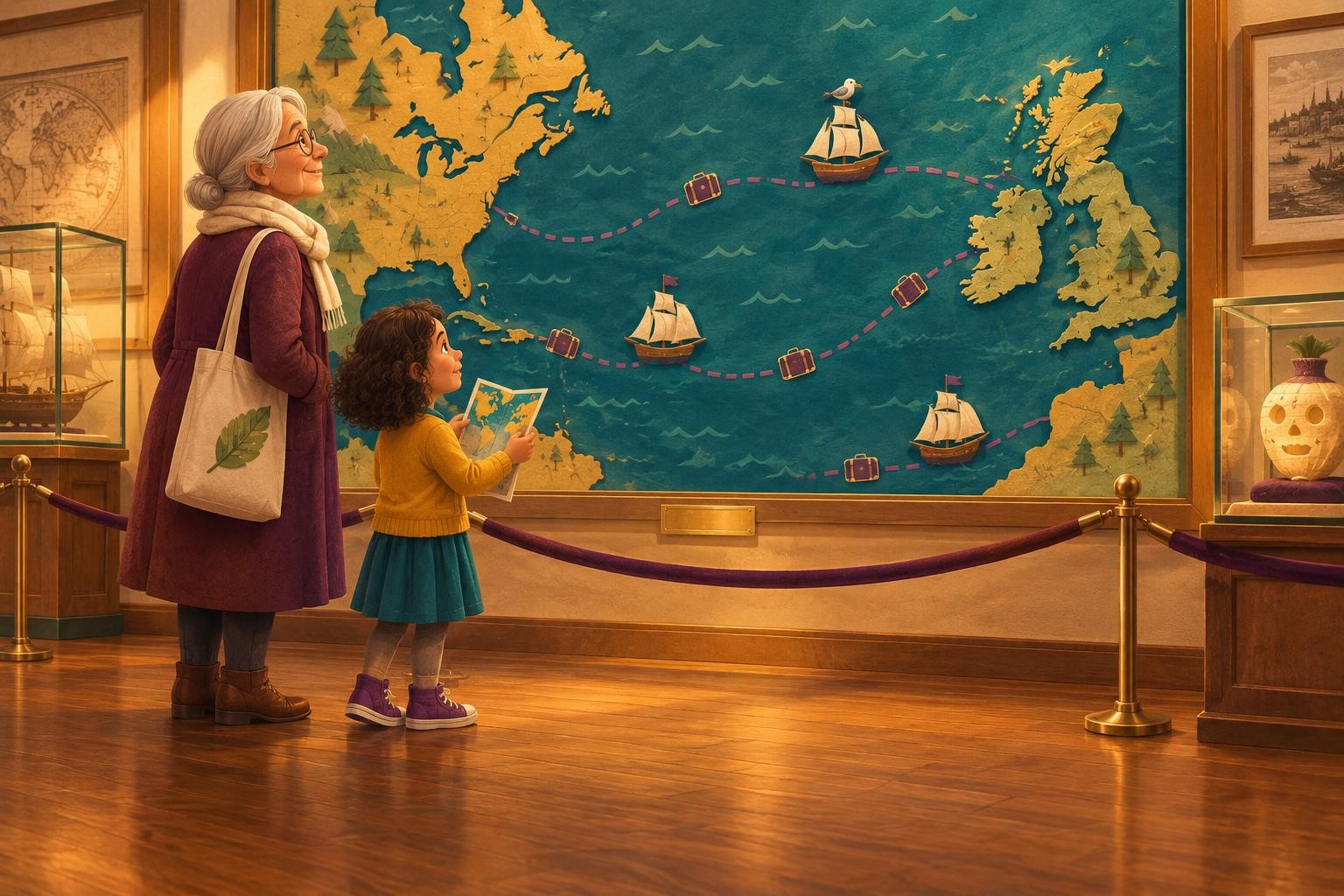
Long ago, many families sailed from Ireland and Scotland across a huge ocean to North America. They packed clothes and pots. They also packed something you cannot hold in your hands: their traditions. Traditions are things people do again and again and pass along. In new places, those traditions began to change. Let's follow them across the sea!
Wait, That Lantern Is a Turnip?
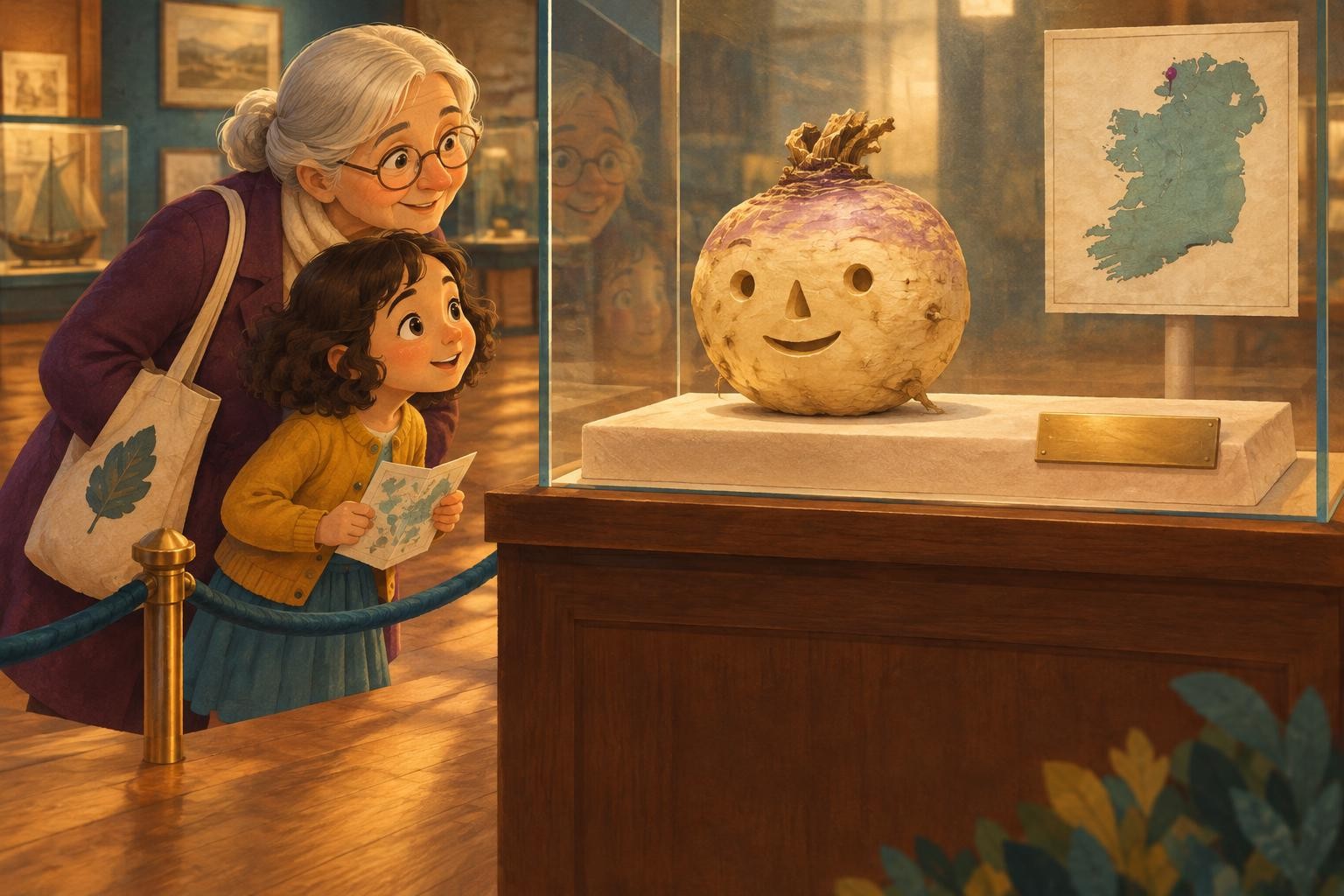
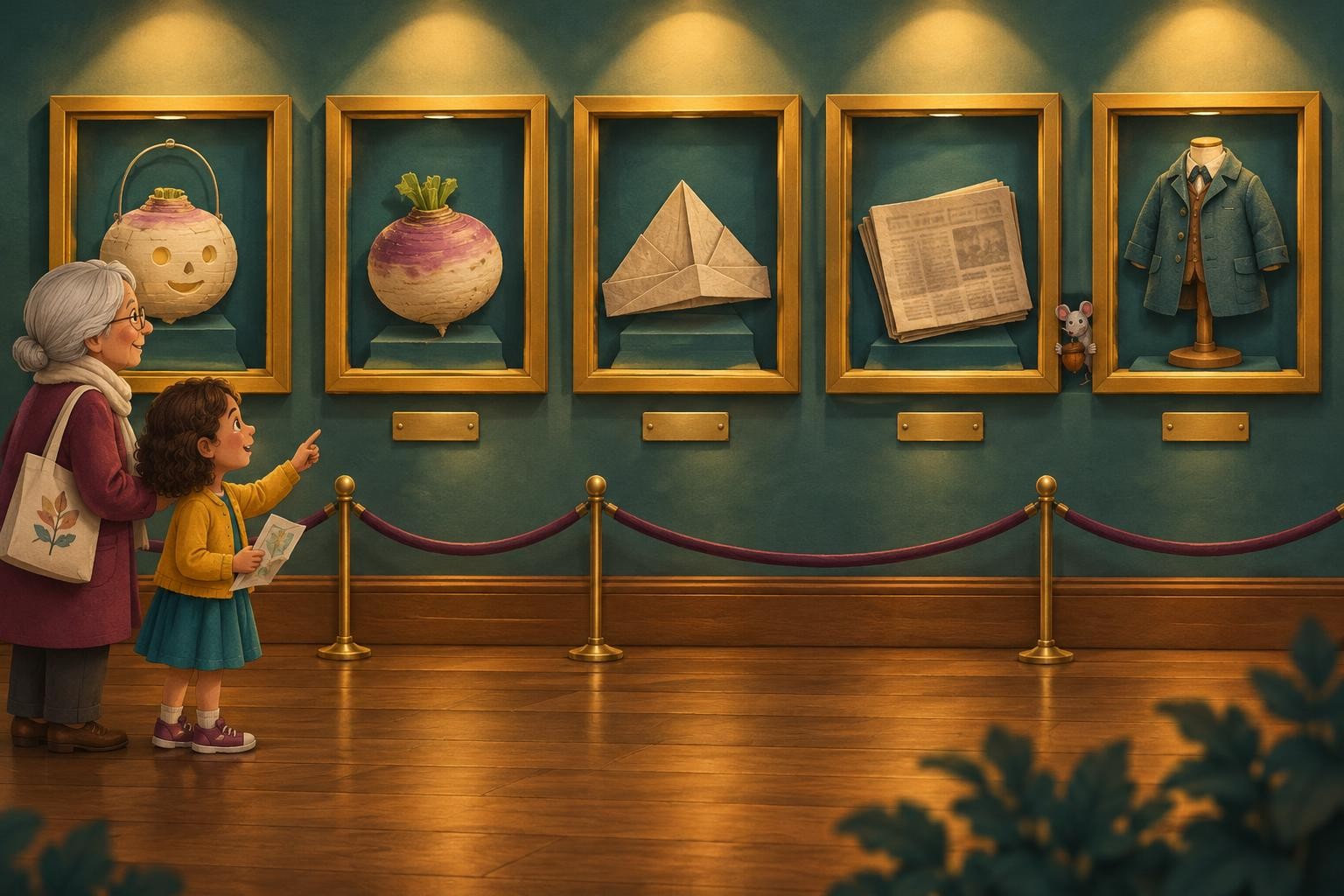
Look closely behind the glass. Is that a pumpkin? Nope! It is a turnip, a lumpy root vegetable that grows under the ground. In Ireland and Scotland, some people made lanterns from turnips. A lantern is a holder for a light. This one is an artifact, which means a real object that helps us learn about the past. It is a model kept by the National Museum of Ireland. It shows a lantern people in County Donegal remembered from around 1900.
Why Did Pumpkins Win the Job?
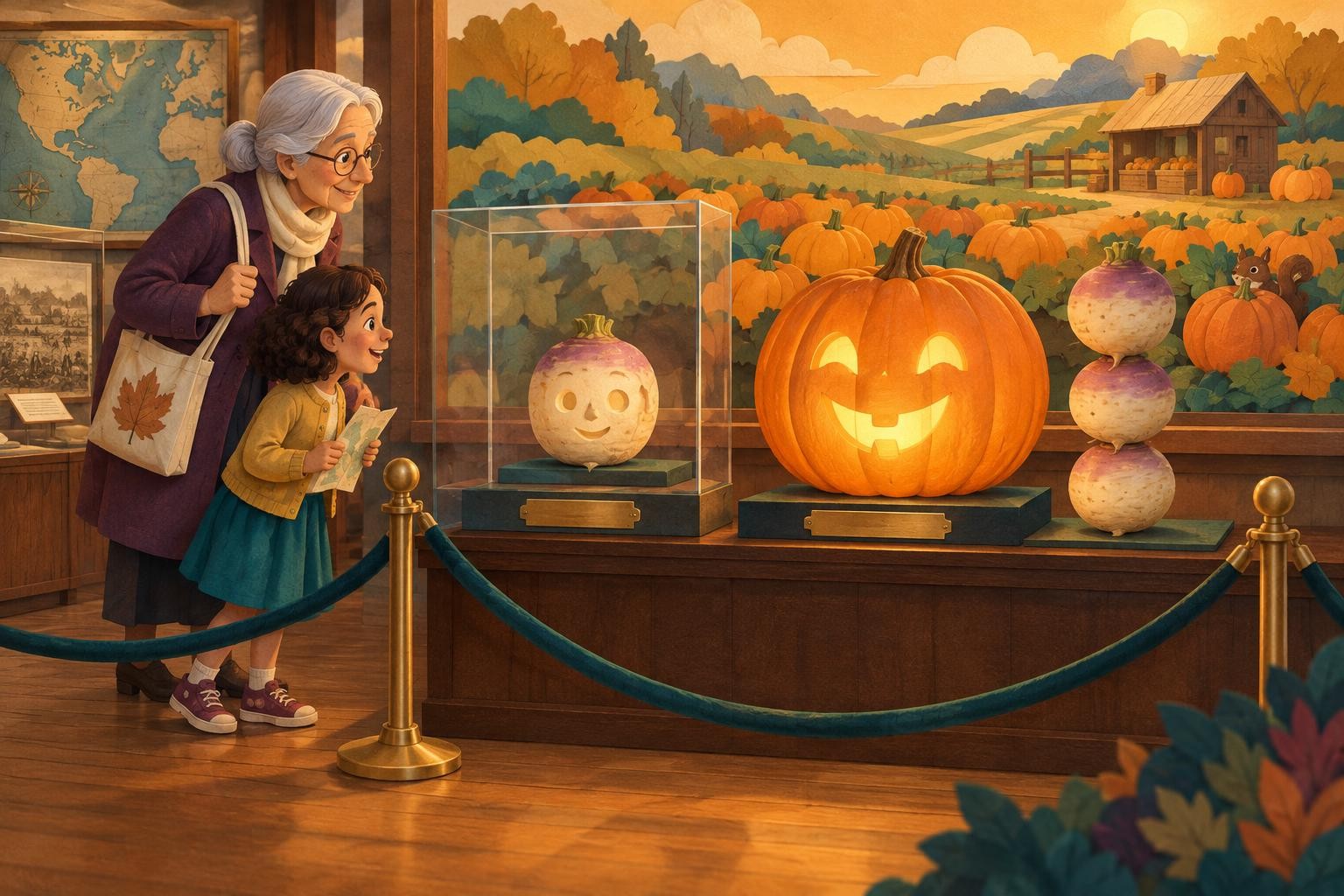
Many people think pumpkins took over because America had no turnips. But actually, turnips grew there too! Pumpkins were just handy. In North America, they grew big, and there were lots of them. A big pumpkin also has plenty of room for a face. So people adapted the tradition. Adapt means changing something so it works in a new place. It is like playing tag at a new park. Same game, new hiding spots!
Knock, Knock! Who's in Disguise?
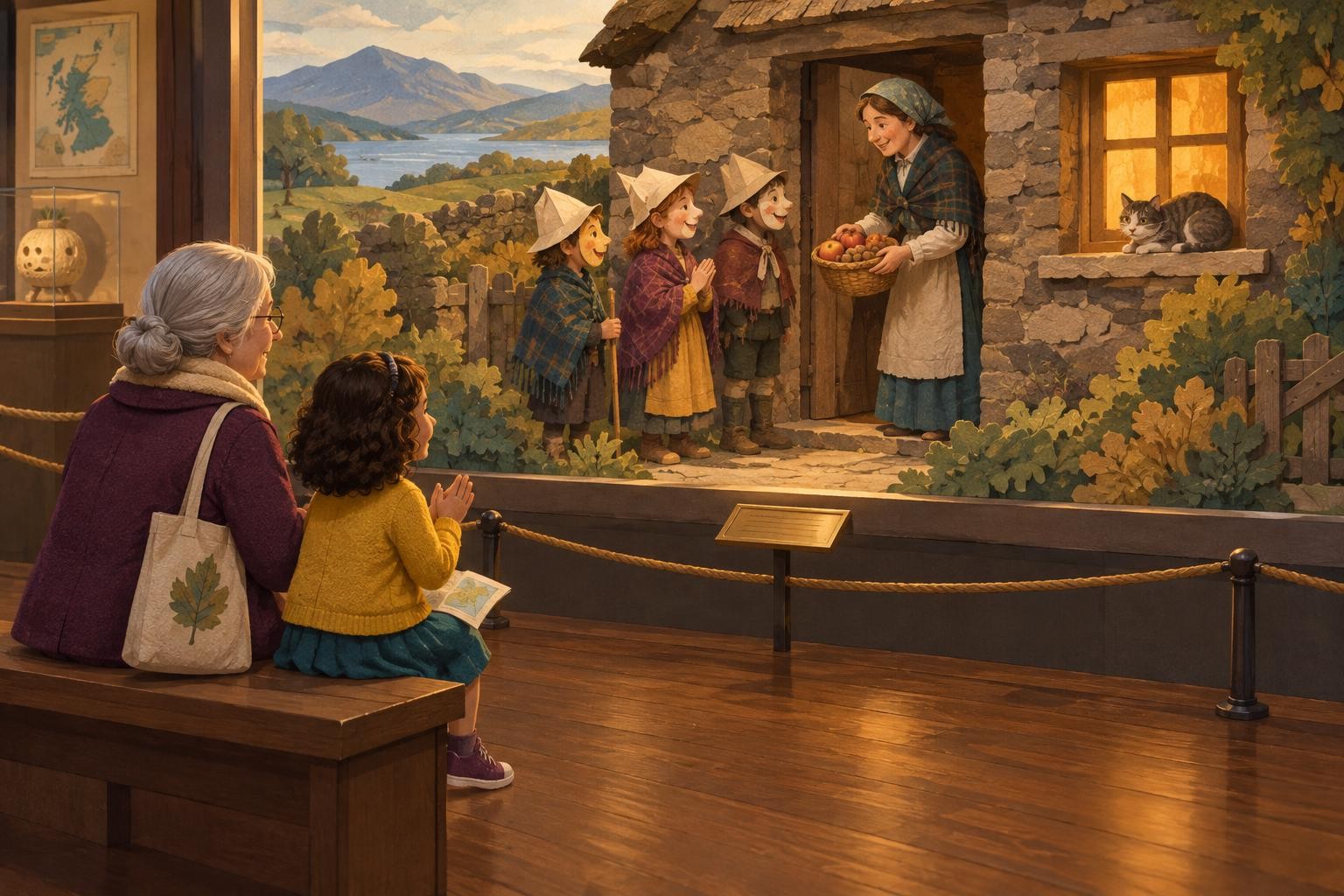
In Scotland, children dressed up in shawls, hats, and masks. Then they visited their neighbors' homes. Nobody could guess who they were! This was called guising, because the children were in disguise. The children were called guisers. At the door, a guiser might sing a song, say a rhyme, or tell a joke. A neighbor might give them apples or nuts. The girl claps when she sees it. Does it remind you of anything?
Costumes on Thanksgiving? Really!
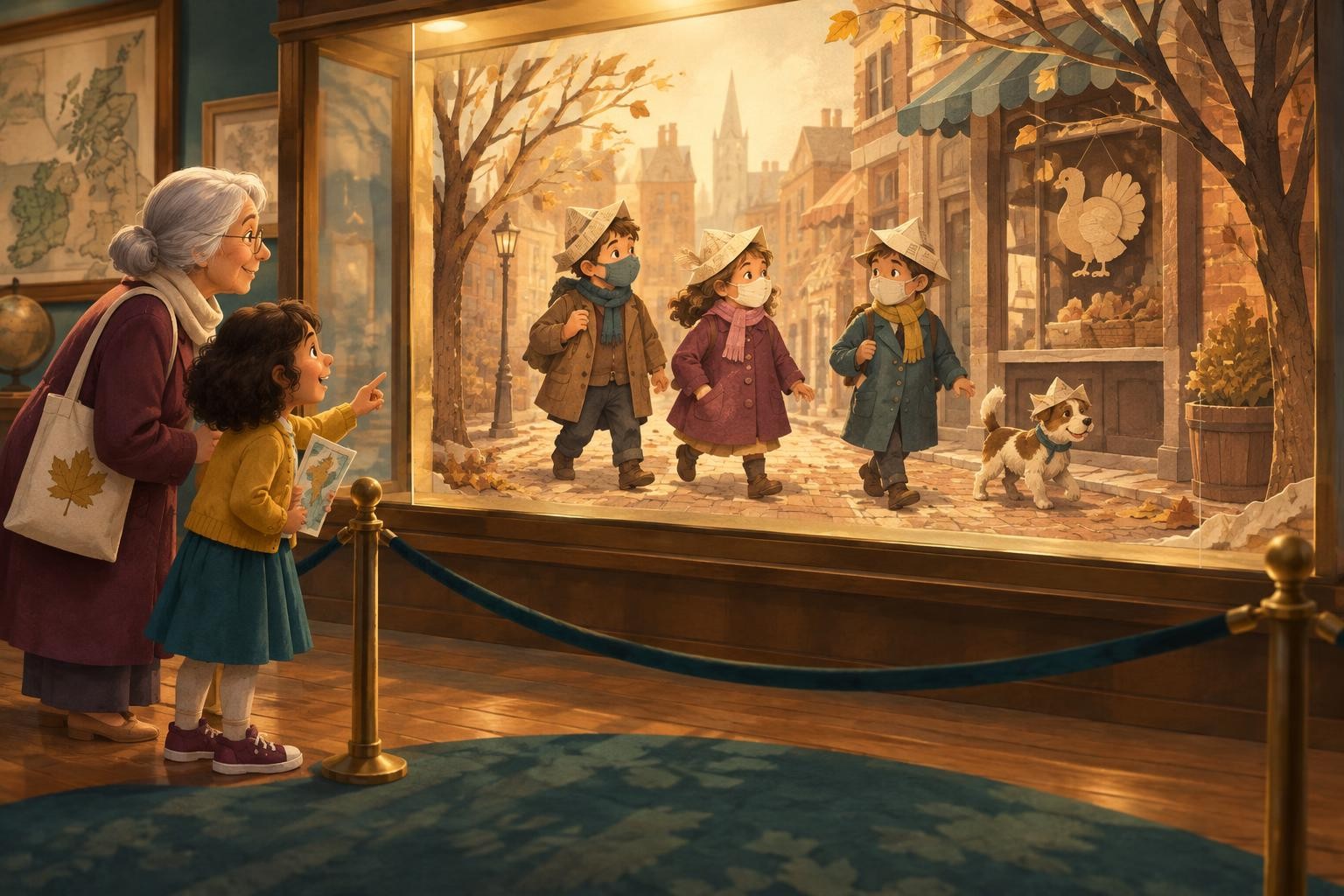
Here is a surprise. Traditions do not always travel in a straight line. Sometimes they hop sideways! Around 1910, in parts of the United States, some children dressed up on Thanksgiving. That is a different holiday, in late November. They wore baggy grown-up coats, paper hats, and masks. Then they visited neighbors. So dressing up was not only a Halloween thing. People mixed and moved customs like puzzle pieces.
Wow Wall of Real Evidence
Welcome to the Brightest Room Yet
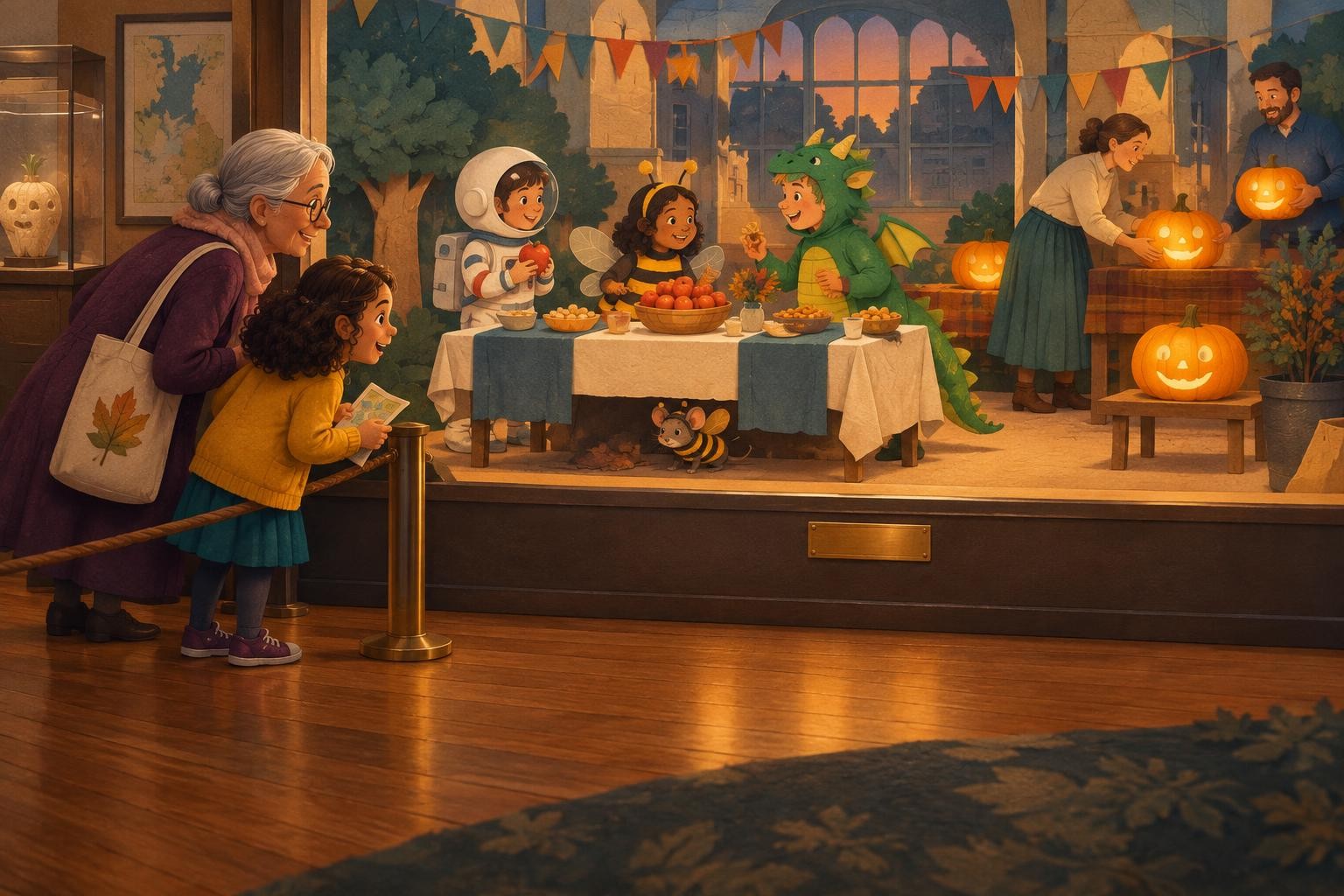
Our museum walk has reached the very last room. It is bright and busy! Today, many people dress up, go to parties, decorate, and share stories. These are new layers on a very old tradition that keeps changing. Let's peek inside!
Four Windows, Four Different Evenings
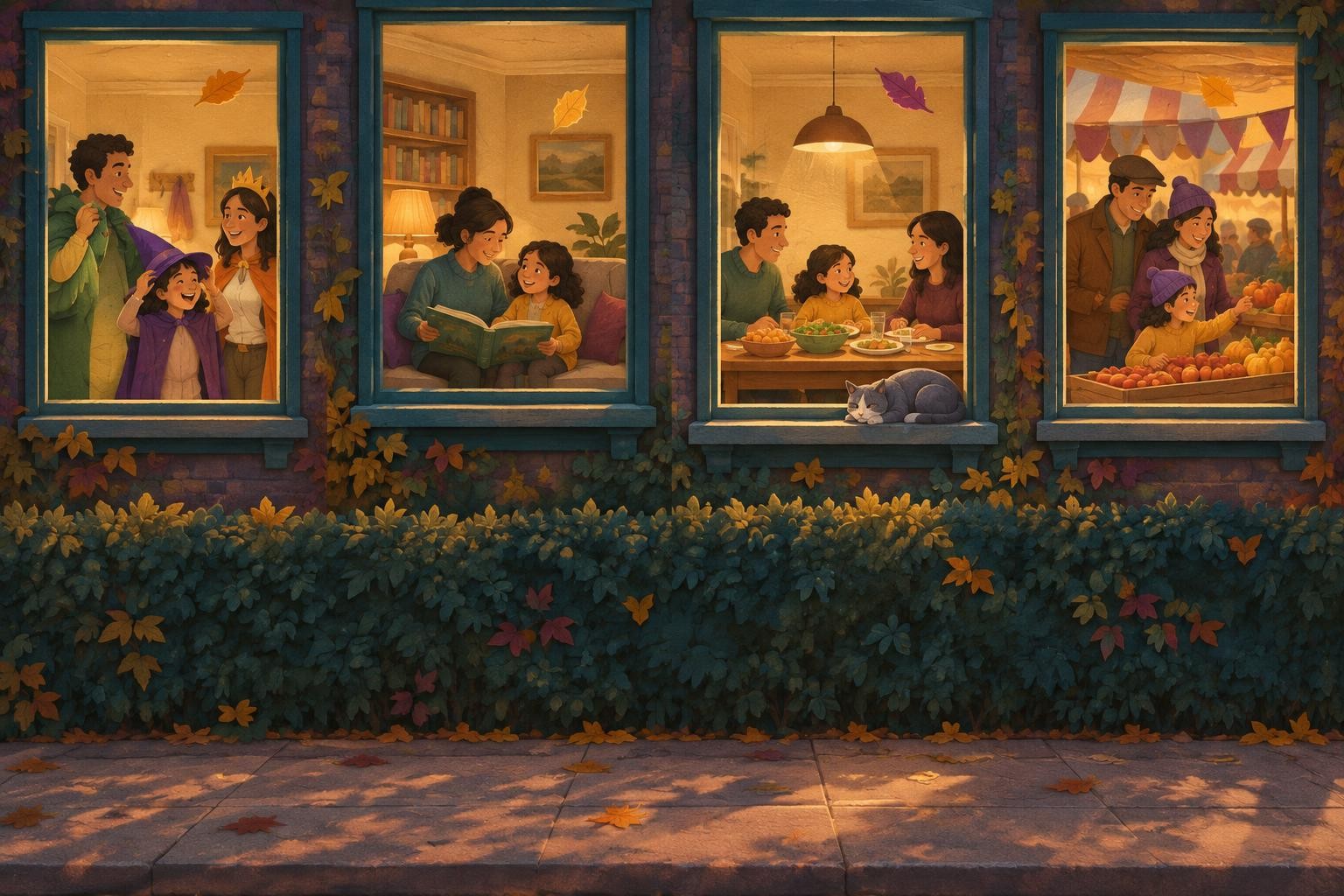
Look at four windows on one street, on the same October night. One family tries on costumes. One reads a storybook on the sofa. One eats a cozy dinner, just like any other night. One visits a harvest festival. Many people think every family does Halloween the same way. But actually, families choose differently. It depends on where they live, what they believe, and what feels comfortable. Some families do not celebrate at all. Every choice deserves kindness and respect.
What Stays After the Pumpkins Go?
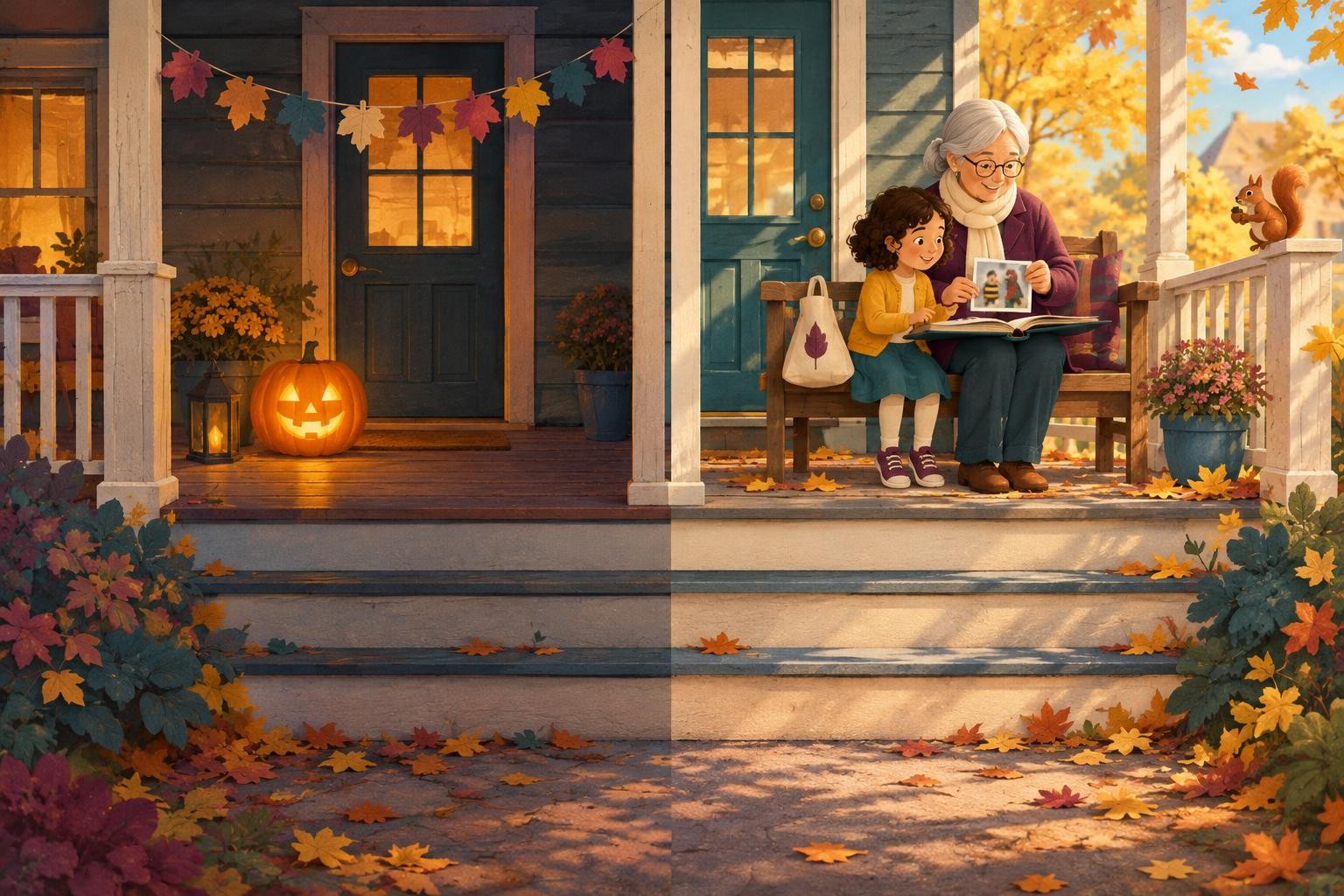
At midnight, October turns into November. The next morning, grown-ups take the pumpkins and paper garlands down. The porch looks plain again. But some things stay. Photos stay. Memories stay. Stories about the buzzing bee costume or the funny dragon stay too. And next year? The tradition will change a little again. It is like a story that grows a bit each time someone tells it.
Then or Now? You Be the Expert
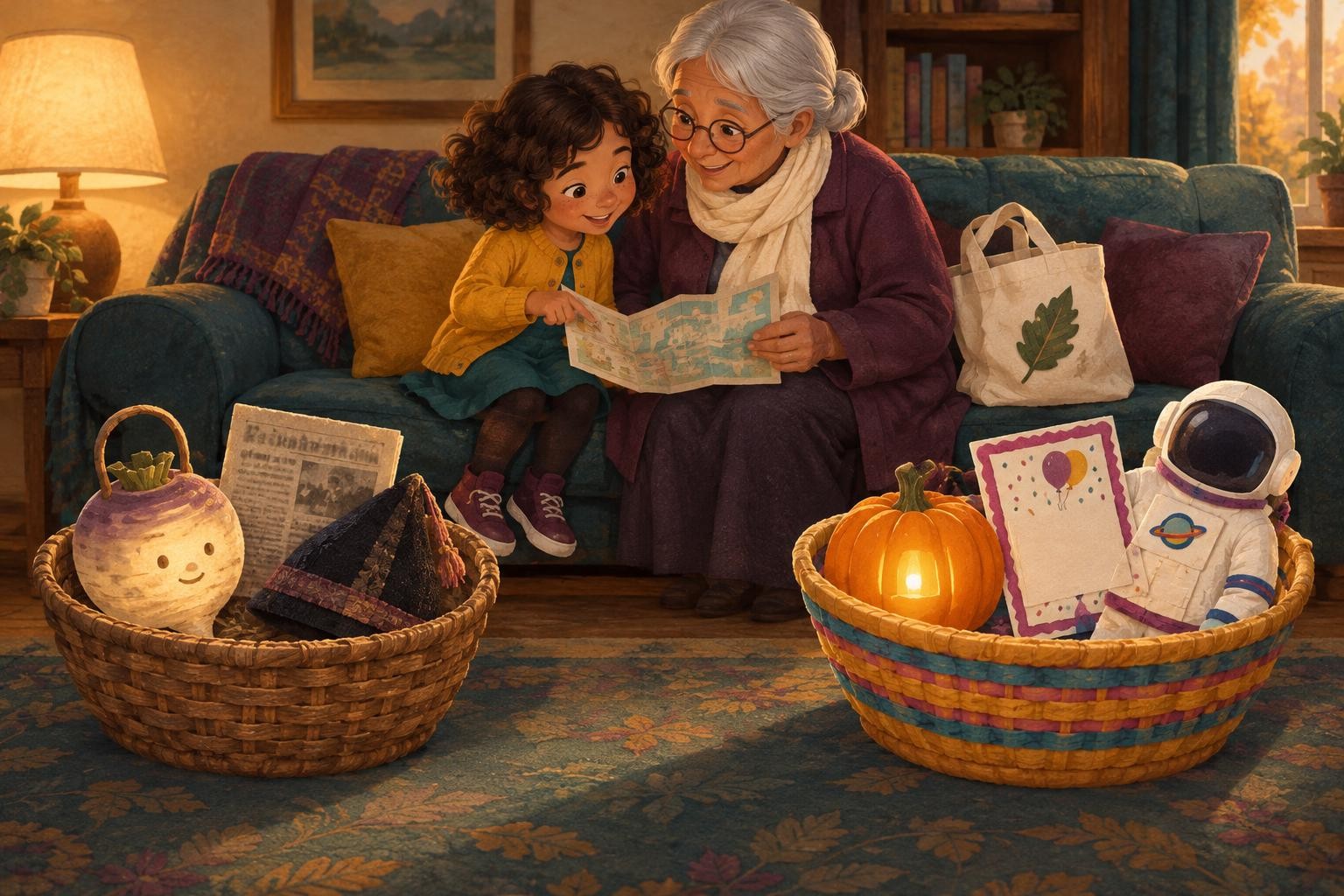
Traditions change as people carry them along, so can you sort these museum treasures into Then and Now?
Check your wonder
New words
Where we looked
We checked trusted places on the web, like the National Museum of Ireland, Historic Environment Scotland, and the Library of Congress, to make sure every fact is true.
The end
Now you know Halloween grew like layers, from turnip lanterns and guising to pumpkins and parties. Traditions keep changing as people carry them to new places. What new layer might your family add someday?