How Snowflakes Are Made: The Science of Snow
Why do snowflakes have six sides, why is snow white, and why does winter sound so quiet? Discover the science of snow in this illustrated kids' book.
about real things · 23 pages · ages 6–7 · long storybook · EN
Read · Play · Listen · PDF · Print edition · with the Storybook Pass · Make it about your child
Reviewed for child safety · gentle by design · How our storybooks are made
The pages
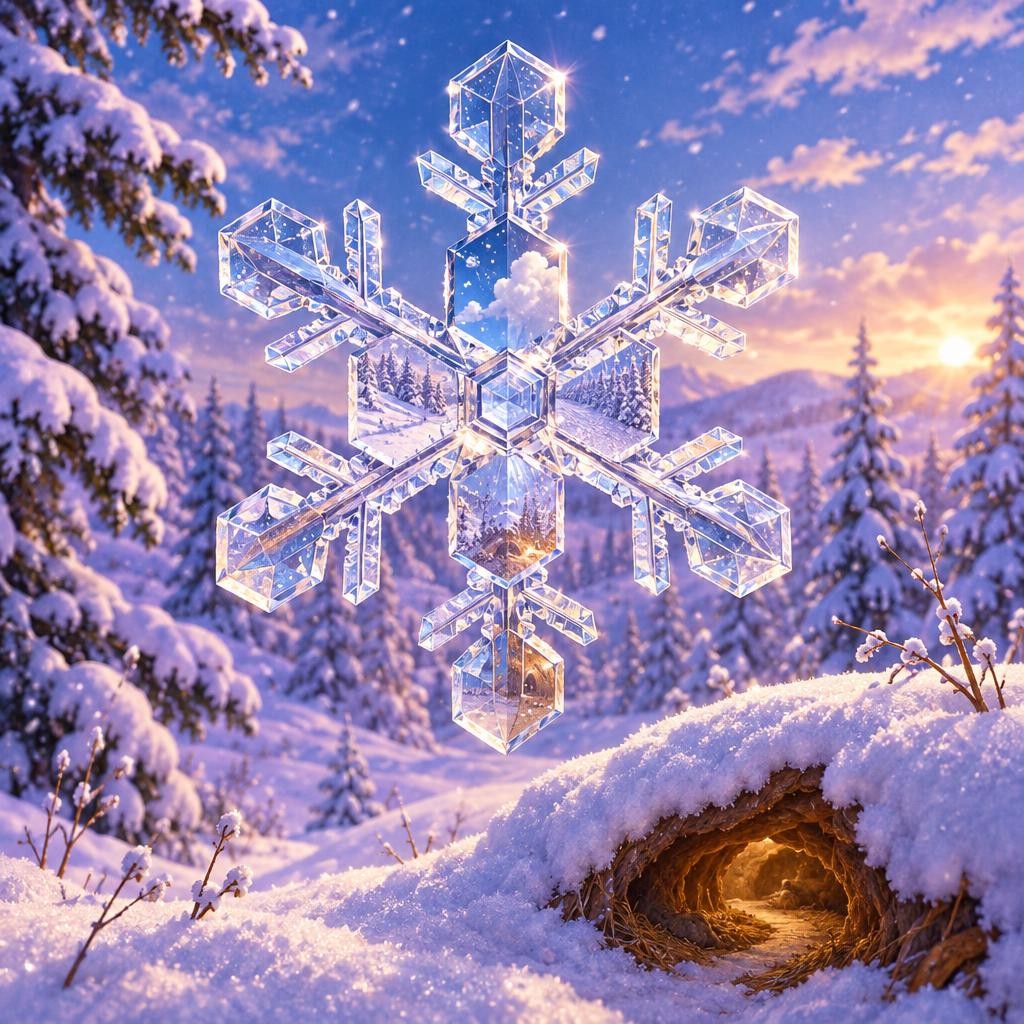
The Snowflake’s Secret Map
The Snowflake’s Secret Map
For every child who looks closely at winter.
What's inside
A Speck in the Cloud The Crystal Grows a Diary White, Hushed, and Full of Air The Secret Room Under Snow
Where Does Snow Begin?
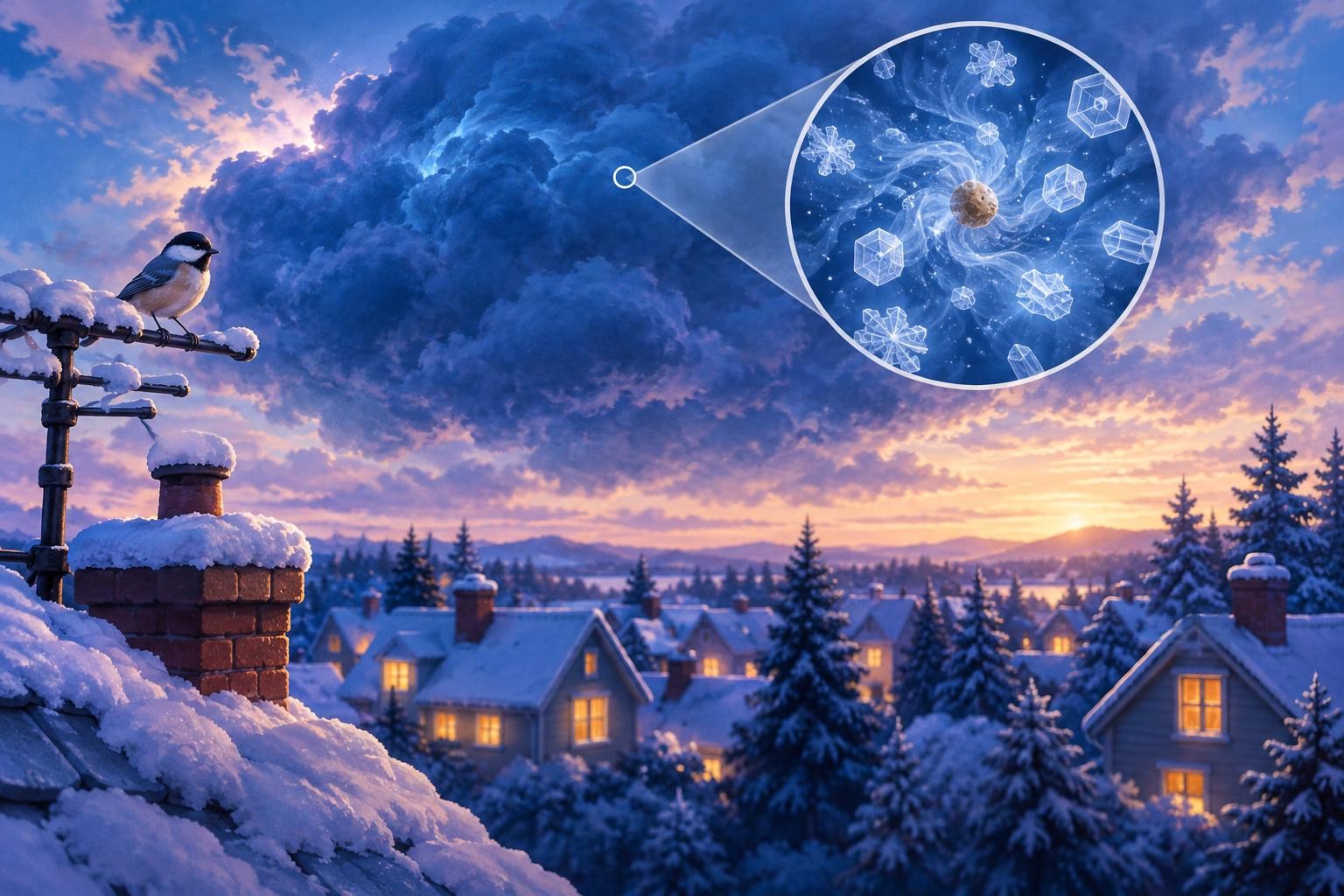
Snow does not begin as a tiny white star. High in a cold cloud, water hides in the air. It gathers around a speck so small you could never spot it. Let’s zoom in and meet the snowflake’s very first home.
Water Wears Three Coats

Think of water as a shape-shifter. In your warm breath, it can be invisible water gas. Scientists call this water vapor. On a window, it can be liquid drops. Outside, cold turns it into solid ice, like an icicle. It is still water each time. What changes is how much warmth it has.
The Tiny Landing Place
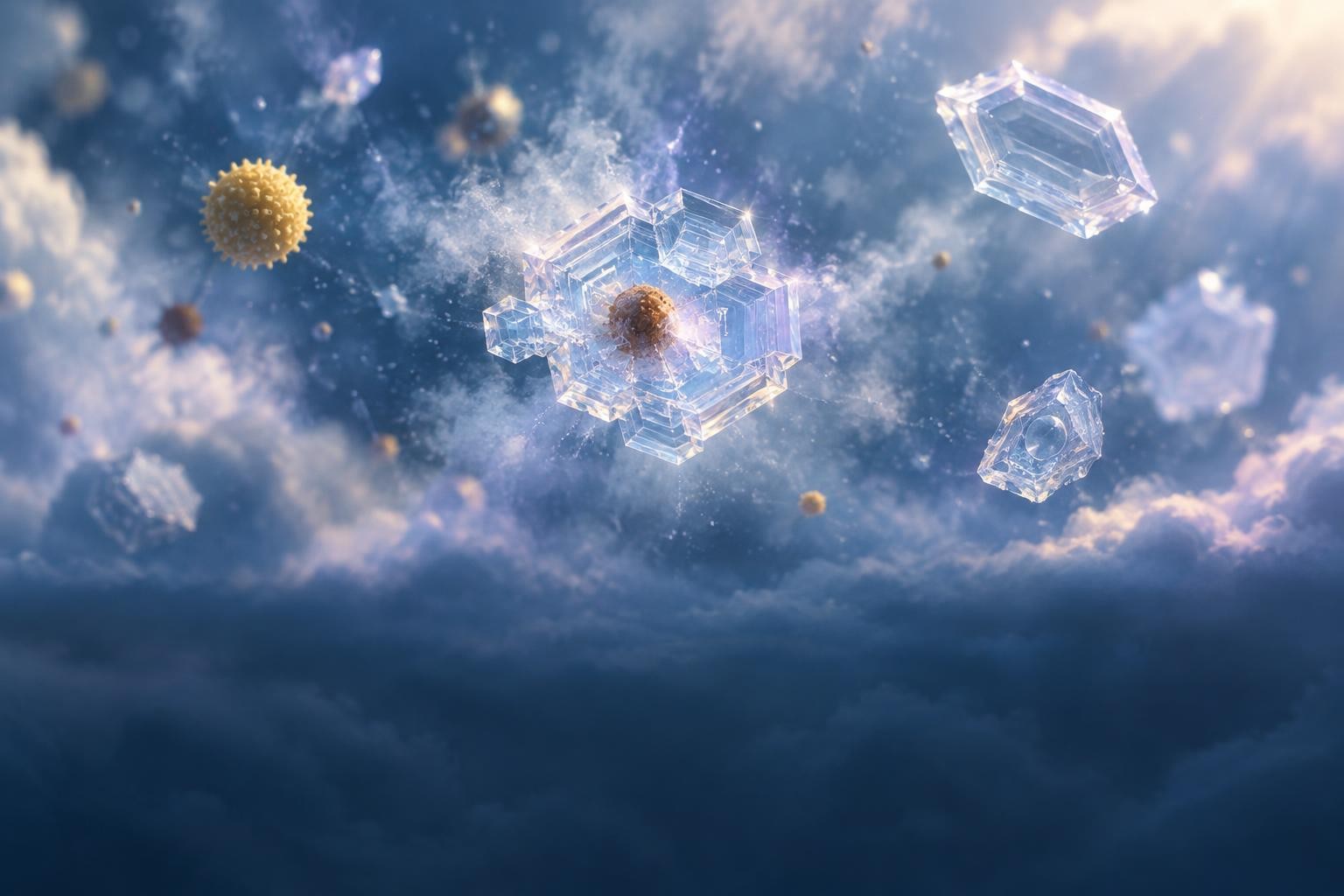
Up in a freezing cloud, water vapor needs a place to begin. It may settle on dust, smoke, pollen, or a grain of sea salt. Instead of becoming a raindrop first, the vapor turns straight into ice. This change is called deposition. Like frost growing on a cold window, a tiny ice crystal begins on its little landing place.
Why Six?
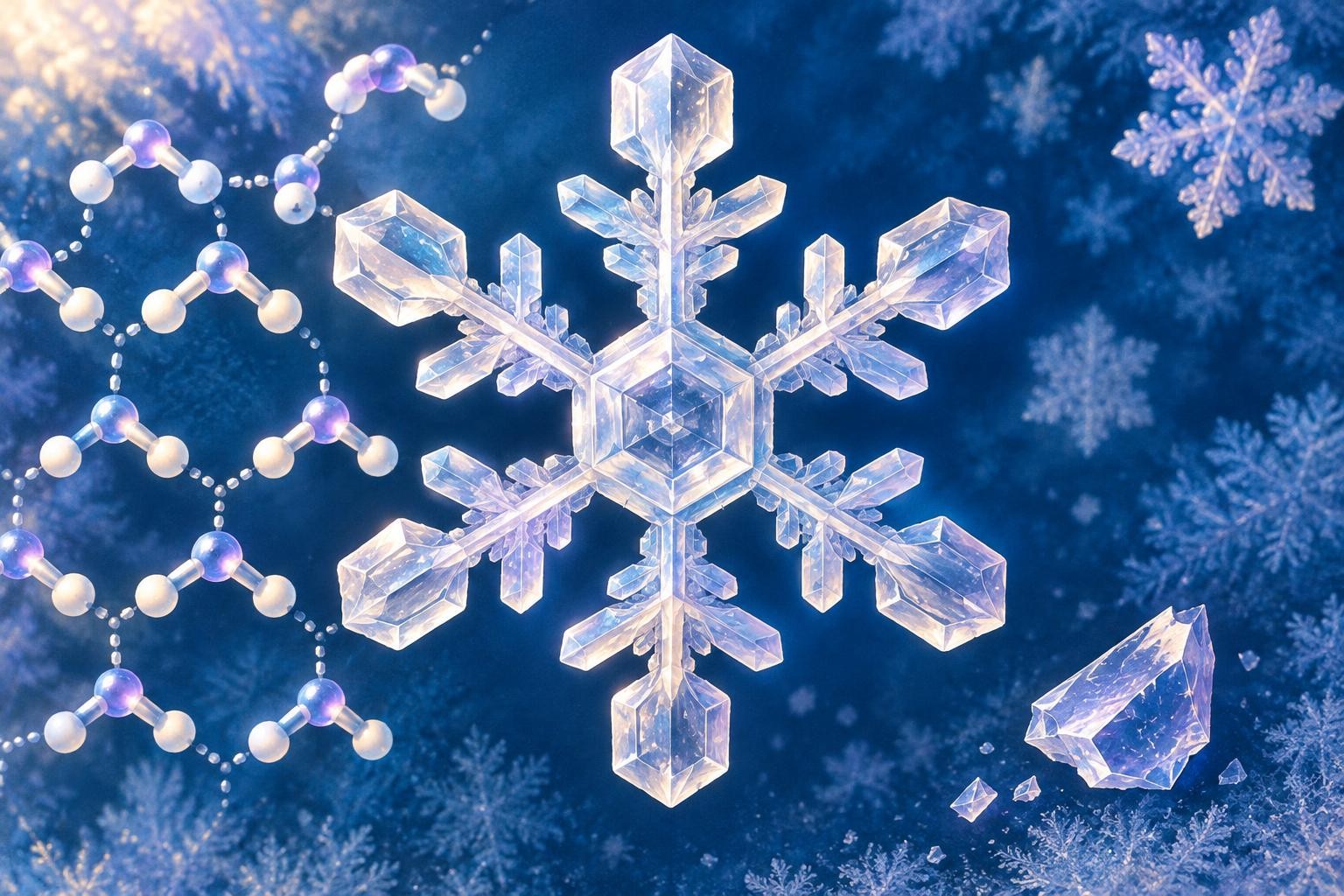
Ice is built from pieces far too small to see. Each piece is a water molecule, a tiny group of atoms. When water freezes, these molecules link in a pattern like a honeycomb cell: six sides. That six-sided shape is a hexagon. So a growing snow crystal has six corners or arms. Not five. Not eight. Its secret map is built into ordinary ice.
A Star Starts to Write
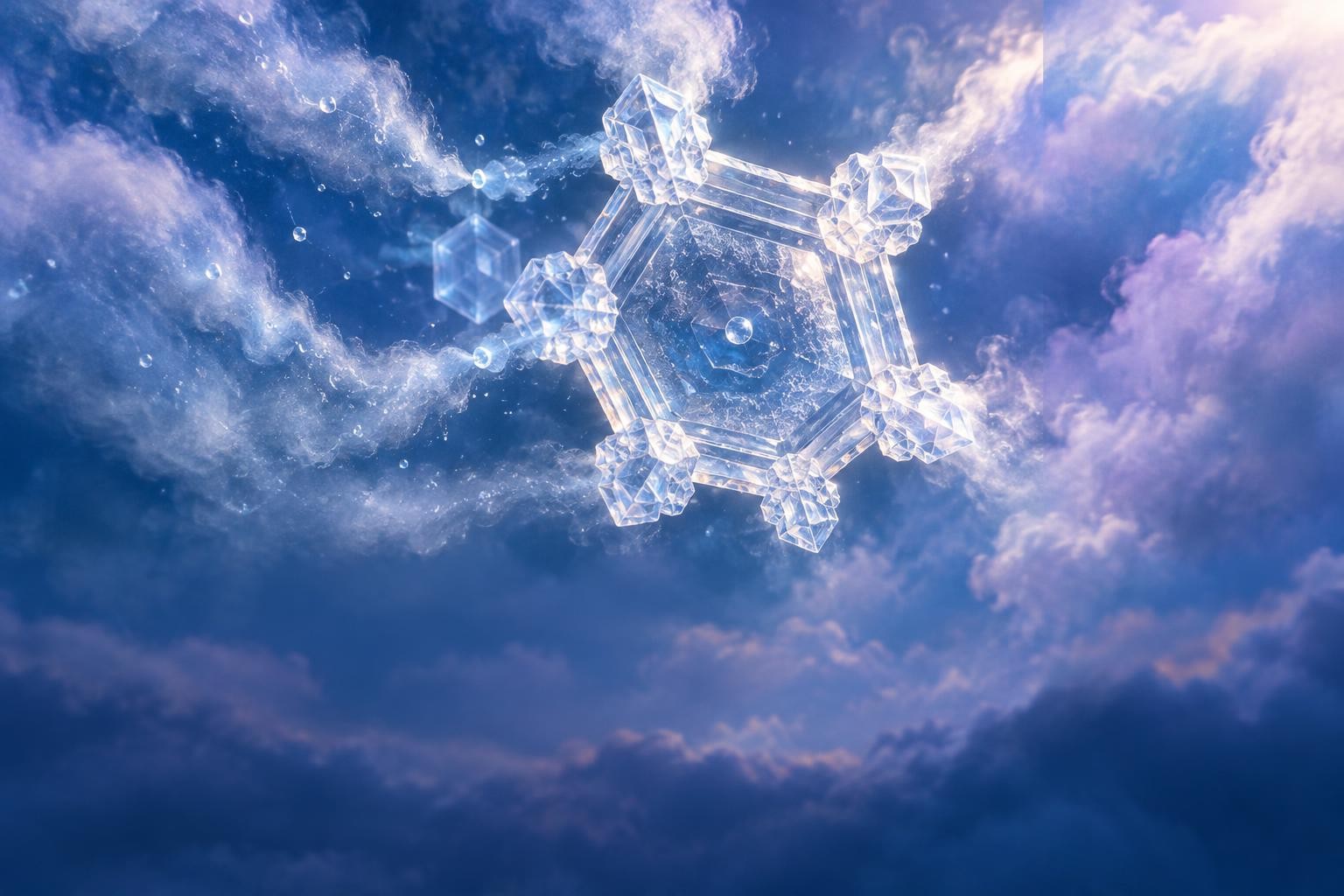
High in a cold cloud, a tiny ice hexagon is growing. Invisible water vapor lands on it, sticks, and turns to ice. New bits gather fastest around its corners. Soon, the little crystal begins stretching six bright arms into the cloudy sky. Its shape will become a diary of the weather it meets.
Edges Grow First
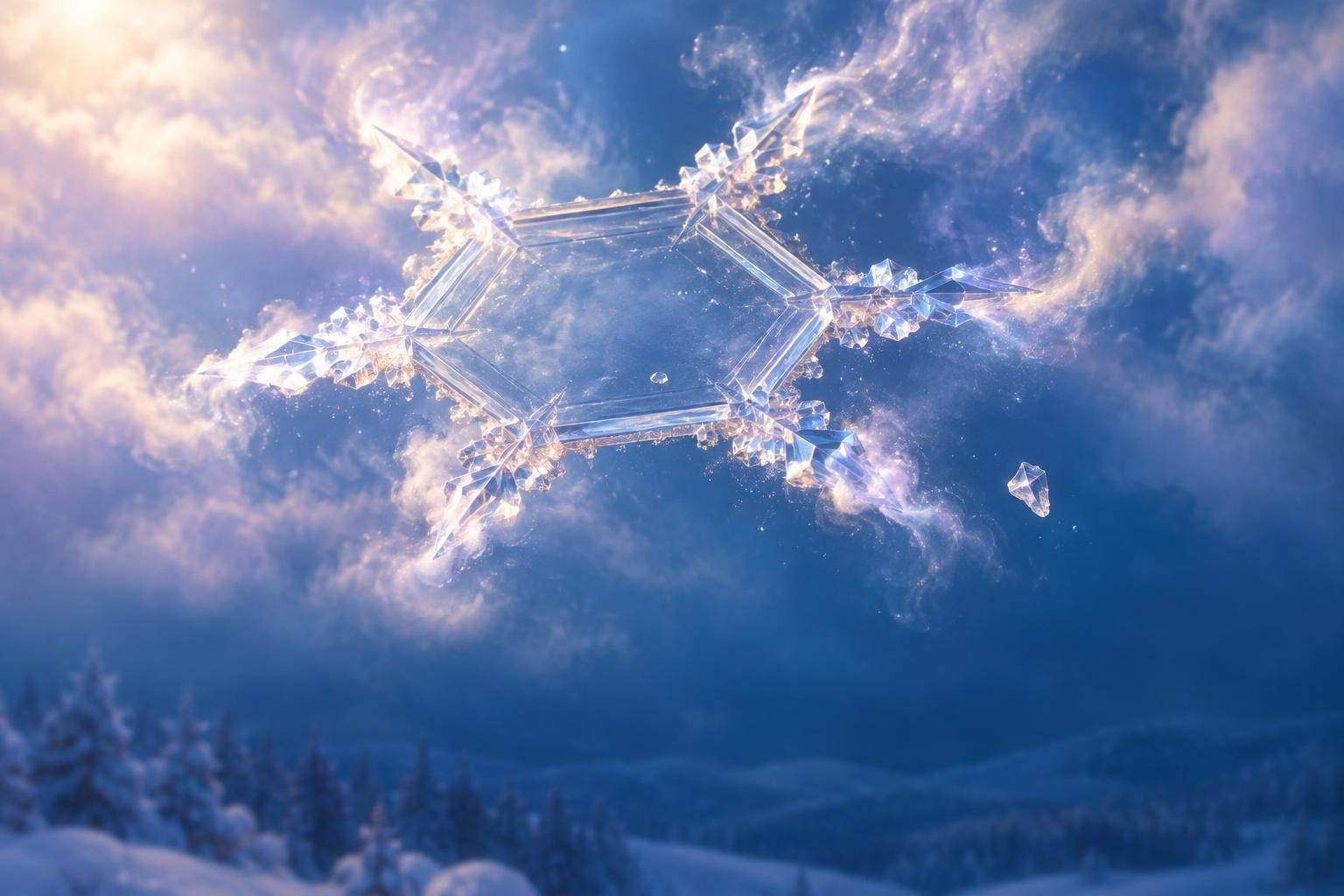
Think of a wet mitten collecting snow on its fuzzy threads. A snow crystal collects water vapor, too. Its sharp corners and edges often catch the vapor fastest. There, it freezes into more ice. The middle grows more slowly, while the corners push outward. That is how a flat plate can begin growing arms.
Cloud Weather Makes Shapes
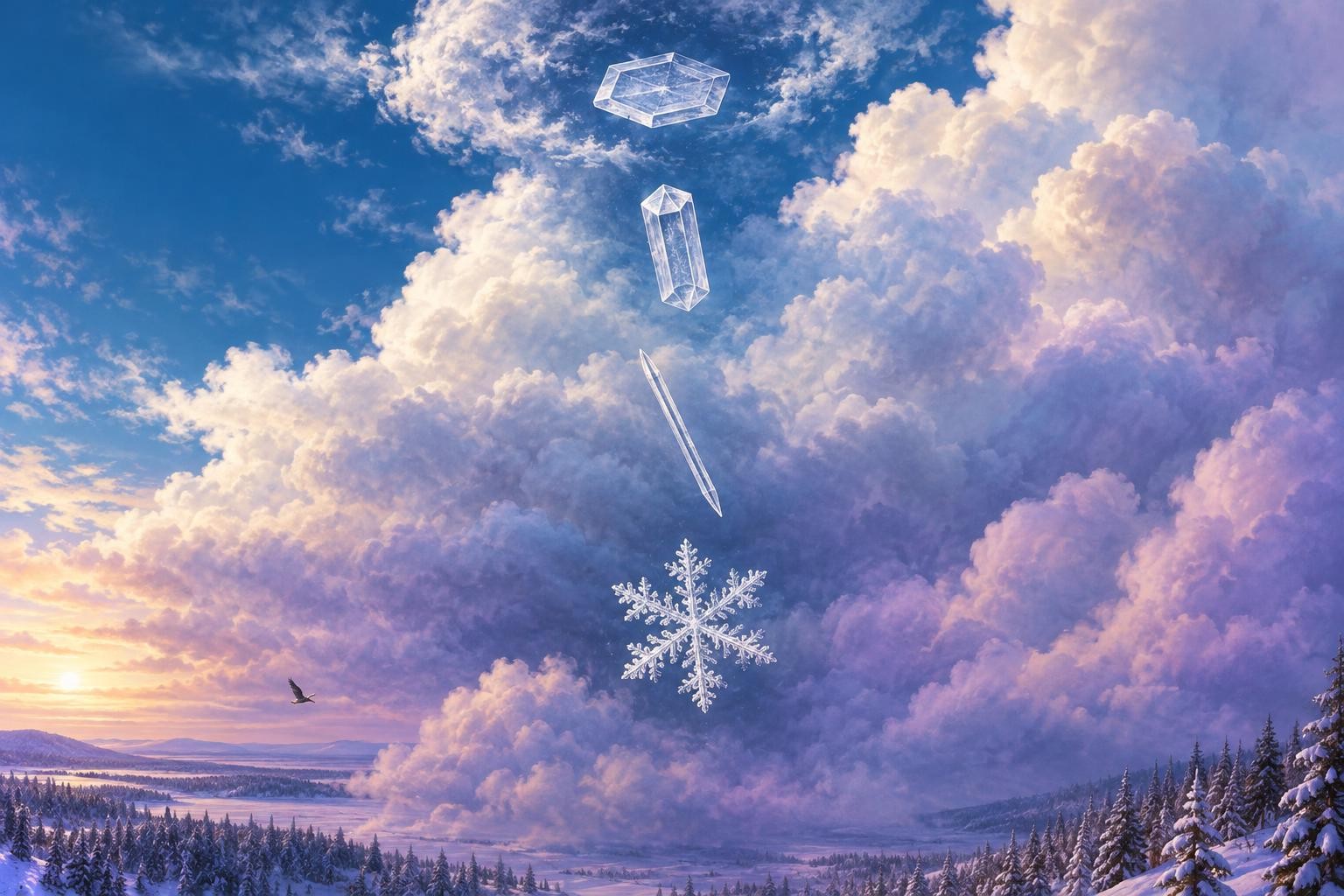
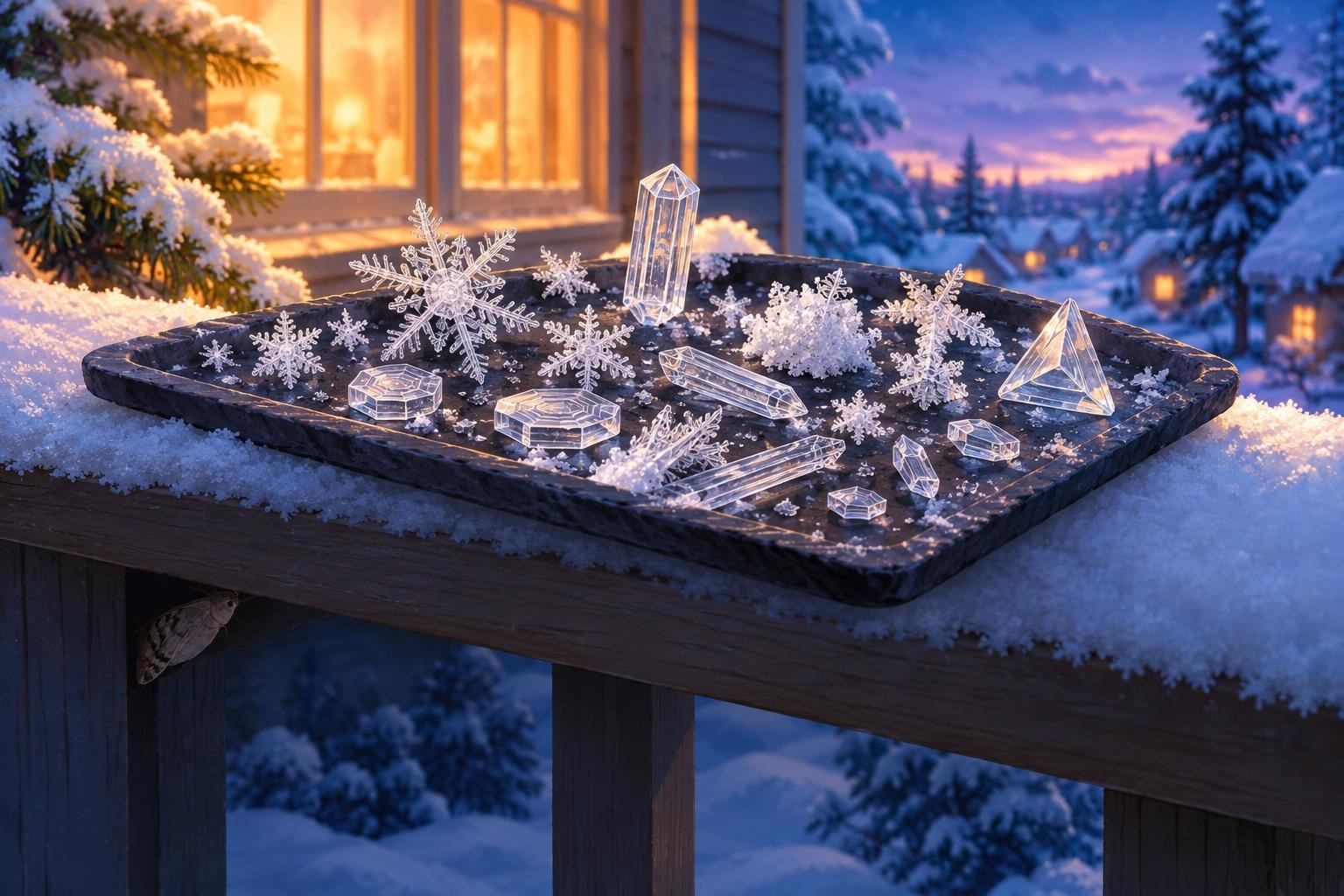
A falling crystal passes through cloud pockets, like rooms with different weather. Cold, drier air can make simple plates or small columns. Colder, wetter air can make fancy branches. A long skinny shape is called a needle. A branching, tree-like crystal is a dendrite. Each new layer changes how the crystal grows. Its final shape records that journey.
Six Sister Arms
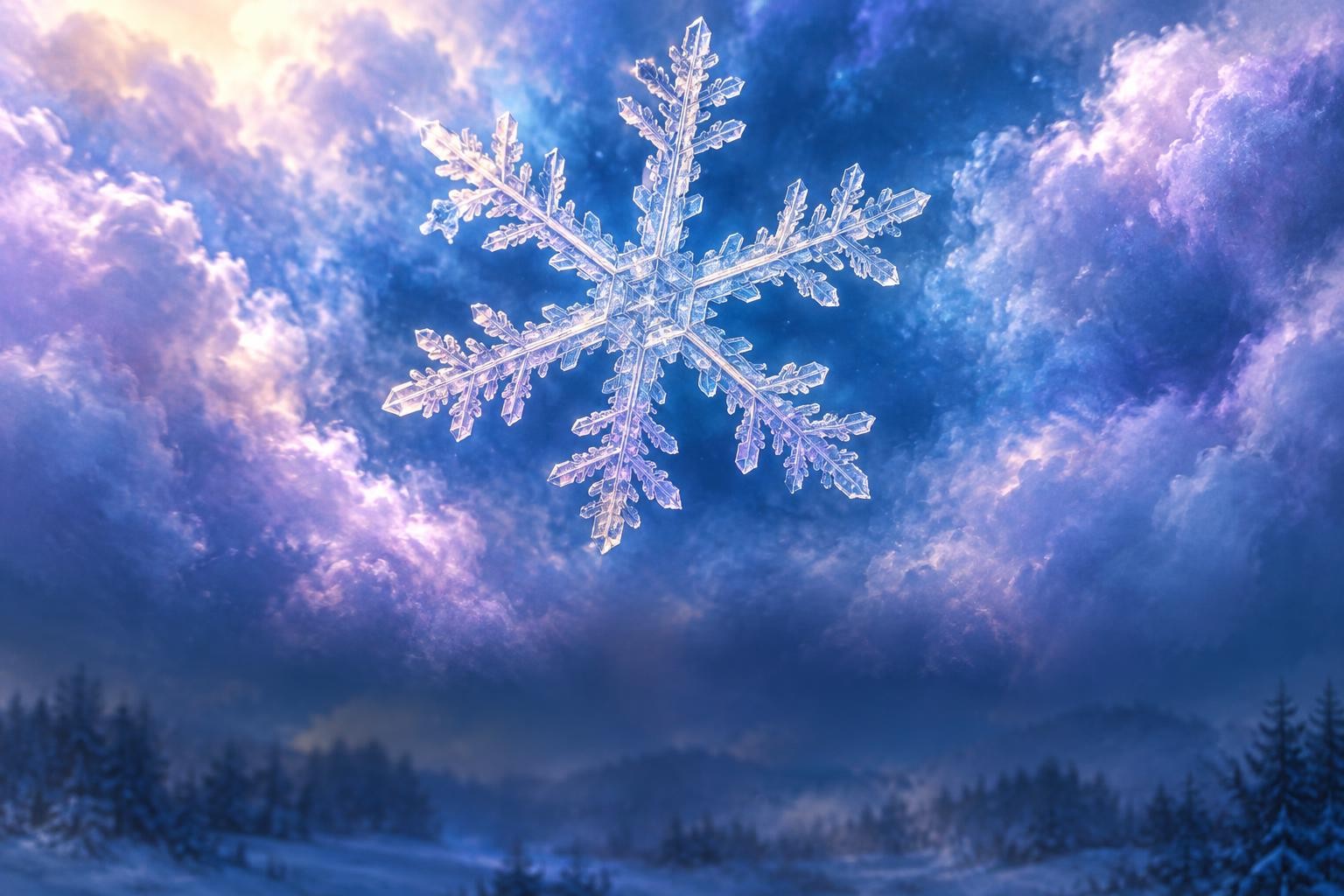
Why do the arms often match? They grow side by side in nearly the same cloud air. If one arm meets damp, cold air, the others usually meet it too. So matching branches sprout at nearly the same time. They are not always perfect copies. A tiny bump or warmer patch can change one arm’s path. Still, the six arms often look like sisters.
Not Every Flake Is a Fairy Star
The White That Isn’t White
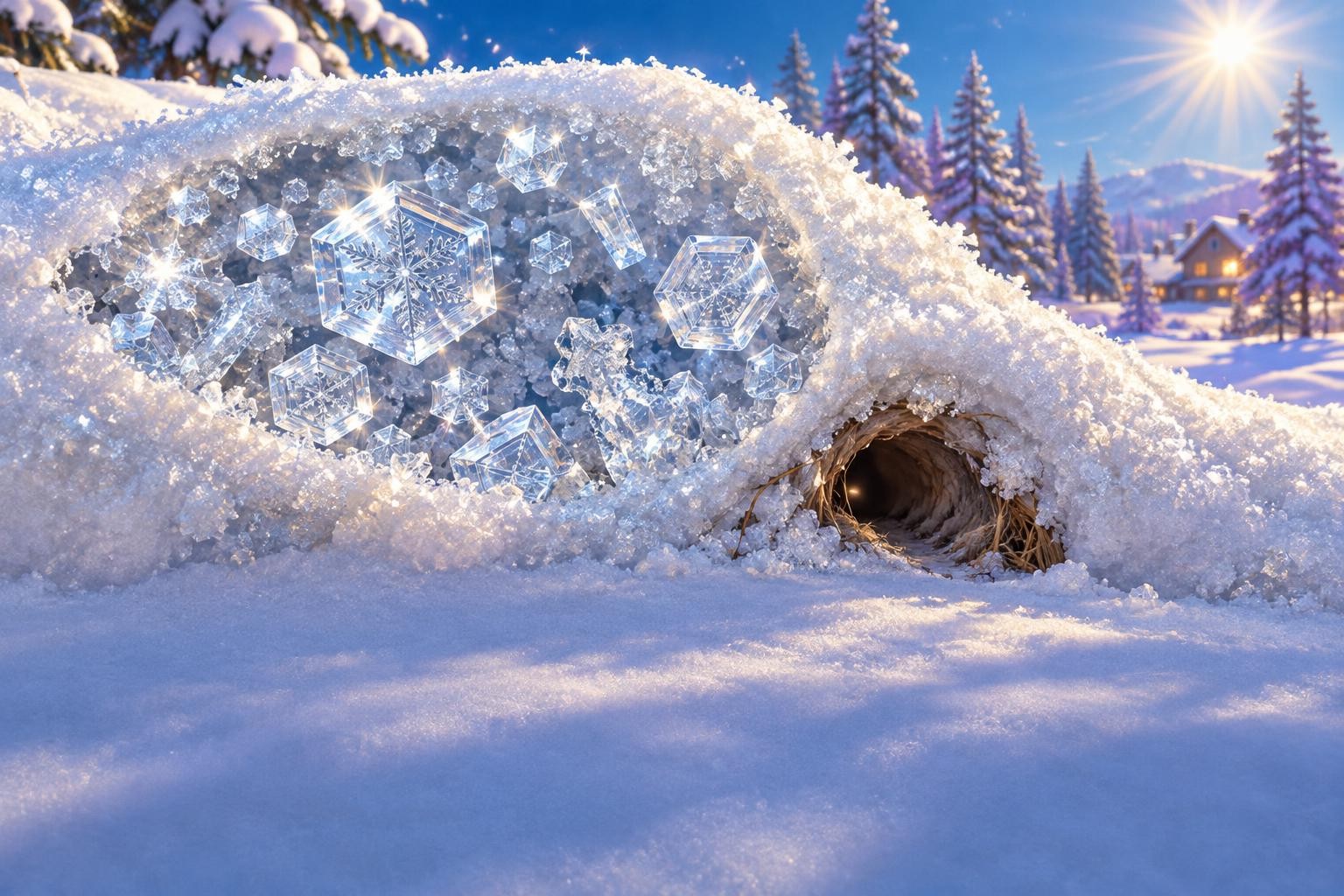
A snowy hill looks bright white. But look closely: its ice crystals are mostly clear! This chapter follows sunlight and sound through a snowbank. You will discover why clear crystals make white snow, and why fresh snowfall makes a busy world feel hushed.
Billions of Tiny Mirrors
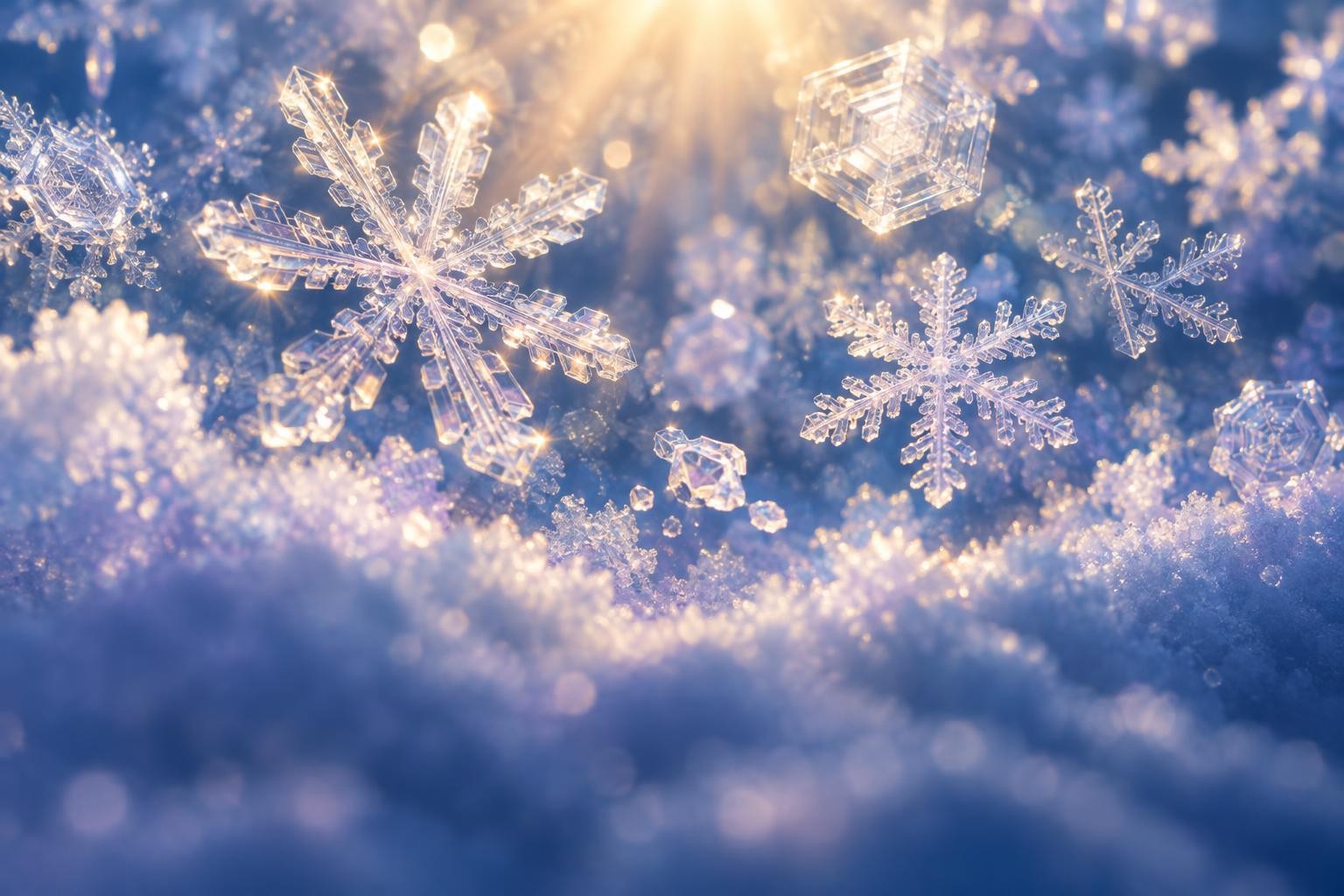
Hold one ice cube to the light. It is mostly clear. Now imagine a snowbank packed with countless tiny crystals. Sunlight hits their many flat faces and bounces in every direction. This spreading-out bounce is called scatter. All the sunlight colors come back to your eyes together, so the snow looks white. Snow is not white paint. It is a dazzling pile of clear ice and air.
The Giant Sound Sponge

After fresh snow falls, listen. Cars, paws, and voices may seem softer. Fluffy snow has thousands of tiny gaps filled with air. Sound wiggles into those gaps and loses energy as it bumps around. The snow absorbs and scatters the sound, a bit like a soft pillow muffles a clap. That is why a snowy street can feel wonderfully hushed, even when life is still moving.
When Snow Gets Crunchy
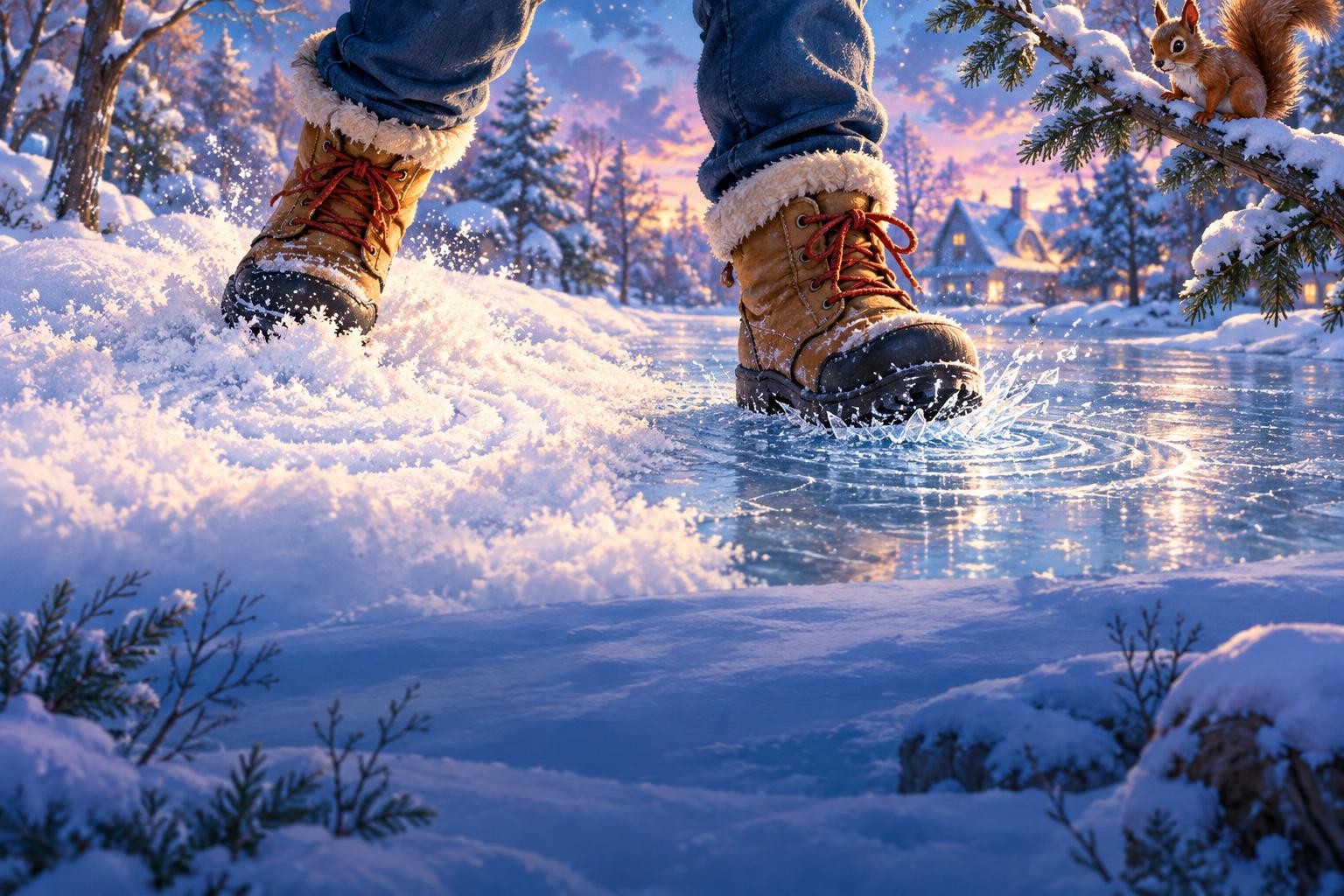
Fresh snow is loose, soft, and full of air. But sun or warmer weather can melt its surface a little. When it freezes again, crystals stick together into a hard, icy crust. Your boots may crunch loudly there. Unlike fluffy snow, hard ice has fewer air gaps. Sound can bounce off it instead of getting soaked up. So snow can be quiet one day and noisy the next!
A Blanket With Tunnels
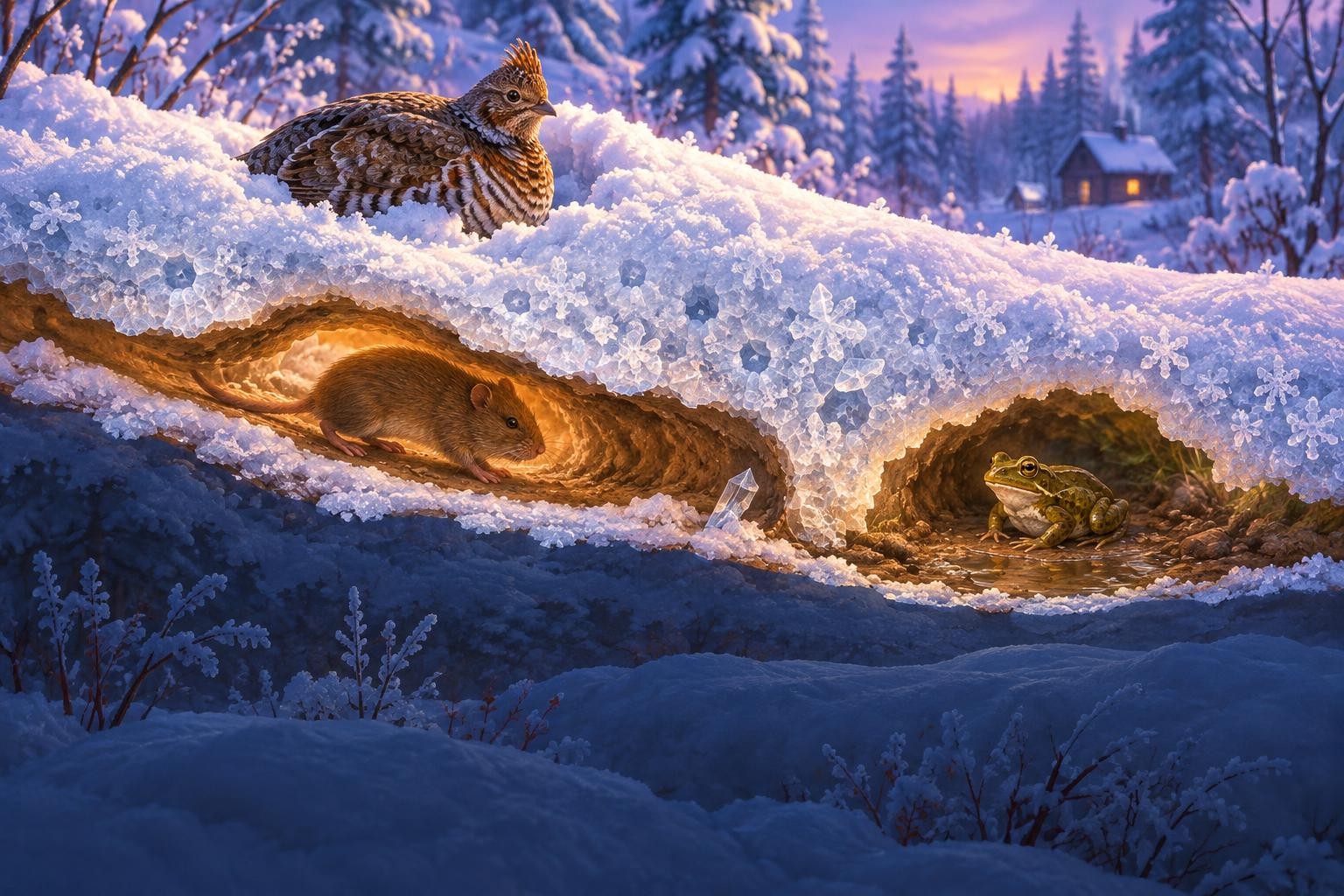
Snow feels cold on your mitten. Yet deep snow can make a hidden room below. Tiny air spaces slow warmth from escaping, like fluff in a blanket. Voles can race through tunnels there. Some frogs rest near the muddy ground. Even a grouse may tuck into soft snow for the night. Let’s peek beneath the sparkling roof.
How Cold Snow Holds Warmth
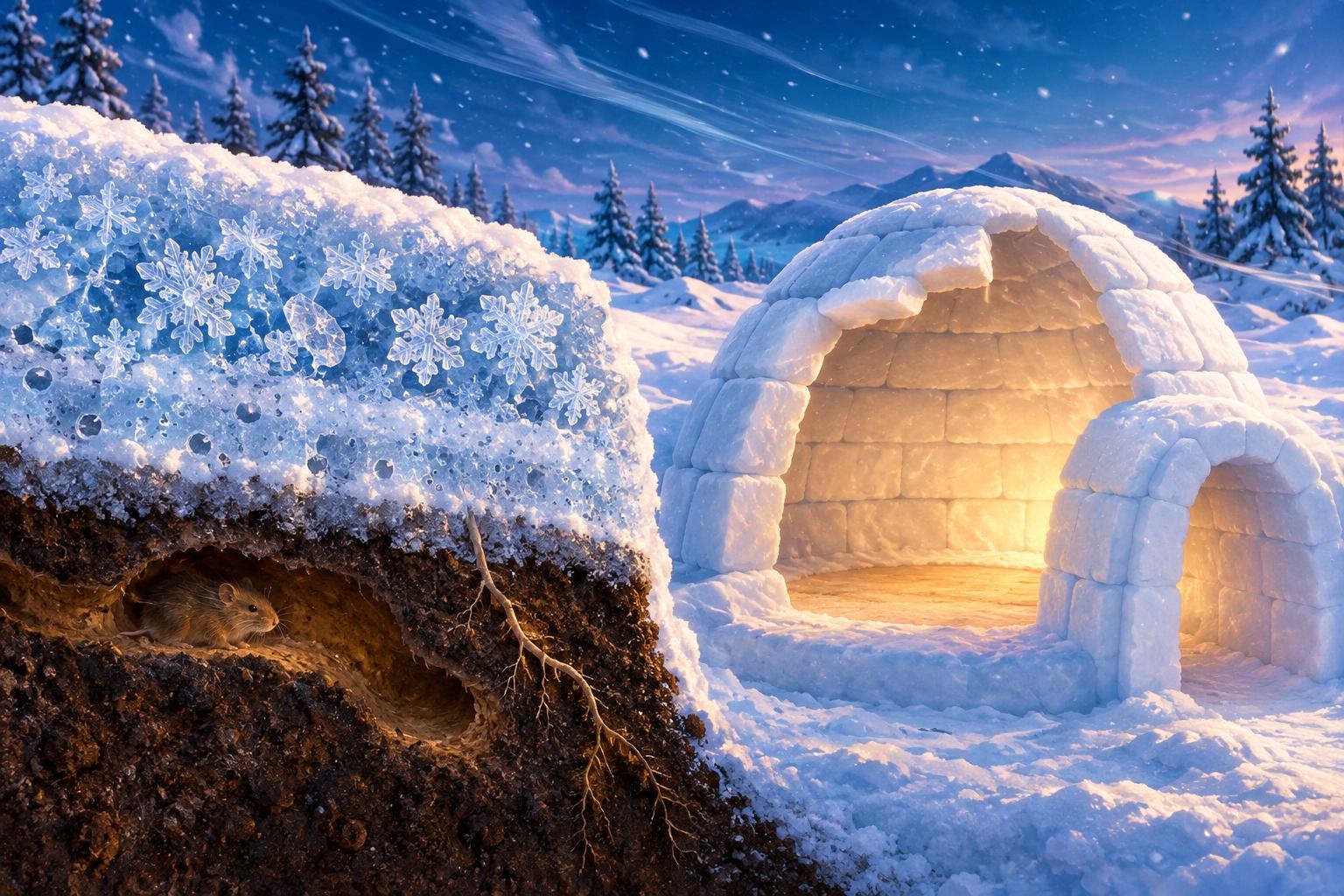
Think of a puffy coat. Its fluffy spaces hold air, and that air slows heat from leaving your body. Snow works similarly. Between its ice crystals are tiny air pockets. They slow warmth rising from the ground. This hidden under-snow space is called the subnivean zone. Traditional Inuit snow shelters, called igluit, also use packed snow’s trapped air to help hold warmth inside. Snow is still cold, but it can block the sharper cold outside.
Catch a Crystal Safely
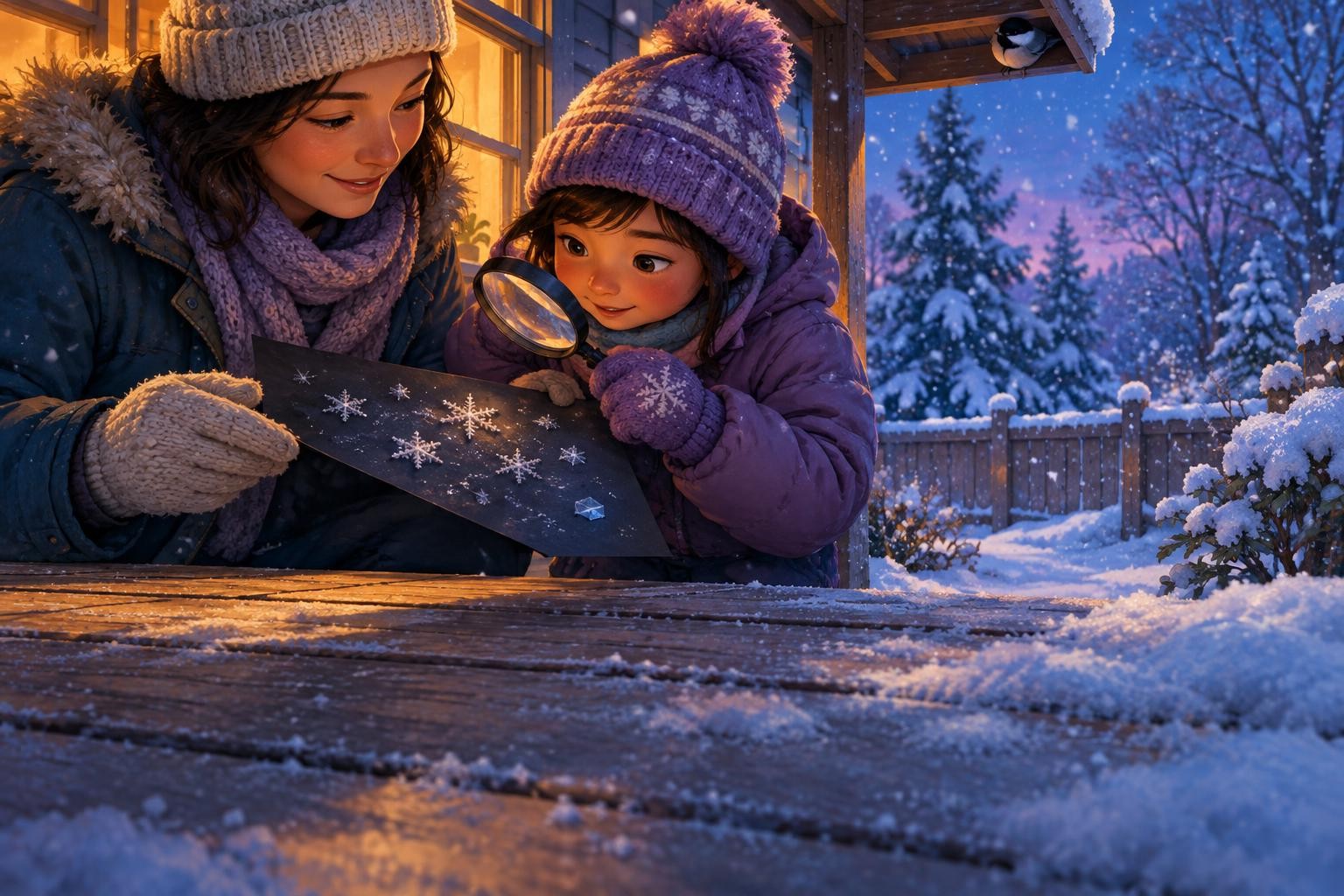
With an adult, catch fresh snow on cold dark paper and look before it melts.
Check your wonder
New words
Where we looked
We used web research from trusted science and education sources, including NOAA, NSIDC, Caltech, and wildlife educators, to check the snow facts in this book.
The end
Now you know that every snow crystal carries a tiny map of its cloud journey. You know why snow can look white, sound quiet, and make a snug space below. Next time snow falls, look closely and wonder: what weather story did it bring?