How the Pyramids Were Built: Ancient Egypt
How did ancient Egyptians build the Great Pyramid without machines? Explore Nile boats, wet-sand sleds, and workers' villages in this illustrated kids' book.
about real things · 23 pages · ages 8–10 · long storybook · EN
Read · Play · Listen · PDF · Print edition · with the Storybook Pass · Make it about your child
Reviewed for child safety · gentle by design · How our storybooks are made
The pages
The Pyramid Builders’ Big Secret
The Pyramid Builders’ Big Secret
For every child who knows a mystery is better when the answer is real.
What's inside
A Stone Mountain for the Sun Stone, River, Road The Trick of Sand and Slope The Town That Fed a Wonder
A Mountain Humans Made
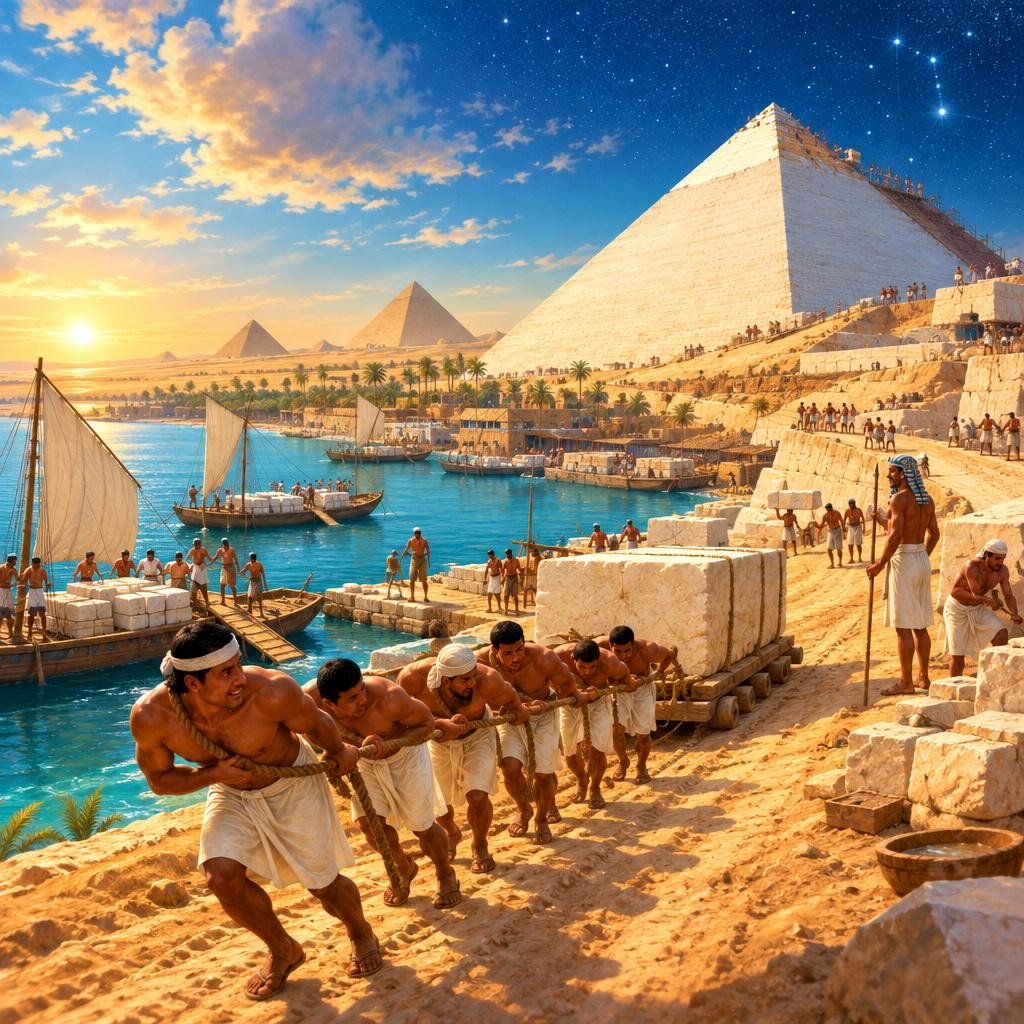
Beside the Nile, Pharaoh Khufu ordered a tomb unlike any other: a giant stone mountain that reached toward the sun. It was built about 4,500 years ago by Egyptian planners, craftspeople, and labor teams. How could people move, measure, and stack so much stone without engines? First, they had to make the ground itself behave.
Why Build So Big?
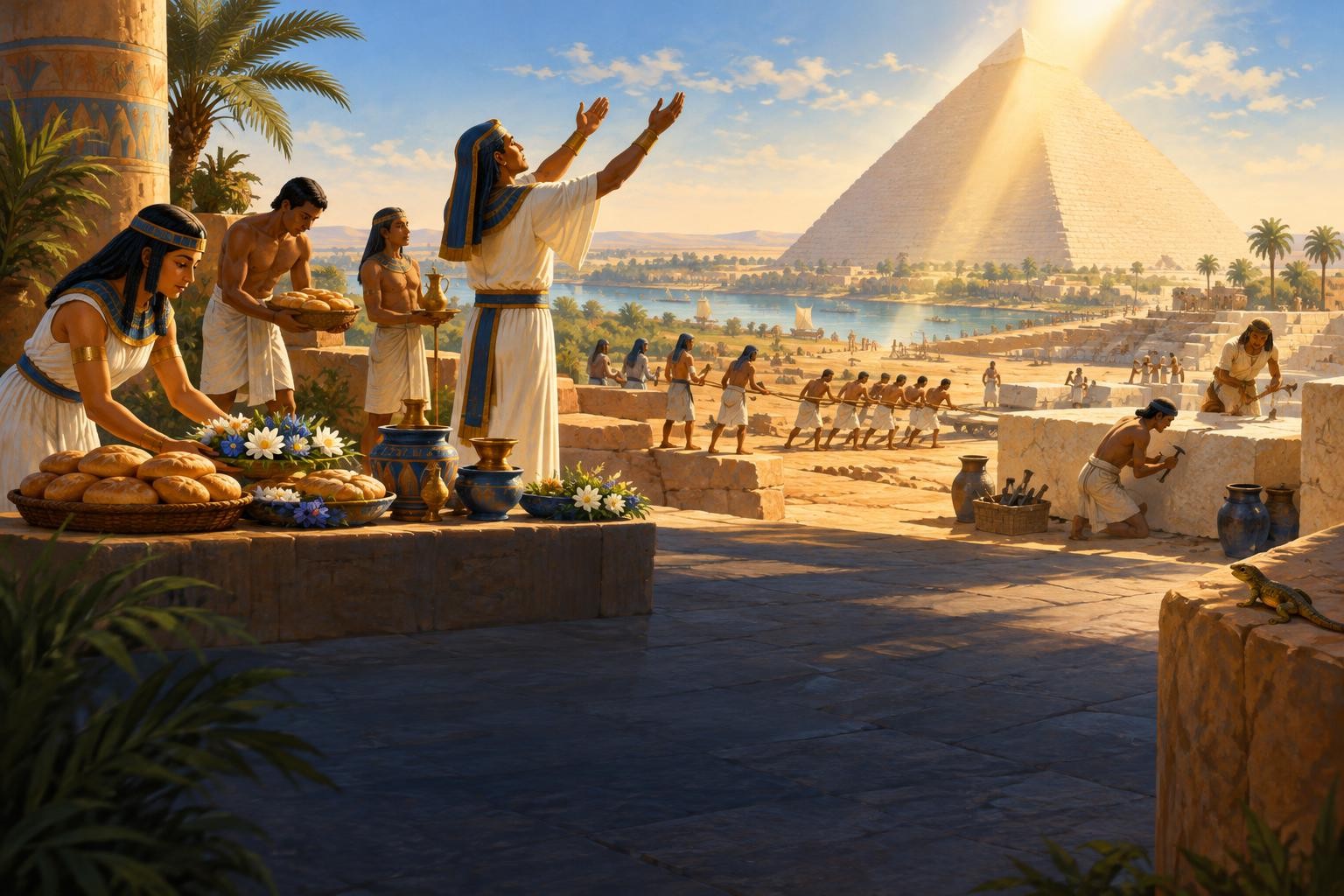
A pyramid was more than a giant building. It was a royal tomb: a place prepared for a pharaoh after death. Egyptians hoped their king would continue a sacred journey and be reborn, bringing order to the world again. The rising pyramid shape may have recalled the first mound of land appearing from ancient waters, or a ray of sunlight reaching upward. So Khufu’s pyramid needed to feel steady, bright, and everlasting. Many people imagine a gloomy place full of frights. Actually, it began as a hopeful monument, made with deep care for kingship, creation, and renewal.
First, Make Earth Behave
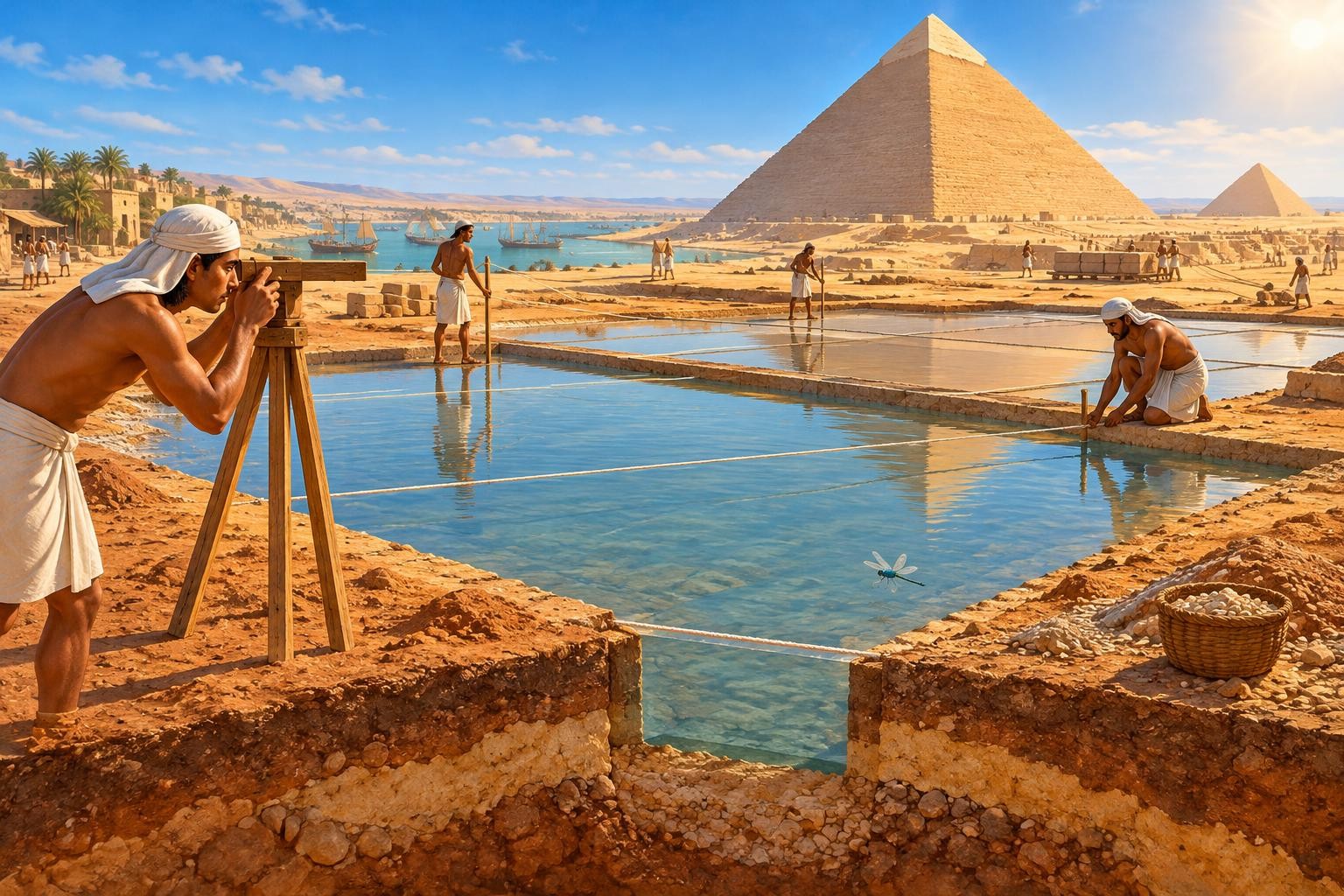
Before a single high course of stones could rise, surveyors had to prepare a level base. Level means flat all the way across, like a tray that would not let a marble roll. Crews cleared the rocky plateau, then checked low and high places with water-filled trenches. Water settles to the same height, making a useful guide. They stretched cords across the ground and used sighting tools to keep long lines straight. Next came the crucial question: where are north, south, east, and west? If the square foundation was crooked, every layer above it would carry that mistake.
Stars for a Compass
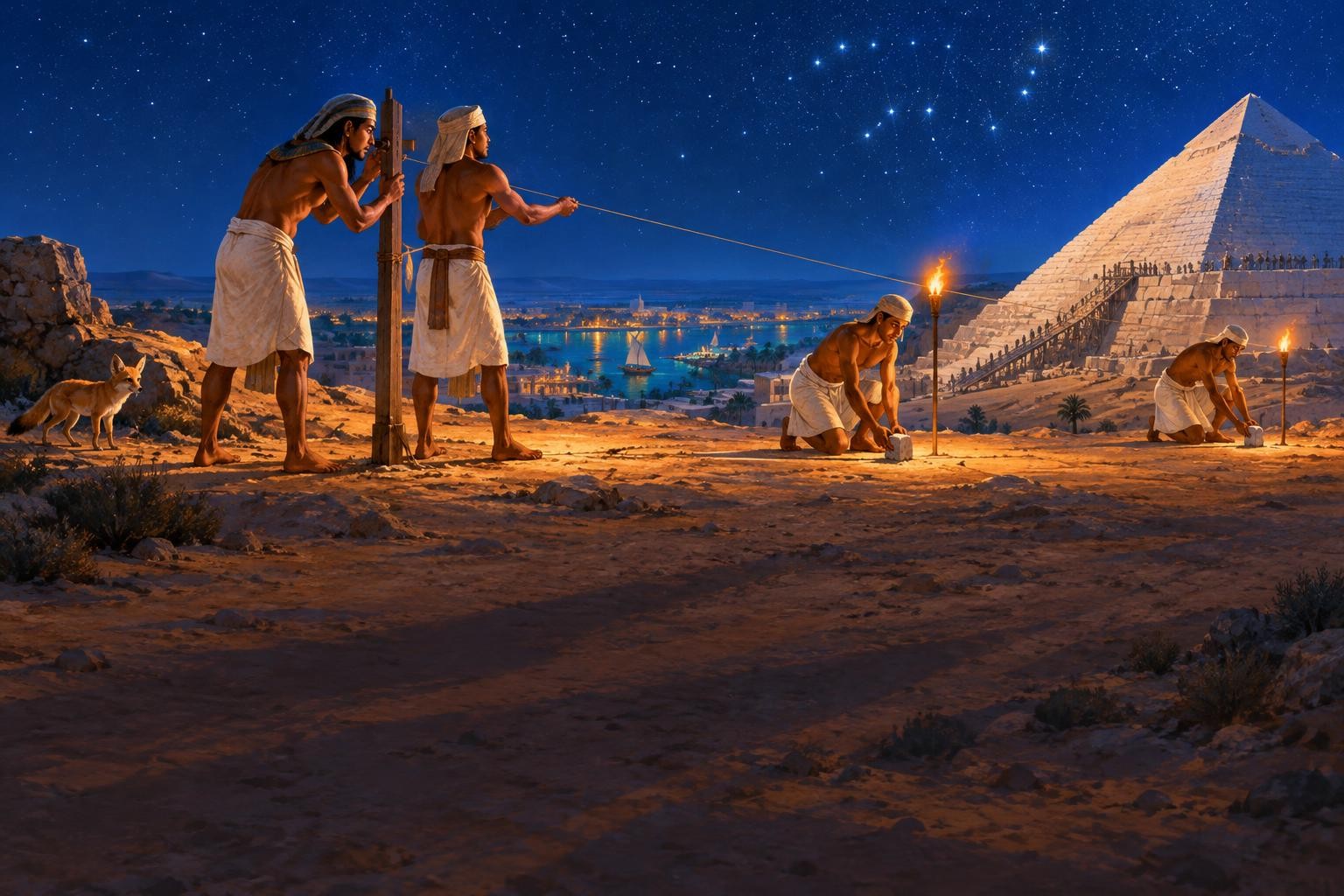
How do you find true north when there is no compass? True north points toward Earth’s North Pole, not toward a magnetic needle. At night, surveyors could watch stars wheel around the northern sky. They may have lined up a sighting tool and cord when particular stars reached just the right positions. Then assistants marked that direction on the ground. From one accurate north line, builders could set the other three directions and make a giant square. The Great Pyramid’s north-south line is within a tiny fraction of a degree of true north. That is astonishingly exact. Star surveying is a leading explanation, but the exact ancient method is still debated.
Where Did the Stone Begin?
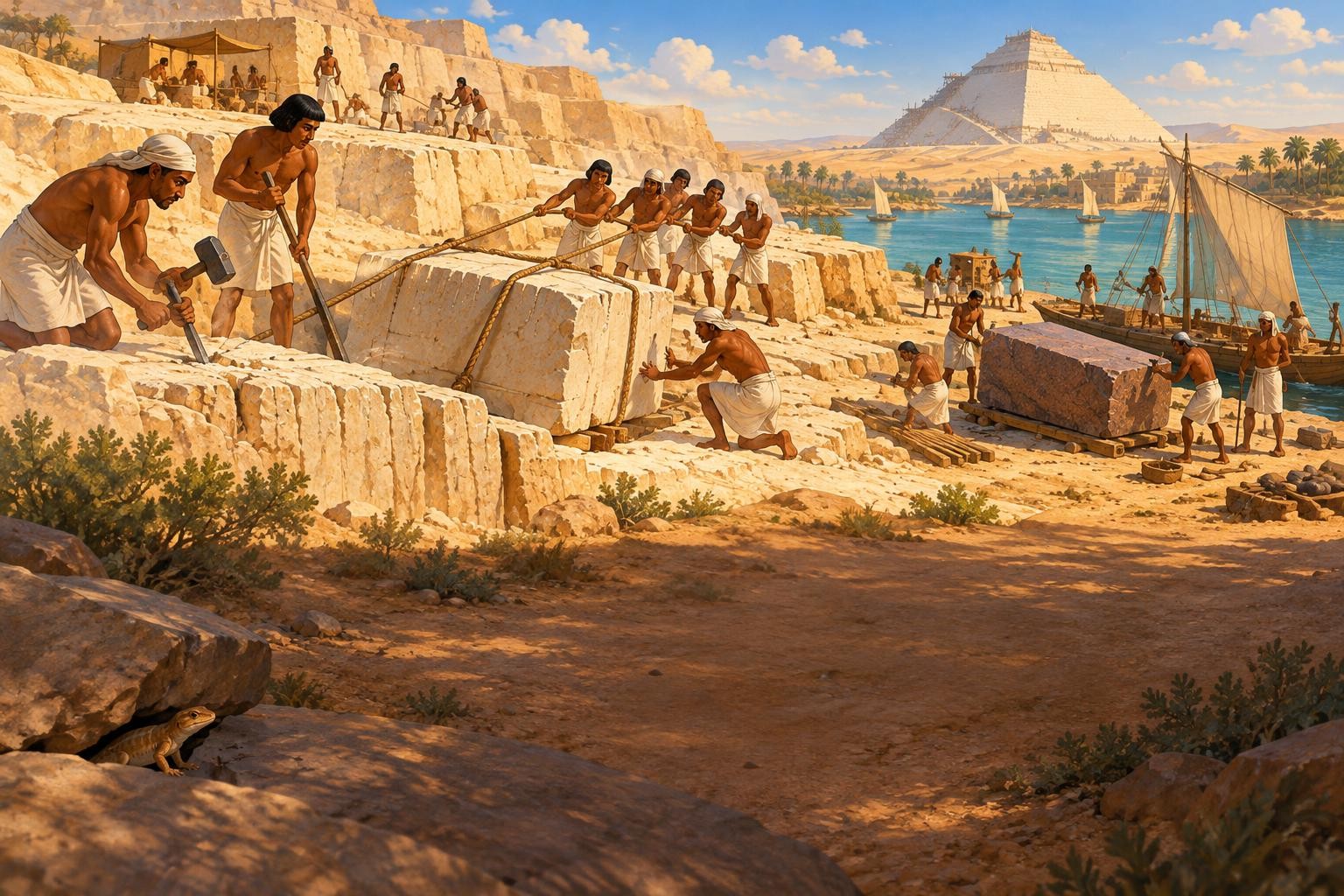
Before a block could become part of Khufu’s pyramid, it needed a journey. Most blocks began as pale limestone close to Giza. But special, extra-hard granite came from much farther away. How could people without engines free stone, float it across water, and bring it to a growing pyramid? Follow the road from rock to river.
Tools That Beat Rock
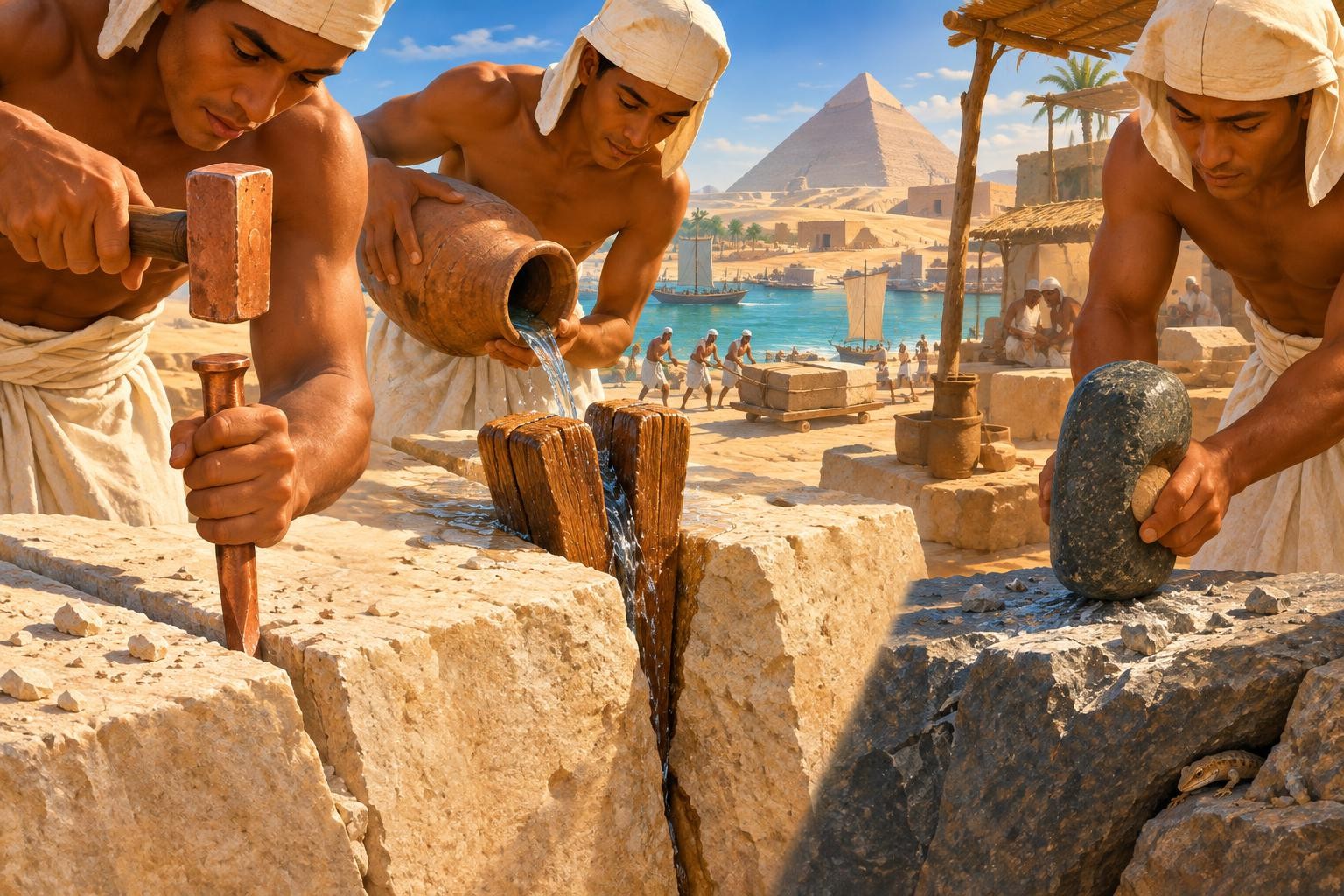
No modern machines were needed, but every tool had a job. First, a copper chisel—like a tough metal carving tool—helped workers cut a groove in limestone. Then they pushed dry wooden wedges into the crack and wet them. As the wood soaked up water, it swelled and pressed outward, helping split the rock. For very hard stone, workers struck with a dolerite pounder, a heavy, hard rock used like a hammer. It bruised and chipped the surface bit by bit. Slow? Yes. Careless? Never. A block had to break where the stonecutters planned.
The Nile Was Their Highway
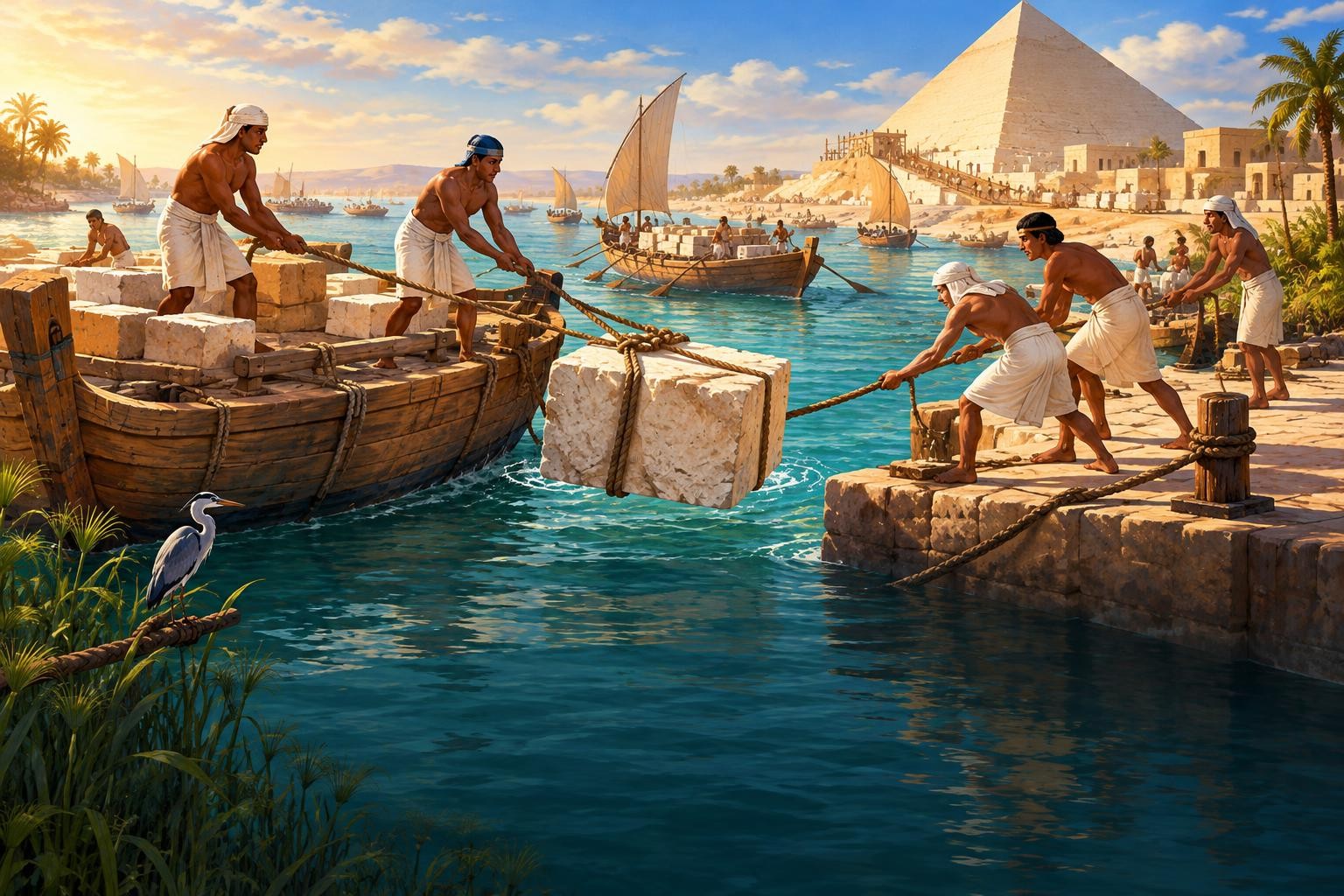
Imagine pulling a giant stone sofa across dry sand for many miles. That would be exhausting. Now imagine loading it onto a floating platform. Water carries the weight, so people need far less pulling. The Nile was ancient Egypt’s superhighway. During the flood season, channels and harbor works near Giza let boats bring stone and supplies close to the building site. Crews still had hard work: they guided cargo boats, tied strong ropes, and shifted blocks safely onto land. But the long part of the trip could happen on water instead of desert. The river was not just scenery. It was part of the pyramid’s moving plan.
A Real Crew Report
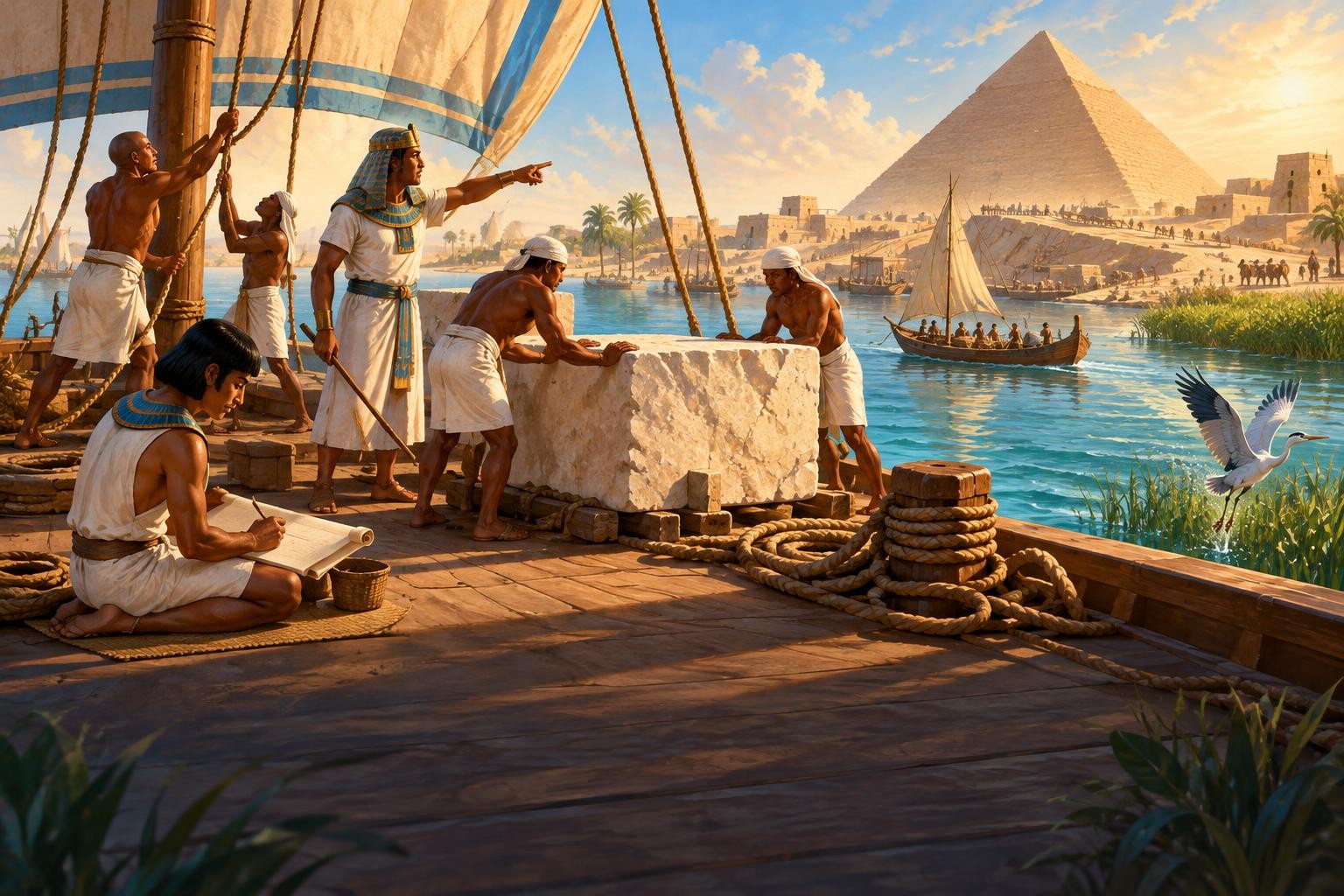
We do not have to guess that boats carried pyramid stone. A papyrus is a sheet made from a river plant, and one ancient papyrus preserves the log of Inspector Merer. Merer was an official who recorded his crew’s work. His notes describe sailing from Tura with stone toward Akhet-Khufu—the ancient Egyptian name for the Great Pyramid. Picture the planning behind one delivery: sailors watching the channel, handlers securing the load, and scribes keeping track. This was not a mysterious miracle. It was a giant team project, organized trip by trip. Merer’s everyday notes give us a rare peek into that real work.
No Wheels, Still Moving
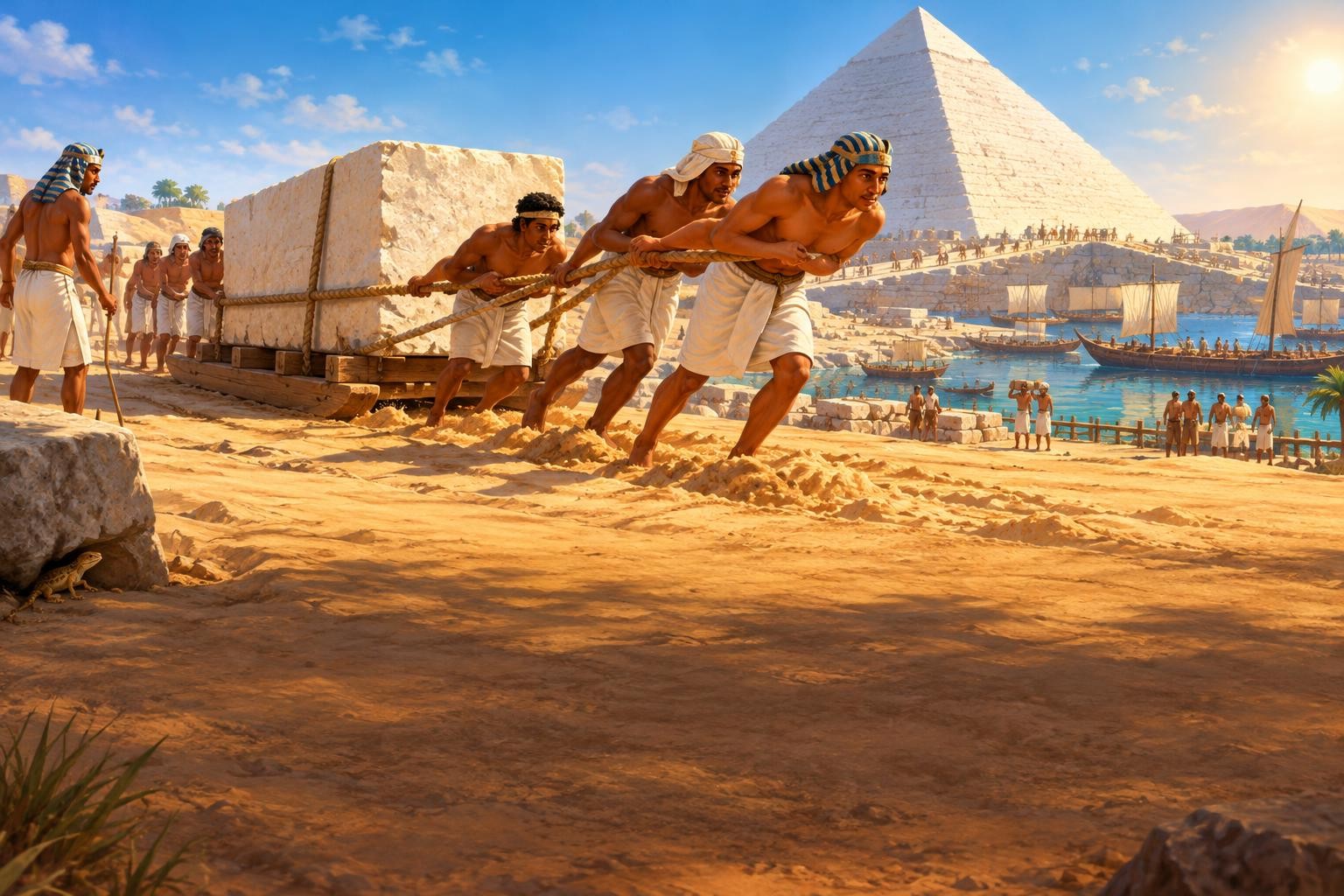
Imagine pulling a stone house across hot ground. No wheels. No engines. How could it budge? This chapter follows the clever tricks behind the pull: wooden sledges, strong ropes, damp sand, climbing ramps, and careful nudges. You will see why a tiny splash of water could help a huge load slide—and why getting a block upward took planning, patience, and a whole crew moving together.
The Perfect Splash
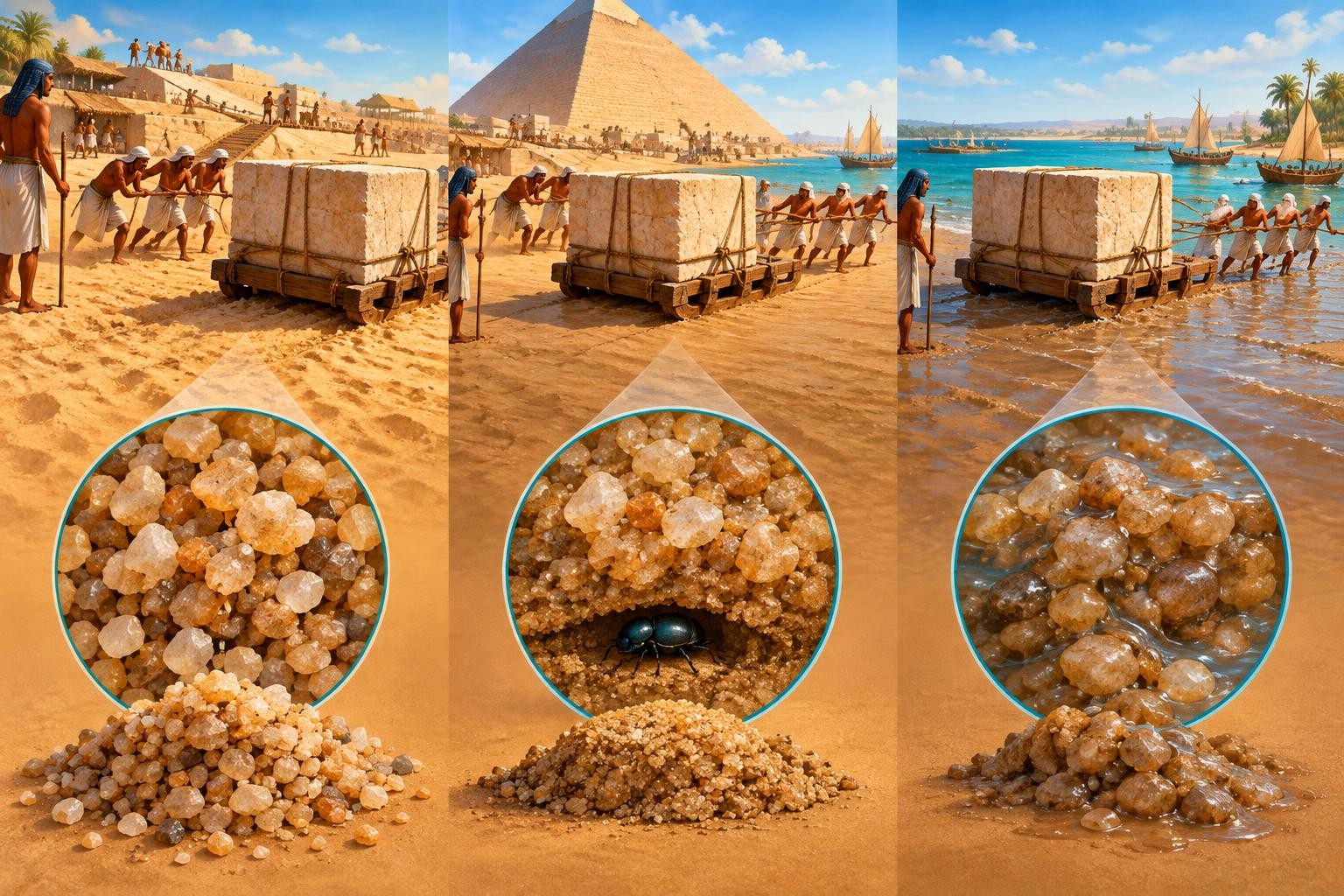
What slows a sledge? **Friction**—the rubbing force that pushes back when two things slide. On dry sand, loose grains pile up in front of the runners like a growing wall. A little water makes neighboring grains cling together, rather like firm sandcastle sand. Then the ground holds its shape, and less sand heaps ahead. Tests suggest the best amount was only about 2–5% of the sand’s volume: a splash, not a puddle. With the sand just damp, a crew might need about half as many pullers. But soak it too much, and the sand turns squishy mud. The trick is not “wet”; it is “just damp enough.”
Roads That Climbed
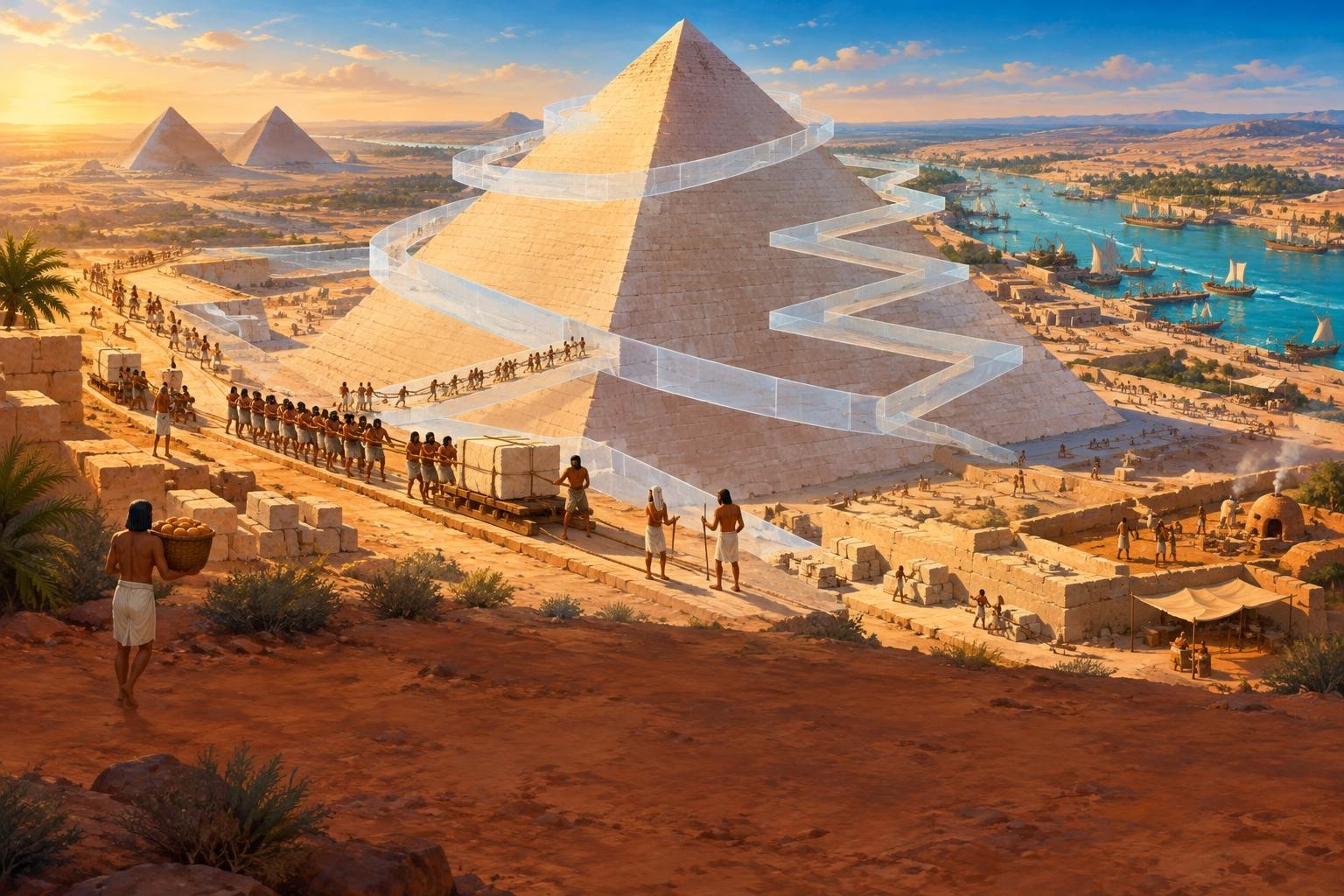
Dragging a block across level ground was hard. Raising it was harder. A **ramp** is a sloping road, like the gentle path beside stairs. Builders probably used ramps to bring stones higher as the pyramid grew, then used ropes and crews to control each climb. But here is an honest puzzle: no one knows the exact ramp plan for the Great Pyramid. Egyptologists debate a long straight ramp, zigzagging ramps, a ramp curling around the structure, or several kinds working together. Each idea must explain where the huge ramp material went and how workers kept room for the pyramid itself. The evidence says ramps were likely. Their precise shapes are still being investigated.
Lever, Nudge, Settle
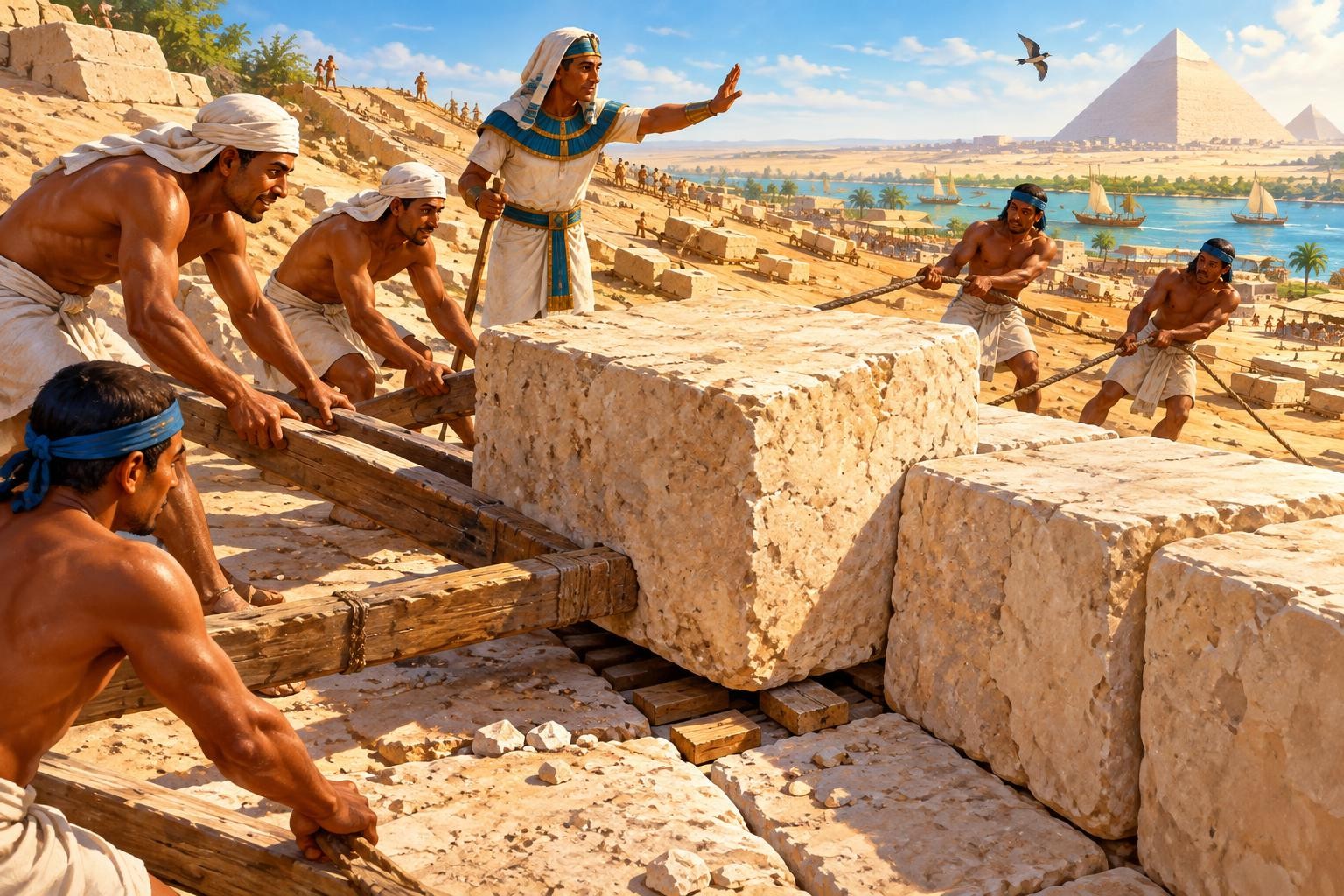
At the top of a ramp, a block still had to land exactly where it belonged. A **lever** is a stiff bar that helps lift something when you push one end down—like using a spoon to pry up a tight lid. Workers could slide a wooden lever under one edge of a stone and press together. That tiny lift let them add packing beneath it or nudge the block sideways. Ropes held the heavy stone from racing away. On a prepared layer, the crew could repeat: lift a little, shift a little, check the fit, and lower carefully. Several people had different jobs, so a signal mattered. We do not know every placement move, but levers, ropes, ramps, and steady teamwork gave builders close control.
Not Magic. Not Aliens. People.
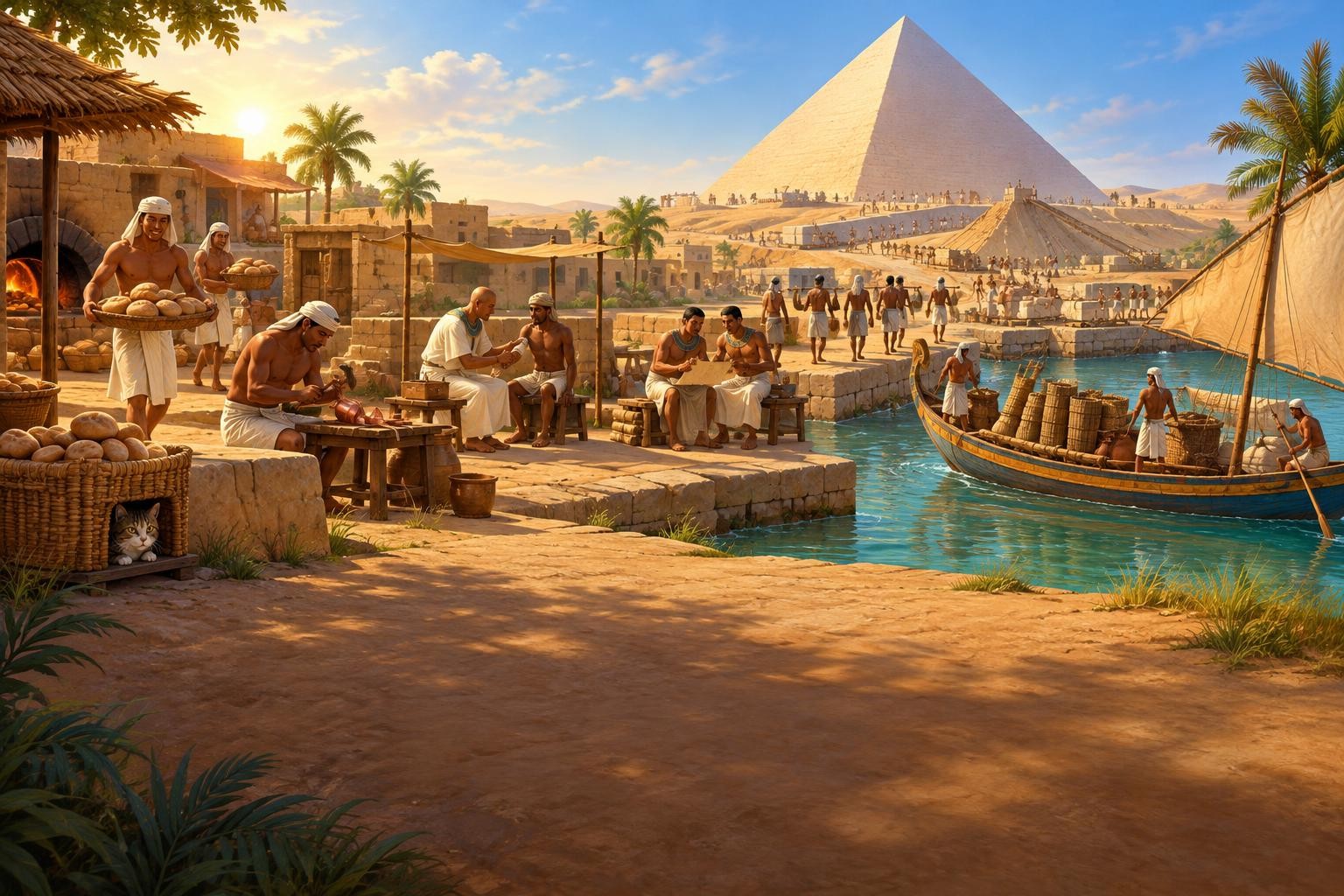
Look behind the shining pyramid. You will find a whole town at work: architects planning, surveyors measuring, boat crews arriving, and stonecutters shaping blocks. Bakers, doctors, tool repairers, and managers helped, too. Many people imagine enslaved people or aliens. But evidence points to organized Egyptian workers, including skilled craftspeople and seasonal laborers, all solving one enormous problem together.
Bread Powered the Builders
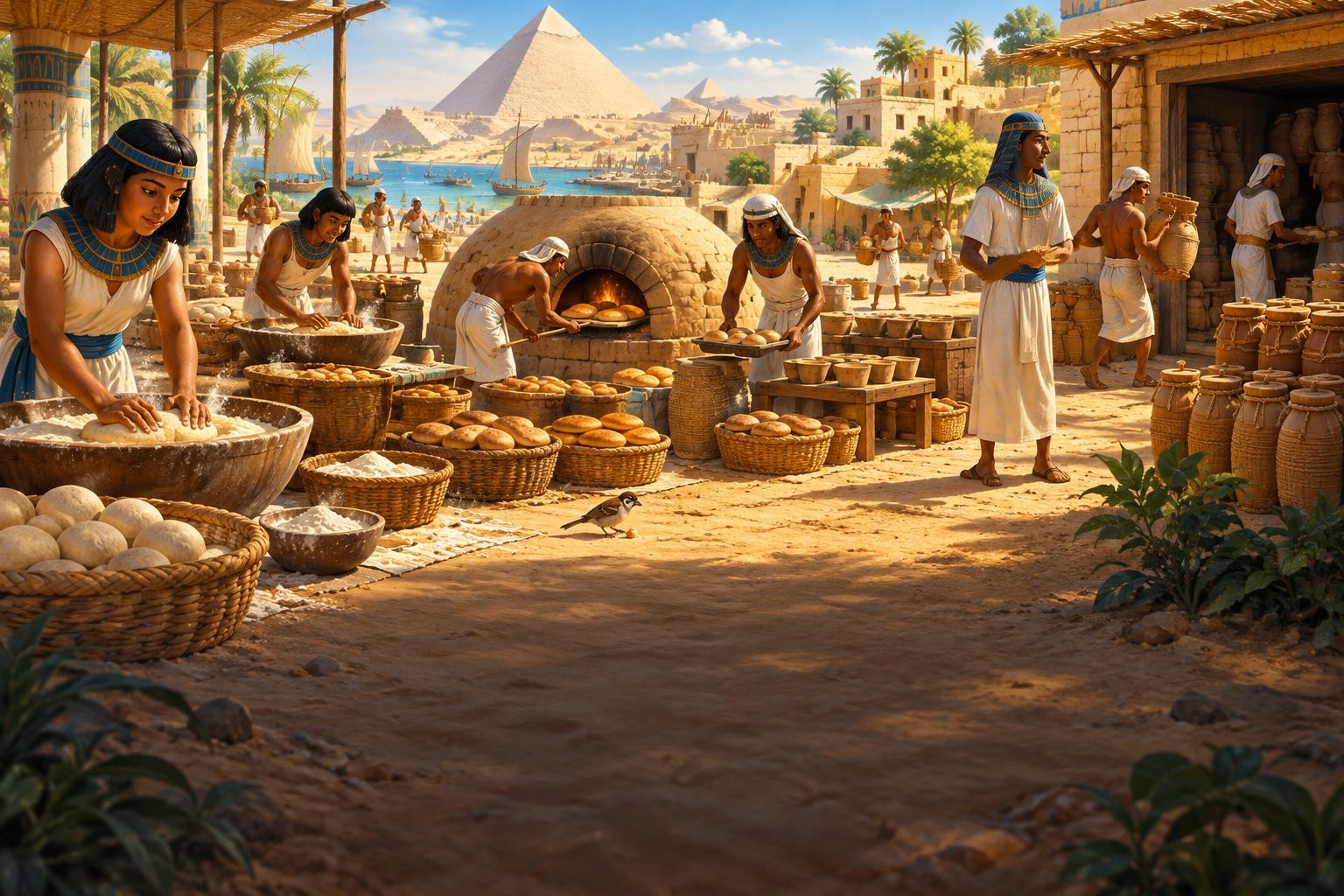
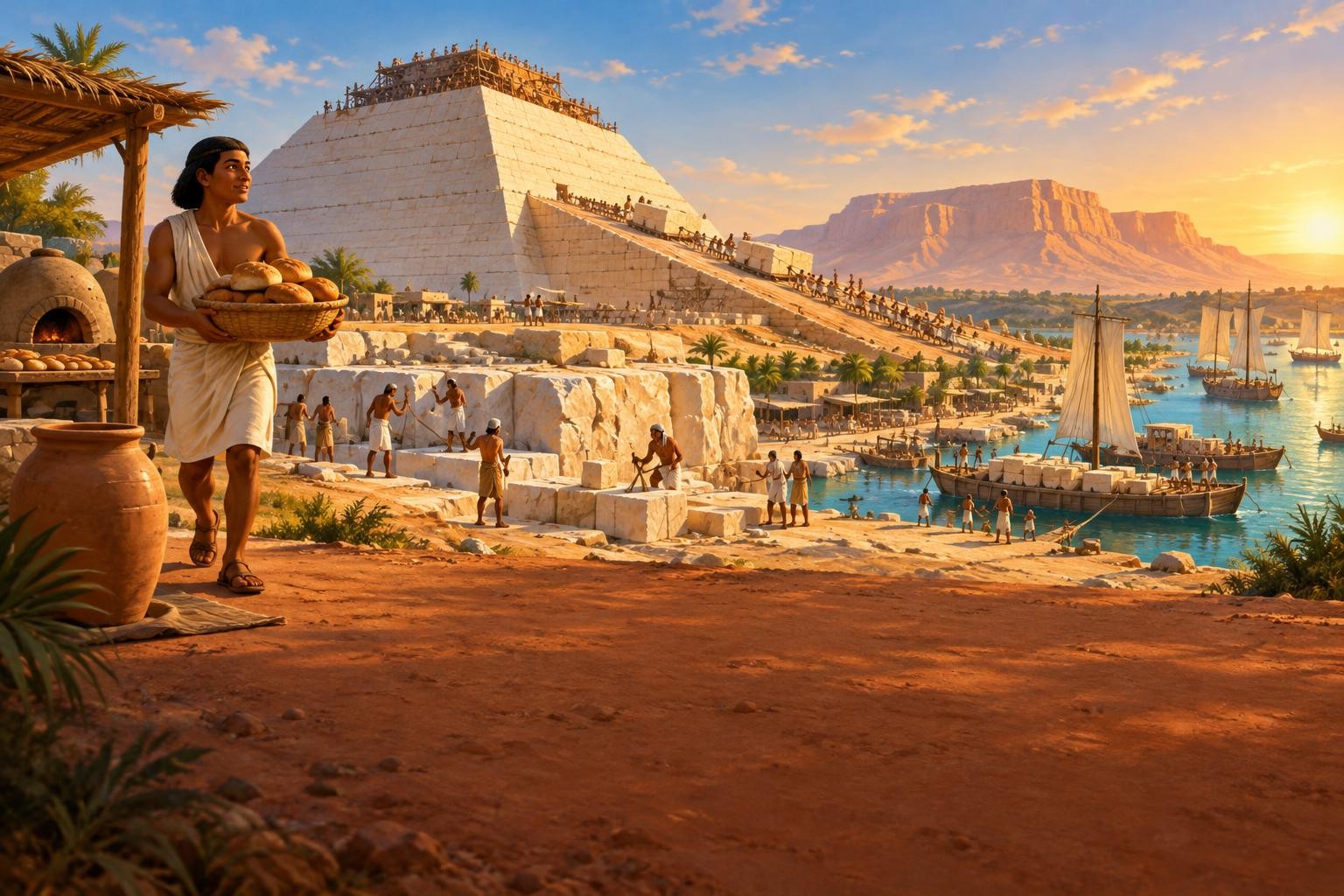
How do you feed a giant building project? You plan it like the stone deliveries. Ancient Egypt did not pay workers with coins. Instead, crews received rations—shares of needed supplies—mainly bread and beer, plus other goods. Bread was not a tiny snack. It was everyday fuel for people doing hard work in heat and dust. At Giza, archaeologists found two ancient bakeries. Imagine ovens glowing before sunrise, dough being mixed, and rows of loaves ready for thousands of hungry people. Feeding crews was engineering, too: grain, water, firewood, ovens, jars, storage, and careful timing all had to work together.
Evidence Changes the Story
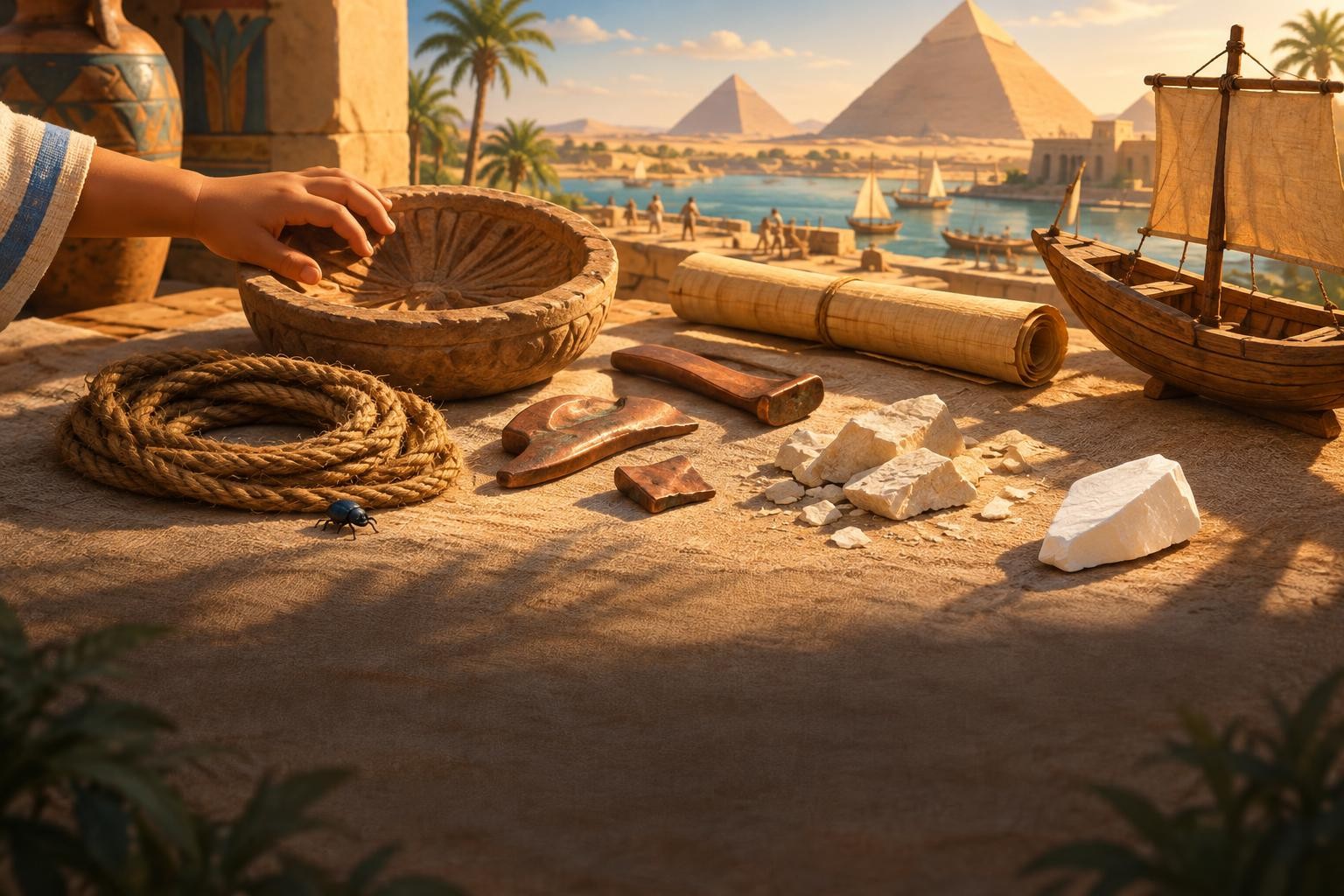
Try the Wet-Sand Secret
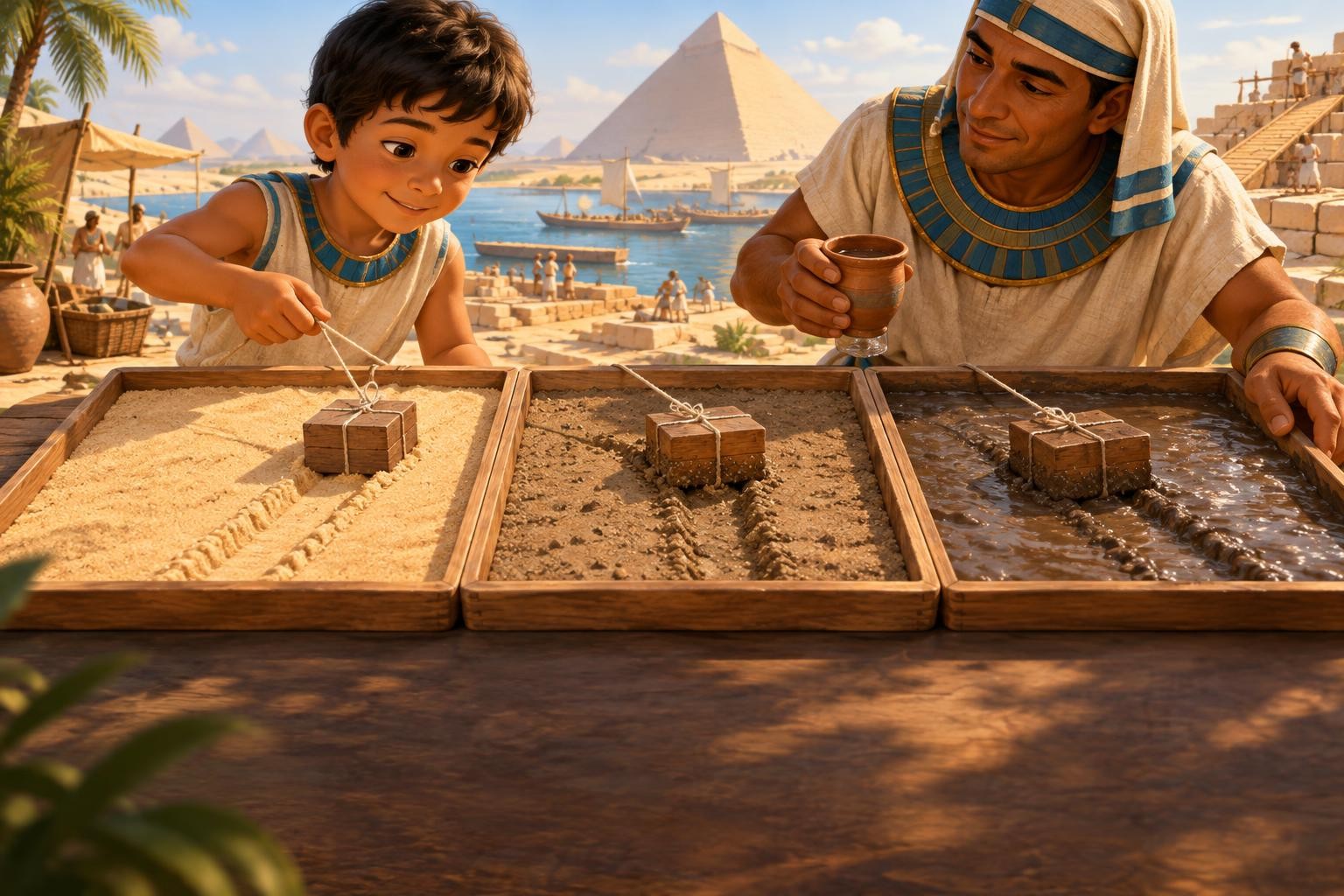
Test which sand lets your little sledge slide most easily.
Check your wonder
New words
Where we looked
We researched this book using reliable web sources from archaeologists, museums, university projects, and scientific studies of ancient Egypt and engineering.
The end
Now you know that the Great Pyramid was not built by magic: it took careful plans, clever tools, river boats, and thousands of organized people. Some details, including the exact shapes of the ramps, are still mysteries—so keep asking big questions like an archaeologist!