How Trees Talk: The Secret Web Under the Woods
Discover how trees, roots, and fungi trade food underground, and what scientists are still testing about signals, in this forest science book for kids 6–7.
about real things · 23 pages · ages 6–7 · long storybook · EN
Read · Play · Listen · PDF · Print edition · with the Storybook Pass · Make it about your child
Reviewed for child safety · gentle by design · How our storybooks are made
The pages
The Secret Web Under the Woods
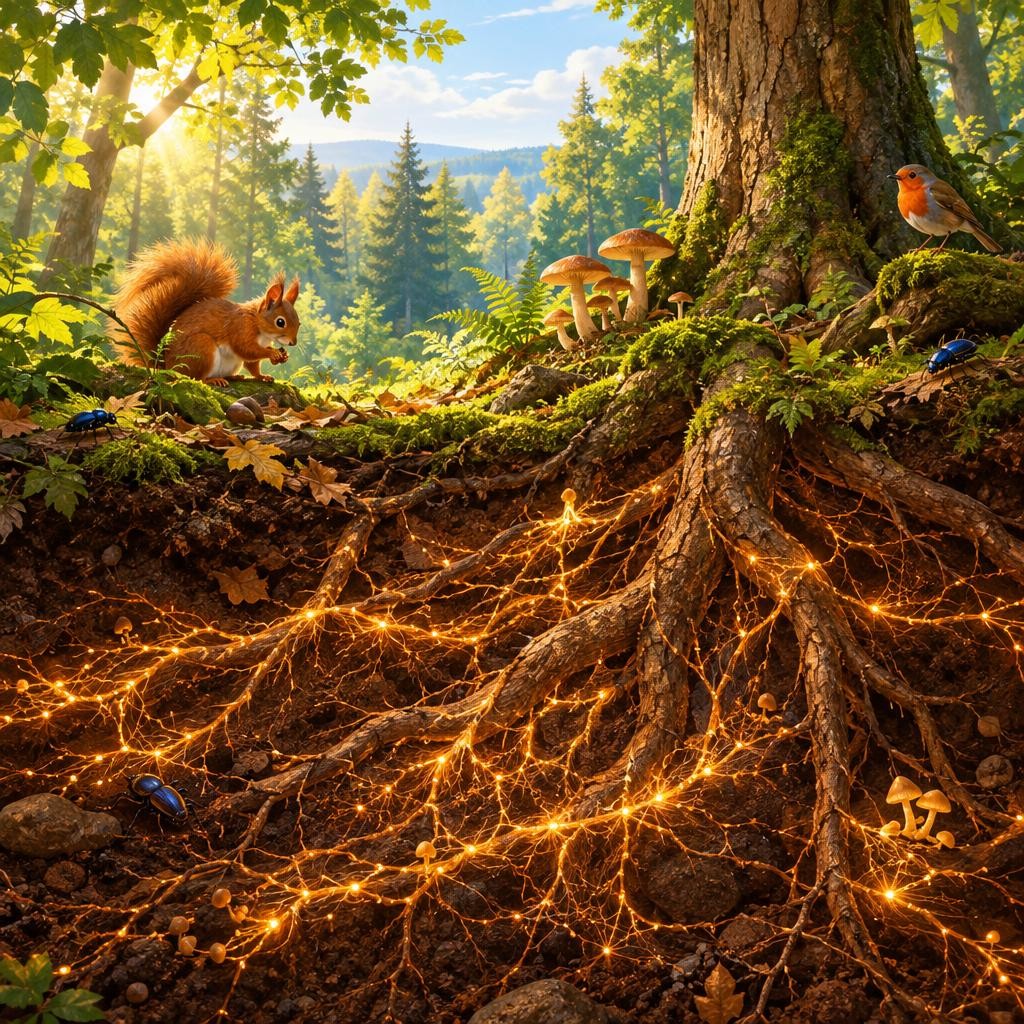
The Secret Web Under the Woods
For every child who wonders what is happening underfoot.
What's inside
A Forest Is a Neighborhood The Great Underground Trade Smells, Signals, and Sky Rivers What We Know, What We Wonder
Not Lonely Trees
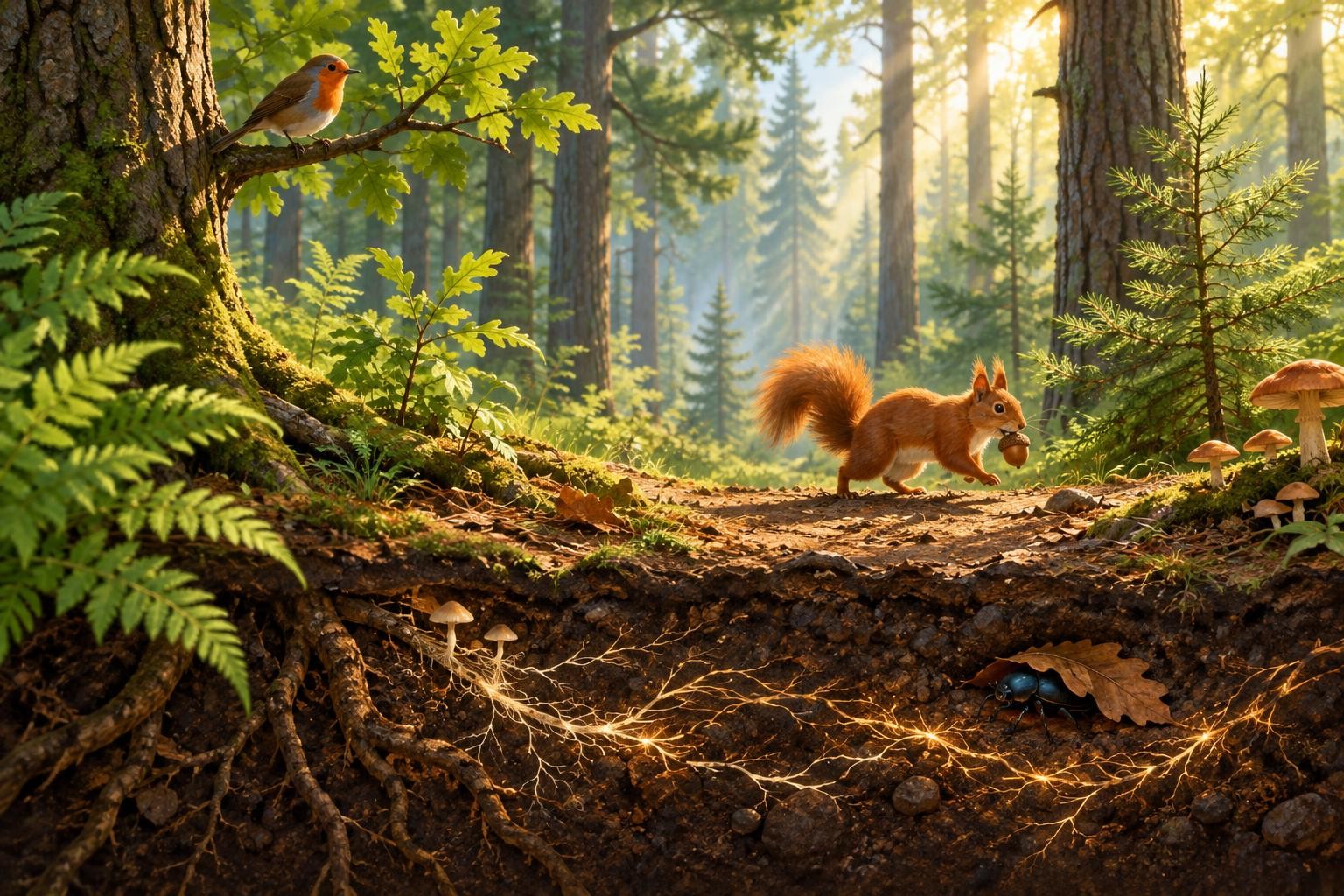
A forest can look like a group of separate trees. Look closer: birds, squirrels, moss, roots, soil, and fungi all share this place. Above ground is only the beginning. Beneath your feet, another busy part of the neighborhood is growing.
Leaves Make Sweet Food
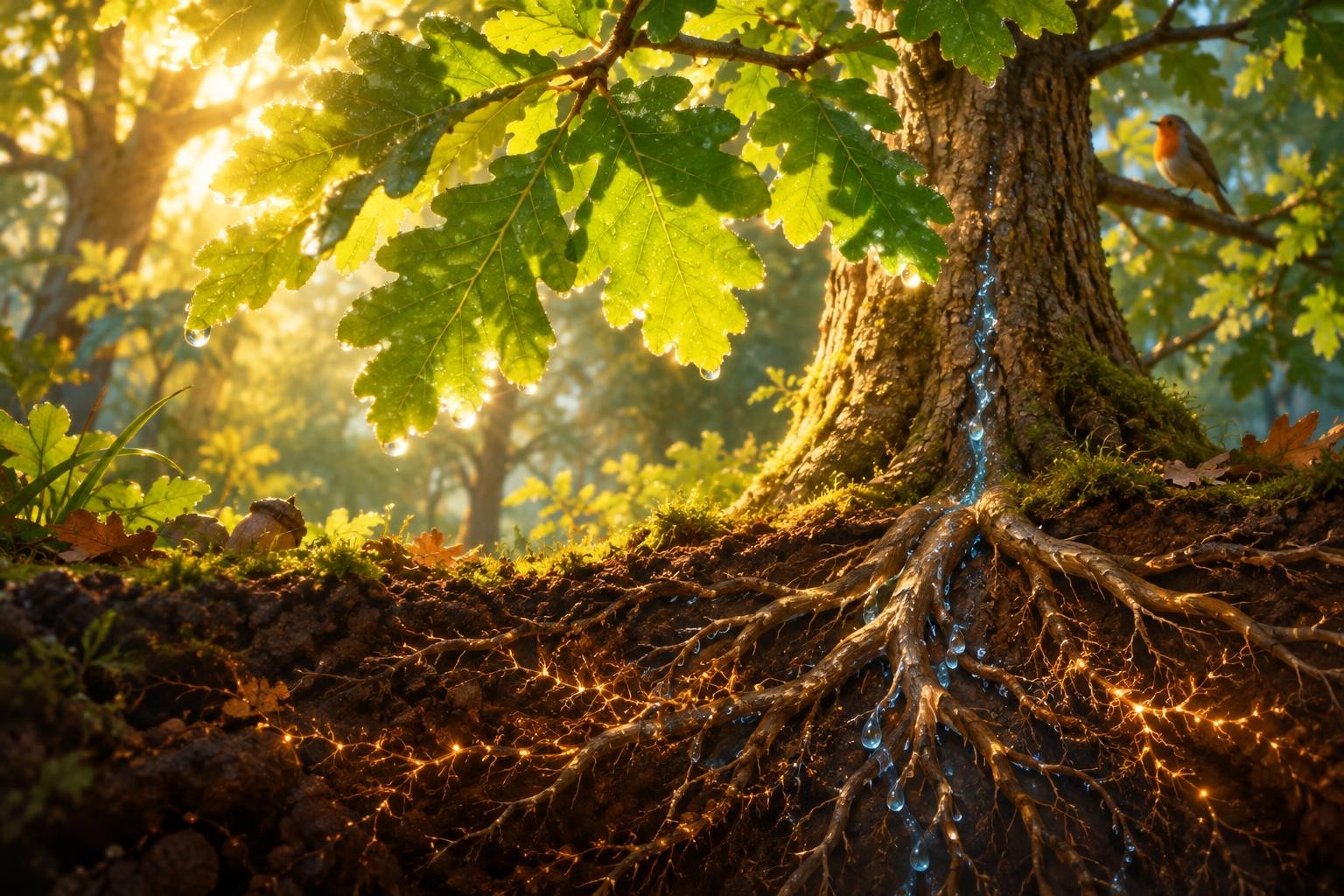
A leaf is like a tiny sun-powered kitchen. It uses sunlight, air, and water from the roots to make sugar. This sugar is food for the tree. Some can travel down from the leaves to places that need it, including the roots. The tree does not eat sunshine itself; it uses sunshine to build sugar.
Roots Reach and Drink
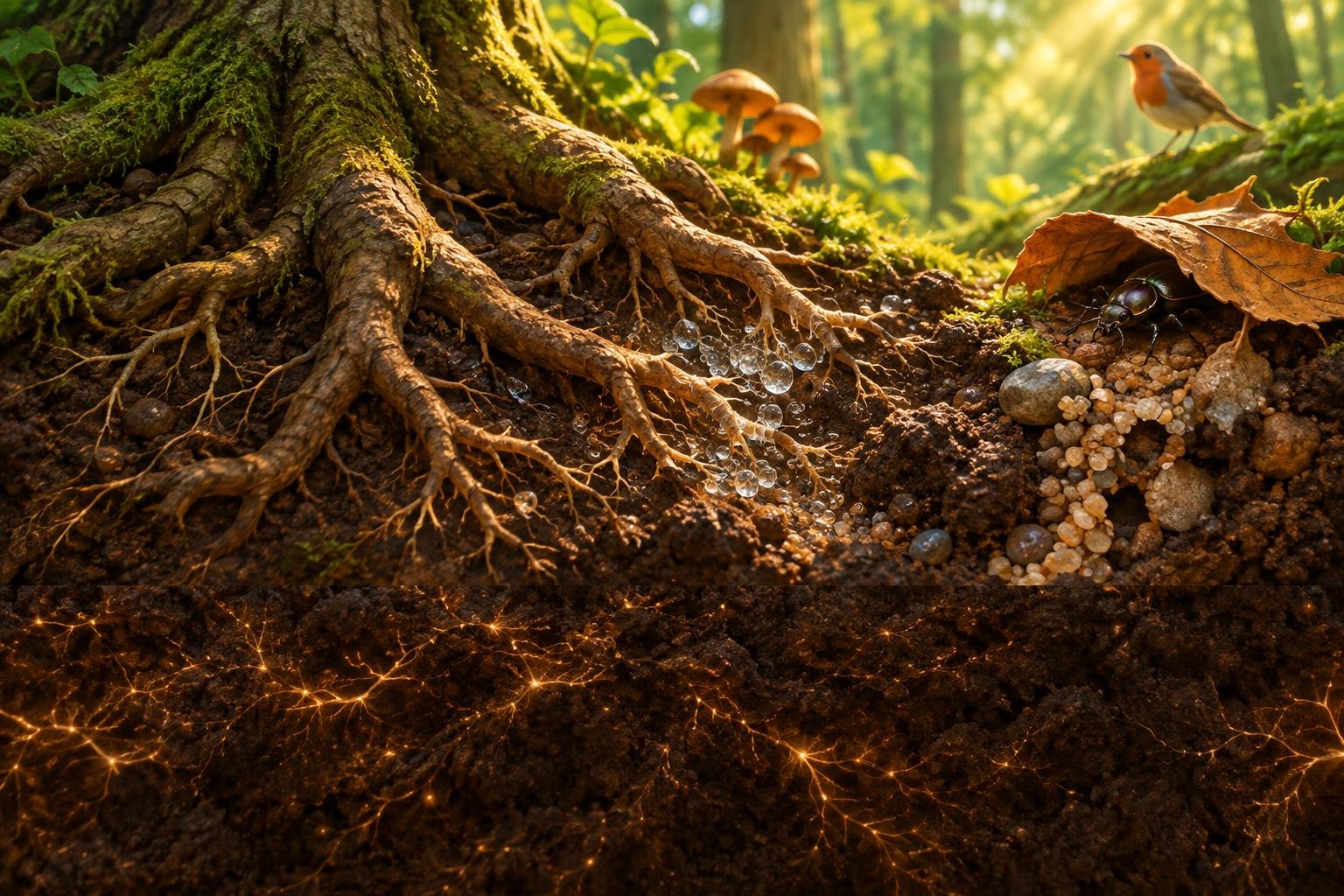
Roots are a tree’s underground anchors. Thick roots help hold the trunk steady. Fine roots take in water and minerals—tiny bits from soil that help a plant grow. But soil is full of tiny gaps between grains and pebbles. Even a fine root cannot squeeze into every space. That is where a helpful partner can explore.
Tiny Treasure Threads
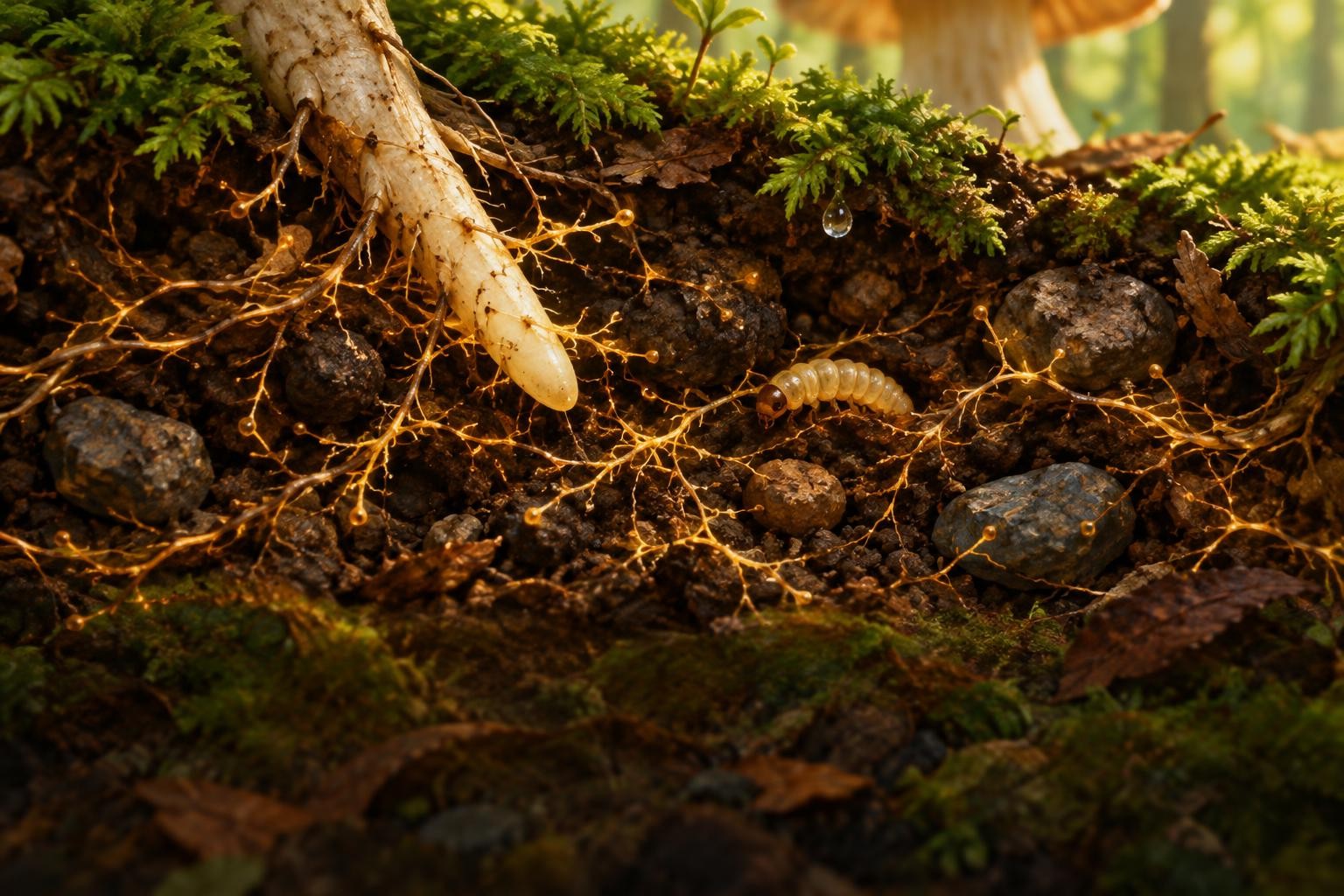
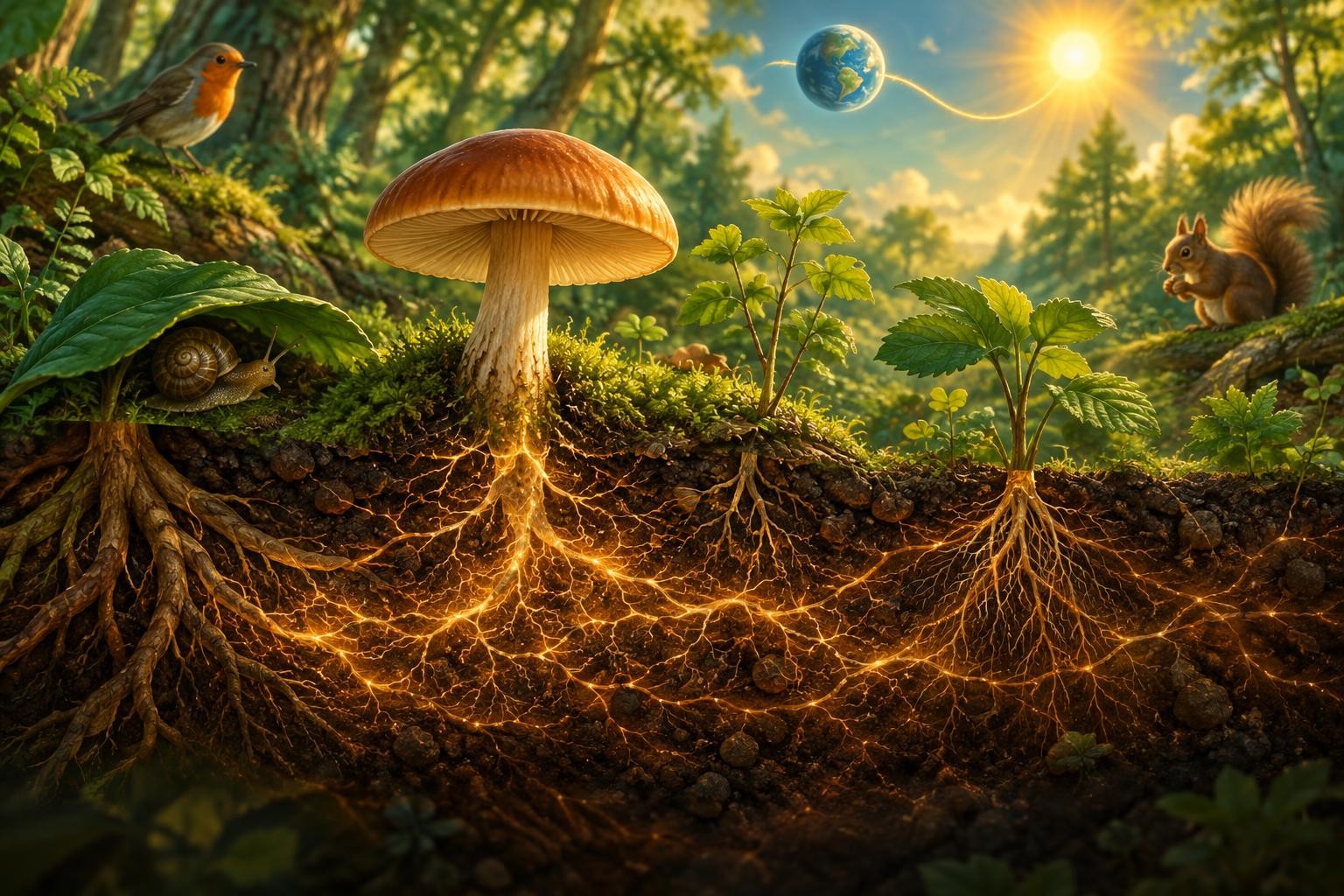
Under the moss, a fungus grows threads much thinner than roots. These branching threads are called hyphae, pronounced HY-fee. Think of a root as a thick crayon and hyphae as wispy pencil lines. They can slip between soil grains and explore tight spaces. Many threads together make a hidden web called mycelium.
A Fungus-Root Deal
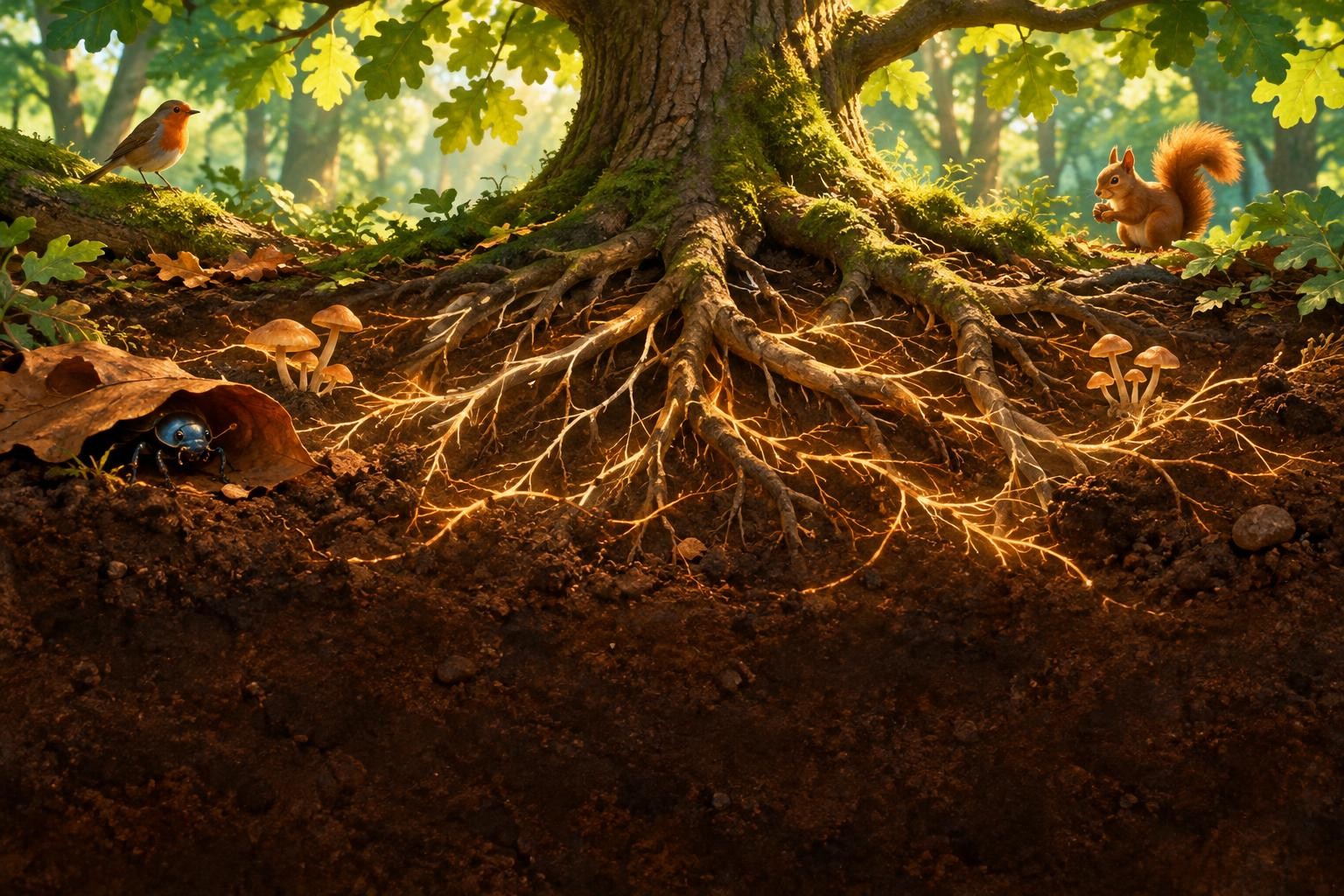
Beneath your feet, roots and fungi can make a useful deal. The tree shares sugar made in sunny leaves. The fungus brings water and tiny soil nutrients. Together, this partnership is called a mycorrhiza.
Sugar for Soil Gifts
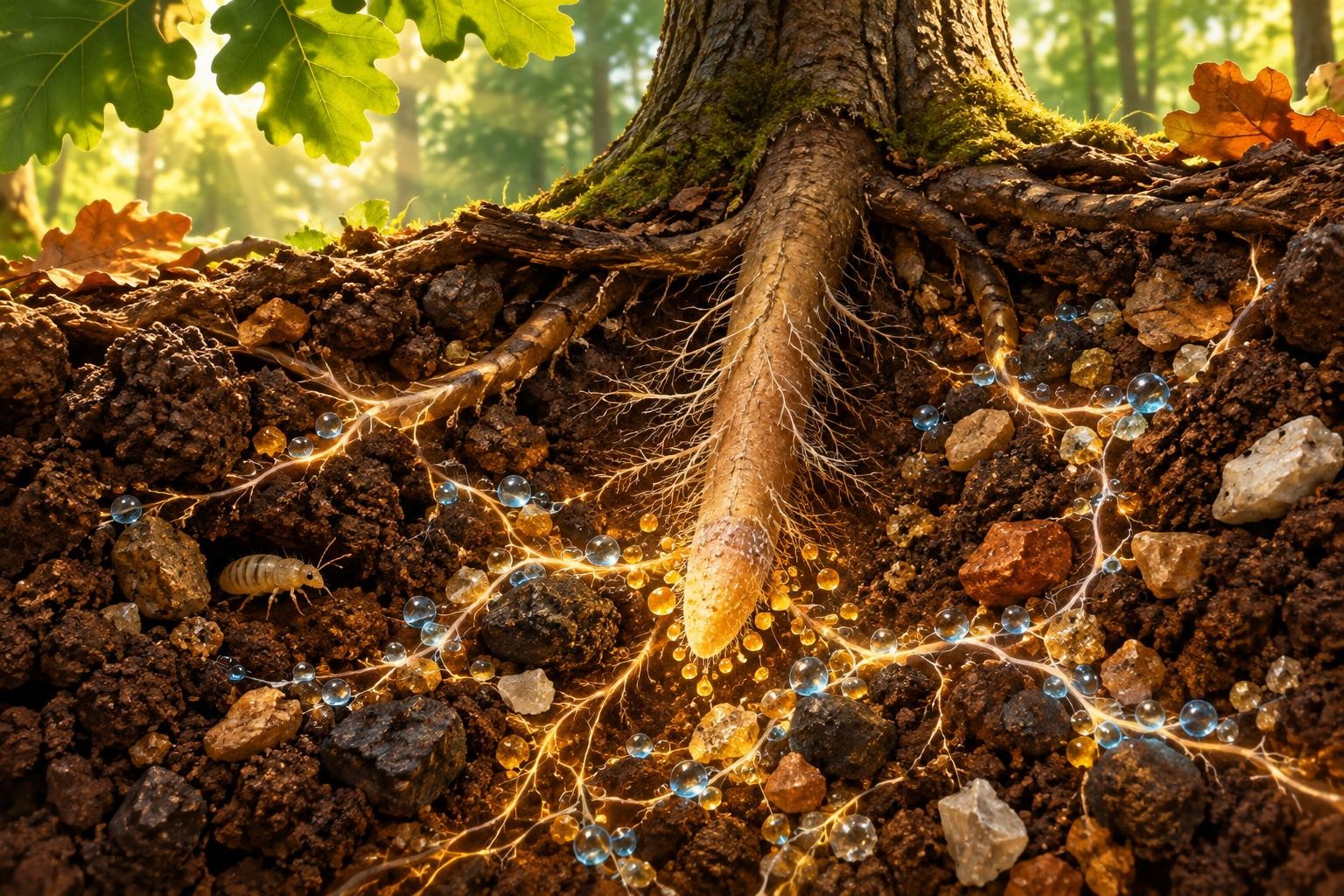
Leaves use sunlight, air, and water to make sugar. Sugar is food the tree can share with its fungus partner. In return, hyphae—fungal threads thinner than roots—reach tight soil spaces. They bring water and minerals, tiny nutrients like nitrogen and phosphorus, close to the roots. Both partners gain something they need.
Roots Can Be Linked
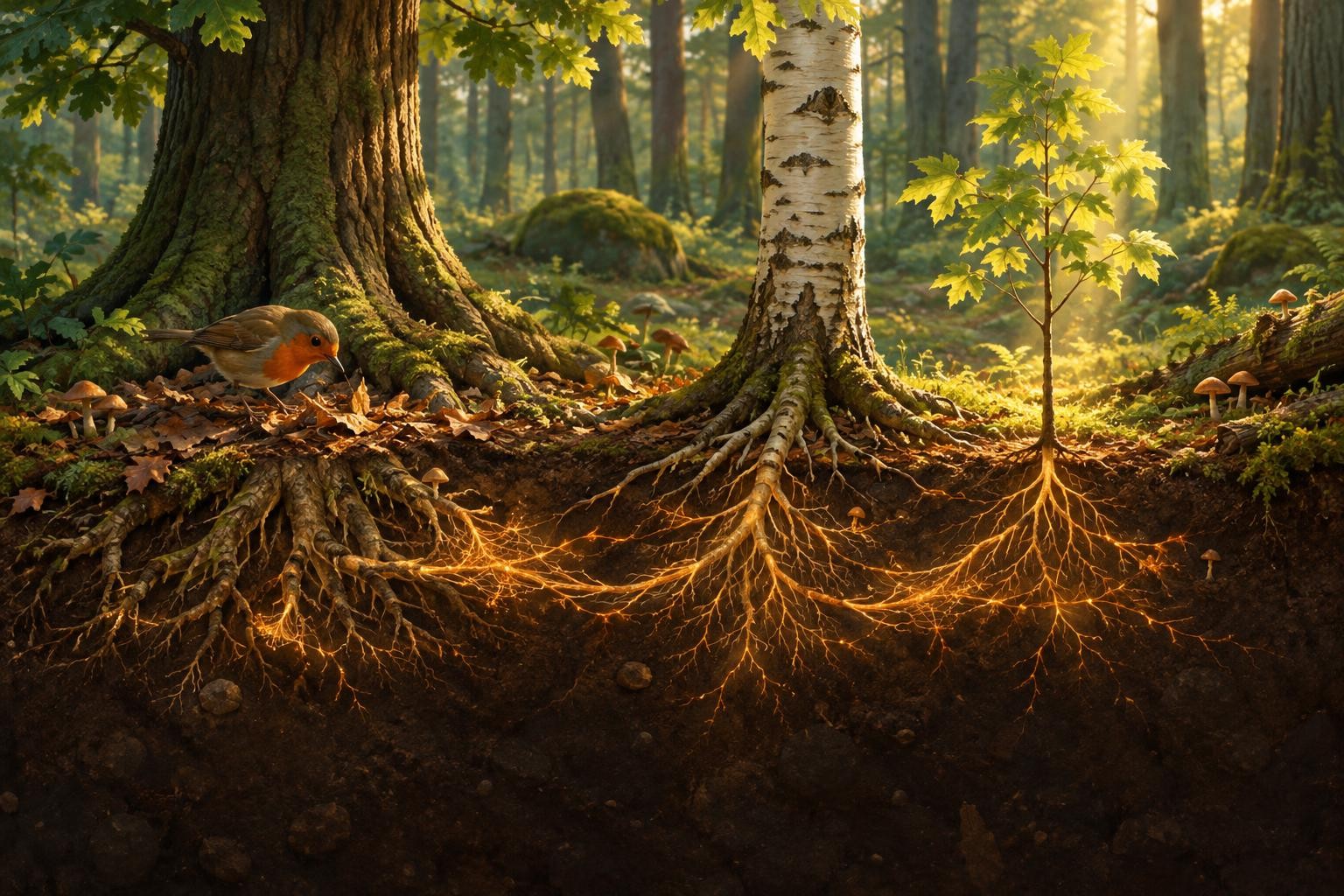
One fungus can grow threads to more than one plant. Its hyphae may touch roots from an oak, a birch, and a young sapling. This is a common mycorrhizal network: a living web of fungus and roots. It is not like internet cables. The threads are living, growing partners that need food, water, and the right soil.
A Little Help, Maybe
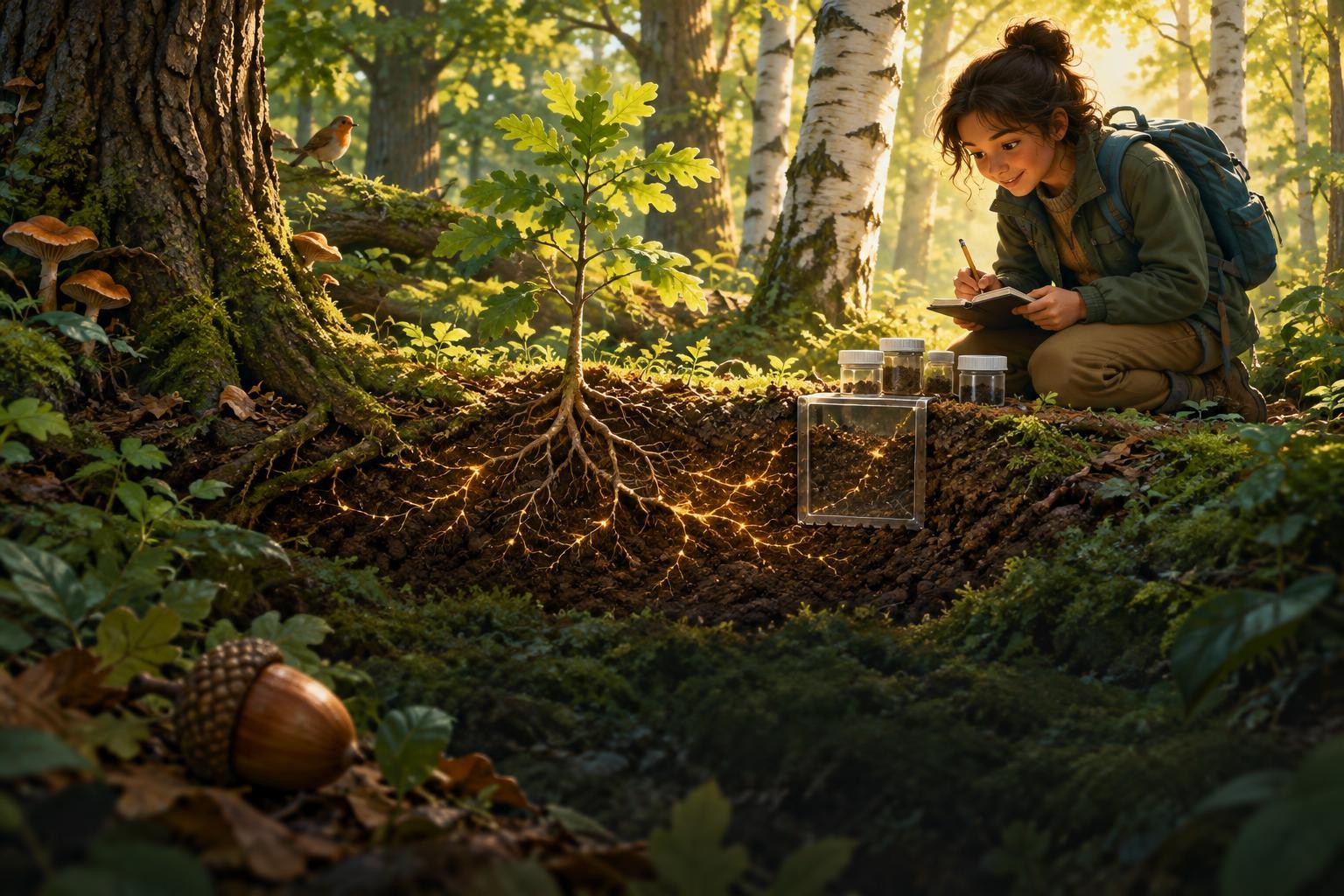
Can linked plants pass tiny bits of food or nutrients? In some studies, scientists have measured carbon or nutrients moving between connected plants. But forests are busy, complicated places. It is hard to tell the exact path and whether a small sapling truly benefits. Many people say big trees feed baby trees. Sometimes movement happens, but scientists are still testing what it means.
When Beetles Nibble
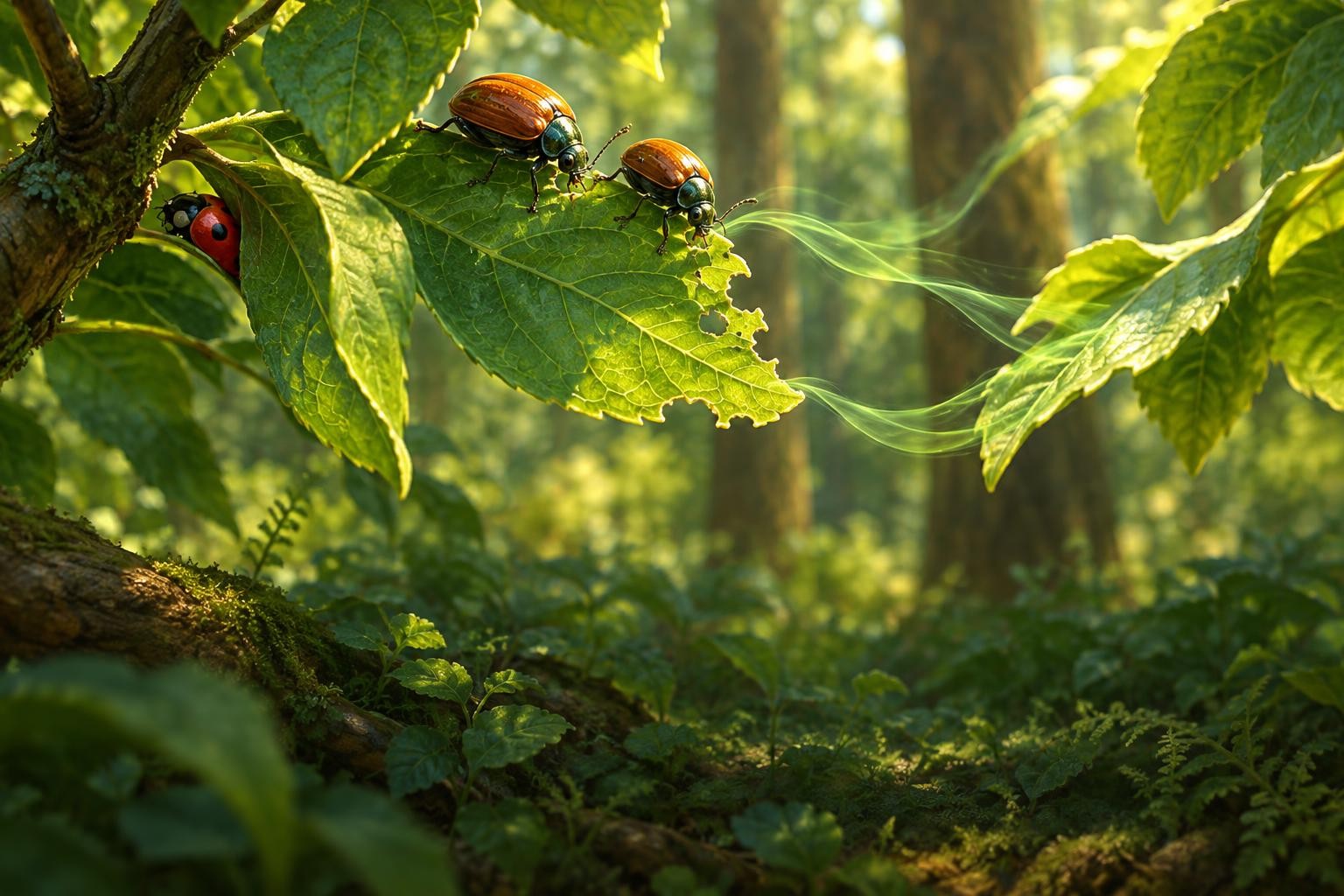
A leaf can do more than sit in sunshine. When a beetle chews it, the leaf may send a smell-like clue into the air. Nearby plants can notice this chemical cue. Let’s follow the drifting scents, the busy soil, and the puzzle gaps high overhead.
Leaves Get Ready
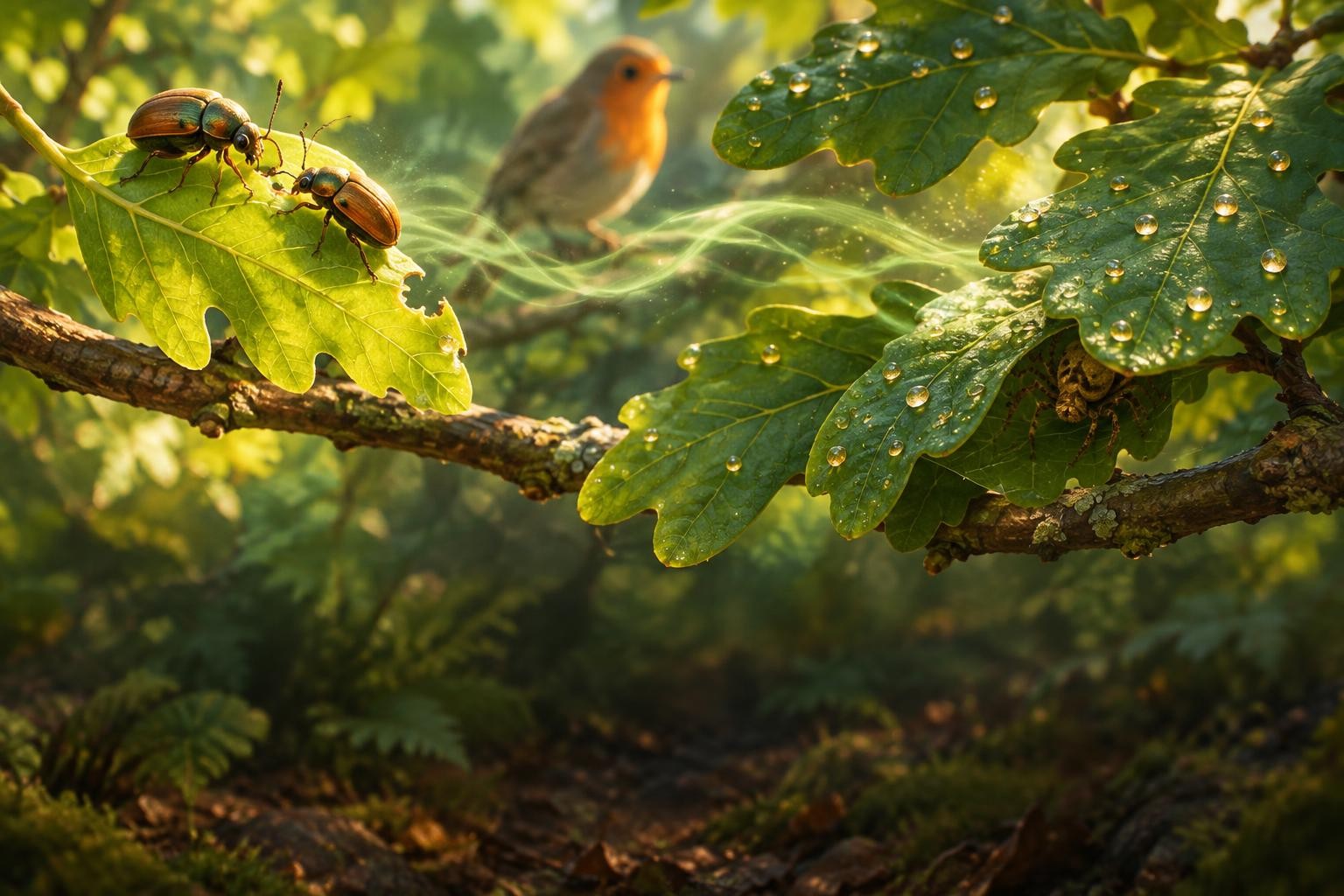
Imagine smelling toast before breakfast. The smell tells you something is happening nearby. A chewed leaf can release smell-like chemicals too. Other leaves may notice these chemicals. Then they may get ready to defend themselves, perhaps by making their tissues less tasty to hungry insects. This is chemistry, not tree talk.
Two Kinds of Clues
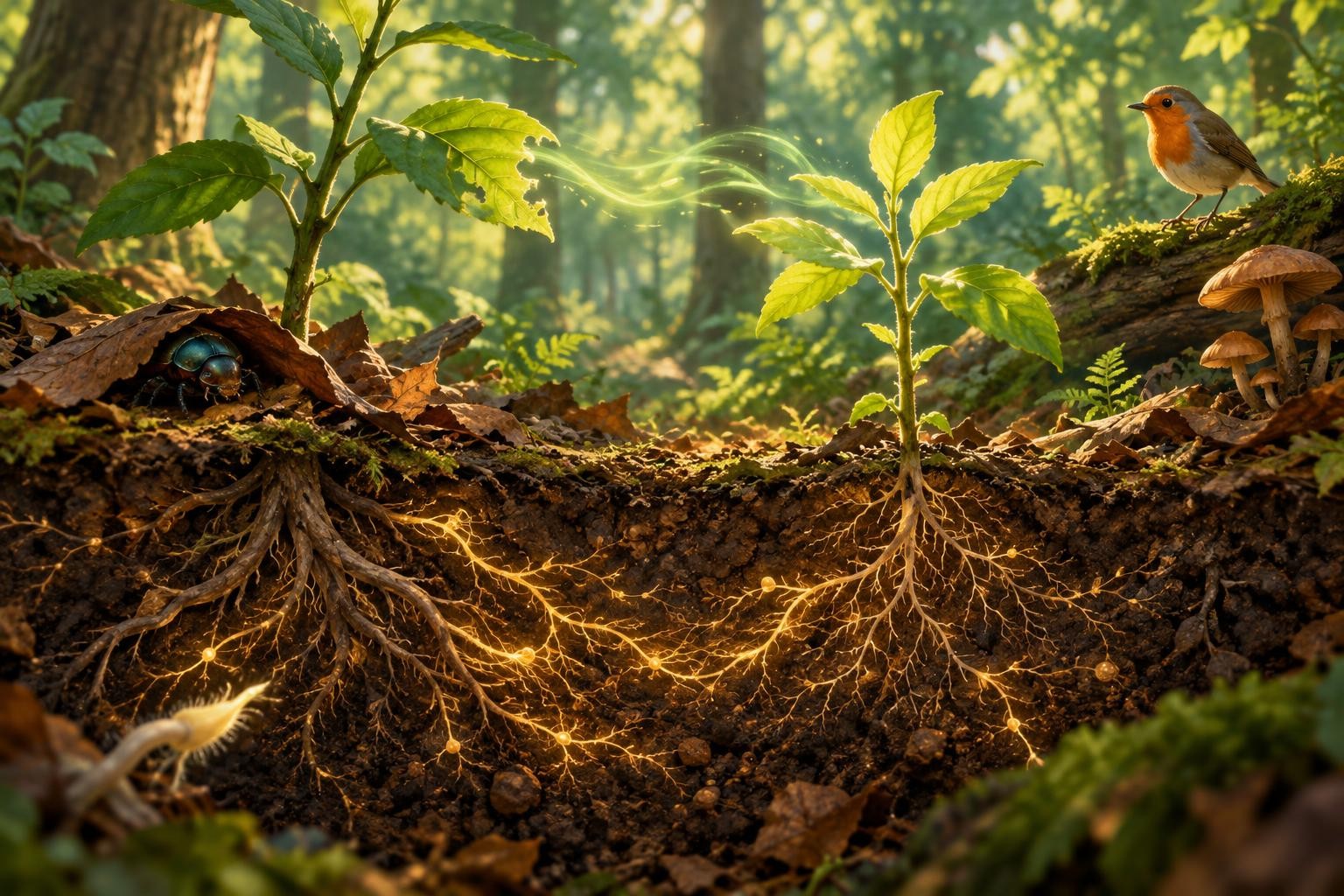
Above ground, scent chemicals can float on the breeze. Below ground, roots and fungal threads sit in damp soil together. Scientists are still testing whether warning chemicals move through these underground links, how they travel, and how much they matter. So do not picture phone calls underground. Picture living roots, tiny threads, and chemistry.
Puzzle Pieces of Sky
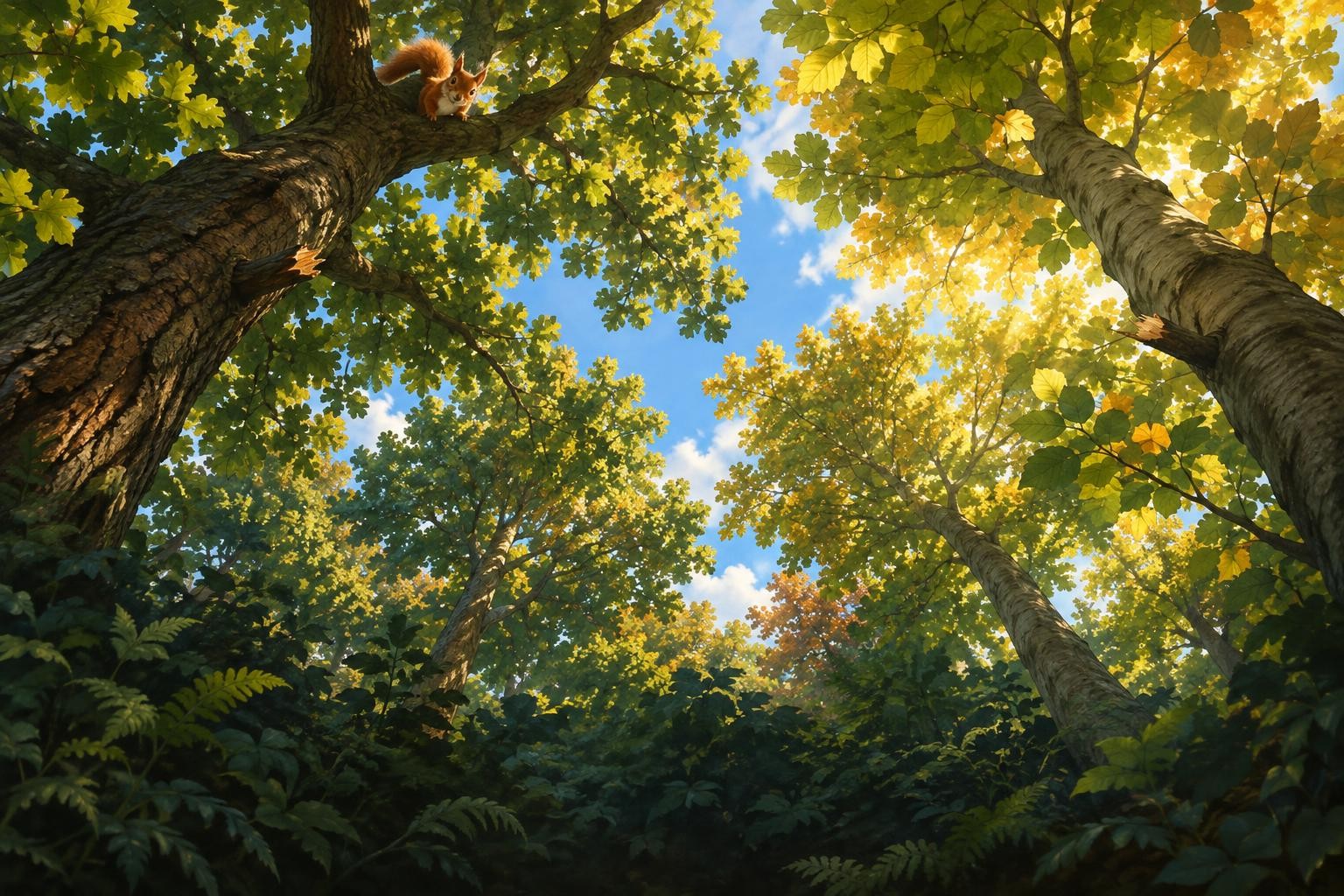
Look straight up through some forests. You may see bright, skinny rivers of sky between treetops. These gaps are called crown shyness. In wind, neighboring branches sway and can rub or break. Over time, their crowns may keep narrow spaces between them. It looks like a leafy puzzle, not trees politely making room.
Forest Detectives
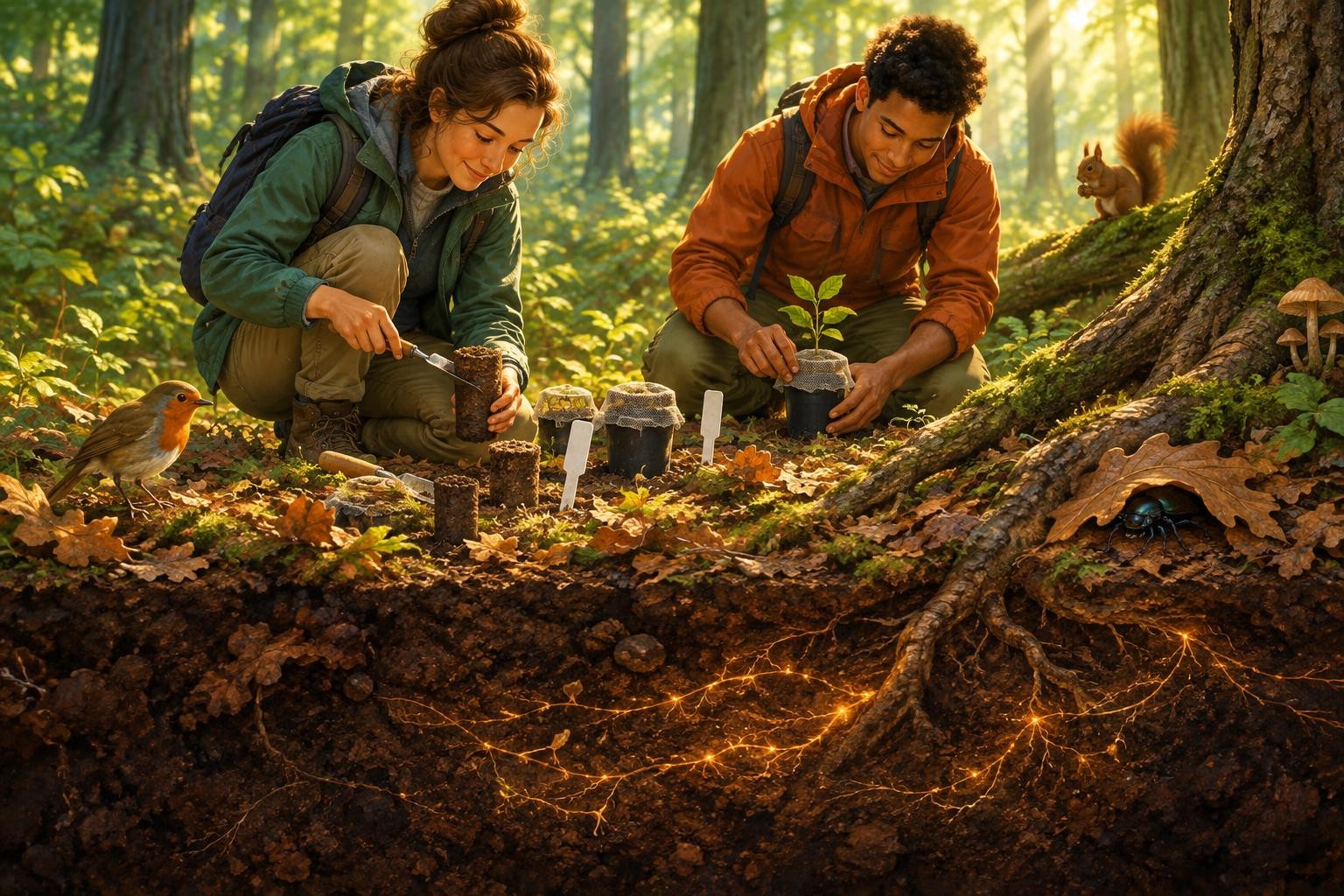
How do we learn about a web we cannot easily see? Forest ecologists are nature detectives. They test small ideas carefully, then check again. Their work shows a forest can hold both helpful trades and competition for space, water, and light.
Hidden Web Wow
The Web Is Not a Phone
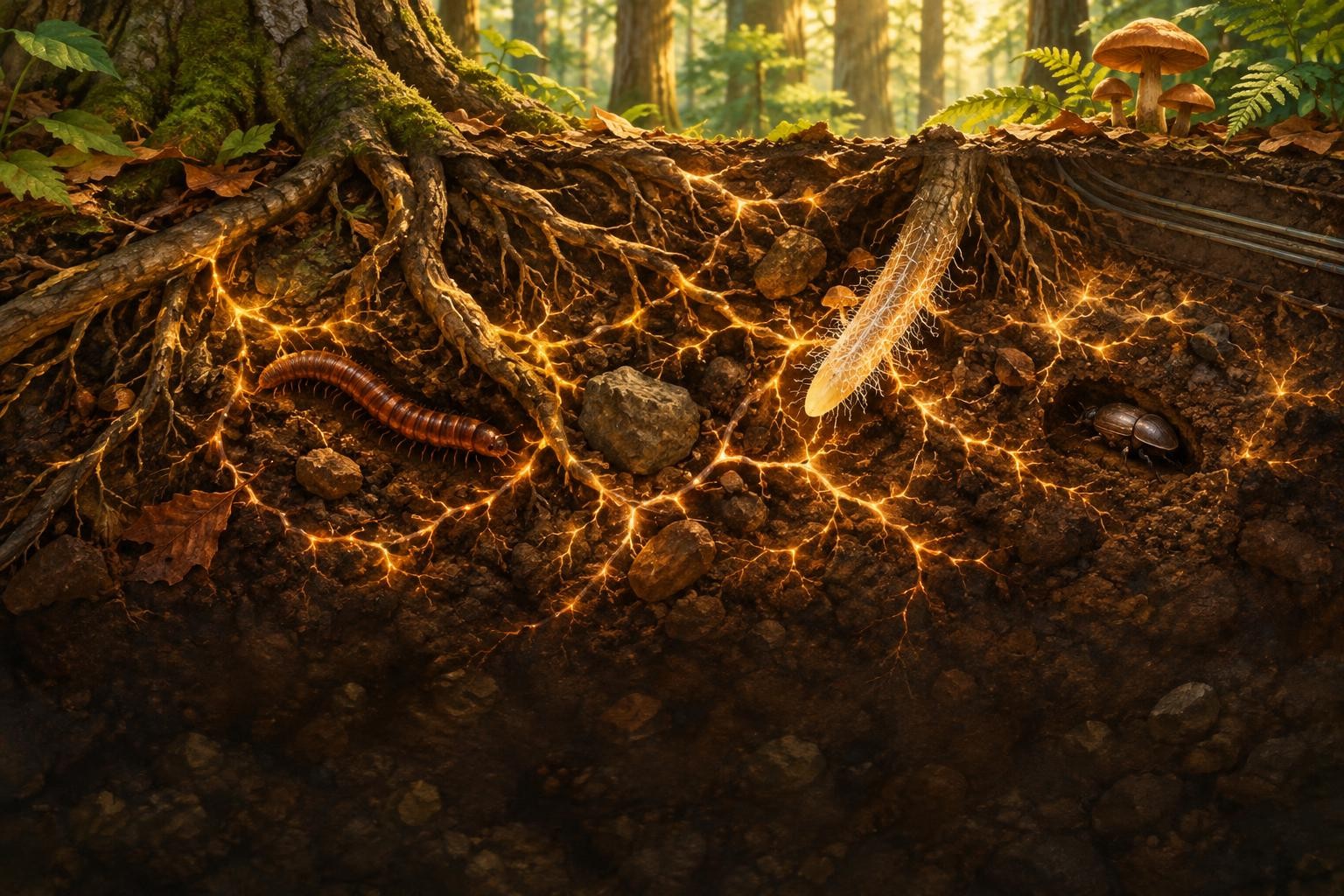
People sometimes call this the “Wood Wide Web.” It is a handy nickname, but do not picture a phone network. Fungi are living partners, not cables that trees control. Their threads grow unevenly through soil and need food too. Some materials can move between connected plants. Yet scientists are still testing the paths, amounts, and whether young trees truly benefit.
Your Tree Detective Walk
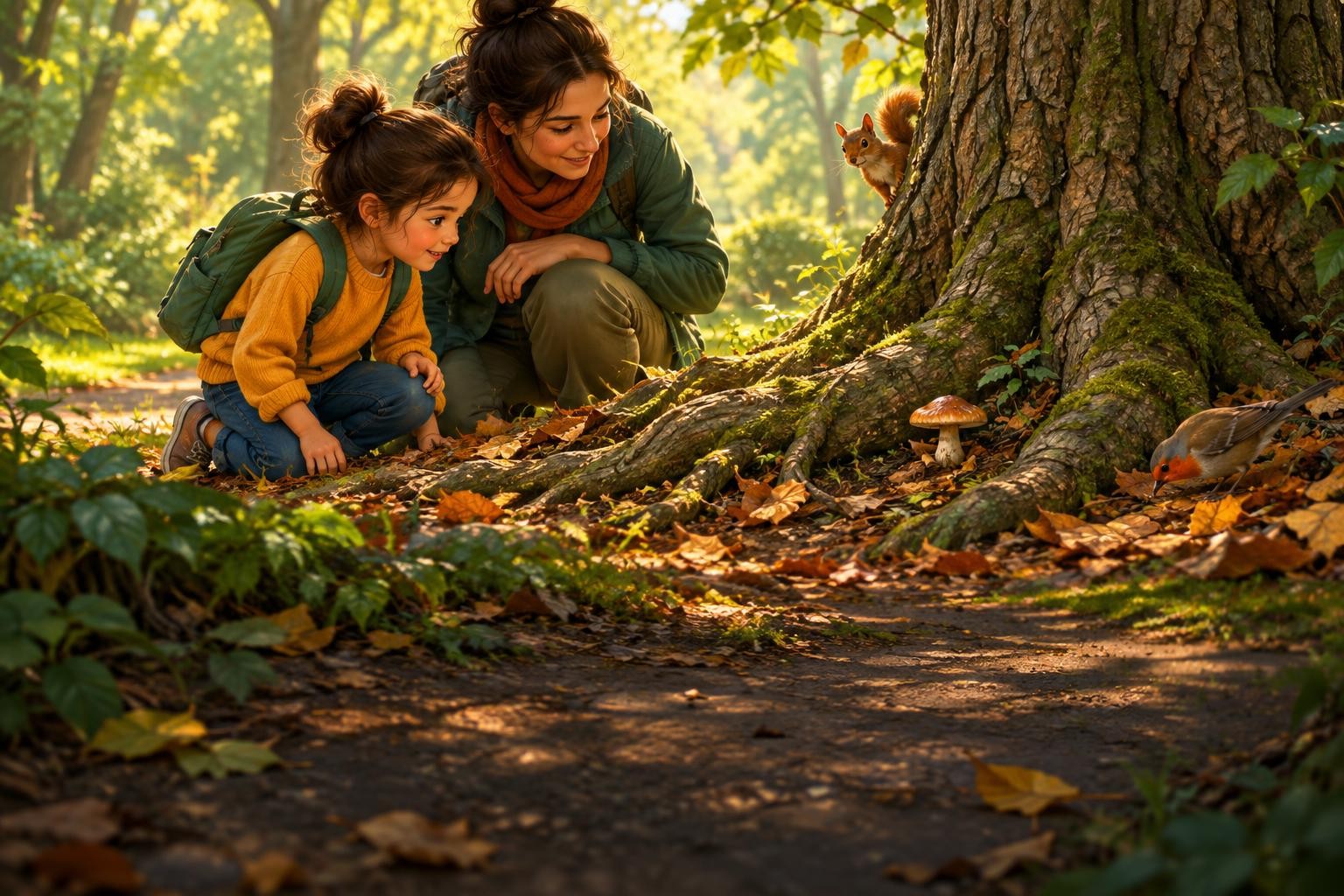
Take a slow forest detective walk with a grown-up and notice what is already there.
Check your wonder
New words
Where we looked
We used web research from forest scientists, ecology studies, museums, and university sources to check the facts in this book.
The end
Now you know that a forest is a busy neighborhood, above and below the soil. Roots, fungi, air, and leaves can all help living things respond to their world. On your next walk, look closely—and keep wondering what hidden jobs are happening under your feet!