The Thankful Table: What Is Thanksgiving? (Story-Lesson Book)
A 16-page illustrated story-lesson book for ages 4–7 teaching Thanksgiving through Grandpa Rafi's expanding table: the Wampanoag Three Sisters, the real 1621 harvest, Sarah Josepha Hale, Canada's October date, global harvest festivals, and everyday gratitude.
Thanksgiving for Kids · 7 of 7
about real things · 23 pages · ages 6–7 · long storybook · EN
Read · Play · Listen · PDF · Print edition · with the Storybook Pass · Make it about your child
Reviewed for child safety · gentle by design · How our storybooks are made
The pages
The Thankful Table
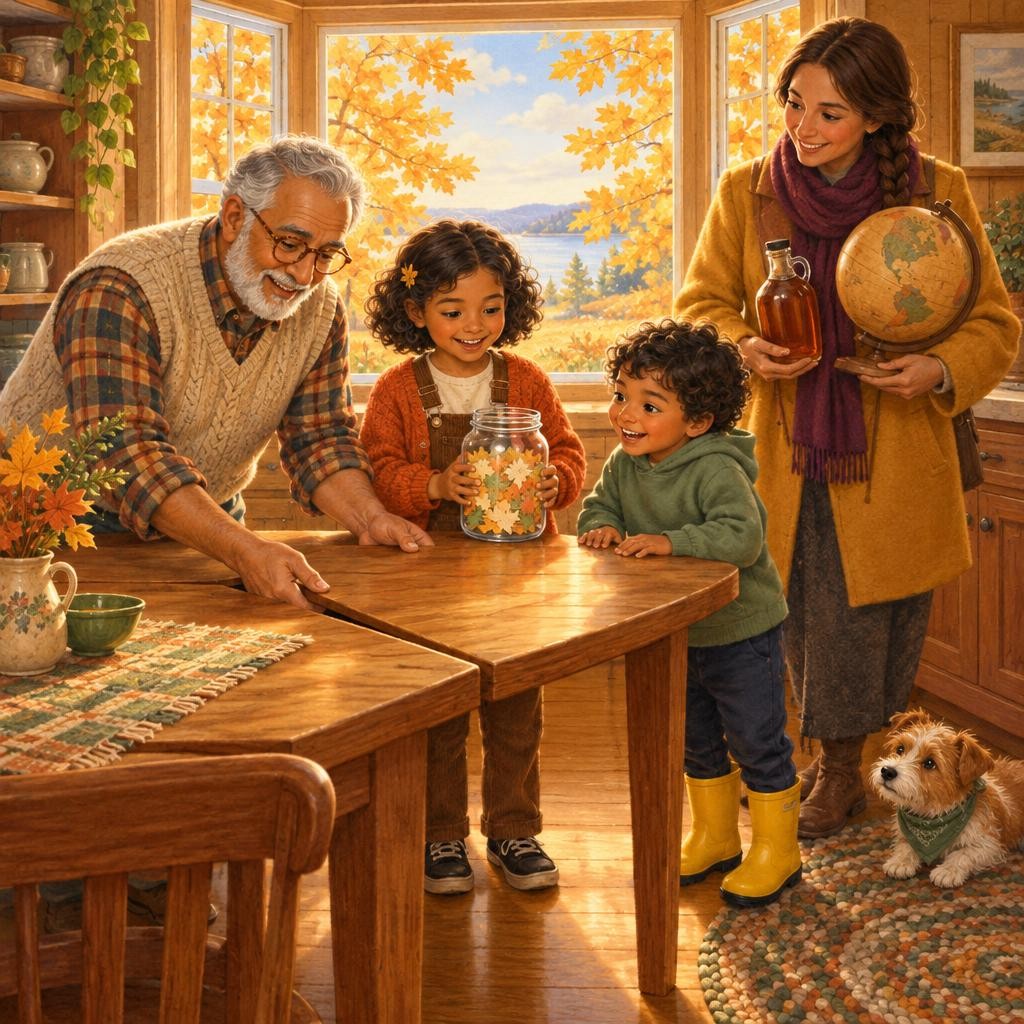
The Thankful Table
For every child who makes room for one more thank-you.
What's inside
Why Do We Pull Out the Big Table? How One Woman’s Letters Made a Holiday Thank You Around the Whole Wide World What Happens Inside a Thankful Brain?
The Secret Leaf in the Table
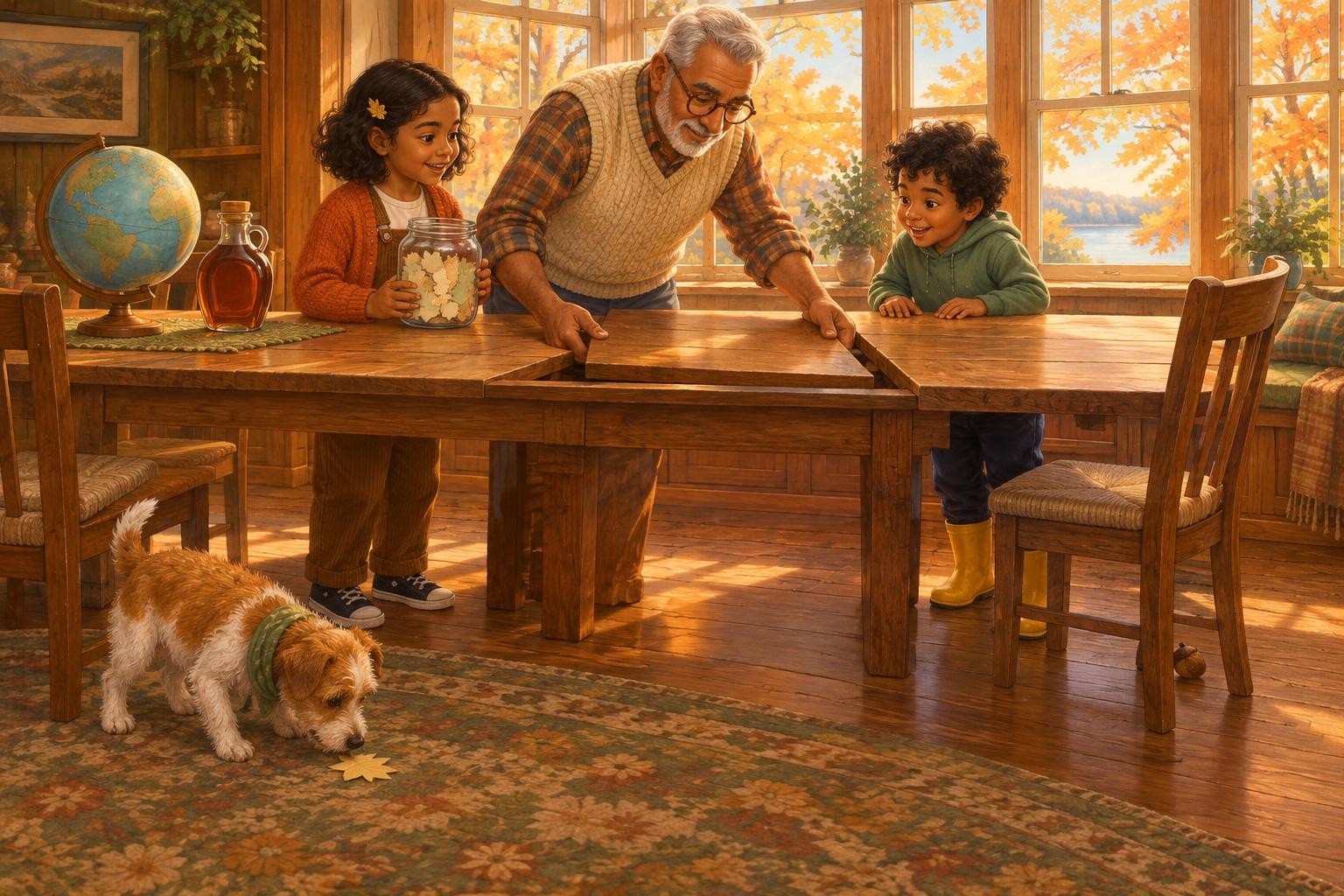
Grandpa Rafi pulls out a hidden table leaf. Suddenly, there is room for more people. This chapter follows that big-table idea: food, memory, and every helper behind one bite. You will meet the people who knew this land long before Plymouth.
Long Before the Ships Arrived
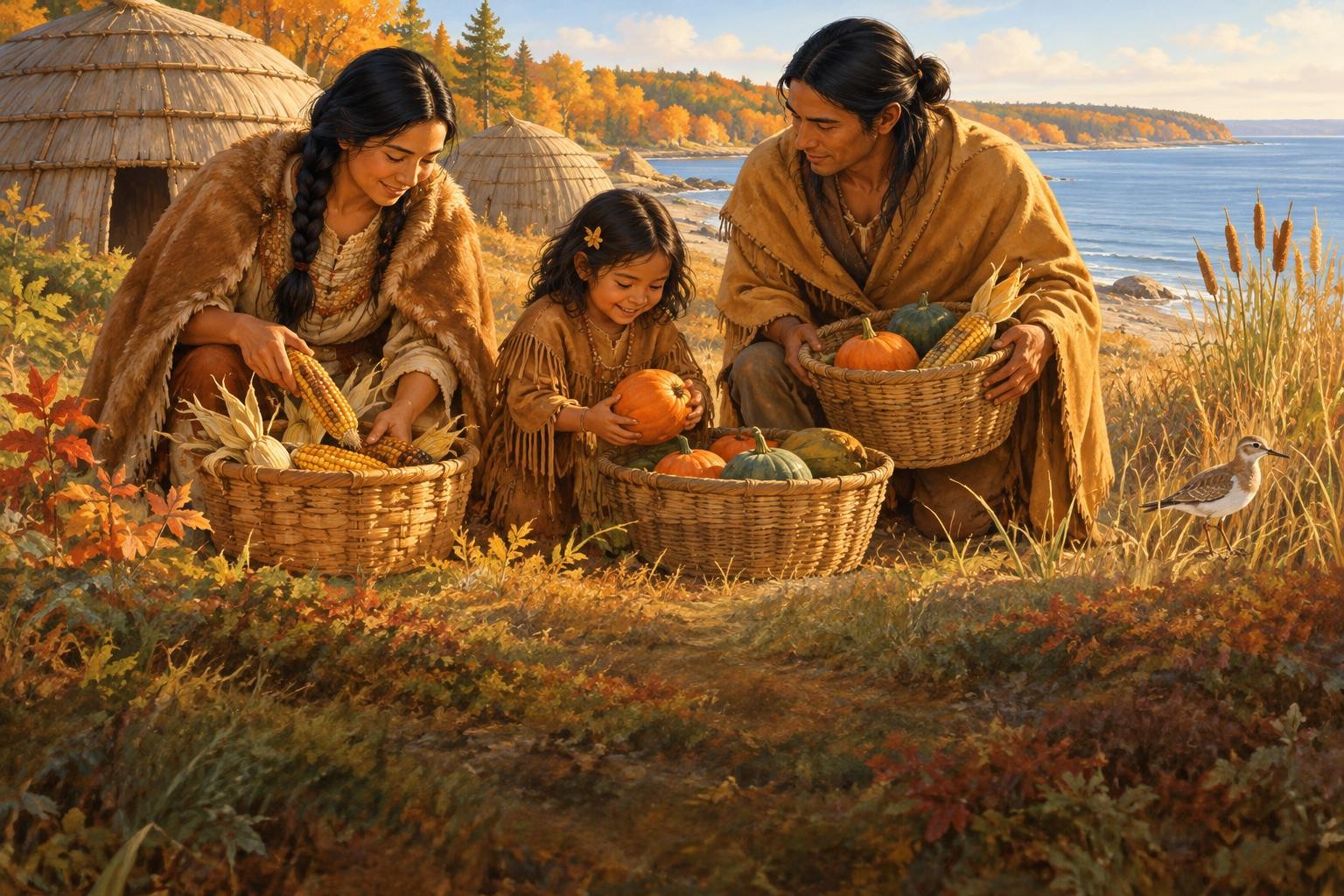
Long before English ships arrived, Wampanoag people lived in Patuxet. Patuxet was their homeland, beside the coast in what is now Massachusetts. They knew the seasons well and gave thanks for food and life through the year. In autumn, families gathered ripe crops. Wampanoag people are not only from history books. Wampanoag communities still live in Massachusetts today.
A Garden Team of Three
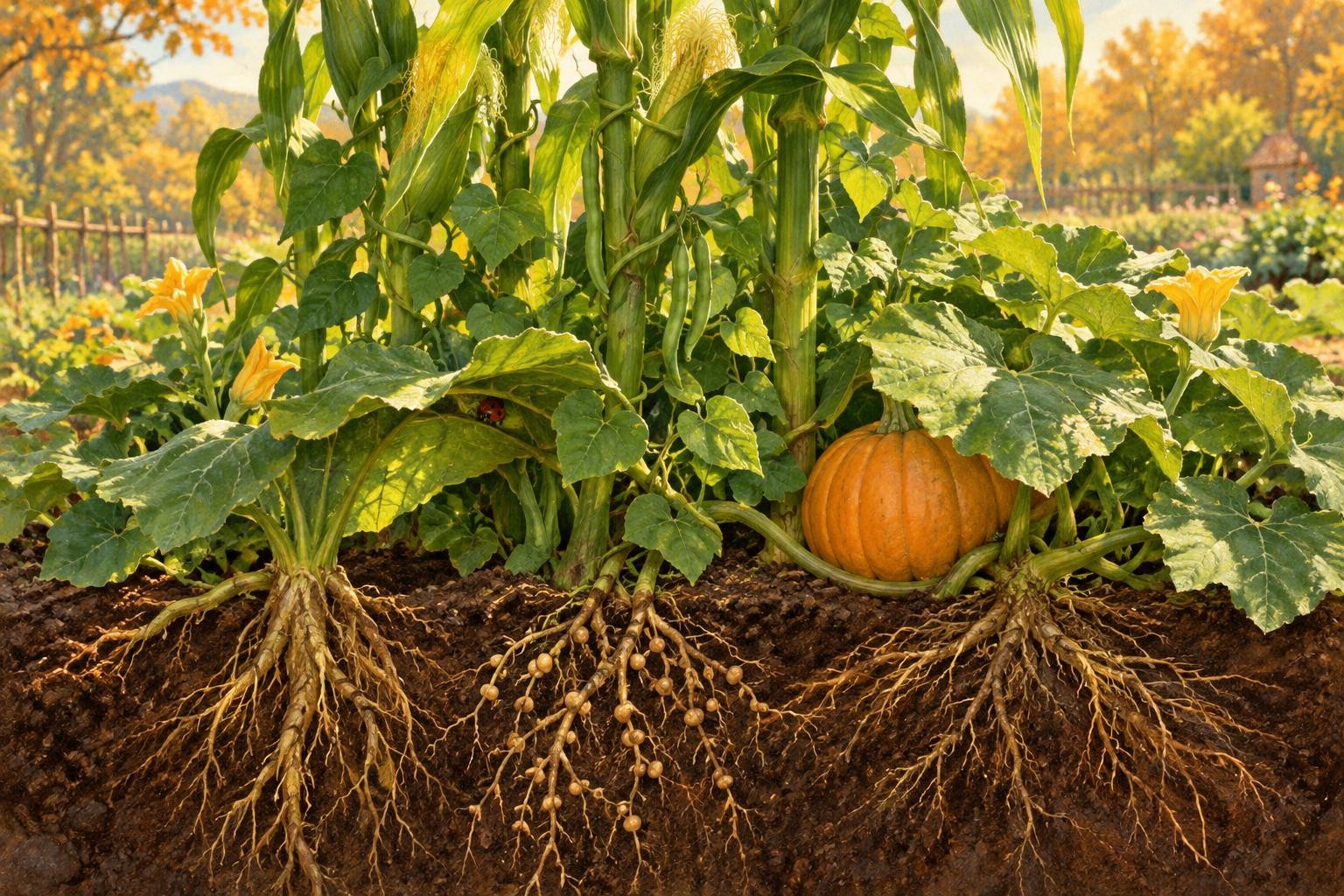
Corn, beans, and squash can grow as a team. Tall corn gives bean vines a pole to climb. Beans have tiny root helpers that take nitrogen, a plant food from the air, and help feed the soil. Broad squash leaves cover the ground like a living umbrella. They keep the soil shaded and help hold in water. This garden team is called the Three Sisters.
The Three-Day Harvest Gathering
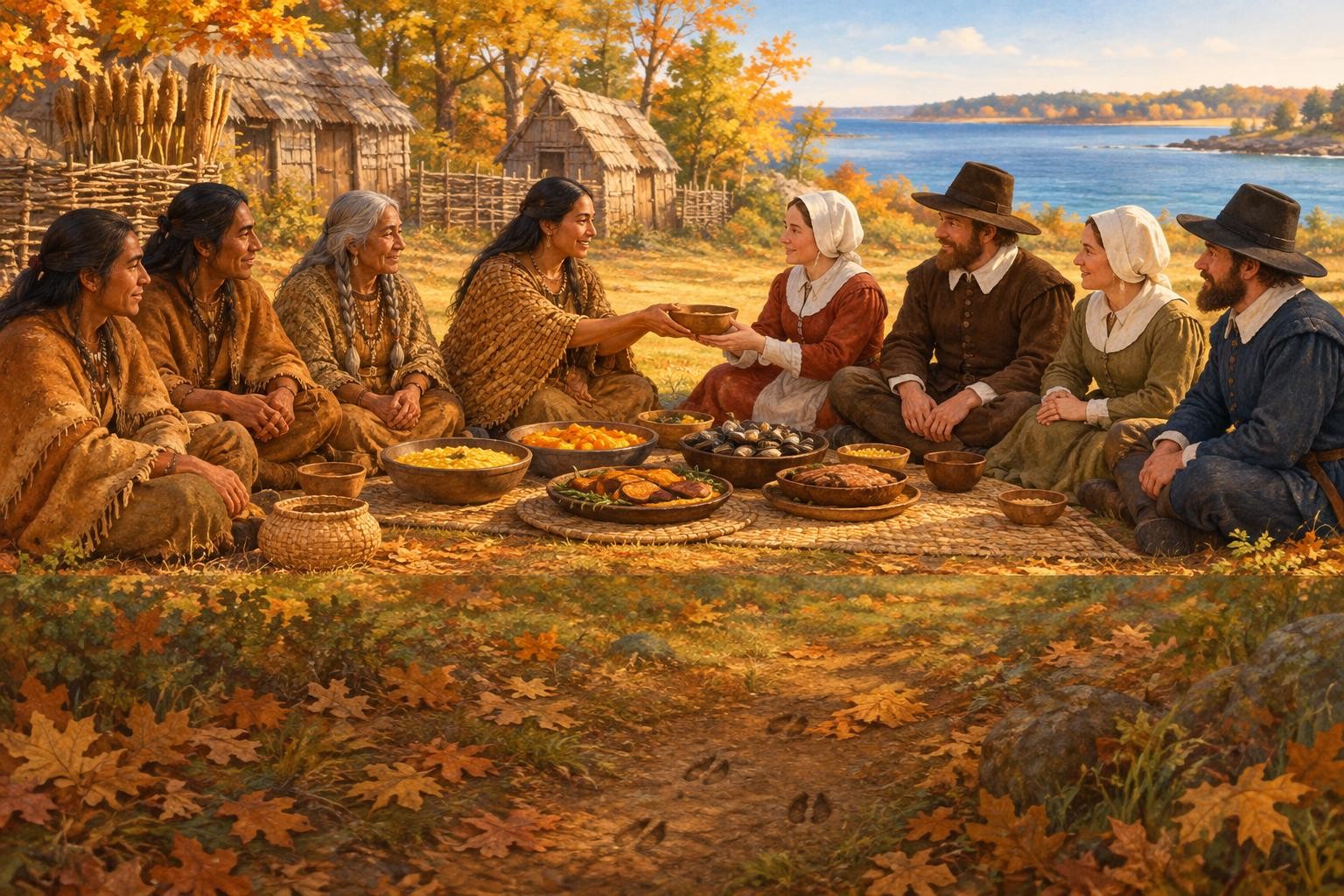
In 1621, a harvest gathering lasted three days in Patuxet. It came after a hard year and careful talks between Wampanoag leader Ousamequin and Plymouth colonists. Their agreement to help keep peace was an alliance. About 90 Wampanoag men joined the colonists. They brought five deer. Many people picture pumpkin pie and forks, but those did not belong at this gathering. Wampanoag communities continue today.
Thirty-Six Years of Letters
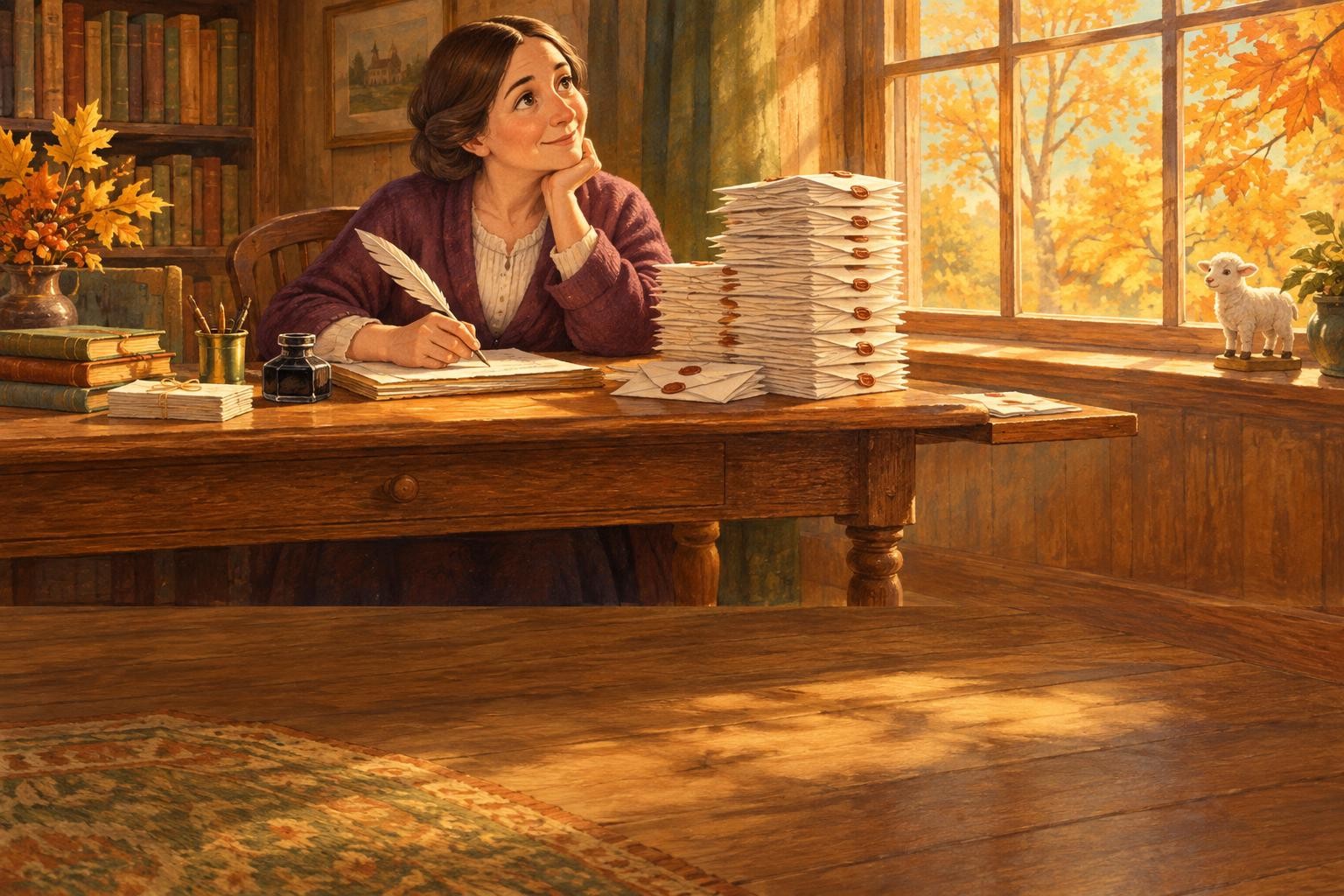
Imagine writing one hopeful letter, then another, for years. Sarah Josepha Hale — the writer who also wrote “Mary Had a Little Lamb” — asked U.S. leaders for one shared day of thanks. She kept going for 36 years. Her patient words helped an idea grow into a holiday.
A Day for Healing
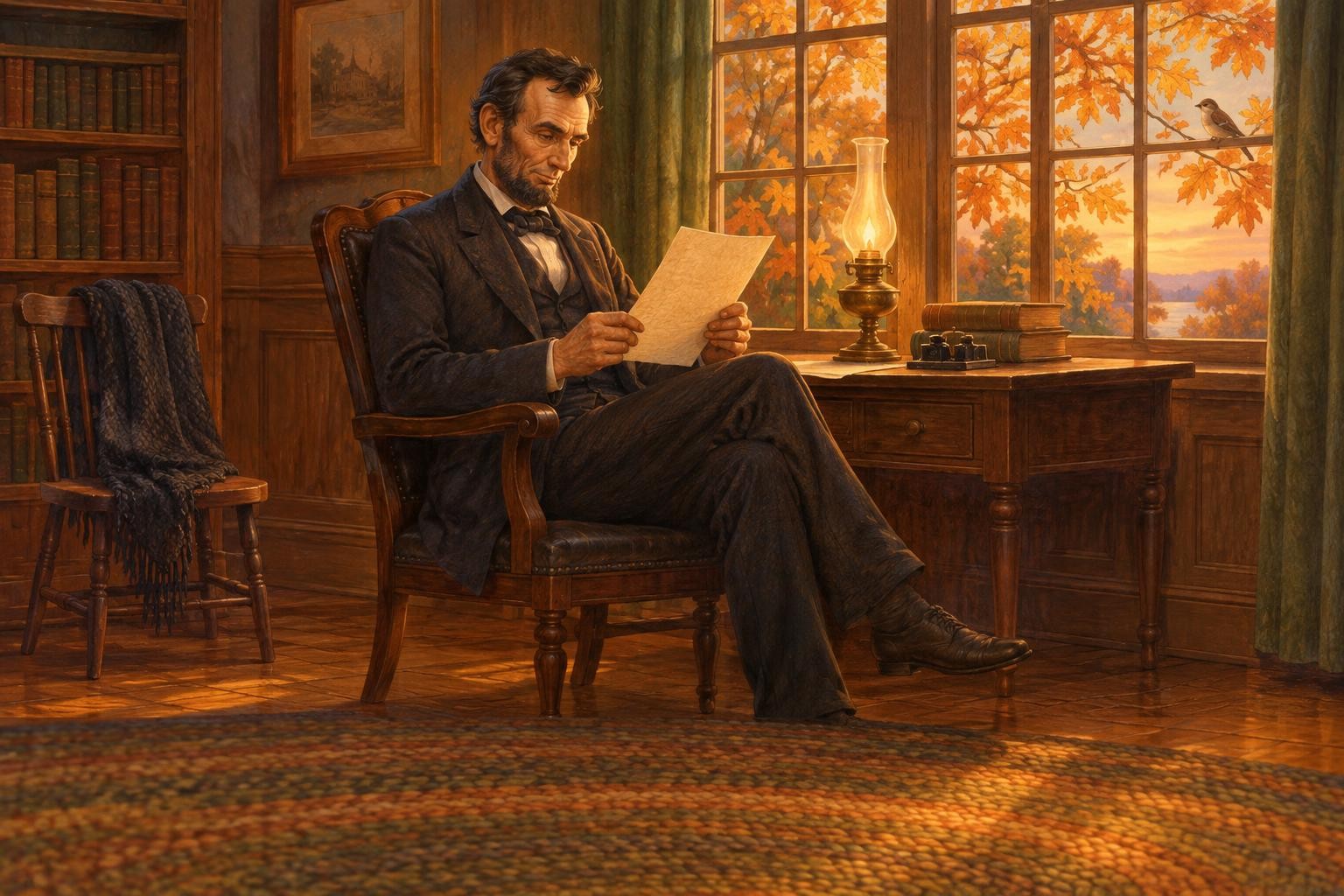
In 1863, families and states in the United States were painfully divided. President Abraham Lincoln chose a day to pause, give thanks, and care for one another. His official announcement was called a proclamation. It made Thanksgiving a national holiday, on the last Thursday of November. One quiet day could not fix everything. But it invited people to look for hope together.
Canada Gives Thanks Earlier
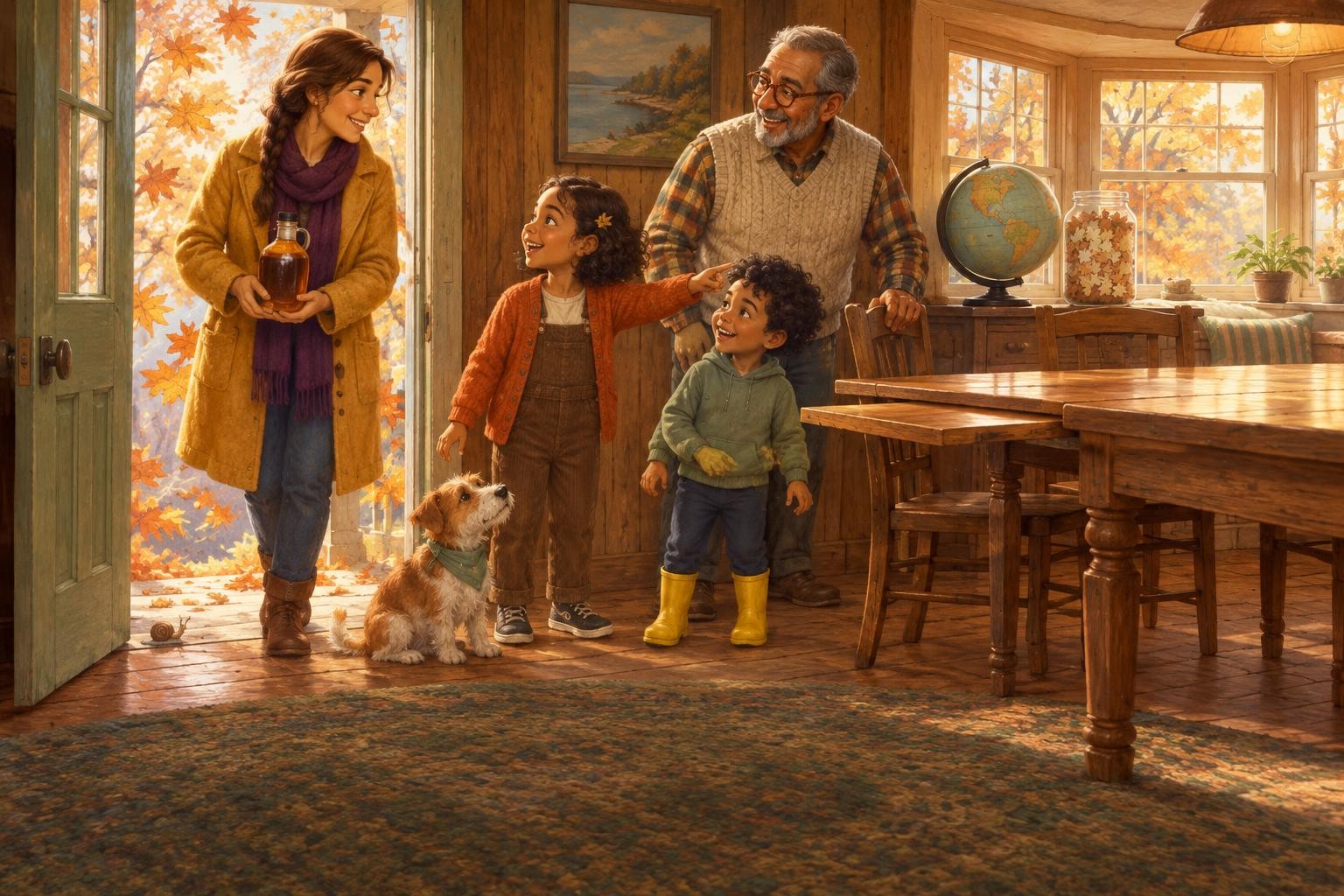
Aunt Clara has arrived when the leaves feel chilly. In Canada, Thanksgiving comes in October, on the second Monday. Why earlier? Much of Canada is farther north, where the growing season often ends sooner. A harvest is when ripe food is gathered. So families may pause for harvest thanks earlier there. People can share gratitude on different days—and still mean it just as deeply.
True or Silly? Food Detective
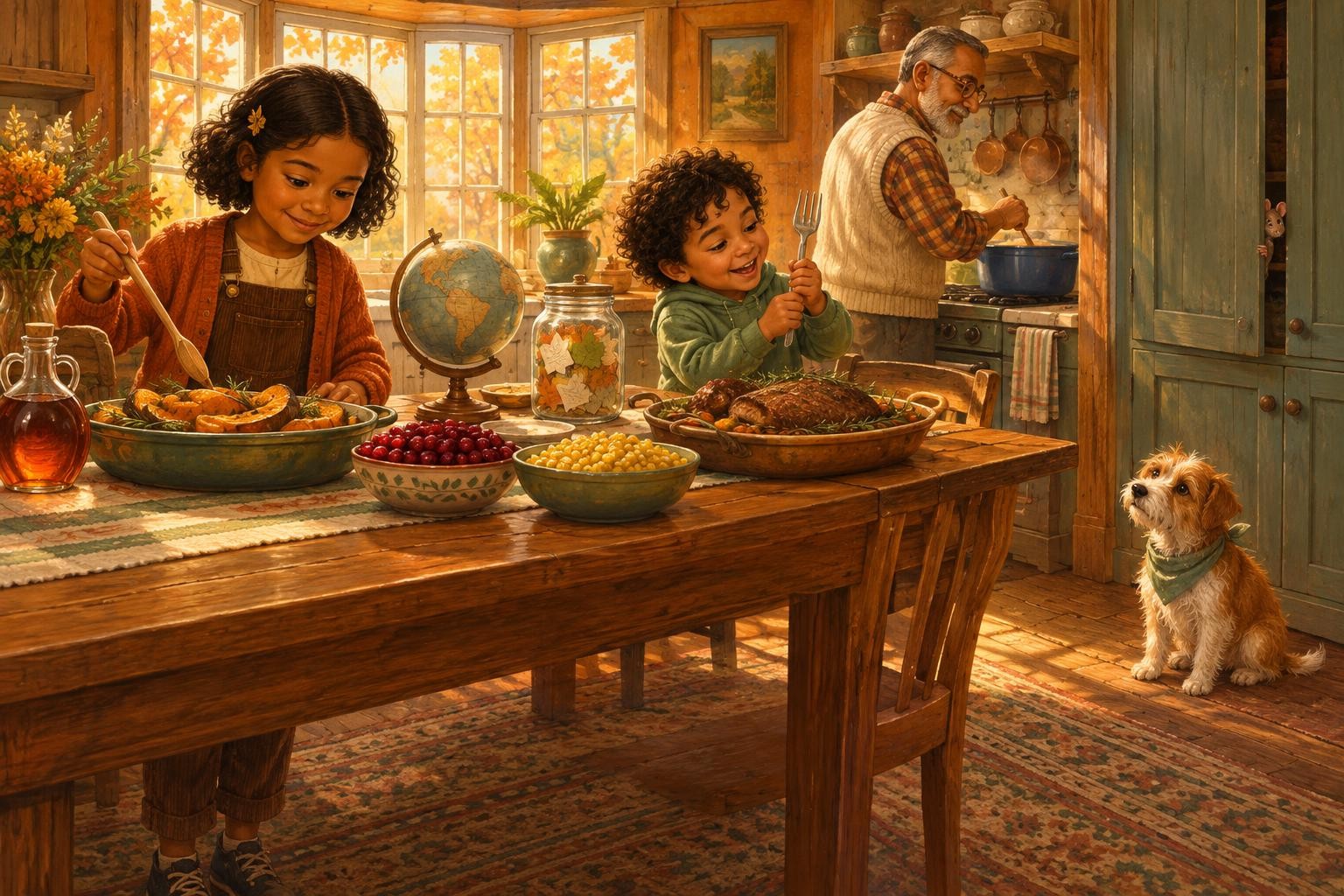
A Globe Full of Thanks
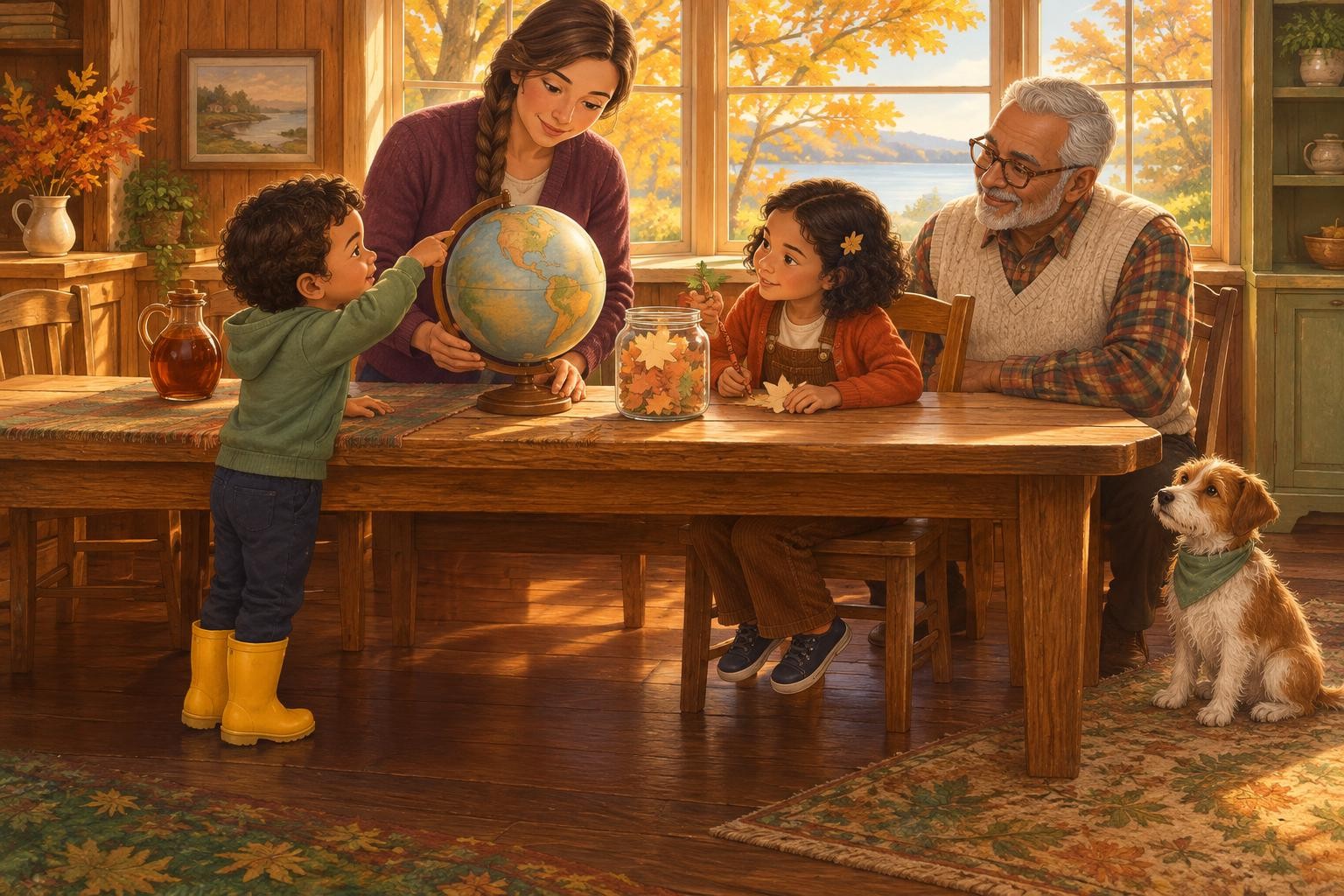
Aunt Clara spins the picture globe. “Thank-you days live in many places,” she says. Some families thank the earth. Some remember family members. Some thank people who grow, carry, cook, and serve food. The foods and seasons may change. The noticing stays bright.
Moonlight, Family, and Treats
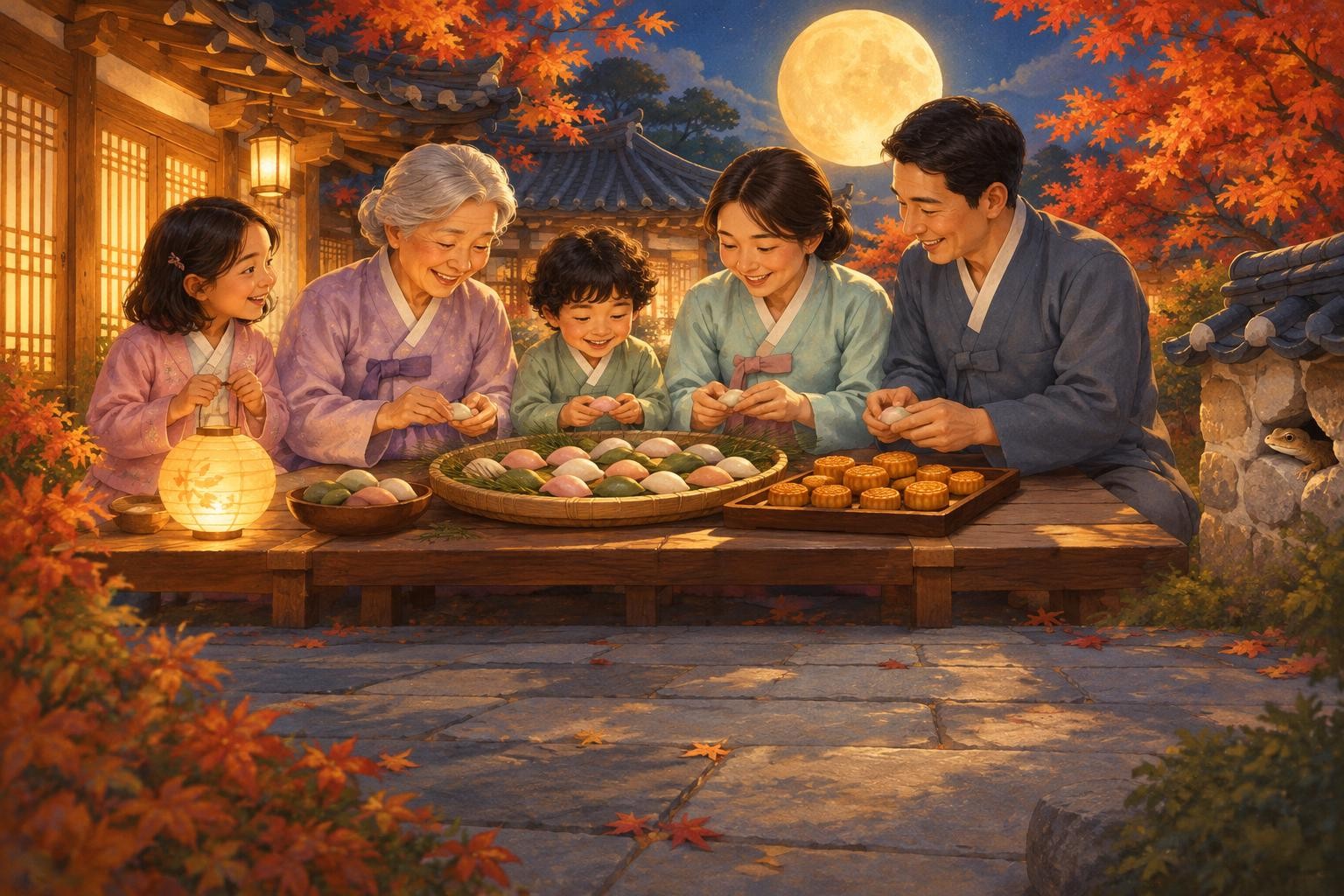
In Korea, Chuseok is a harvest festival for family and remembrance. Families may share songpyeon, soft rice cakes shaped like half-moons. In China and Vietnam, many families celebrate under the full moon and share round mooncakes. Half-moon, full moon, little bite, big thank-you: food can help families remember one another.
Thanks That Bubbles and Dances
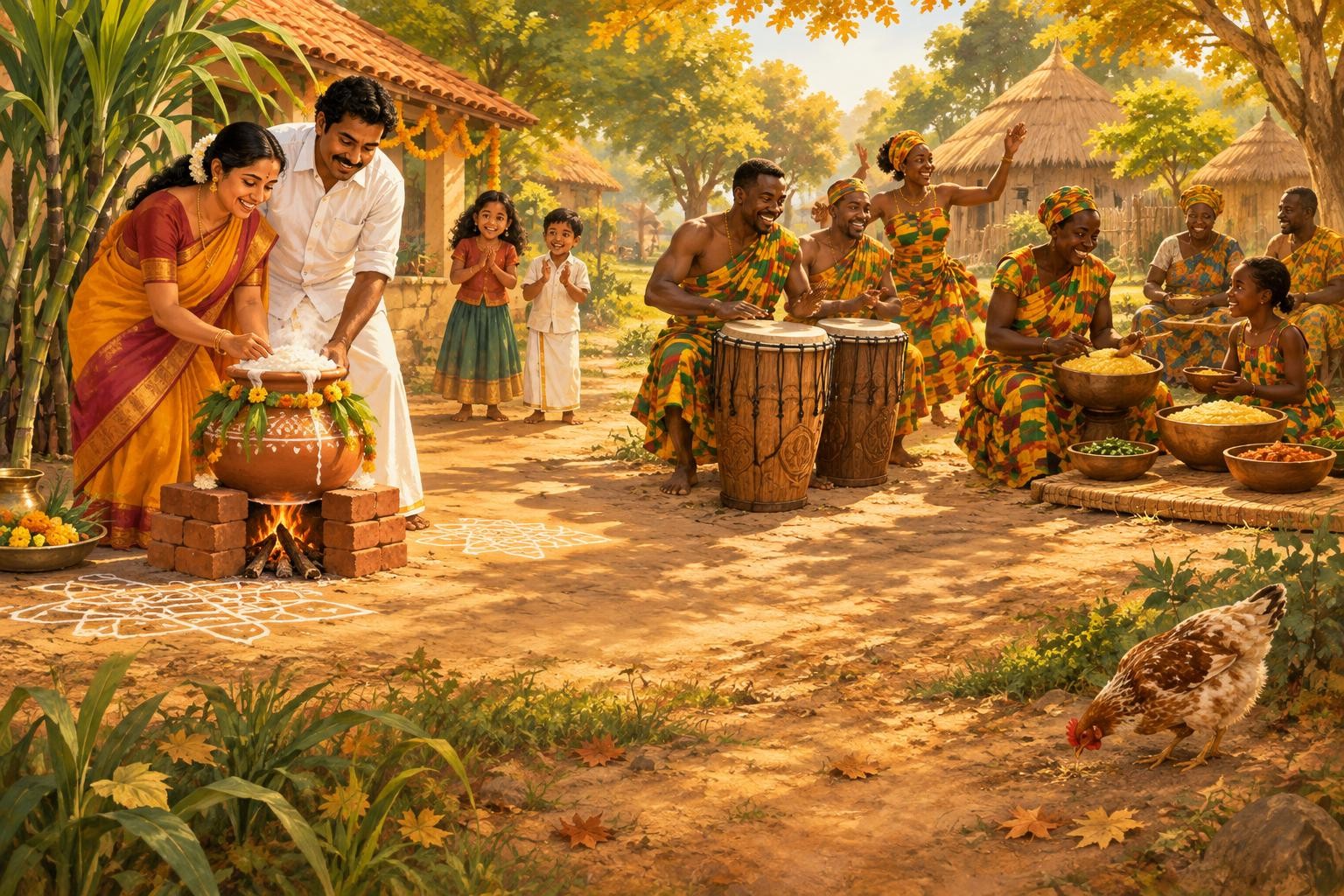
In South India, Pongal thanks the sun, earth, rain, and cattle that help food grow. Rice and milk bubble up from a clay pot. That cheerful overflow says, “May we have plenty.” In Ghana, Ga people celebrate Homowo with music, dancing, and food. Homowo means “hooting at hunger.” It remembers getting through hard times together.
Thanking Food and Helpers
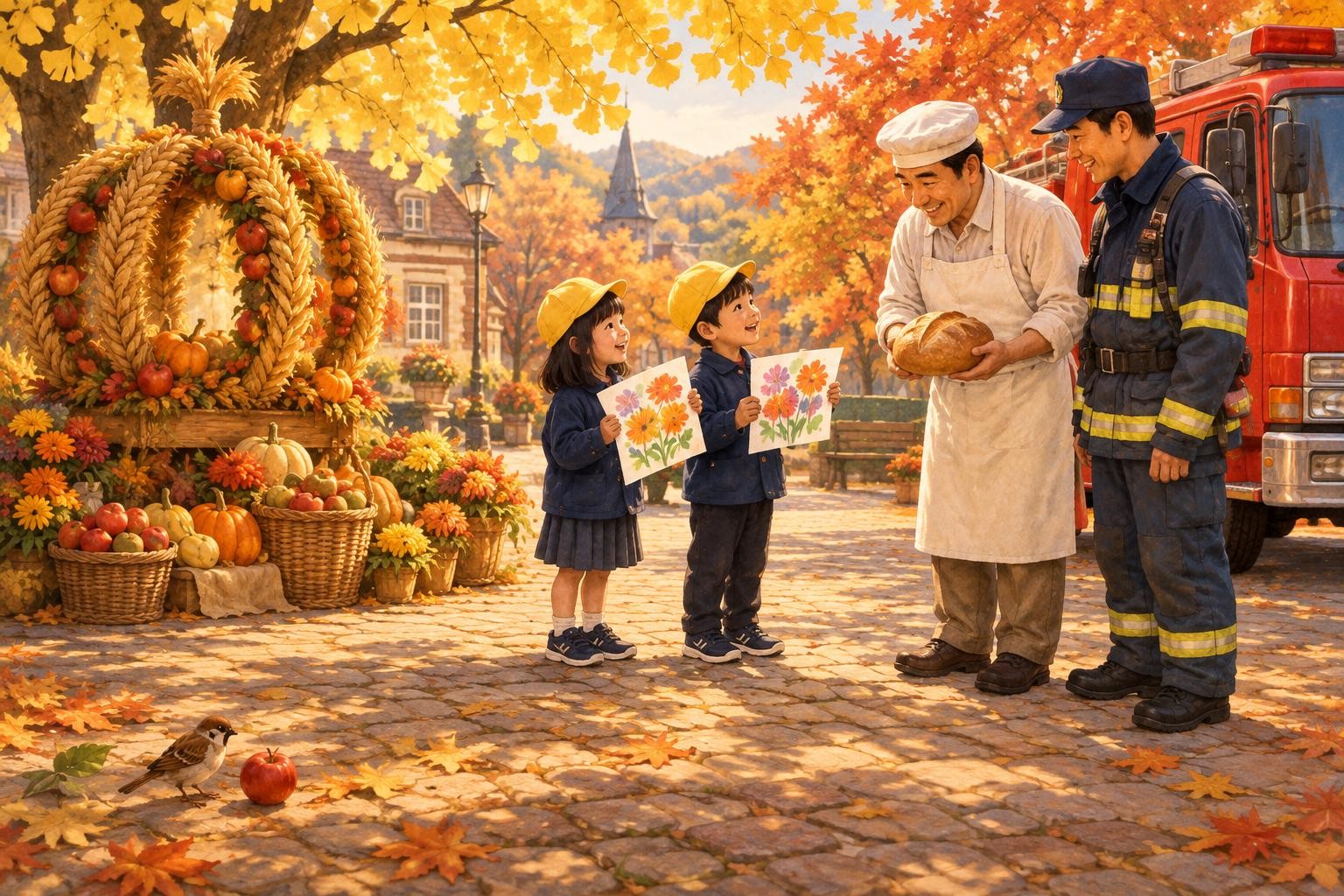
In Germany and Austria, Erntedankfest celebrates the harvest. Baskets of apples, wheat, and vegetables show the good food gathered. Japan’s Labor Thanksgiving Day thanks workers and helpers. Think of a baker, farmer, driver, cleaner, or firefighter. Food reaches your table because many hands help. Gratitude can be for a harvest—and for people, too.
Why Thanks Feels Warm
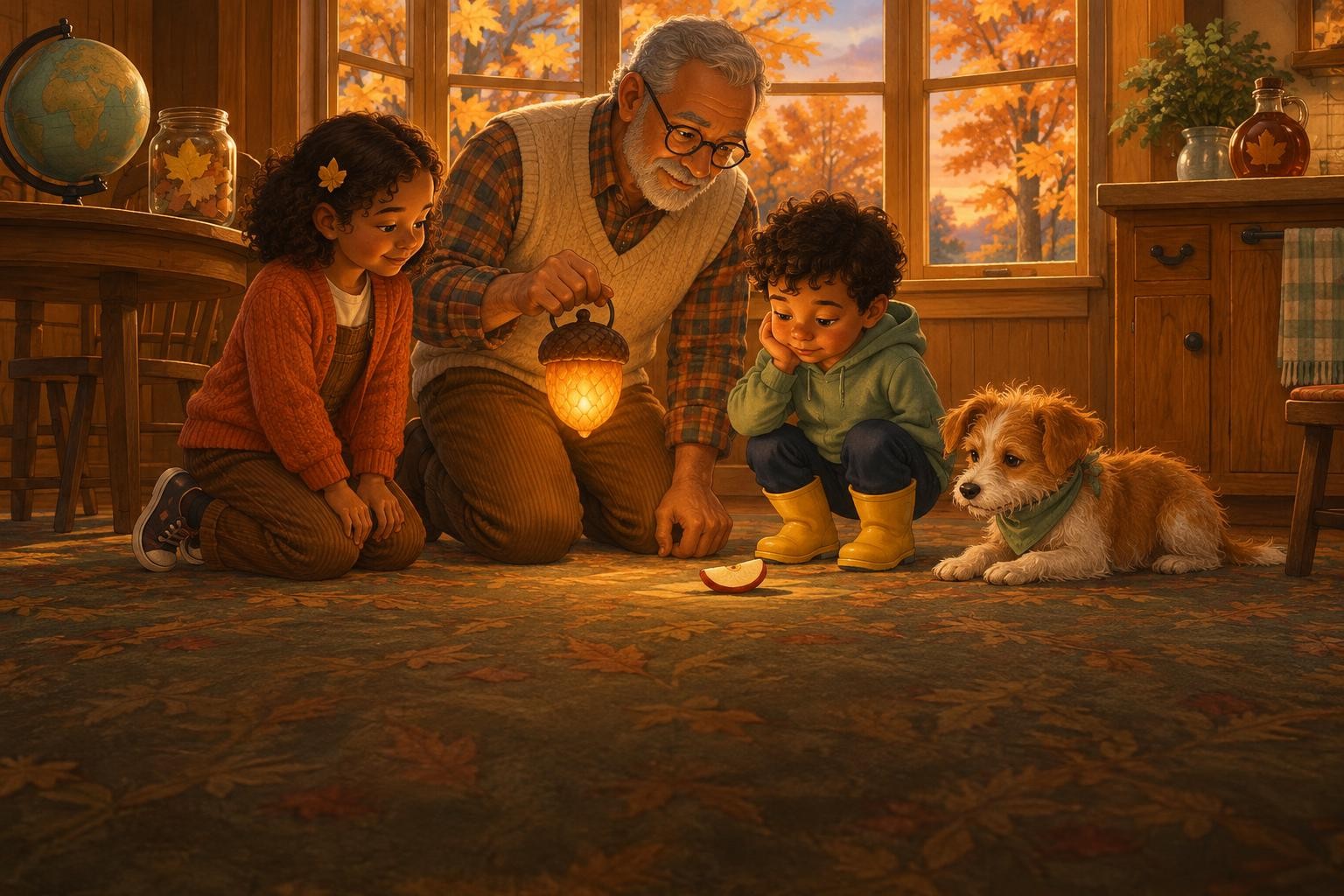
Sometimes a small problem can fill your whole mind. Then you notice one good thing: a kind hand, a crunchy apple, a safe home. That noticing is gratitude—saying thank you for good things and helpers. It cannot erase a hard feeling, but it can help your worried brain feel steadier.
One Bite, Many Helpers
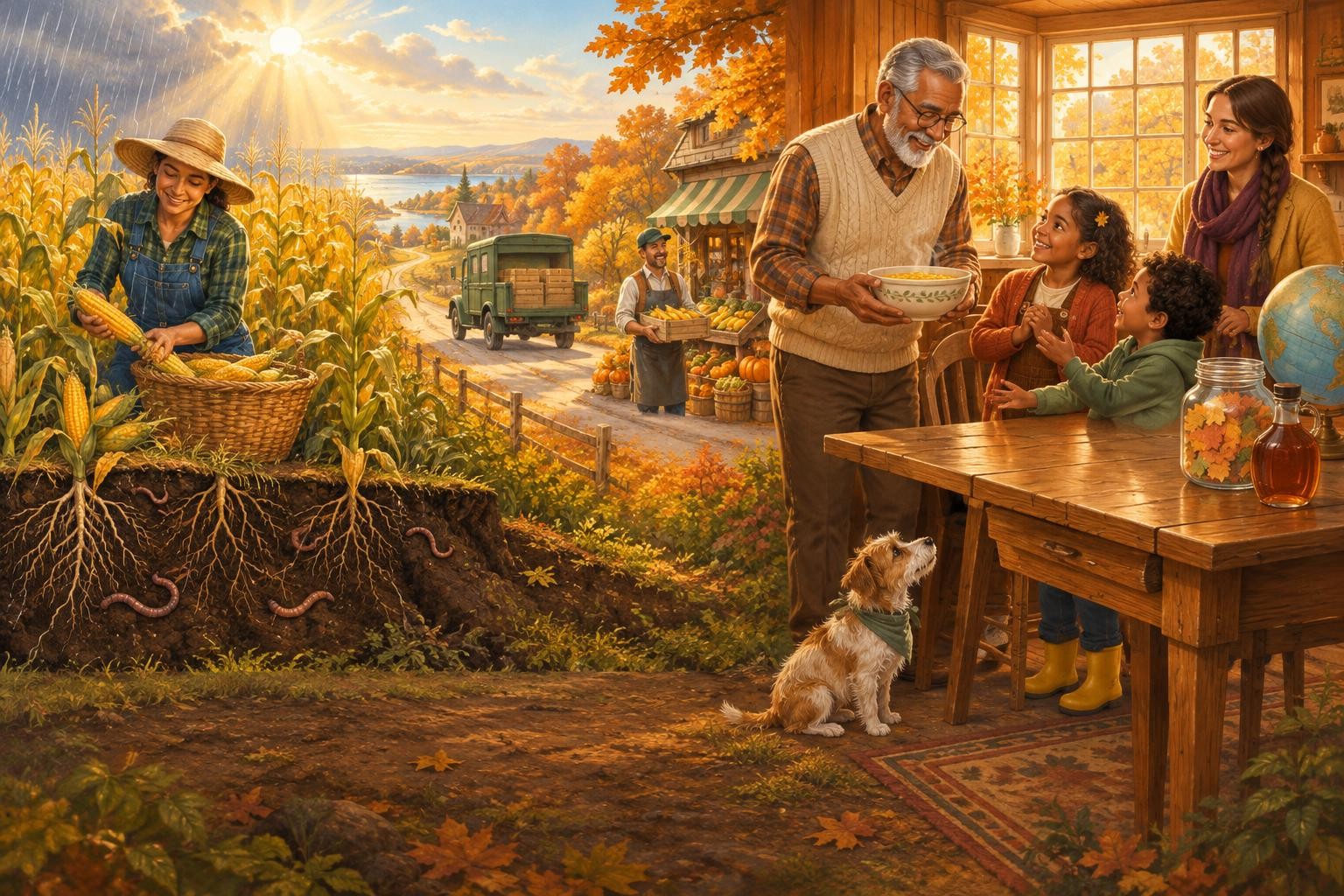
Look at one spoonful of corn. Sunshine helped the plant make food. Rain gave it a drink. Soil held its roots, while worms helped keep the soil loose. A farmer grew it. A driver moved it. A grocer put it in the store. Then a cook made it ready. Your bite is like a tiny thank-you parade, with many helpers joining in.
Make a Thankful Jar
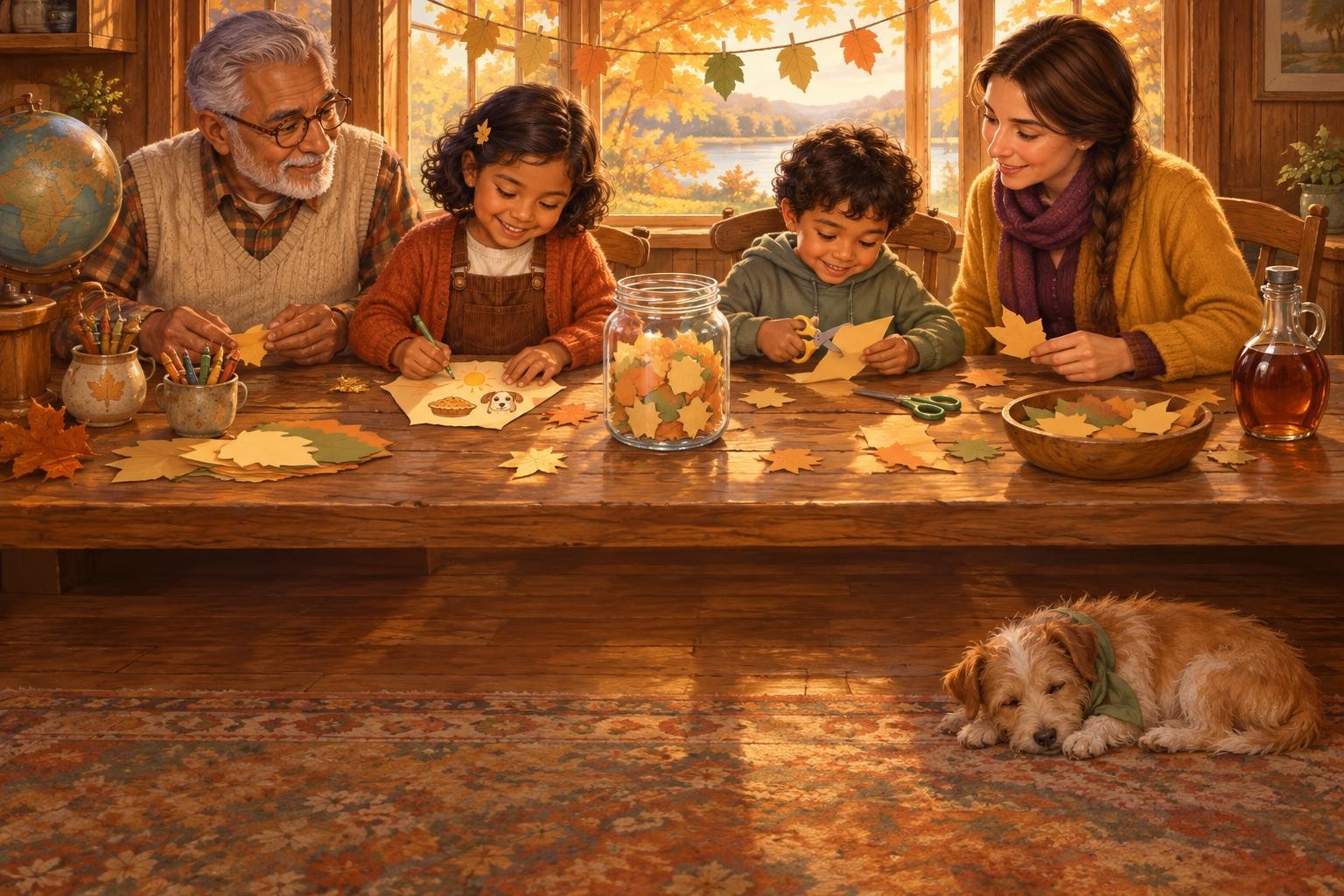
Make a jar of small picture-thanks to notice all year long.
Passing Warmth Forward
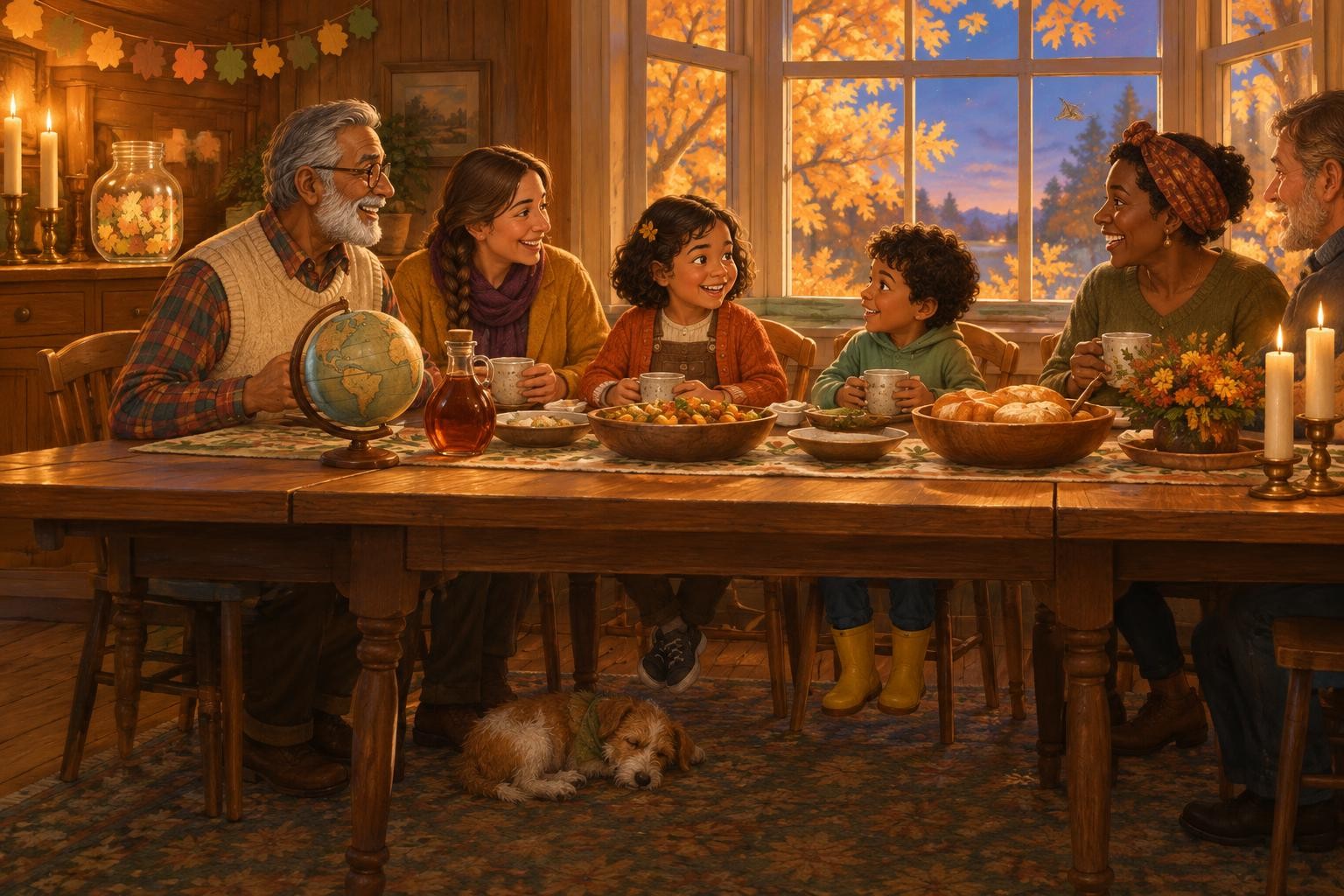
A holiday meal can be a beginning, not an ending. You can notice helpers on an ordinary Tuesday, too. You might welcome someone new, share food, listen to a family story, or help carry dishes. Families celebrate harvest gratitude in many different ways and seasons. The warm part is not only what is on the table. It is the care you pass from person to person.
Check your wonder
New words
Where we looked
We used web research from museums, archives, government sources, and cultural organizations to check the history and traditions in this book.
The end
Now you know that a thankful table holds food, helpers, memories, and room for others. You also know that gratitude has many traditions around the world. Keep wondering: who helped bring your next bite to the table?