What Sweets Do People Share on Diwali?
Mei gets a pile of Diwali sweet boxes and opens one with Asha and Jai: ladoos, sticky jalebis, silver-topped barfi and more. A Diwali sweets lesson for kids.
Diwali for kids · 11 of 16
about real things · asks questions · 10 pages · ages 4–5 · 2 min · English
Read · Play · Listen · PDF · Print edition · with the Storybook Pass · Make it about your child
Reviewed for child safety · gentle by design · How our storybooks are made
Published 2026-11-04T06:11:01.003962
Quick answer
On Diwali, families share boxes of sweets, often called mithai. Favourites include round ladoos, sticky orange jalebis dipped in syrup, milky barfi (sometimes topped with edible silver) and kaju katli made from cashew nuts. Salty treats like chakli, or murukku, are shared too.
Inside this storybook
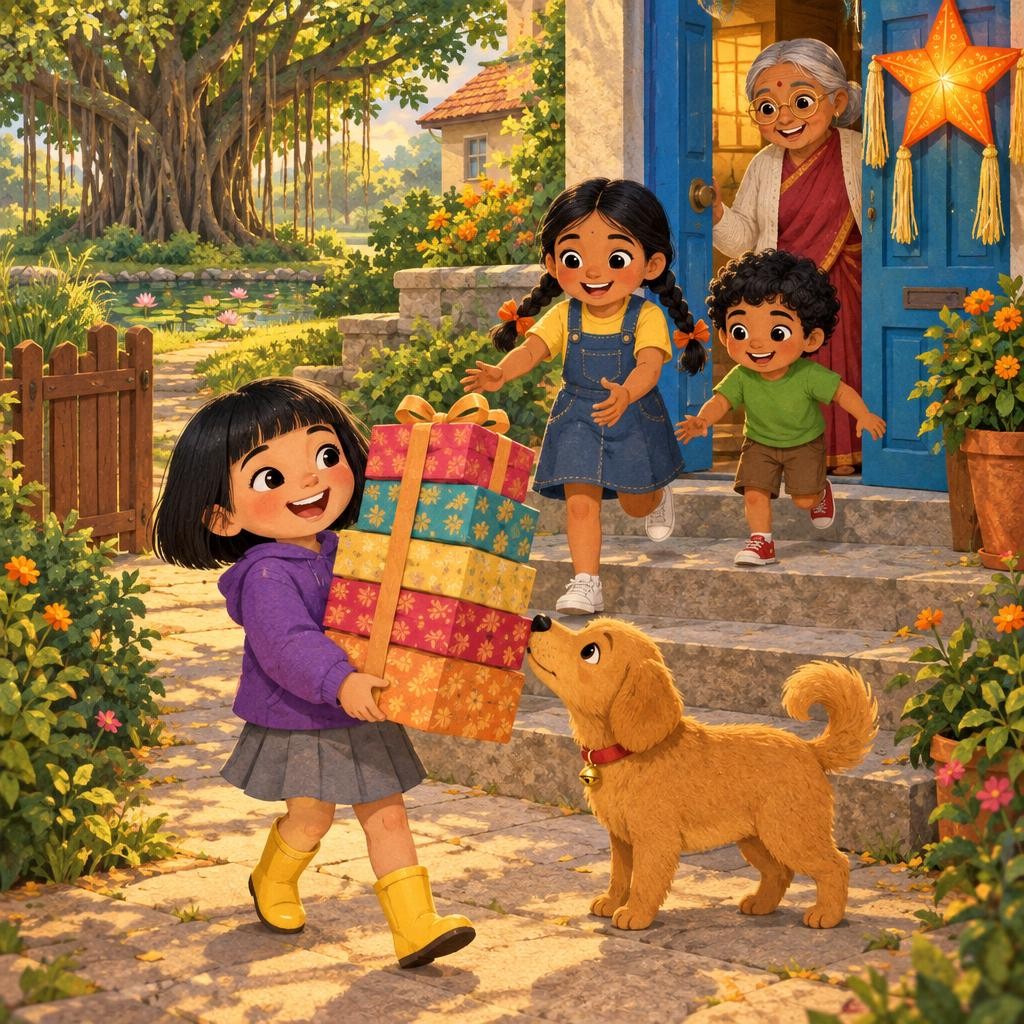
Mei carries a pile of boxes up Nani's path. "Our neighbours keep giving us these!" she laughs. "What is inside them?" Asha grins. "Diwali sweets! Let's open one and see."
They open the first box on Nani's kitchen table. Inside are rows of little sweets in many shapes and colours. Many families call these Diwali sweets mithai.
The round yellow ones are ladoos. Many are made from chickpea flour, sugar and butter, rolled into little balls. Jai pops one in his mouth. "Mmm!"
The orange swirls are jalebis. They are crunchy on the outside and very, very sticky. Asha licks her fingers after just one.
A grown-up fries the jalebi swirls until they are crisp, then dips them in warm sugar syrup. That is what makes them shiny and sticky.
The flat white squares are barfi, made from milk and sugar. Some barfi has a shiny silver top. The silver is so thin, you can eat it!
The diamond shapes are kaju katli, made from cashew nuts and sugar. Some people cannot eat nuts. Mei's little cousin is one of them.
Not every Diwali treat is sweet! Nani brings a bowl of crunchy spirals called chakli, or murukku. They are salty and a little spicy. Crunch, crunch!
Mei laughs. "Now I know why we got so many boxes!" On Diwali, families fill boxes with mithai and give them to neighbours, friends and teachers, to share the happy day.
Then the children fill a box of their own, with one of each kind. "This one is for Mei's family," says Jai. Which sweets would you put in your Diwali box, and who would you share it with?
The pages
So many boxes!
Mei carries a pile of boxes up Nani's path. "Our neighbours keep giving us these!" she laughs. "What is inside them?" Asha grins. "Diwali sweets! Let's open one and see."
Rows of little sweets
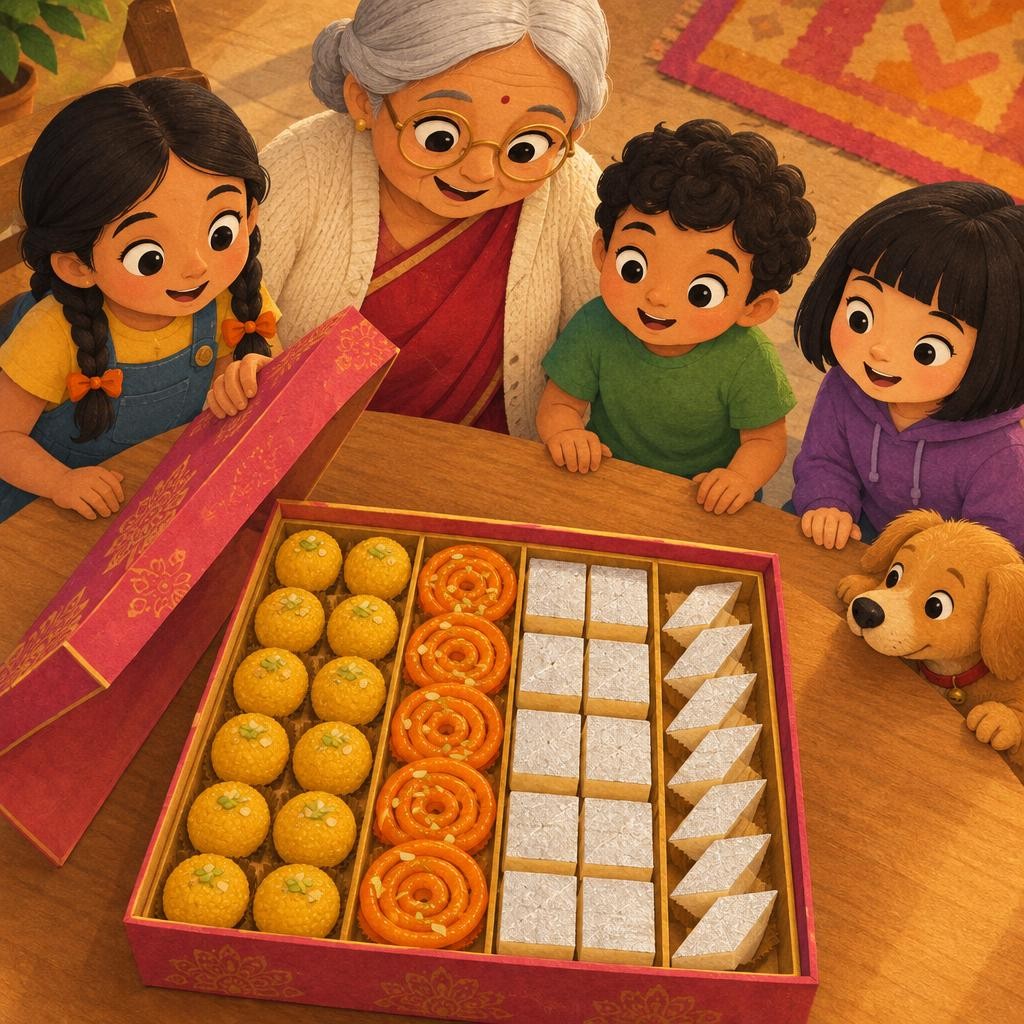
They open the first box on Nani's kitchen table. Inside are rows of little sweets in many shapes and colours. Many families call these Diwali sweets mithai.
Ladoos
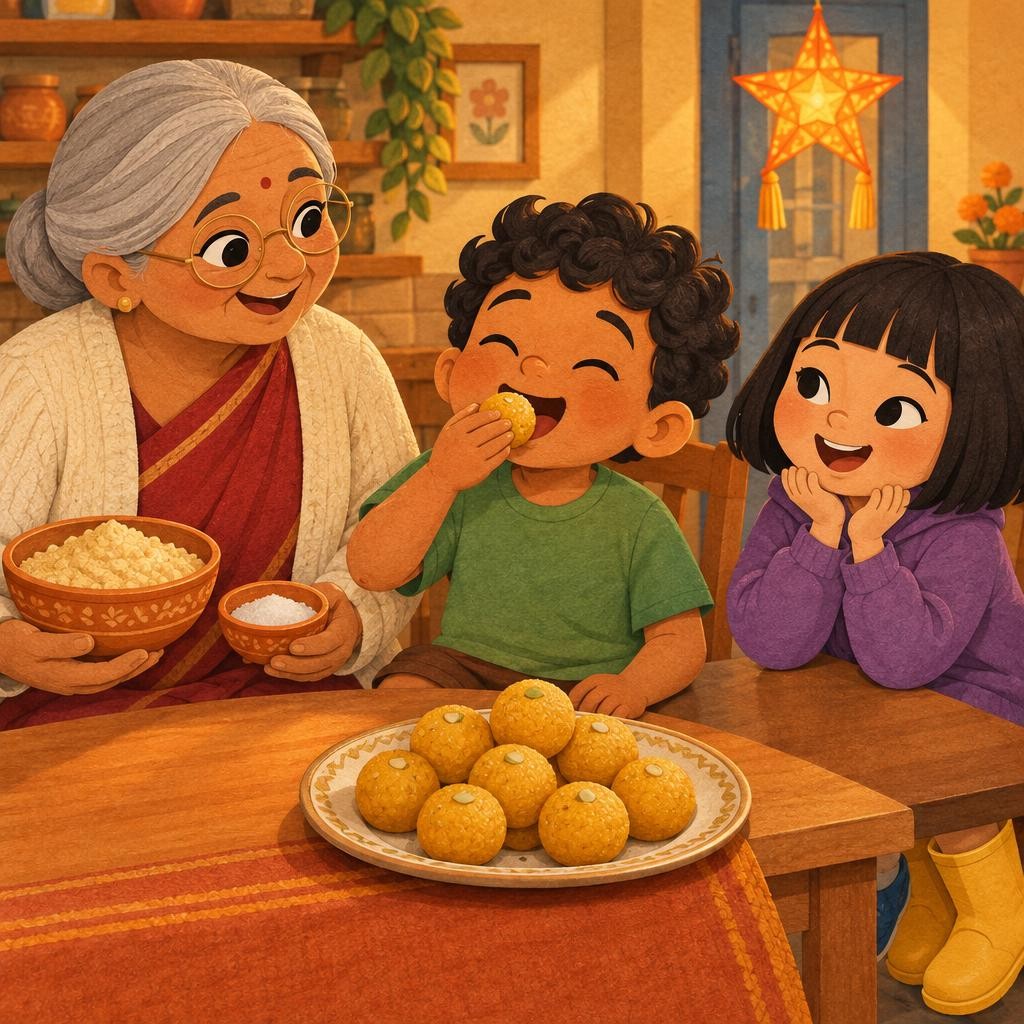
The round yellow ones are ladoos. Many are made from chickpea flour, sugar and butter, rolled into little balls. Jai pops one in his mouth. "Mmm!"
Sticky swirls
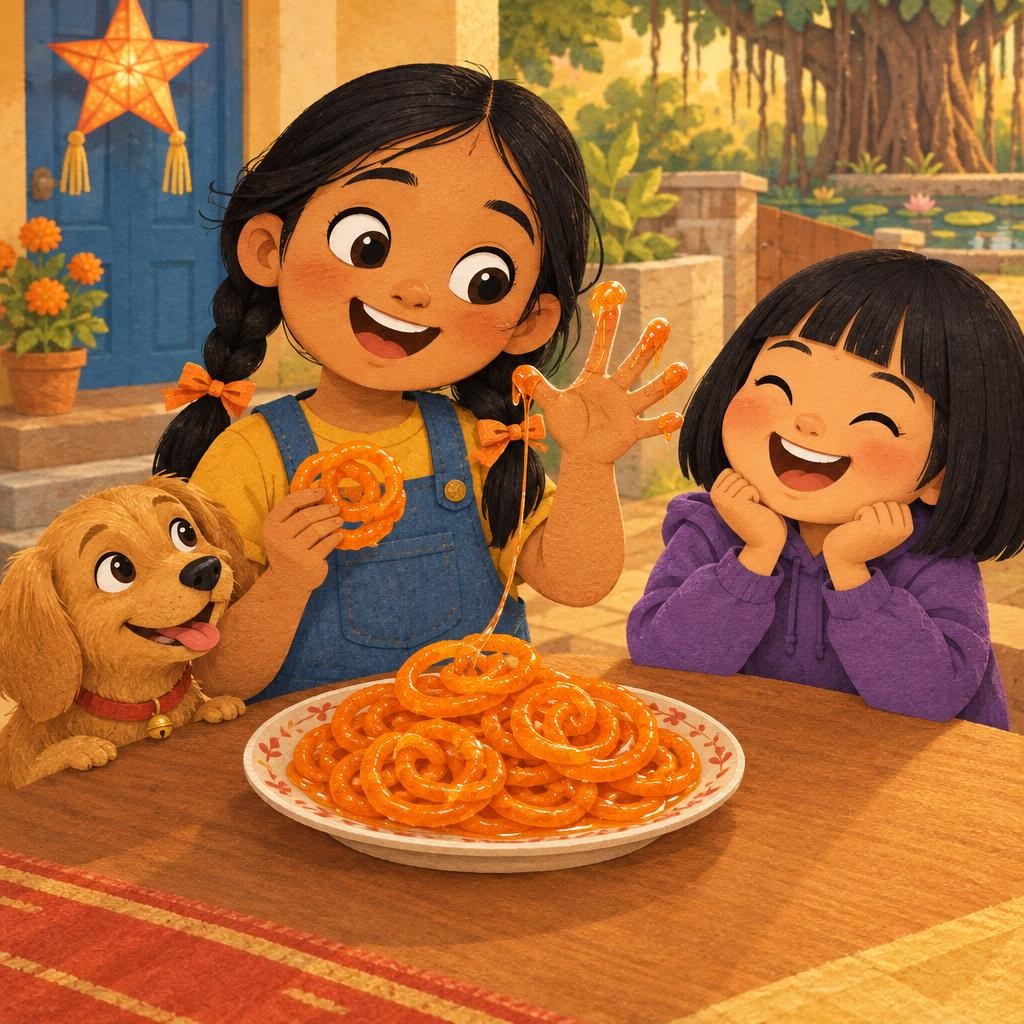
The orange swirls are jalebis. They are crunchy on the outside and very, very sticky. Asha licks her fingers after just one.
Dipped in syrup
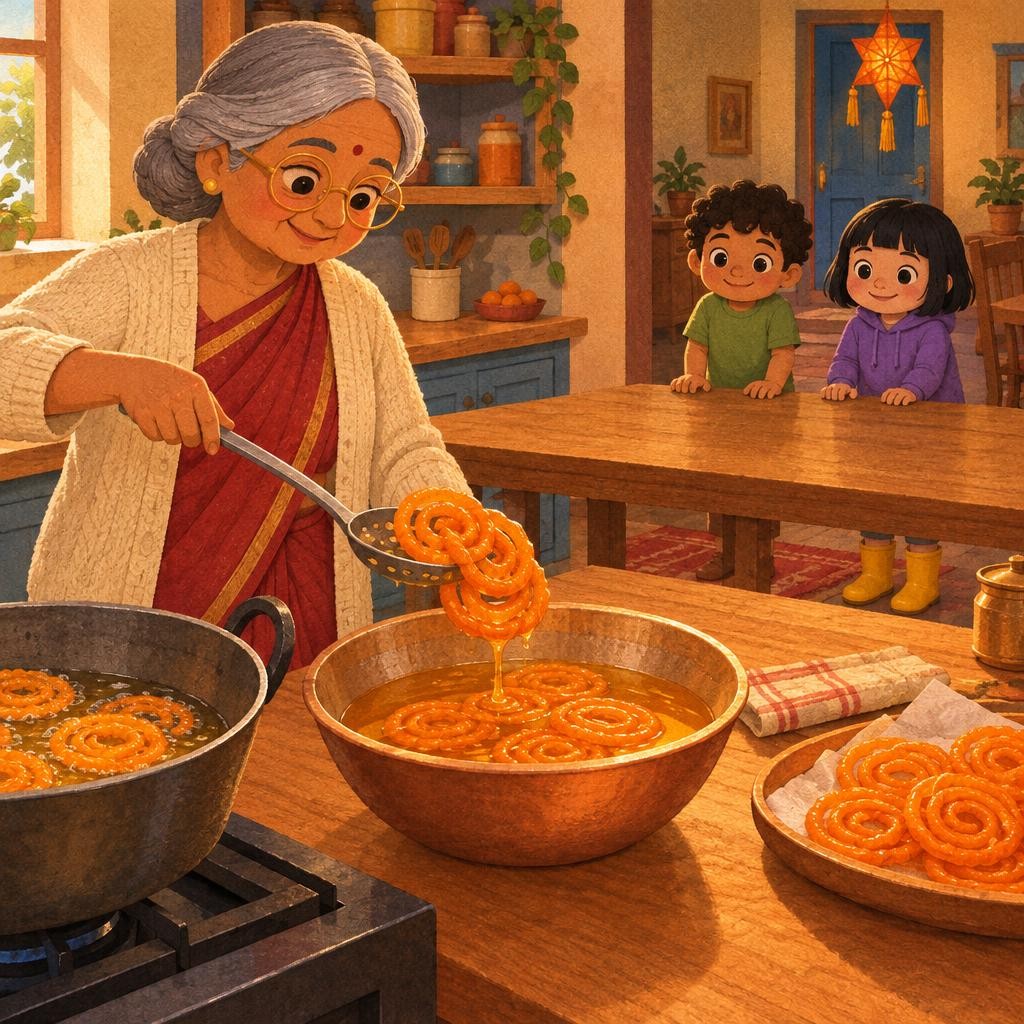
A grown-up fries the jalebi swirls until they are crisp, then dips them in warm sugar syrup. That is what makes them shiny and sticky.
A silver top
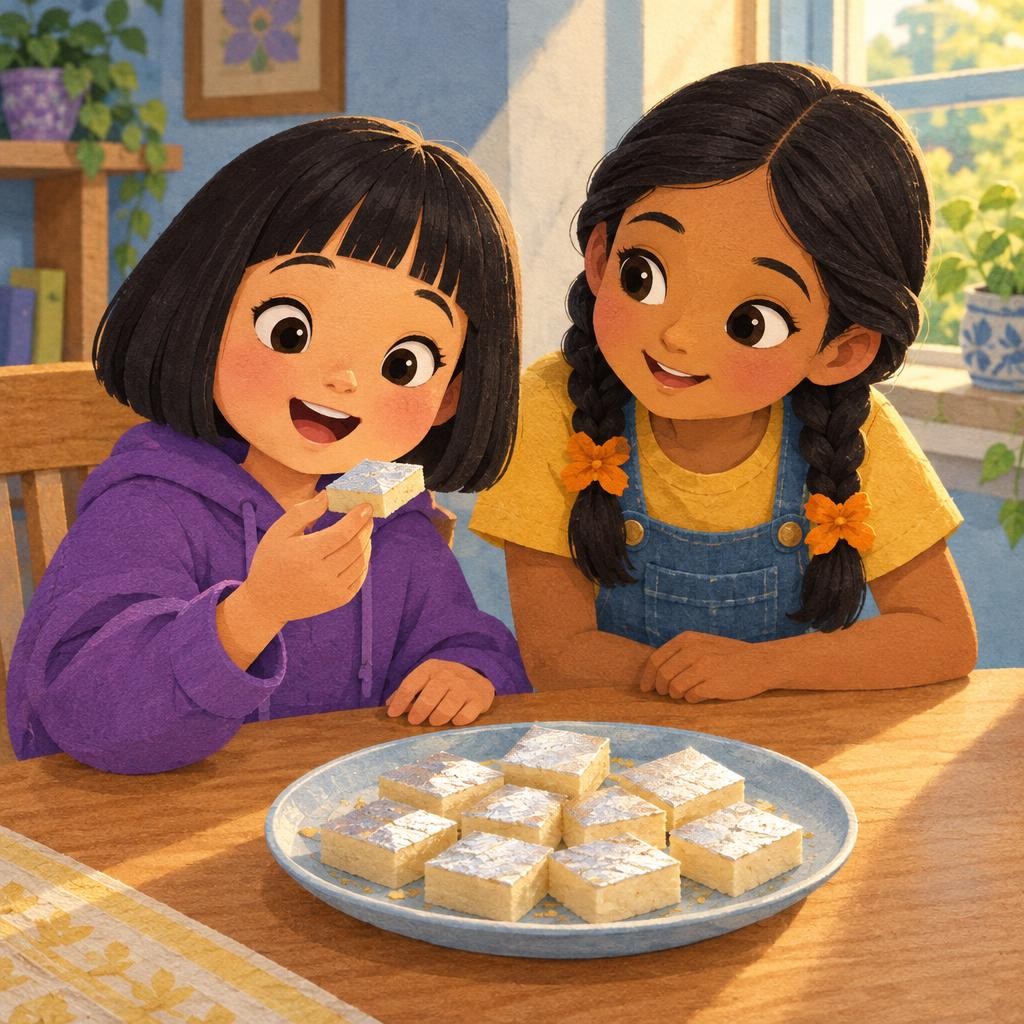
The flat white squares are barfi, made from milk and sugar. Some barfi has a shiny silver top. The silver is so thin, you can eat it!
Made from nuts
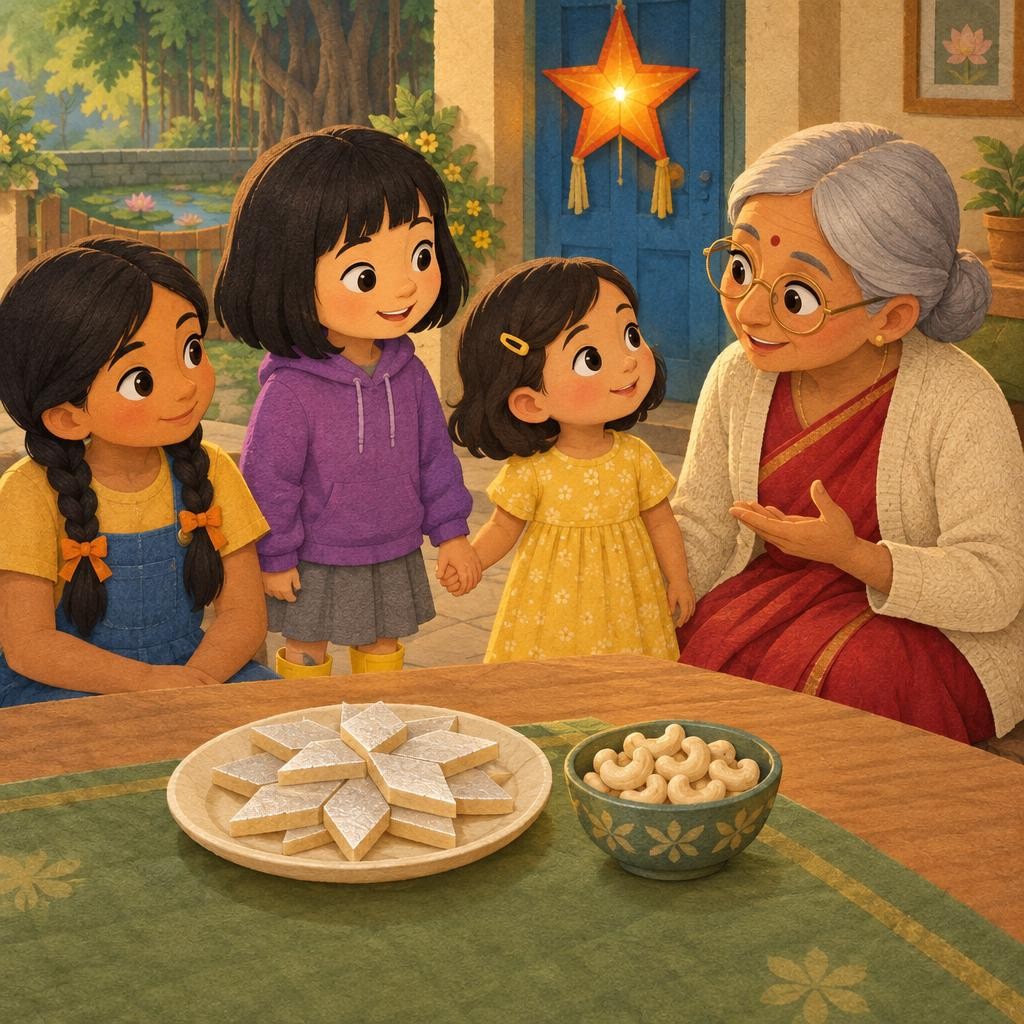
The diamond shapes are kaju katli, made from cashew nuts and sugar. Some people cannot eat nuts. Mei's little cousin is one of them.
Crunchy, not sweet
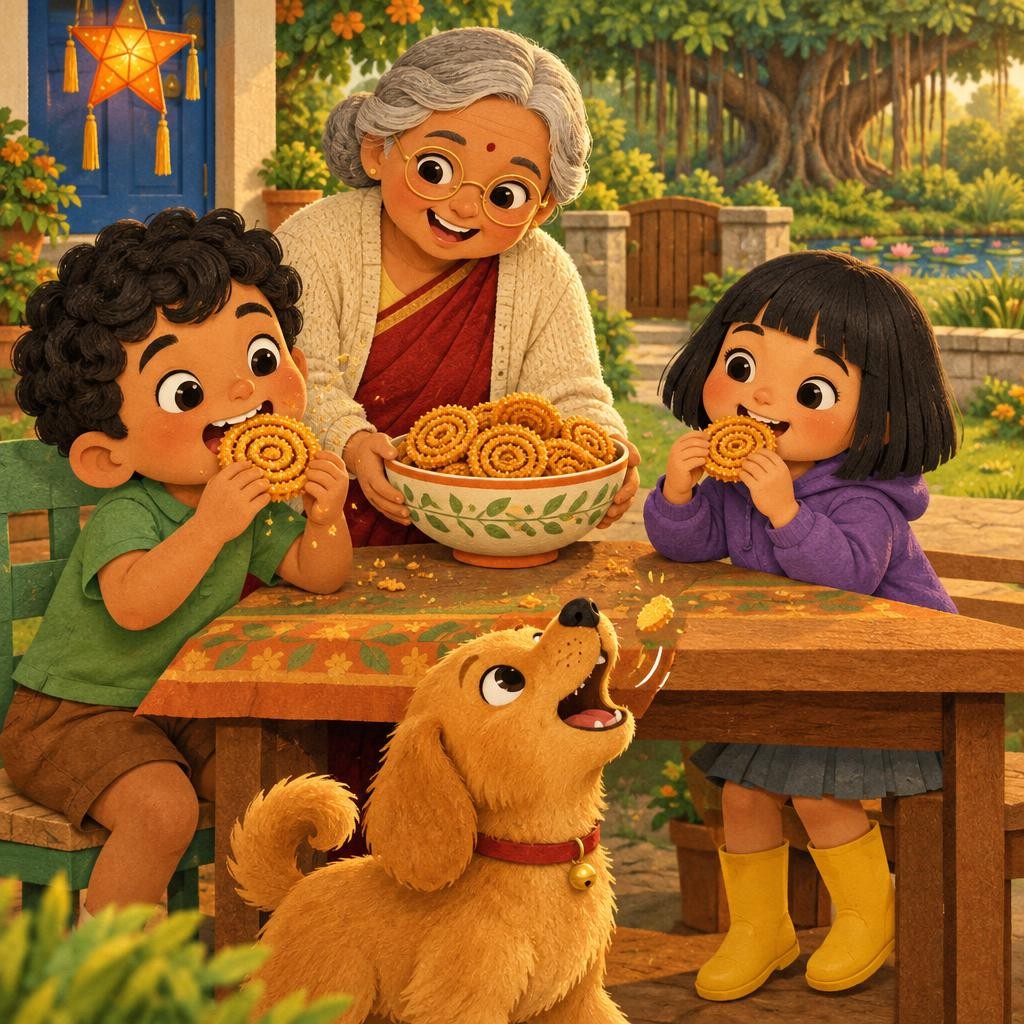
Not every Diwali treat is sweet! Nani brings a bowl of crunchy spirals called chakli, or murukku. They are salty and a little spicy. Crunch, crunch!
Boxes for everyone
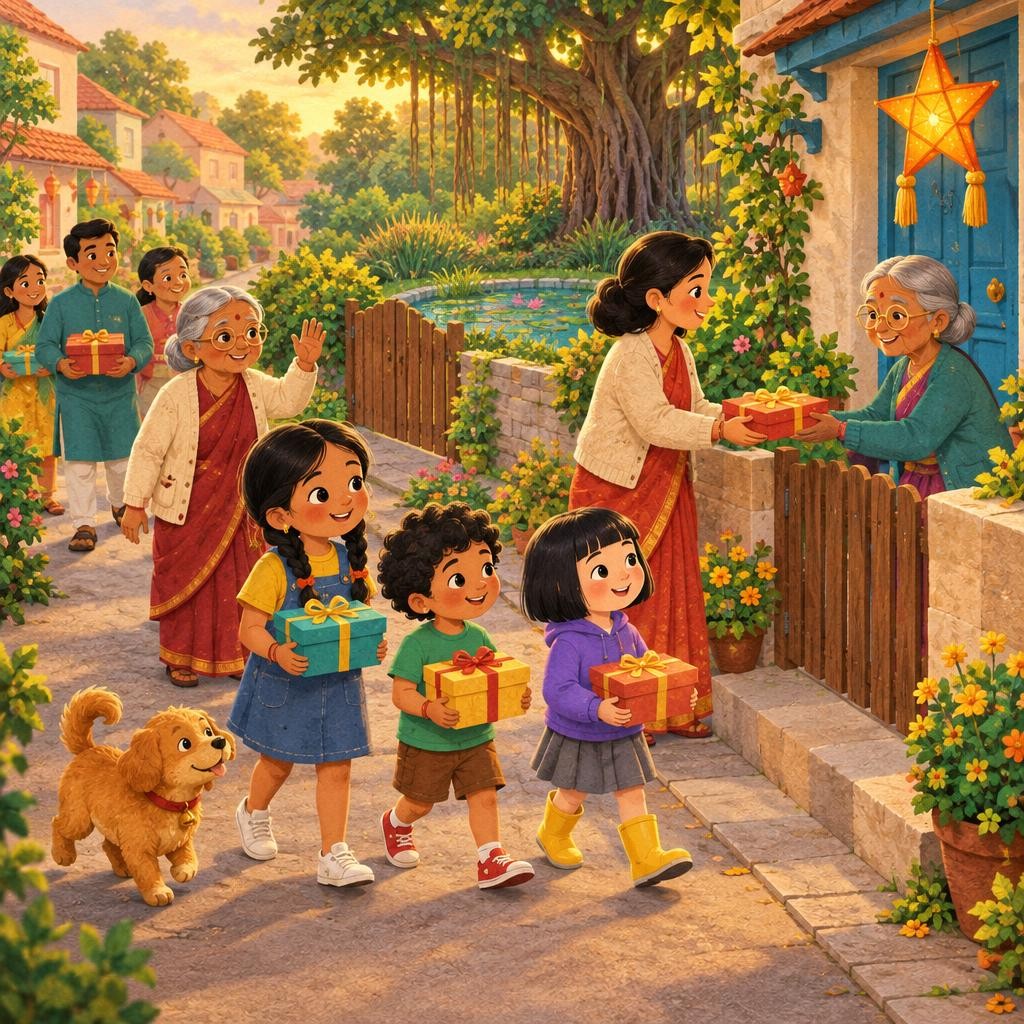
Mei laughs. "Now I know why we got so many boxes!" On Diwali, families fill boxes with mithai and give them to neighbours, friends and teachers, to share the happy day.
Our own box
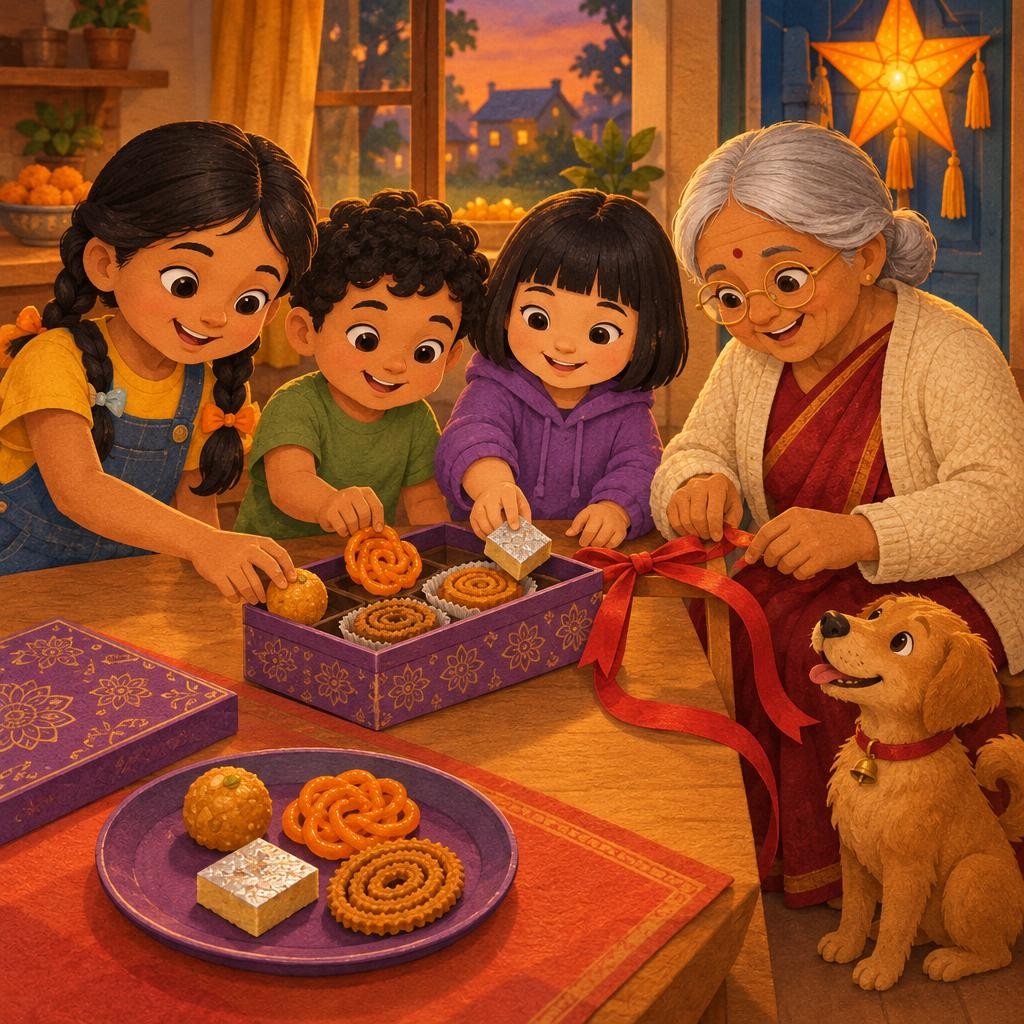
Then the children fill a box of their own, with one of each kind. "This one is for Mei's family," says Jai. Which sweets would you put in your Diwali box, and who would you share it with?
Key takeaways
- Many families call Diwali sweets mithai.
- Ladoos are round, jalebis are sticky spirals and barfi can have a thin edible silver top.
- Kaju katli is made from cashew nuts, so ask a grown-up if you cannot eat nuts.
- Families share boxes of sweets with neighbours, friends and family.
Questions along the way
- What do many families call Diwali sweets?
- What makes jalebis so sticky?
- If someone cannot eat nuts, what should they do?
Common questions
What sweets are eaten on Diwali?
Popular Diwali sweets include ladoos, jalebis, barfi, kaju katli, gulab jamun and soan papdi, plus salty snacks like chakli or murukku. Families share them in gift boxes.
Why do people give sweets on Diwali?
Sharing sweets spreads the happiness of the festival to neighbours, friends and family, and says "we are glad you are here".
Read-together tip
Make a Diwali sweet box together: fill an egg carton with fruit pieces, dates or biscuits, decorate the lid, and let your child choose who to give it to. Check for nuts if you share with friends.