How Airplanes Fly
A kid-friendly lesson on how engines push airplanes forward and curved wings use moving air to create lift.
Ages 8-10 - 3 minute lesson - curious - EN
Reviewed for child-safety · gentle by design · How our stories are made
Published 2026-07-04T03:23:52.445377

Quick answer
Your child will understand that airplanes fly because engines push them fast and curved wings turn that speed into upward lift from real, pushing air.
Lesson
You are at the park watching a plane glide across the sky, and you wonder how something so heavy and full of people stays up there instead of dropping like your ball. Hold your hand flat out of a moving car window and feel the air push it up and back. The air is not empty—it is real stuff that pushes, and that pushing is the secret. Air is a pusher, not nothing!
Watch the front of a plane and notice the long wings sticking out from the sides. Wings are shaped flat on the bottom and gently curved on top, like the back of a spoon. As the plane rushes forward, air splits and races over and under each wing, so the wing gets pushed upward. Curvy wings catch a lift!
But the plane only flies if it moves fast, so something has to pull it forward through the air. Look at the engines under the wings—they grab air, squeeze it, and blast it backward very hard. Because the engine pushes air back, the air pushes the plane forward, the same way a balloon zooms when you let it go. Push back to go forward!
Here is a prediction: if you drop a flat sheet of paper and a crumpled ball of the same paper, which lands first—or do they tie? Try it at home and watch carefully. The flat sheet floats slower because its wide surface leans on more air, just like a wing leaning on air to stay up. Wide and flat means more air to ride!
Many people think the engines lift the plane straight up, but that is not quite right. The engines only make speed, and the wings turn that speed into lift, so it is teamwork between engine and wing. To land, the pilot slows down and the wings catch less air, letting the plane settle down gently. Speed makes lift, slow lets it rest.
Here is a true wow fact: a big passenger plane can weigh more than forty elephants, yet smooth fast wings still hold it in the sky. So remember, planes fly because engines push them fast and curved wings ride the pushing air upward. Air is strong, wings are clever, and now you know the sky's secret too. You understood flight!
Lesson scenes
Air Is a Pusher
At the park you watch a heavy plane glide across the sky and wonder why it doesn't drop like your ball. Hold your flat hand out of a moving car window and feel the air push it up and back. Air is not empty — it is real stuff that pushes!
Curvy Wings Catch a Lift
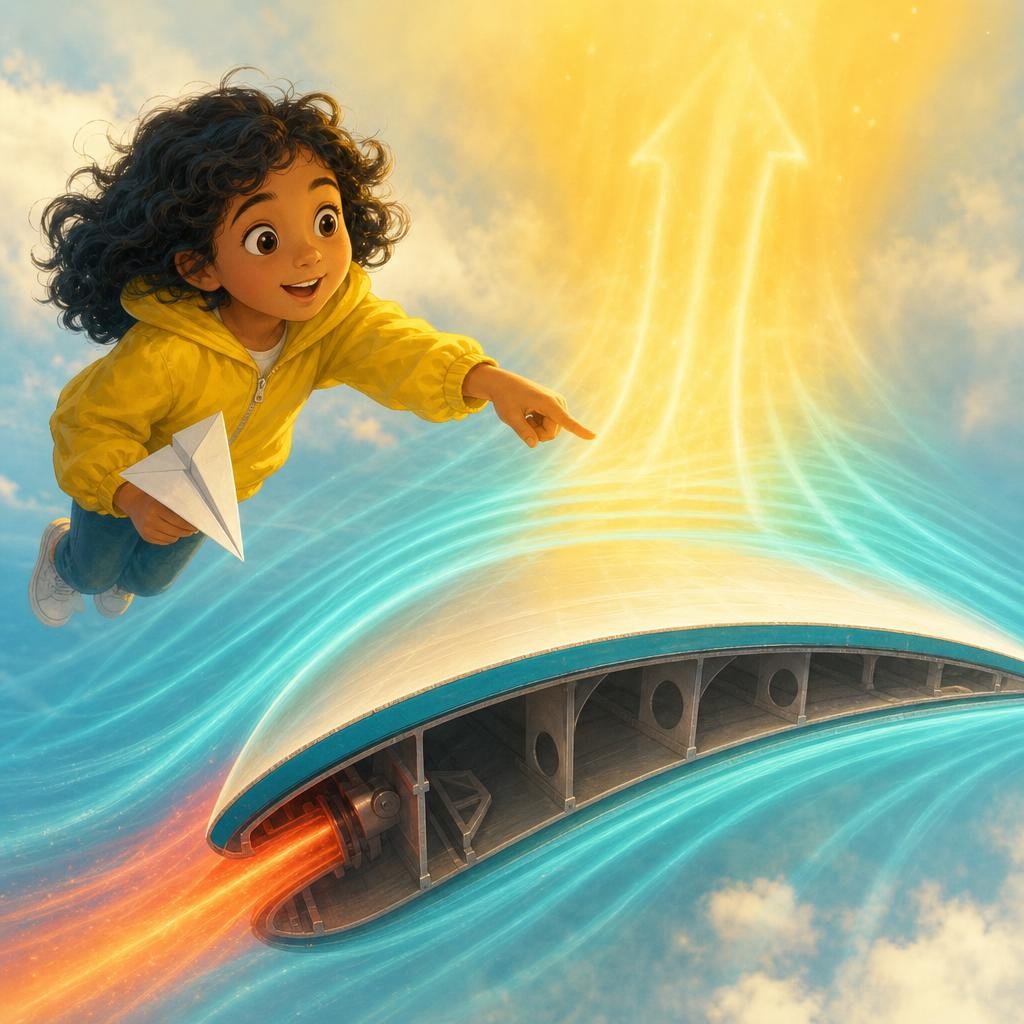
Look at the long wings sticking out from the plane's sides — flat underneath and gently curved on top, like the back of a spoon. As the plane rushes forward, air splits and races over and under each wing, and the wing gets pushed upward. Curvy wings catch a lift!
Push Back to Go Forward
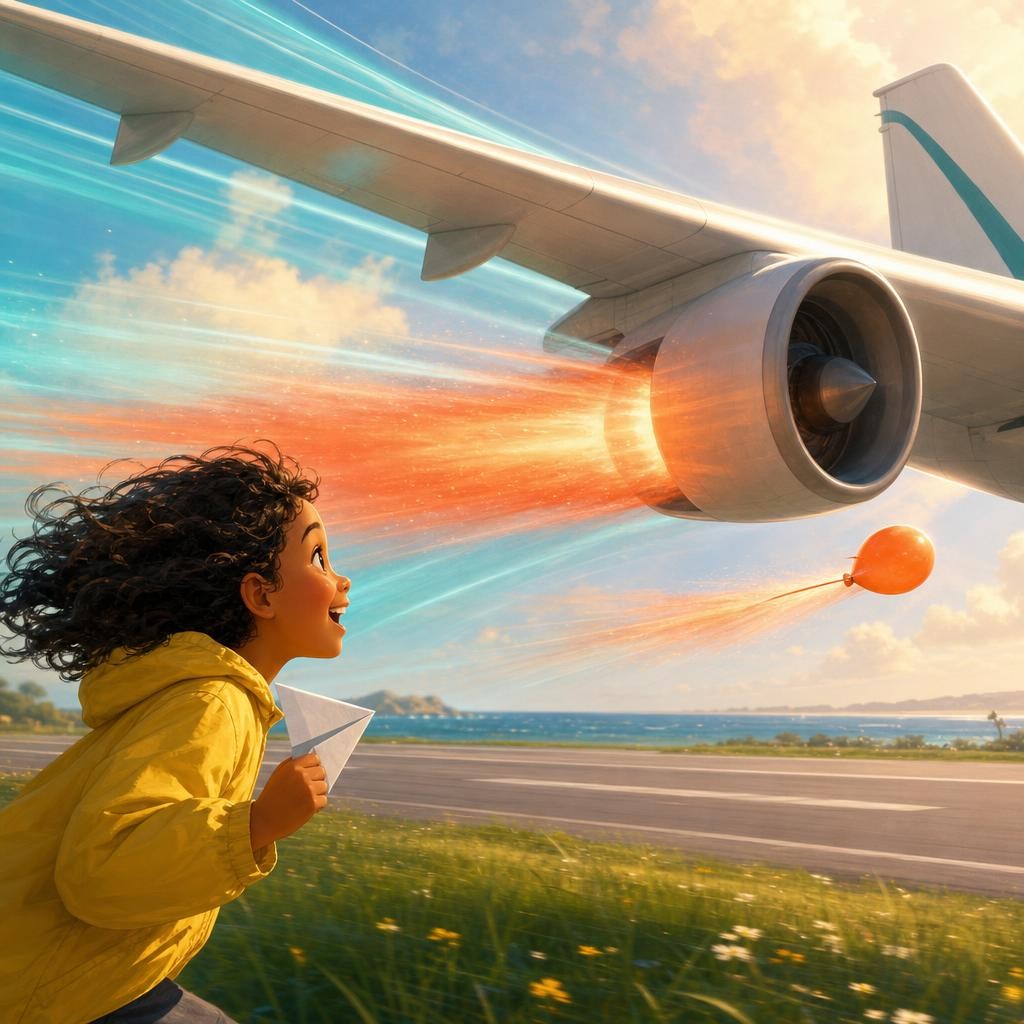
The plane only flies if it moves fast, so something must pull it forward. The engines grab air, squeeze it, and blast it backward very hard — so the air pushes the plane forward, just like a balloon zooming when you let it go. Push back to go forward!
Wide and Flat Rides More Air
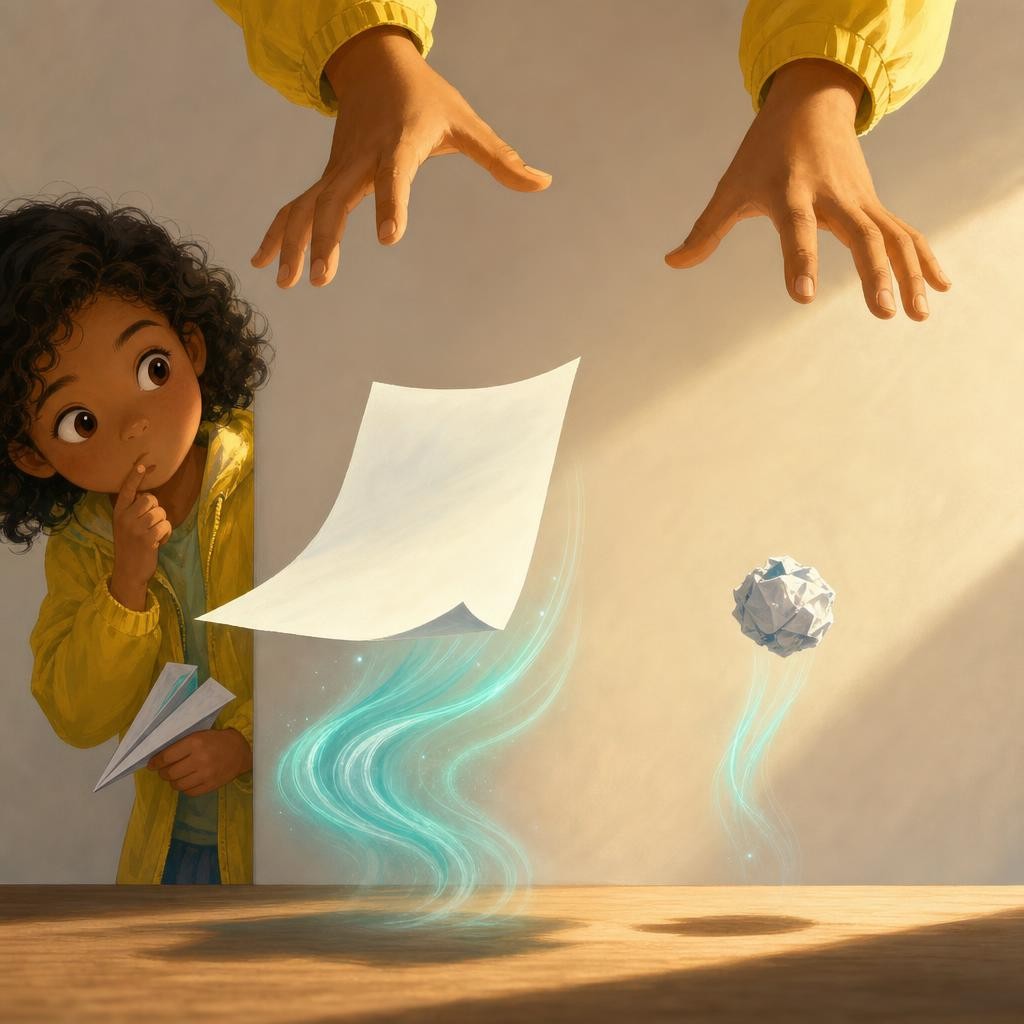
Here's a prediction: if you drop a flat sheet of paper and a crumpled ball of the same paper, which lands first — or do they tie? Make your guess, then we'll see. A wide flat shape leans on more air, just like a wing.
Teamwork: Speed Makes Lift
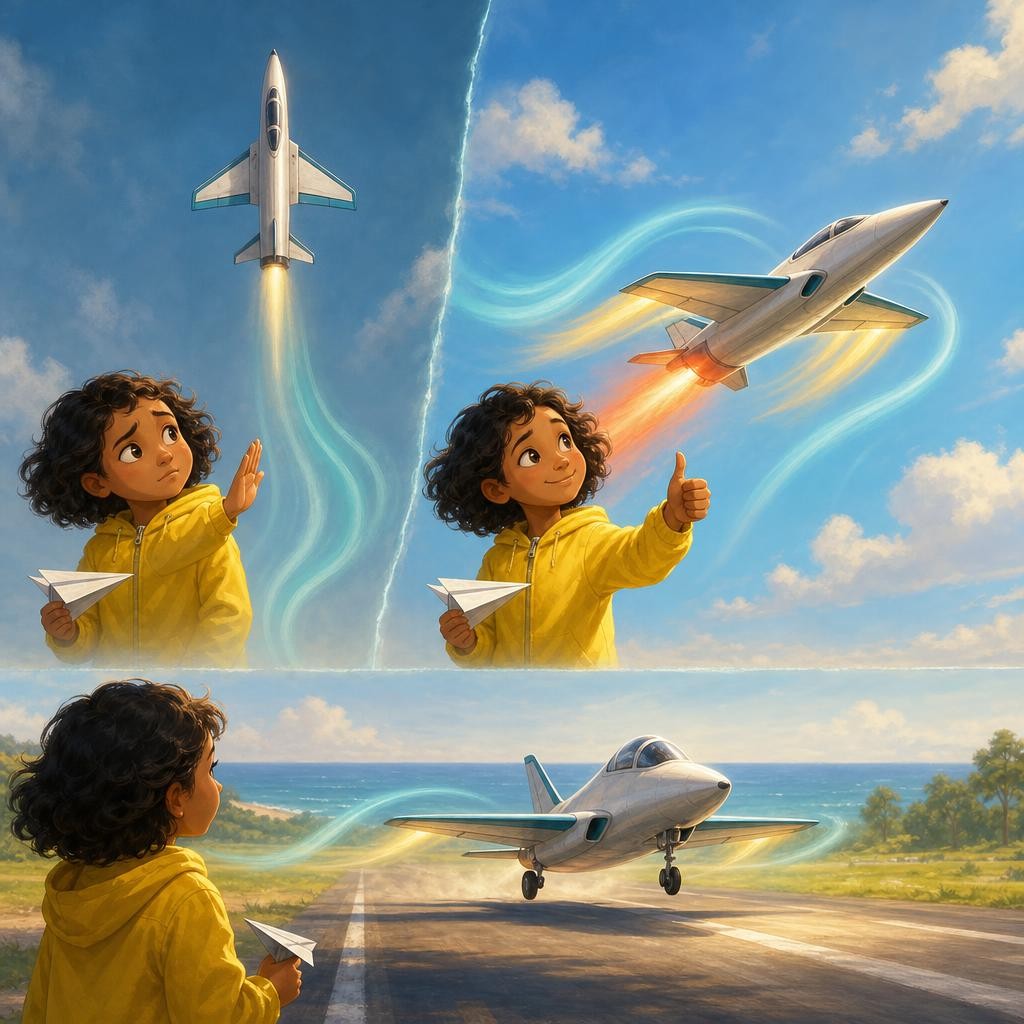
The flat sheet floated slower because its wide surface leaned on more air. Many people think the engines lift the plane straight up, but that's not quite right — engines only make speed, and the wings turn speed into lift. To land, the pilot slows down so the wings catch less air and the plane settles gently.
You Understood Flight
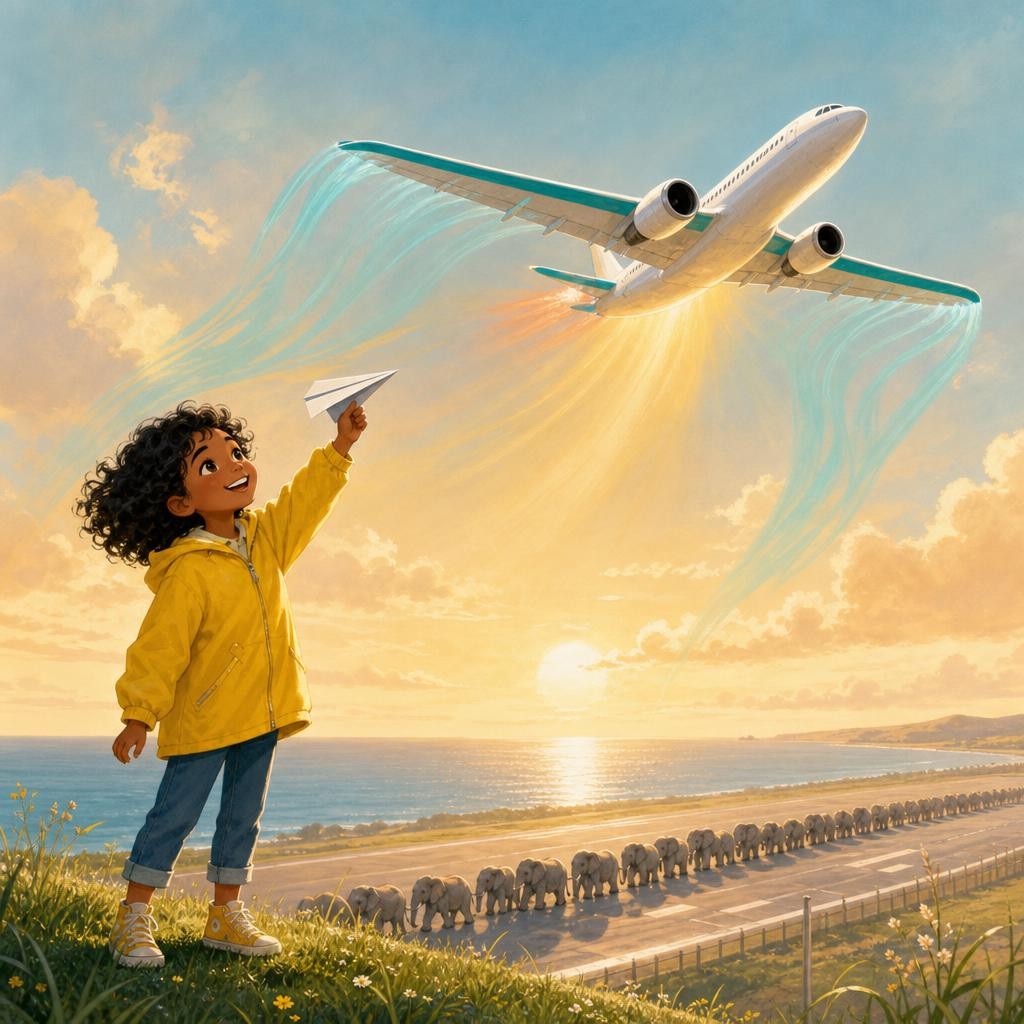
Here's a true wow fact: a big passenger plane can weigh more than forty elephants, yet smooth fast wings still hold it in the sky! Planes fly because engines push them fast and curved wings ride the pushing air upward. Air is strong, wings are clever — and now you know the sky's secret too!
Key takeaways
- Air Is a Pusher
- Curvy Wings Catch a Lift
- Push Back to Go Forward
Mini quiz
- What is air, really?
- How does a plane get its lift?
- Why does the engine push the plane forward?
Common questions
What will kids learn in How Airplanes Fly?
Your child will understand that airplanes fly because engines push them fast and curved wings turn that speed into upward lift from real, pushing air.
Read-together tip
Technology lessons should show inputs, parts, movement, energy, or instructions in a simple visible way.