How Train Engines Push the Wheels
Your child will understand that every train engine has one job — to turn the wheels — and that steam, diesel, and electric trains each get that spinning power in a different way: by boiling, by burning, or by borrowing f
Ages 8-10 - 4 minute lesson - curious - EN
Reviewed for child-safety · gentle by design · How our stories are made
Published 2026-07-04T03:23:52.470286
Quick answer
Your child will understand that every train engine has one job — to turn the wheels — and that steam, diesel, and electric trains each get that spinning power in a different way: by boiling, by burning, or by borrowing from a wire.
Lesson
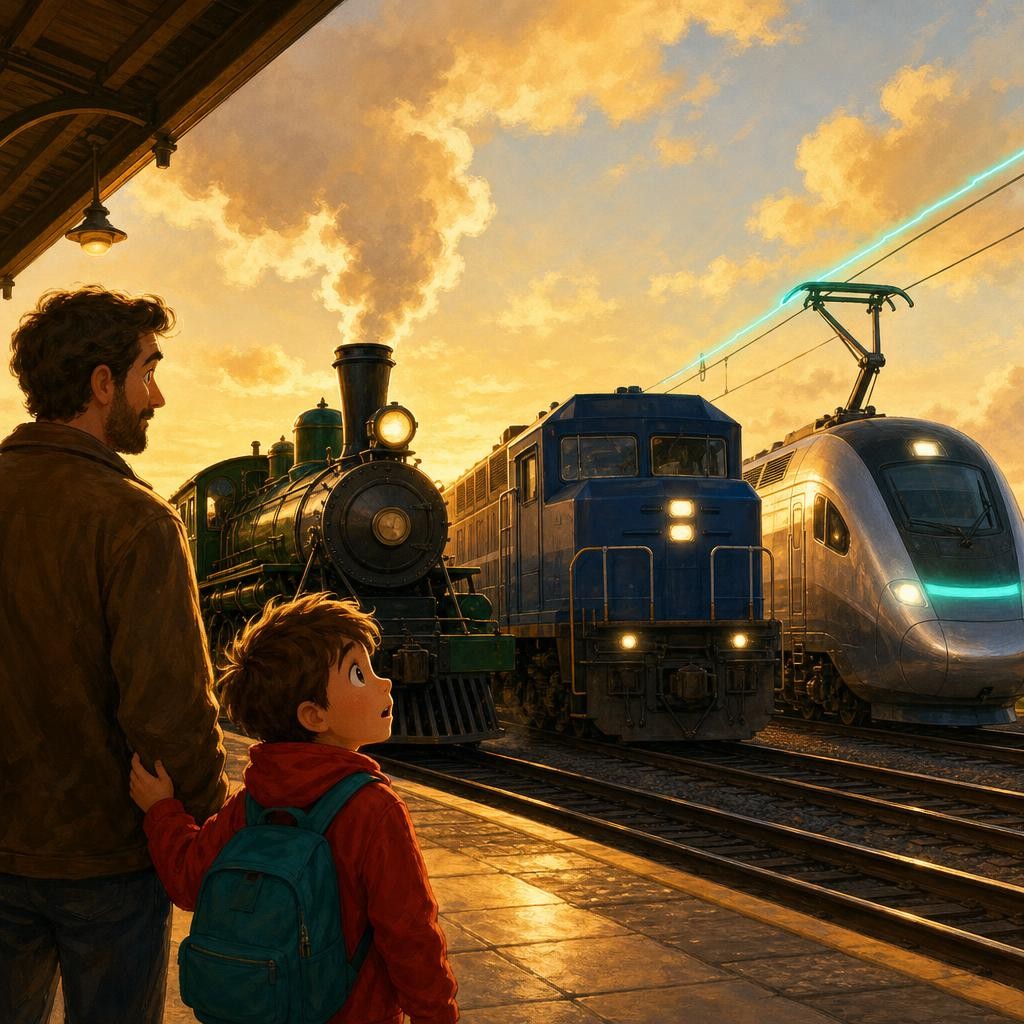
You're standing on a platform, and three different trains roll by. One puffs white clouds, one rumbles low like a giant lawnmower, and one slides past almost silently with a wire above it. You tug your grown-up's sleeve and ask, "They all move on the same tracks... so why do they sound so different inside?" Great question — let's open them up and peek.
Here's the secret every train shares: somewhere inside, something has to turn the wheels. That's the whole job. An engine is just a machine that makes power, and that power spins the wheels so the train rolls forward. So when we compare trains, we're really asking one thing: where does the spinning power come from? Say it with me: every engine's only job is to turn the wheels.
Now meet the steam engine, the puffing one. Watch a kettle at home boil — see how the lid rattles and steam shoves its way out? That pushing steam is the trick. Inside a steam train, a fire burns coal to boil a huge tank of water, and the trapped steam pushes a piston, a snug plug that slides back and forth in a tube. That sliding push is connected to a rod that turns the wheels, back-and-forth, back-and-forth. So fire boils water, steam shoves the piston, the piston turns the wheel. Aha: hot steam pushes, and the wheels go round.
Next comes the diesel train, the rumbling one. It doesn't boil water — it burns fuel called diesel inside a strong engine, a bit like the engine in a family car, just much bigger. But here's the surprising part. What do you think the diesel engine turns first... the wheels? Almost everyone guesses wheels — but it actually spins a generator, a machine that makes electricity. Then that electricity runs motors that turn the wheels. So diesel makes electricity, electricity spins the motors, motors turn the wheels. Aha: the diesel train carries its own little power station inside.
Last is the quiet electric train, sliding under that wire. It carries no fire and no fuel tank, because the electricity comes from outside — flowing down through that overhead wire or a special rail. The electricity goes straight into the motors, and the motors turn the wheels. So fewer steps means less rumble and less smoke. Aha: an electric train drinks power from a wire instead of burning anything. And here's the wow part for the whole family: a modern electric train can slow down and feed power back into the wires for other trains to use, like pouring a little juice back into the jug — so braking actually makes electricity instead of wasting it.
Quick myth check: many people think the puffing smoke is what pushes a steam train forward. Look again at the kettle — the steam escaping out the top isn't pushing the kettle anywhere. The real push happens hidden inside, where the steam shoves the piston. The cloud you see is just steam saying goodbye after its job is done.
Try this right now: hold your two flat hands together and slide one forward and back, like a piston. That sliding push is the same motion turning a steam train's wheels — your hands just became an engine. Now you know the riddle of the rolling trains: every engine, steam or diesel or electric, has one mission — turn the wheels — they just find power in different ways, by boiling, by burning, or by borrowing from a wire. Next time a train rolls by, listen and look: is it puffing, rumbling, or gliding? You'll know exactly where its power is hiding.
Lesson scenes
Three Trains, One Question
Three trains roll past the same platform: one puffs white clouds, one rumbles low, and one glides by almost silently under a wire. Remy tugs a sleeve and asks, "They all run on the same tracks — so why do they sound so different inside?"
The Secret Every Train Shares
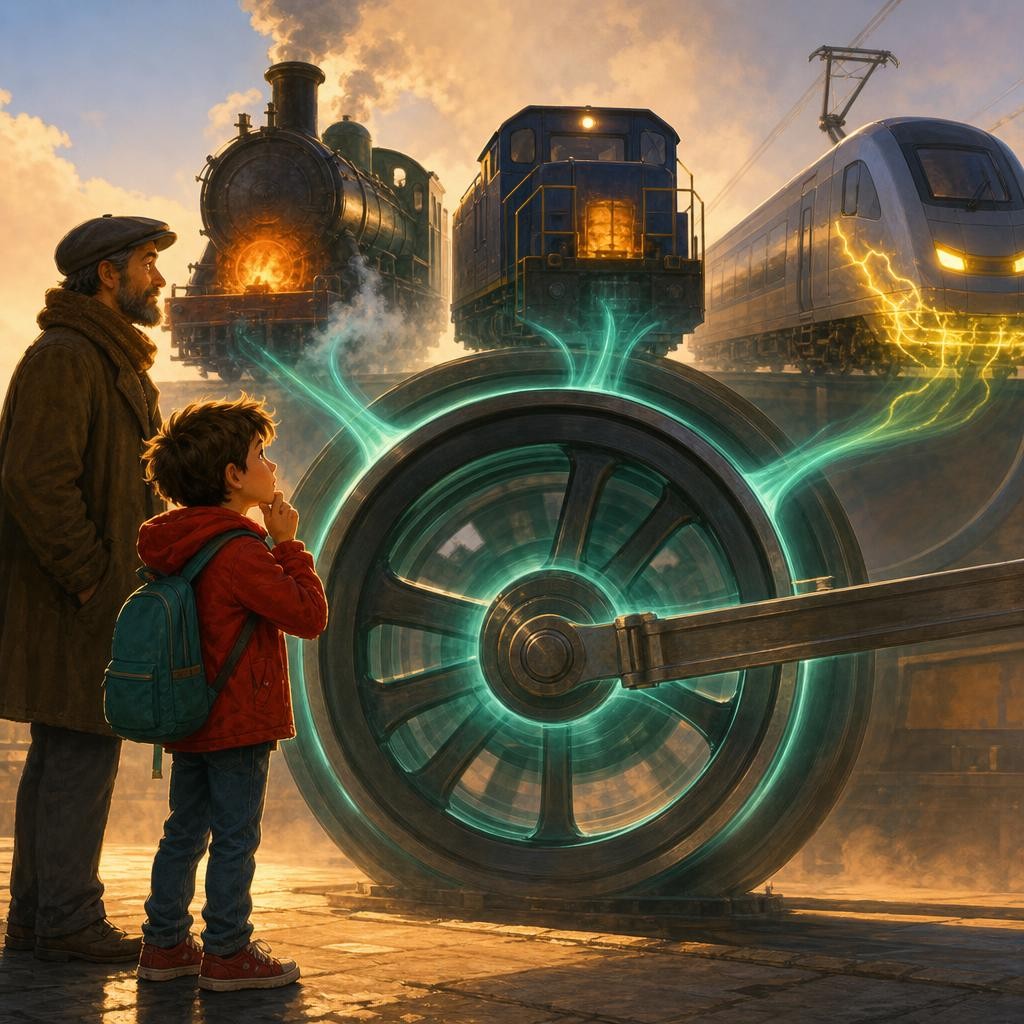
Here's the secret hiding inside every train: something must turn the wheels — that's the whole job. So when we compare trains, we're really asking one thing: where does the spinning power come from?
The Puffing Steam Engine
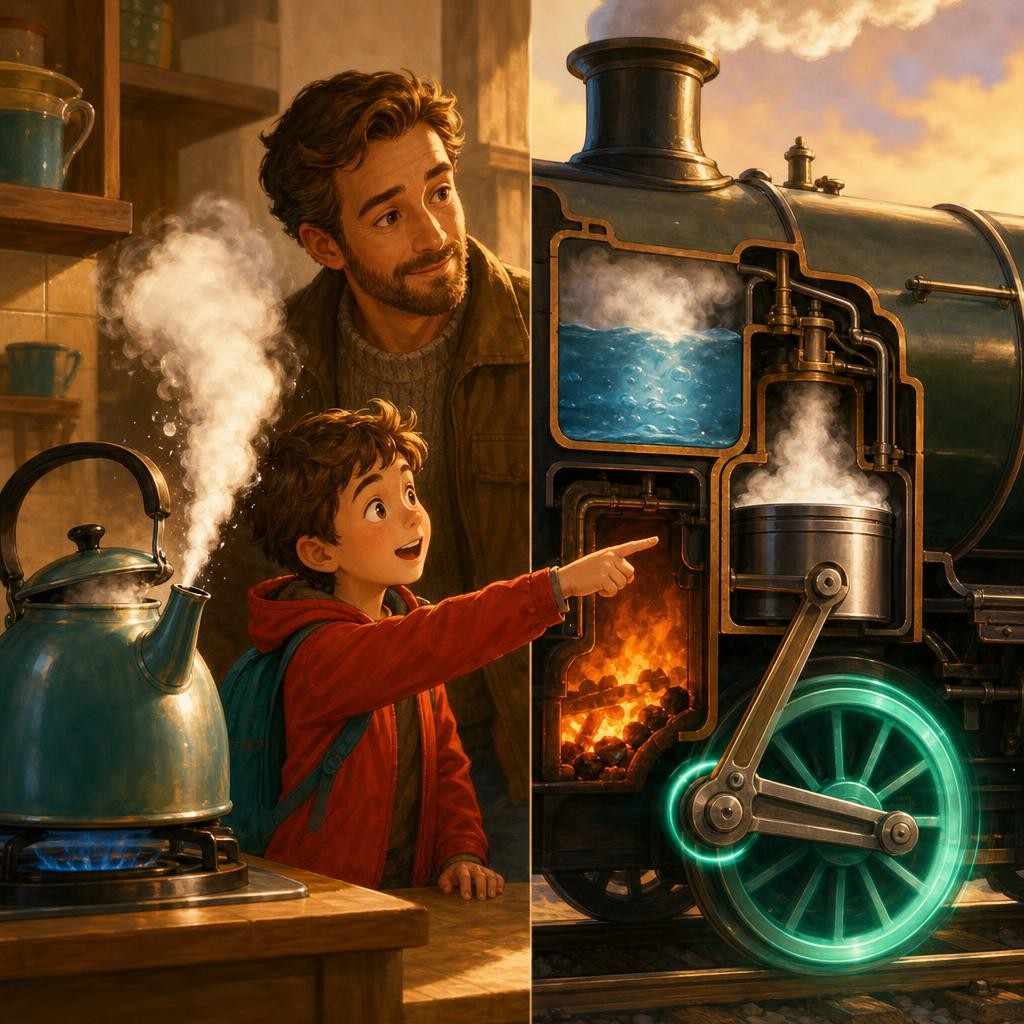
Watch a kettle boil — the trapped steam shoves its way out. Inside a steam train, fire boils water, the steam pushes a piston sliding back and forth, and that push turns the wheels. Aha: hot steam pushes, and the wheels go round!
The Rumbling Diesel Train
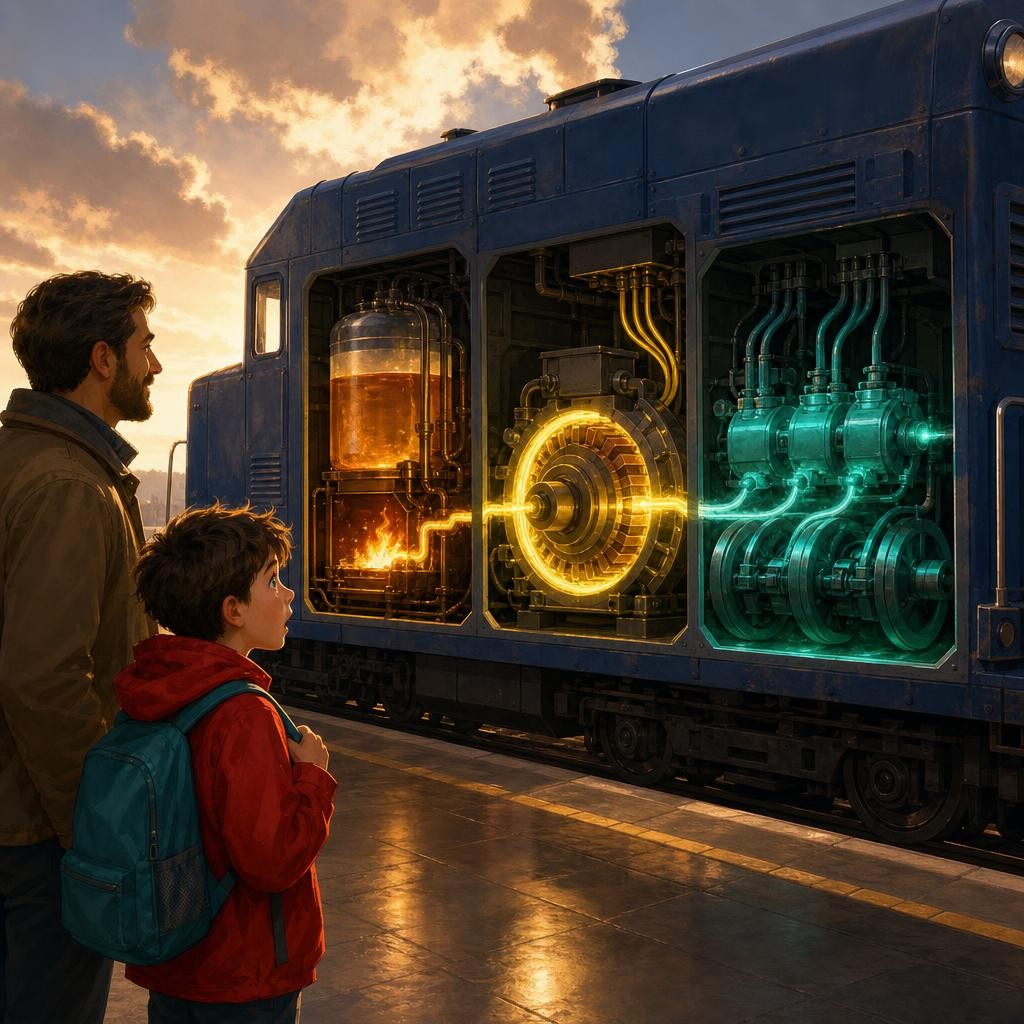
The diesel train burns fuel in a big engine, like a giant car. But here's the surprise — what does it turn first, the wheels? Almost everyone guesses wheels, but it actually spins a generator that makes electricity, and that electricity turns the motors. Aha: the diesel carries its own little power station inside!
The Quiet Electric Train
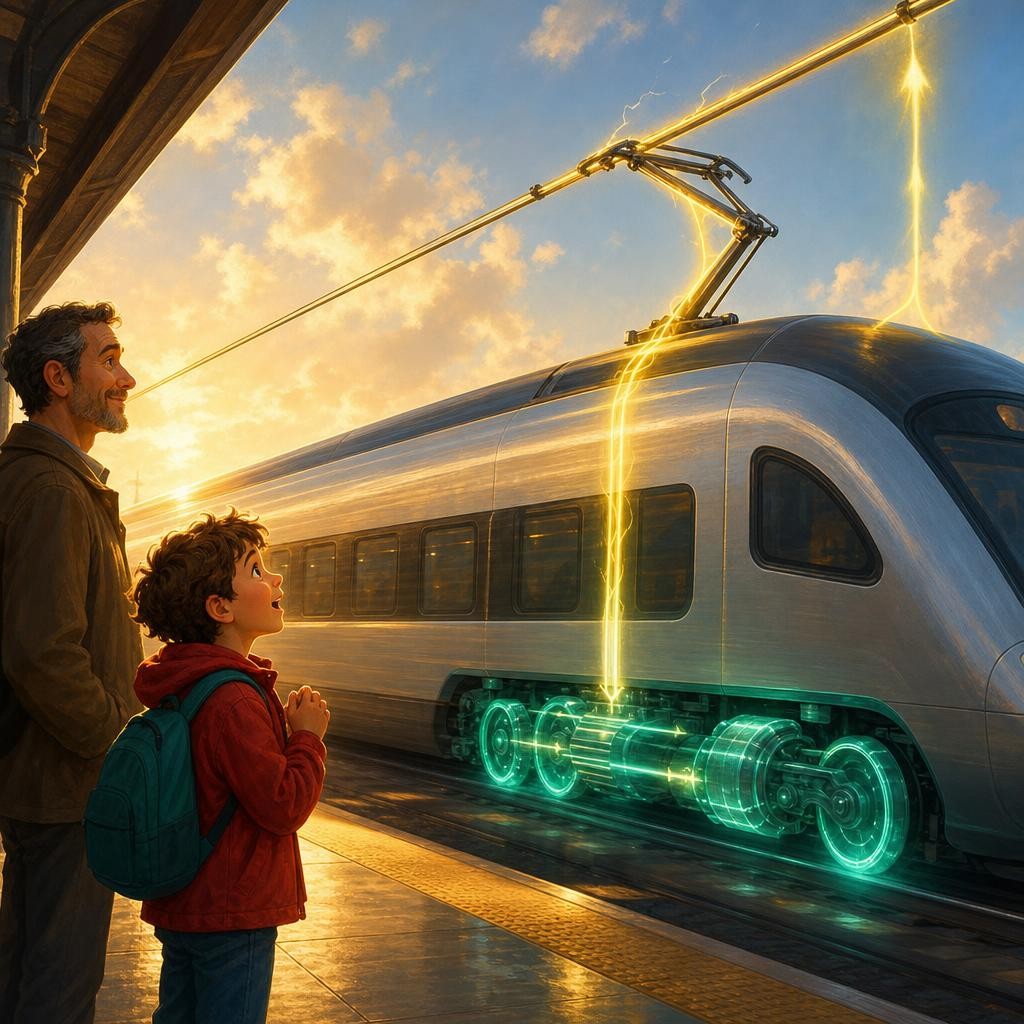
The electric train carries no fire and no fuel — electricity flows down through the overhead wire straight into the motors that turn the wheels. Fewer steps means less rumble and less smoke. And the wow part: when it brakes, it can pour power back into the wires for other trains to use!
Now You Know the Riddle
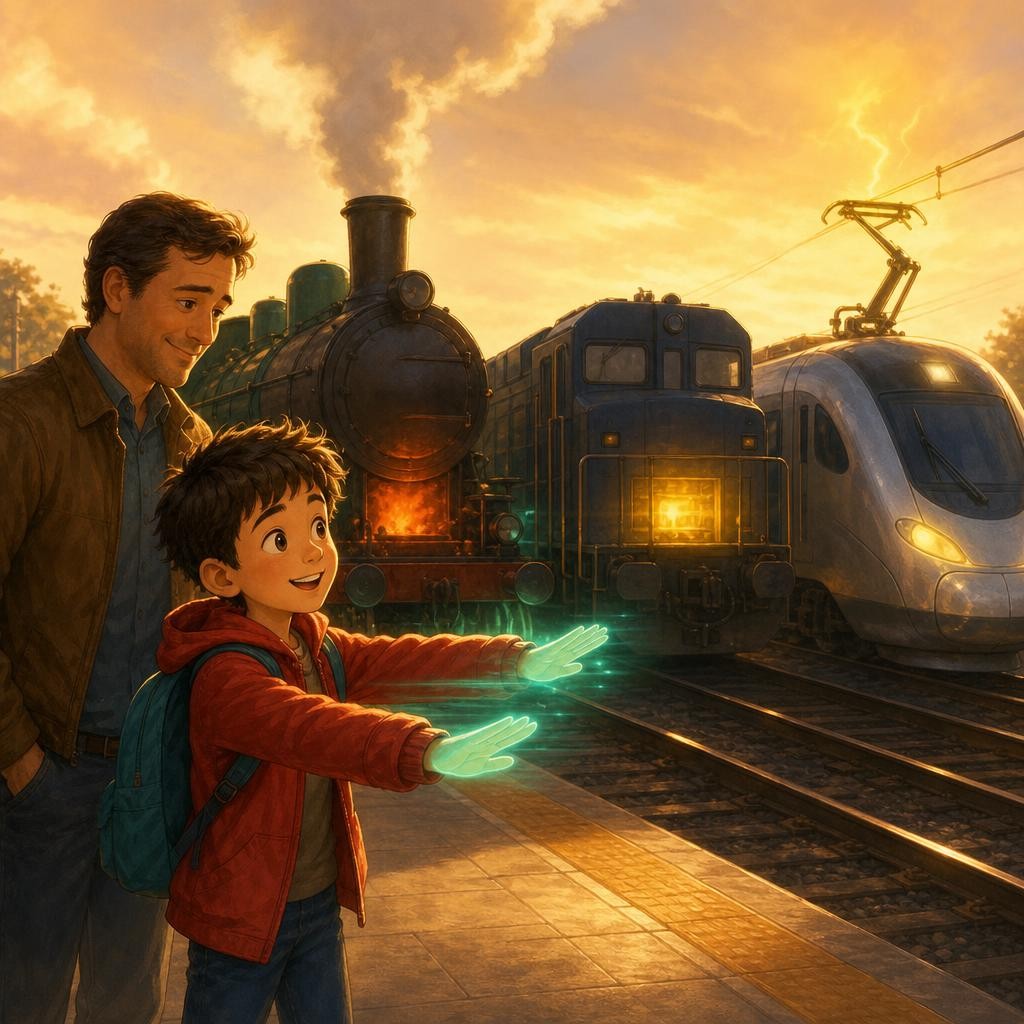
Myth check: the puffing cloud doesn't push the steam train — that's just steam saying goodbye after its job inside. Now slide your two flat hands forward and back like a piston — your hands just became an engine! Every engine has one mission: turn the wheels, by boiling, burning, or borrowing from a wire.
Key takeaways
- Three Trains, One Question
- The Secret Every Train Shares
- The Puffing Steam Engine
Mini quiz
- What is every train engine's only job?
- What does the diesel engine spin first?
- Where does an electric train get its power?
Common questions
What will kids learn in How Train Engines Push the Wheels?
Your child will understand that every train engine has one job — to turn the wheels — and that steam, diesel, and electric trains each get that spinning power in a different way: by boiling, by burning, or by borrowing from a wire.
Read-together tip
Technology lessons should show inputs, parts, movement, energy, or instructions in a simple visible way.