How Do Bats Find Their Way at Night?
Meet the real animal behind the Halloween decoration. Pictures and gentle questions show how many bats use returning echoes to find their way at night.
about real things · asks questions · 6 pages · ages 6–7 · 2 min · English
Read · Play · Listen · PDF · Print edition · with the Storybook Pass · Make it about your child
Reviewed for child safety · gentle by design · How our storybooks are made
Published 2026-11-03T13:12:16.112134
Quick answer
Understand that many bats use returning echoes from their calls to locate things at night.
Inside this storybook
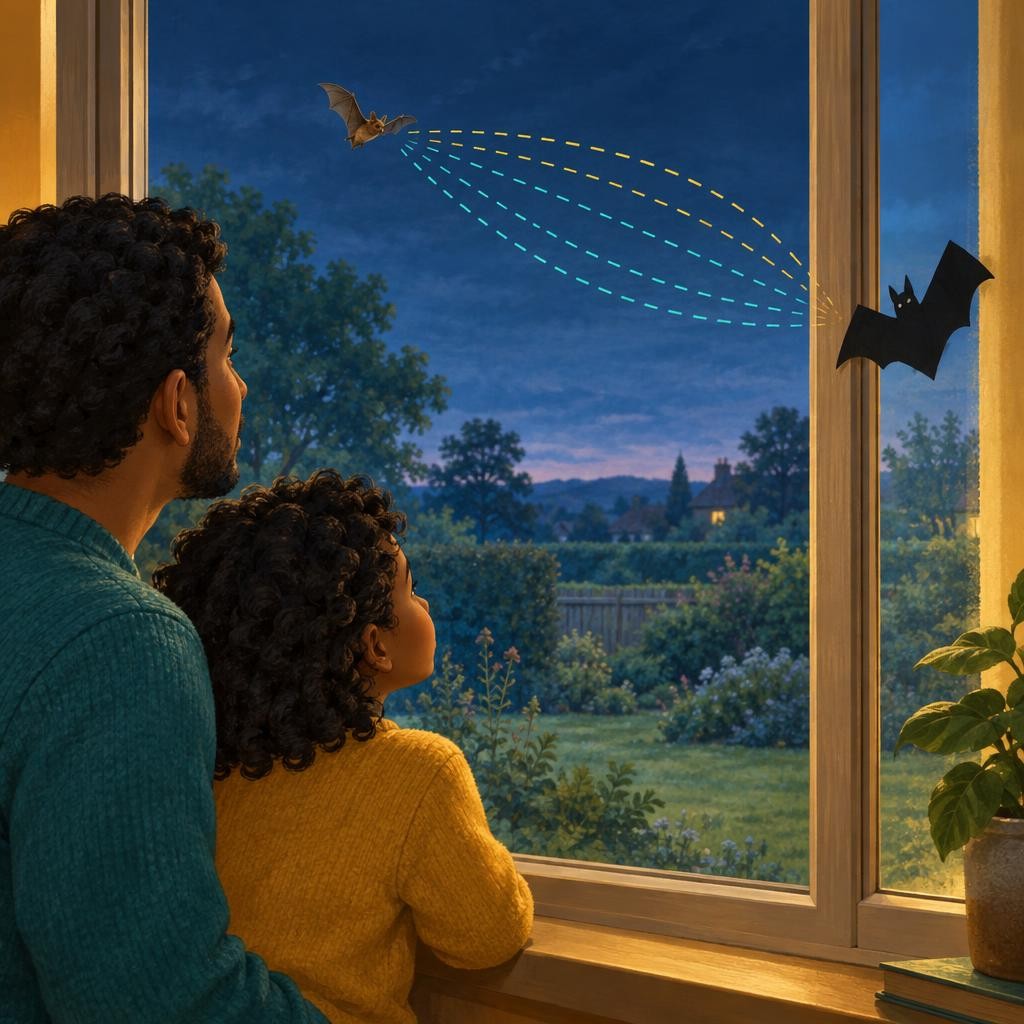
“Look, a real one!” Jo whispers. A brown bat loops above the garden. Their paper Halloween bat stays still on the window. Jo and Dad watch the hunter. It can see, and it has another way to find things. What could it be?
The bat makes a very high call, above what most people can hear. Follow the gold lines toward the moth. They help us picture invisible sound. The call reaches the moth. What do you think happens next?
Back comes an echo—the bat’s own sound returning! Follow the teal lines back to those big ears. Finding things with returning sounds is called echolocation. The moth did not need to answer. The bat listens for its own call coming back.
Now there is a branch in the bat’s path. The branch is silent. It makes no call at all! Think about the moth and the returning sound. Could the bat use echolocation to find a silent branch too?
The bat listens for how soon its echo returns. A close moth means a short trip for the sound—out and back! A farther moth means a longer trip, so the echo takes longer. Just the timing of a returning sound can help the bat find its dinner.
Jo grins as the bat loops past. Dad smiles back. “Let’s leave it to its hunting.” Call out, echo back—the night flyer goes on its way. Many bats find food with echolocation. That paper Halloween bat will never seem quite the same again.
The pages
A Real Night Flyer
“Look, a real one!” Jo whispers. A brown bat loops above the garden. Their paper Halloween bat stays still on the window. Jo and Dad watch the hunter. It can see, and it has another way to find things. What could it be?
A Call Goes Out
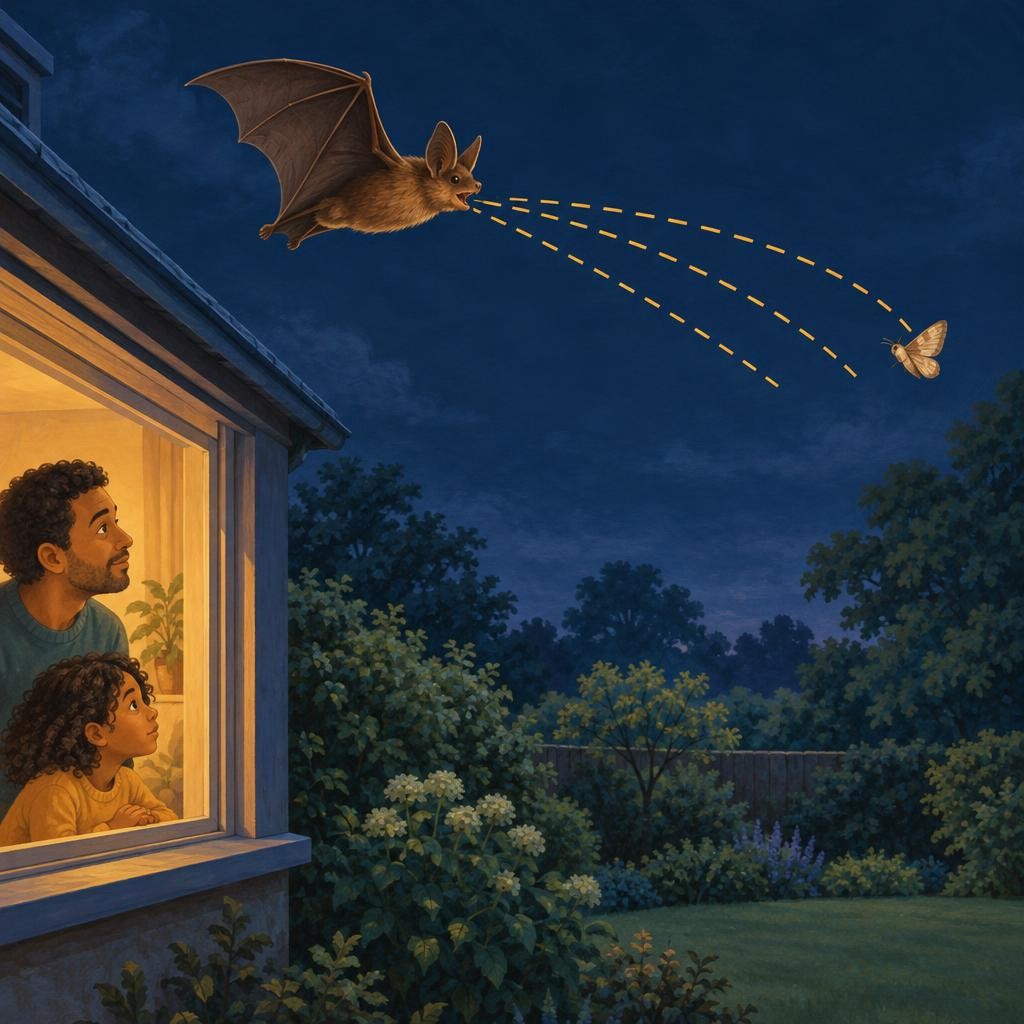
The bat makes a very high call, above what most people can hear. Follow the gold lines toward the moth. They help us picture invisible sound. The call reaches the moth. What do you think happens next?
An Echo Comes Back
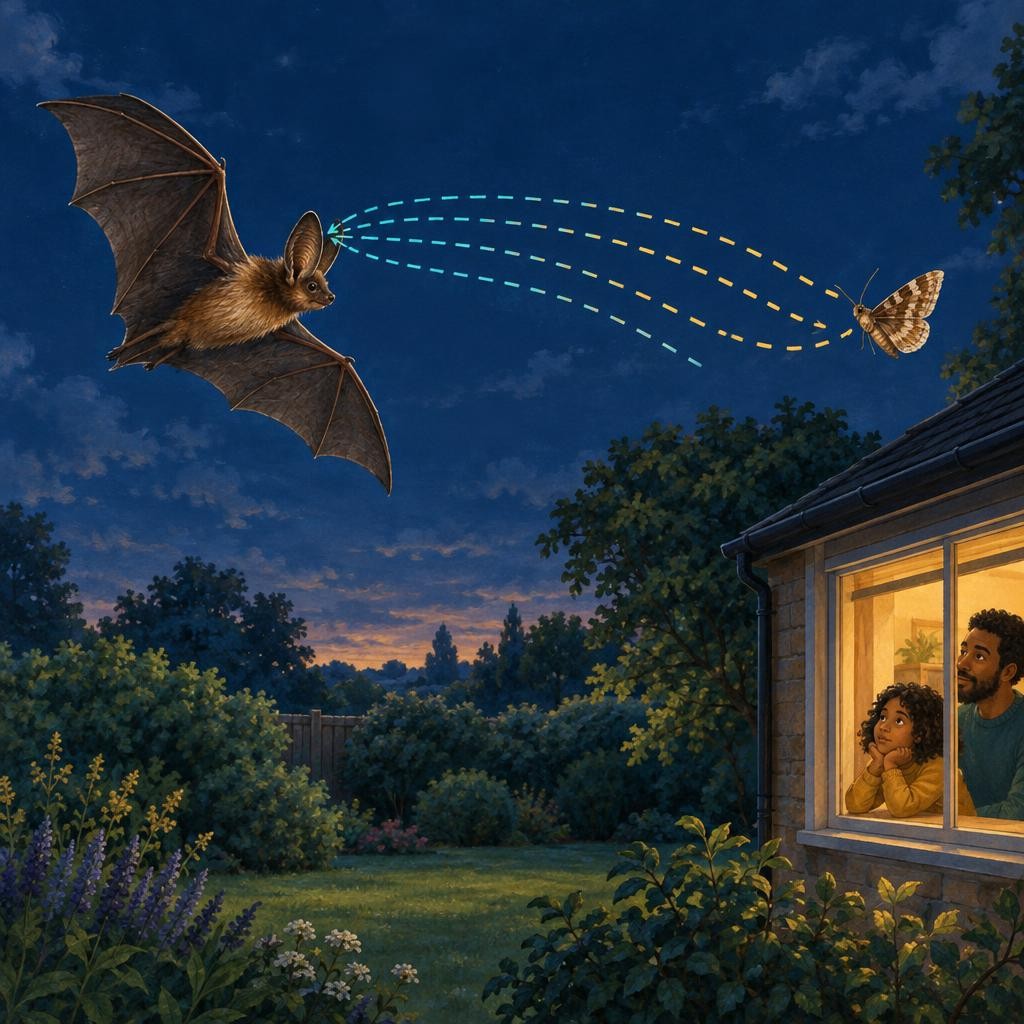
Back comes an echo—the bat’s own sound returning! Follow the teal lines back to those big ears. Finding things with returning sounds is called echolocation. The moth did not need to answer. The bat listens for its own call coming back.
A Way Around
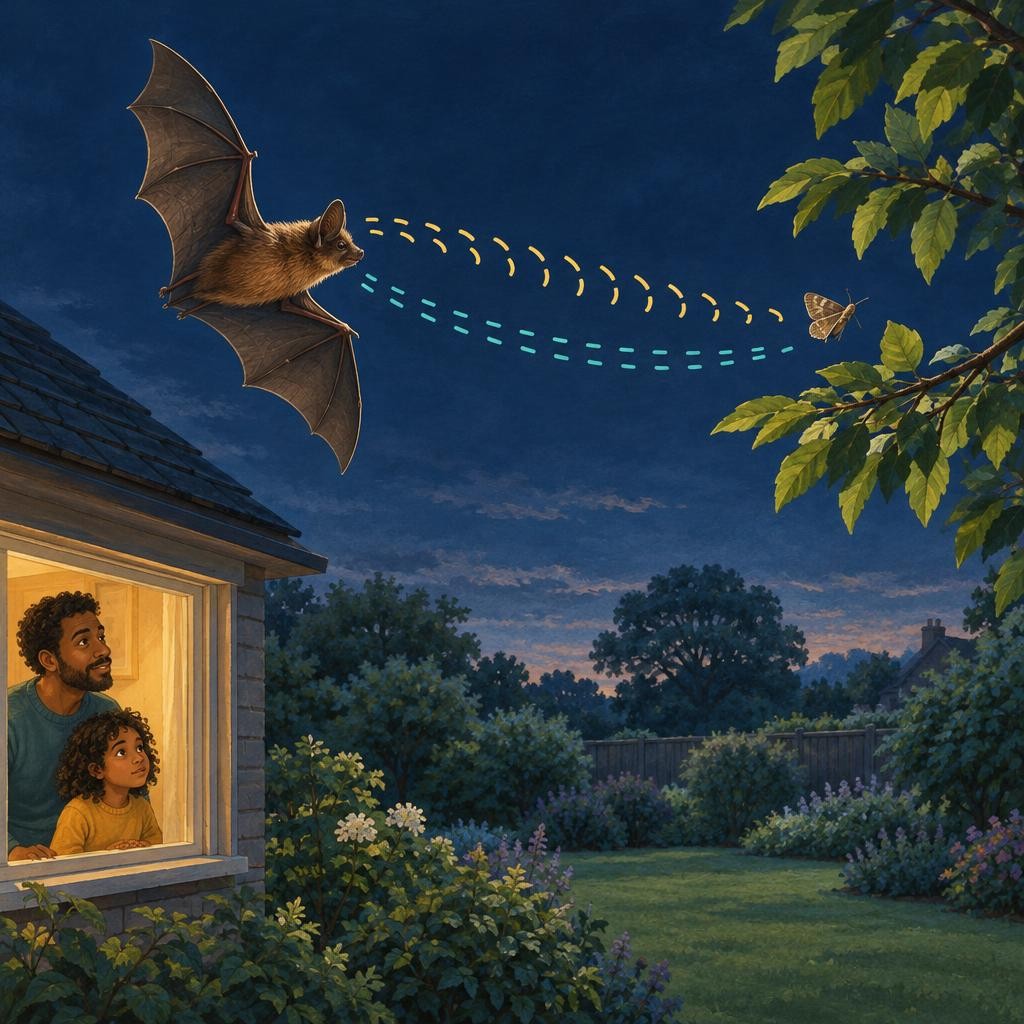
Now there is a branch in the bat’s path. The branch is silent. It makes no call at all! Think about the moth and the returning sound. Could the bat use echolocation to find a silent branch too?
How Close Is the Moth?
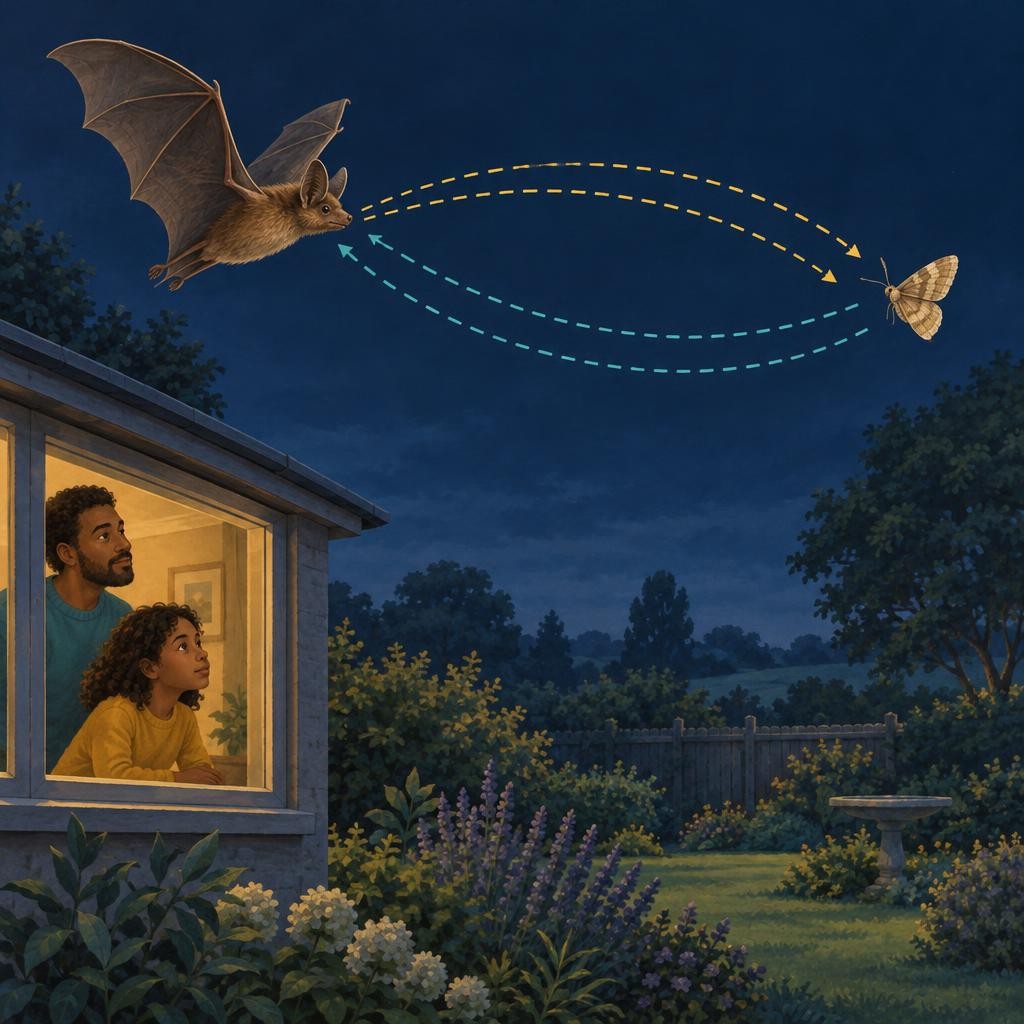
The bat listens for how soon its echo returns. A close moth means a short trip for the sound—out and back! A farther moth means a longer trip, so the echo takes longer. Just the timing of a returning sound can help the bat find its dinner.
A Night Neighbor
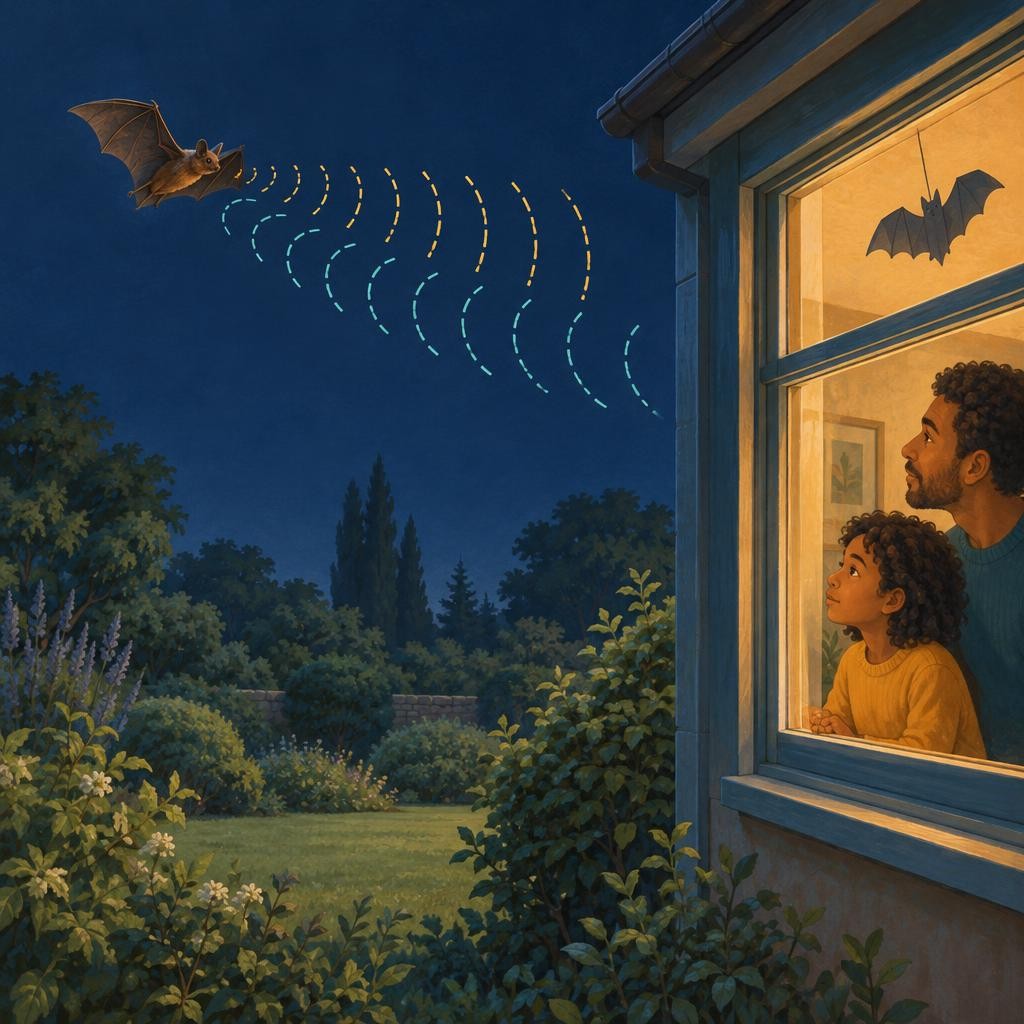
Jo grins as the bat loops past. Dad smiles back. “Let’s leave it to its hunting.” Call out, echo back—the night flyer goes on its way. Many bats find food with echolocation. That paper Halloween bat will never seem quite the same again.
Key takeaways
- A Real Night Flyer
- A Call Goes Out
- An Echo Comes Back
Questions along the way
- What does echolocation use to find things?
- A moth moves farther away. What happens to the sound’s trip out and back?
- A fence is silent. Could it still return an echo?
Common questions
What will kids learn in How Do Bats Find Their Way at Night?
Understand that many bats use returning echoes from their calls to locate things at night.
Read-together tip
Read the pictures together and use the questions as conversation starters. This is a looking book; no handling of wildlife or carving activity is needed.