How Do Ants Find the Way?
See how one ant's invisible scent trail can guide nestmates to food—and why the trail fades when the trip is over.
Ages 6-7 - 2 minute lesson - curious - EN
Reviewed for child-safety · gentle by design · How our stories are made
Published 2026-07-12T08:33:33.821952
Quick answer
Children will understand that many ants find food by sensing pheromone scent trails with their antennae, and that ants strengthen useful trails by adding more scent.
Lesson
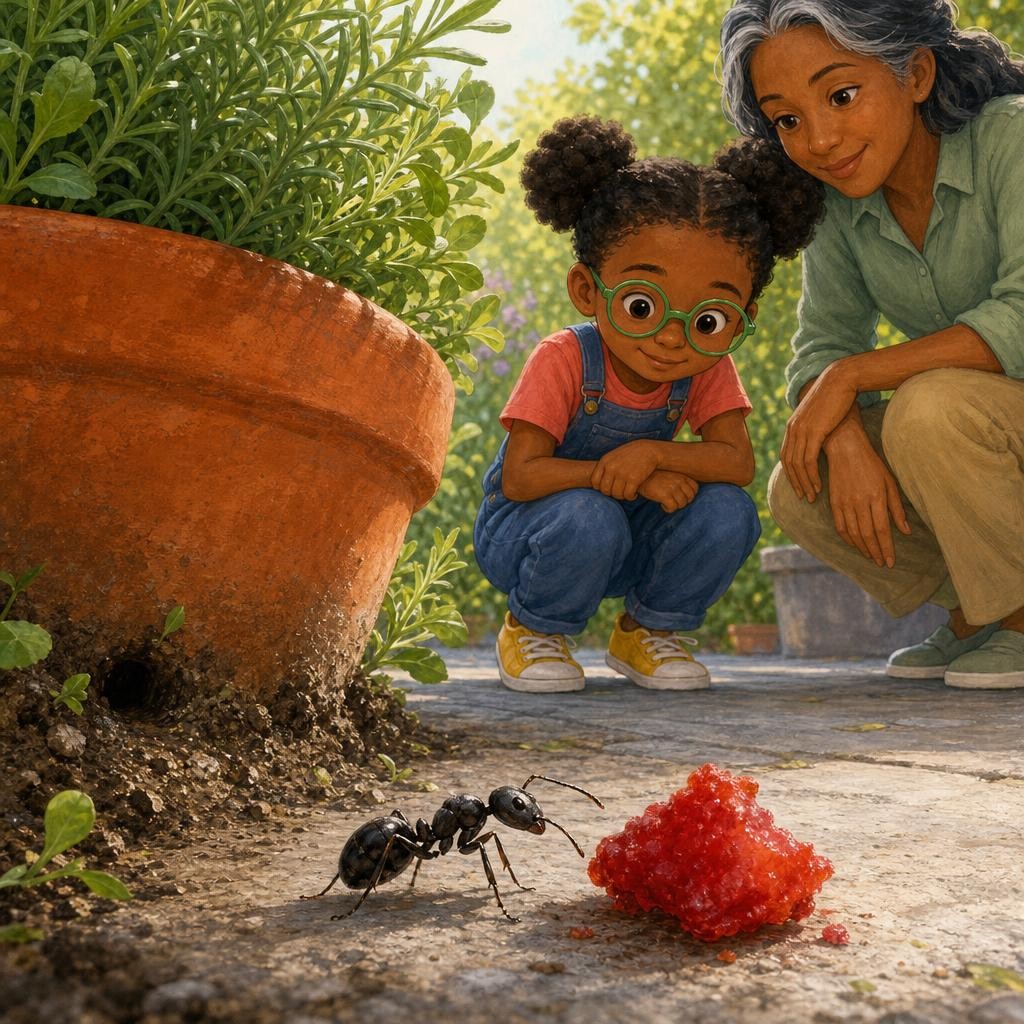
Mina spotted one black garden ant beside a crumb from a fallen red berry. No ant parade followed it. No tiny leader waved a flag. Mina stayed on the path with a grown-up, hands safely away, and wondered, "How will the other ants know where to go?"
The ant picked up a bit of berry and headed toward its nest. As it walked, it left tiny amounts of a scent signal called a pheromone along the ground. People cannot see this trail. In our picture, turquoise dots are only a diagram overlay that helps us follow the invisible route.
Near the nest, other ants swept their antennae close to the ground. Their antennae sensed the pheromone. At a fork, one route had the scent signal and the other did not. The ants turned onto the scented route and headed toward the berry crumb.
Ants carried berry bits toward the nest, then returned along the useful route. On each trip back, more ants added pheromone. A route with a stronger scent was easier for nestmates to follow, so the quiet line of ants grew busy in both directions—without one ant giving orders.
Soon the berry crumb was gone. With no food to collect, fewer ants returned and the old scent was not renewed. Pheromone fades over time, so the trail became harder to follow and the ants searched elsewhere. Mina smiled from the path. Many tiny scent signals had made one remarkable team route.
Lesson scenes
One Ant, One Crumb
Mina spotted one black garden ant beside a crumb from a fallen red berry. No ant parade followed it. No tiny leader waved a flag. Mina stayed on the path with a grown-up, hands safely away, and wondered, "How will the other ants know where to go?"
An Invisible Message
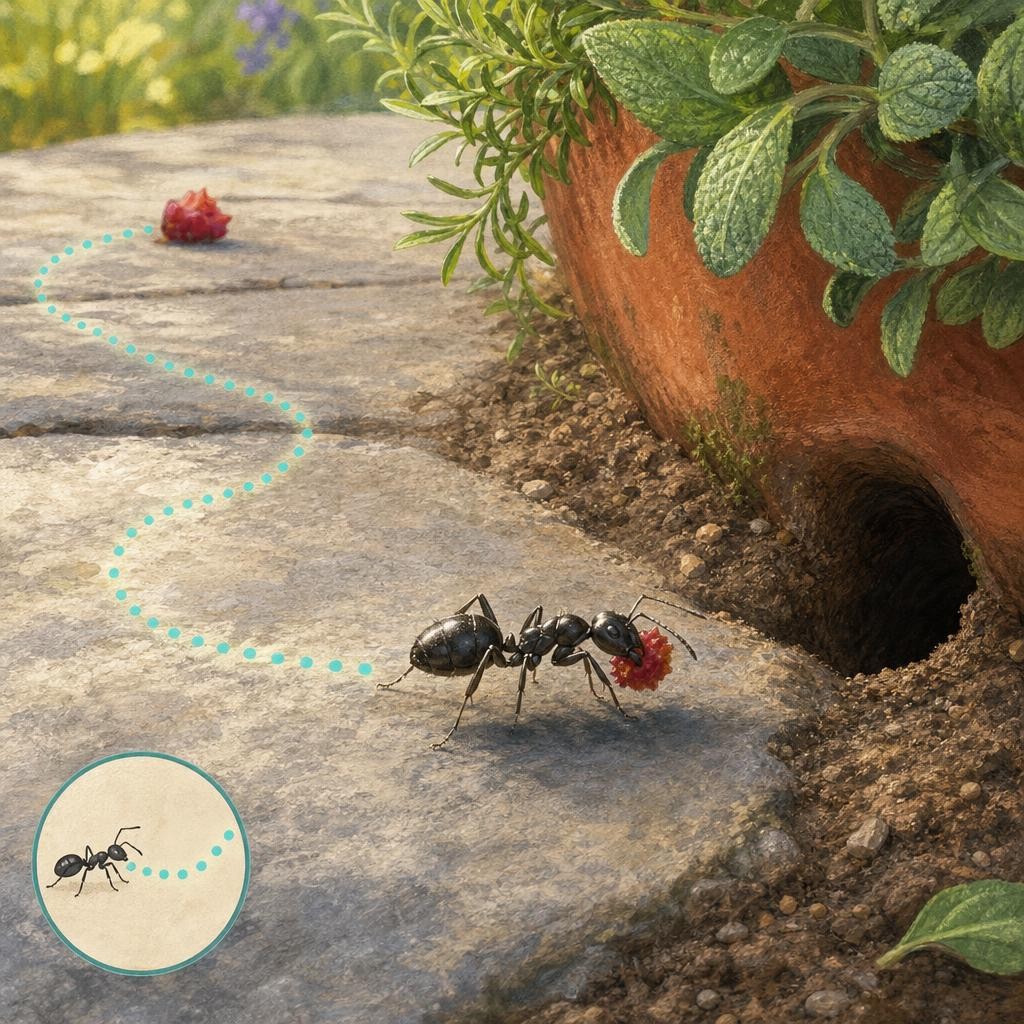
The ant picked up a bit of berry and headed toward its nest. As it walked, it left tiny amounts of a scent signal called a pheromone along the ground. People cannot see this trail. In our picture, turquoise dots are only a diagram overlay that helps us follow the invisible route.
Antennae Find the Trail
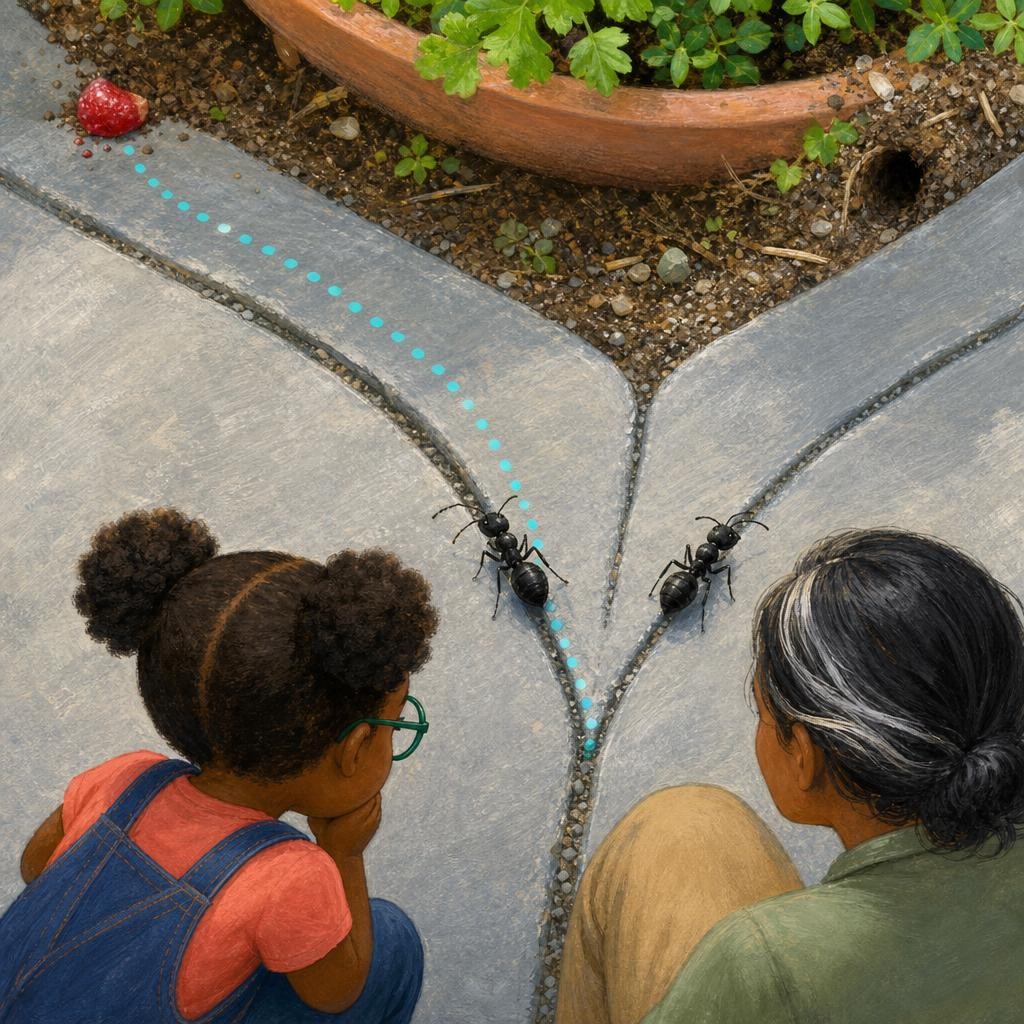
Near the nest, other ants swept their antennae close to the ground. Their antennae sensed the pheromone. At a fork, one route had the scent signal and the other did not. The ants turned onto the scented route and headed toward the berry crumb.
A Stronger Team Route
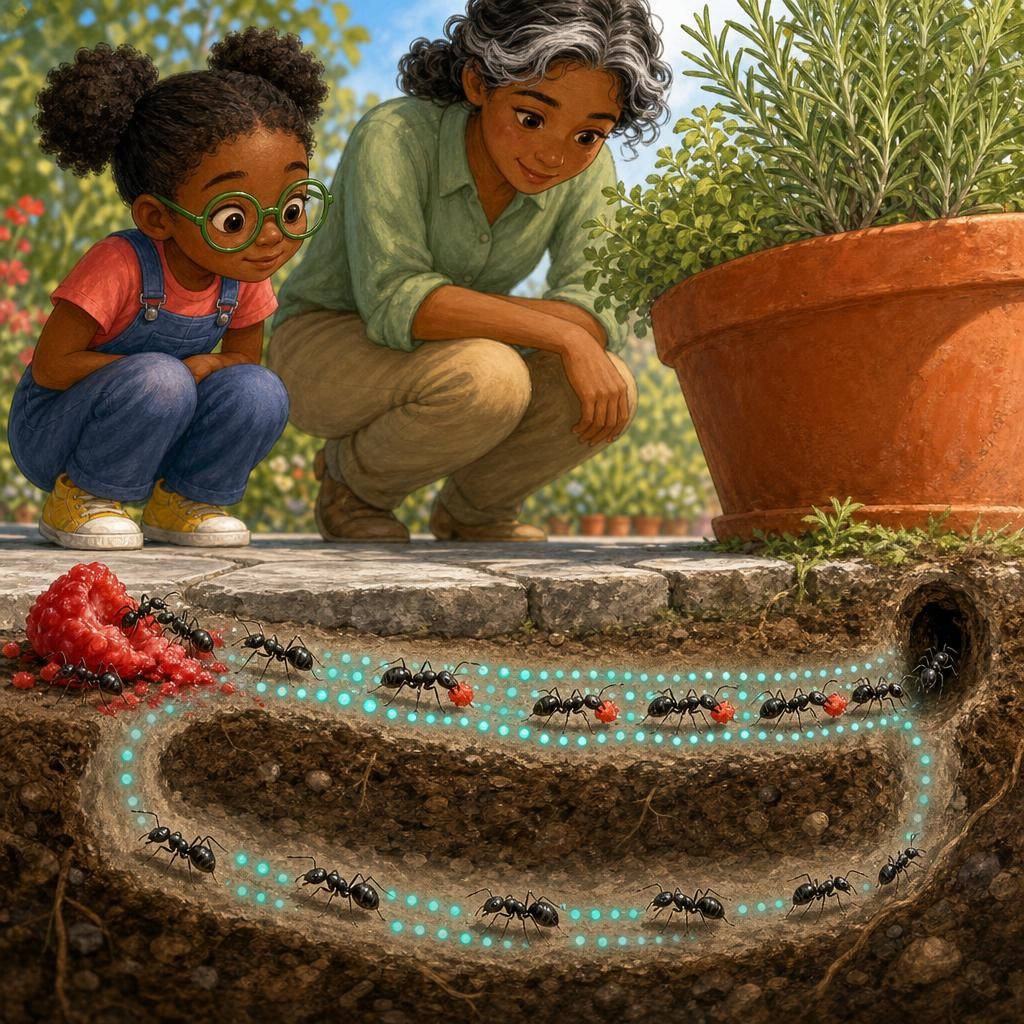
Ants carried berry bits toward the nest, then returned along the useful route. On each trip back, more ants added pheromone. A route with a stronger scent was easier for nestmates to follow, so the quiet line of ants grew busy in both directions—without one ant giving orders.
When the Message Fades
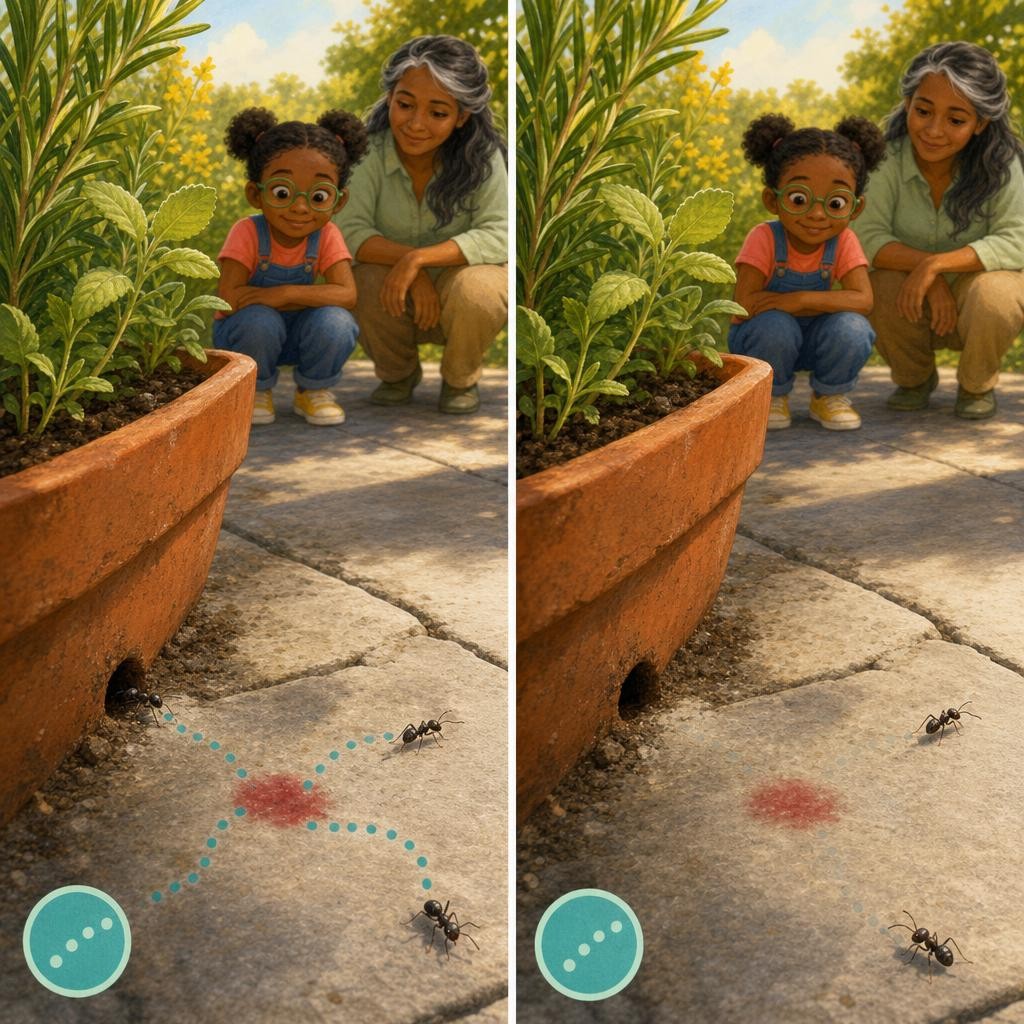
Soon the berry crumb was gone. With no food to collect, fewer ants returned and the old scent was not renewed. Pheromone fades over time, so the trail became harder to follow and the ants searched elsewhere. Mina smiled from the path. Many tiny scent signals had made one remarkable team route.
Key takeaways
- One Ant, One Crumb
- An Invisible Message
- Antennae Find the Trail
Mini quiz
- How do ants detect a pheromone trail?
- What can make a useful ant trail stronger?
- Why did the old trail fade after the berry was gone?
Common questions
What will kids learn in How Do Ants Find the Way??
Children will understand that many ants find food by sensing pheromone scent trails with their antennae, and that ants strengthen useful trails by adding more scent.
Read-together tip
Body and health lessons should show the reason behind a routine or body process: germs wash away, teeth get clean, food gives energy, sleep helps the body rest.