The Wiggly Tooth Handover
A gentle lesson explaining why baby teeth wiggle, fall out, and make room for grown-up teeth.
Ages 6-7 - 3 minute lesson - curious - EN
Reviewed for child-safety · gentle by design · How our stories are made
Published 2026-07-08T16:25:46.792110
Quick answer
Baby teeth wiggle because grown-up teeth underneath push up and take their place.
Lesson
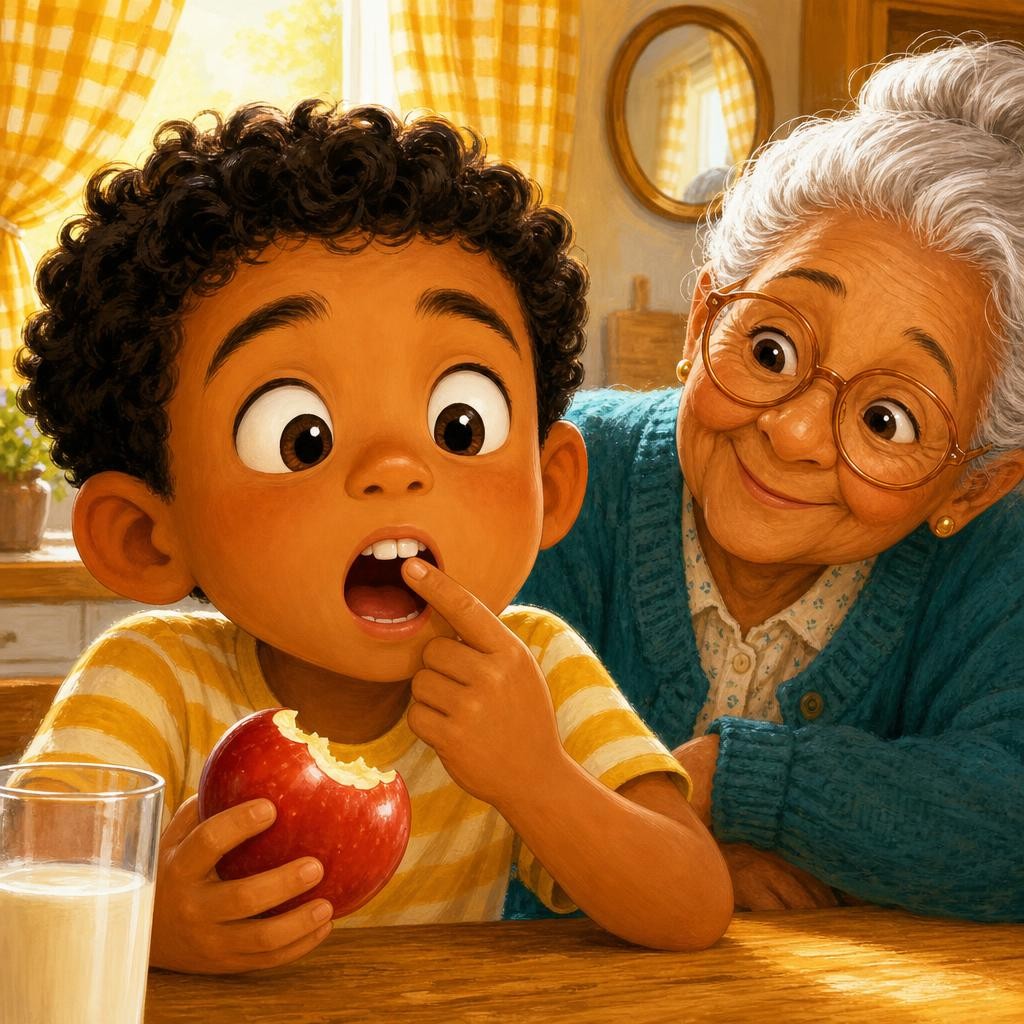
Sam bit into his apple at breakfast, and something moved. He touched his front tooth with his tongue — wiggle, wiggle! "Is my tooth broken?" he asked Grandma. Grandma smiled a big knowing smile. "Nothing is broken, Sam. Your mouth is doing exactly what mouths are supposed to do. Come look."
Grandma held up Sam's old baby shoes, tiny as cookies. "These fit you when you were little. Then your feet grew, so you needed bigger shoes." Sam wiggled his big-boy toes. Baby teeth are like those little shoes — they are starter teeth, just the right size for a small mouth. They chew your food and hold a spot while your jaw, the bone that holds your teeth, keeps growing bigger.
"But where do the new teeth come from?" Sam asked. Grandma drew a picture: under Sam's gums, hiding like feet inside socks, grown-up teeth were already waiting! Each big tooth sat right below a baby tooth, growing slowly, day by day. Sam stared at the picture. When that big tooth is ready and starts to push up, what do you think happens to the little baby tooth on top?
It wiggles — just like Sam's tooth! The big tooth pushes up from below, the baby tooth lets go little by little, and one day it pops out, soft and easy, with a perfect spot waiting. Nothing broken, nothing wrong — the baby tooth finished its job of saving the space, like little shoes stepping aside for bigger shoes. Small tooth out, big tooth up!
Here is the amazing part: you start with 20 baby teeth, but you trade them for 32 grown-up teeth — twelve more, because your bigger jaw has room for a bigger team! Tonight, stand at the mirror with a grown-up and count your teeth together. Can you find a wiggly one, or a brand-new big one already peeking through?
So when a tooth wiggles, Sam does not worry — he grins. His baby teeth saved the spots, his jaw grew big and strong, and now the grown-up teeth are pushing up to take their turn. It is a handover that was planned all along. Say it with Sam: small tooth out, big tooth up!
Lesson scenes
Wiggle, Wiggle!
Sam bit into his apple at breakfast, and something moved. He touched his front tooth with his tongue — wiggle, wiggle! "Is my tooth broken?" he asked Grandma, and she smiled a big knowing smile.
Starter Teeth, Starter Shoes
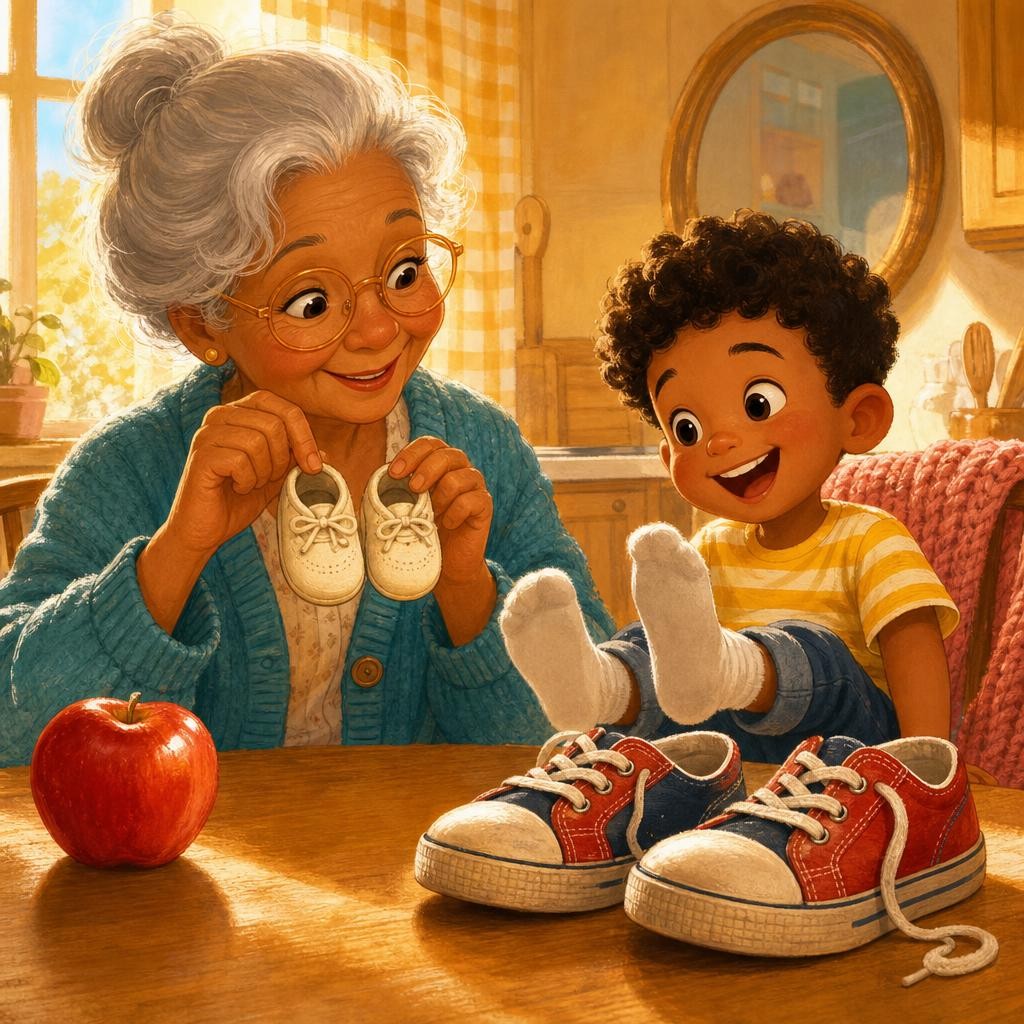
Grandma held up Sam's old baby shoes, tiny as cookies. "These fit you when you were little — then your feet grew!" Baby teeth are like those little shoes: starter teeth that chew your food and hold a spot while your jaw, the bone that holds your teeth, keeps growing bigger.
The Hidden Teeth
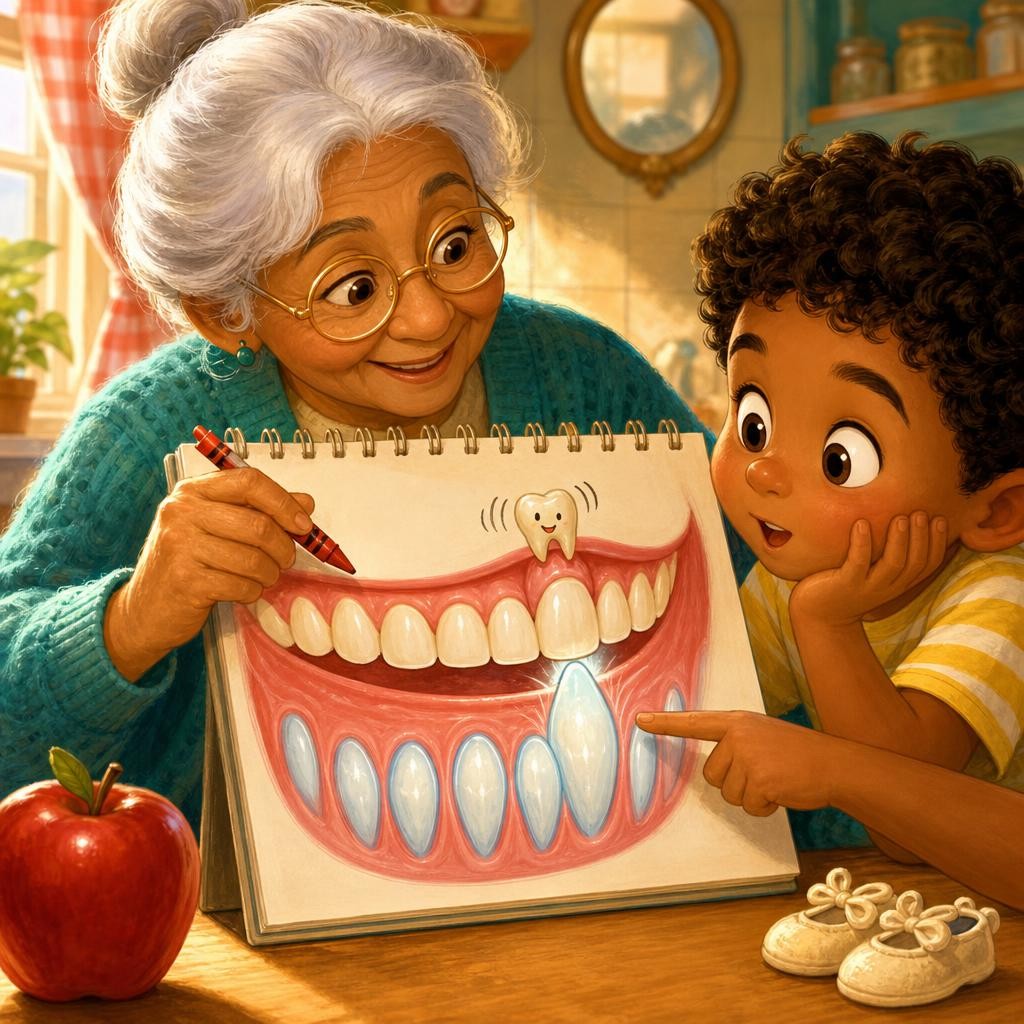
"But where do the new teeth come from?" Sam asked. Grandma drew a picture: under Sam's gums, hiding like feet inside socks, grown-up teeth were already waiting, each one right below a baby tooth. When that big tooth is ready and starts to push up — what do you think happens to the little baby tooth on top?
Small Tooth Out, Big Tooth Up!
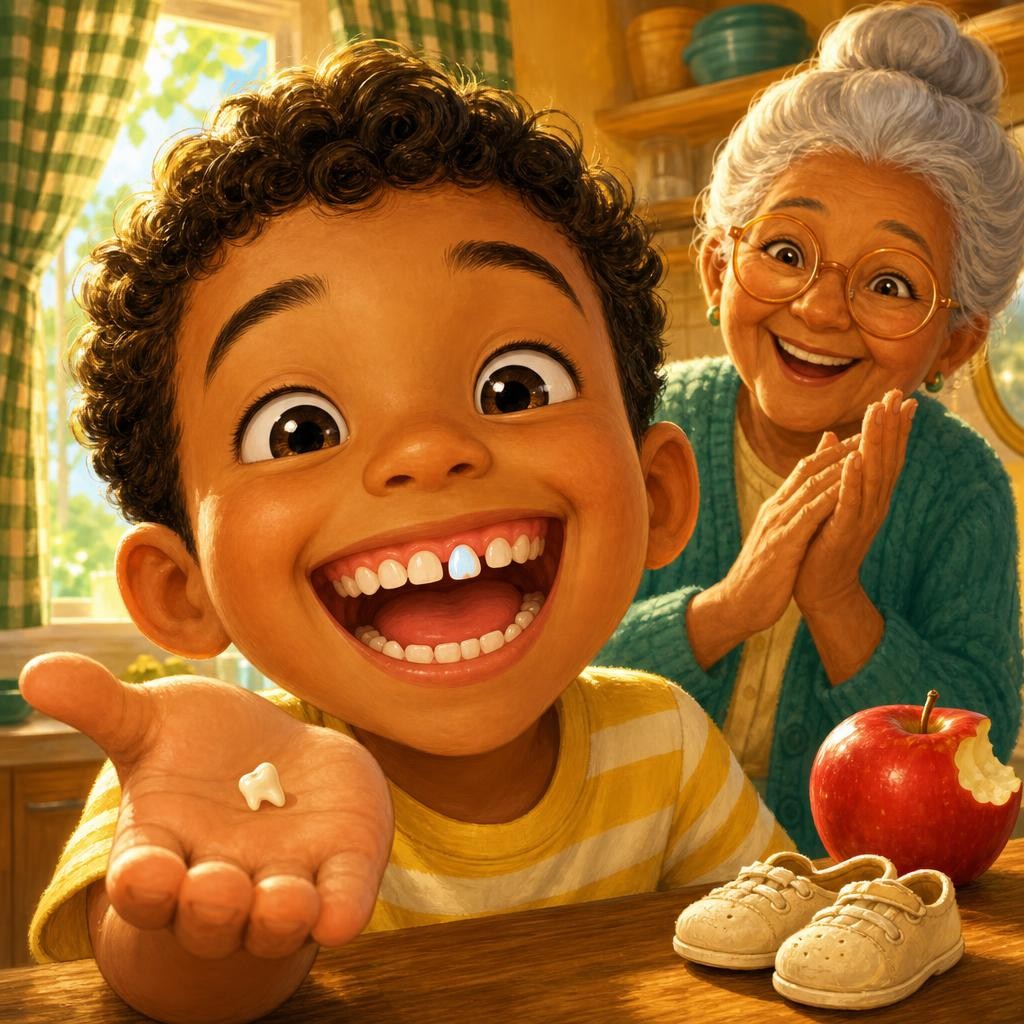
It wiggles — just like Sam's tooth! The big tooth pushed up from below, the baby tooth let go little by little, and one day it popped out, soft and easy, with a perfect spot waiting. Nothing broken, nothing wrong — small tooth out, big tooth up!
Count Your Team Tonight
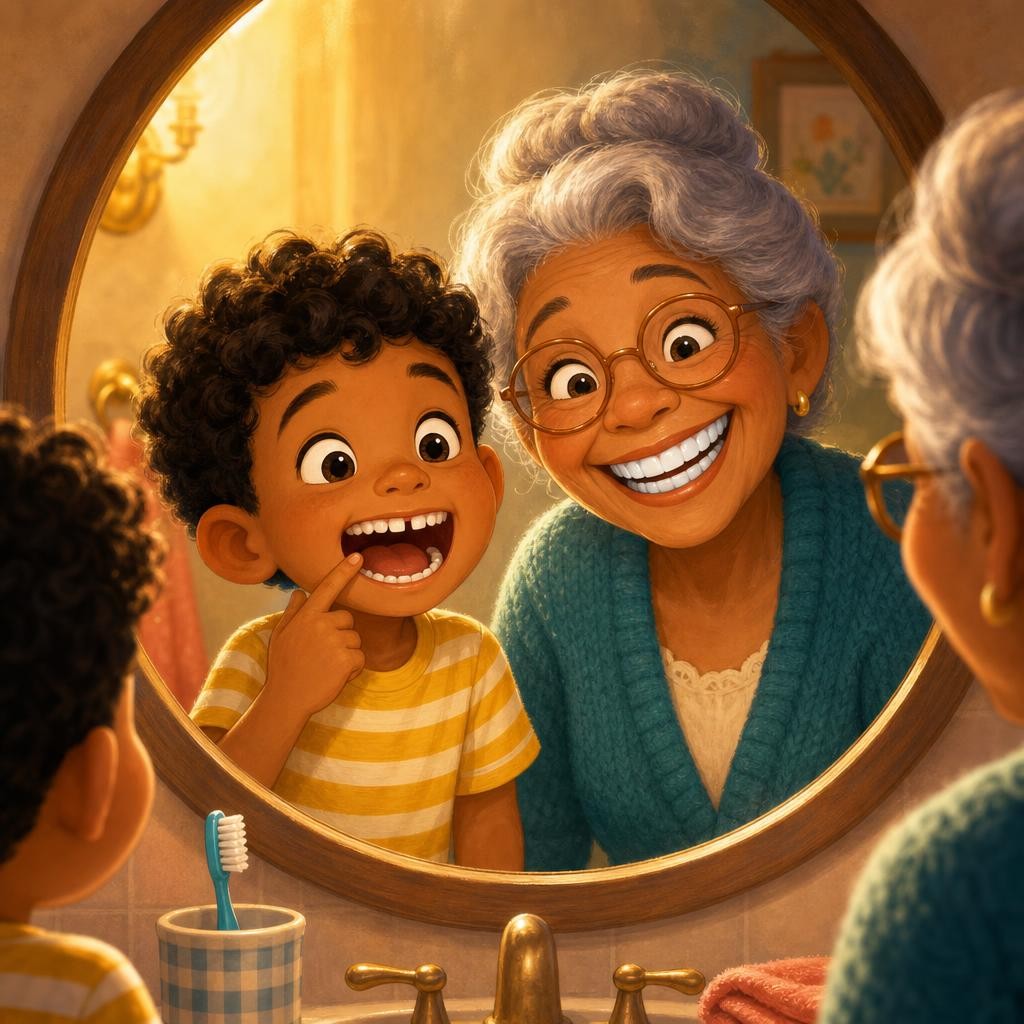
Here is the amazing part: you start with 20 baby teeth, but you trade them for 32 grown-up teeth — twelve more, because your bigger jaw has room for a bigger team! Tonight, stand at the mirror with a grown-up and count your teeth together — can you find a wiggly one, or a brand-new big one peeking through?
The Planned Handover
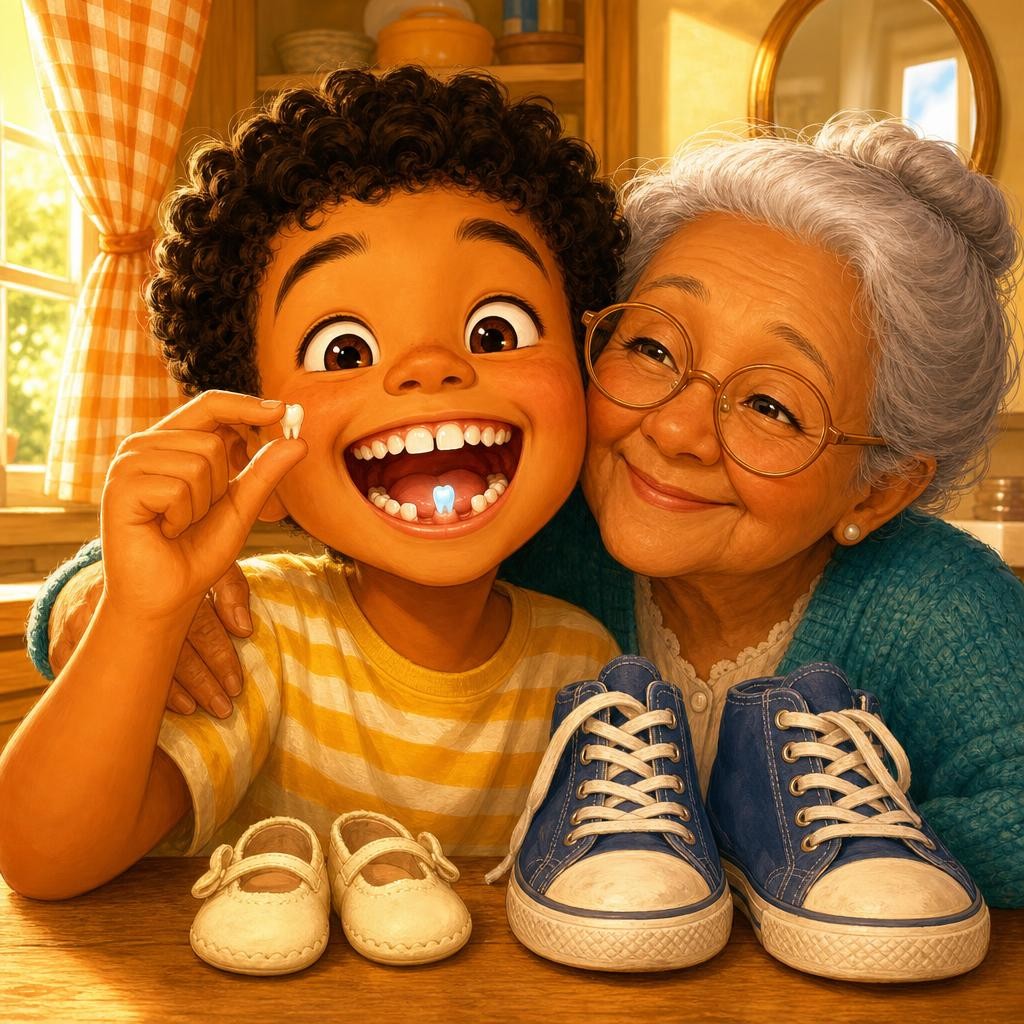
So when a tooth wiggles, Sam does not worry — he grins. His baby teeth saved the spots, his jaw grew big and strong, and the grown-up teeth are pushing up to take their turn. It was a handover planned all along — say it with Sam: small tooth out, big tooth up!
Key takeaways
- A wiggly baby tooth is not broken.
- Grown-up teeth wait under the gums and push up when they are ready.
- Baby teeth chew food and hold spots for grown-up teeth.
- Children start with 20 baby teeth and later get 32 grown-up teeth.
Mini quiz
- Why does a baby tooth start to wiggle?
- What job does a baby tooth do?
- Do you get more grown-up teeth than baby teeth?
Common questions
Why is my tooth wiggly?
It may be wiggly because a grown-up tooth is pushing up from under the gums.
Is a wiggly tooth broken?
No. In this lesson, Grandma explains that nothing is broken; the mouth is doing what it is supposed to do.
What do baby teeth do?
Baby teeth help chew food and save spaces for the grown-up teeth.
Where is the new tooth before it comes in?
The grown-up tooth is waiting under the gums, below the baby tooth.
Read-together tip
Look in the mirror together and gently count teeth. Reassure your child that a wiggly tooth can be a normal handover: small tooth out, big tooth up.