How Does Saved Money Grow?
Kai finds an extra coin in his savings. A pop-up trip to Mesopotamia, where one basket of borrowed seeds grows a whole field, shows him what interest is.
Understanding money · 7 of 12
about real things · asks questions · 8 pages · ages 6–7 · 2 min · English
Read · Play · Listen · PDF · Print edition · with the Storybook Pass · Make it about your child
Reviewed for child safety · gentle by design · How our storybooks are made
Published 2026-11-03T17:45:27.468879
Quick answer
Interest is a small extra paid for borrowing. When you save in a bank, the bank lends some of your money to others, and it shares a little of the interest it earns with you, so your savings grow slowly.
Inside this storybook
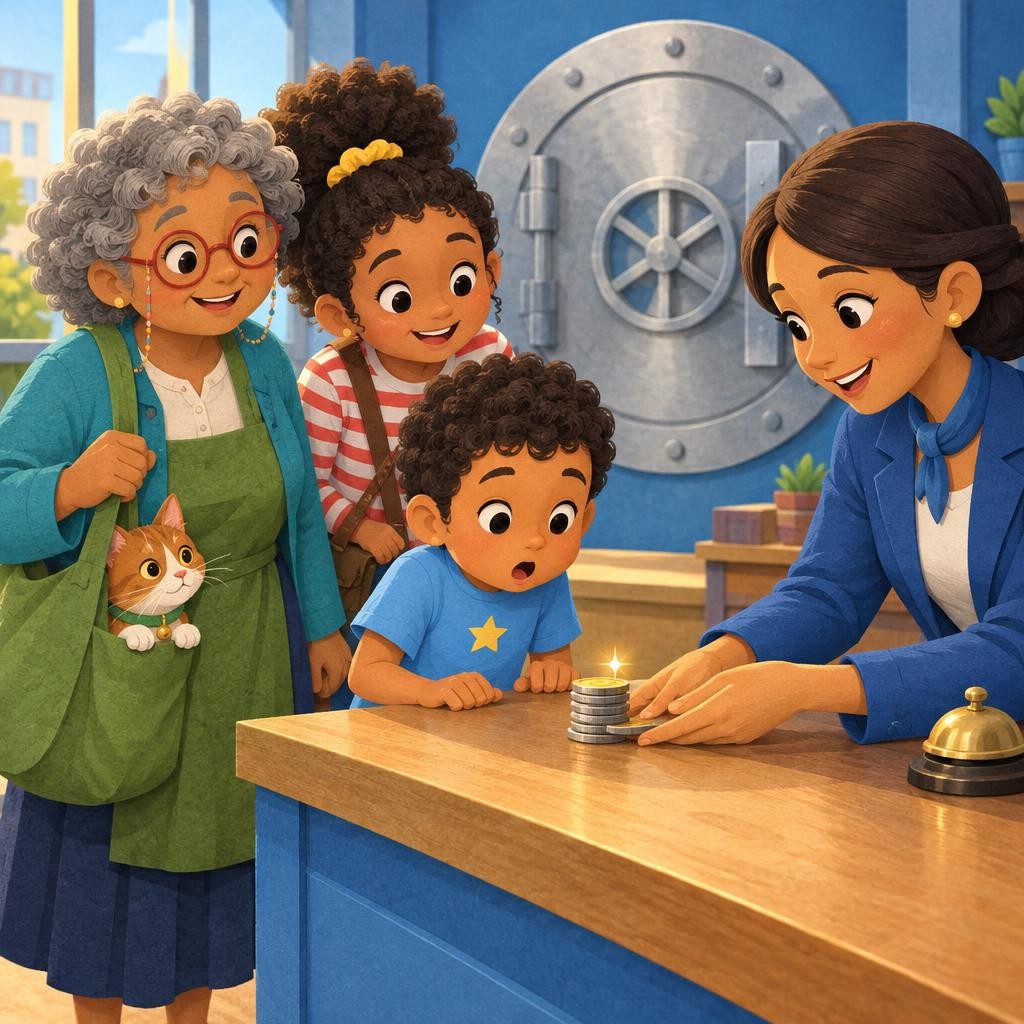
At the bank, the worker shows Kai his savings. There is a little more than he put in! "I didn't add any," says Kai. "Where did the extra come from?"
Pop! They are in Mesopotamia, about 4,000 years ago, beside a wide river. A farmer has no seeds to plant. So he borrows a basket of barley seeds from a lender, and promises to pay her back after the harvest.
The farmer plants every seed. The sun shines, the river waters the field, and one basket of seeds grows into a whole field of barley. It grows so tall that Kai disappears into it, then pops out covered in barley!
Harvest time! The farmer fills his baskets with barley and carries them to the lender's storehouse to pay her back.
He gives back the whole basket, plus a little more. That little extra is called interest. It is the price of borrowing. More than 3,700 years ago, a king's laws even said how much extra a lender was allowed to ask.
Banks work the same way with money. The bank lends some of Kai's savings to people who need it, like a woman opening a new café, and they pay the bank back with a little interest. The bank shares a little of that extra with Kai, for letting it lend his money.
At home, Kai sets out three jars: one for spending, one for saving and one for sharing. He drops a coin in each.
Kai's savings have grown enough at last. He takes them out of the bank and buys the red kite from Grandma Rosa's shop! That night, a tiny sack of barley goes into the box. "Waiting helps money grow," says Grandma Rosa. "Slowly."
The pages
Where did the extra come from?
At the bank, the worker shows Kai his savings. There is a little more than he put in! "I didn't add any," says Kai. "Where did the extra come from?"
A basket of seeds
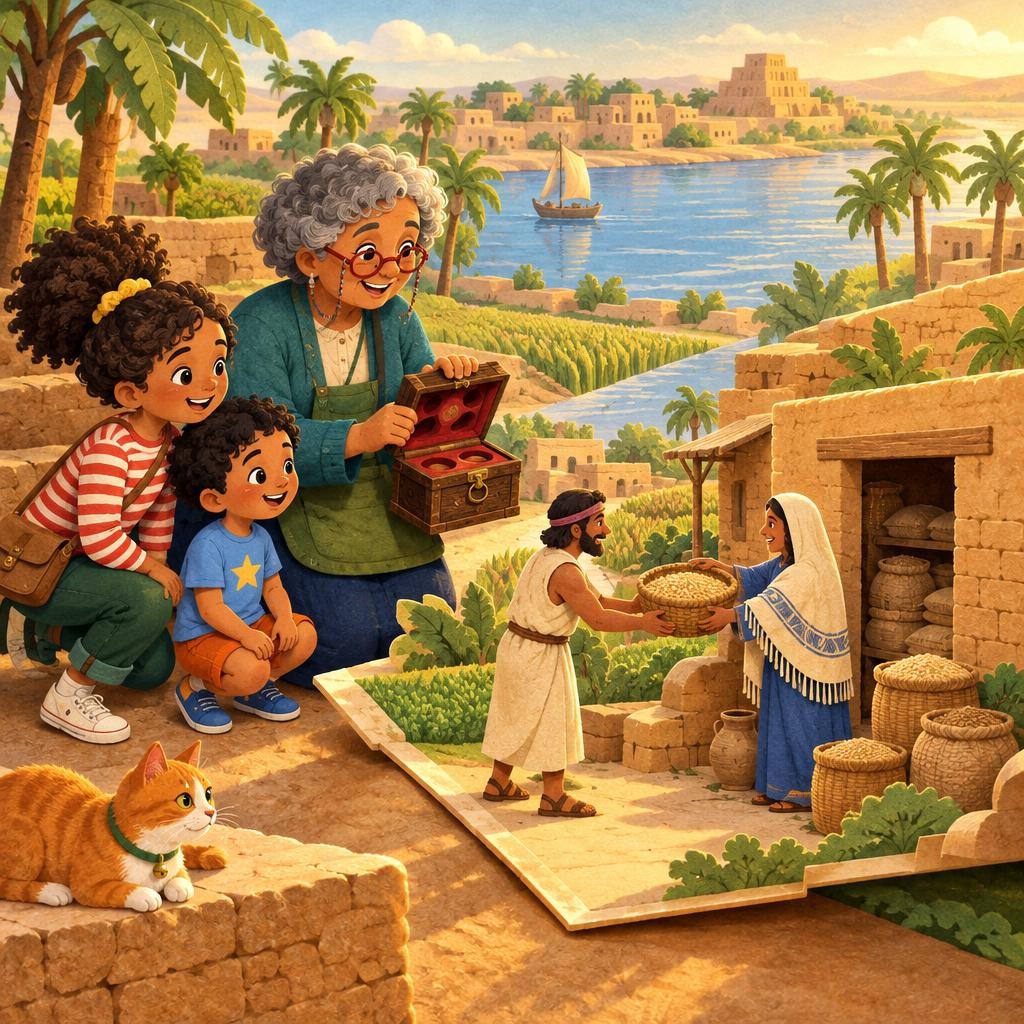
Pop! They are in Mesopotamia, about 4,000 years ago, beside a wide river. A farmer has no seeds to plant. So he borrows a basket of barley seeds from a lender, and promises to pay her back after the harvest.
One basket, a whole field
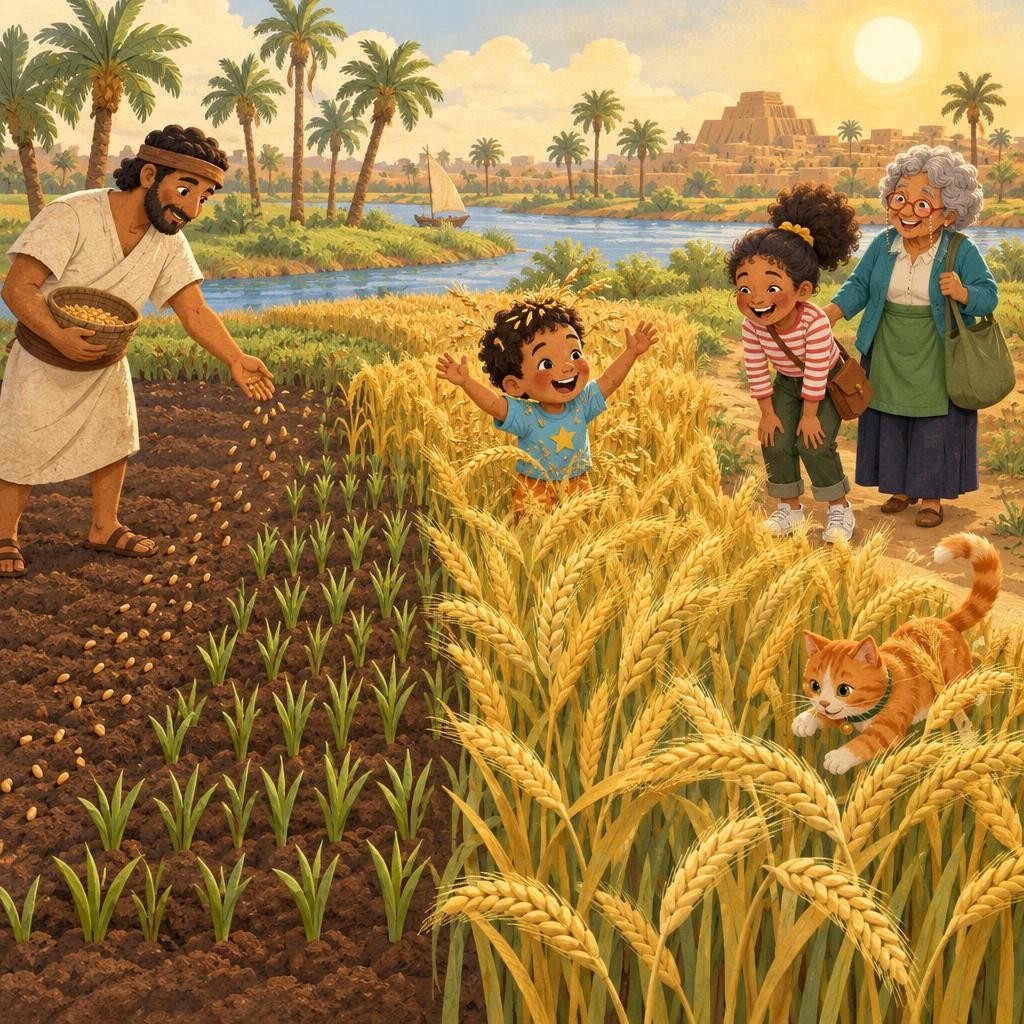
The farmer plants every seed. The sun shines, the river waters the field, and one basket of seeds grows into a whole field of barley. It grows so tall that Kai disappears into it, then pops out covered in barley!
Paying back
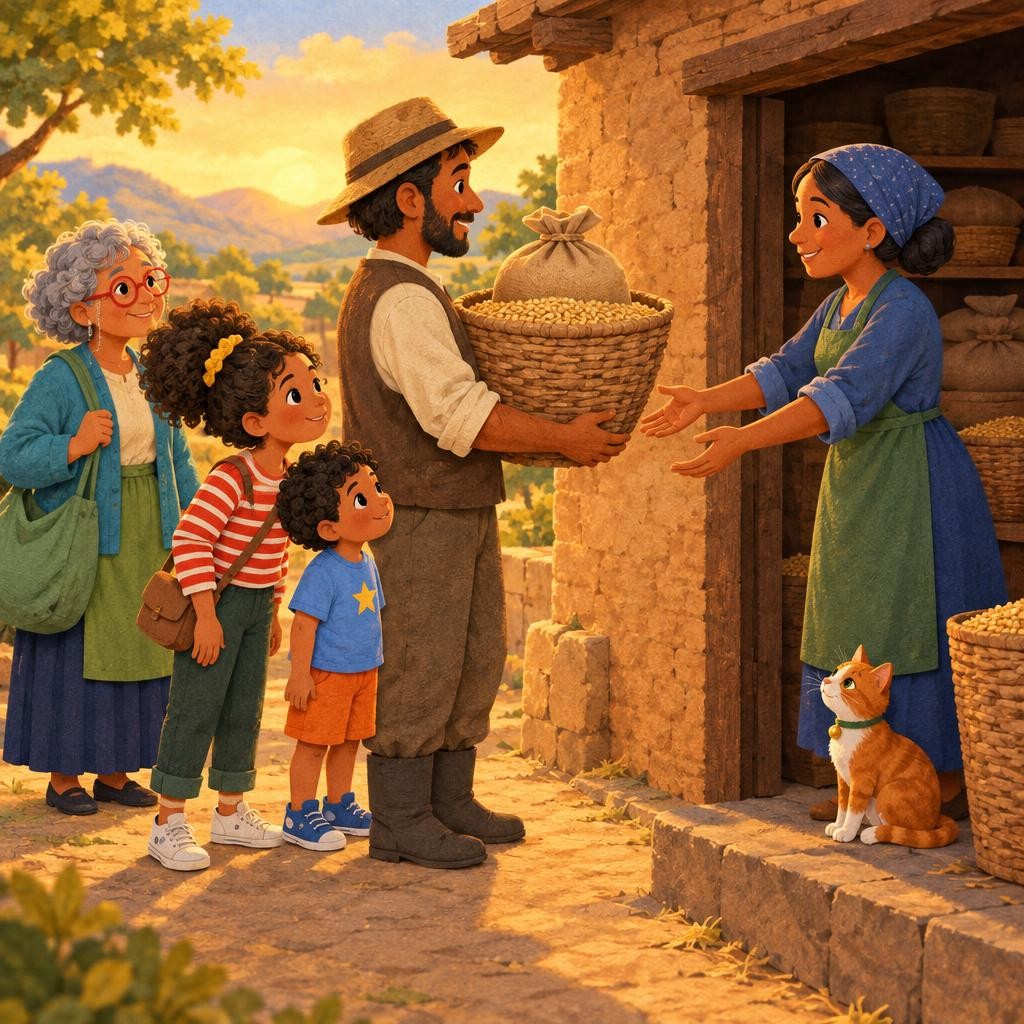
Harvest time! The farmer fills his baskets with barley and carries them to the lender's storehouse to pay her back.
Interest
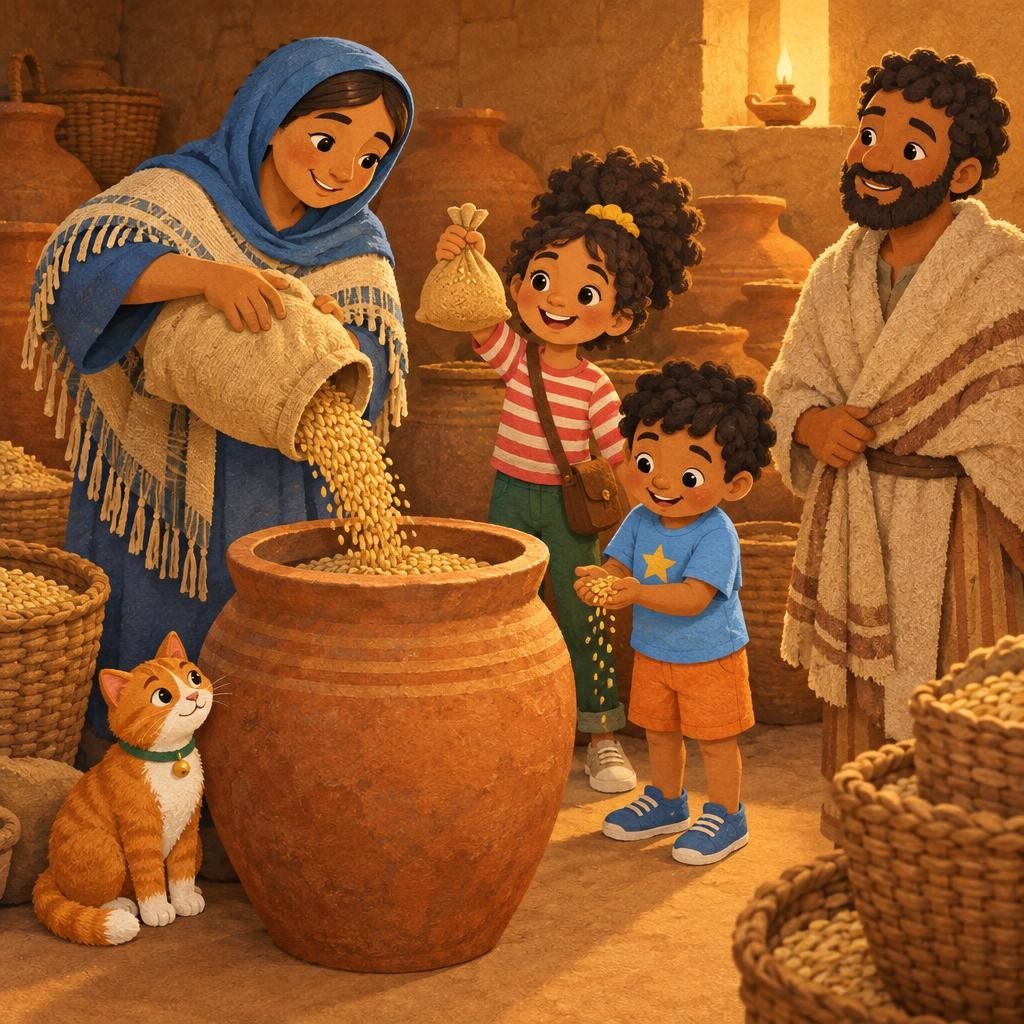
He gives back the whole basket, plus a little more. That little extra is called interest. It is the price of borrowing. More than 3,700 years ago, a king's laws even said how much extra a lender was allowed to ask.
Why Kai got extra
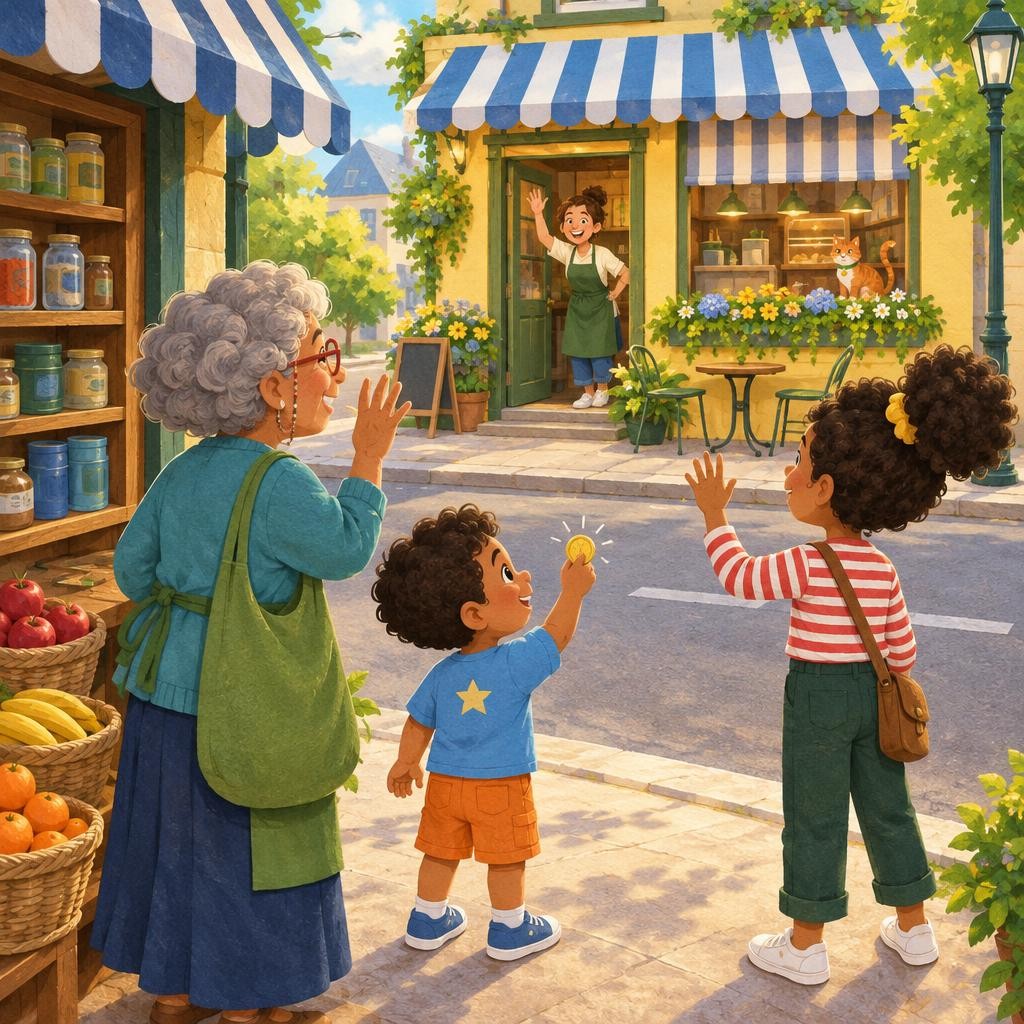
Banks work the same way with money. The bank lends some of Kai's savings to people who need it, like a woman opening a new café, and they pay the bank back with a little interest. The bank shares a little of that extra with Kai, for letting it lend his money.
Three jars
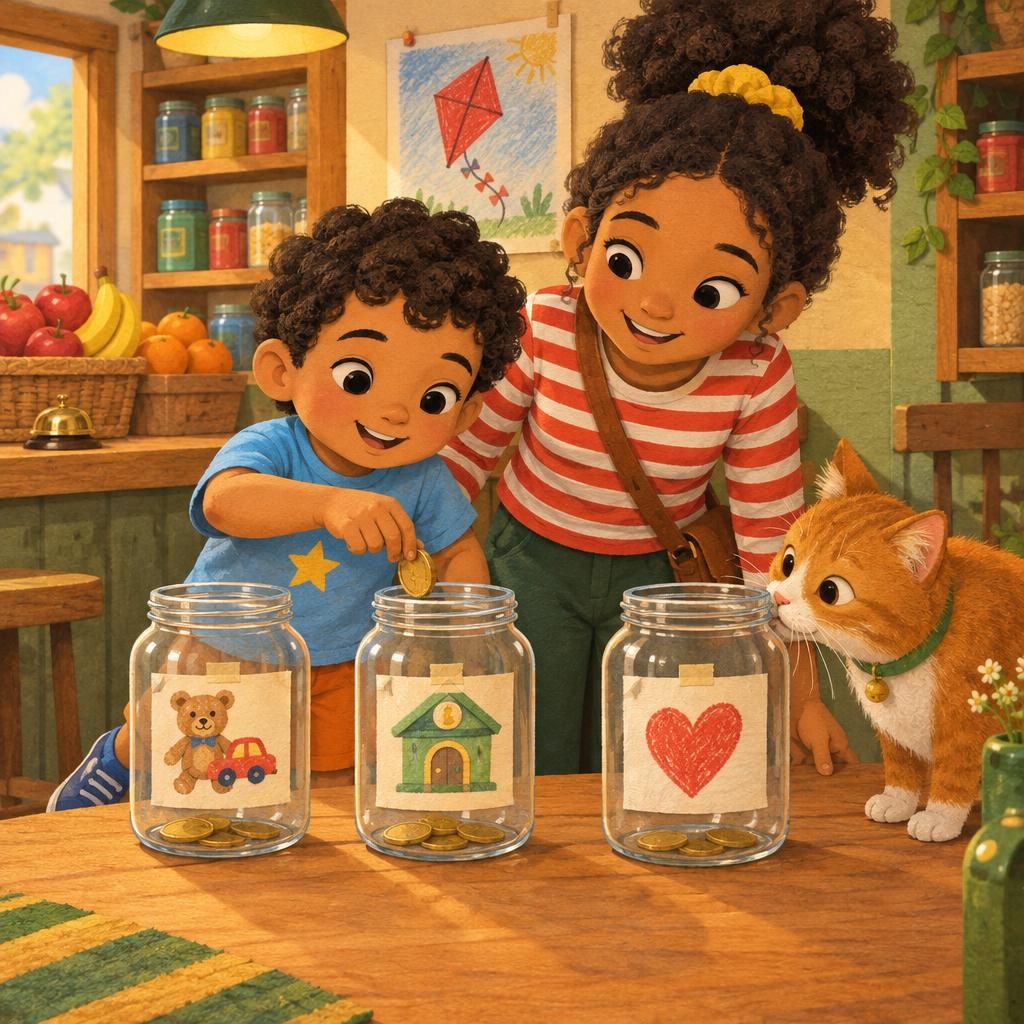
At home, Kai sets out three jars: one for spending, one for saving and one for sharing. He drops a coin in each.
The red kite at last
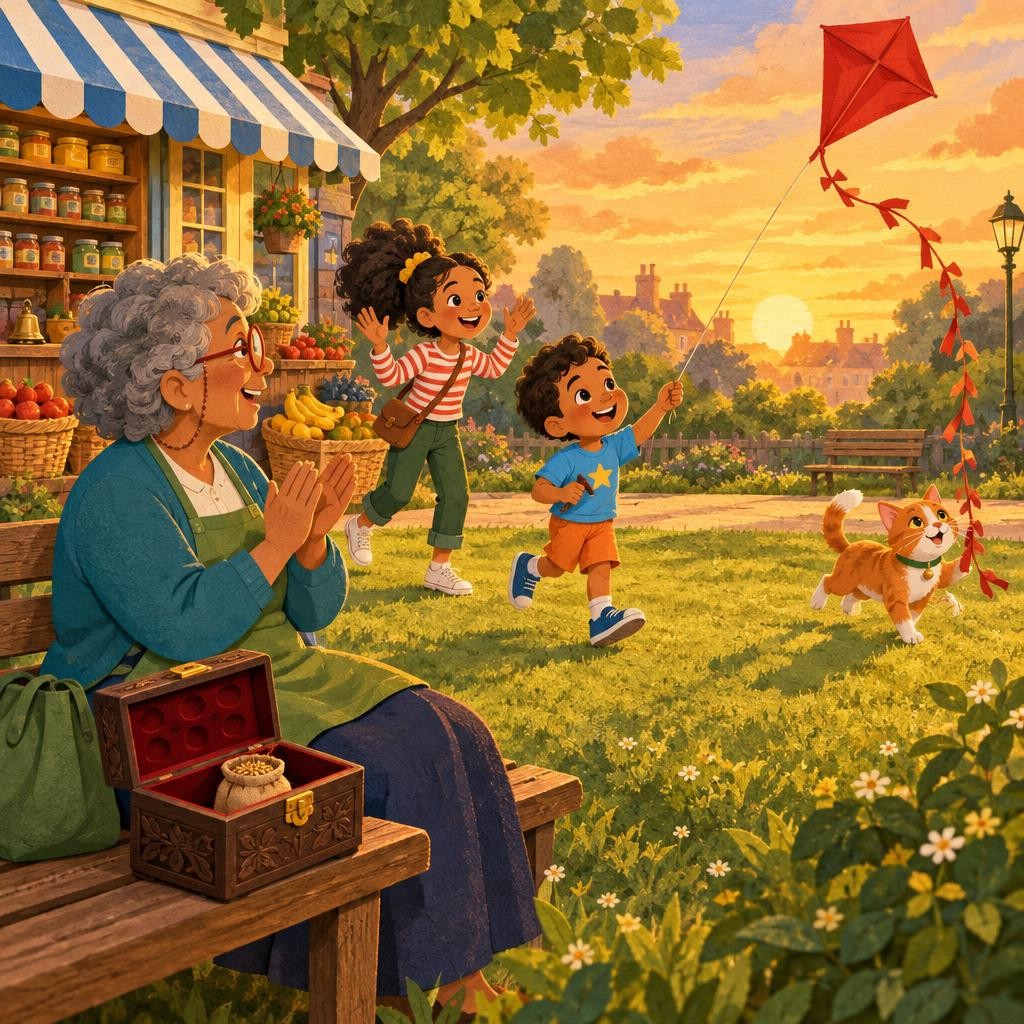
Kai's savings have grown enough at last. He takes them out of the bank and buys the red kite from Grandma Rosa's shop! That night, a tiny sack of barley goes into the box. "Waiting helps money grow," says Grandma Rosa. "Slowly."
Key takeaways
- Interest is the price of borrowing.
- Savers earn a little interest; borrowers pay some.
- Interest is about 4,000 years old.
- Saving first helps money grow, slowly.
Questions along the way
- Why did the farmer pay back a little extra barley?
- Where did Kai's extra coin come from?
- Which jar helps money grow a little?
Common questions
How do you explain interest to a child?
Interest is a small extra for borrowing. If you save, the bank pays you a little extra for letting it lend your money. If you borrow, you pay a little extra back.
Where does interest come from?
From borrowers. The bank lends saved money to people who need it, they pay back a little extra, and the bank shares some of it with savers.
Read-together tip
Plant a few seeds in a pot together. As one seed becomes a plant with many seeds, talk about why the farmer paid back a little extra.