How people reached distant lands
Story lesson
Ages 4-5 - 2 minute lesson - curious - EN
Reviewed for child-safety · gentle by design · How our stories are made
Published 2026-08-09T12:10:20.737966
Quick answer
Children will understand that early humans spread across the world over a long time by walking over land, using exposed land bridges during cold times, and paddling simple boats to islands.
Lesson
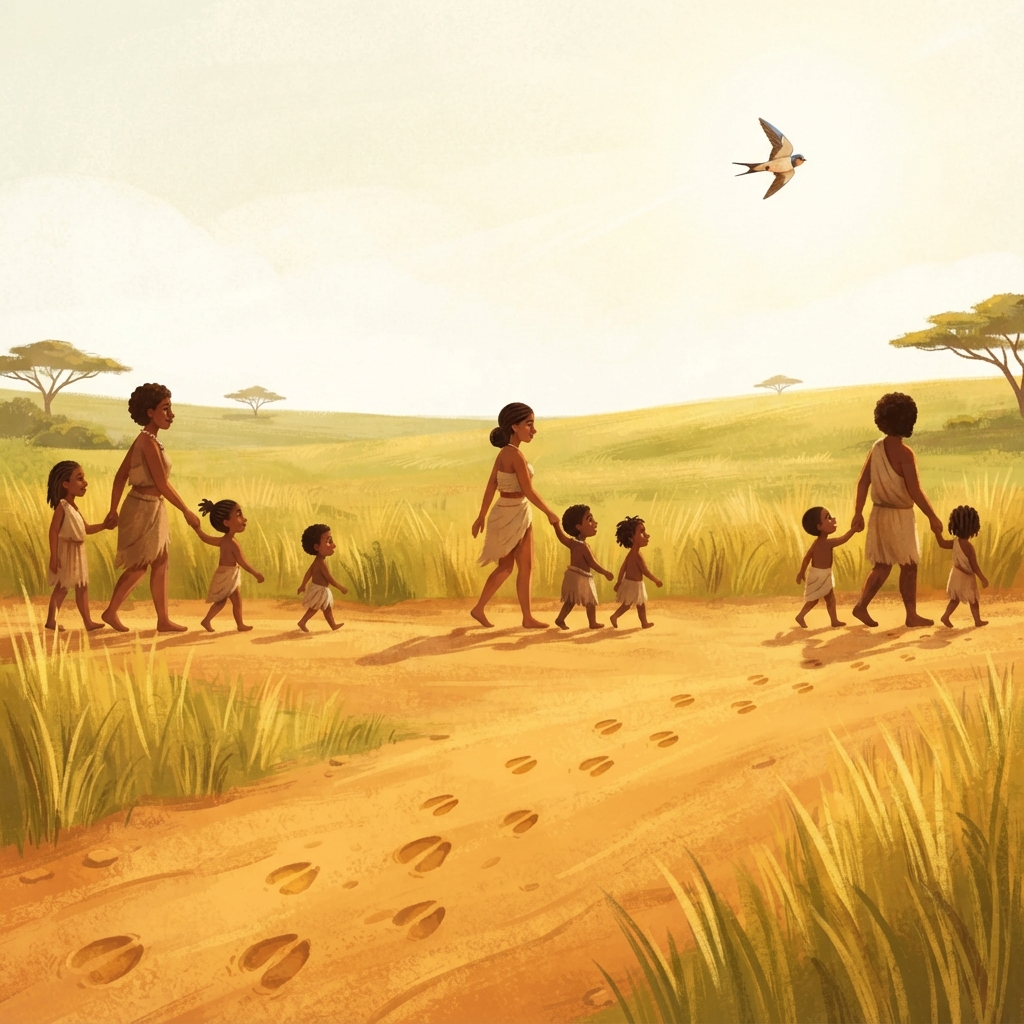
Long ago, early humans lived in Africa, a warm land of wide grassy plains. Families walked together, following animal tracks and looking for food and water. Step by step, some journeys led farther away.
As families searched for food, water, and new places to live, they kept walking. Over many, many years, footsteps reached green forests, valleys, and mountains. The world was full of new paths to explore.
During very cold times, so much water was frozen that the sea became lower. Wide pieces of land appeared between some places. Bundled-up families could walk across this cold, snowy land to another land.
Some places were islands, with water all around. People made sturdy wooden canoes and paddled together across calm stretches of sea. That is one way families reached faraway islands.
Walking over land, crossing land bridges, and paddling canoes helped people spread to many parts of Earth over a very long time. Today, people live on continents and islands around our shared world. At home, an adult can help make a floor map with tape and safe pillow islands for your own pretend journey.
Lesson scenes
One Warm Beginning
Long ago, early humans lived in Africa, a warm land of wide grassy plains. Families walked together, following animal tracks and looking for food and water. Step by step, some journeys led farther away.
Further on Foot
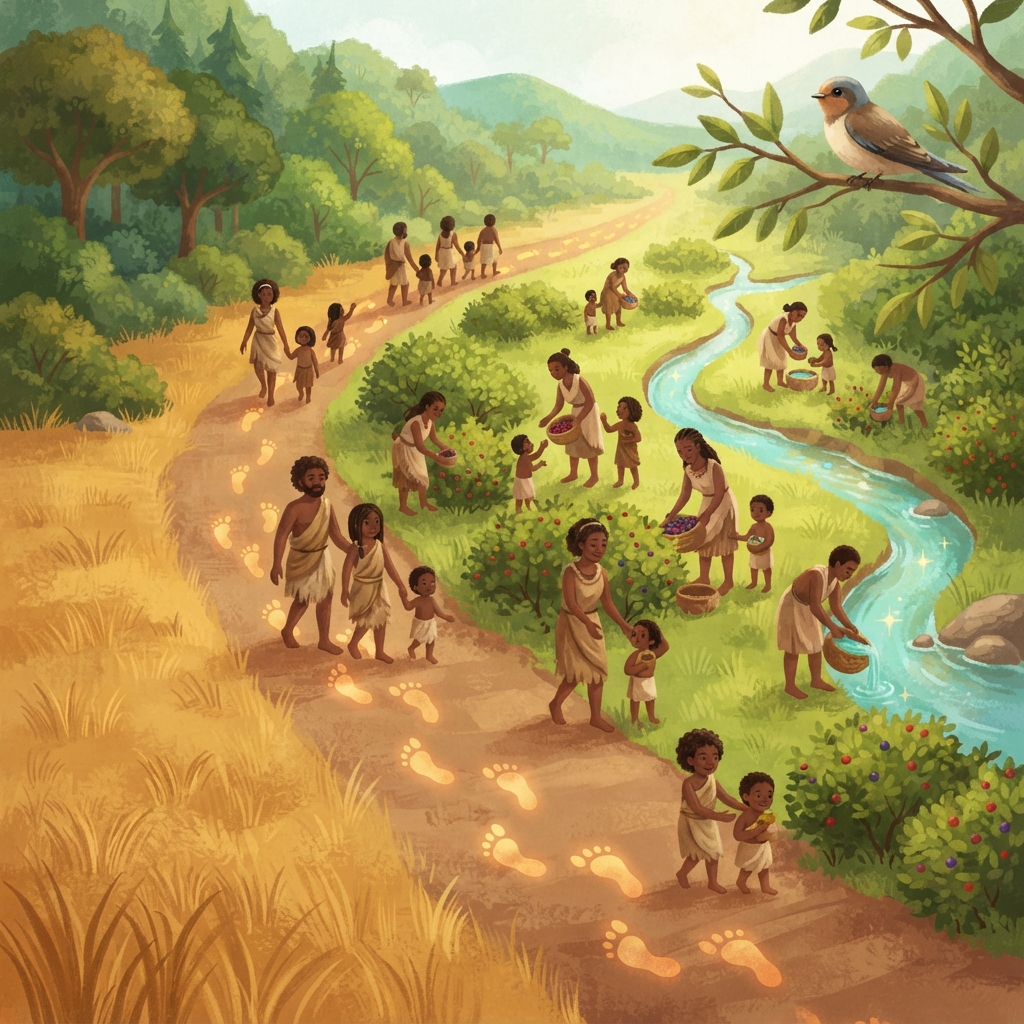
As families searched for food, water, and new places to live, they kept walking. Over many, many years, footsteps reached green forests, valleys, and mountains. The world was full of new paths to explore.
Land Between Lands
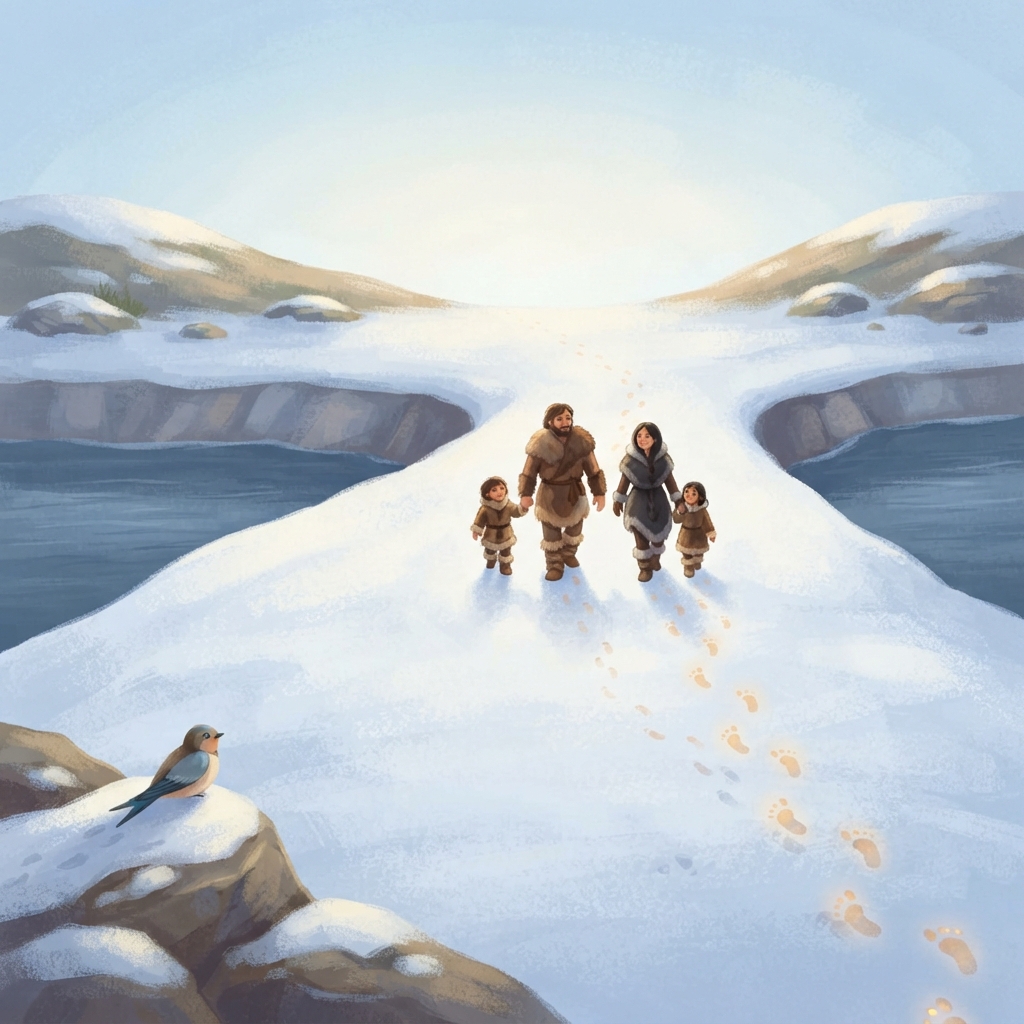
During very cold times, so much water was frozen that the sea became lower. Wide pieces of land appeared between some places. Bundled-up families could walk across this cold, snowy land to another land.
Canoes to Islands
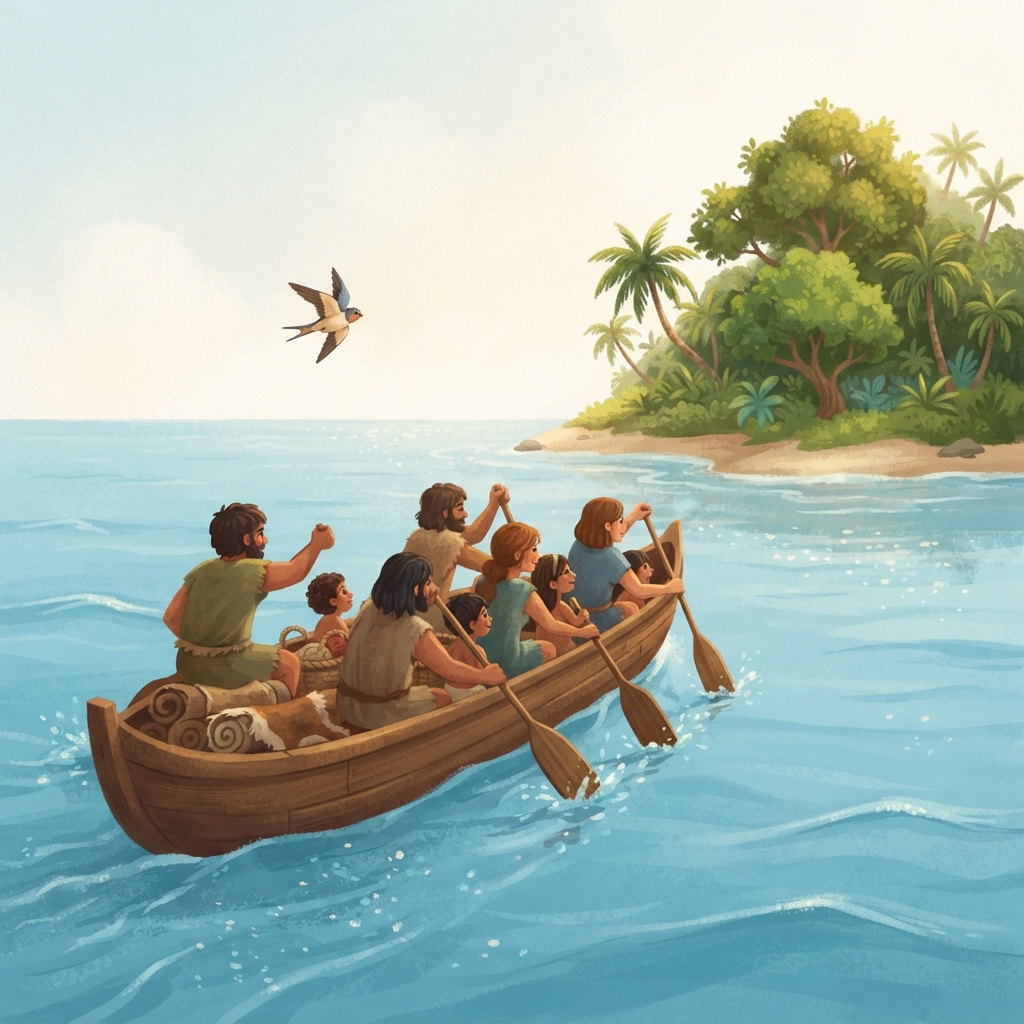
Some places were islands, with water all around. People made sturdy wooden canoes and paddled together across calm stretches of sea. That is one way families reached faraway islands.
A World of Footsteps
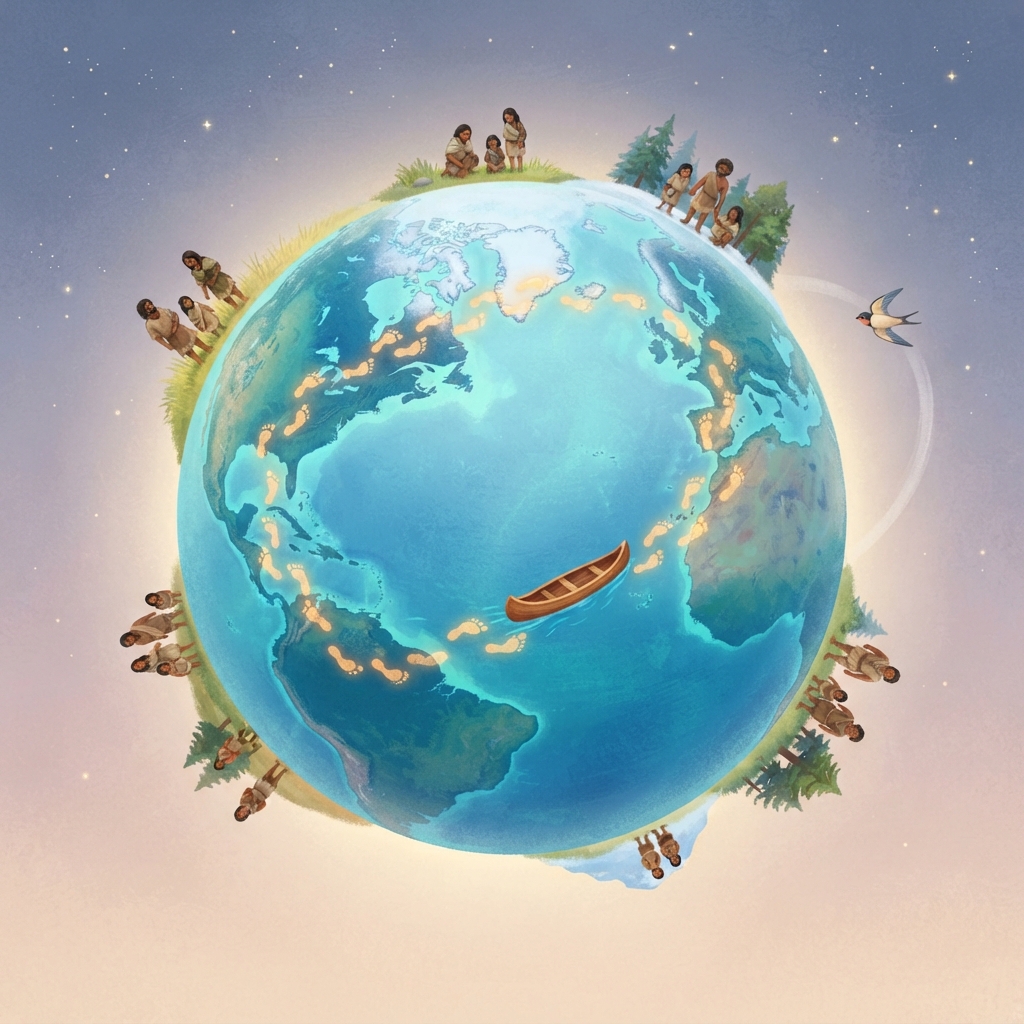
Walking over land, crossing land bridges, and paddling canoes helped people spread to many parts of Earth over a very long time. Today, people live on continents and islands around our shared world. At home, an adult can help make a floor map with tape and safe pillow islands for your own pretend journey.
Key takeaways
- One Warm Beginning
- Further on Foot
- Land Between Lands
Mini quiz
- What helped people travel across forests and mountains?
- What appeared when the sea was lower during very cold times?
- How could people reach some islands?
Common questions
What will kids learn in How people reached distant lands?
Children will understand that early humans spread across the world over a long time by walking over land, using exposed land bridges during cold times, and paddling simple boats to islands.
Read-together tip
World and community lessons should connect a big social idea to a familiar place, helper, family, map, holiday, or journey.