The Big Blue Puzzle: Seven Land Pieces of Our World
Learn the seven continents with Mia: Asia, Africa, Europe, North America, South America, Australia, and Antarctica.
Ages 6-7 - 4 minute lesson - curious - EN
Reviewed for child-safety · gentle by design · How our stories are made
Published 2026-06-30T05:44:02.303615
Quick answer
Earth has seven continents: Asia, Africa, Europe, North America, South America, Australia, and Antarctica.
Lesson
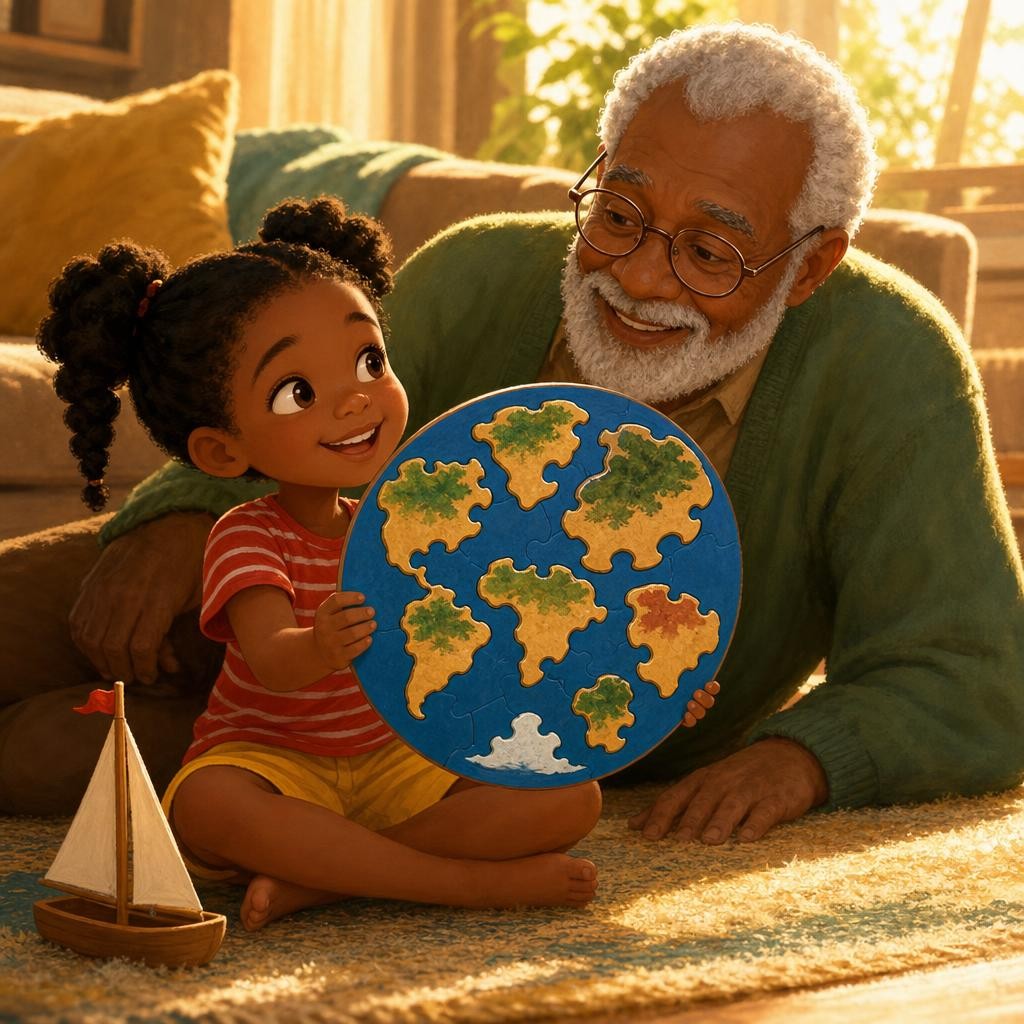
Mia holds up a big jigsaw puzzle of Earth and asks, "Why are there so many giant pieces of land?" Her grandpa smiles and says, "Those pieces are called continents — seven huge land homes floating on our one big ocean." Mia decides to visit each piece with her little toy boat, Pip.
Pip sails to Asia first, the largest piece of all. Mia sees enormous mountains, thick forests, and the longest rivers she has ever imagined. Asia is so big that more than half of all the people on Earth live there. "Wow," says Mia. "Asia is the biggest home of all!"
Next to Asia sits Africa, the second-largest continent. Mia notices wide golden grasslands, giant rivers, and the world's largest hot desert, the Sahara, which is nearly as big as the whole United States. Here is today's wow fact: Africa is the only continent that stretches from the northern half of Earth all the way to the southern half. "Africa reaches both sides of the middle!" says Mia.
Before Pip reaches the next land, Mia looks at the puzzle and predicts: "This small piece next to Asia must be tiny." But when she arrives, she is surprised! Europe has more than forty countries packed into it — more countries squeezed together than any other continent. "Small does not mean simple," laughs Mia.
Pip crosses a wide ocean and arrives at North America, where Mia feels right at home. Forests, prairies, deserts, and snowy lands all live here together. Mia notices something important to get right: North America and South America are two separate continents, not one, even though they touch at a narrow neck of land. "Two continents, two names — they are neighbors, not twins!" she says.
South America comes next. Pip floats past the Amazon River, the biggest river in the world by the amount of water it carries. The Amazon rainforest is so thick and green that Mia can almost smell the wet leaves. She spots a gentle correction in her old book: some books once drew South America directly below North America, but it is actually shifted quite far to the right. "Continents are not always where you expect!" says Mia.
Australia is the only continent that is also its very own country, all by itself in the ocean. Mia is delighted — one word names both the land and the nation. She spots kangaroos in her imagination bounding across the red sandy middle. "Try this at home," says Grandpa. "Find a round fruit like an orange and draw seven shapes on it — that is just like the seven continents on our round Earth!"
Last, Pip reaches Antarctica, the coldest and windiest place on the whole planet, all the way at the bottom of the globe. No people live there all year long, only penguins and scientists visiting for a while. Mia places the final puzzle piece in and steps back. Seven continents — Asia, Africa, Europe, North America, South America, Australia, Antarctica — fit together to make one beautiful world. "We all live on different pieces," she says warmly, "but we all share the same big blue ocean and the same round home."
Lesson scenes
A Puzzle of the World
Mia holds up a big jigsaw puzzle of Earth. "Why are there so many giant pieces of land?" she asks. Grandpa smiles: "Those pieces are called continents — seven huge land homes floating on one big ocean."
The Biggest Piece
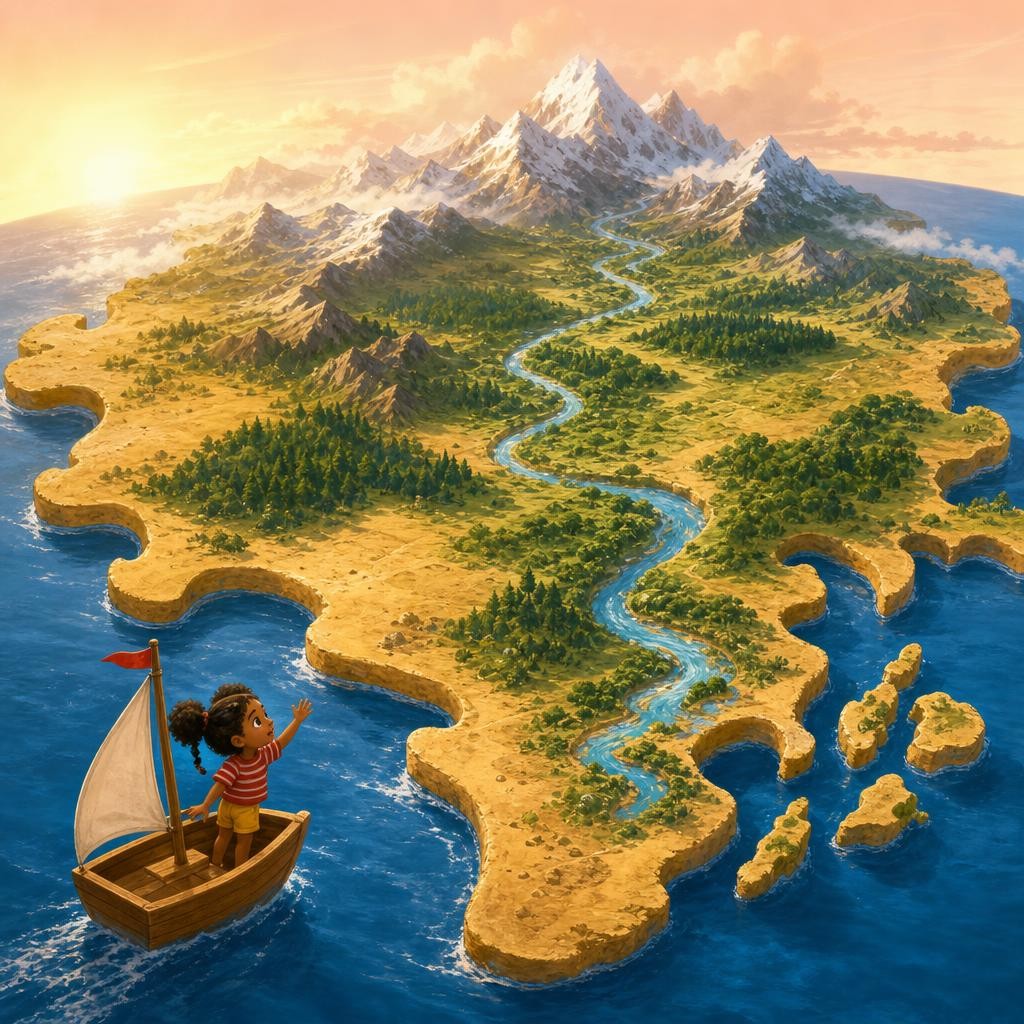
Pip sails to Asia first — the largest piece of all. Mia sees huge mountains, thick forests, and the longest rivers. More than half of all the people on Earth live here. "Wow, Asia is the biggest home of all!"
Reaching Both Sides
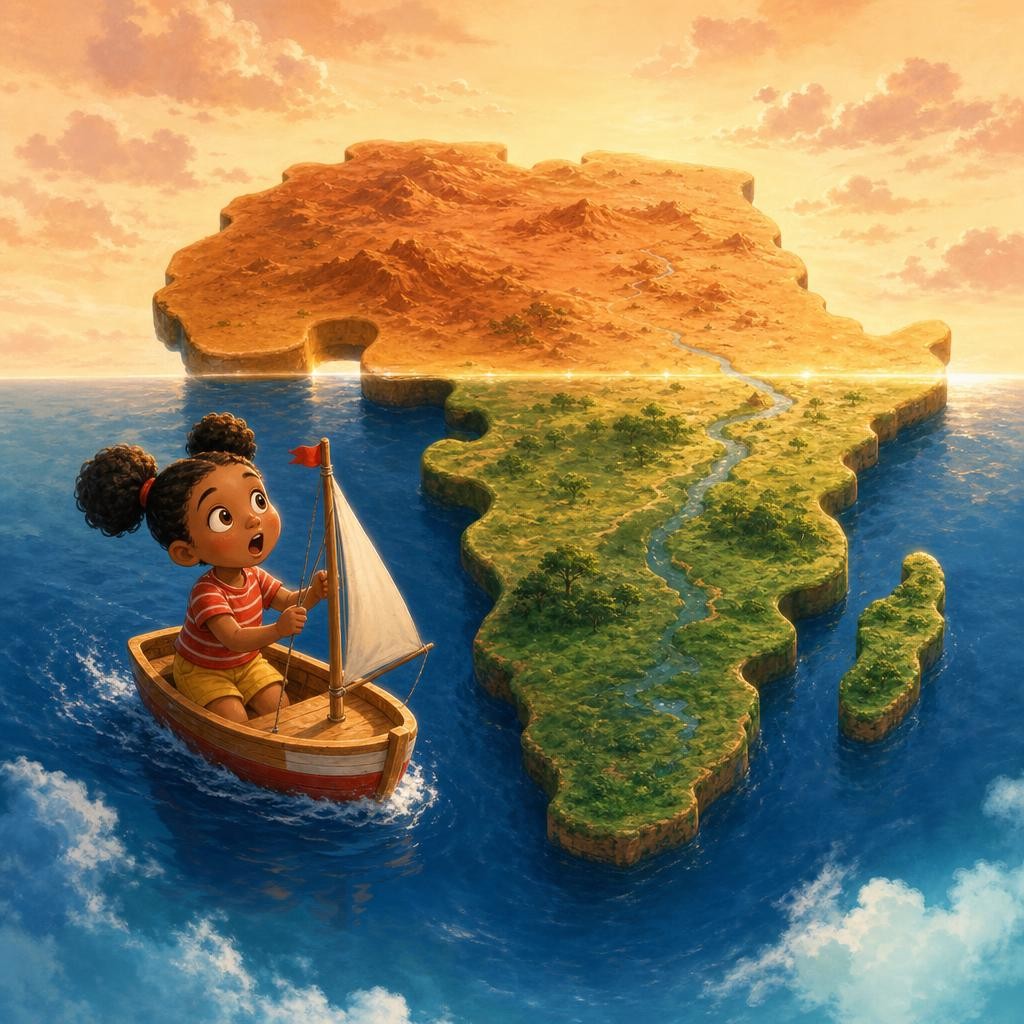
Next is Africa, the second-largest continent. Mia sees golden grasslands and the huge hot Sahara desert. Wow fact: Africa is the only continent that stretches from the top half of Earth all the way to the bottom half!
Small but Full
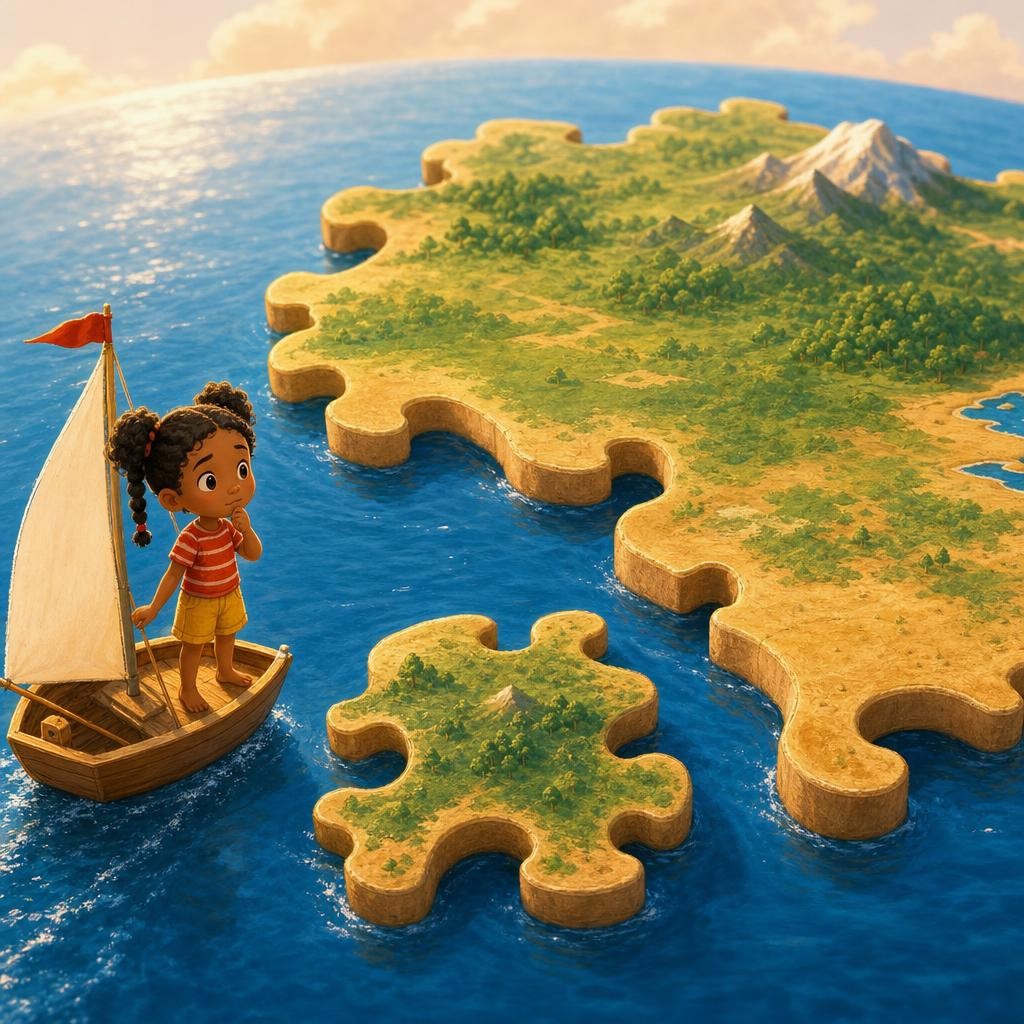
Mia looks at the puzzle and guesses: "This small piece must be tiny and simple." What do you think Pip will find on Europe?
More Than Forty Countries
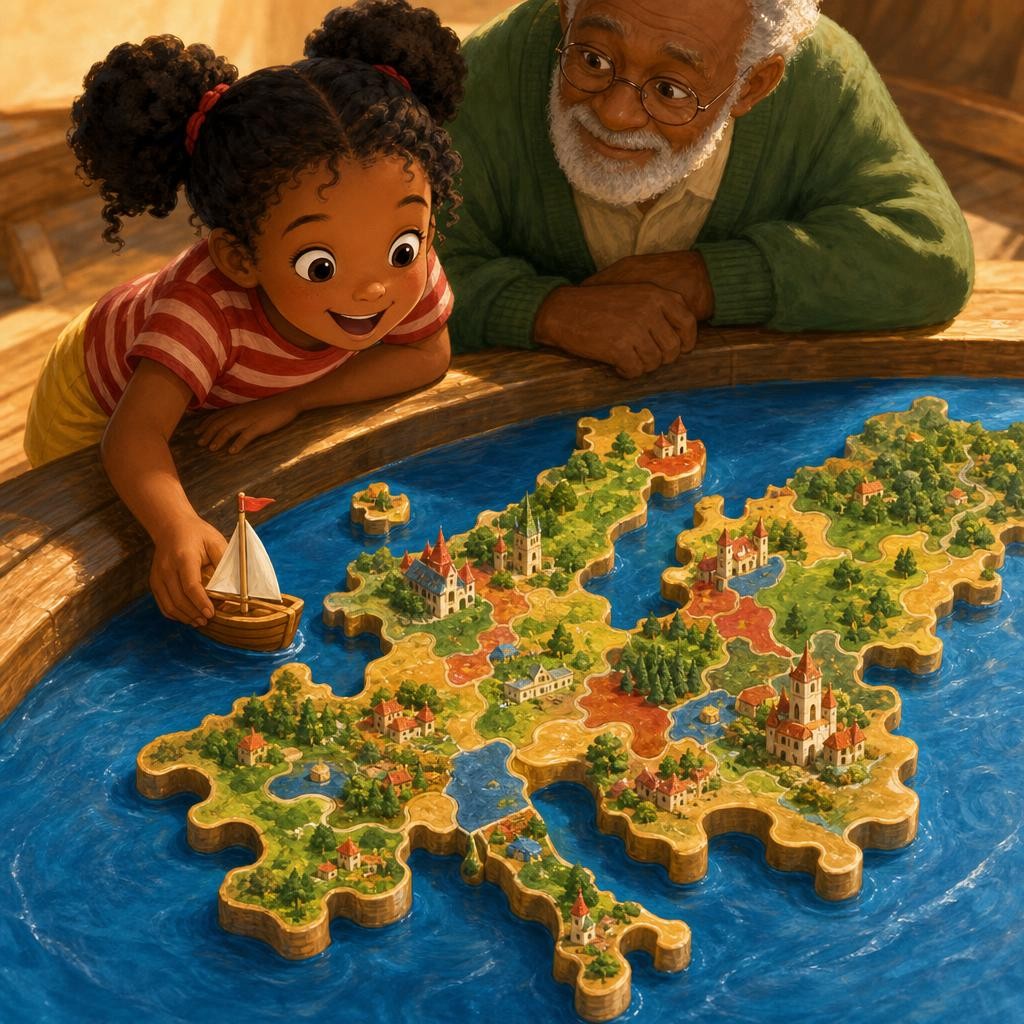
Surprise! Europe has more than forty countries packed close together — more countries squeezed in than any other continent. "Small does not mean simple!" laughs Mia.
Two Neighbors, Not Twins
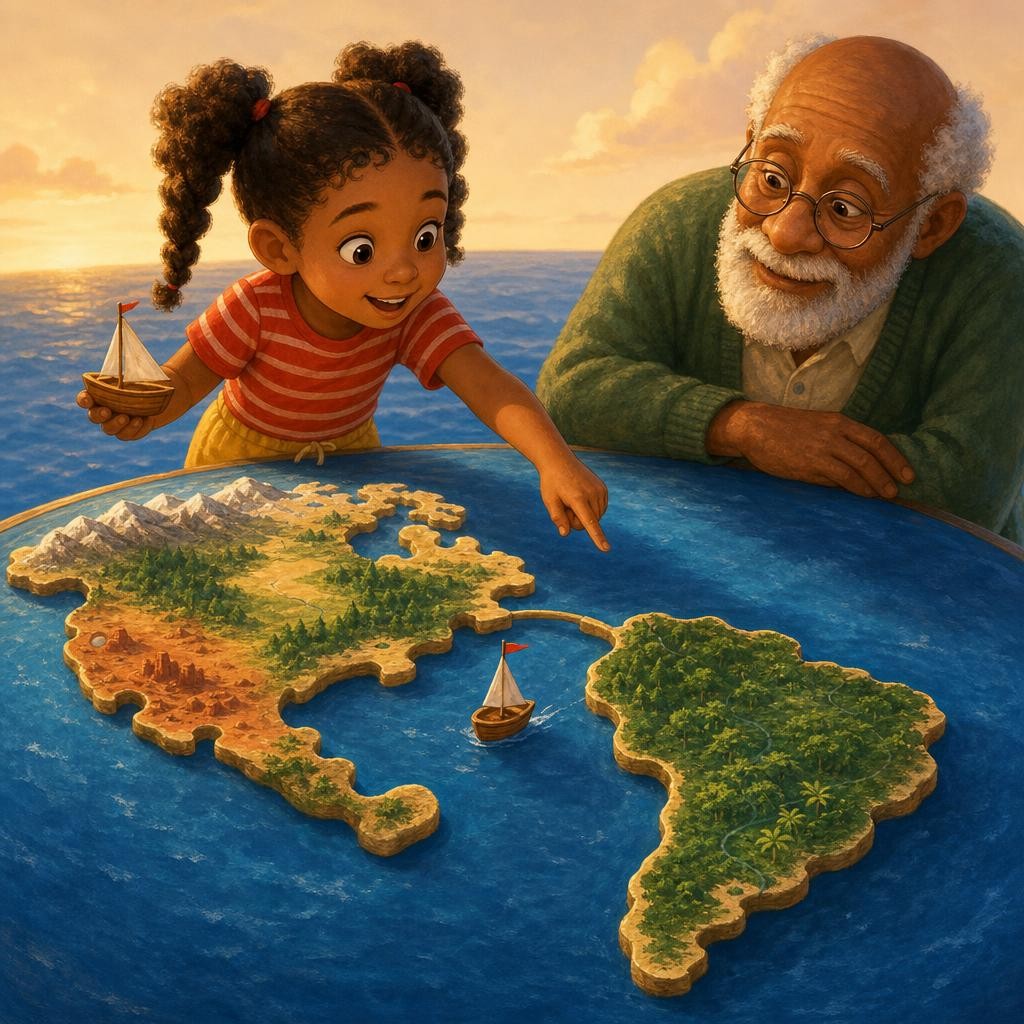
Pip crosses a wide ocean to North America — forests, prairies, deserts, and snowy lands all in one place. Important: North America and South America are TWO separate continents, joined by a narrow neck of land. South America also sits shifted far to the right of North America. "Neighbors, not twins!" says Mia.
A Land That Is Also a Country
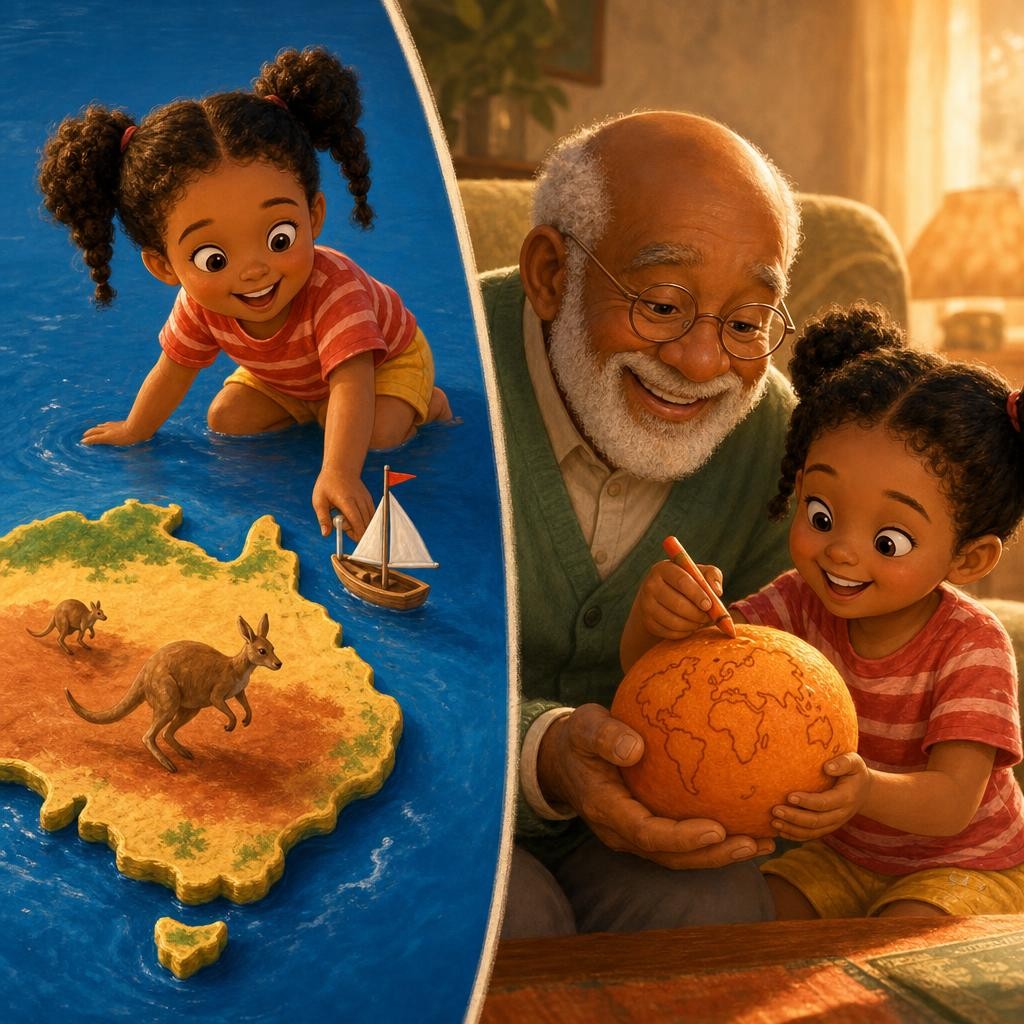
Australia is the only continent that is also its own country, all by itself in the ocean. Mia imagines kangaroos bounding across the red sandy middle. "Try this at home," says Grandpa. "Draw seven shapes on an orange — just like the seven continents on our round Earth!"
The Last Piece
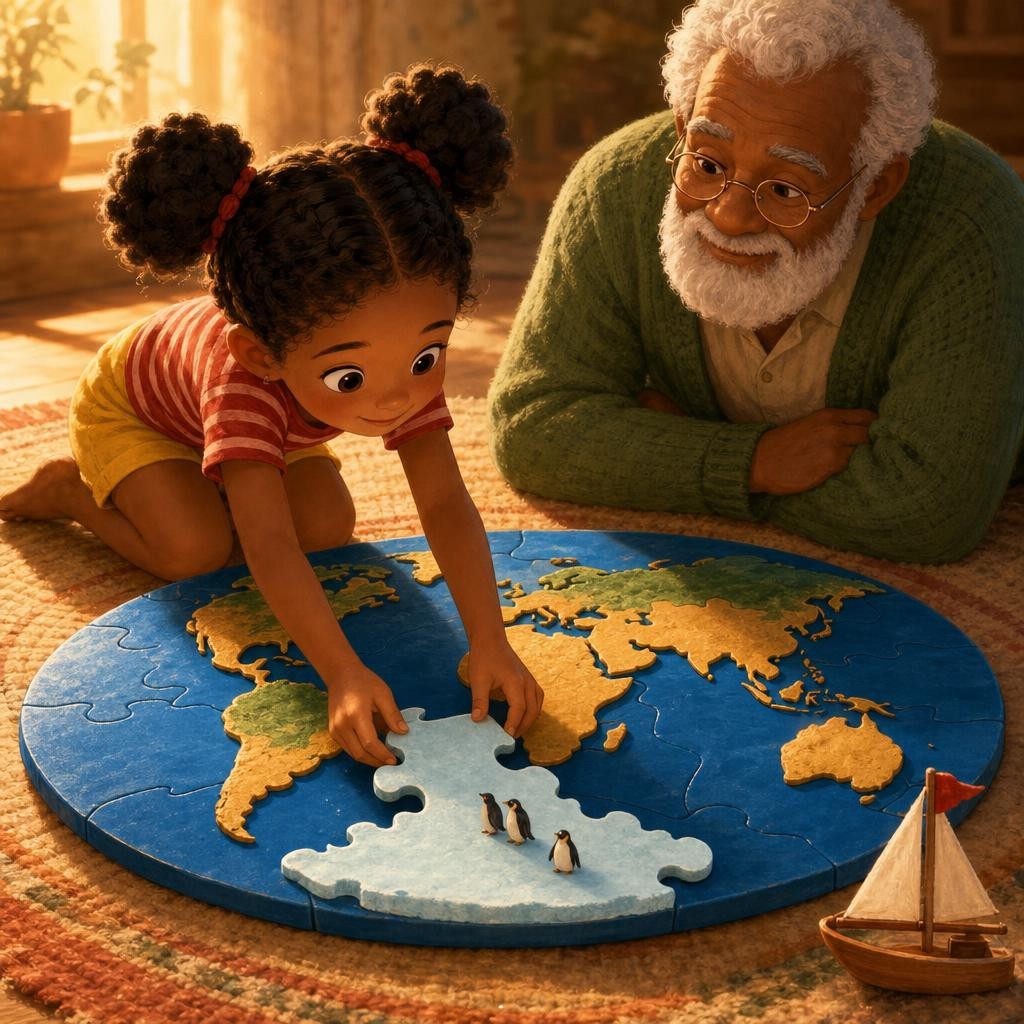
Last, Pip reaches Antarctica — the coldest, windiest place on Earth, with only penguins and visiting scientists. Mia clicks in the final puzzle piece. Seven continents fit together to make one beautiful world. "Different pieces," she says warmly, "but the same big blue ocean and the same round home."
Key takeaways
- There are seven continents on Earth.
- Asia is the biggest continent.
- North America and South America are two separate continents.
- Australia is both a continent and a country.
- Antarctica is the coldest and windiest continent.
Mini quiz
- Which continent is the biggest of all?
- Which continent is the coldest and windiest?
- How many continents fit together to make our world?
Common questions
What are the seven continents?
The seven continents are Asia, Africa, Europe, North America, South America, Australia, and Antarctica.
Which continent is the biggest?
Asia is the biggest continent.
Are North America and South America one continent?
In this lesson, North America and South America are taught as two separate continents.
Which continent is also a country?
Australia is both a continent and its own country.
Read-together tip
Look at a globe or world map together and ask your child to point to each continent as you say its name.