Nara's Day with Many Caring Hands
Before sunrise to bedtime, follow two-year-old Nara through an imagined ancient foraging camp where parents, grandparents, cousins, and friends share care. A historically cautious story inspired by documented forager patterns—not a claim about every family.
Ages 3-4 - 10 minute read - gentle - EN
Reviewed for child-safety · gentle by design · How our stories are made
Published 2026-07-16T08:07:51.899058
Read-aloud note
Ask what the character could try next, then accept the child answer without correcting too much.
Story
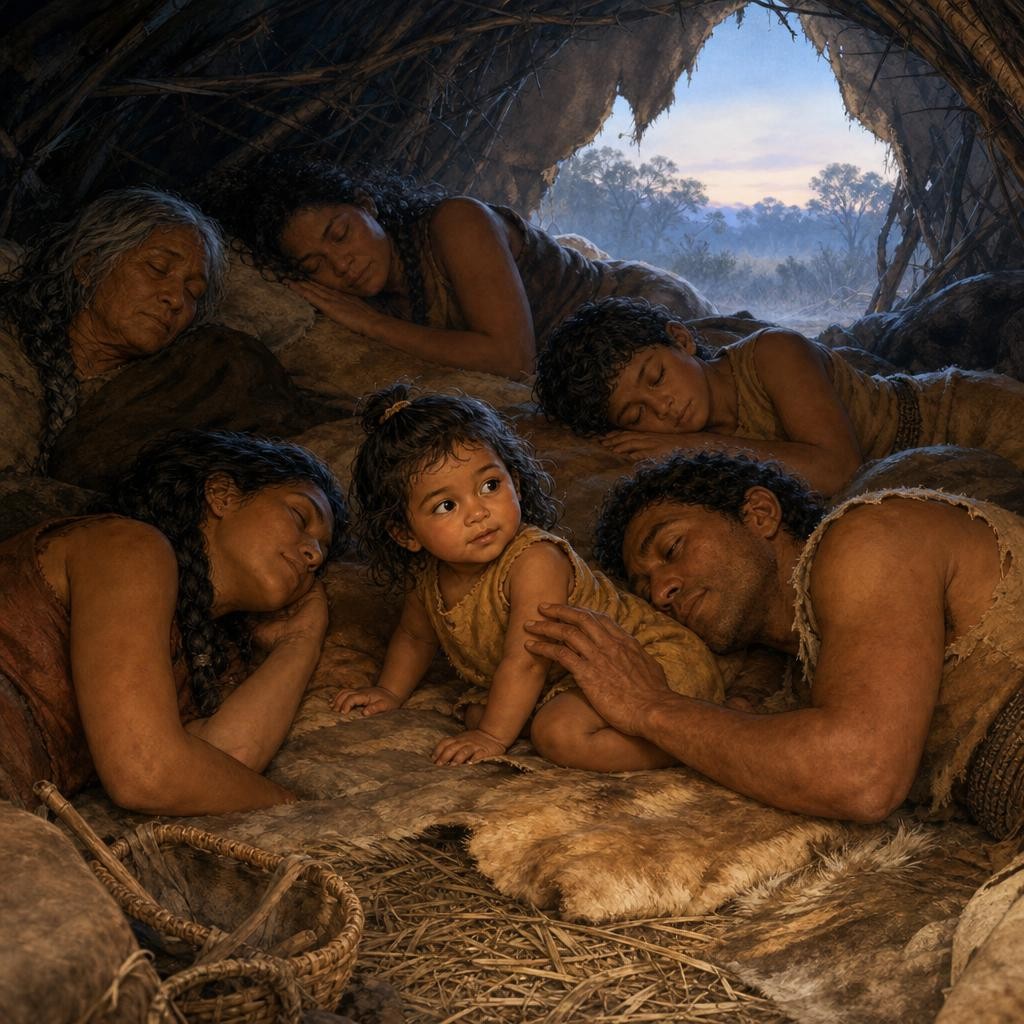
Long ago, at the edge of open woodland, two-year-old Nara slept on soft hides and dry grass among people she knew. Her mother lay on one side, an older cousin on the other, and her father close enough to touch. Beyond them, grandparents, aunts, uncles, and friends rested in the blue-gray dark. The night had not been perfectly quiet. A baby had fussed and been fed. Grandmother had tucked a covering around cold feet. Each time Nara stirred, familiar breathing or a gentle arm told her, You are here. We are here.
This is one imagined family, not a picture of every hunter-gatherer camp. People lived differently across places and centuries. Still, Nara's day can show one important possibility: a very small child growing inside a wide circle of care.
When Nara sat up with a grumble, Mother pulled her close. Sometimes Nara still drank her mother's milk; she also ate soft pieces of the food everyone shared. Father smoothed her hair. “Still dark,” he whispered—not as an order, but as a promise that someone had noticed.
Soon Nara wriggled toward the waking camp, so Father carried her outside. He knelt near the hearth while she watched from behind his arm. Orange light glowed under ash. Nara leaned forward. Father's hand stopped her at once.
“Stay back. The flame can hurt. A grown-up tends it.”
He moved her to a safe distance and gave her a cool, blunt stick. Nara drew circles in bare earth and poked only cold ash Father had carried far from the hearth. Her fingers turned gray. Grandmother laughed softly. “Our little earth artist.”
By sunrise, a woven mat held soft roasted root, ripe fruit chosen by adults, seed mash, and small tender pieces from the evening meal. In another landscape the foods would have been different. Today, this was breakfast.
Nara sat with her family. Mother tore a soft bite. Father cooled another. An aunt noticed the piece Nara dropped. Her older cousin offered a little wooden cup. When Nara wandered to Grandmother's knee, Grandmother shared from her own bowl and wiped the mash from Nara's thumb.
No one had made a completely separate meal called toddler food. The adults changed the size and texture so Nara could eat safely, then watched her appetite. Her mother mattered deeply, but feeding, wiping, carrying, and noticing did not belong to Mother alone. Around Nara, care moved from hand to hand as naturally as the breakfast bowl.
After breakfast, Mother tied on a woven carrying bag and joined other skilled adults who would collect foods they knew well. On a short, easy day, Nara might go too. Toddlers learned by accompanying people, stopping often, and watching. But today's route crossed rough ground and would last for hours.
Nara ran after Mother. “I go!”
Mother knelt, touched Nara's chest, and pointed to where the sun would climb. “You stay today. I come back when the sun is there.”
Nara understood the leaving more than the returning. She cried and clung. Nobody called her babyish. Aunt lifted her securely. Father stayed close. Her cousin made an absurdly solemn bird dance until one of Nara's sobs became a surprised hiccup.
The leaving still hurt. Nara was not abandoned to practice independence, and the whole camp did not have to stop. Several people carried the feeling with her while necessary work continued.
When Nara's tears slowed, Aunt set her near a loose group of children. Adults worked within sight and hearing, but no one planned every minute of play. One child tucked a bundle of leaves like a baby. Two others made a tiny shelter from fallen branches. Another pressed a smooth stick into soft ground as if digging for roots.
Nara copied them. She laid two short branches down, knocked them apart, and laid them down again. Her older cousin balanced a third branch across the top. Nara tried. It fell. She shouted and flung it aside.
Her cousin did not give a speech. They quietly set the supports upright and waited. Nara watched more closely. This time she placed the branch with both hands. It stayed.
The shelter was no bigger than a basket. To Nara, it was serious work. Play let her rehearse building, gathering, caring, cooperating, failing, and trying once more.
Later, an older child brought a few soft pieces of fruit to the playgroup. Before the pieces were divided, Nara grabbed a fistful. Another toddler pushed her. Nara yelled and lifted her hand to hit back.
Her cousin stepped between them. One calm hand blocked the swat; the other opened Nara's fist without hurting her. The cousin split the fruit into two small bowls. “His. Yours.”
Nara protested. The bowls did not change. An aunt nearby smiled and said, “Good thing the bowl has more than one side.” The humor was warm, not cruel. Nobody made Nara the camp joke, and nobody pretended the grabbing was fine.
At last Nara sat. She ate her portion while the other toddler ate his. Sharing here was more than a nice idea. A person with food today might need someone else's food tomorrow. Nara began learning that truth through hands, faces, and repeated small repairs long before she could explain it in words.
Near midday, Father repaired a wooden carrying frame. Nara planted herself beside him. He did not hide every real tool forever; one day she would need to understand how work was done. But understanding began with a trusted grown-up judging the risk.
When Nara reached across his work space, Father kept the keen stone edge closed in his own hand and moved it farther away. “Not this.” He gave her a smooth scrap of wood and a rounded rubbing stone. “This is yours.”
Nara rubbed stone on wood, accomplishing almost nothing. Father did not correct every motion. Once, he slowed his own hand so she could see the angle. Nara changed her grip. Scrrrape, scrrrape.
From far away, the scene might have looked relaxed. Up close, Father was always measuring: a harmless mistake, let it happen; a serious danger, stop it now. Nara received both freedom and protection, moment by moment.
When Mother returned, Nara ran straight into her knees. Mother set down her load before lifting Nara, as if the welcome needed no polite words. Later, a smaller group took a short path to collect water. This time Nara went too.
She walked three quick steps, then stopped for a striped stone. Five more steps, then a print in mud. Adults named some things and let other discoveries stay quiet. Her cousin pointed out a thorny branch before Nara touched it, and the group went around.
At the shallow edge, Mother held Nara's hand. “We stay here with a grown-up. We never go into deep water.” Nara stamped one foot in the thin, clear wash and squealed at the splash.
When the group needed to move faster, her cousin carried her in a soft sling. Toddler freedom did not mean matching an adult's legs. Nara's day moved back and forth between her own busy feet and somebody else's steady arms.
On the way home, Nara's steps grew crooked. Mother reached down. Nara shouted, “No carry!” Then she sat in the path and shouted, “No walk!” When Mother lifted her, Nara kicked.
Mother did not treat a two-year-old's exhaustion as a grand challenge to her authority. She held Nara securely and spoke in the same voice she used before the tears. “You are tired. You do not want arms. We still have to reach camp before dark, so I will carry you.”
The limit was firm; the anger was not. Father took Mother's bag. Aunt shifted the water container. Her cousin walked close enough for Nara to see a familiar face. The group kept moving.
Nara cried against Mother's shoulder. Then the kicks became heavy legs. Her fist opened. Before the camp came into view, her cheek rested on Mother's back. Being understood had not made the necessary limit disappear. It had made the limit bearable.
At dusk, people shared the day's food and news. Then Grandmother told a story about someone who ignored good advice, wandered beyond the familiar path, and had to be guided home. Nara understood the running feet, the funny voices, and the relieved embrace better than the lesson. Still, stories gave children words for social rules, remembered places, and dangers that could not be learned by copying alone.
Nara fell asleep before the ending. Father lifted her. Grandmother tucked a covering around her legs. Mother lay down beside her, and the breathing circle gathered again.
Nara's world was not easy or idyllic. Illness, hunger, injury, conflict, grief, and harsh treatment could exist, and no two foraging peoples parented in exactly the same way. Researchers' observations of recent hunter-gatherer communities can suggest ancient possibilities; they are not a window copied straight into prehistory.
Yet Nara's imagined day lets one pattern glow: a toddler need not be one exhausted adult's private task. Many hands comforted her, fed her, set limits, made room for mistakes, and showed her how to belong. Little by little, she would learn to care for the circle that cared for her.
Scenes
Before Sunrise
Long ago, at the edge of open woodland, two-year-old Nara slept on soft hides and dry grass among people she knew. Her mother lay on one side, an older cousin on the other, and her father close enough to touch. Beyond them, grandparents, aunts, uncles, and friends rested in the blue-gray dark. The night had not been perfectly quiet. A baby had fussed and been fed. Grandmother had tucked a covering around cold feet. Each time Nara stirred, familiar breathing or a gentle arm told her, You are here. We are here. This is one imagined family, not a picture of every hunter-gatherer camp. People lived differently across places and centuries. Still, Nara's day can show one important possibility: a very small child growing inside a wide circle of care.
The First Boundary
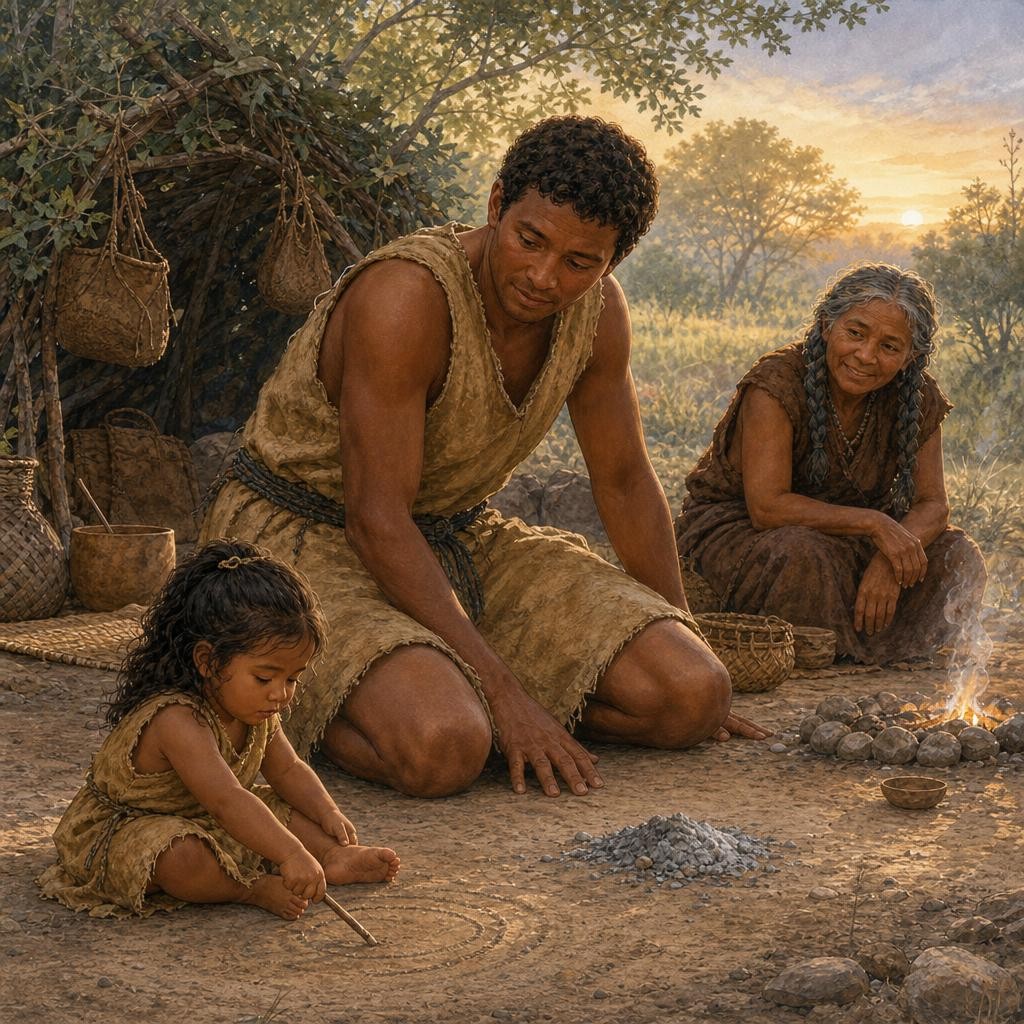
When Nara sat up with a grumble, Mother pulled her close. Sometimes Nara still drank her mother's milk; she also ate soft pieces of the food everyone shared. Father smoothed her hair. “Still dark,” he whispered—not as an order, but as a promise that someone had noticed. Soon Nara wriggled toward the waking camp, so Father carried her outside. He knelt near the hearth while she watched from behind his arm. Orange light glowed under ash. Nara leaned forward. Father's hand stopped her at once. “Stay back. The flame can hurt. A grown-up tends it.” He moved her to a safe distance and gave her a cool, blunt stick. Nara drew circles in bare earth and poked only cold ash Father had carried far from the hearth. Her fingers turned gray. Grandmother laughed softly. “Our little earth artist.”
Breakfast Belongs to Everyone
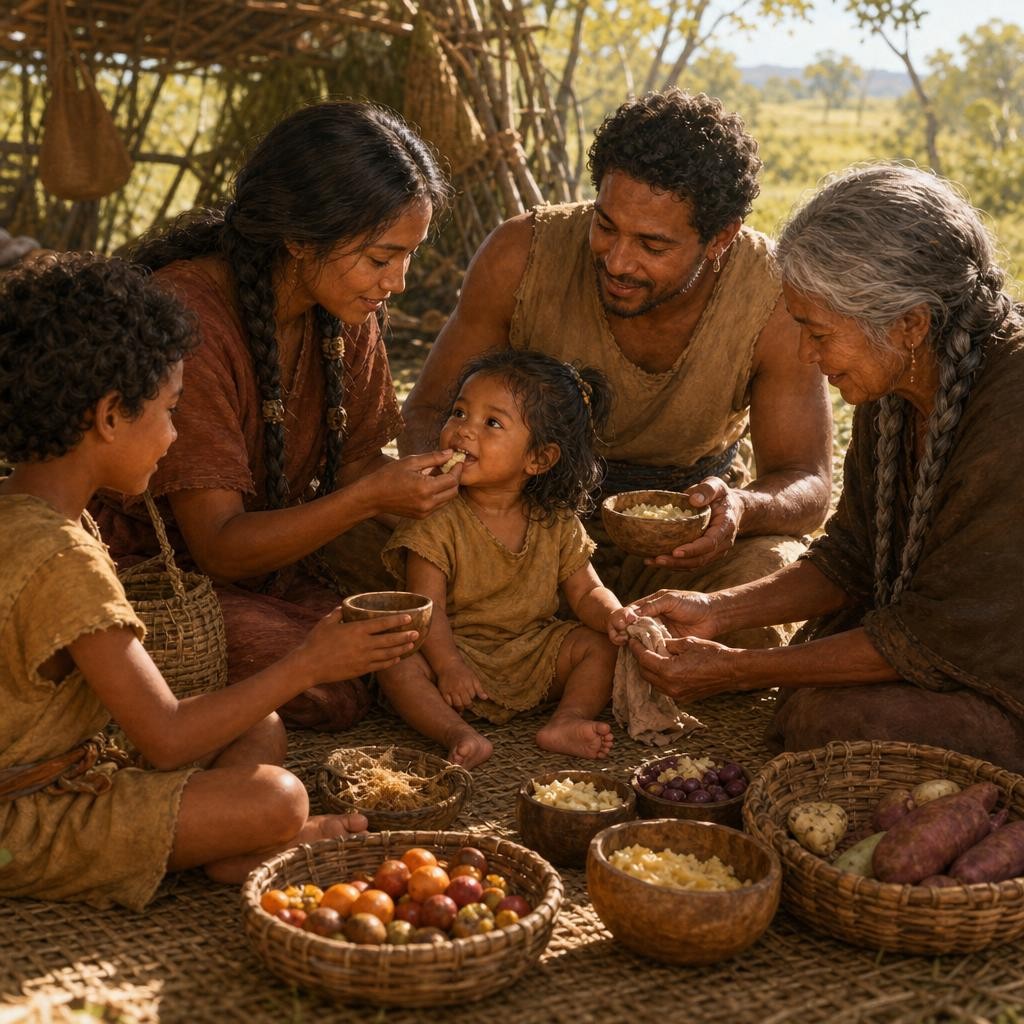
By sunrise, a woven mat held soft roasted root, ripe fruit chosen by adults, seed mash, and small tender pieces from the evening meal. In another landscape the foods would have been different. Today, this was breakfast. Nara sat with her family. Mother tore a soft bite. Father cooled another. An aunt noticed the piece Nara dropped. Her older cousin offered a little wooden cup. When Nara wandered to Grandmother's knee, Grandmother shared from her own bowl and wiped the mash from Nara's thumb. No one had made a completely separate meal called toddler food. The adults changed the size and texture so Nara could eat safely, then watched her appetite. Her mother mattered deeply, but feeding, wiping, carrying, and noticing did not belong to Mother alone. Around Nara, care moved from hand to hand as naturally as the breakfast bowl.
Mother Goes Beyond the Ridge
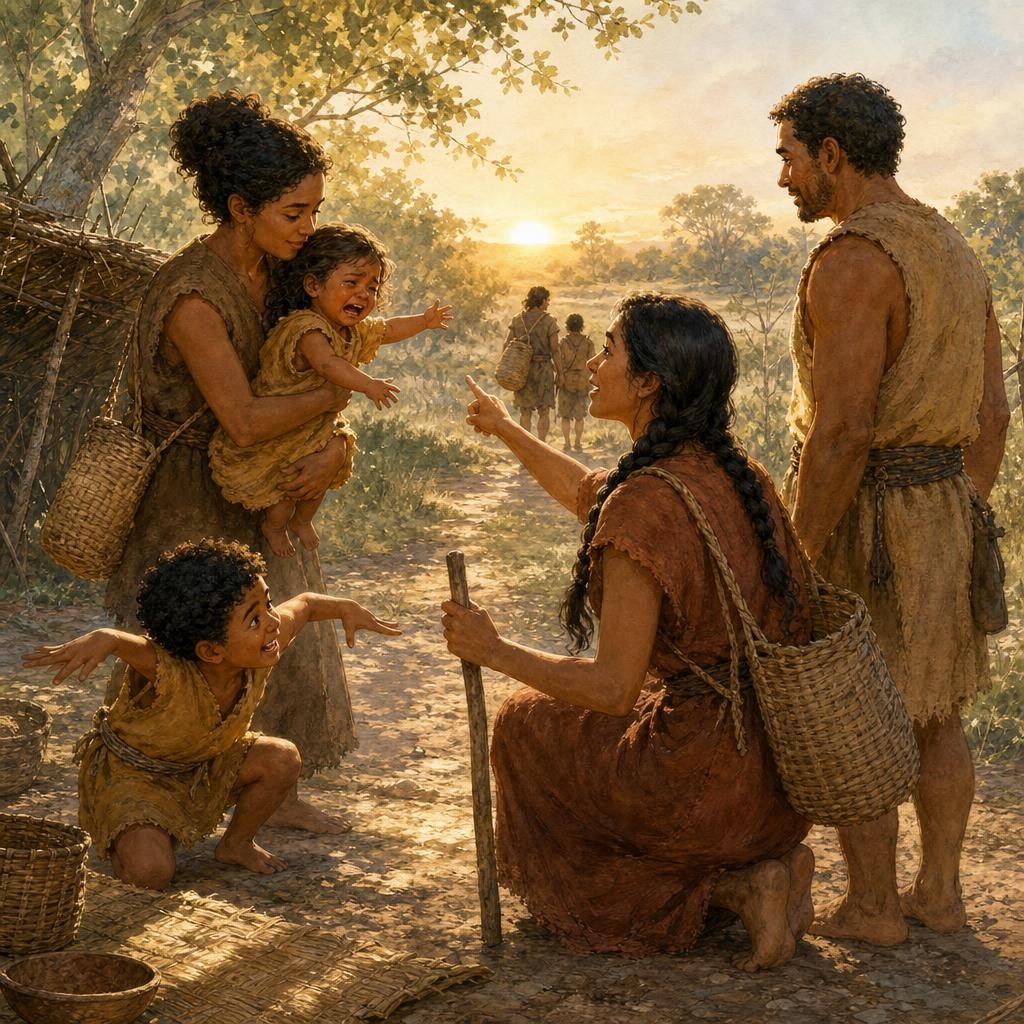
After breakfast, Mother tied on a woven carrying bag and joined other skilled adults who would collect foods they knew well. On a short, easy day, Nara might go too. Toddlers learned by accompanying people, stopping often, and watching. But today's route crossed rough ground and would last for hours. Nara ran after Mother. “I go!” Mother knelt, touched Nara's chest, and pointed to where the sun would climb. “You stay today. I come back when the sun is there.” Nara understood the leaving more than the returning. She cried and clung. Nobody called her babyish. Aunt lifted her securely. Father stayed close. Her cousin made an absurdly solemn bird dance until one of Nara's sobs became a surprised hiccup. The leaving still hurt. Nara was not abandoned to practice independence, and the whole camp did not have to stop. Several people carried the feeling with her while necessary work continued.
The Children's Little Camp
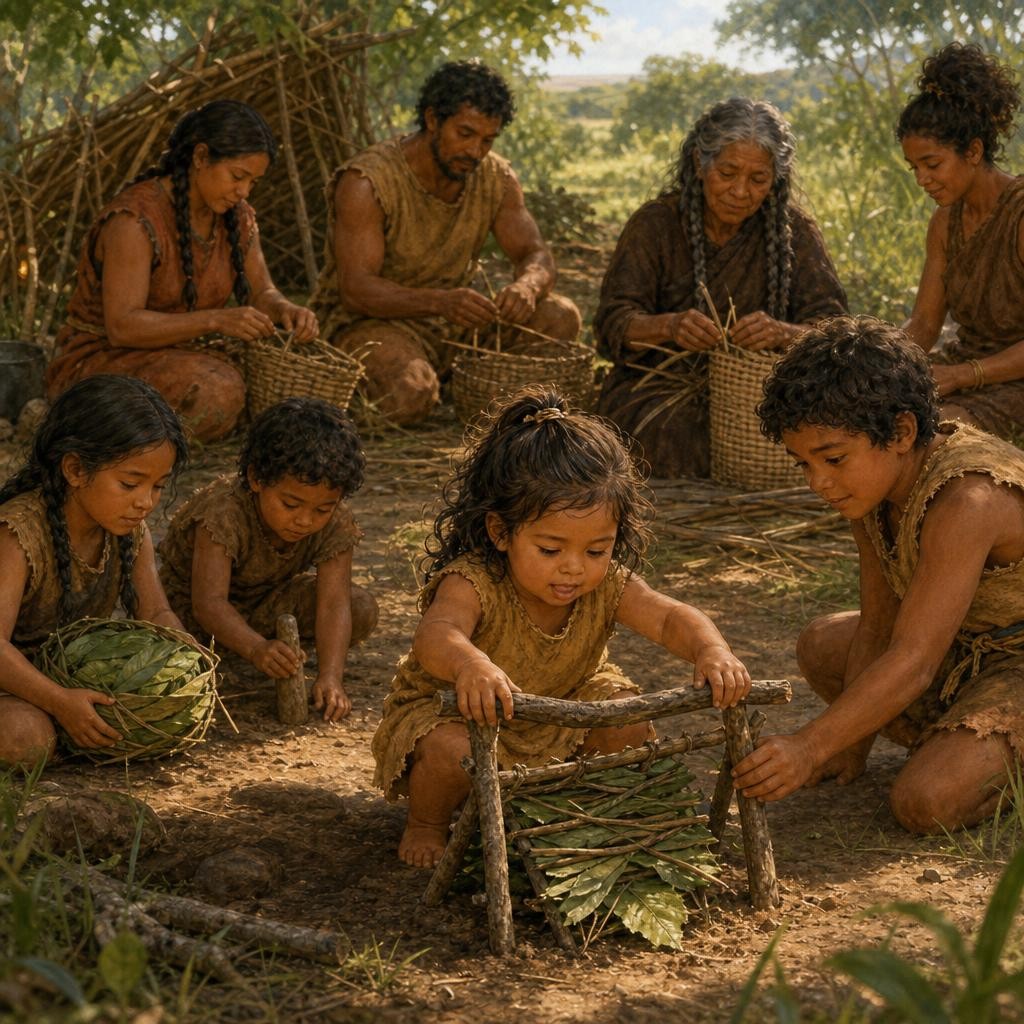
When Nara's tears slowed, Aunt set her near a loose group of children. Adults worked within sight and hearing, but no one planned every minute of play. One child tucked a bundle of leaves like a baby. Two others made a tiny shelter from fallen branches. Another pressed a smooth stick into soft ground as if digging for roots. Nara copied them. She laid two short branches down, knocked them apart, and laid them down again. Her older cousin balanced a third branch across the top. Nara tried. It fell. She shouted and flung it aside. Her cousin did not give a speech. They quietly set the supports upright and waited. Nara watched more closely. This time she placed the branch with both hands. It stayed. The shelter was no bigger than a basket. To Nara, it was serious work. Play let her rehearse building, gathering, caring, cooperating, failing, and trying once more.
One Handful Too Many
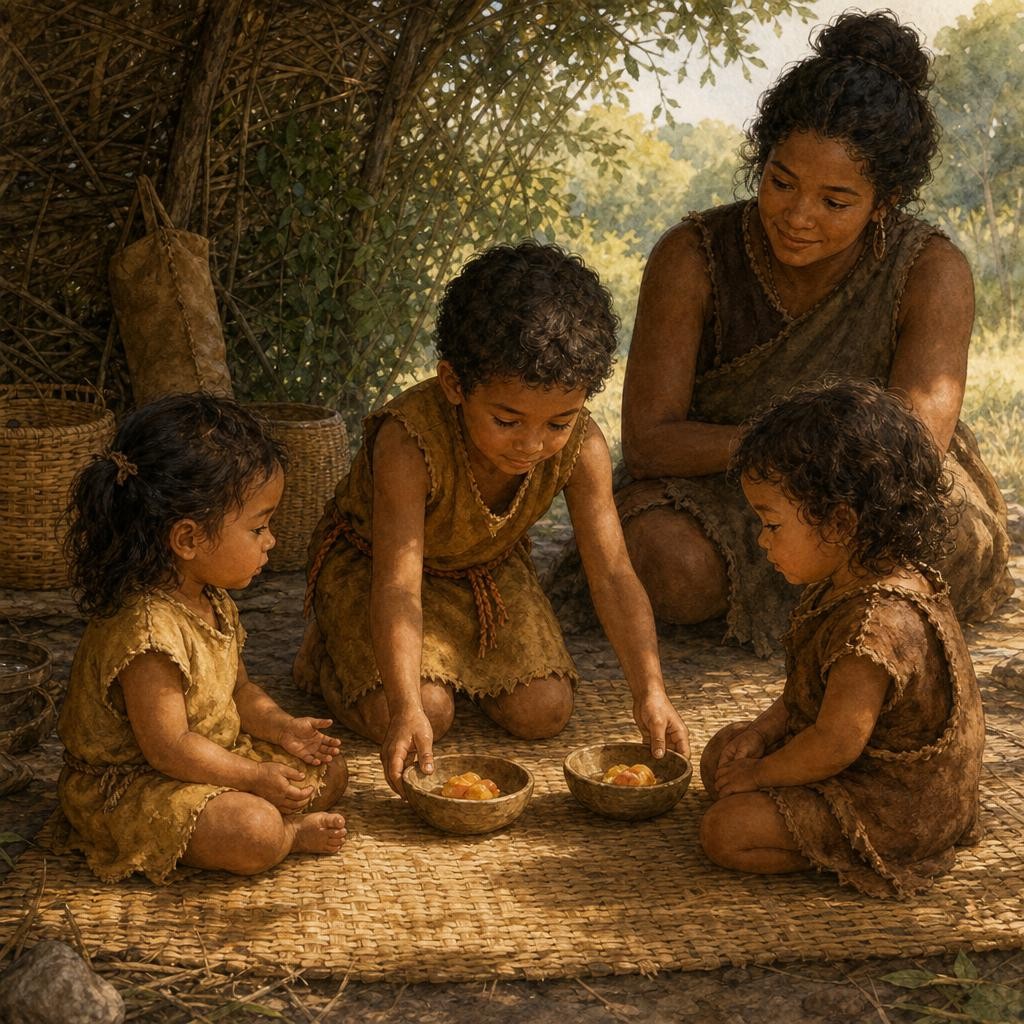
Later, an older child brought a few soft pieces of fruit to the playgroup. Before the pieces were divided, Nara grabbed a fistful. Another toddler pushed her. Nara yelled and lifted her hand to hit back. Her cousin stepped between them. One calm hand blocked the swat; the other opened Nara's fist without hurting her. The cousin split the fruit into two small bowls. “His. Yours.” Nara protested. The bowls did not change. An aunt nearby smiled and said, “Good thing the bowl has more than one side.” The humor was warm, not cruel. Nobody made Nara the camp joke, and nobody pretended the grabbing was fine. At last Nara sat. She ate her portion while the other toddler ate his. Sharing here was more than a nice idea. A person with food today might need someone else's food tomorrow. Nara began learning that truth through hands, faces, and repeated small repairs long before she could explain it in words.
Beside Father's Working Hands
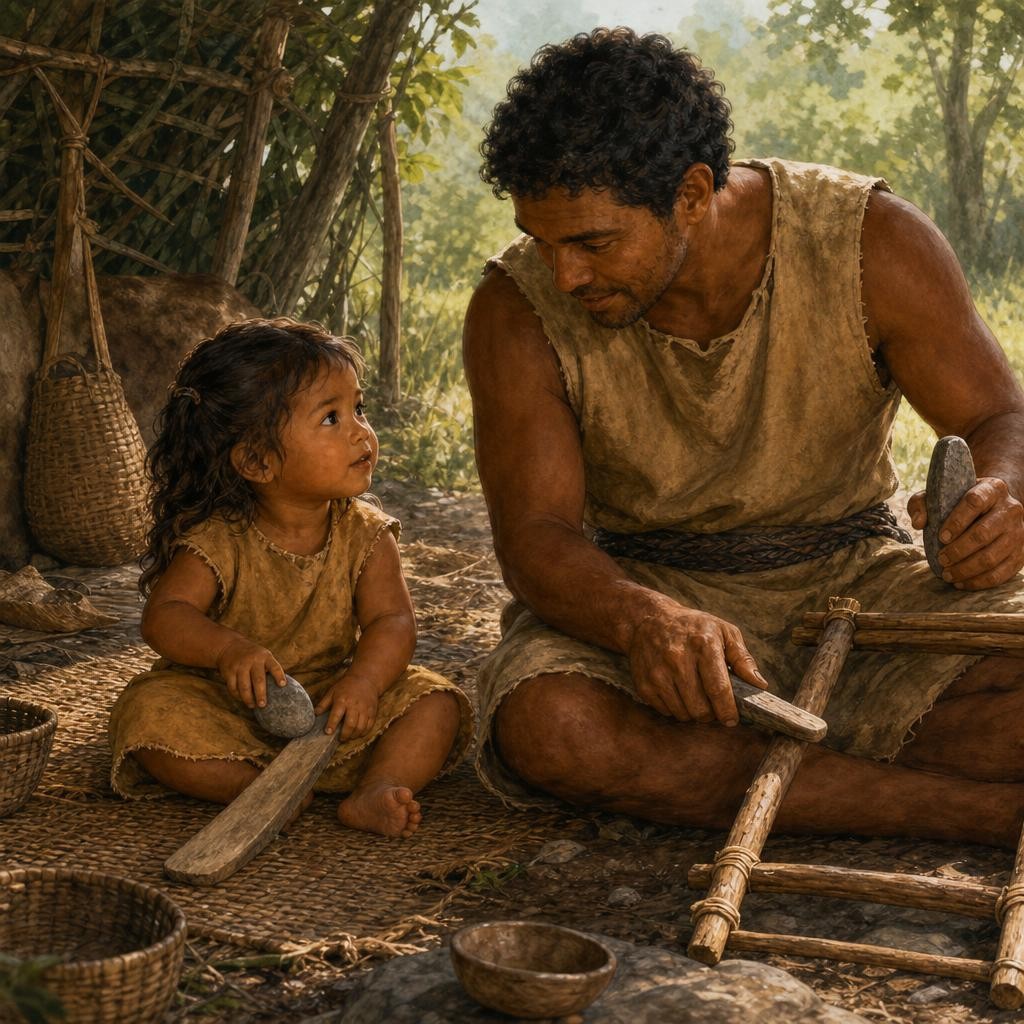
Near midday, Father repaired a wooden carrying frame. Nara planted herself beside him. He did not hide every real tool forever; one day she would need to understand how work was done. But understanding began with a trusted grown-up judging the risk. When Nara reached across his work space, Father kept the keen stone edge closed in his own hand and moved it farther away. “Not this.” He gave her a smooth scrap of wood and a rounded rubbing stone. “This is yours.” Nara rubbed stone on wood, accomplishing almost nothing. Father did not correct every motion. Once, he slowed his own hand so she could see the angle. Nara changed her grip. Scrrrape, scrrrape. From far away, the scene might have looked relaxed. Up close, Father was always measuring: a harmless mistake, let it happen; a serious danger, stop it now. Nara received both freedom and protection, moment by moment.
The Path of Small Discoveries
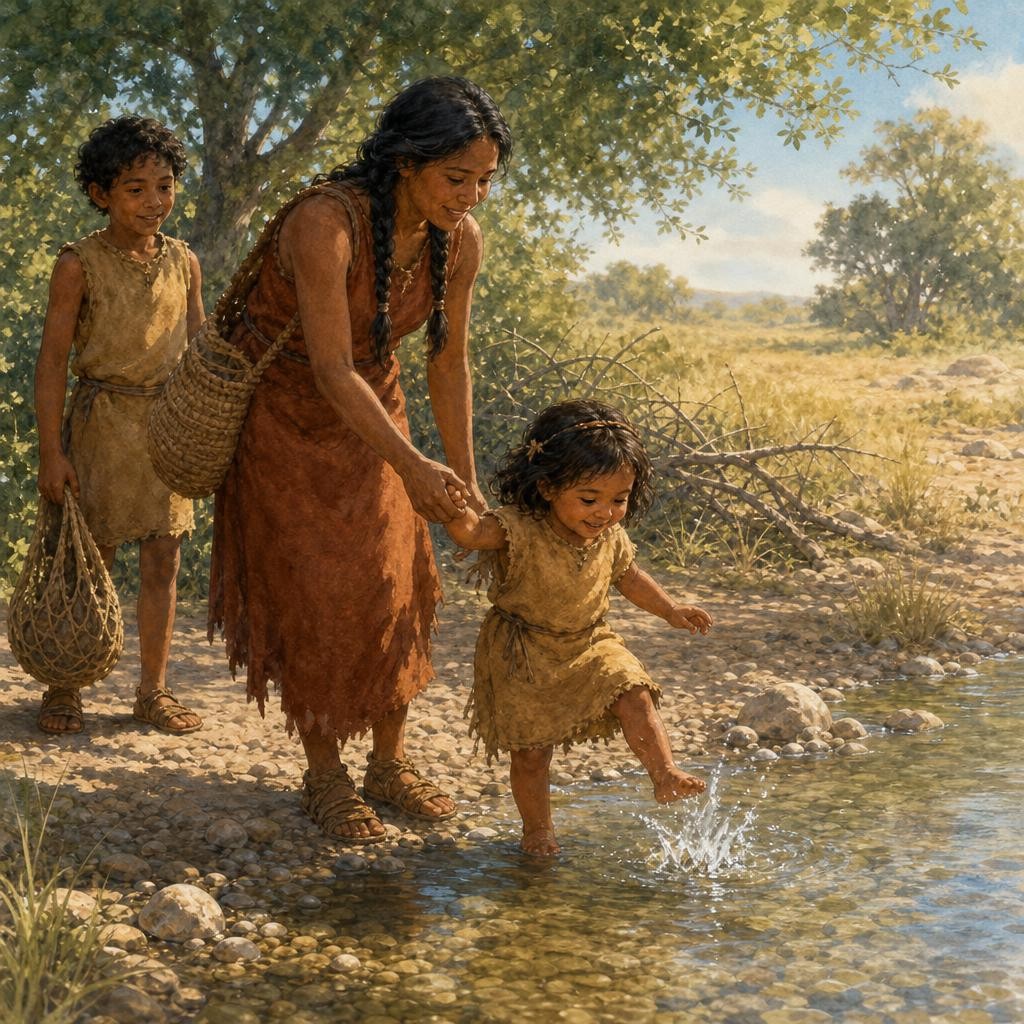
When Mother returned, Nara ran straight into her knees. Mother set down her load before lifting Nara, as if the welcome needed no polite words. Later, a smaller group took a short path to collect water. This time Nara went too. She walked three quick steps, then stopped for a striped stone. Five more steps, then a print in mud. Adults named some things and let other discoveries stay quiet. Her cousin pointed out a thorny branch before Nara touched it, and the group went around. At the shallow edge, Mother held Nara's hand. “We stay here with a grown-up. We never go into deep water.” Nara stamped one foot in the thin, clear wash and squealed at the splash. When the group needed to move faster, her cousin carried her in a soft sling. Toddler freedom did not mean matching an adult's legs. Nara's day moved back and forth between her own busy feet and somebody else's steady arms.
Too Tired to Choose
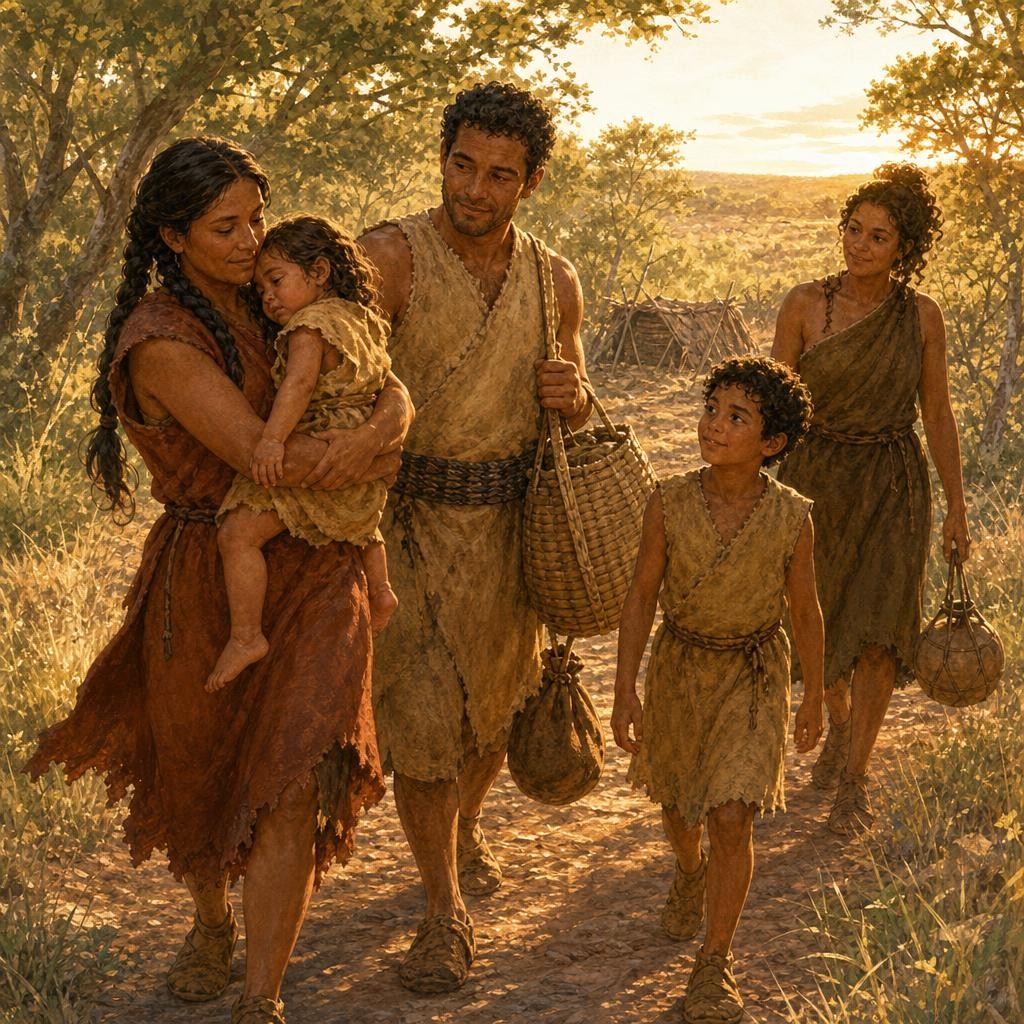
On the way home, Nara's steps grew crooked. Mother reached down. Nara shouted, “No carry!” Then she sat in the path and shouted, “No walk!” When Mother lifted her, Nara kicked. Mother did not treat a two-year-old's exhaustion as a grand challenge to her authority. She held Nara securely and spoke in the same voice she used before the tears. “You are tired. You do not want arms. We still have to reach camp before dark, so I will carry you.” The limit was firm; the anger was not. Father took Mother's bag. Aunt shifted the water container. Her cousin walked close enough for Nara to see a familiar face. The group kept moving. Nara cried against Mother's shoulder. Then the kicks became heavy legs. Her fist opened. Before the camp came into view, her cheek rested on Mother's back. Being understood had not made the necessary limit disappear. It had made the limit bearable.
The Circle Closes
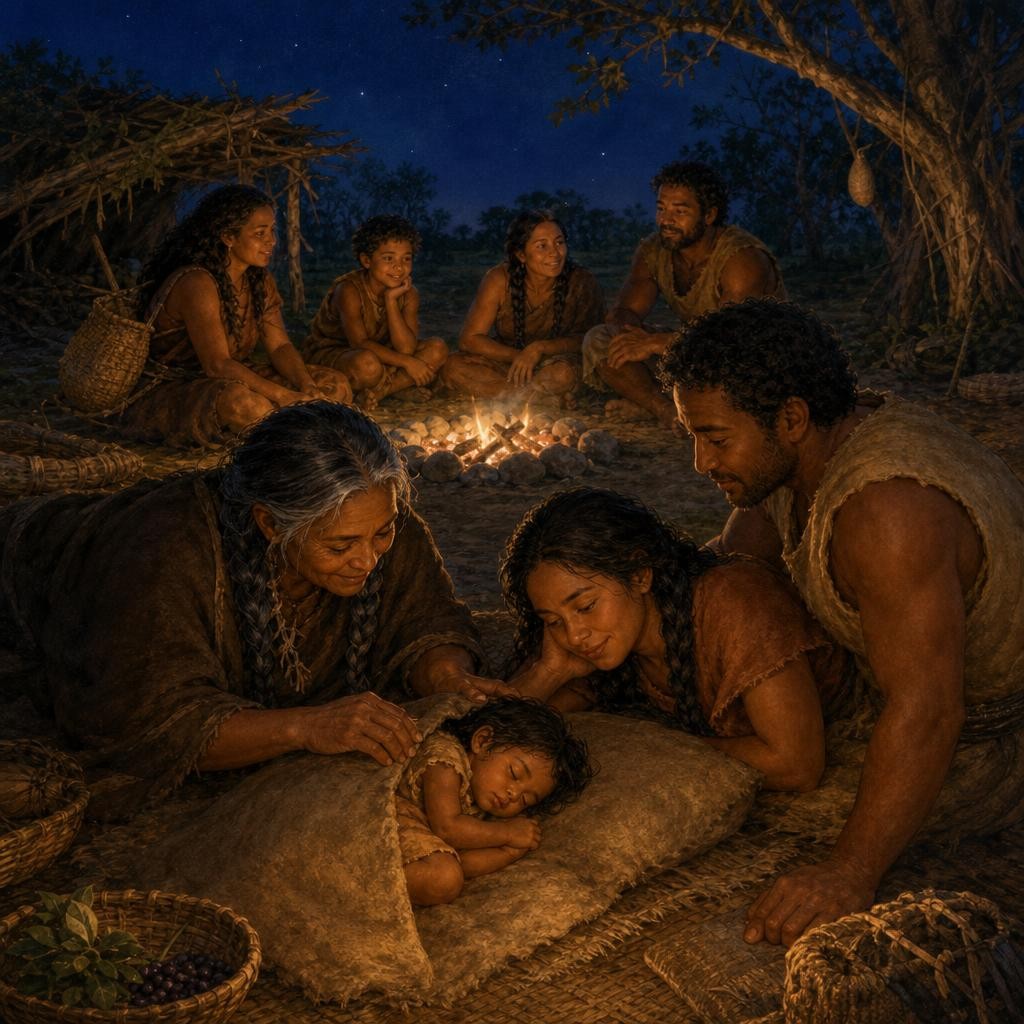
At dusk, people shared the day's food and news. Then Grandmother told a story about someone who ignored good advice, wandered beyond the familiar path, and had to be guided home. Nara understood the running feet, the funny voices, and the relieved embrace better than the lesson. Still, stories gave children words for social rules, remembered places, and dangers that could not be learned by copying alone. Nara fell asleep before the ending. Father lifted her. Grandmother tucked a covering around her legs. Mother lay down beside her, and the breathing circle gathered again. Nara's world was not easy or idyllic. Illness, hunger, injury, conflict, grief, and harsh treatment could exist, and no two foraging peoples parented in exactly the same way. Researchers' observations of recent hunter-gatherer communities can suggest ancient possibilities; they are not a window copied straight into prehistory. Yet Nara's imagined day lets one pattern glow: a toddler need not be one exhausted adult's private task. Many hands comforted her, fed her, set limits, made room for mistakes, and showed her how to belong. Little by little, she would learn to care for the circle that cared for her.
Read-aloud note
Ask what the character could try next, then accept the child answer without correcting too much.