The Time-Travel Zoo
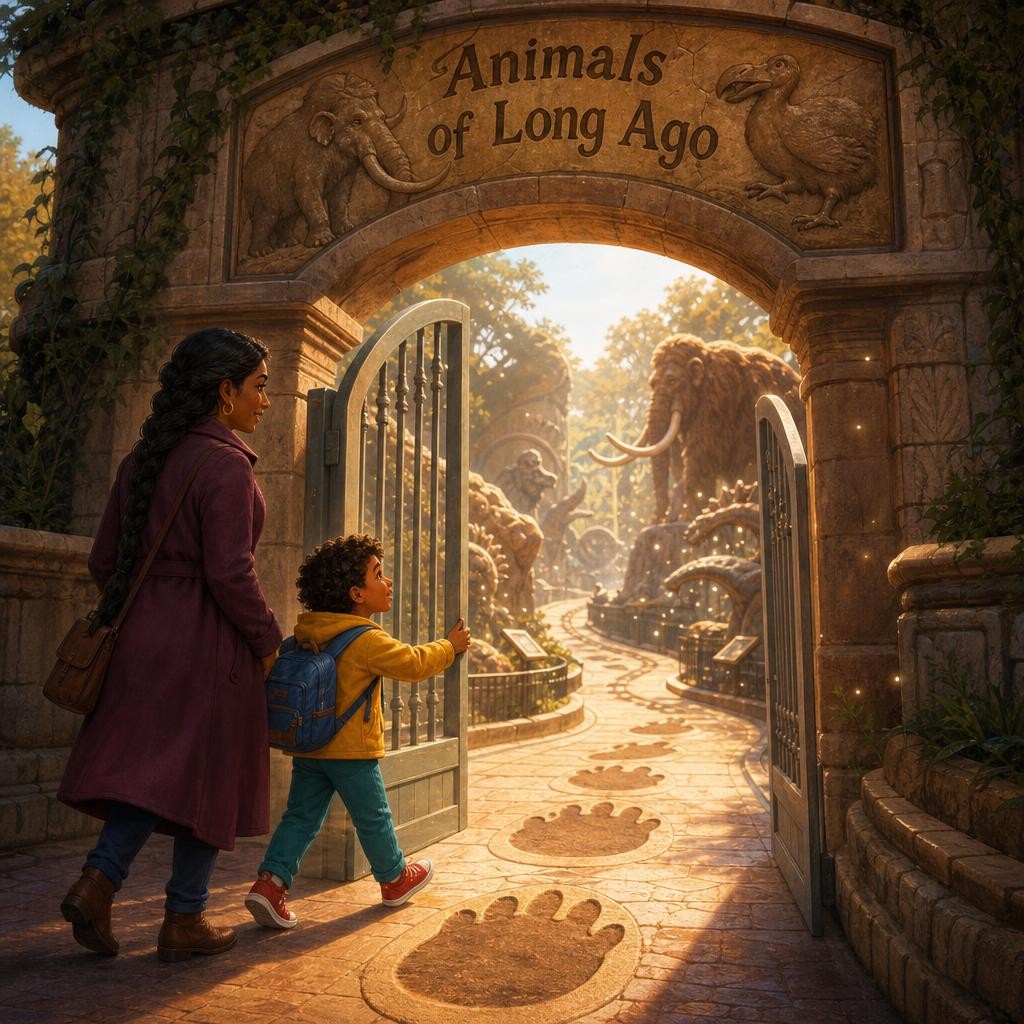
With their mother beside them, a curious child pushed open the light visitor gate and stepped inside.
Ages 3-4 - 3 minute read - gentle - EN
Reviewed for child-safety · gentle by design · How our stories are made
Published 2026-07-13T04:54:38.223131
Read-aloud note
Use gentle animal voices, but keep them quiet enough for bedtime.
Story
With their mother beside them, a curious child pushed open the light visitor gate and stepped inside. Above the grand arch, a banner read, “Animals of Long Ago,” beneath silhouettes of a mammoth and a dodo. Giant footprint signs led along a sparkling path. This was no ordinary zoo. Every creature here had once truly walked, waddled, or prowled across Earth—but none of these animal kinds lived today. Which giant animal would you hope to meet first?
At the Island House, a plump dodo pecked beneath a shady tree. It flapped its little wings—flap, flap—but its sturdy feet stayed on the ground. Long ago, sailors reached the dodo’s island. Some hunted the birds, and rats arriving on ships ate eggs from their ground nests. Their safe home became dangerous until no dodos remained. Flap your arms gently. The dodo could flap too, but its small wings could not lift its heavy body into the air.
The ground seemed to tremble at Mammoth Meadow. A towering woolly mammoth turned its shaggy head, sweeping its curved tusks safely inside the enclosure. What did such a giant eat? Look near its feet—grass and other small plants! Across the time display, frost melted and the cold grassland shrank and changed. Food became harder for mammoths to find. Even the biggest animal needs a home that can feed it.
At Cat Canyon, a sabertooth cat padded through the golden grass. Then it yawned, revealing two remarkably long upper teeth. Can you count them? One, two! The cat was magnificent, but it was still a powerful wild predator. The child stayed on the marked path with their mother, safely behind the wide, sturdy barrier. They could admire every whisker and paw without moving closer. Wild animals deserve plenty of space.
Beyond the enclosures, the path entered a quiet Memory Garden. Stone carvings of the dodo, mammoth, and sabertooth cat rested among flowers and softly glowing lanterns. “The animals you saw were glimpses through time,” the caretaker explained. “None of their kind is alive today. When every member of an animal kind has died out, it is extinct. That loss is permanent.” The child felt a small ache of sadness—and great wonder too. Which animal was your favorite? What made it special?
At the exit, a bright mural showed animals still living today: elephants, rhinos, and brilliant birds. They needed safe habitats, clean homes, and people who would give wild creatures space. The caretaker handed the child a shiny “Protector” badge. Sadness warmed into determination. “I can help keep our park clean with a grown-up,” the child said, “and watch wildlife from a respectful distance.” The past could not be changed—but animals living now could still be protected. What is one safe way you could help?
Scenes
A Gate into Long Ago
With their mother beside them, a curious child pushed open the light visitor gate and stepped inside. Above the grand arch, a banner read, “Animals of Long Ago,” beneath silhouettes of a mammoth and a dodo. Giant footprint signs led along a sparkling path. This was no ordinary zoo. Every creature here had once truly walked, waddled, or prowled across Earth—but none of these animal kinds lived today. Which giant animal would you hope to meet first?
The Bird That Stayed on the Ground
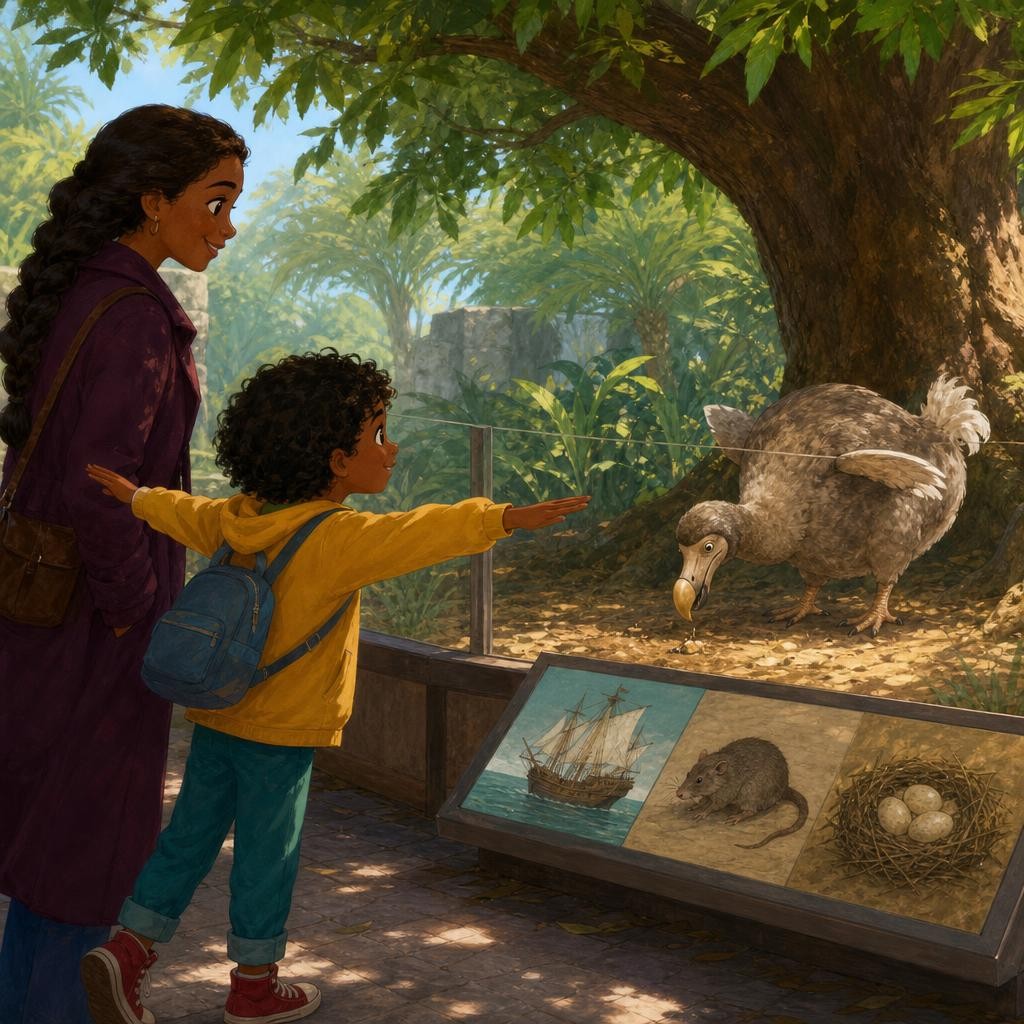
At the Island House, a plump dodo pecked beneath a shady tree. It flapped its little wings—flap, flap—but its sturdy feet stayed on the ground. Long ago, sailors reached the dodo’s island. Some hunted the birds, and rats arriving on ships ate eggs from their ground nests. Their safe home became dangerous until no dodos remained. Flap your arms gently. The dodo could flap too, but its small wings could not lift its heavy body into the air.
The Giant of Mammoth Meadow
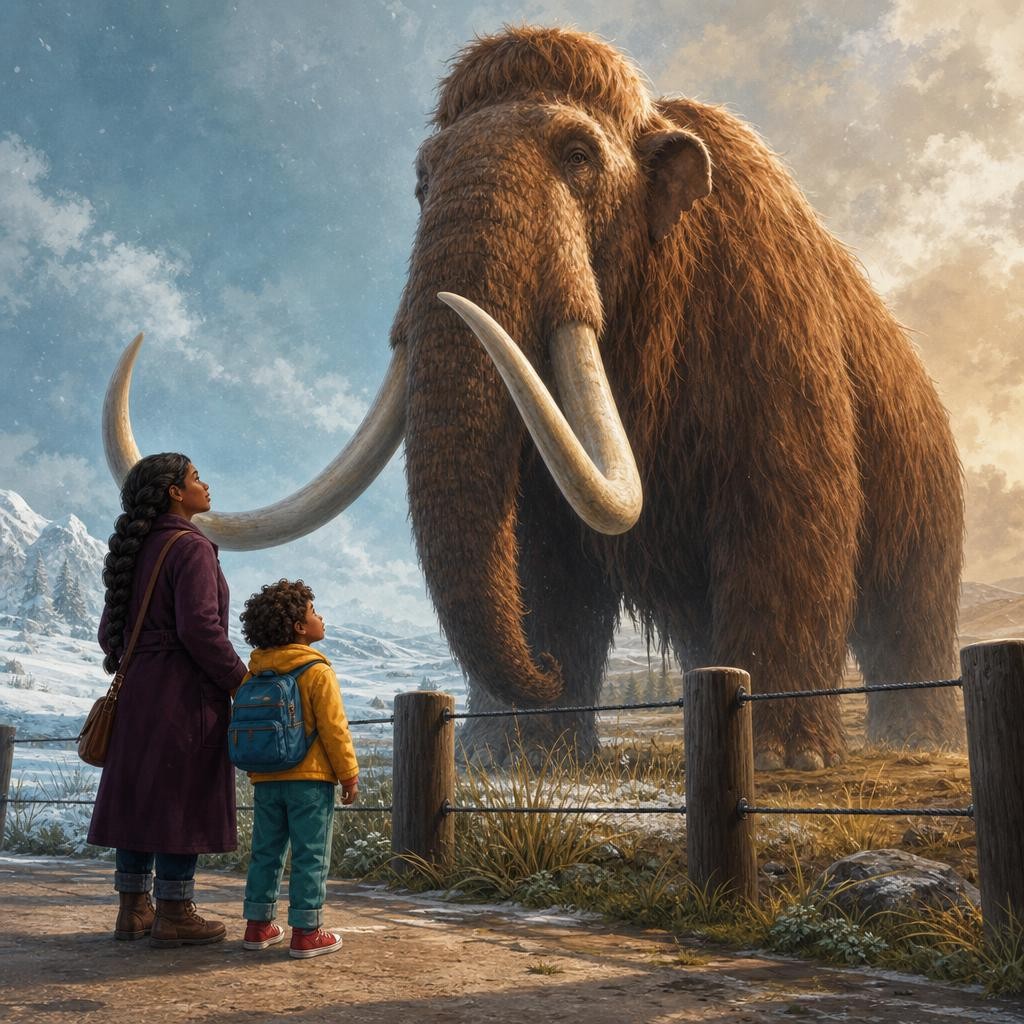
The ground seemed to tremble at Mammoth Meadow. A towering woolly mammoth turned its shaggy head, sweeping its curved tusks safely inside the enclosure. What did such a giant eat? Look near its feet—grass and other small plants! Across the time display, frost melted and the cold grassland shrank and changed. Food became harder for mammoths to find. Even the biggest animal needs a home that can feed it.
Two Remarkable Teeth
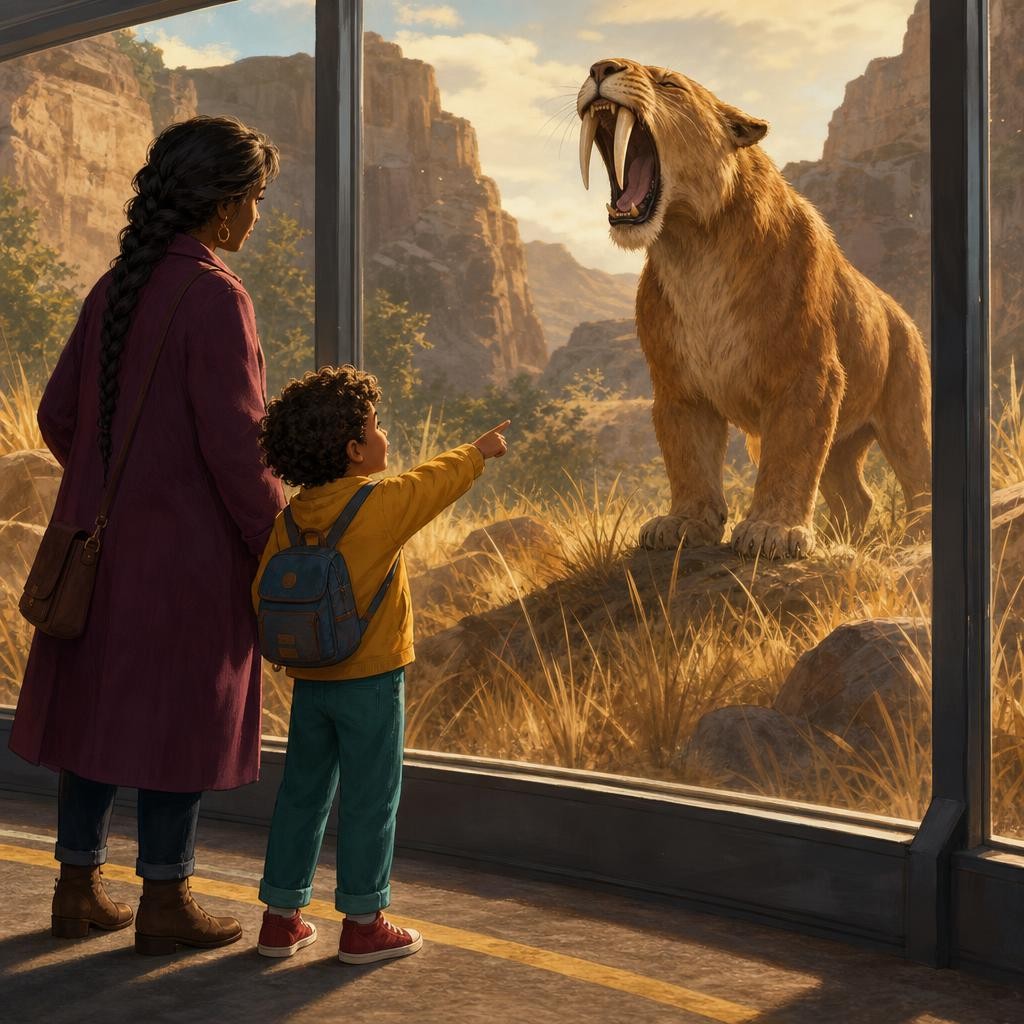
At Cat Canyon, a sabertooth cat padded through the golden grass. Then it yawned, revealing two remarkably long upper teeth. Can you count them? One, two! The cat was magnificent, but it was still a powerful wild predator. The child stayed on the marked path with their mother, safely behind the wide, sturdy barrier. They could admire every whisker and paw without moving closer. Wild animals deserve plenty of space.
The Memory Garden
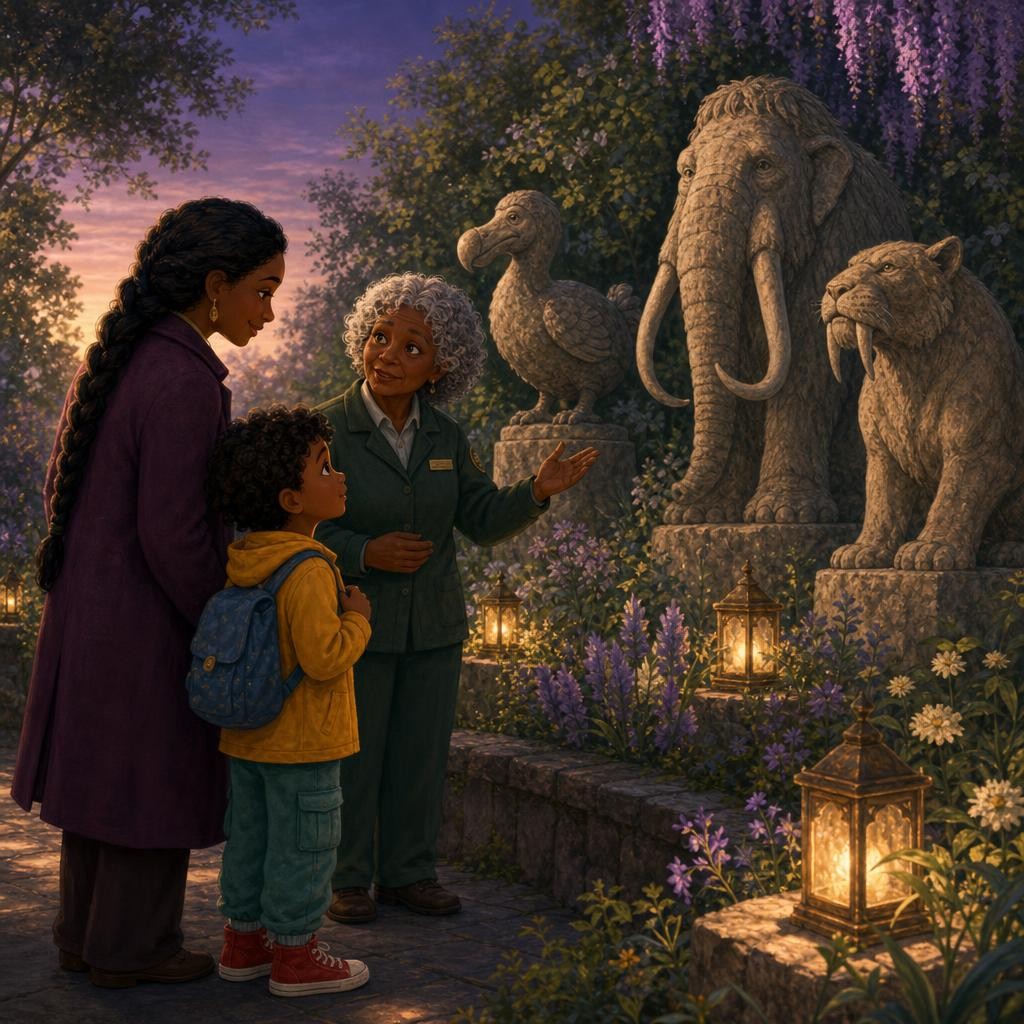
Beyond the enclosures, the path entered a quiet Memory Garden. Stone carvings of the dodo, mammoth, and sabertooth cat rested among flowers and softly glowing lanterns. “The animals you saw were glimpses through time,” the caretaker explained. “None of their kind is alive today. When every member of an animal kind has died out, it is extinct. That loss is permanent.” The child felt a small ache of sadness—and great wonder too. Which animal was your favorite? What made it special?
A Protector for Today
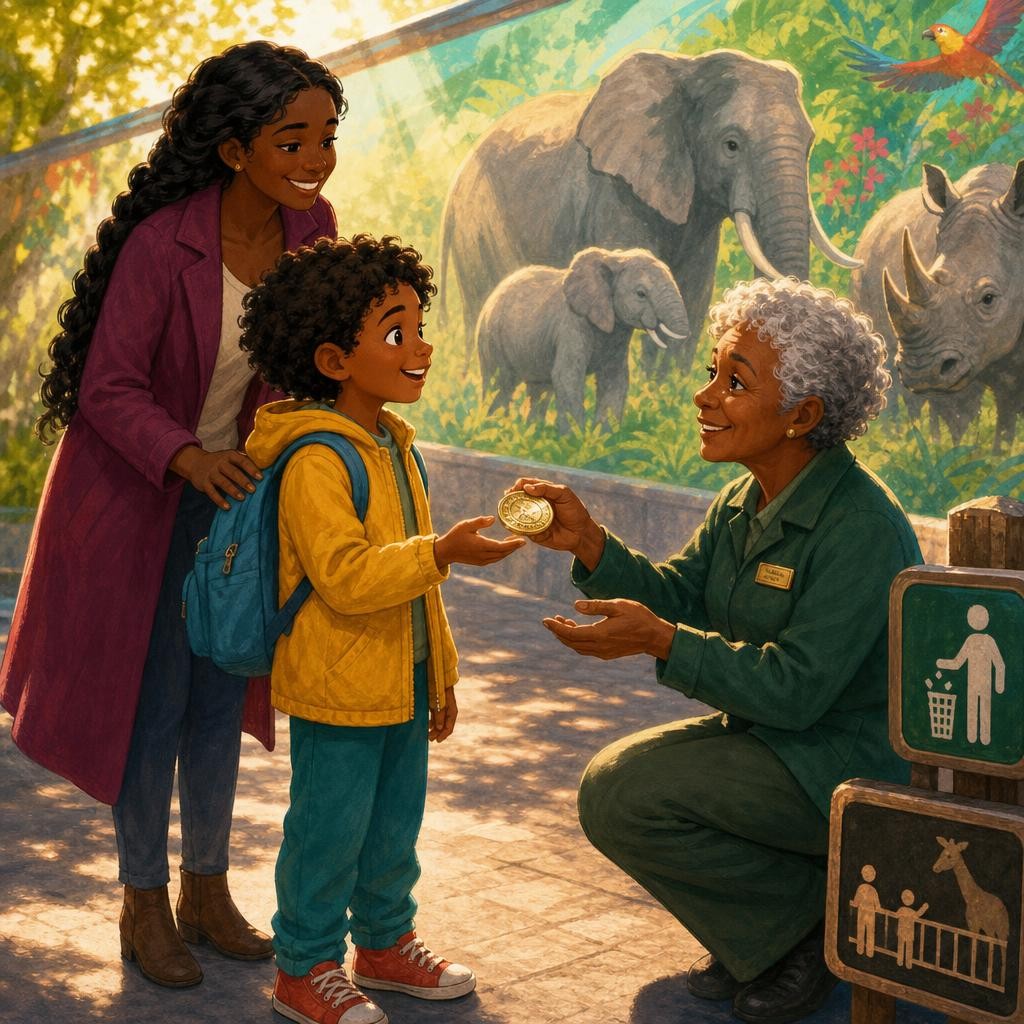
At the exit, a bright mural showed animals still living today: elephants, rhinos, and brilliant birds. They needed safe habitats, clean homes, and people who would give wild creatures space. The caretaker handed the child a shiny “Protector” badge. Sadness warmed into determination. “I can help keep our park clean with a grown-up,” the child said, “and watch wildlife from a respectful distance.” The past could not be changed—but animals living now could still be protected. What is one safe way you could help?
Read-aloud note
Use gentle animal voices, but keep them quiet enough for bedtime.