What Is Crypto?
Kai hunts through every pocket for his cousin's crypto. A paper-chain daydream shows what crypto really is: a shared list kept by many computers, with big risks.
Understanding money · 10 of 12
about real things · asks questions · 8 pages · ages 8–10 · 3 min · English
Read · Play · Listen · PDF · Print edition · with the Storybook Pass · Make it about your child
Reviewed for child safety · gentle by design · How our storybooks are made
Published 2026-11-03T17:45:31.582499
Quick answer
Crypto is money kept as a shared record, called a blockchain, on thousands of computers instead of by one bank. There is no coin to hold, and its price can jump up and down a lot.
Inside this storybook
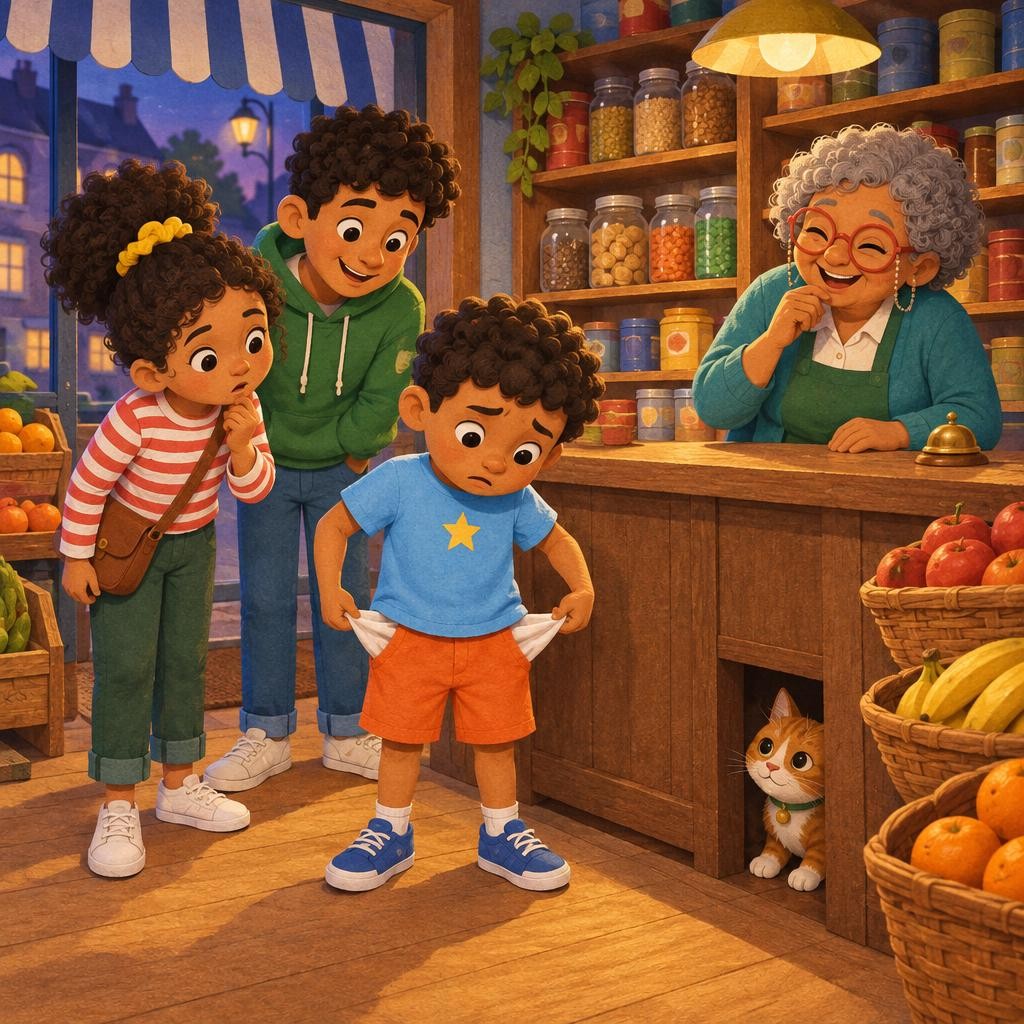
Nia's cousin says he has some crypto. Kai checks the cousin's pockets, then Nia's, then peeks under Penny. "Where is it? Can I hold it?" Grandma Rosa laughs. "That's the trickiest money of all. Shall we find out where it lives?"
Grandma Rosa opens her box. This time the pop-up is a whole paper city at night, full of tiny glowing windows. In 2009, a new kind of money called Bitcoin began. It was started by someone using a made-up name, and nobody knows for sure who that person really is.
Imagine thousands of children all over the world, each keeping the very same paper chain. Every time someone pays, everyone adds the same new link. That's the idea behind crypto. Really, it's thousands of computers keeping one shared list, called a blockchain: blocks of records joined like links in a chain. It works a bit like the village on Yap that remembered every stone.
Now someone tries a trick. A boy at the end of the line secretly adds a shiny gold link to his own chain, to give himself more money.
The other copies don't match, so the gold link is thrown out. Because thousands of computers check every new block, nobody can quietly change the list. That's why people can trust it without a bank.
Here is a true story. In 2010, a man paid 10,000 bitcoins for two pizzas. Later, those same coins were worth far more than a mountain of pizzas. Crypto's price can zoom up and crash down, so nobody knows what it will be worth tomorrow.
Crypto has two big catches. If you lose your secret key, the special password that opens your crypto, nobody can get your coins back, because there is no bank to ask. And tricksters love crypto. They make big, shiny promises and tell people to hurry.
Grandma Rosa's shop doesn't take crypto, and most shops don't. Kai opens the box. There is a keepsake for every money they have met, except this one: crypto is the only money that won't fit in the box! So Kai draws "money of the future" and tucks it into the last, empty hollow. "Money," says Grandma Rosa, "is whatever people agree to trust."
The pages
Where is the crypto?
Nia's cousin says he has some crypto. Kai checks the cousin's pockets, then Nia's, then peeks under Penny. "Where is it? Can I hold it?" Grandma Rosa laughs. "That's the trickiest money of all. Shall we find out where it lives?"
A mystery from 2009
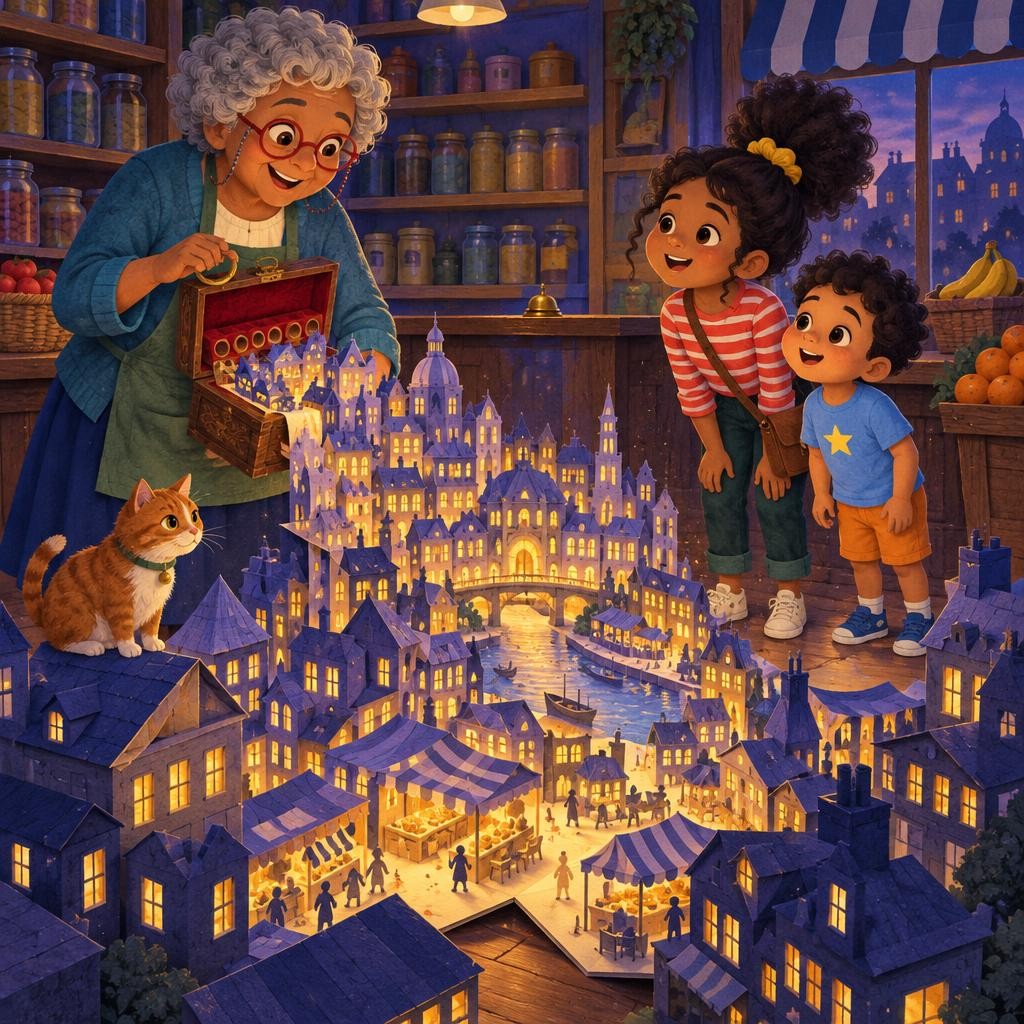
Grandma Rosa opens her box. This time the pop-up is a whole paper city at night, full of tiny glowing windows. In 2009, a new kind of money called Bitcoin began. It was started by someone using a made-up name, and nobody knows for sure who that person really is.
A list everyone keeps
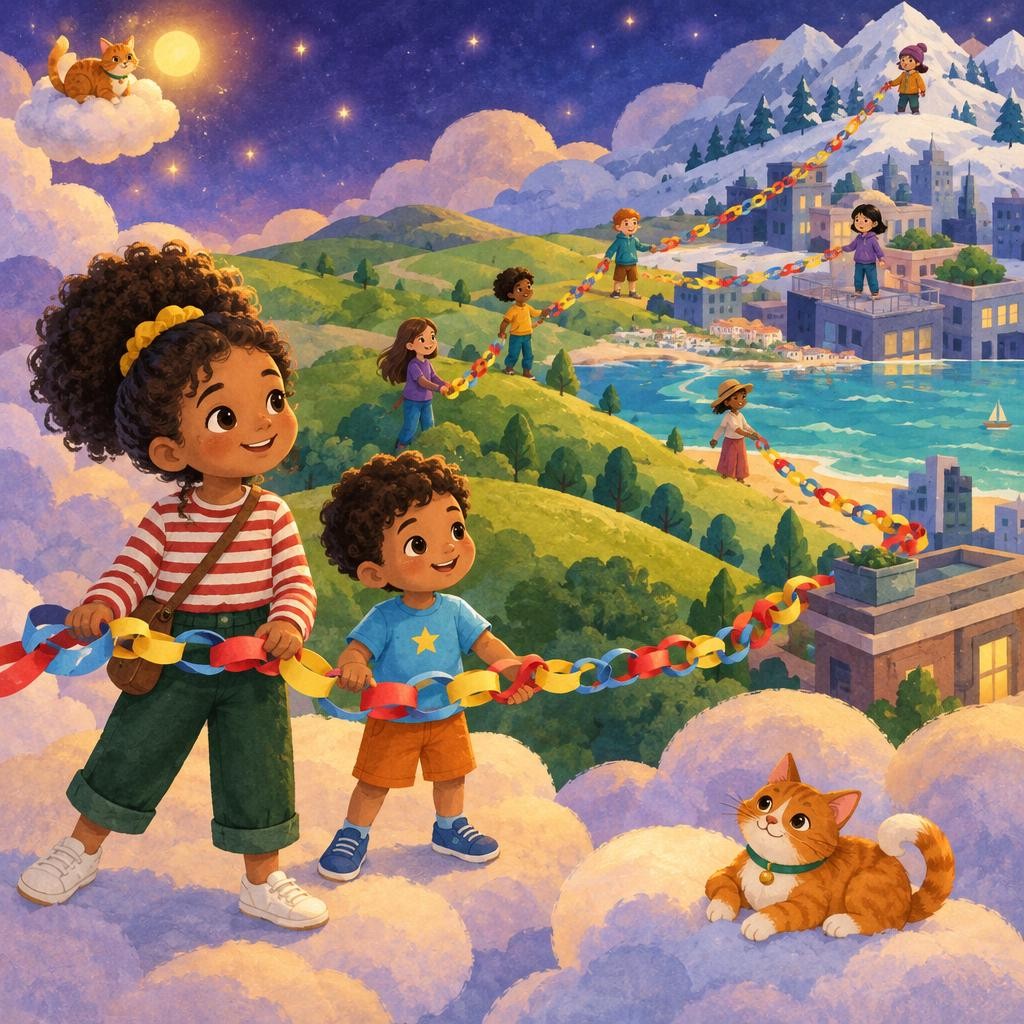
Imagine thousands of children all over the world, each keeping the very same paper chain. Every time someone pays, everyone adds the same new link. That's the idea behind crypto. Really, it's thousands of computers keeping one shared list, called a blockchain: blocks of records joined like links in a chain. It works a bit like the village on Yap that remembered every stone.
The sneaky gold link
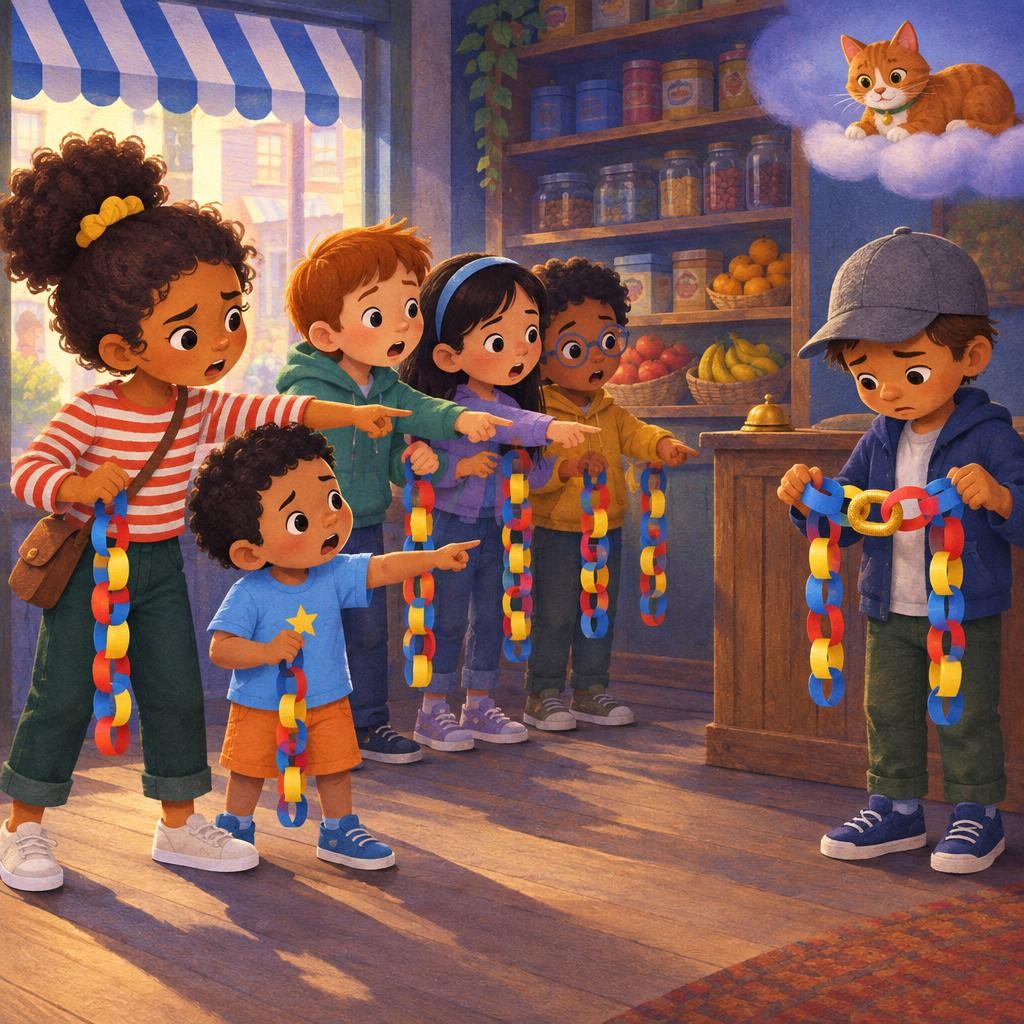
Now someone tries a trick. A boy at the end of the line secretly adds a shiny gold link to his own chain, to give himself more money.
Thrown out
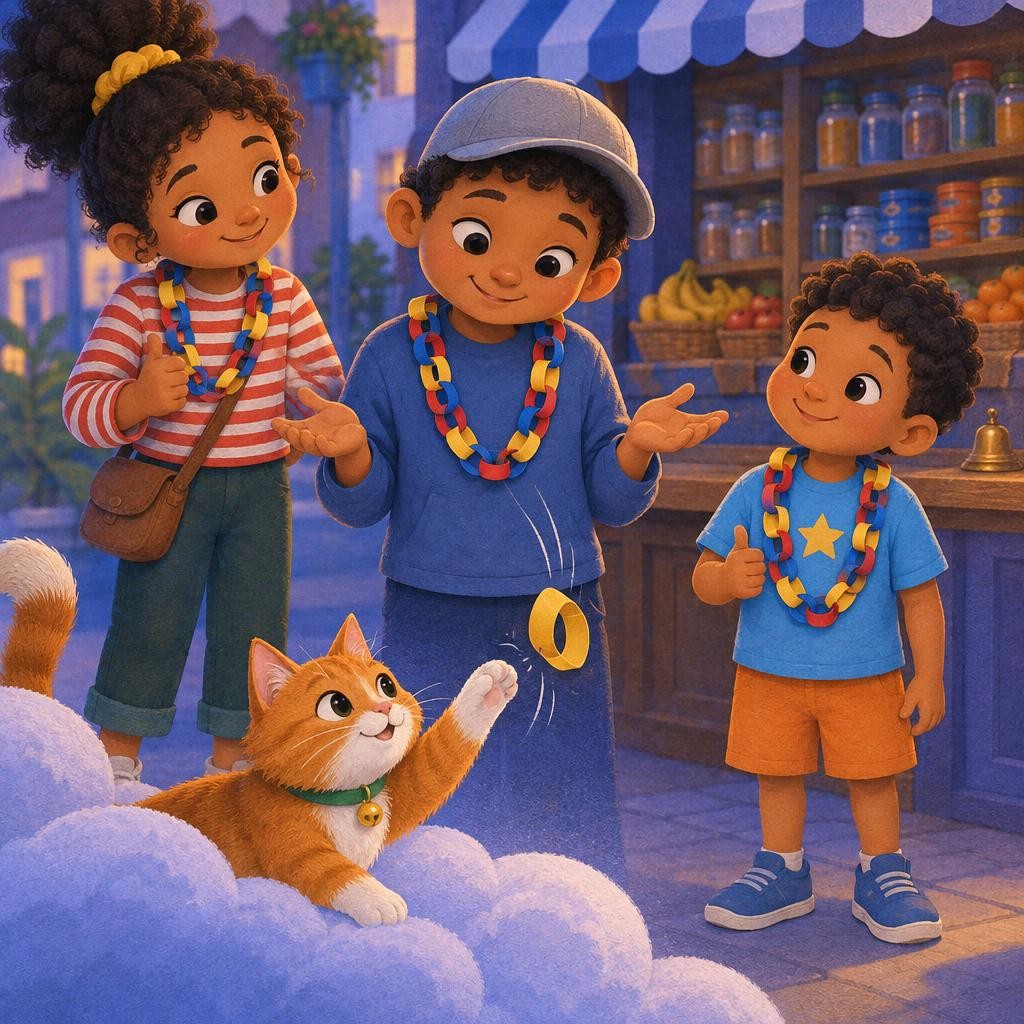
The other copies don't match, so the gold link is thrown out. Because thousands of computers check every new block, nobody can quietly change the list. That's why people can trust it without a bank.
Two very expensive pizzas
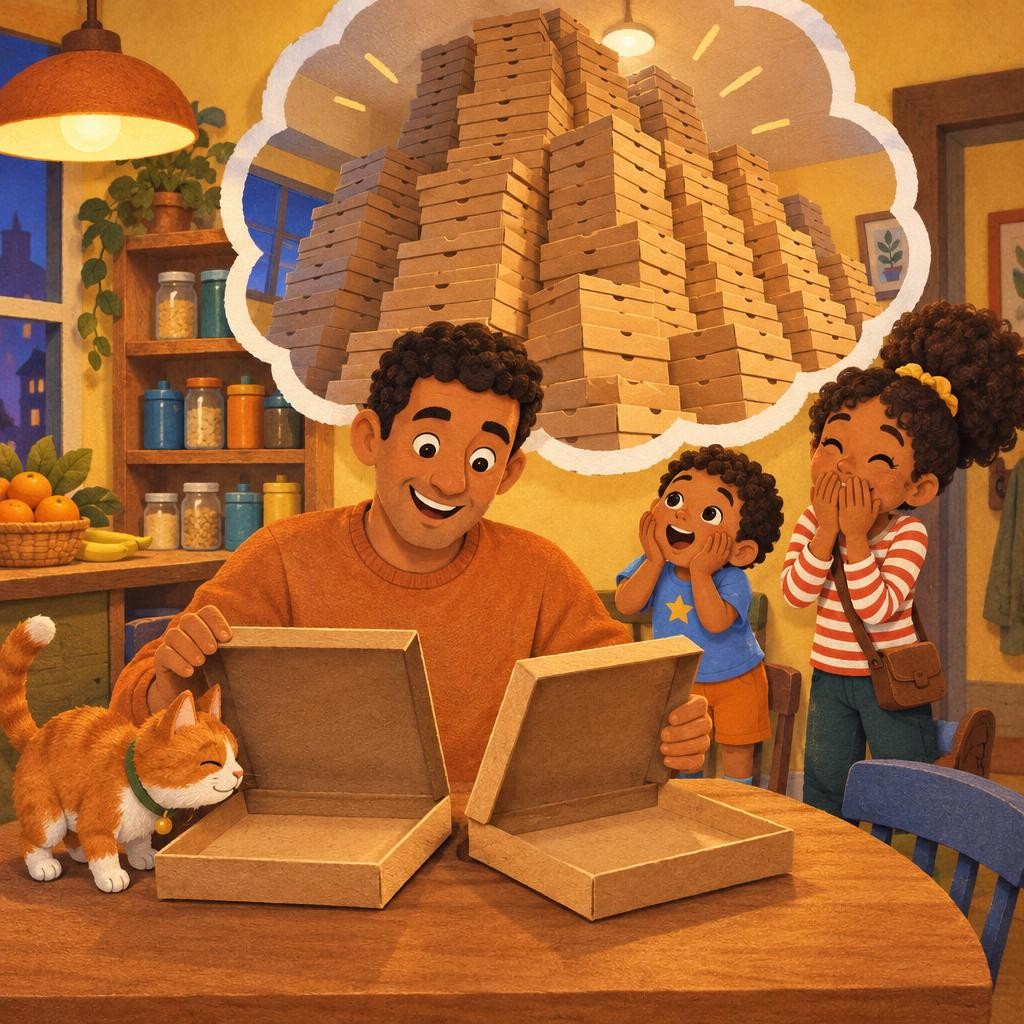
Here is a true story. In 2010, a man paid 10,000 bitcoins for two pizzas. Later, those same coins were worth far more than a mountain of pizzas. Crypto's price can zoom up and crash down, so nobody knows what it will be worth tomorrow.
Keys and tricksters
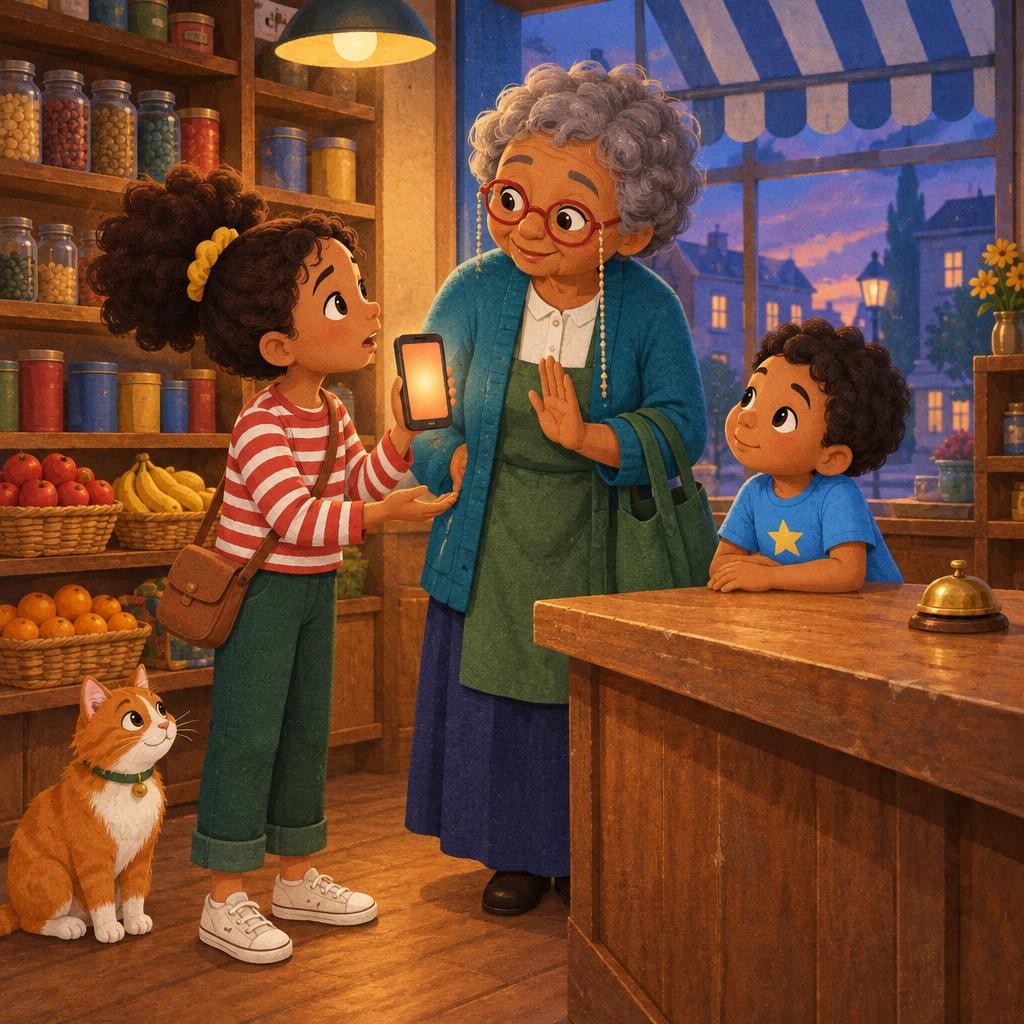
Crypto has two big catches. If you lose your secret key, the special password that opens your crypto, nobody can get your coins back, because there is no bank to ask. And tricksters love crypto. They make big, shiny promises and tell people to hurry.
The empty hollow
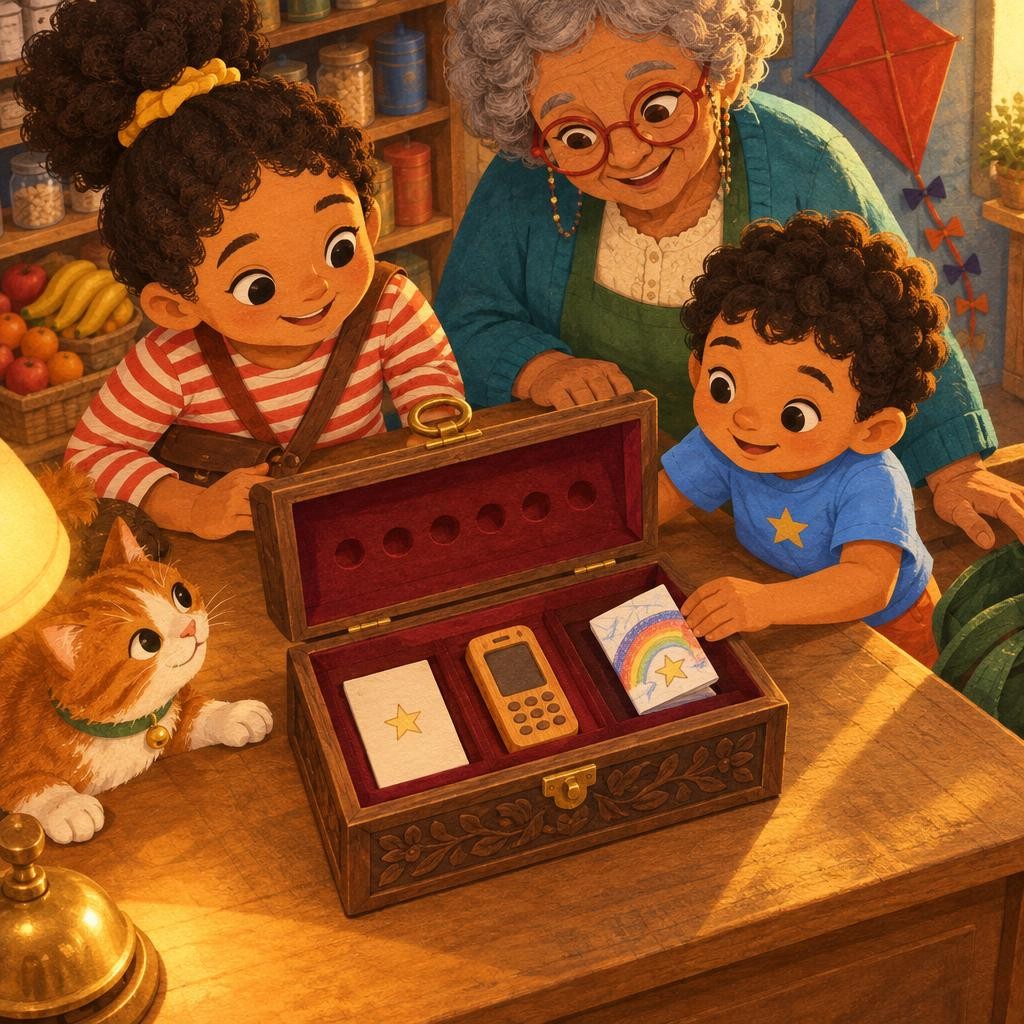
Grandma Rosa's shop doesn't take crypto, and most shops don't. Kai opens the box. There is a keepsake for every money they have met, except this one: crypto is the only money that won't fit in the box! So Kai draws "money of the future" and tucks it into the last, empty hollow. "Money," says Grandma Rosa, "is whatever people agree to trust."
Key takeaways
- Crypto is a shared record, not a coin you can hold.
- Thousands of computers keep the same list and check every change.
- Crypto prices can jump up and down a lot.
- Nobody can promise easy money, so ask a grown-up.
Questions along the way
- Where does crypto really live?
- Why was the sneaky gold link thrown out?
- What should you do if someone promises easy money?
Common questions
How do you explain crypto to a child?
Say it is money kept on a list that thousands of computers share and check, instead of in one bank. There is no coin to hold, and its price can change a lot.
Should children buy crypto?
No. It is a good topic to talk about together: why prices swing, why secret keys matter, and why anyone promising easy money is a trickster.
Read-together tip
Make paper chains together, one link per pretend payment, everyone adding the same colour at the same time. Then let someone sneak in an odd colour and see how quickly everyone spots it.