Where Is the Money in a Card?
Kai listens to a card for money. Trips to a 1950 restaurant and the first cash machine in 1967 show what a card really does, and why tapping still costs money.
Understanding money · 8 of 12
about real things · asks questions · 8 pages · ages 8–10 · 2 min · English
Read · Play · Listen · PDF · Print edition · with the Storybook Pass · Make it about your child
Reviewed for child safety · gentle by design · How our storybooks are made
Published 2026-11-03T17:45:28.744039
Quick answer
A card doesn't hold money. It sends a message to a bank, which moves money from your account, or, with a credit card, lends it to you to pay back later.
Inside this storybook
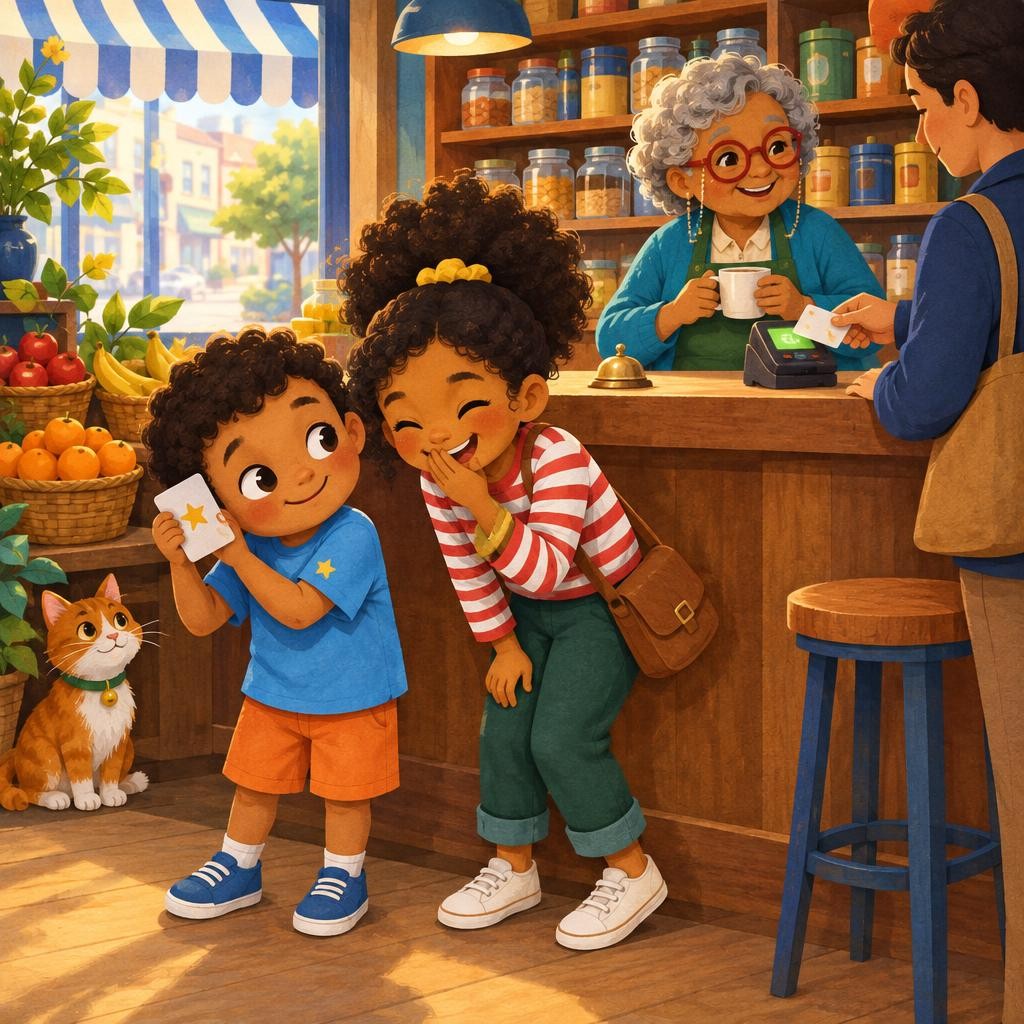
At the café, a customer taps a card on a little machine. Beep! Nobody hands over any coins. Kai holds Grandma Rosa's card to his ear. "Hello? Is there money in there?" Nia laughs. "Then where is the money?"
Pop! The box opens into a busy city restaurant in 1950. Diners in smart hats finish their dinner and pay with a small card instead of cash. It is one of the very first cards for paying.
Here is what the card really did. The waiter filled in a paper slip. A postman carried the slip to the card company's office. At the end of the month, the diner paid the card company for every dinner. The card was a message, not money.
Pop! Now it is London, 1967. People line up outside a bank to try something brand new: the first cash machine, set right into the bank's wall. Grandma Rosa takes a turn, and out slide some notes.
The notes came from Grandma Rosa's own savings, and her bank record went down. To keep the money safe, the machine needed a secret number called a PIN. Its inventor said PINs have four numbers because four was all his wife could remember!
Today, the slip's whole journey happens in a blink, through wires. Some cards spend your own money from your bank account. A credit card is different: it borrows money, and you must pay it back. Pay late, and you pay extra, called interest.
Back at the café, Nia's friend shrugs. "Tapping a card is easy. It doesn't really cost anything!" Nia isn't so sure.
Before she taps, Grandma Rosa always asks two questions: "Do I need it? And do I have it?" That night, a plain card goes into the box, and outside the window Kai's red kite flutters in the breeze.
The pages
Is there money in there?
At the café, a customer taps a card on a little machine. Beep! Nobody hands over any coins. Kai holds Grandma Rosa's card to his ear. "Hello? Is there money in there?" Nia laughs. "Then where is the money?"
Paying with a card
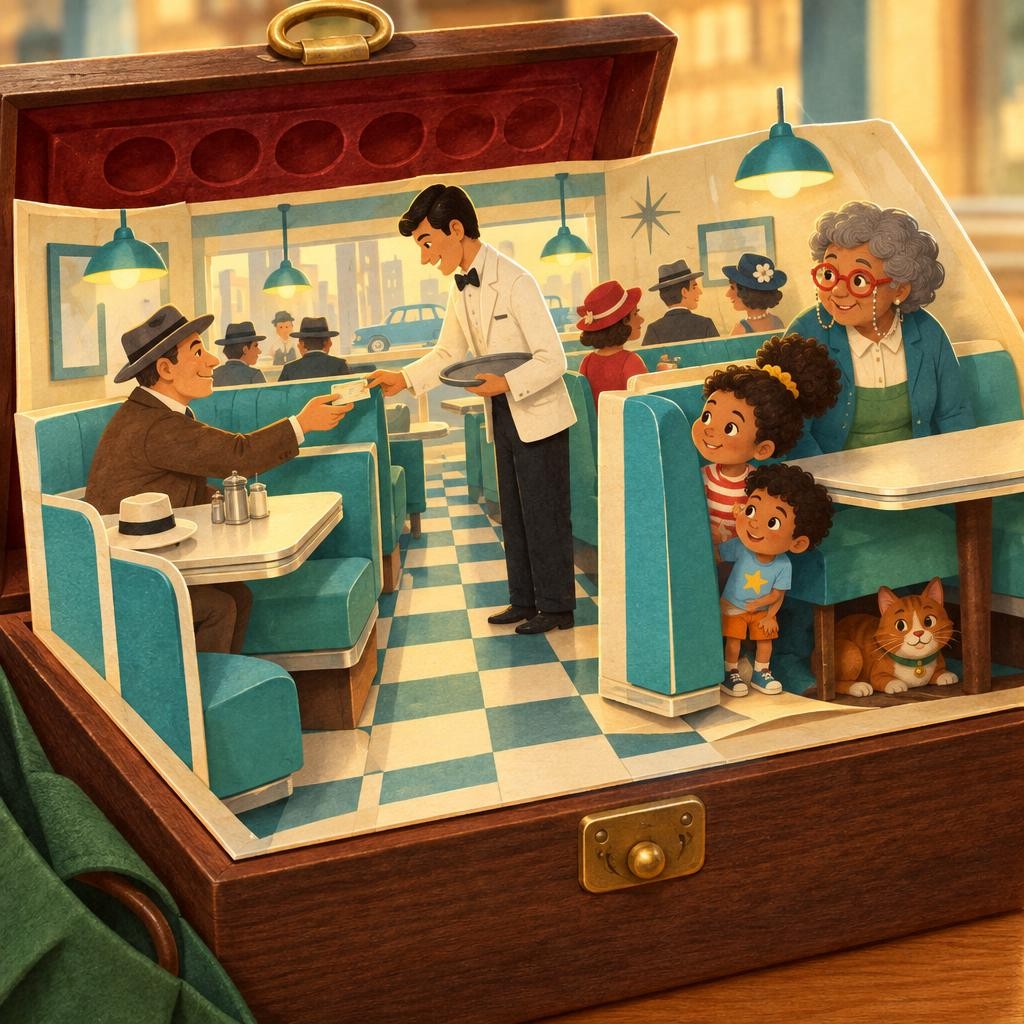
Pop! The box opens into a busy city restaurant in 1950. Diners in smart hats finish their dinner and pay with a small card instead of cash. It is one of the very first cards for paying.
The card's message
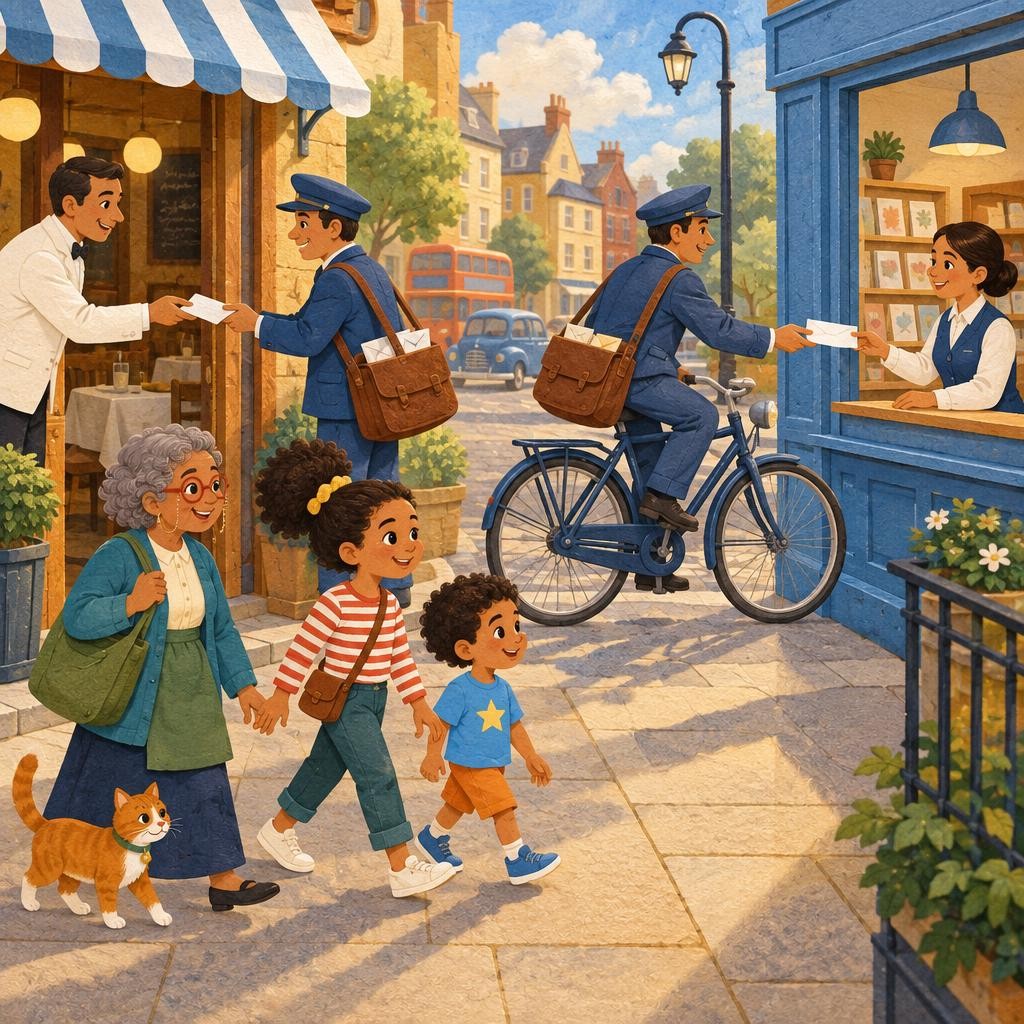
Here is what the card really did. The waiter filled in a paper slip. A postman carried the slip to the card company's office. At the end of the month, the diner paid the card company for every dinner. The card was a message, not money.
The first cash machine
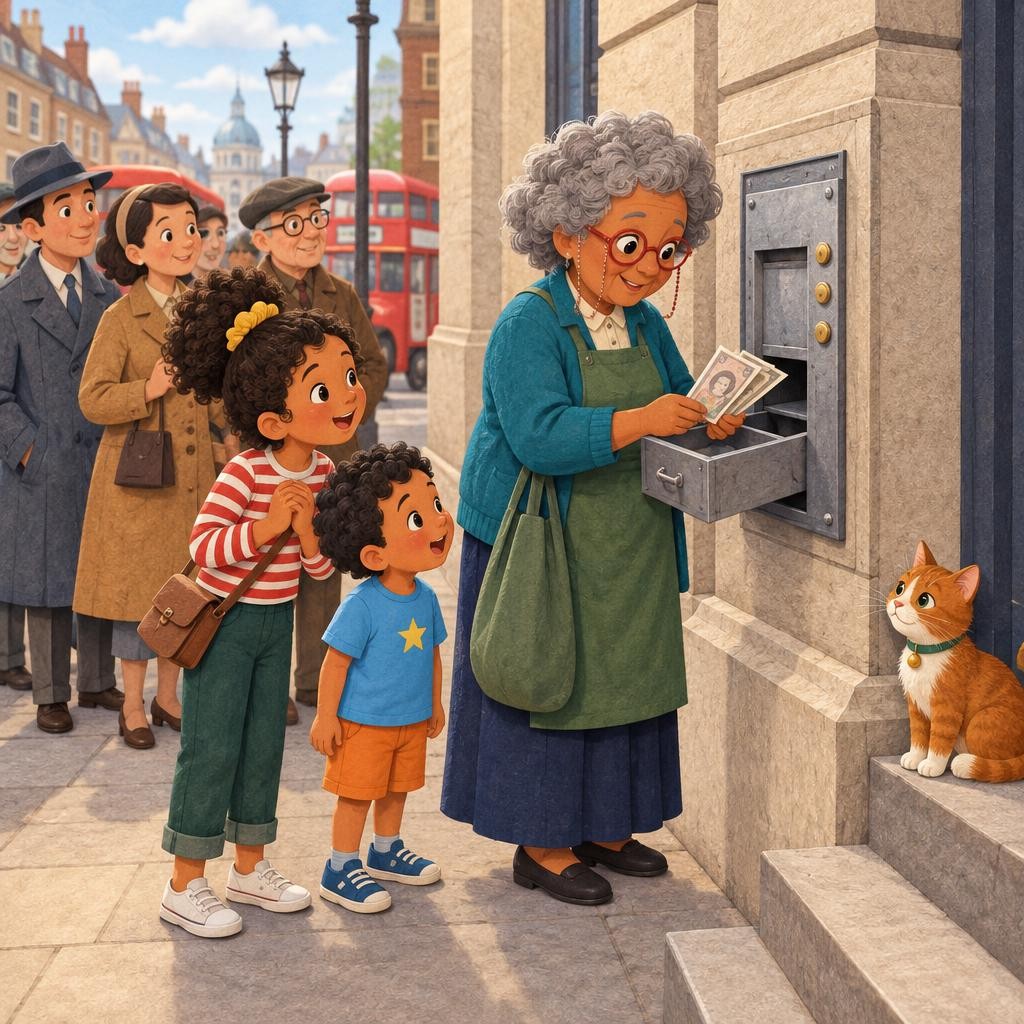
Pop! Now it is London, 1967. People line up outside a bank to try something brand new: the first cash machine, set right into the bank's wall. Grandma Rosa takes a turn, and out slide some notes.
Her own money
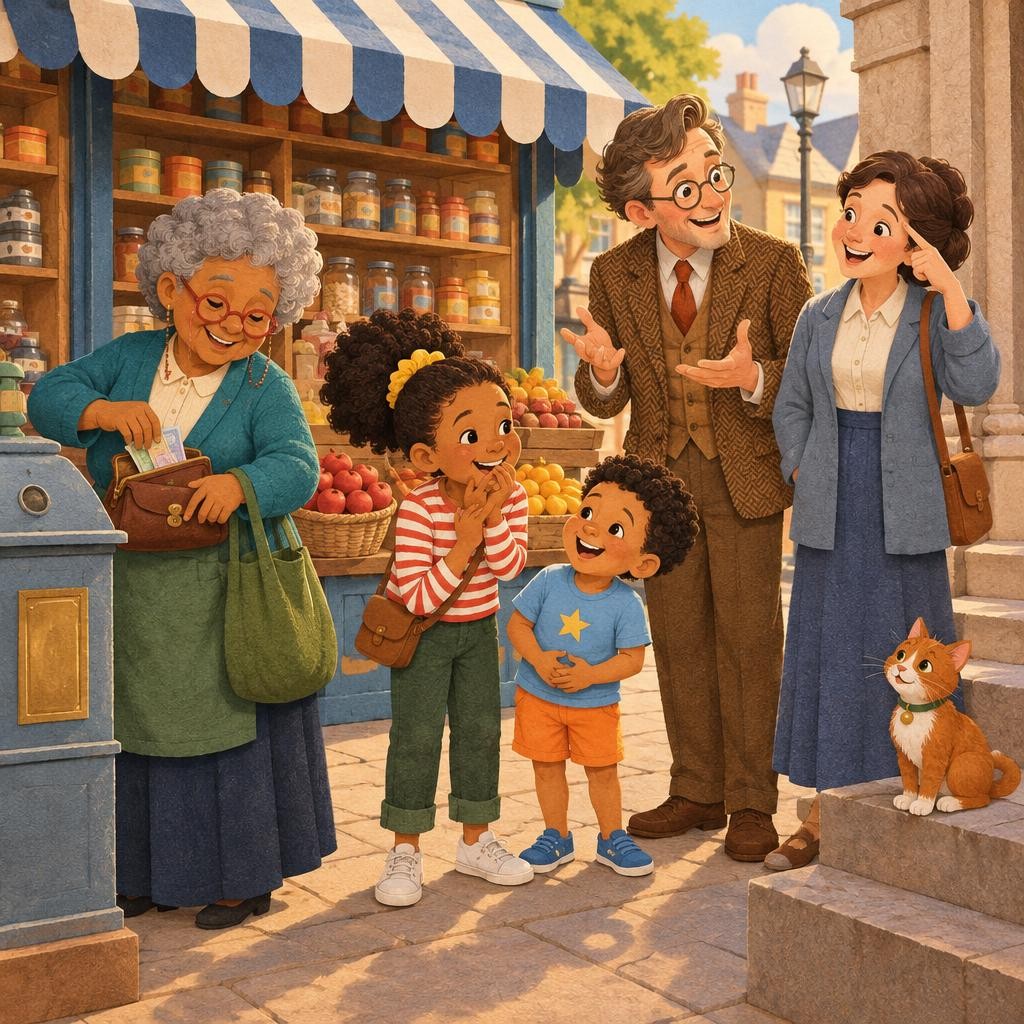
The notes came from Grandma Rosa's own savings, and her bank record went down. To keep the money safe, the machine needed a secret number called a PIN. Its inventor said PINs have four numbers because four was all his wife could remember!
Two kinds of card
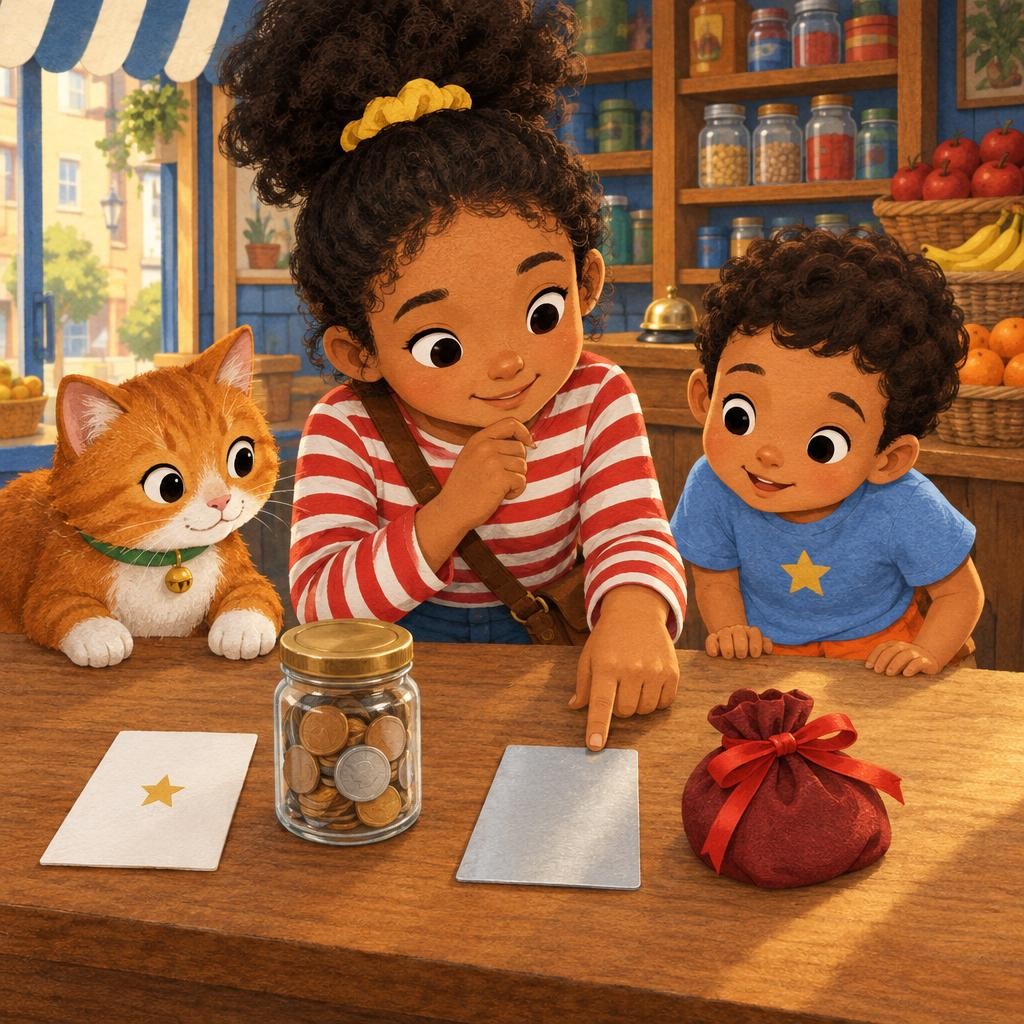
Today, the slip's whole journey happens in a blink, through wires. Some cards spend your own money from your bank account. A credit card is different: it borrows money, and you must pay it back. Pay late, and you pay extra, called interest.
Does tapping cost anything?
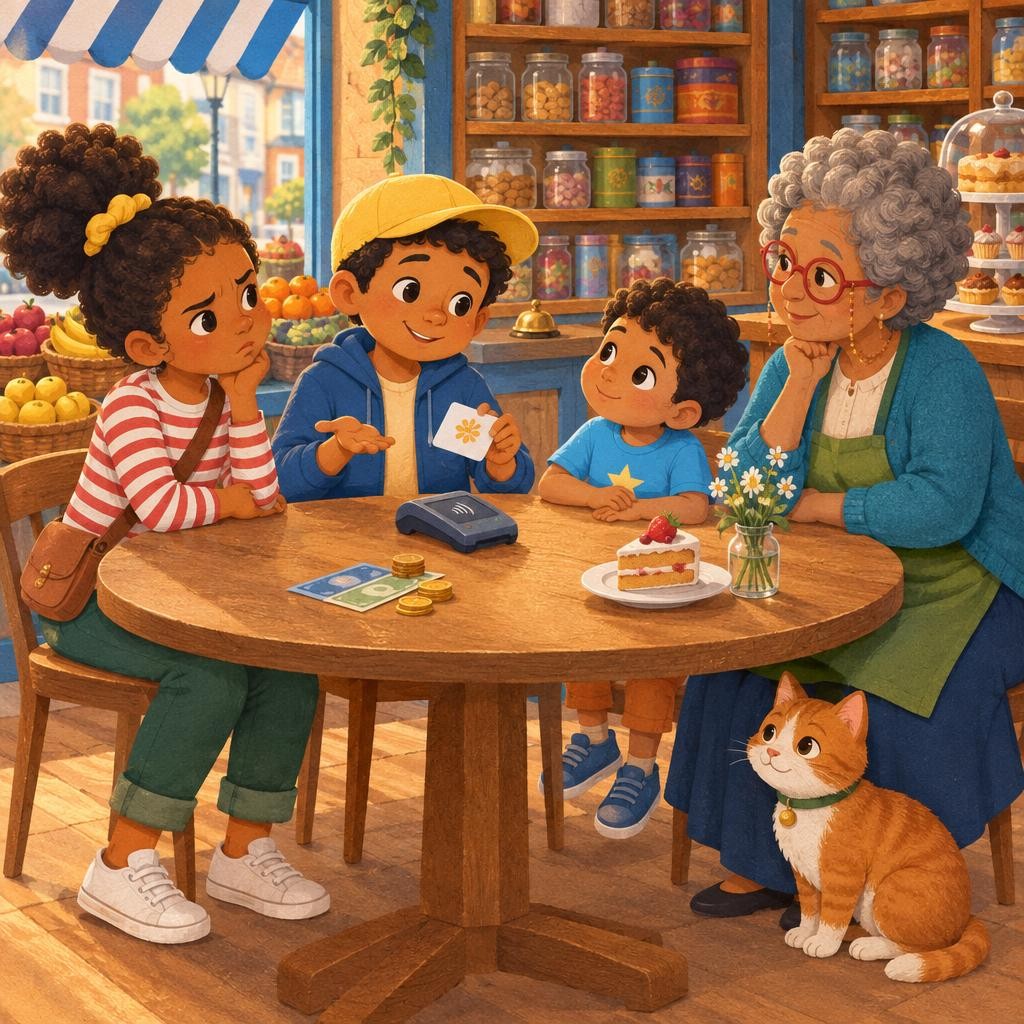
Back at the café, Nia's friend shrugs. "Tapping a card is easy. It doesn't really cost anything!" Nia isn't so sure.
Do I need it? Do I have it?
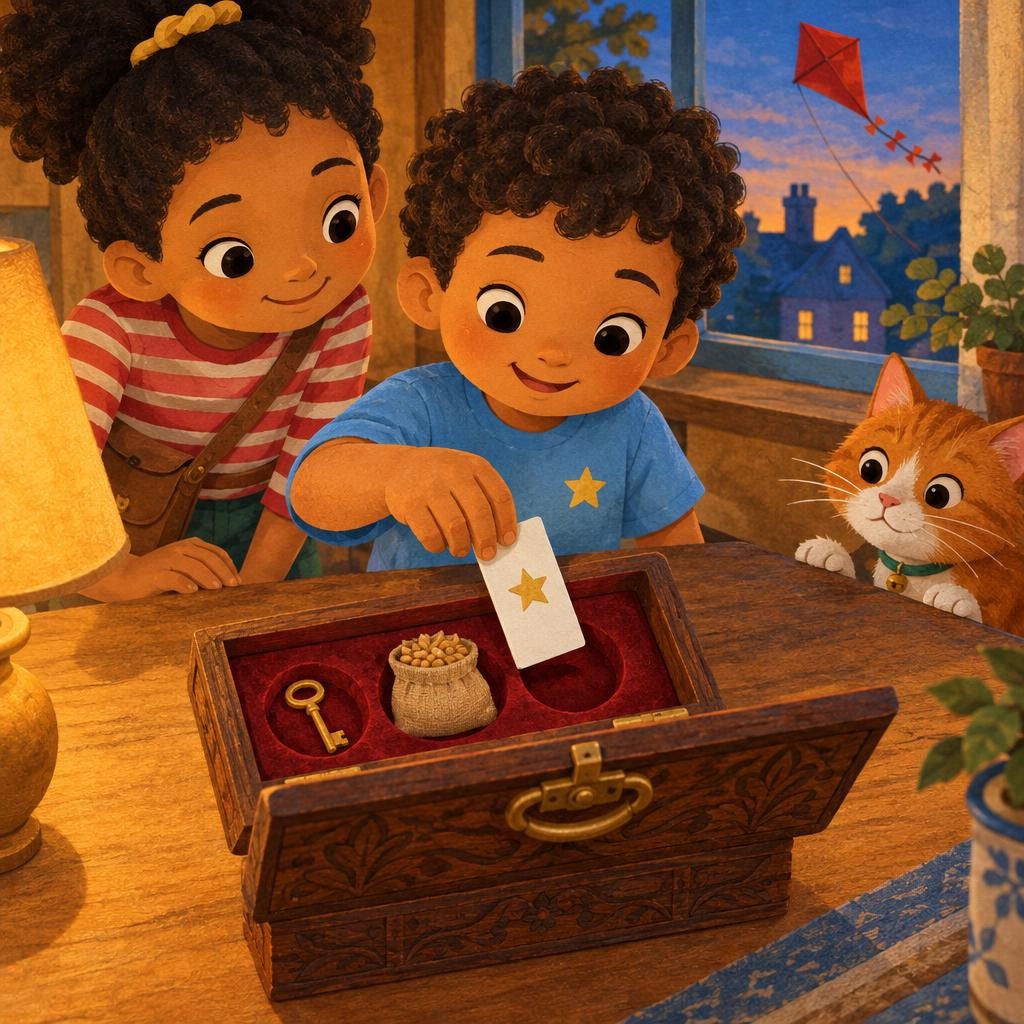
Before she taps, Grandma Rosa always asks two questions: "Do I need it? And do I have it?" That night, a plain card goes into the box, and outside the window Kai's red kite flutters in the breeze.
Key takeaways
- A card is a message to a bank, not money inside plastic.
- Cash machines give out your own money.
- A credit card is borrowing that must be paid back.
- Money you can't see is still money you spend.
Questions along the way
- What did a card do in 1950?
- Where does cash machine money come from?
- What is a credit card?
Common questions
How do you explain a credit card to a child?
A credit card borrows money from a bank to pay for something now. You have to pay it back later, and if you are late, you pay extra.
Is tapping a card real money?
Yes. Each tap spends money from an account or borrows it, just as if you paid with coins.
Read-together tip
Play café: one child writes a pretend paper slip for each order, another "posts" it to the bank, and at the end of the week everyone settles up with play coins.