Why Do People Light Lamps on Diwali?
Why do people light lamps on Diwali? Nani's star lantern takes Asha and Jai to Rama's homecoming, the Golden Temple and a Jain temple. The story of Diwali for kids.
Diwali for kids · 8 of 16
about real things · asks questions · 10 pages · ages 6–7 · 3 min · English
Read · Play · Listen · PDF · Print edition · with the Storybook Pass · Make it about your child
Reviewed for child safety · gentle by design · How our storybooks are made
Published 2026-11-04T06:10:49.711085
Quick answer
People light lamps on Diwali because of the stories their families remember. Many Hindu families remember Prince Rama and Sita coming home to Ayodhya, when people lit rows of lamps to light their way, and welcome Lakshmi, who stands for good luck. Sikh families remember Bandi Chhor Divas, when Guru Hargobind was set free, and Jain families remember Mahavira. In every story, light means good winning over bad.
Inside this storybook
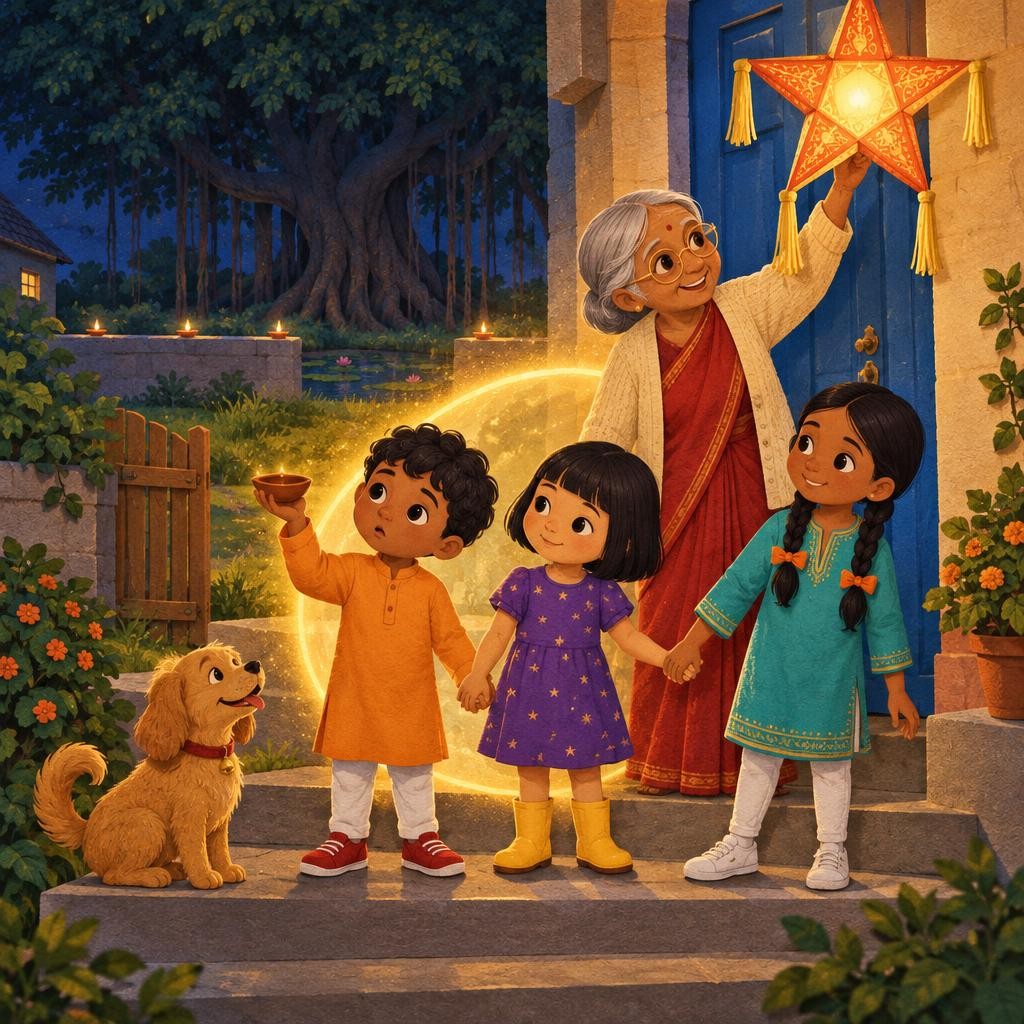
On Diwali night, Jai holds up a little clay lamp. "Nani, why do we light so many lamps? We already have lights in the house!" Mei nods. "Yes, why?" Nani smiles and lifts the star lantern. "Because of some very old stories," she says. "Hold hands!"
The lantern's light opens into a round doorway, and they step through into a city from long ago, called Ayodhya. Many Hindu families tell this story. Prince Rama, Princess Sita and Rama's brother have been far away for fourteen years. Tonight, at last, they are coming home.
The people light rows and rows of little clay lamps, called diyas, along every road and roof. The lamps light the way home! Far down the road, Rama, Sita and his brother arrive, and everyone cheers. In some places, Diwali is called Deepavali, which means "a row of lamps".
Back through the doorway, Nani points to her own front step. Many Hindu families also welcome Lakshmi on Diwali night. Lakshmi stands for good luck and plenty. Families clean, light lamps and paint tiny footprints at the door.
The lantern opens again, onto a golden building in the middle of a pool. This is the Golden Temple in Amritsar. Sikh families remember a day called Bandi Chhor Divas. A Guru is a great teacher. Long ago, Guru Hargobind was set free from a fort, and he helped 52 kings go free too.
When Guru Hargobind came home, people lit lamps all around the Golden Temple, and they still do. Then the lantern shows a white stone temple. Jain families remember Mahavira, a wise teacher from long ago. They light lamps for the light of his teaching, which helps people be kind and wise.
Pop! They step back home. Jai counts the stories on his fingers. "Rama came home. Lakshmi brings good luck. Guru Hargobind set people free. Mahavira taught kindness." Asha thinks hard.
In every story, the lamps mean something good wins. Light wins over dark. Kindness wins over meanness. Home wins over far away. That is why one tiny diya means so much.
Some families remember Rama. Some remember Guru Hargobind or Mahavira, and many remember more than one story. Friends like Mei join in too. Diwali has room for everyone.
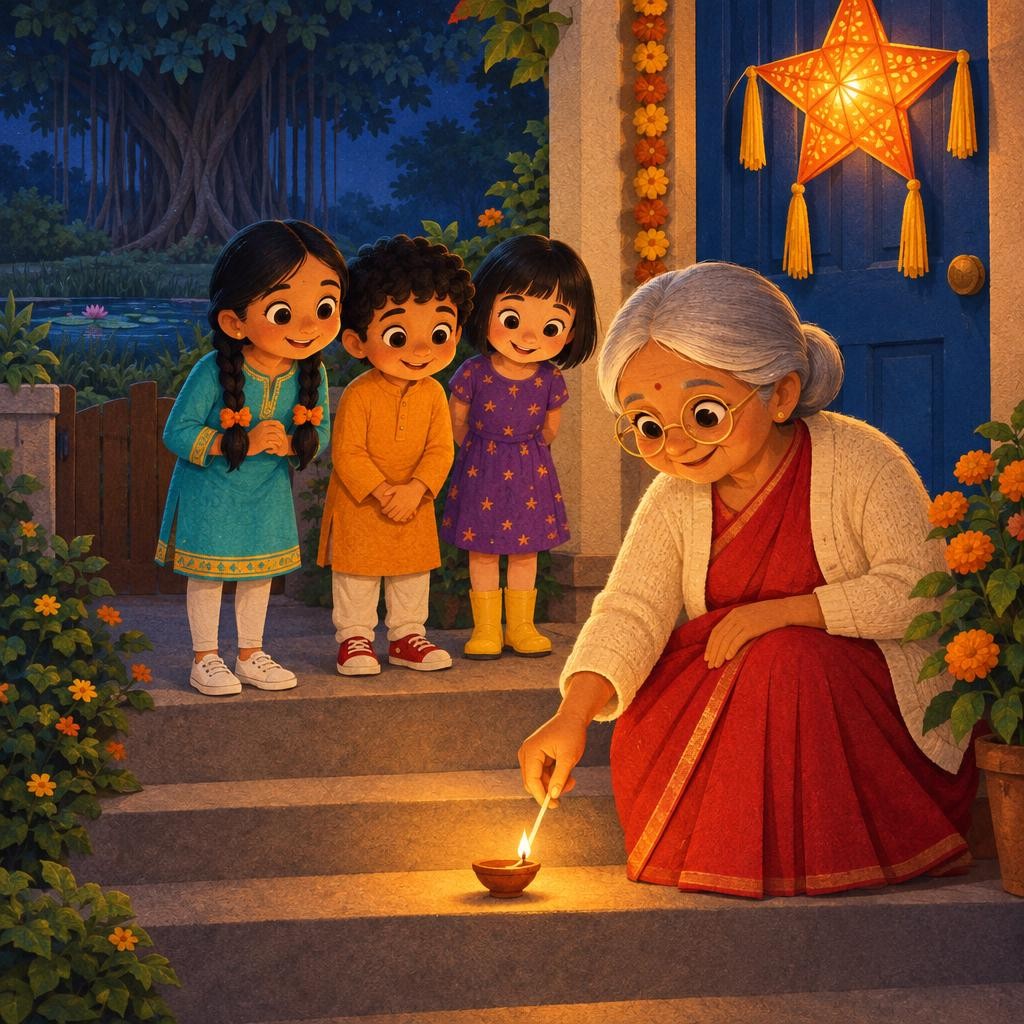
Nani lights a whole row of diyas on the step. "Each little lamp," says Asha, "says that light is stronger than dark." Which Diwali story would you like to hear again?
The pages
Why so many lamps?
On Diwali night, Jai holds up a little clay lamp. "Nani, why do we light so many lamps? We already have lights in the house!" Mei nods. "Yes, why?" Nani smiles and lifts the star lantern. "Because of some very old stories," she says. "Hold hands!"
A city waiting
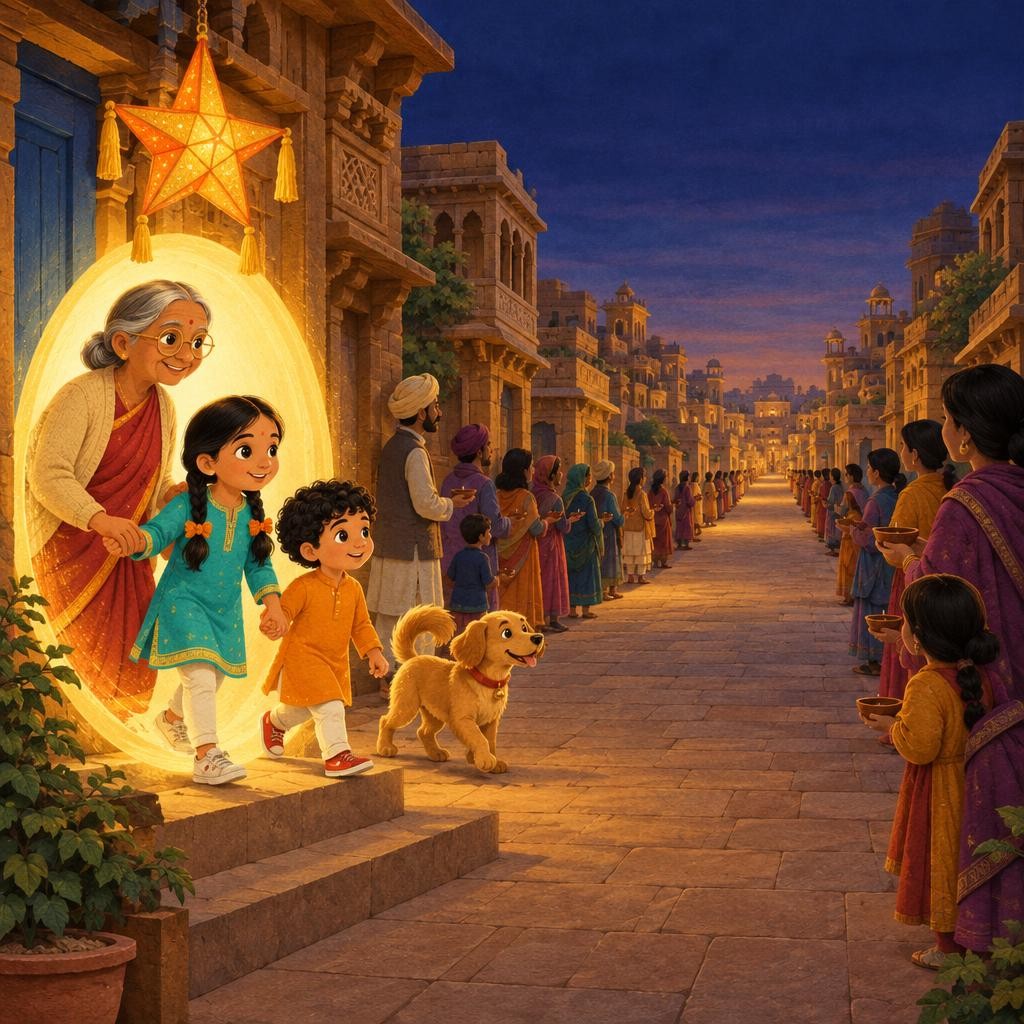
The lantern's light opens into a round doorway, and they step through into a city from long ago, called Ayodhya. Many Hindu families tell this story. Prince Rama, Princess Sita and Rama's brother have been far away for fourteen years. Tonight, at last, they are coming home.
A row of lamps
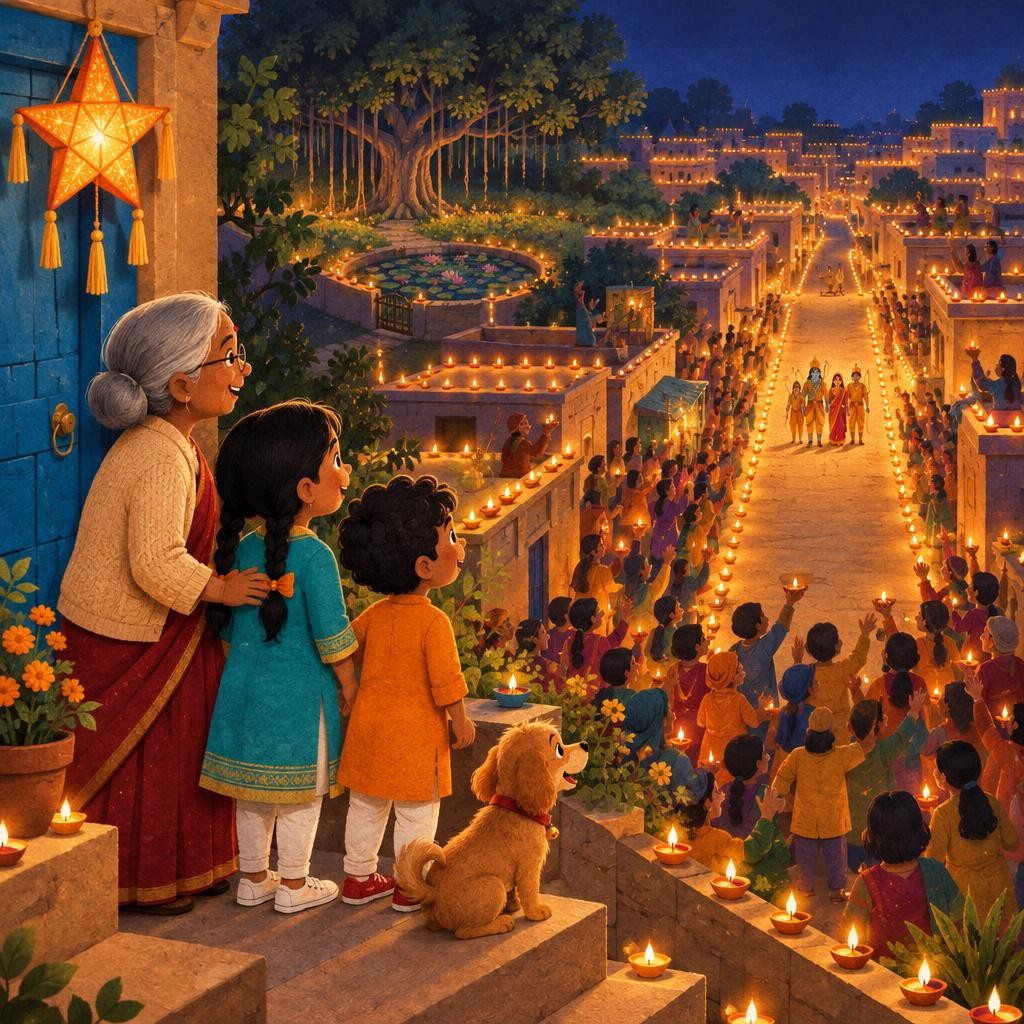
The people light rows and rows of little clay lamps, called diyas, along every road and roof. The lamps light the way home! Far down the road, Rama, Sita and his brother arrive, and everyone cheers. In some places, Diwali is called Deepavali, which means "a row of lamps".
Little footprints
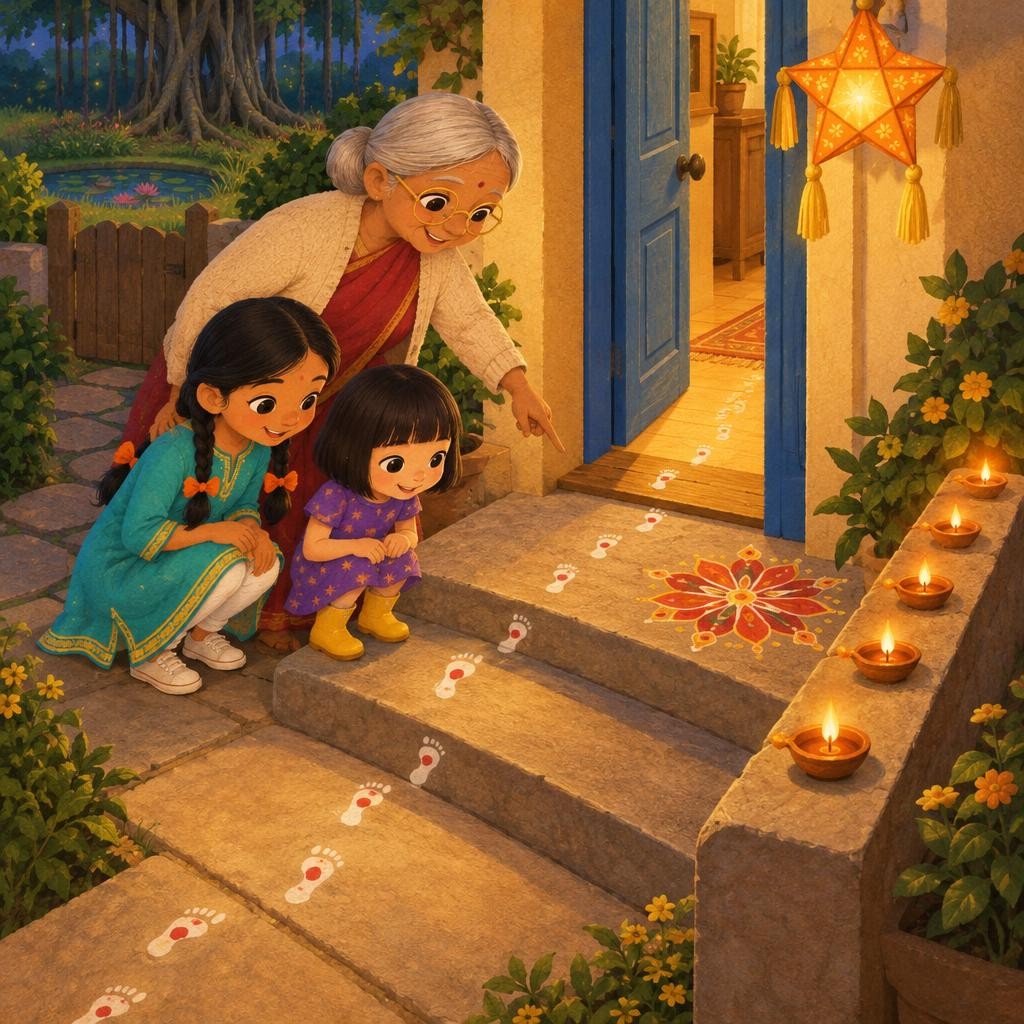
Back through the doorway, Nani points to her own front step. Many Hindu families also welcome Lakshmi on Diwali night. Lakshmi stands for good luck and plenty. Families clean, light lamps and paint tiny footprints at the door.
The Golden Temple
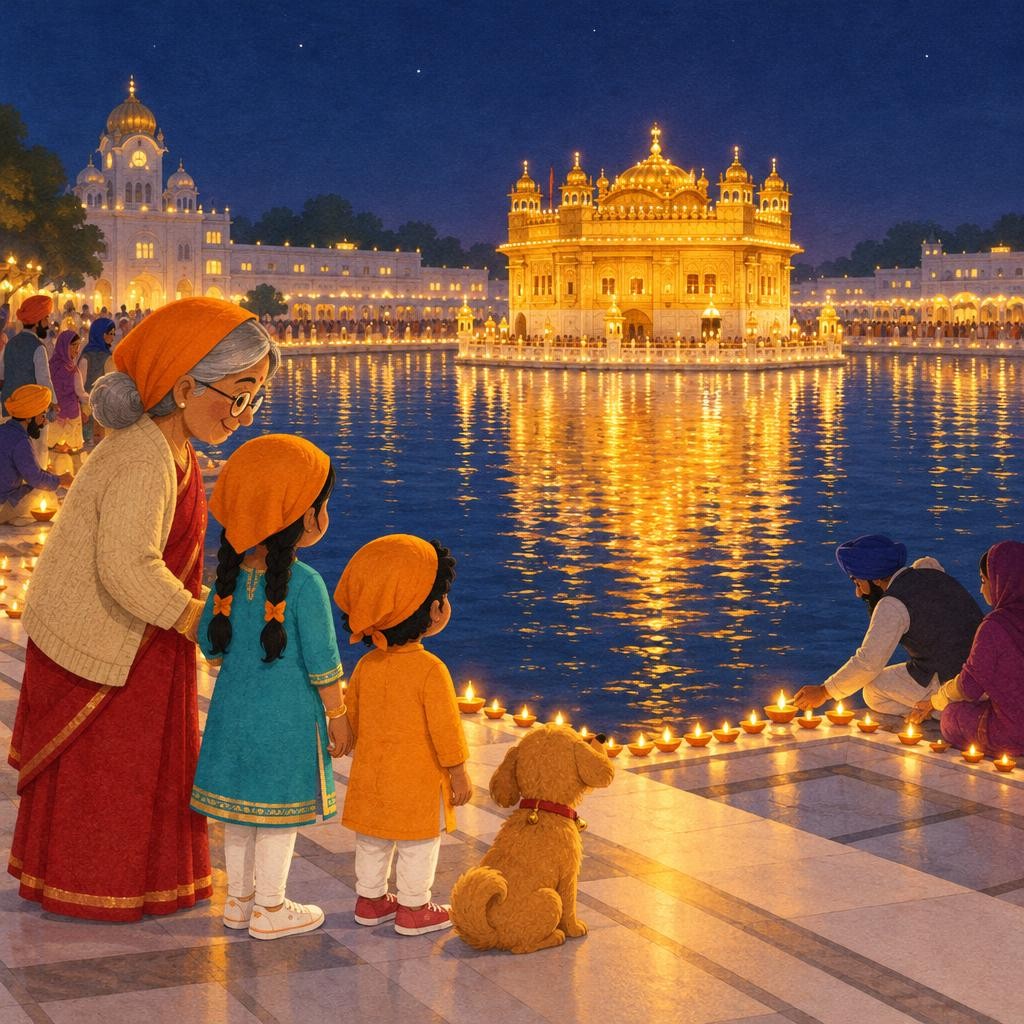
The lantern opens again, onto a golden building in the middle of a pool. This is the Golden Temple in Amritsar. Sikh families remember a day called Bandi Chhor Divas. A Guru is a great teacher. Long ago, Guru Hargobind was set free from a fort, and he helped 52 kings go free too.
Light for a wise teacher
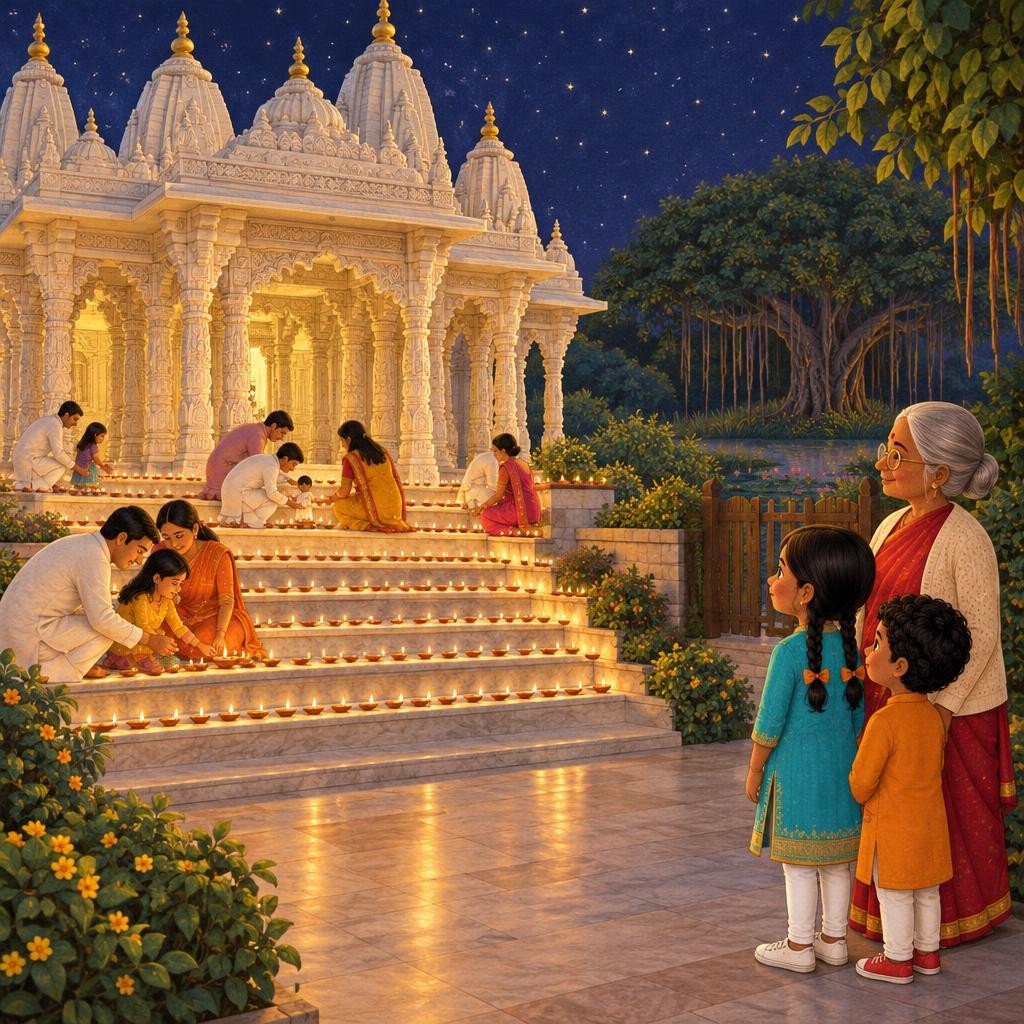
When Guru Hargobind came home, people lit lamps all around the Golden Temple, and they still do. Then the lantern shows a white stone temple. Jain families remember Mahavira, a wise teacher from long ago. They light lamps for the light of his teaching, which helps people be kind and wise.
What is the same?
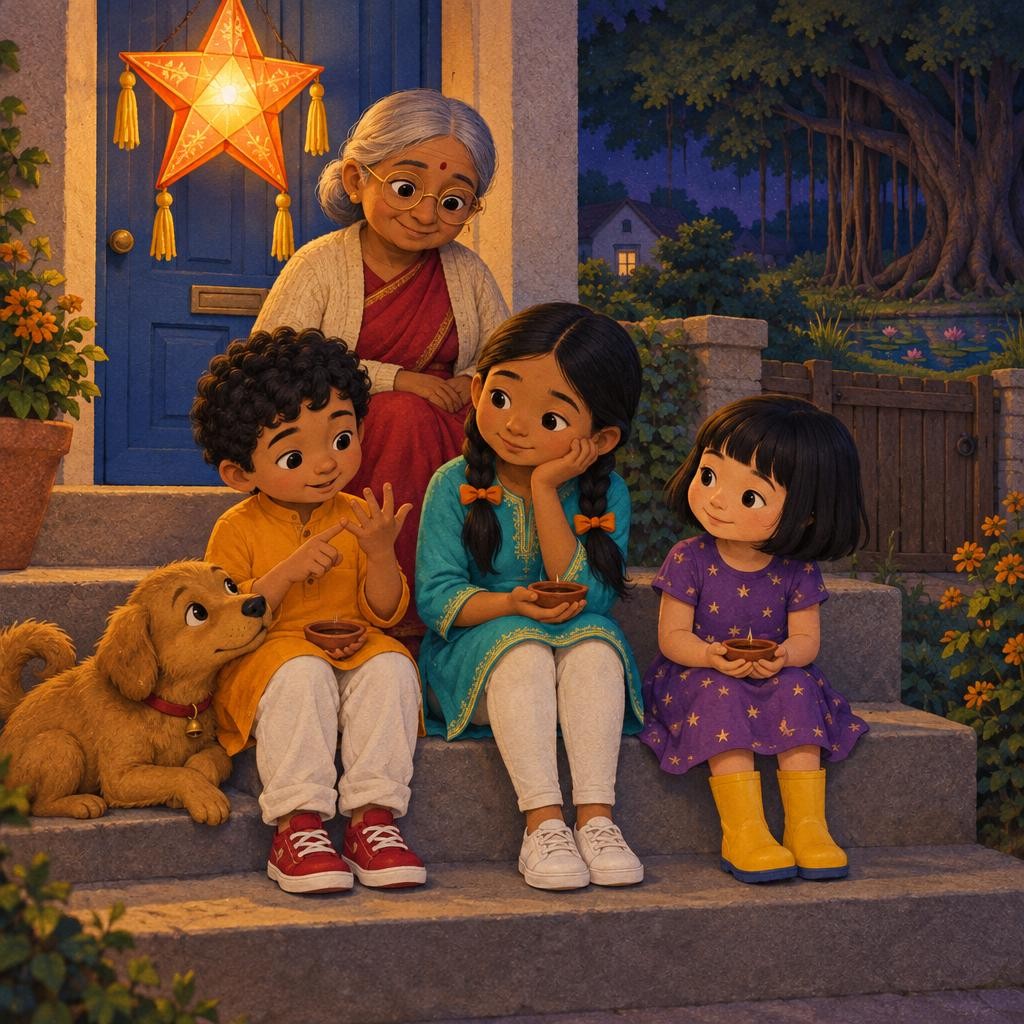
Pop! They step back home. Jai counts the stories on his fingers. "Rama came home. Lakshmi brings good luck. Guru Hargobind set people free. Mahavira taught kindness." Asha thinks hard.
Light wins over dark
In every story, the lamps mean something good wins. Light wins over dark. Kindness wins over meanness. Home wins over far away. That is why one tiny diya means so much.
Room for everyone
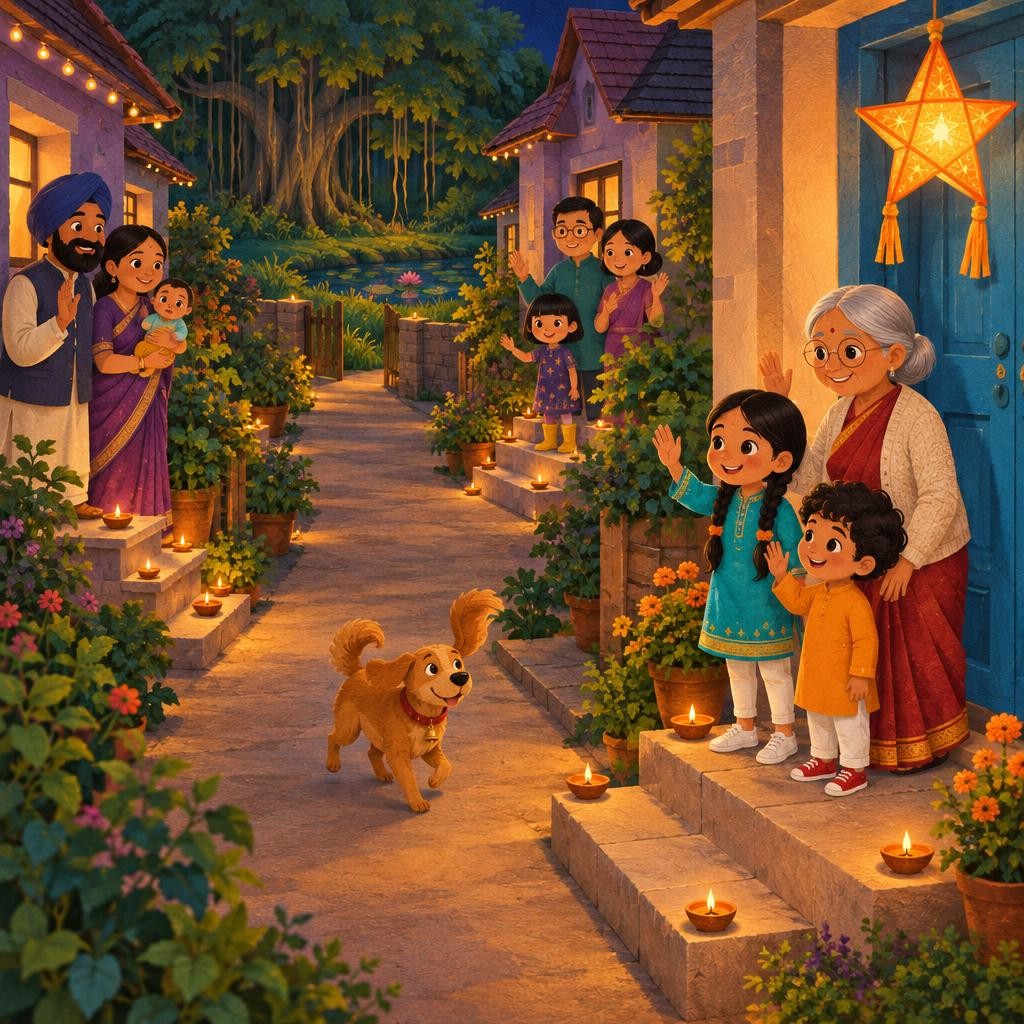
Some families remember Rama. Some remember Guru Hargobind or Mahavira, and many remember more than one story. Friends like Mei join in too. Diwali has room for everyone.
Stronger than dark
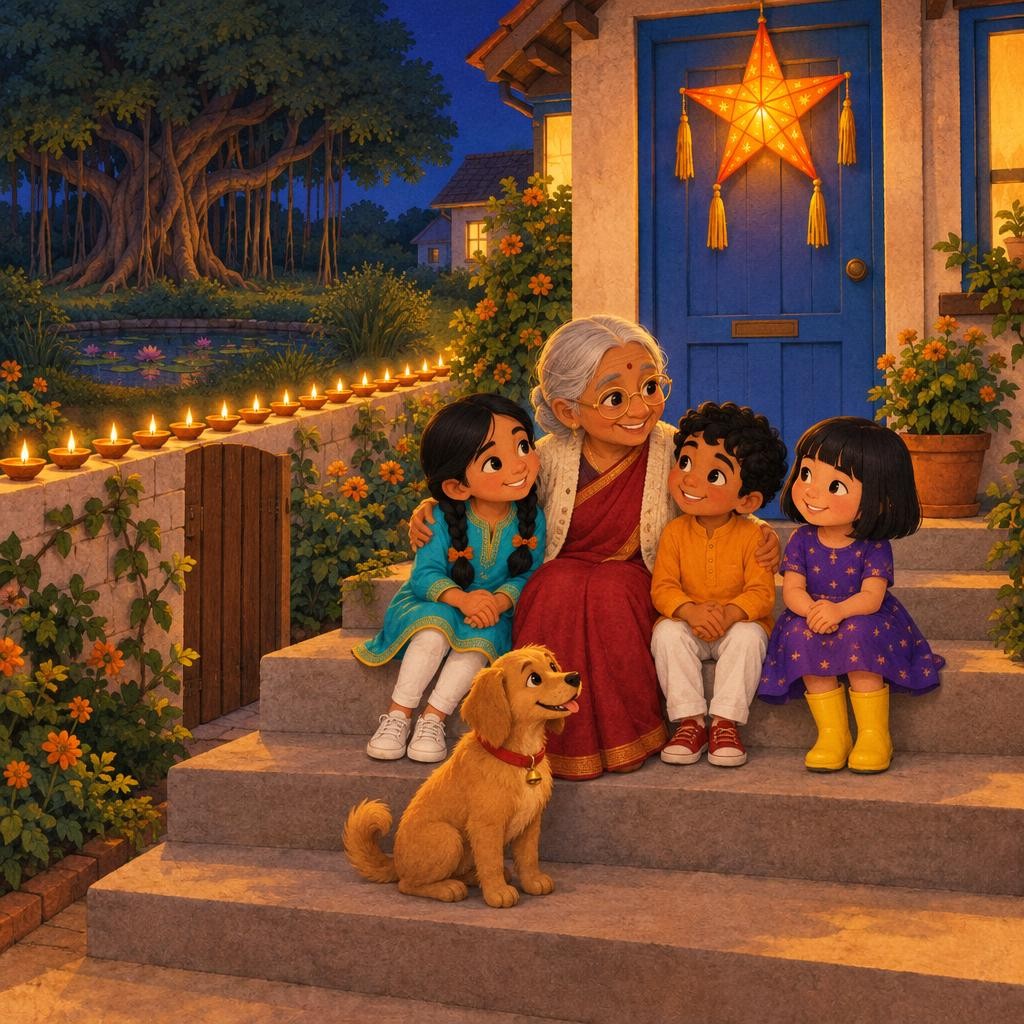
Nani lights a whole row of diyas on the step. "Each little lamp," says Asha, "says that light is stronger than dark." Which Diwali story would you like to hear again?
Key takeaways
- Many Hindu families remember Rama and Sita's homecoming, when rows of lamps lit the way.
- Deepavali, another name for Diwali, means "a row of lamps".
- Sikh families remember Bandi Chhor Divas with lamps at the Golden Temple.
- Jain families light lamps for the teacher Mahavira.
- In every story, light means good winning over bad.
Questions along the way
- Why did the people of Ayodhya light rows of lamps?
- What does the word Deepavali mean?
- Which day do Sikh families remember with lamps at the Golden Temple?
Common questions
What is the story of Diwali for kids?
Many Hindu families tell how Prince Rama, Sita and Rama's brother came home to Ayodhya after fourteen years away. It was a dark night, so the people lit rows of clay lamps to light their way home. That is one reason families light diyas on Diwali.
Why do Sikhs celebrate at Diwali time?
Sikh families celebrate Bandi Chhor Divas, remembering when Guru Hargobind was set free from a fort and helped 52 kings go free too. When he came home to Amritsar, people lit lamps around the Golden Temple.
Why do we celebrate Diwali?
To remember stories where good wins over bad and light wins over dark, to welcome good luck into the home, and to be together with family and friends.
Read-together tip
Light a battery tea light together in a dark room and notice how far one small light reaches. Then ask your child which Diwali story they would tell a friend, and why.