How the World Says Thank You
Spin Aunt Clara's wooden globe to visit six harvest thank-you festivals for kids: Chuseok, Mid-Autumn, Pongal, Homowo, Erntedankfest, and Japan's Labor Thanksgiving Day.
Thanksgiving for Kids · 4 of 7
about real things · asks questions · 9 pages · ages 6–7 · 3 min · English
Read · Play · Listen · PDF · Print edition · with the Storybook Pass · Make it about your child
Reviewed for child safety · gentle by design · How our storybooks are made
Published 2026-11-26T10:24:13.117395
Quick answer
Around the world, families celebrate harvest and gratitude in many ways: Chuseok in Korea, Mid-Autumn Festival in China and Vietnam, Pongal in South India, Homowo in Ghana, Erntedankfest in Germany and Austria, and Kinrō Kansha no Hi in Japan.
Inside this storybook
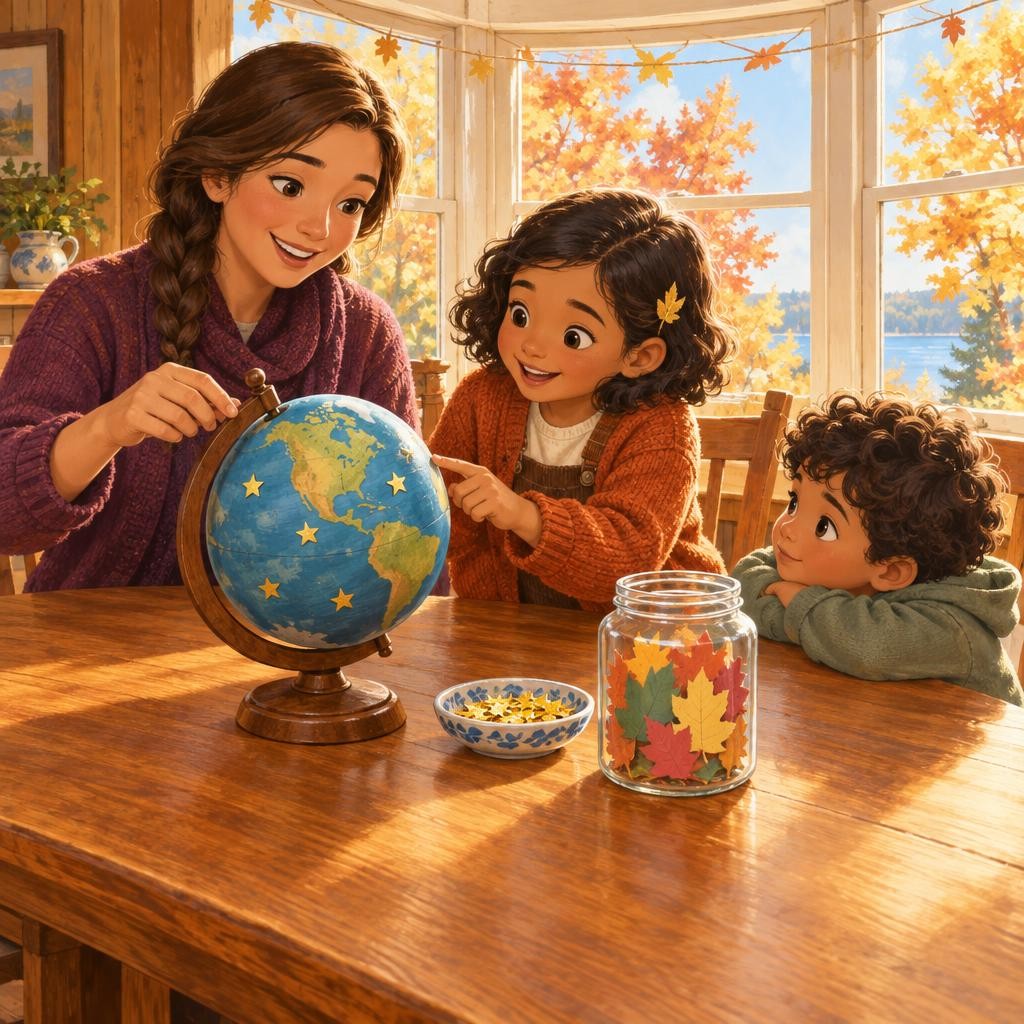
Aunt Clara sets her smooth wooden picture globe beside the Thankful Jar on the table. "We celebrate Thanksgiving in November, and you celebrate in Canada in October," says Nora. "Do families in other countries have thank-you harvest days too?" Aunt Clara spins the globe gently. "Let's travel and see!"
First stop across the ocean: Korea! Under the bright autumn full moon, families gather for Chuseok. Grandparents and children sit together shaping sweet half-moon rice cakes called songpyeon from newly harvested rice, thanking their ancestors for a good year.
Nearby in China and Vietnam, families step outdoors under the same bright harvest moon for the Mid-Autumn Festival. Children parade with glowing paper lanterns while grandparents slice round golden mooncakes into neat wedges so every person at the table gets a piece.
Now spin south to South India! In January, after the rice and sugarcane harvest, families celebrate Pongal — sweet rice boiled with milk and brown sugar in a decorated clay pot outdoors. When the pot bubbles over, everyone cheers "Pongalo Pongal!" to thank the sun, the rain, and farm cattle.
Back at Grandpa's table, Nora sticks three tiny gold paper stars onto Aunt Clara's smooth globe: Korea, China and Vietnam, and South India. "Every place celebrates with the food its land grows best!" says Nora. Owen gives the globe a gentle nudge west. "Where are we going next?"
In Ghana, the Ga people celebrate Homowo, which means "hooting at hunger." Long ago, rain finally returned after a hard dry season and brought a rich corn harvest. Today, whole neighborhoods gather in bright woven kente cloth for joyful music, dancing, and shared cornmeal feasts!
Spin north to Germany and Austria! Each autumn, towns celebrate Erntedankfest — literally "harvest thanks festival." Neighbors weave giant golden crowns out of wheat stalks, shiny red apples, and autumn flowers, and parade them proudly through the town square.
One more spin east to Japan! On November twenty-third, families celebrate Labor Thanksgiving Day — Kinrō Kansha no Hi. It began as an ancient rice harvest day, and today children draw colorful thank-you pictures to give to local bakers, teachers, bus drivers, and firefighters.
Six tiny gold stars now sparkle across Aunt Clara's wooden globe beside the Thankful Jar. Whether families share songpyeon, mooncakes, sweet Pongal rice, cornmeal, wheat crowns, or handmade cards, saying thank you for food and helpers connects people all over Earth. What food does your family love to share?
The pages
Spinning the picture globe
Aunt Clara sets her smooth wooden picture globe beside the Thankful Jar on the table. "We celebrate Thanksgiving in November, and you celebrate in Canada in October," says Nora. "Do families in other countries have thank-you harvest days too?" Aunt Clara spins the globe gently. "Let's travel and see!"
Chuseok in Korea
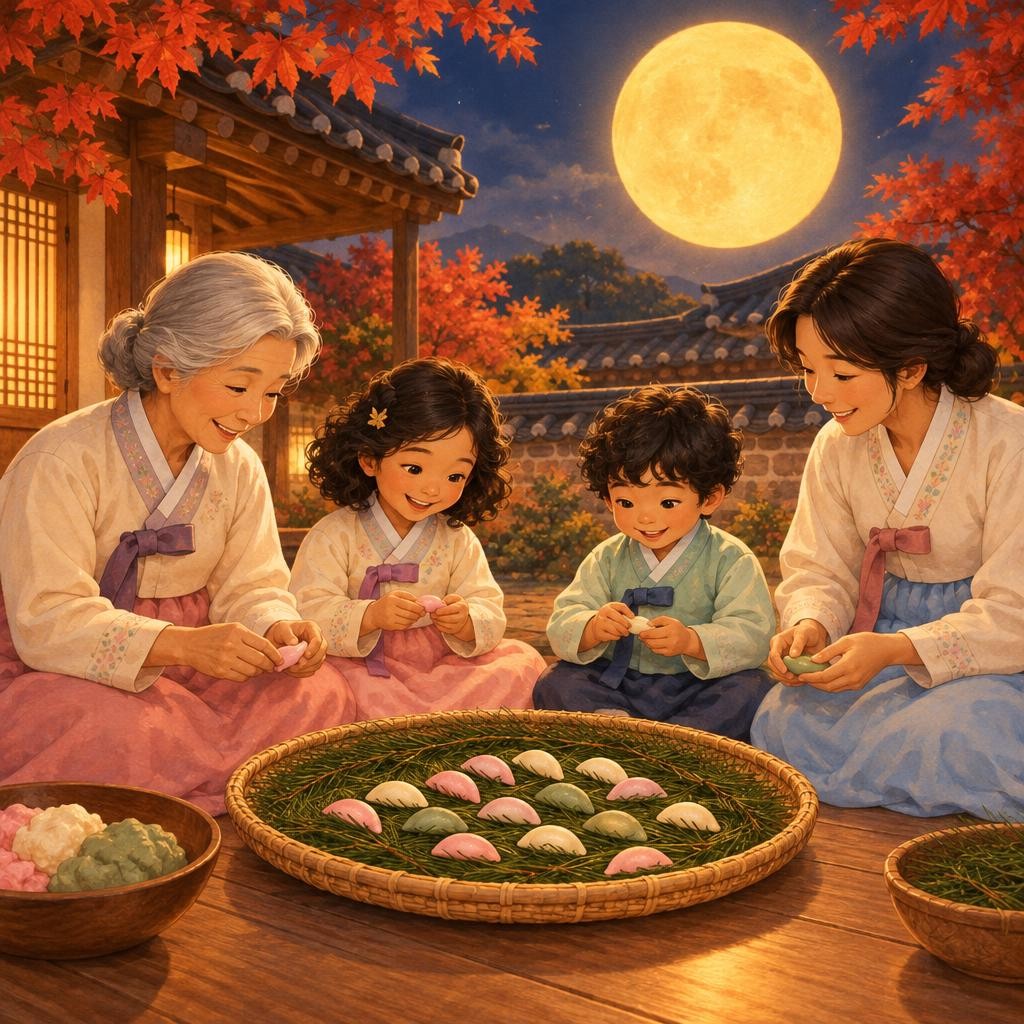
First stop across the ocean: Korea! Under the bright autumn full moon, families gather for Chuseok. Grandparents and children sit together shaping sweet half-moon rice cakes called songpyeon from newly harvested rice, thanking their ancestors for a good year.
Mid-Autumn mooncakes
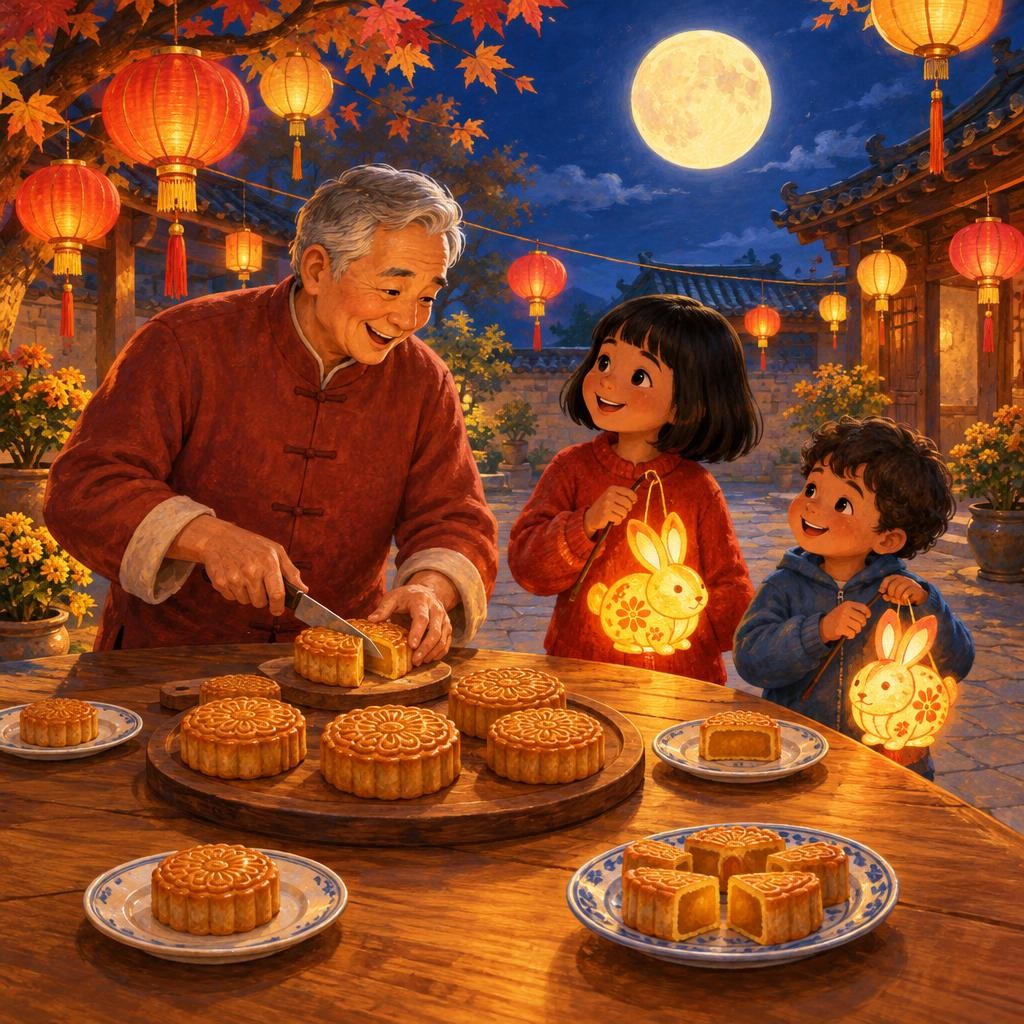
Nearby in China and Vietnam, families step outdoors under the same bright harvest moon for the Mid-Autumn Festival. Children parade with glowing paper lanterns while grandparents slice round golden mooncakes into neat wedges so every person at the table gets a piece.
Pongal in South India
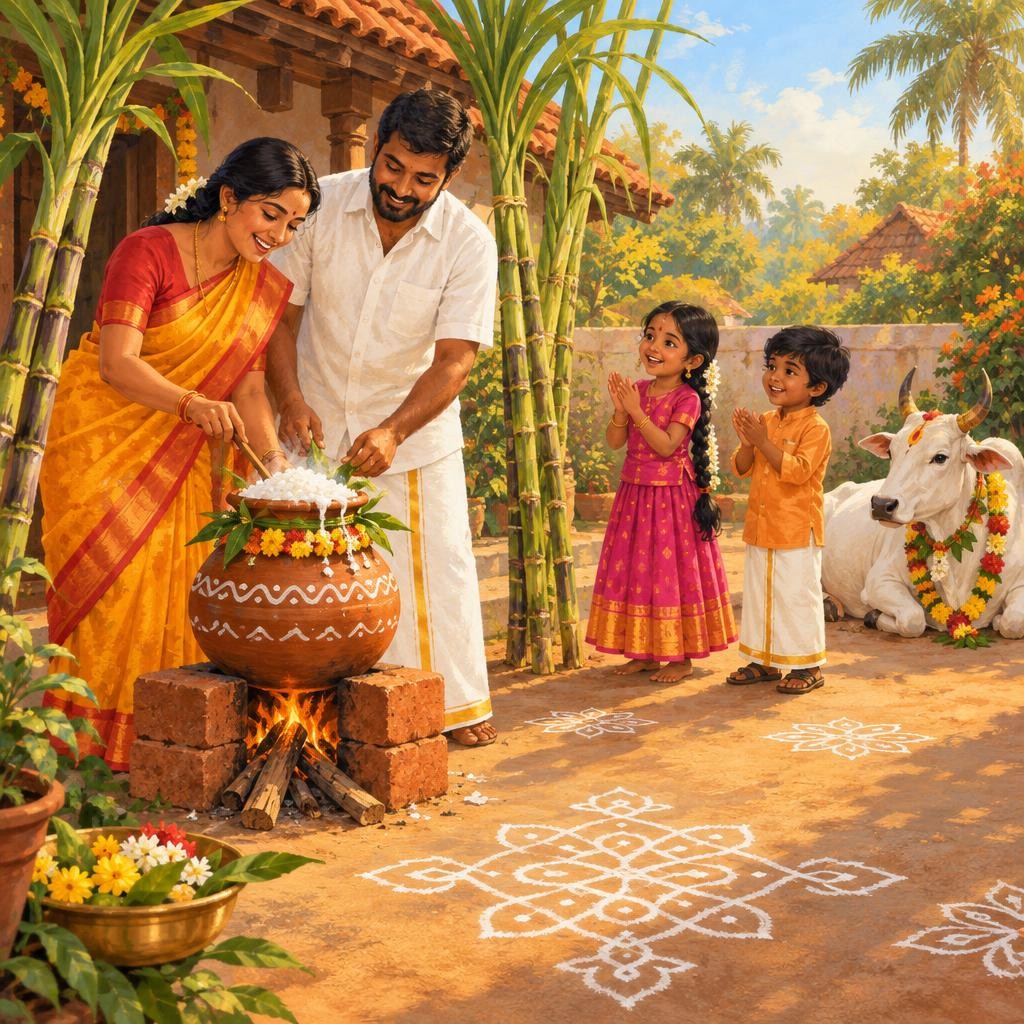
Now spin south to South India! In January, after the rice and sugarcane harvest, families celebrate Pongal — sweet rice boiled with milk and brown sugar in a decorated clay pot outdoors. When the pot bubbles over, everyone cheers "Pongalo Pongal!" to thank the sun, the rain, and farm cattle.
Three stars on the globe
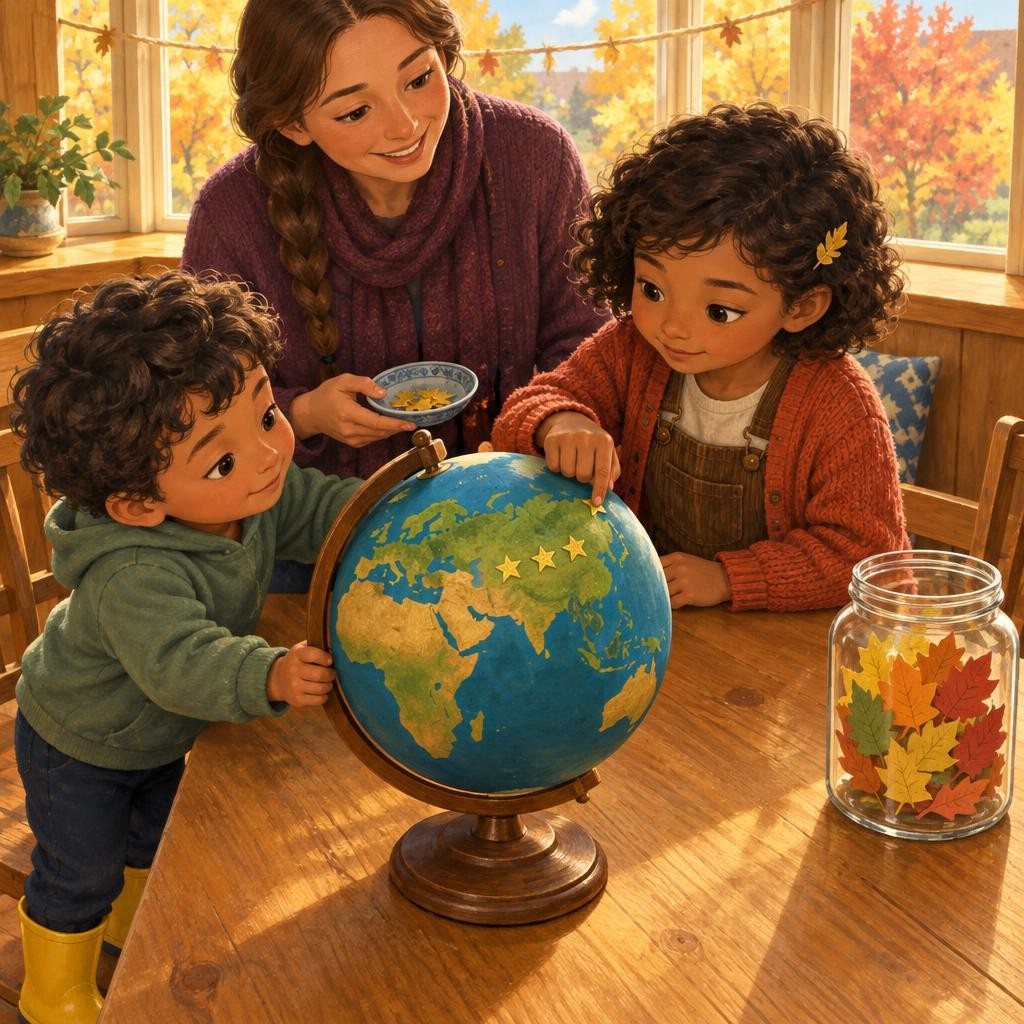
Back at Grandpa's table, Nora sticks three tiny gold paper stars onto Aunt Clara's smooth globe: Korea, China and Vietnam, and South India. "Every place celebrates with the food its land grows best!" says Nora. Owen gives the globe a gentle nudge west. "Where are we going next?"
Homowo in Ghana
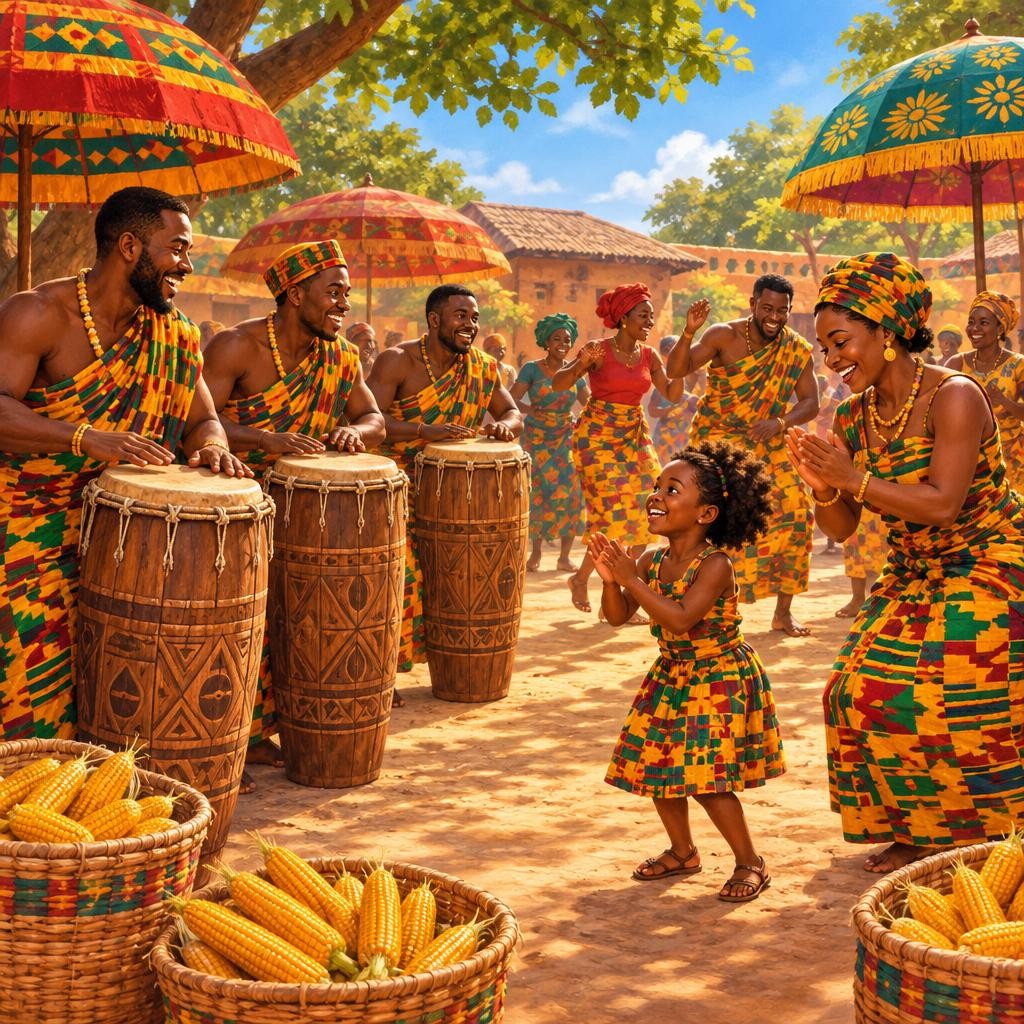
In Ghana, the Ga people celebrate Homowo, which means "hooting at hunger." Long ago, rain finally returned after a hard dry season and brought a rich corn harvest. Today, whole neighborhoods gather in bright woven kente cloth for joyful music, dancing, and shared cornmeal feasts!
Erntedankfest in Germany
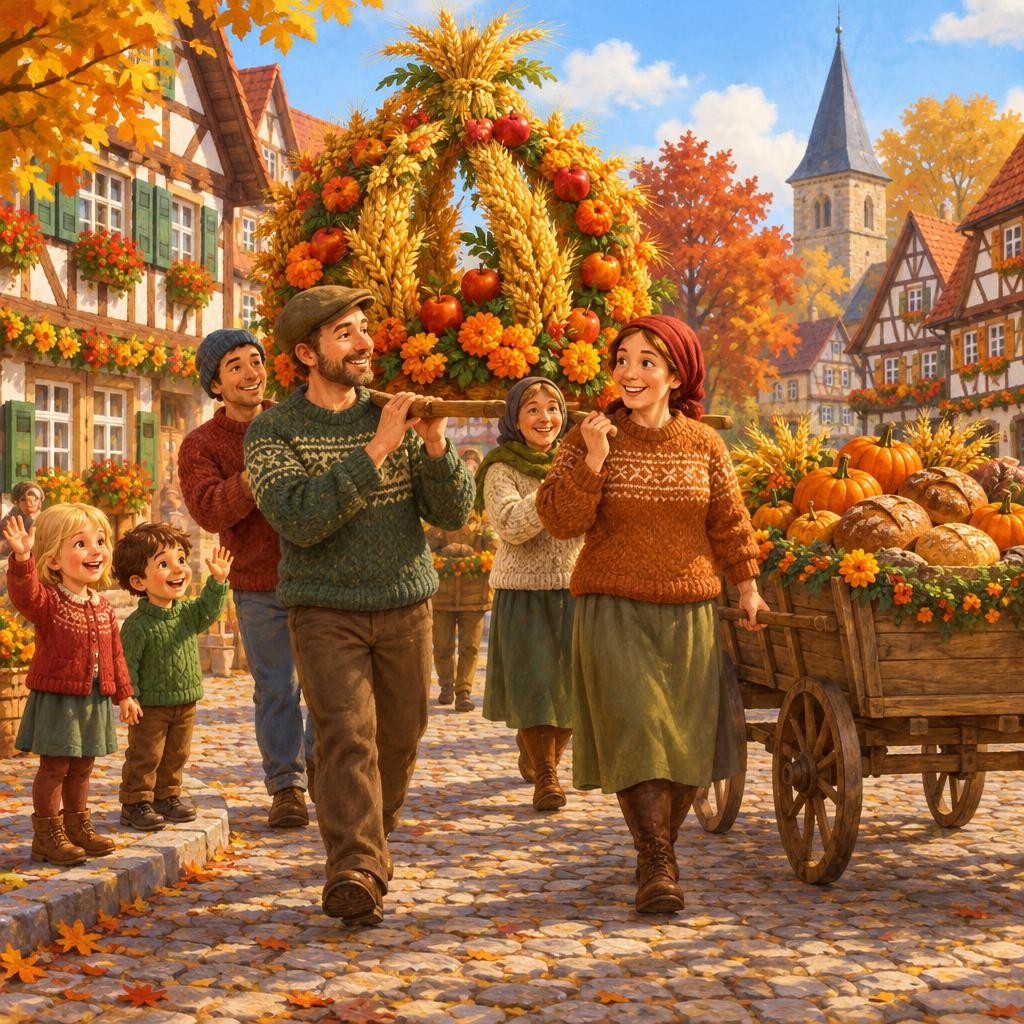
Spin north to Germany and Austria! Each autumn, towns celebrate Erntedankfest — literally "harvest thanks festival." Neighbors weave giant golden crowns out of wheat stalks, shiny red apples, and autumn flowers, and parade them proudly through the town square.
Thank-you cards in Japan
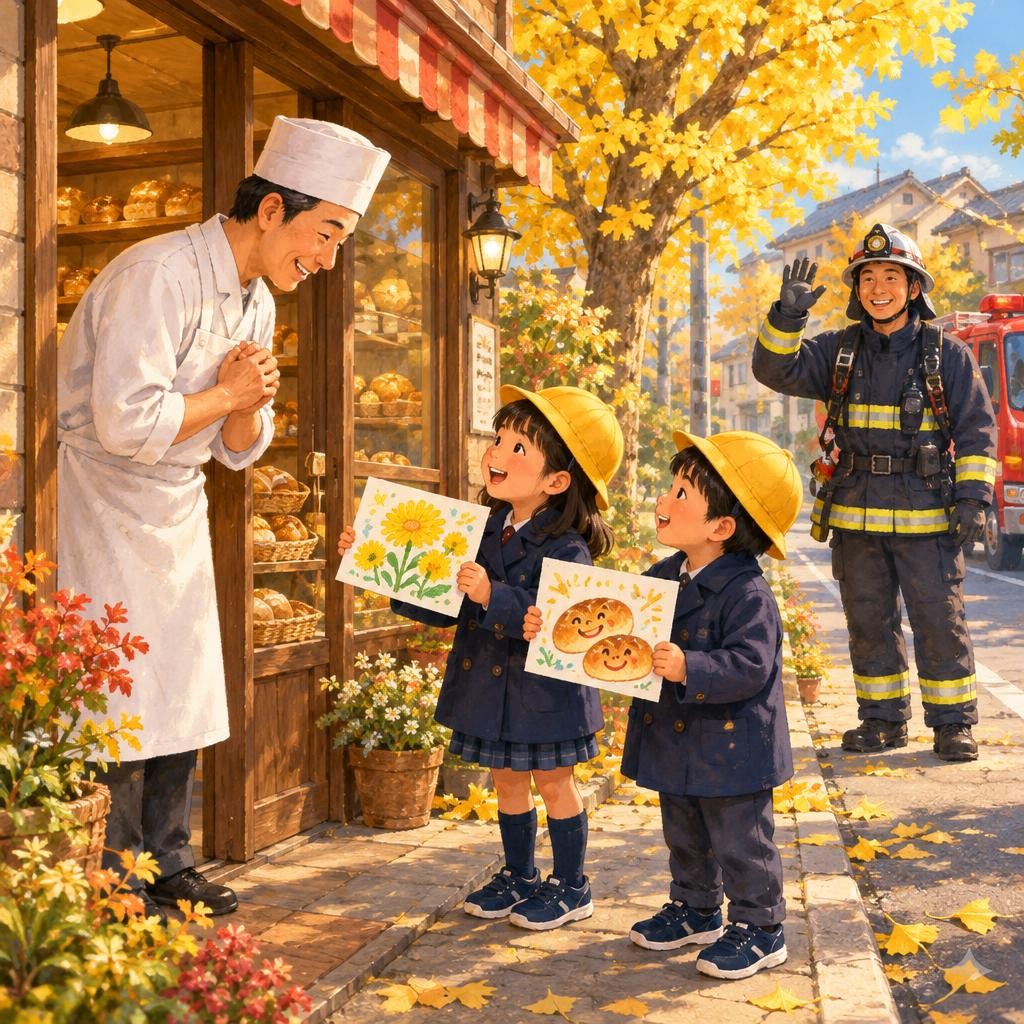
One more spin east to Japan! On November twenty-third, families celebrate Labor Thanksgiving Day — Kinrō Kansha no Hi. It began as an ancient rice harvest day, and today children draw colorful thank-you pictures to give to local bakers, teachers, bus drivers, and firefighters.
One thankful world
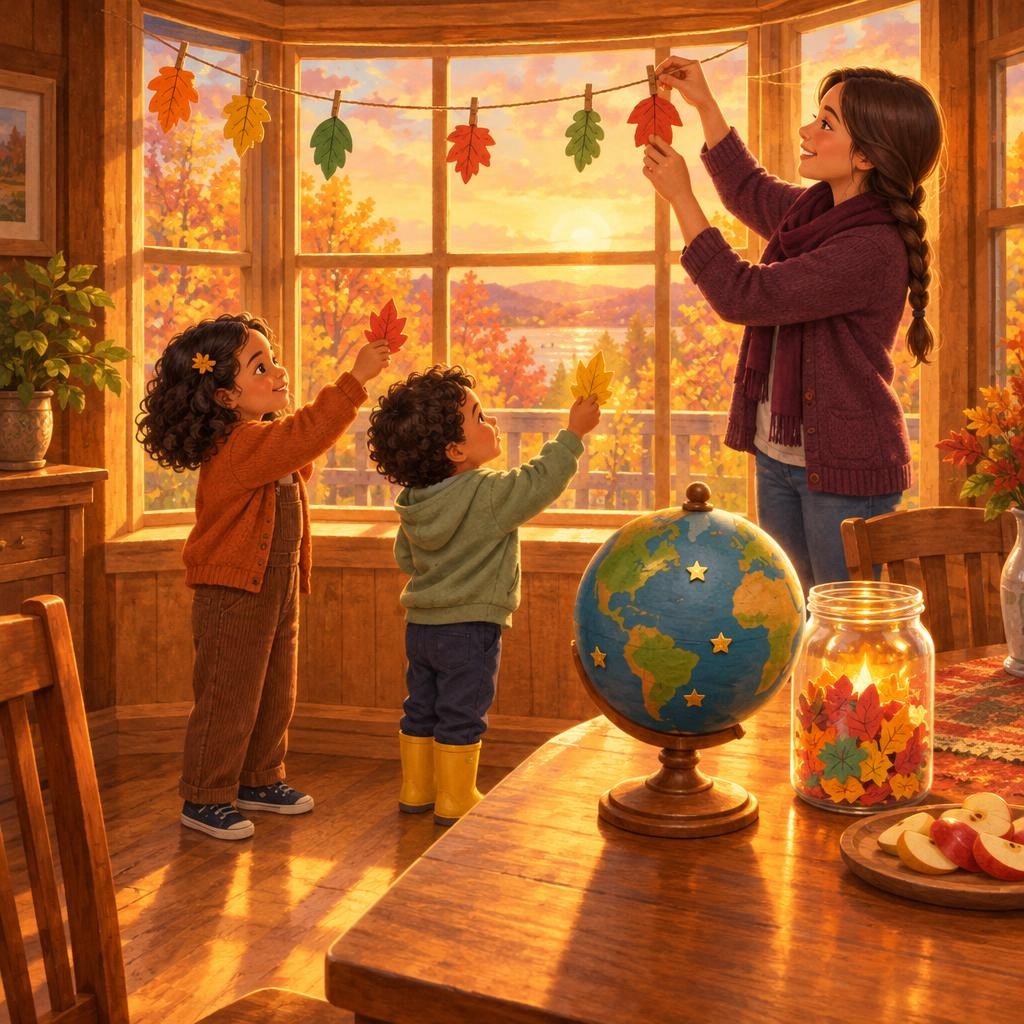
Six tiny gold stars now sparkle across Aunt Clara's wooden globe beside the Thankful Jar. Whether families share songpyeon, mooncakes, sweet Pongal rice, cornmeal, wheat crowns, or handmade cards, saying thank you for food and helpers connects people all over Earth. What food does your family love to share?
Key takeaways
- In Korea, families shape half-moon songpyeon rice cakes for Chuseok under the autumn moon.
- In South India, Pongal celebrates January's rice harvest with sweet bubbling rice.
- In Ghana, the Ga people celebrate Homowo ("hooting at hunger") with drums and cornmeal feasts.
- On November 23 in Japan, children give handmade thank-you drawings to local community helpers.
Questions along the way
- What are songpyeon, shaped by families in Korea during Chuseok?
- During Pongal in South India, why do families cheer when the clay pot bubbles over?
- What does the Ghanaian harvest festival name Homowo mean?
Common questions
What are harvest festivals around the world for kids?
Major harvest celebrations include Chuseok (Korea), Mid-Autumn Festival (China and Vietnam), Pongal (South India), Homowo (Ghana), Erntedankfest (Germany and Austria), and US and Canadian Thanksgiving.
What is Japan's Labor Thanksgiving Day?
Celebrated on November 23, Kinrō Kansha no Hi grew from an ancient rice harvest festival into a day when children draw thank-you cards for firefighters, teachers, bakers, and neighbors.
Why do harvest festivals happen in different months?
Crops ripen at different times depending on climate and latitude — October in Canada, autumn in Korea and Germany, and January in tropical South India.
Read-together tip
Pick one community helper your child sees each week — a librarian, postal worker, or bus driver — and borrow Japan's tradition by drawing them a colorful thank-you picture together!