How Could a Giant Stone Be Money?
Kai can't lift a stone doorstop. On the island of Yap he finds stones taller than Grandma Rosa that were money, and one sunk in the sea that still counted.
Understanding money · 4 of 12
about real things · asks questions · 8 pages · ages 6–7 · 2 min · English
Read · Play · Listen · PDF · Print edition · with the Storybook Pass · Make it about your child
Reviewed for child safety · gentle by design · How our storybooks are made
Published 2026-11-03T17:45:21.912411
Quick answer
On the island of Yap in the Pacific, giant round stones called rai were money. They were too heavy to move, so when one changed hands it stayed put and the whole village remembered who owned it.
Inside this storybook
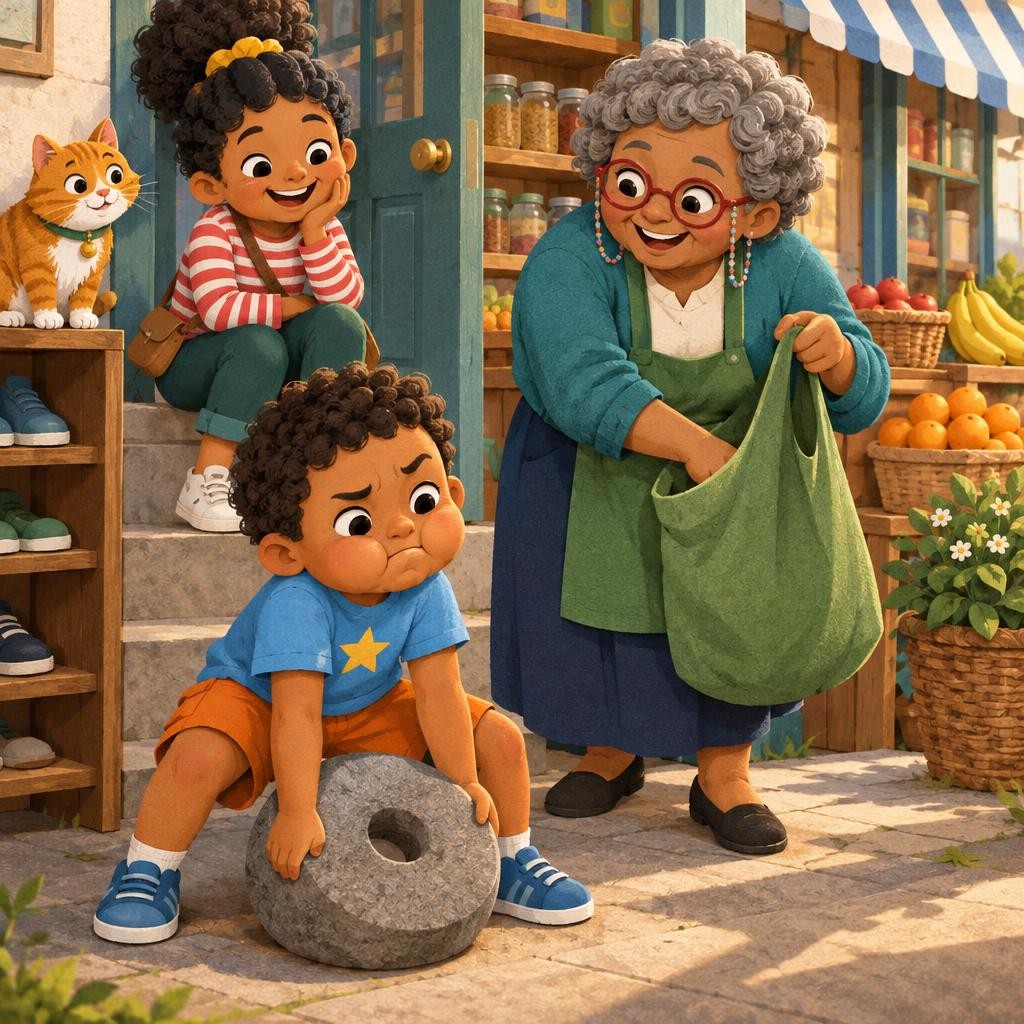
Kai tries to lift Grandma Rosa's round stone doorstop. It won't budge. "Could a stone ever be money?" he puffs. Grandma Rosa reaches into her green bag for her little box. "A giant one could. Let's go and see."
Pop! The box opens onto Yap, a green island in the Pacific Ocean. Along the village paths stand huge round stones with holes in the middle. Some are taller than Grandma Rosa! For hundreds of years, these stones were money.
Long ago, the people of Yap carved these stones on another island, far across the sea. Then they carried them home on rafts pulled by canoes. It was hard, slow work, and that is one reason the stones were so special.
Kai tries to put a giant stone in his pocket. It doesn't work! The stones were far too heavy to move. So when a stone was given to a new family, it stayed right where it was, and the whole village remembered who owned it now.
Here is a true story. Once, a big stone slipped off its raft on the way home and sank to the bottom of the sea. Nobody could ever see it again. But all the villagers knew it was down there.
It was still money! The family that owned it could still pay with it, because everyone agreed it was there. A visitor wrote this story down more than a hundred years ago. Money works when people agree and remember.
Pop! Back home, Nia needs a green crayon for her drawing, so she borrows Kai's. Kai frowns. Will he get it back?
A tiny stone wheel goes into the next hollow. "Remember this stone," says Grandma Rosa. "One day we'll meet a new kind of money that works a bit like it."
The pages
Could a stone be money?
Kai tries to lift Grandma Rosa's round stone doorstop. It won't budge. "Could a stone ever be money?" he puffs. Grandma Rosa reaches into her green bag for her little box. "A giant one could. Let's go and see."
The island of stone money
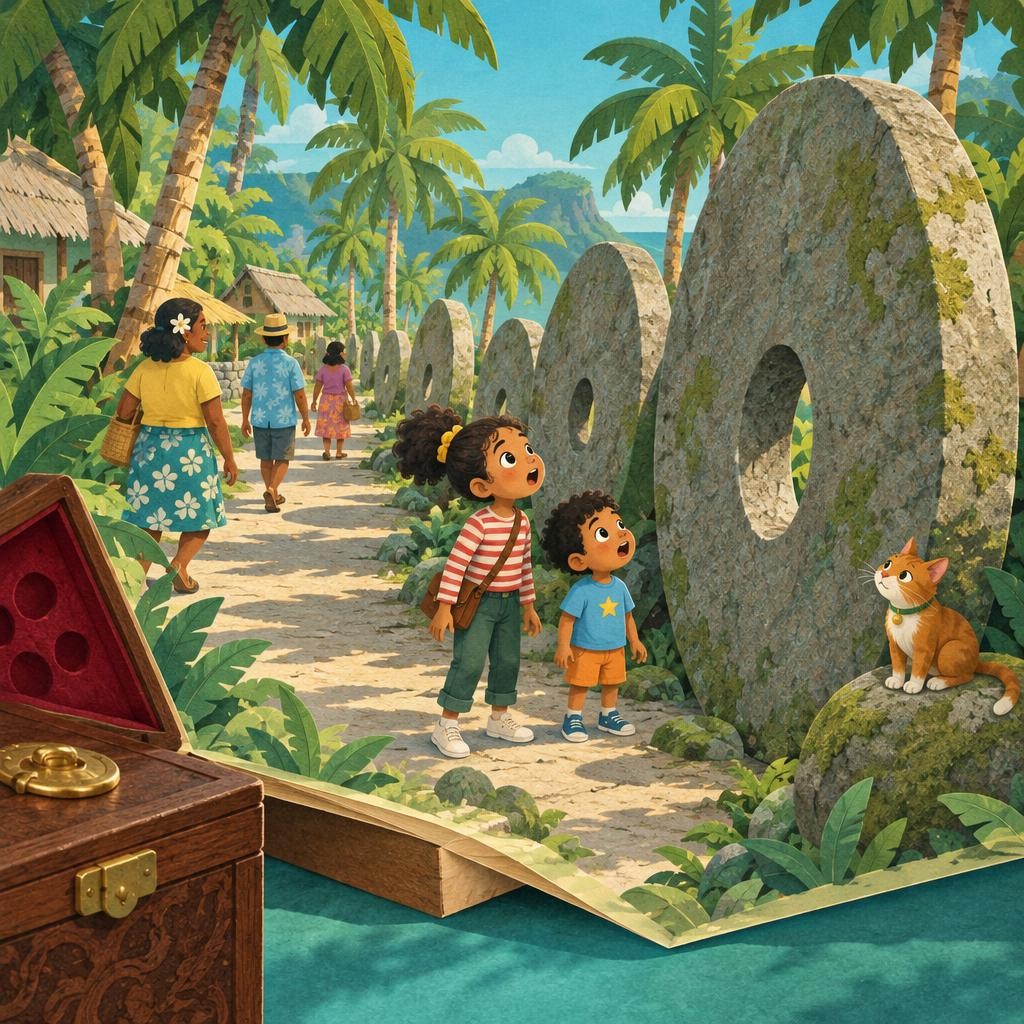
Pop! The box opens onto Yap, a green island in the Pacific Ocean. Along the village paths stand huge round stones with holes in the middle. Some are taller than Grandma Rosa! For hundreds of years, these stones were money.
Across the sea
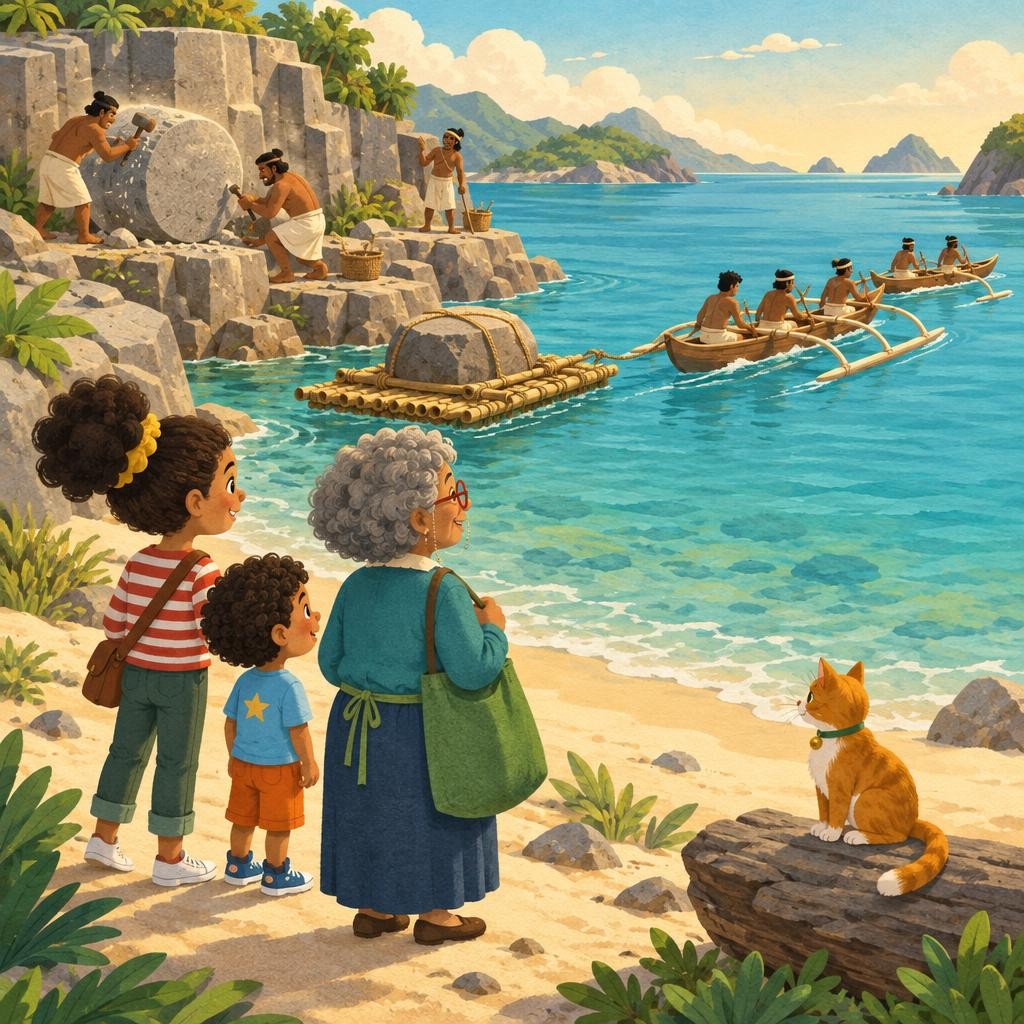
Long ago, the people of Yap carved these stones on another island, far across the sea. Then they carried them home on rafts pulled by canoes. It was hard, slow work, and that is one reason the stones were so special.
Too big for a pocket
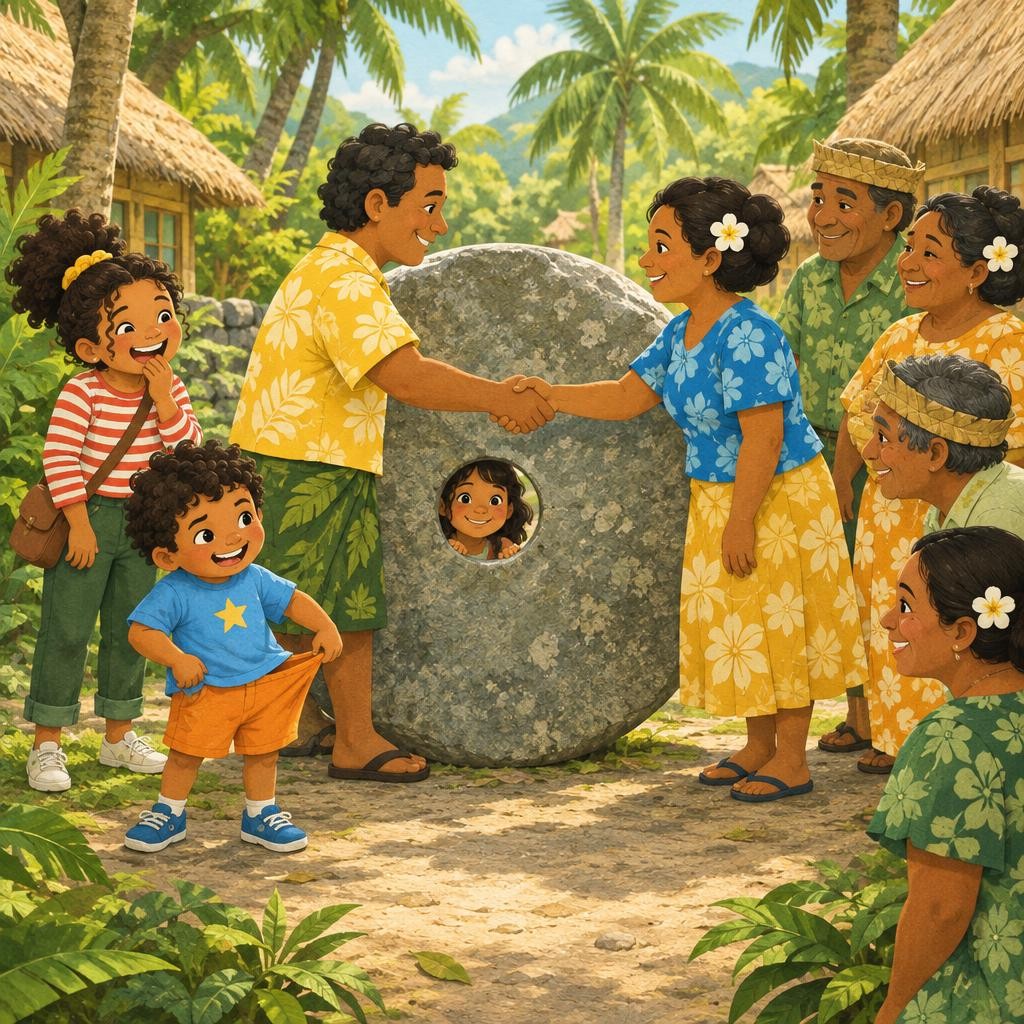
Kai tries to put a giant stone in his pocket. It doesn't work! The stones were far too heavy to move. So when a stone was given to a new family, it stayed right where it was, and the whole village remembered who owned it now.
The stone in the sea
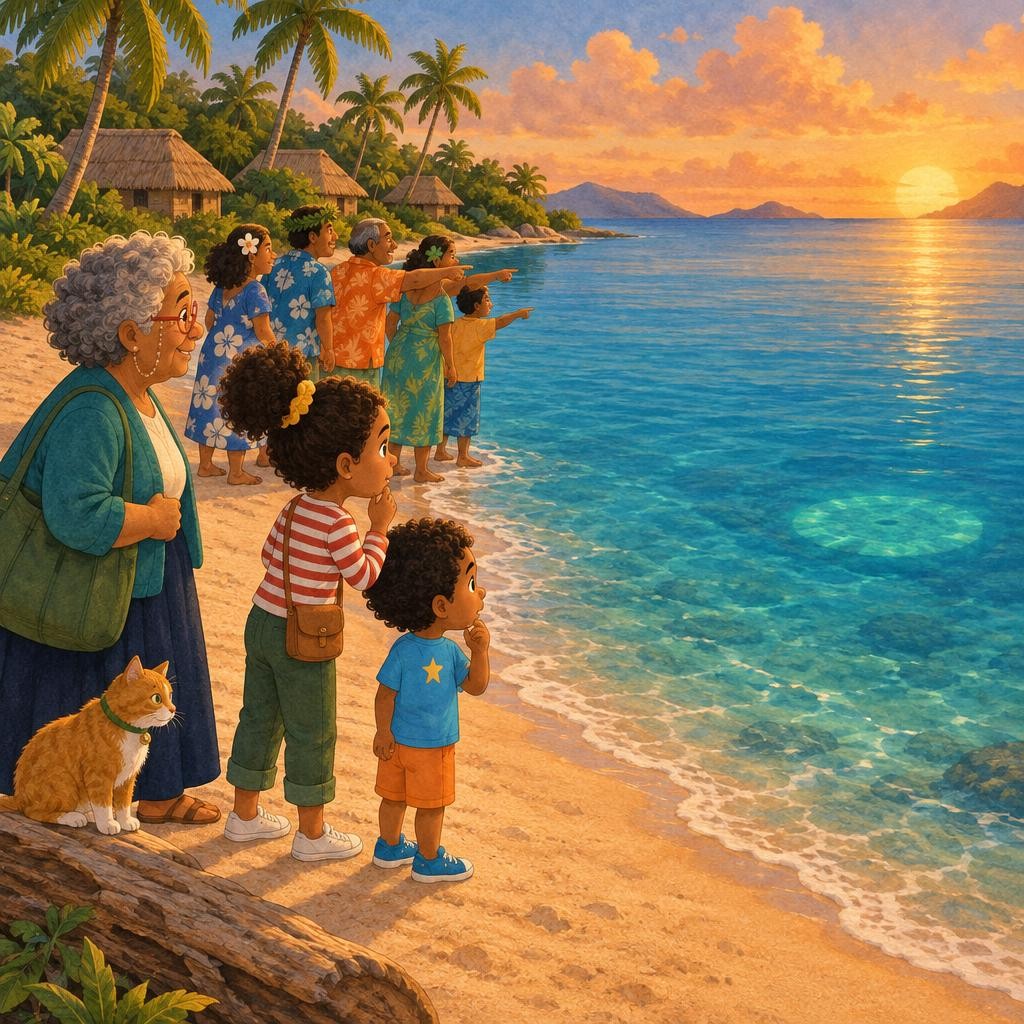
Here is a true story. Once, a big stone slipped off its raft on the way home and sank to the bottom of the sea. Nobody could ever see it again. But all the villagers knew it was down there.
Still money!
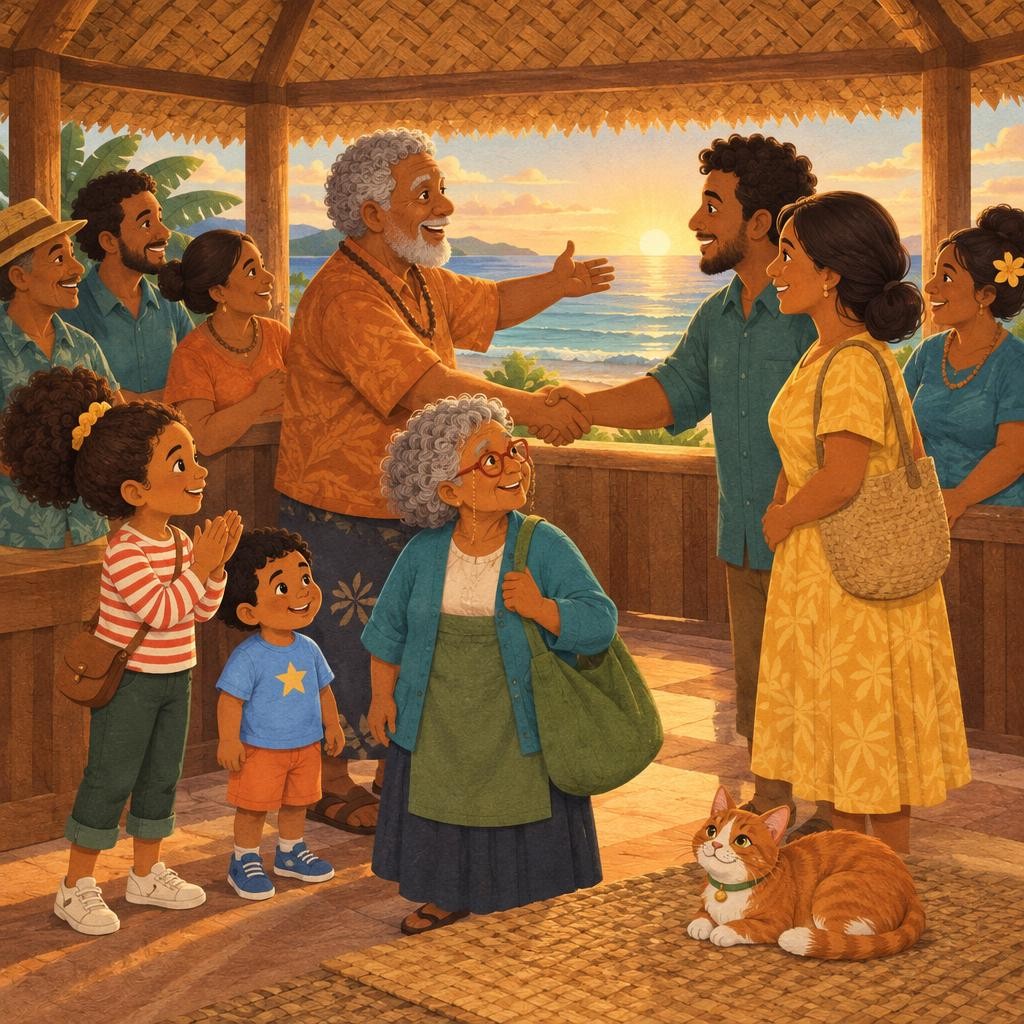
It was still money! The family that owned it could still pay with it, because everyone agreed it was there. A visitor wrote this story down more than a hundred years ago. Money works when people agree and remember.
Keeping track
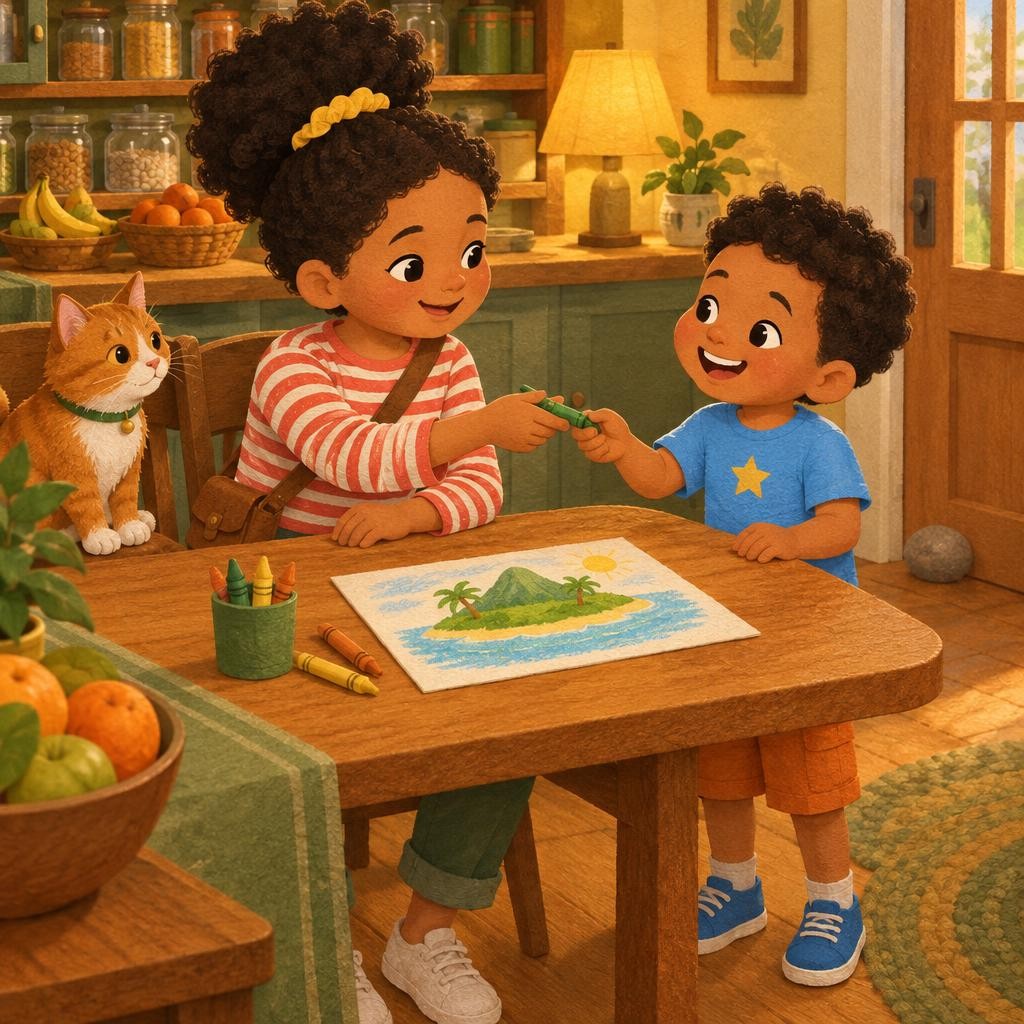
Pop! Back home, Nia needs a green crayon for her drawing, so she borrows Kai's. Kai frowns. Will he get it back?
A stone for the box
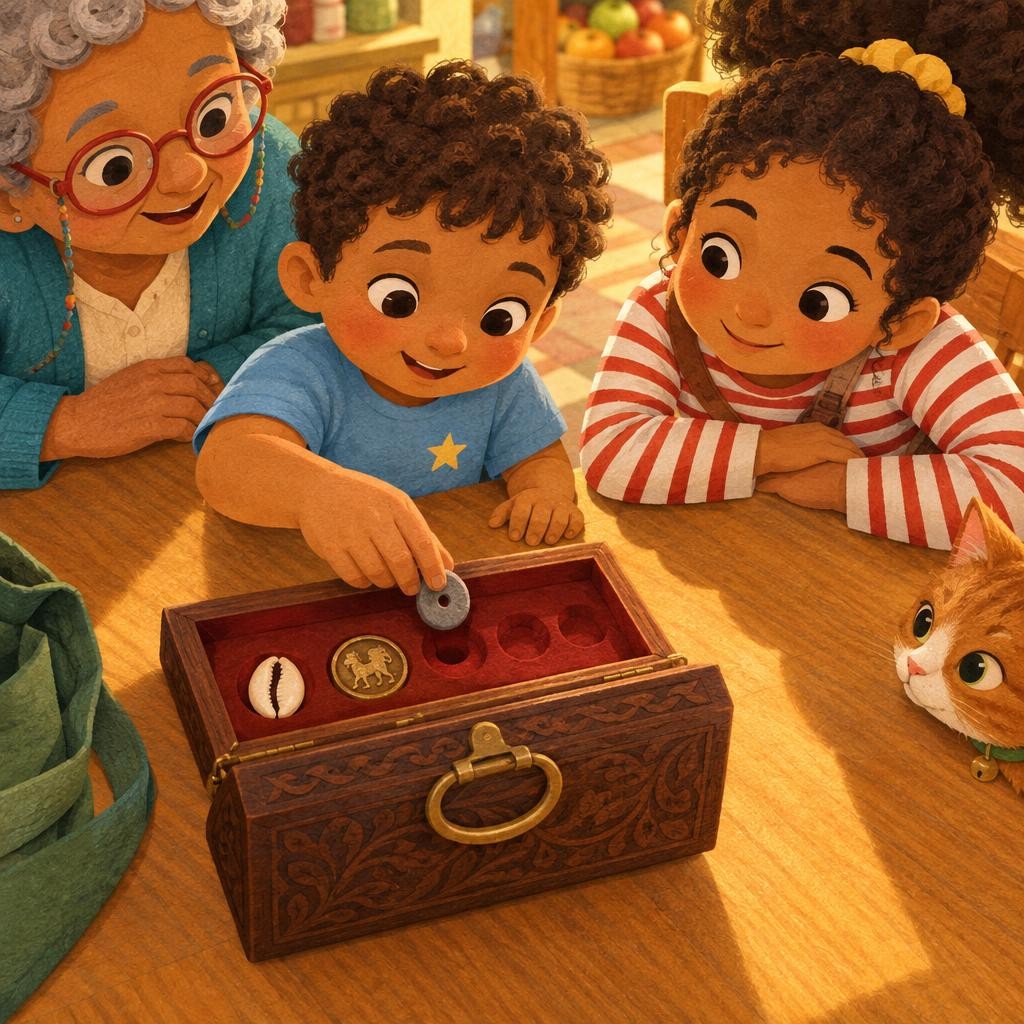
A tiny stone wheel goes into the next hollow. "Remember this stone," says Grandma Rosa. "One day we'll meet a new kind of money that works a bit like it."
Key takeaways
- On Yap, giant stones were money.
- The stones stayed put; the village remembered who owned each one.
- Money works when people agree and keep track.
- When we borrow, we remember and give it back.
Questions along the way
- Why didn't people on Yap move their giant stones?
- How did people know who owned each stone?
- The stone at the bottom of the sea: was it still money?
Common questions
What is Yap stone money?
Giant round stones with a hole in the middle, called rai, used as money on the island of Yap. Some are taller than a grown-up.
How could a stone at the bottom of the sea be money?
Everyone agreed it was there and remembered who owned it, so its family could still use it to pay.
Read-together tip
Give each person a "stone" (a cushion) and trade them without moving them. A day later, can everyone remember who owns which one?