How Do Octopuses Change Color?
Zoom beneath octopus skin to see pigment sacs expand and shrink under muscular control.
Ages 8-10 - 2 minute lesson - gentle - EN
Reviewed for child-safety · gentle by design · How our stories are made
Published 2026-08-09T12:10:44.206842

Quick answer
Children will understand that an octopus can expand or contract pigment-filled chromatophore organs using radial muscles, changing how much colored pigment is visible across the skin.
Lesson
A common octopus rested pale against sand. As it crossed toward a rust-colored rock, patches of red-brown and dark brown spread across its mantle and arms. No paint entered the water. The color was already inside the octopus's skin, controlled by many tiny organs.
Zoom into pale-looking skin. One tiny dark dot is a chromatophore: a flexible sac that already contains pigment. Thin muscle fibers spread outward from it like spokes. When those muscles are relaxed, the pigment sac stays small, so little color shows at the surface.
When the radial muscles contract, they shorten and pull the sac outward in many directions. The pigment spreads across a wider disk, so more color becomes visible. When the muscles relax, the elastic sac shrinks again. The pigment does not vanish; its visible area changes.
Octopus skin contains thousands of chromatophores with yellow, red, and brown pigments. The nervous system controls groups of them, building spots, bands, and mottled patterns. Other cells can reflect light and change brightness too. Together, these layers make the octopus's appearance remarkably flexible.
Lesson scenes
A Pattern Appears
A common octopus rested pale against sand. As it crossed toward a rust-colored rock, patches of red-brown and dark brown spread across its mantle and arms. No paint entered the water. The color was already inside the octopus's skin, controlled by many tiny organs.
A Dot Called a Chromatophore
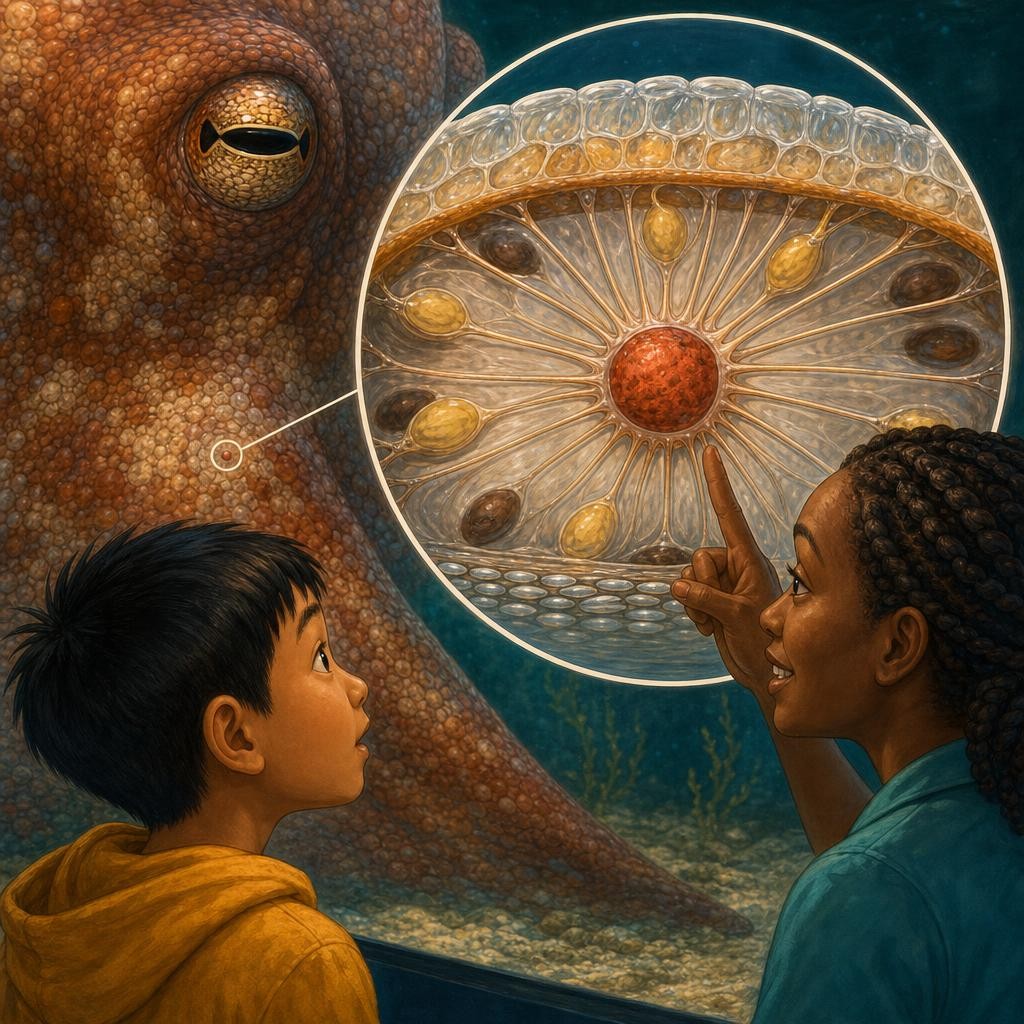
Zoom into pale-looking skin. One tiny dark dot is a chromatophore: a flexible sac that already contains pigment. Thin muscle fibers spread outward from it like spokes. When those muscles are relaxed, the pigment sac stays small, so little color shows at the surface.
Pull Wide, Show More Color
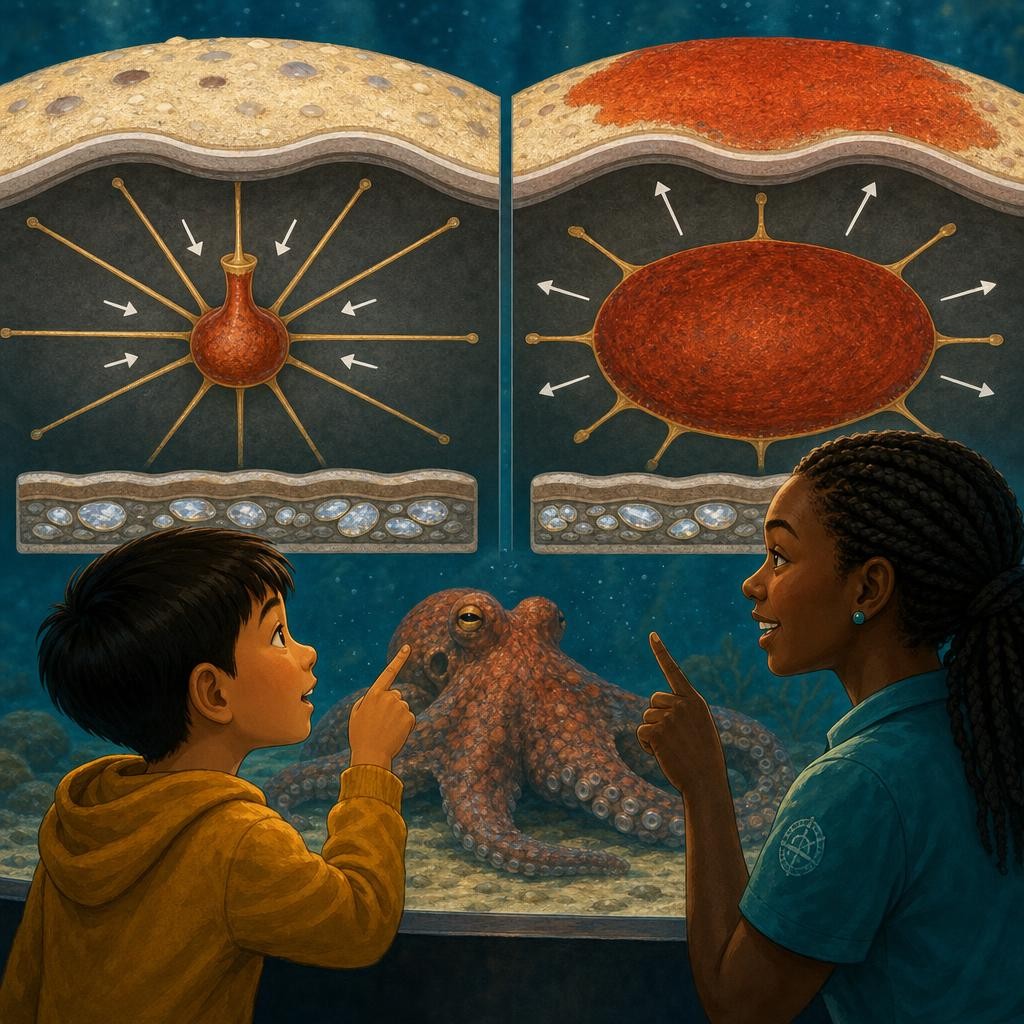
When the radial muscles contract, they shorten and pull the sac outward in many directions. The pigment spreads across a wider disk, so more color becomes visible. When the muscles relax, the elastic sac shrinks again. The pigment does not vanish; its visible area changes.
Thousands Make a Pattern
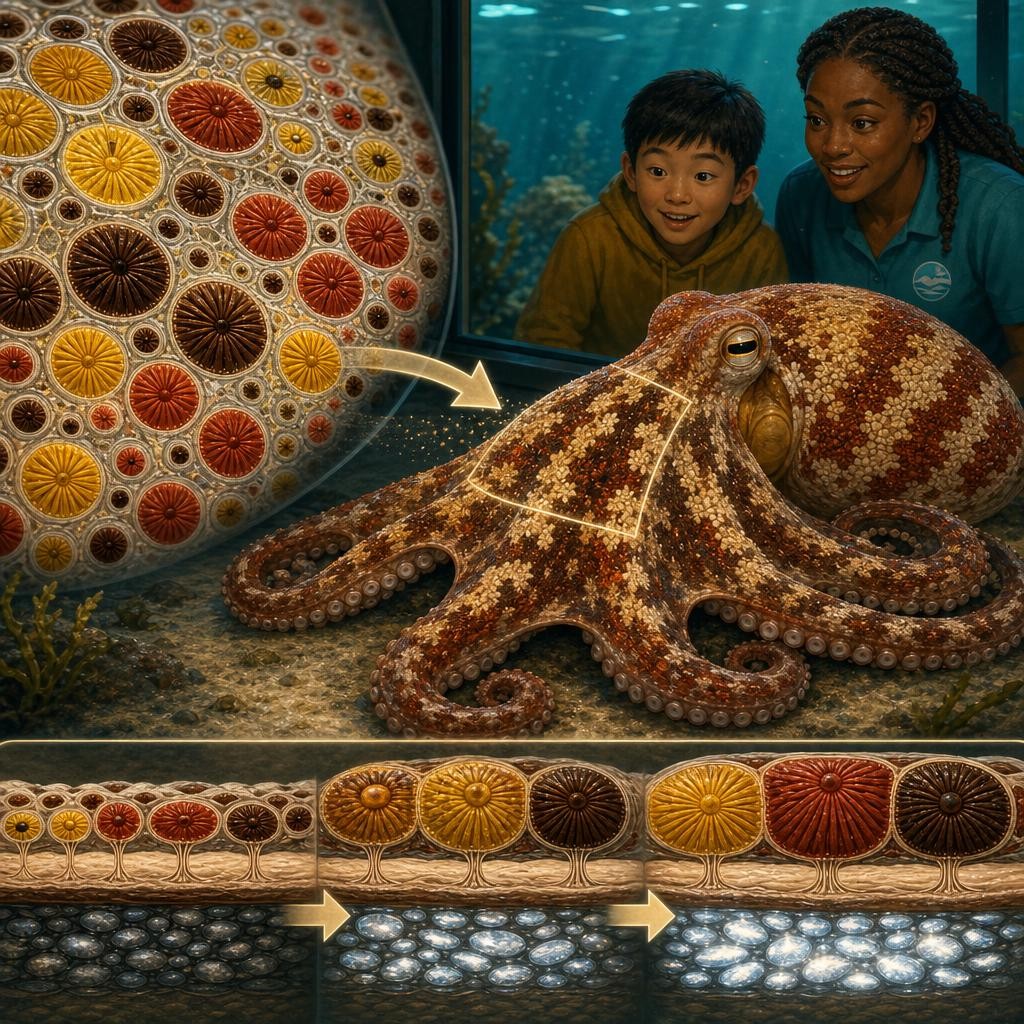
Octopus skin contains thousands of chromatophores with yellow, red, and brown pigments. The nervous system controls groups of them, building spots, bands, and mottled patterns. Other cells can reflect light and change brightness too. Together, these layers make the octopus's appearance remarkably flexible.
Key takeaways
- A Pattern Appears
- A Dot Called a Chromatophore
- Pull Wide, Show More Color
Mini quiz
- What changes when a chromatophore expands?
- What pulls a pigment sac wider?
Common questions
What will kids learn in How Do Octopuses Change Color??
Children will understand that an octopus can expand or contract pigment-filled chromatophore organs using radial muscles, changing how much colored pigment is visible across the skin.
Read-together tip
Science lessons work best when the idea can be seen: light changes, rain forms, ice melts, sound vibrates, or a force makes something move.