The Mountain That Burps Fire
Your child will understand that volcanoes erupt because deep heat melts rock into magma, the lighter magma rises, and trapped gas pushes it up and out as lava that cools into new land.
Ages 8-10 - 3 minute lesson - sleepy - EN
Reviewed for child-safety · gentle by design · How our stories are made
Published 2026-07-04T03:23:52.460354
Quick answer
Your child will understand that volcanoes erupt because deep heat melts rock into magma, the lighter magma rises, and trapped gas pushes it up and out as lava that cools into new land.
Lesson
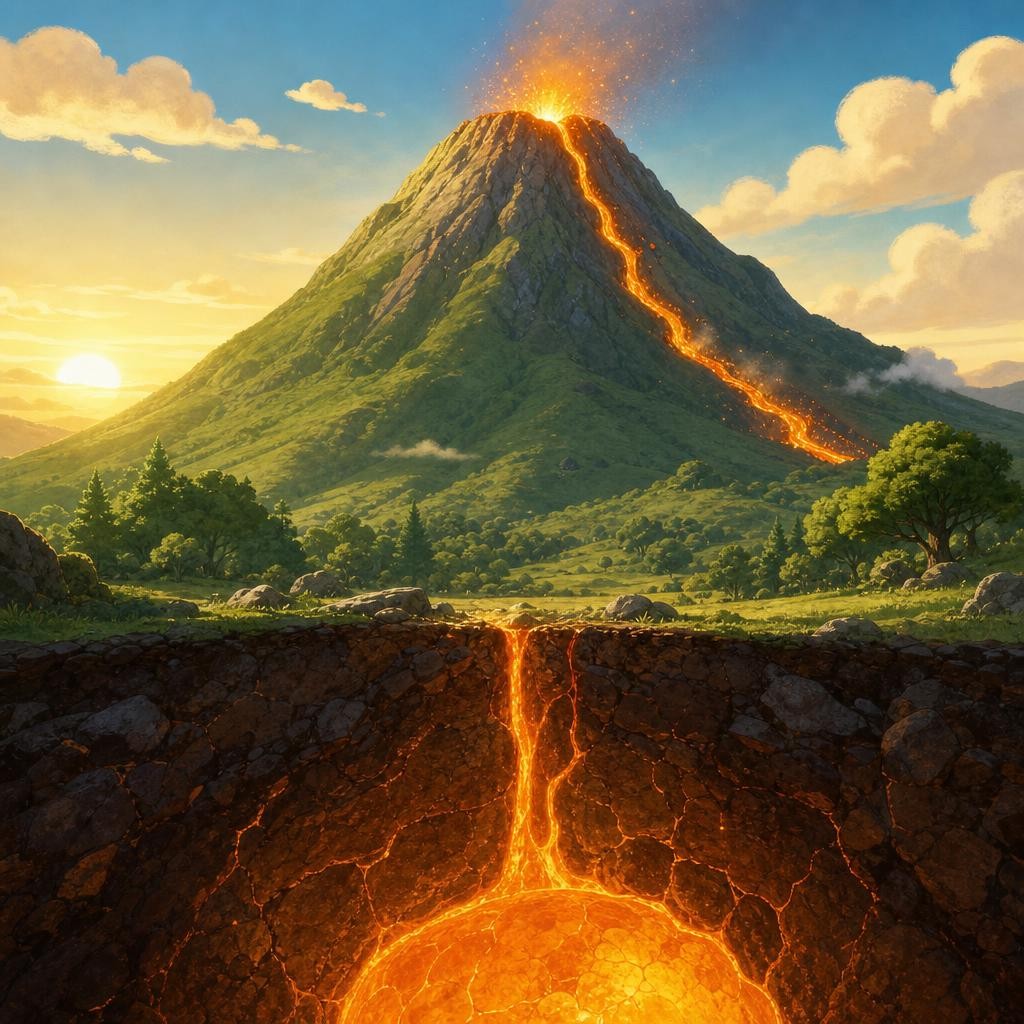
Picture a quiet mountain, sitting still for a hundred years. Then one morning the ground trembles, and a glowing orange river bursts out the top. You've probably wondered: where does all that fire-rock come from, and why now? Let's go down, deep under the mountain, to find out.
Zoom underground, far below your feet, deeper than the deepest swimming pool, deeper than ten stacked skyscrapers. Down here it's so hot that rock melts into a thick, gloopy liquid called magma — think of it like glowing-hot honey, but made of stone. This melted rock is squeezed into a giant underground pocket called a magma chamber. Because Earth's deep insides are scorching hot, so the rock down there turns runny instead of staying hard. Aha: deep inside Earth, rock gets hot enough to melt.
Now here's the trick. That magma is lighter than the solid rock around it, so it slowly pushes upward, looking for any crack to escape — just like bubbles in your fizzy drink racing to the top. The magma is full of trapped gas too. What do you think happens when that gas suddenly gets room to expand? It explodes outward, shoving the magma up and out the opening with a roar! Aha: trapped gas pushes the melted rock up and out.
Try it right now: gently shake a sealed bottle of fizzy water (don't open it — just look). See the bubbles crowding up? That squeezing, rising pressure is exactly how a volcano feels before it erupts. Here's the wow part: when magma finally pours out, we give it a new name — lava — and fresh lava can be hotter than 1,000 degrees, about ten times hotter than your oven on full blast. And once it cools, that lava hardens into brand-new rock, which means volcanoes actually build new land. Many islands, like Hawaii, were born this way.
Some people think volcanoes are full of fire, like a campfire inside the mountain. But there's no burning wood down there — it's melted rock and squeezed gas, glowing because it's so incredibly hot. Can you explain it back? Heat melts the rock, the lighter magma rises, and trapped gas pushes it out. Next time you open a fizzy drink and hear that little hiss, remember: that's a tiny, gentle taste of how a volcano wakes up.
Lesson scenes
The Quiet Mountain
Picture a quiet mountain, sitting still for a hundred years. Then one morning the ground trembles, and a glowing orange river bursts out the top. You've probably wondered: where does all that fire-rock come from, and why now? Let's go down, deep under the mountain, to find out.
Deep Underground
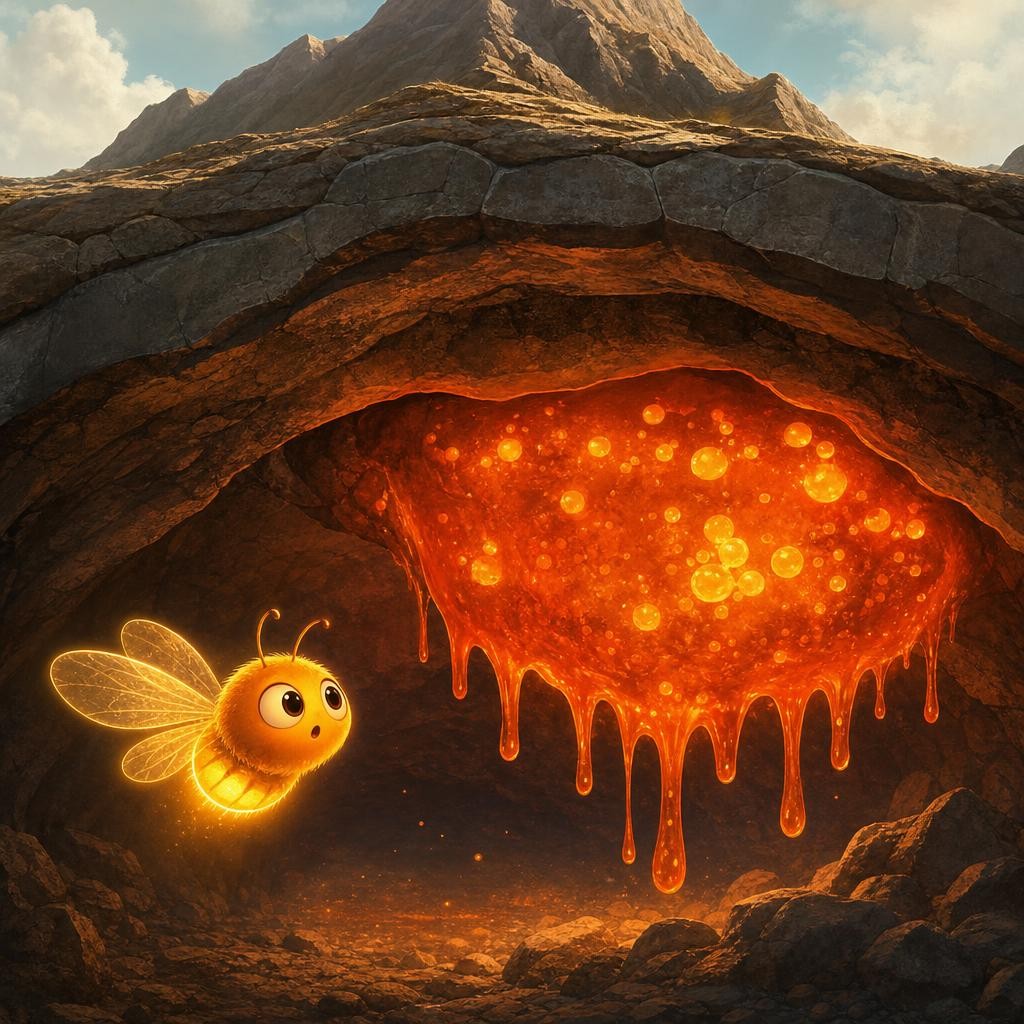
Let's go down, deeper than ten stacked skyscrapers. It's so hot here that rock melts into thick, gloopy magma — like glowing-hot honey made of stone. Aha: deep inside Earth, rock gets hot enough to melt!
The Rising Squeeze
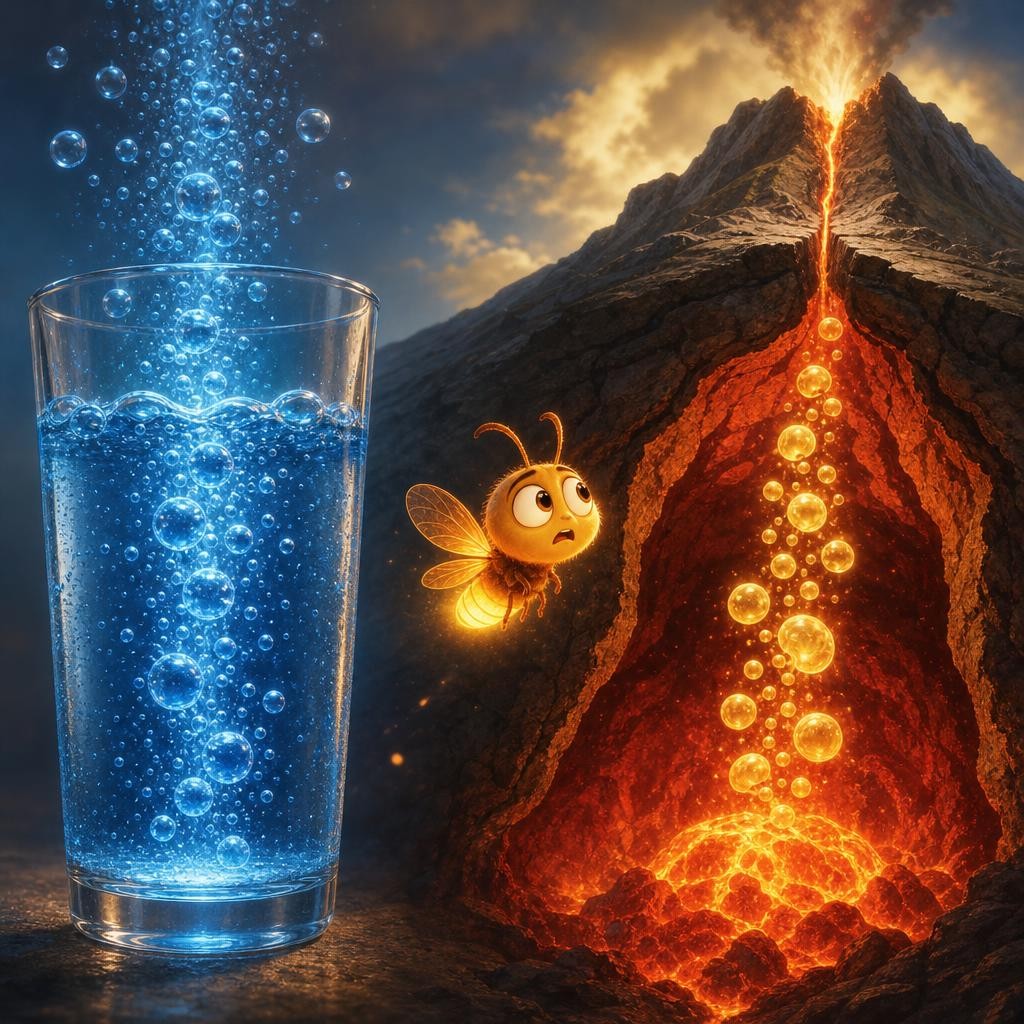
Magma is lighter than the rock around it, so it slowly pushes upward looking for a crack — like bubbles racing to the top of a fizzy drink. It's full of trapped gas too. What do you think happens when that gas suddenly gets room to expand?
Out Comes the Lava
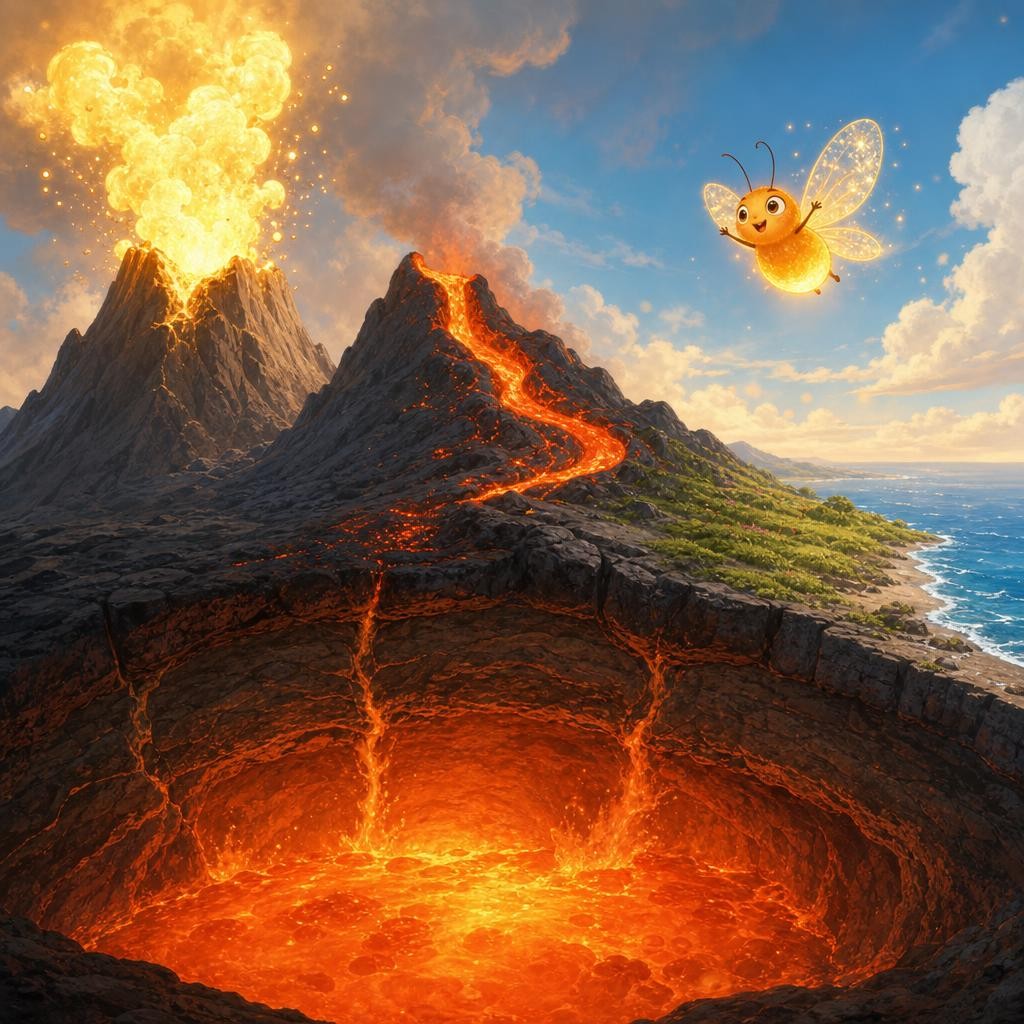
The gas explodes outward and shoves the magma up with a roar! Once it pours out we call it lava — hotter than 1,000 degrees, about ten times hotter than your oven. And when it cools, it hardens into brand-new rock, building new land like the islands of Hawaii.
No Campfire Inside
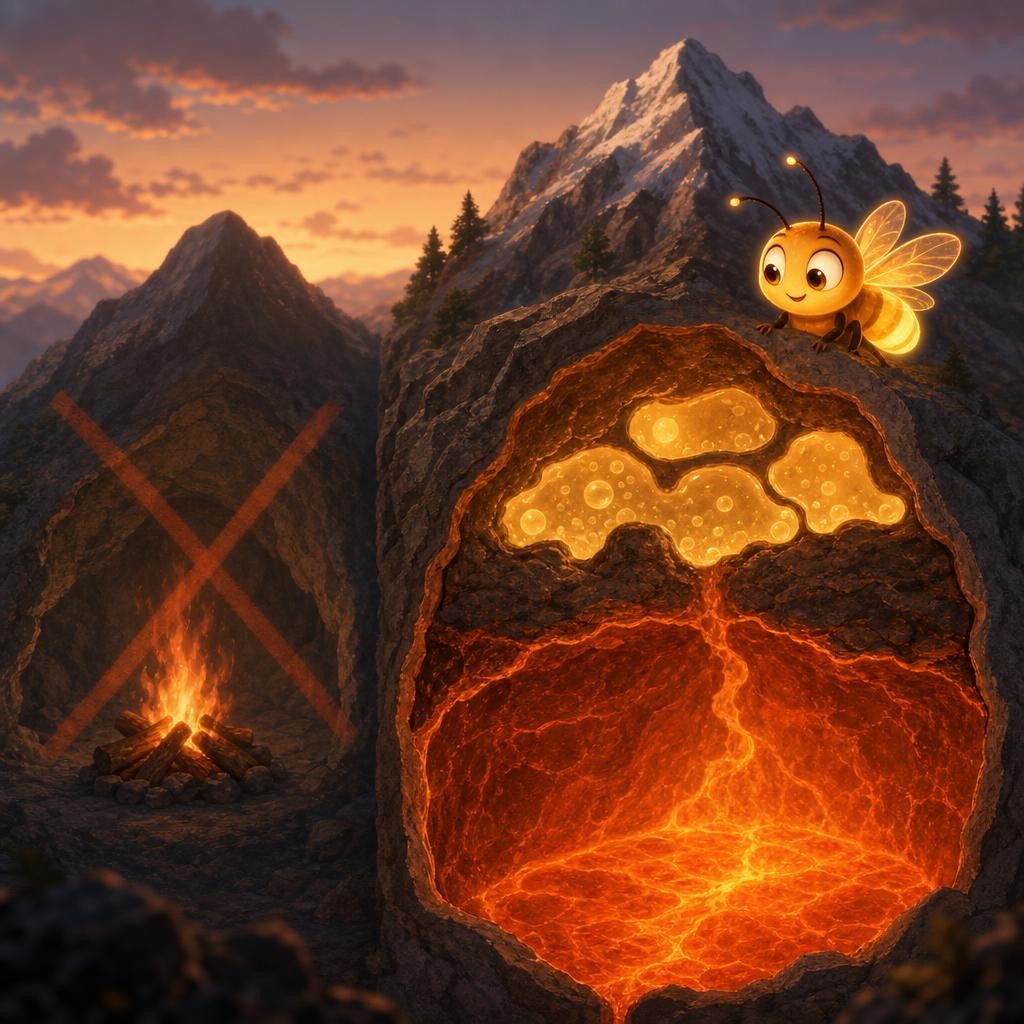
Some people think a volcano is burning wood, like a campfire — but there's no fire down there. It's melted rock and squeezed gas, glowing because it's so hot. Heat melts the rock, lighter magma rises, and trapped gas pushes it out!
Key takeaways
- The Quiet Mountain
- Deep Underground
- The Rising Squeeze
Mini quiz
- Why does rock deep inside Earth turn into runny magma?
- What pushes the melted rock up and out of the volcano?
- What happens after lava cools down?
Common questions
What will kids learn in The Mountain That Burps Fire?
Your child will understand that volcanoes erupt because deep heat melts rock into magma, the lighter magma rises, and trapped gas pushes it up and out as lava that cools into new land.
Read-together tip
Science lessons work best when the idea can be seen: light changes, rain forms, ice melts, sound vibrates, or a force makes something move.