The Little Raindrop's Journey
Your child will understand that rain falling on a hill rolls downhill, joins other drops to make a stream, and grows into a river that flows all the way to the sea.
Ages 4-5 - 3 minute lesson - curious - EN
Reviewed for child-safety · gentle by design · How our stories are made
Published 2026-07-04T03:23:52.453479

Quick answer
Your child will understand that rain falling on a hill rolls downhill, joins other drops to make a stream, and grows into a river that flows all the way to the sea.
Lesson
Plip! A raindrop lands on top of a big hill. It sits there, round and shiny, like a drop of water on the back of your hand. But it does not stay still. Watch what it does next!
Water loves to go down, never up. So when our little raindrop lands high on the hill, it rolls downhill, because down is the only way water wants to go. Try it right now: tip a cup of water in the bath, just a tiny bit. See? It always runs to the lowest place. Water always runs downhill.
Now our raindrop is not alone. More raindrops fall, and they all run down the same little path, like lots of children sliding down the same slide. When they squish together, they make a tiny trickle, then a small stream, then a wider, splashier stream. So many drops join up that the path gets bigger and bigger. Many little drops make one big stream.
What do you think happens when this stream keeps going? Does it shrink, or does it grow? It grows! As the water slides down, it bumps over rocks and slowly scoops out a long groove in the ground, like dragging your finger through soft sand. More and more water fills that groove until it becomes wide and long. That big, flowing path of water has a name: a river. A river is a stream that grew up.
Here is the wow part: every river is going somewhere, all the way to the sea! Our little raindrop keeps traveling down, down, down, past trees and under bridges, until it reaches the great big ocean. So the raindrop that started on a tiny hilltop ends up in the sea, far, far away. From one little drop to the giant ocean!
So let's remember our shiny little raindrop. It fell on a hill, it rolled downhill because water always goes down, it joined lots of other drops to make a stream, and the stream grew into a river that flows all the way to the sea. Next time you see rain sliding down a window, follow one drop with your finger and whisper, "Go on, little raindrop, find your river!"
Lesson scenes
Plip on the Hilltop
Plip! A shiny raindrop lands on top of a big hill. It sits there round and bright, like a drop of water on the back of your hand. But it won't stay still — watch what it does next!
Water Always Goes Down
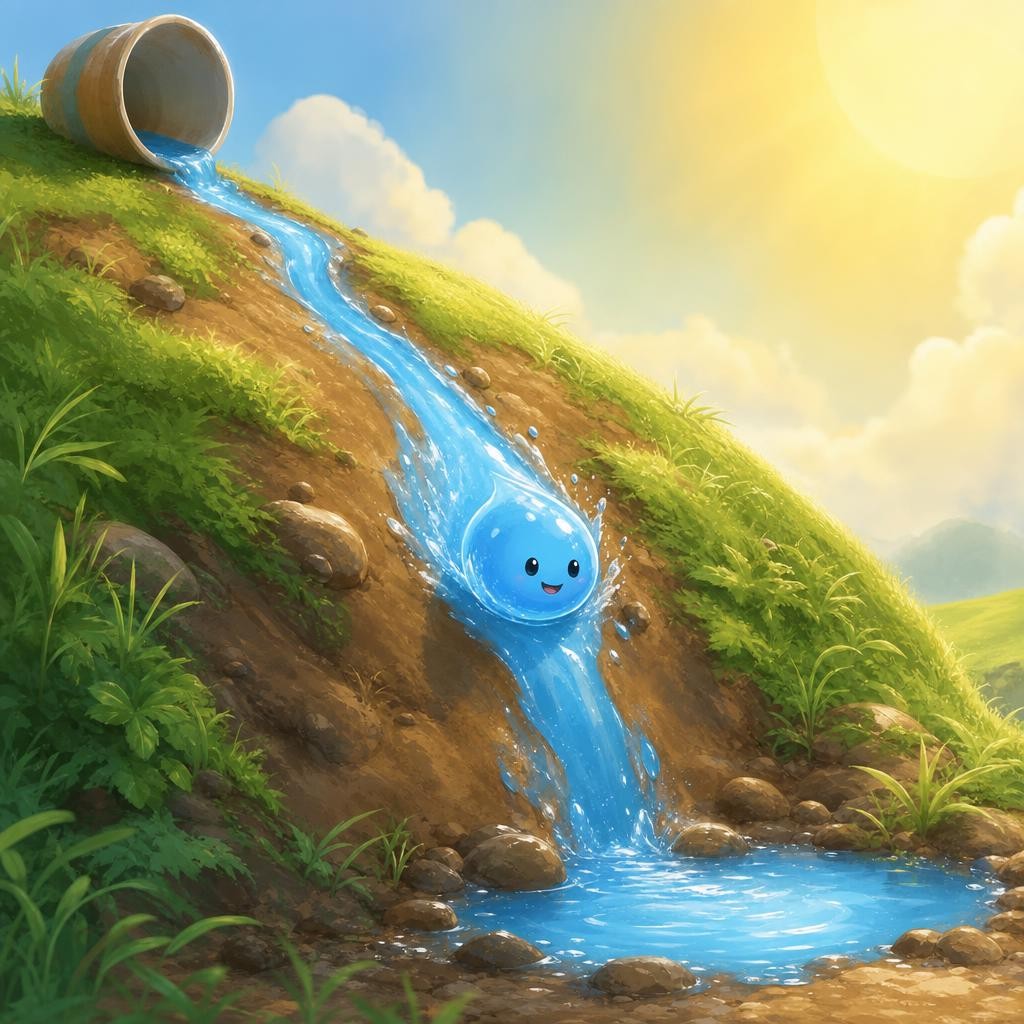
Water loves to go down, never up. So Plip rolls downhill, because down is the only way water wants to go. Just like tipping a cup in the bath — water always runs to the lowest place!
Many Drops Make a Stream
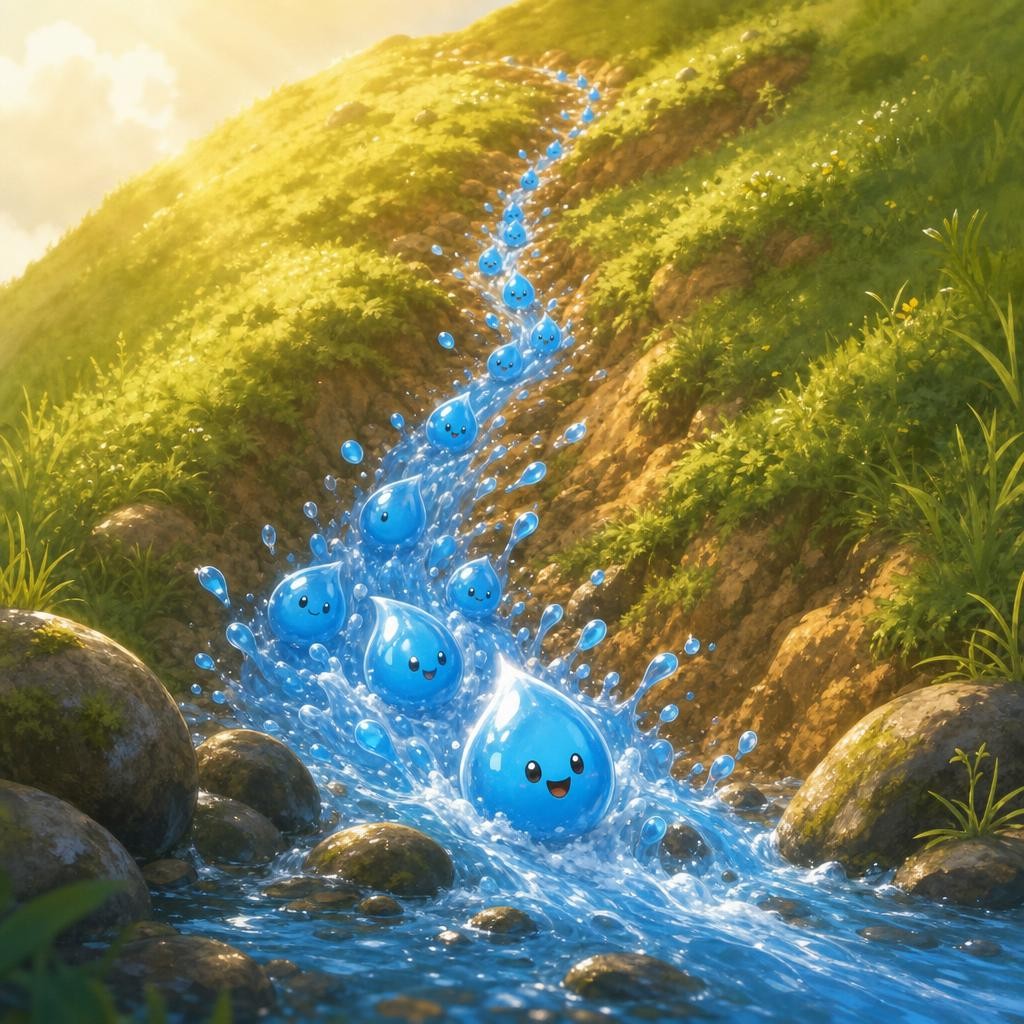
Now Plip is not alone! More raindrops fall and run down the same little path, like lots of children sliding down the same slide. So many drops join up that they make a tiny trickle, then a splashy little stream.
The Stream Grows Into a River
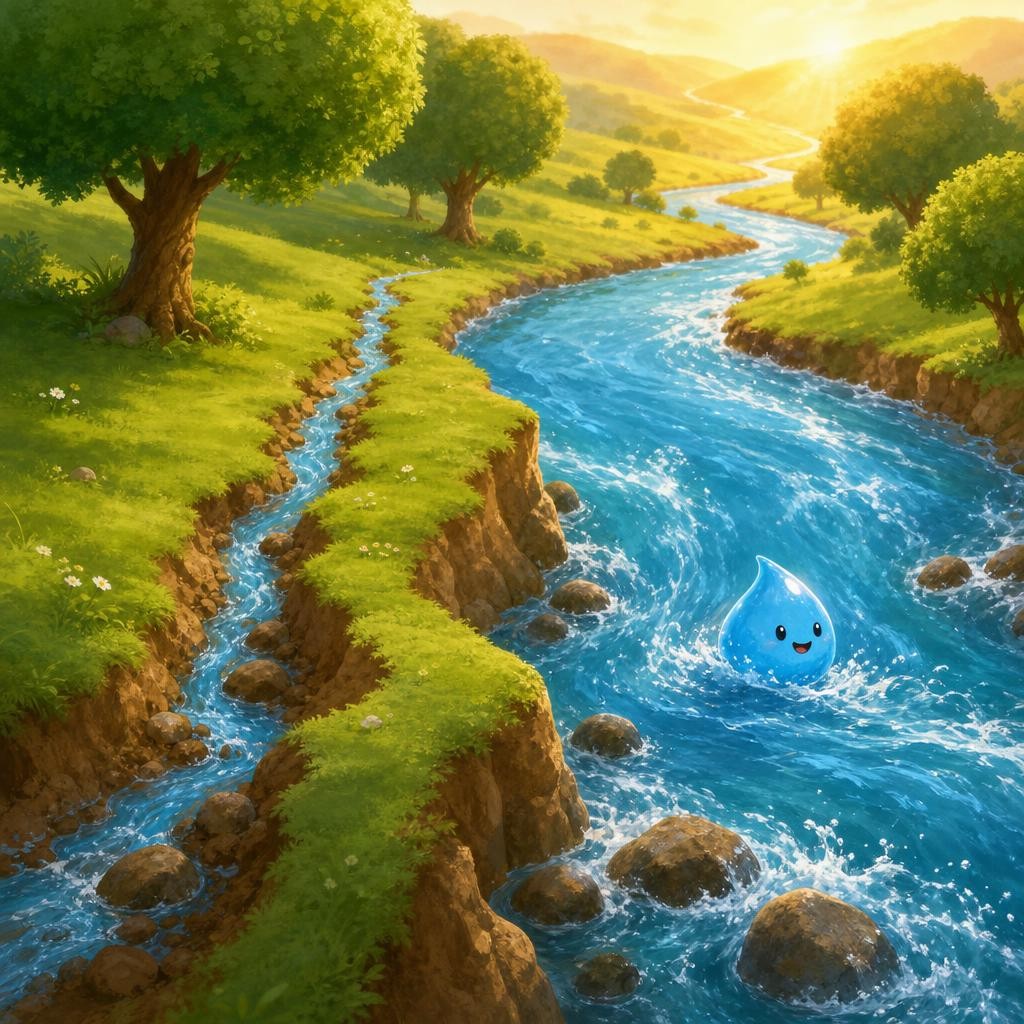
What do you think happens as the water keeps going — does it shrink or grow? It grows! The water scoops out a long groove in the ground, like dragging your finger through sand, until it becomes wide and long. That big flowing water has a name: a river!
All the Way to the Sea
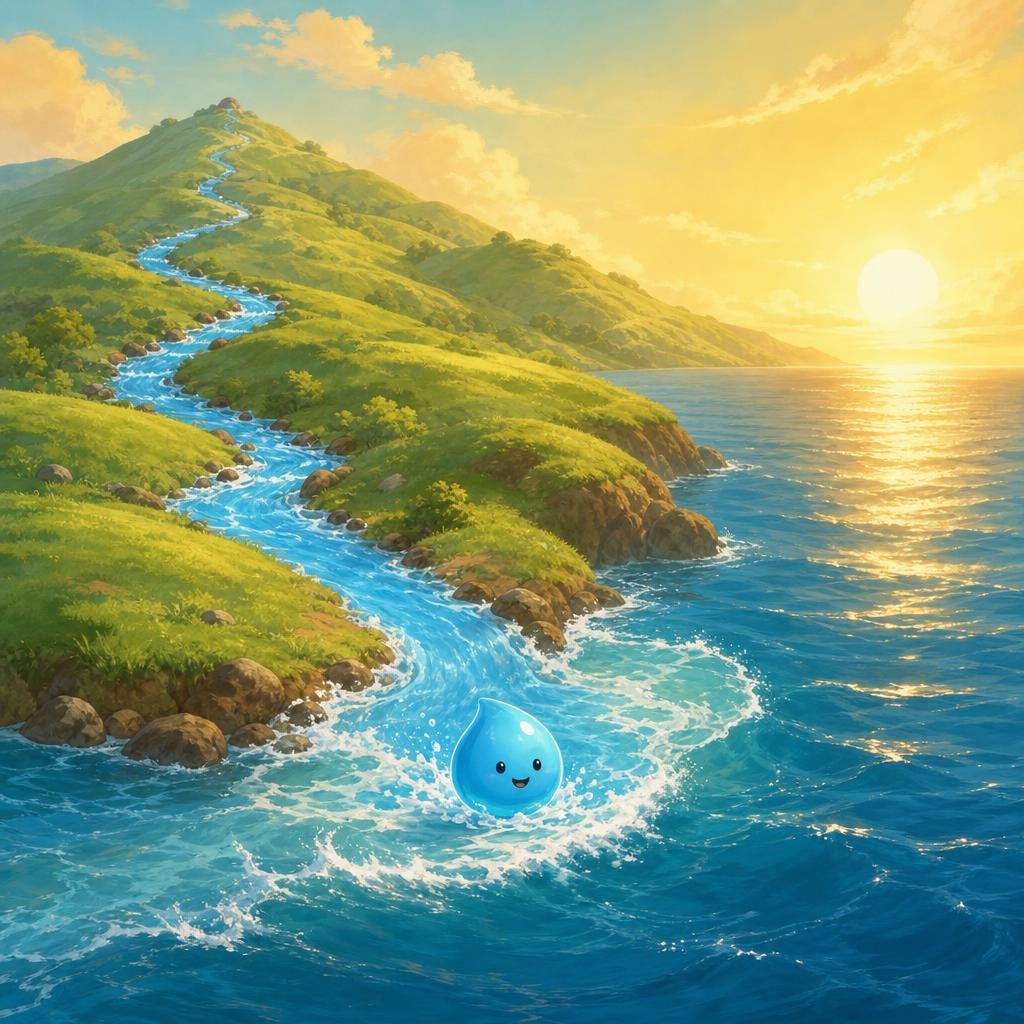
Here is the wow part: every river is going somewhere — all the way to the sea! Plip travels down, down, down until it reaches the great big ocean. From one little drop on a hill to the giant sea! Next time rain slides down a window, whisper, "Go on, little raindrop, find your river!"
Key takeaways
- Plip on the Hilltop
- Water Always Goes Down
- Many Drops Make a Stream
Mini quiz
- Which way does water always go?
- What do many little drops make?
- Where does the river go in the end?
Common questions
What will kids learn in The Little Raindrop's Journey?
Your child will understand that rain falling on a hill rolls downhill, joins other drops to make a stream, and grows into a river that flows all the way to the sea.
Read-together tip
Science lessons work best when the idea can be seen: light changes, rain forms, ice melts, sound vibrates, or a force makes something move.