Where Does the Light Switch Get Its Power?
Your child should understand that flicking a switch completes a loop that lets a fast-moving electric push travel from a faraway power plant, through wires and a transformer, into the lamp.
Ages 8-10 - 3 minute lesson - curious - EN
Reviewed for child-safety · gentle by design · How our stories are made
Published 2026-07-04T03:23:52.467338
Quick answer
Your child should understand that flicking a switch completes a loop that lets a fast-moving electric push travel from a faraway power plant, through wires and a transformer, into the lamp.
Lesson
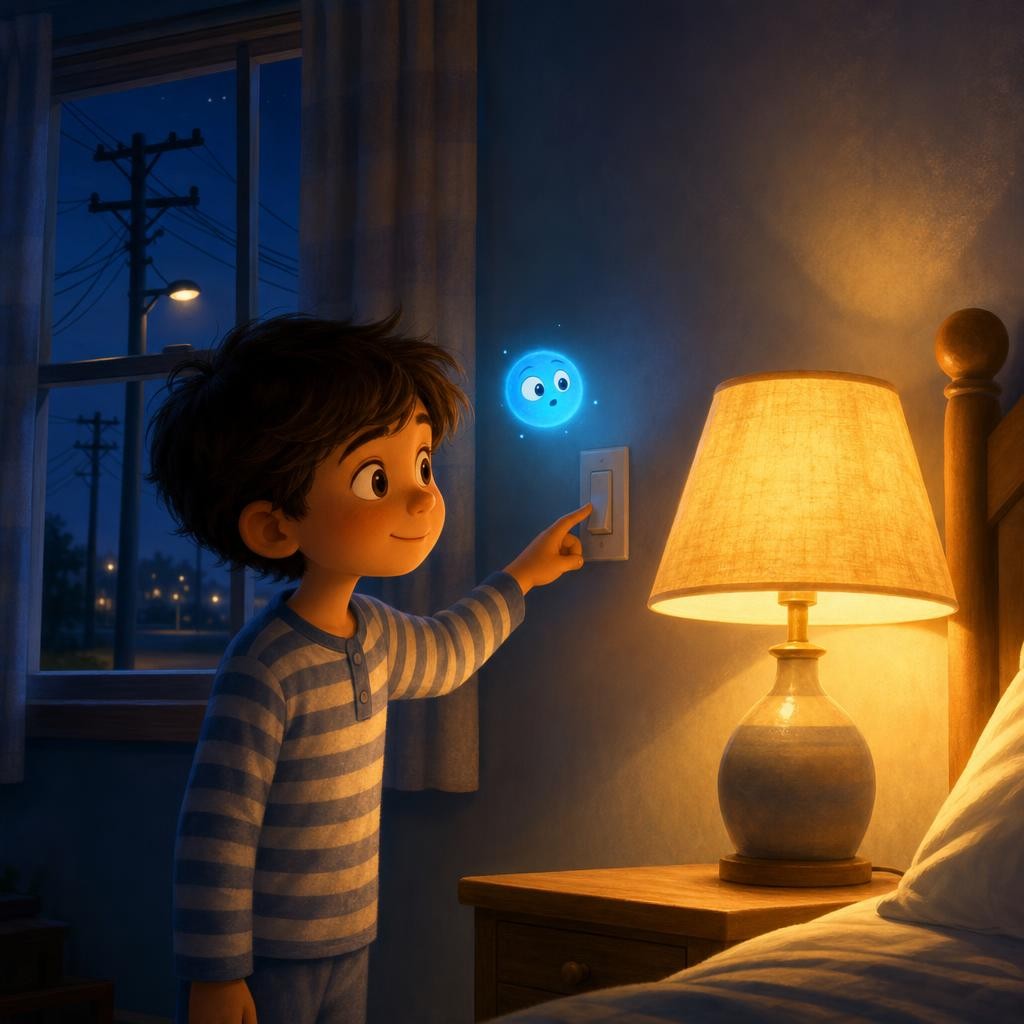
You flick the switch on your bedroom wall, and *click* — the lamp glows instantly, like it was waiting. But the lamp doesn't store light inside it. So where does that glow actually come from? Let's follow the path backward, all the way out your window and down the street.
Picture a giant building far away called a power plant. Inside it, something spins a huge magnet around coils of wire — really fast, like a blender for energy. That spinning pushes the tiny bits inside the wire, called electrons, into a moving wave. Electricity isn't a thing that pours like water; it's a *push* that travels along the wire. So the aha is: the power plant doesn't make electrons, it makes them move.
Now follow that push outside. It rides along thick wires up on tall poles, the ones you see drooping street to street like jump ropes. Here's the wow part: that push travels close to the speed of light — fast enough to circle the whole Earth about seven times in one second. That's why your lamp lights the very instant you flick the switch. Quick — what do you think slows it down before it reaches your house? Nothing slows it; instead, a box called a transformer makes the push gentler and safer for your home, so it doesn't zap your toaster.
Here's a sneaky mix-up: many kids think electricity is *stored* in the wires, just sitting there. But the wires are more like a closed track for a toy train loop — the push only flows when the loop is complete. Try it right now: look at any lamp or charger cord. See two wires, or a plug with two prongs? One side carries the push in, the other lets it loop back. Break the loop by flicking the switch off, and the train stops. So: no complete loop, no glow.
So next time you click a switch, picture the whole journey: a magnet spinning in a faraway plant, a push racing down the poles, a transformer calming it for your house, and a tiny loop closing right inside your wall. You're not turning on light that was hiding — you're finishing a track that lets the push run. Tonight, find one switch and whisper, "Loop closed, lights go!"
Lesson scenes
Click — Instant Glow
You flick the switch and *click* — the lamp glows instantly, like it was waiting. But the lamp doesn't store light inside it. So where does that glow actually come from?
The Spinning Magnet
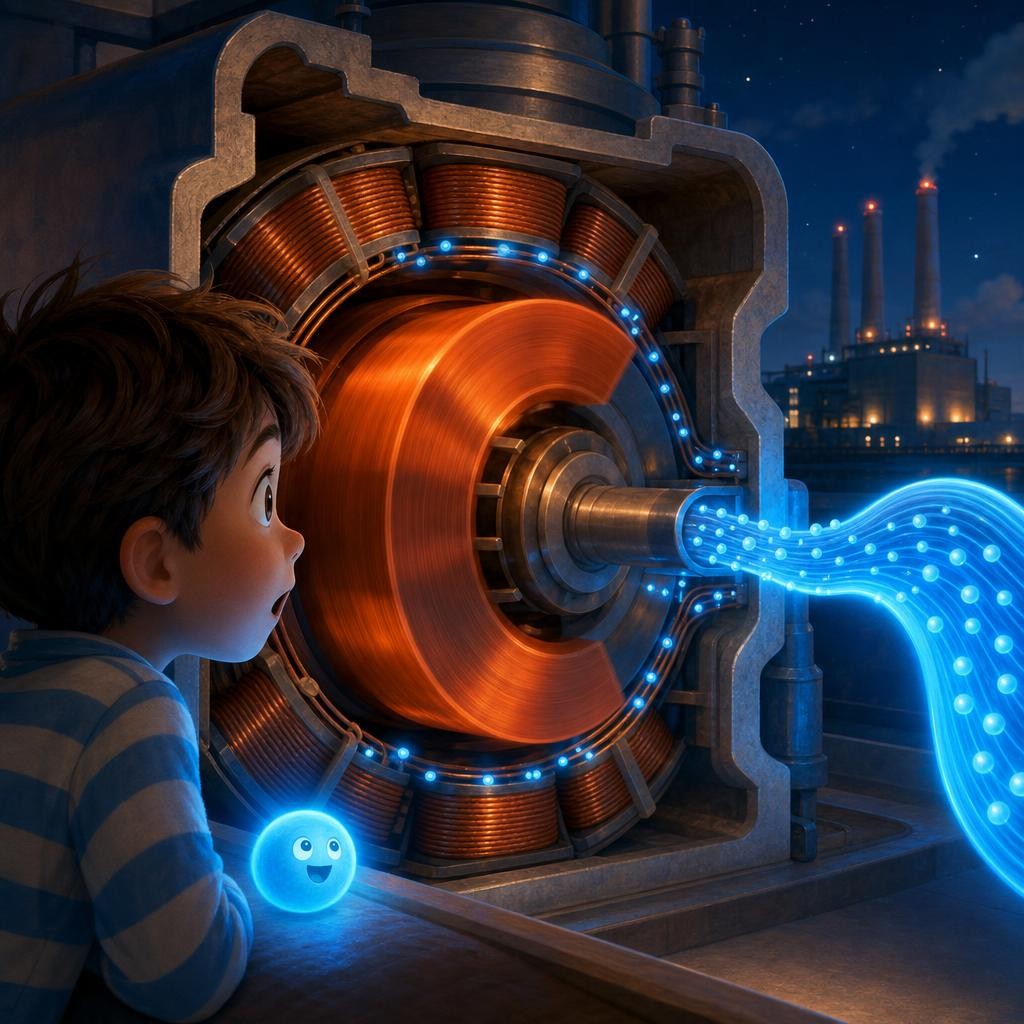
Far away in a giant power plant, something spins a huge magnet around coils of wire, really fast, like a blender for energy. That spinning pushes the tiny electrons into a moving wave. The aha: the plant doesn't make electrons, it makes them move.
The Racing Push
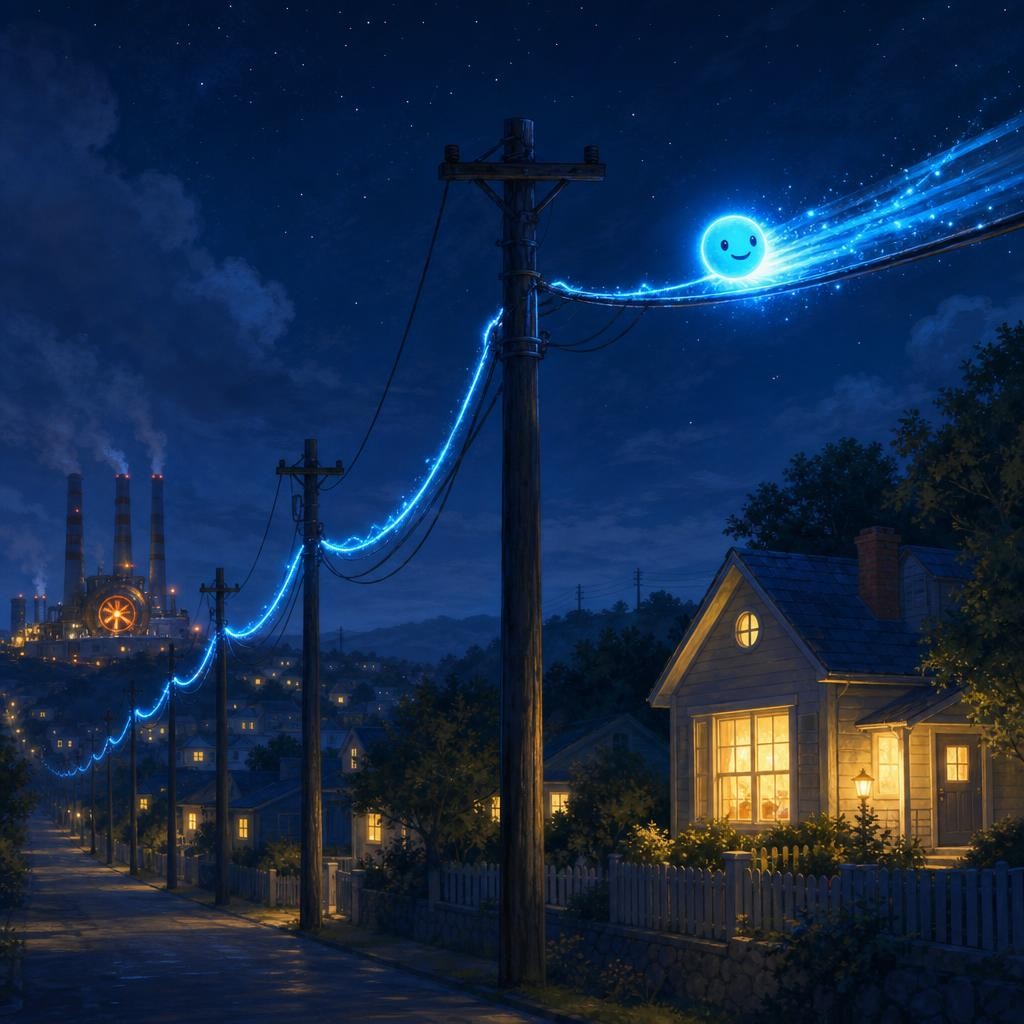
That push rides along thick wires drooping pole to pole like jump ropes — and travels close to the speed of light, fast enough to circle Earth about seven times in one second! Quick — what do you think slows it down before it reaches your house?
The Loop Must Close
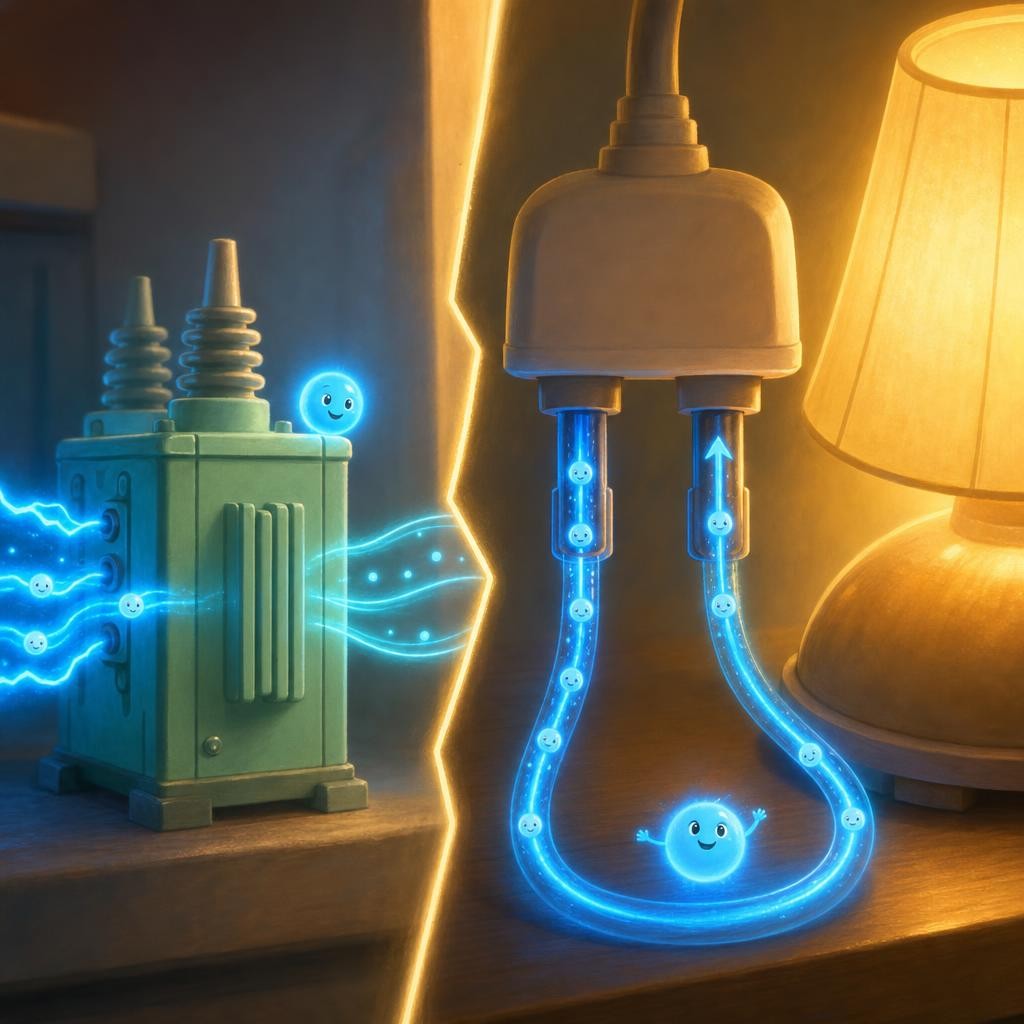
A box called a transformer makes the push gentler and safer for your home. And here's a sneaky mix-up: electricity isn't stored sitting in the wires — it's like a toy train loop. See two prongs on a plug? One carries the push in, one loops it back. Break the loop, and the train stops.
Loop Closed, Lights Go!
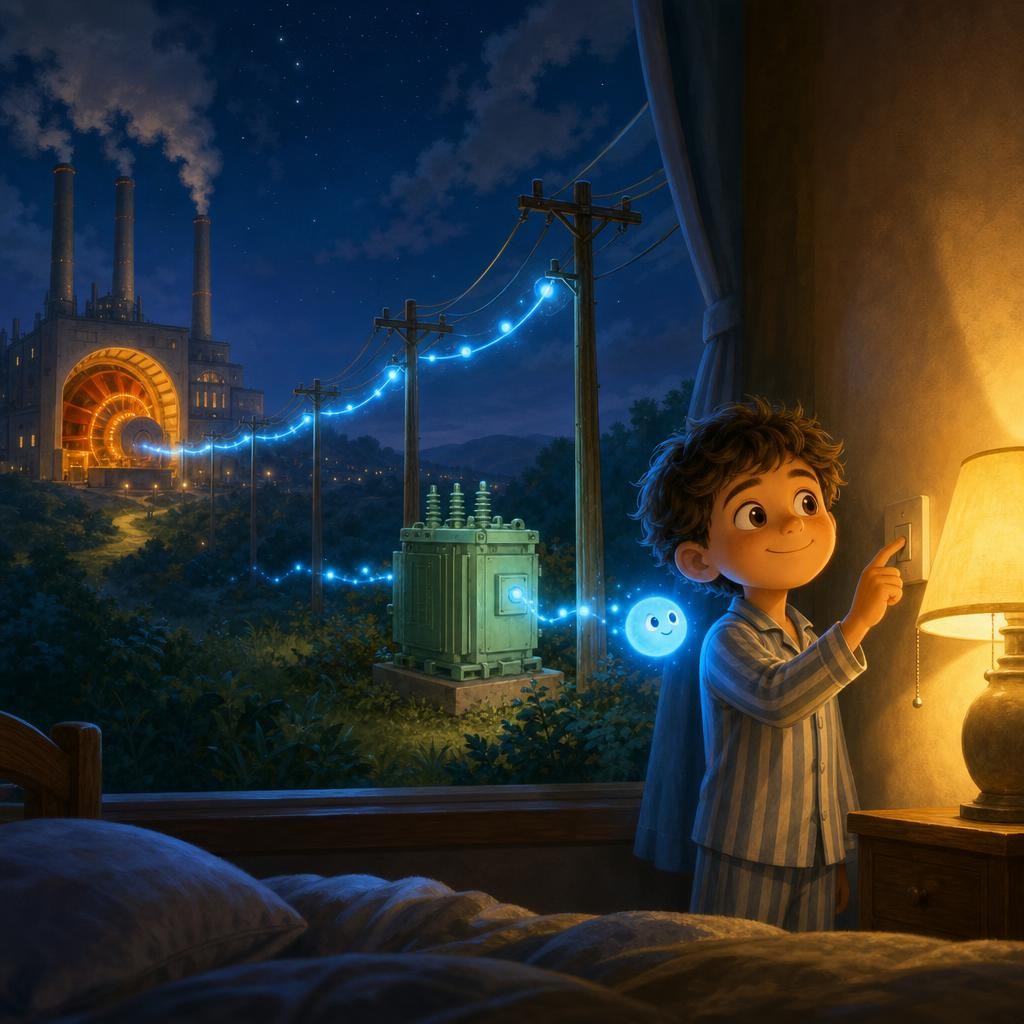
So picture the whole journey: a magnet spinning far away, a push racing down the poles, a transformer calming it, and a tiny loop closing inside your wall. You're not turning on hidden light — you're finishing a track that lets the push run. Tonight, find a switch and whisper, "Loop closed, lights go!"
Key takeaways
- Click — Instant Glow
- The Spinning Magnet
- The Racing Push
Mini quiz
- Does the power plant make new electrons, or make them move?
- Why does the lamp light the instant you flick the switch?
- When does the push actually flow?
Common questions
What will kids learn in Where Does the Light Switch Get Its Power??
Your child should understand that flicking a switch completes a loop that lets a fast-moving electric push travel from a faraway power plant, through wires and a transformer, into the lamp.
Read-together tip
Science lessons work best when the idea can be seen: light changes, rain forms, ice melts, sound vibrates, or a force makes something move.