How Do Families Get Ready for Diwali?
Three days to Diwali! Asha, Jai and their friend Mei help Nani clean, hang the lights, try on new clothes, roll ladoos and make a rangoli. A picture lesson for kids.
Diwali for kids · 4 of 16
about real things · asks questions · 9 pages · ages 4–5 · 2 min · English
Read · Play · Listen · PDF · Print edition · with the Storybook Pass · Make it about your child
Reviewed for child safety · gentle by design · How our storybooks are made
Published 2026-11-04T06:10:38.760041
Quick answer
Families get ready for Diwali by cleaning their homes, hanging lights, lanterns and marigold garlands, buying new or special clothes, making sweets like ladoos, making a colourful rangoli by the door, and, on the night, lighting little clay lamps called diyas and saying a short prayer.
Inside this storybook
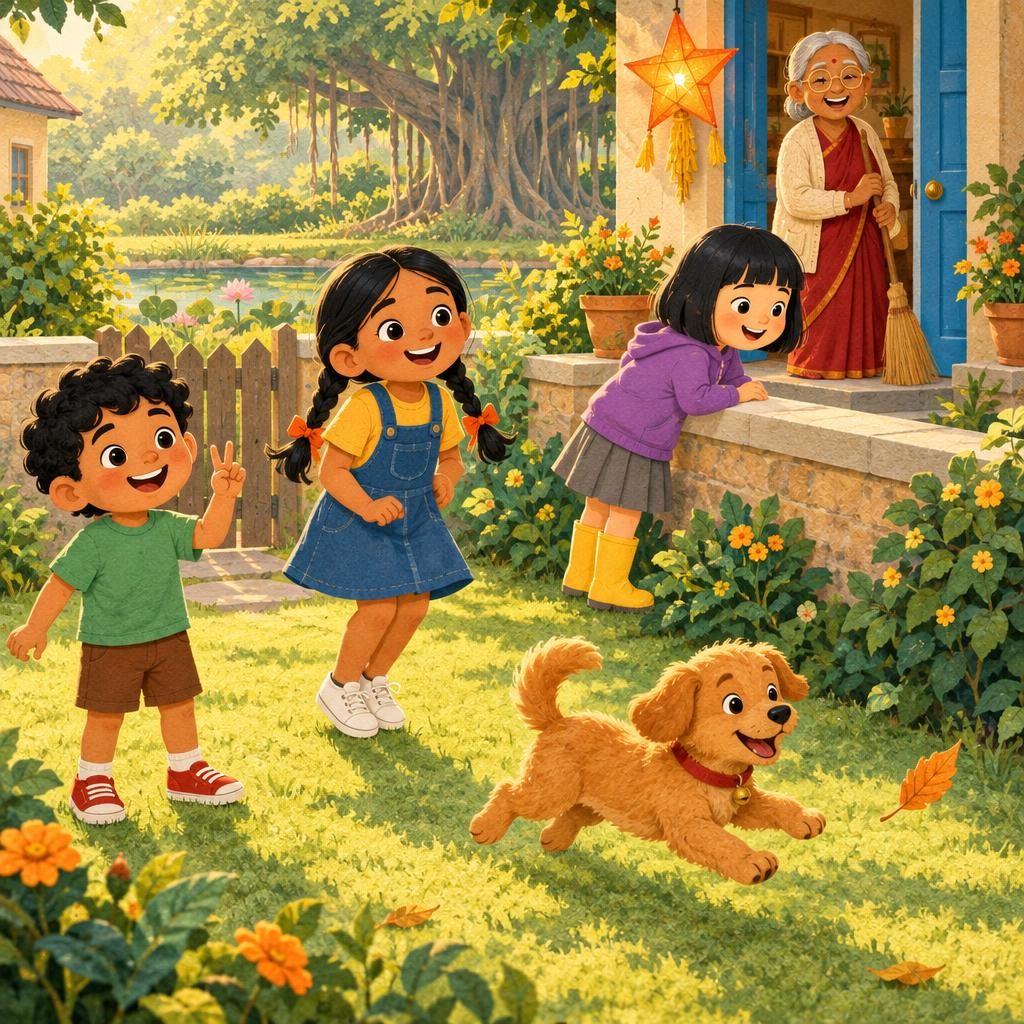
"Diwali is in three days!" says Jai, counting on his fingers. Asha jumps up and down. Mei leans over the garden wall. "How do you get ready for Diwali?" she asks. Nani laughs. "Come and help, and you will see!"
First, the whole family cleans the house, from top to bottom. They sweep the floors, wash the windows and clear out old things. Jai finds a lost sock under the sofa!
Now the home is fresh and ready for guests. Next come the lights! Jai and Asha hang the big paper star by the blue door. Nani drapes strings of little lights along the roof, and a garland of orange marigold flowers over the door.
Families often buy new or special clothes for Diwali. Asha twirls in a turquoise kurta with a gold border. Jai's new kurta is bright saffron orange, like the marigolds!
Then it is time to make sweets. Nani stirs a pan of hot, golden mixture on the stove. When it has cooled, everyone will roll it into round ladoos.
Nani the grown-up handles the hot stove. Now the mixture is cool, so everyone rolls it into balls. Roll, roll, roll! Jai's ladoo comes out a funny lumpy shape, and everybody laughs.
On Diwali day, Asha and Mei make a rangoli at the front door. A rangoli is a pattern made from coloured powder, rice flour or flower petals. It says welcome to everyone who comes.
As the sky gets dark, a grown-up lights rows of little clay lamps called diyas. Then many families sit together and say a short prayer, to give thanks and wish for a happy new year.
Clean and fresh, bright with lights, sweet with ladoos and together with family: now the home is ready for Diwali! Which job would you like to help with?
The pages
What do we do first?
"Diwali is in three days!" says Jai, counting on his fingers. Asha jumps up and down. Mei leans over the garden wall. "How do you get ready for Diwali?" she asks. Nani laughs. "Come and help, and you will see!"
Brooms and buckets
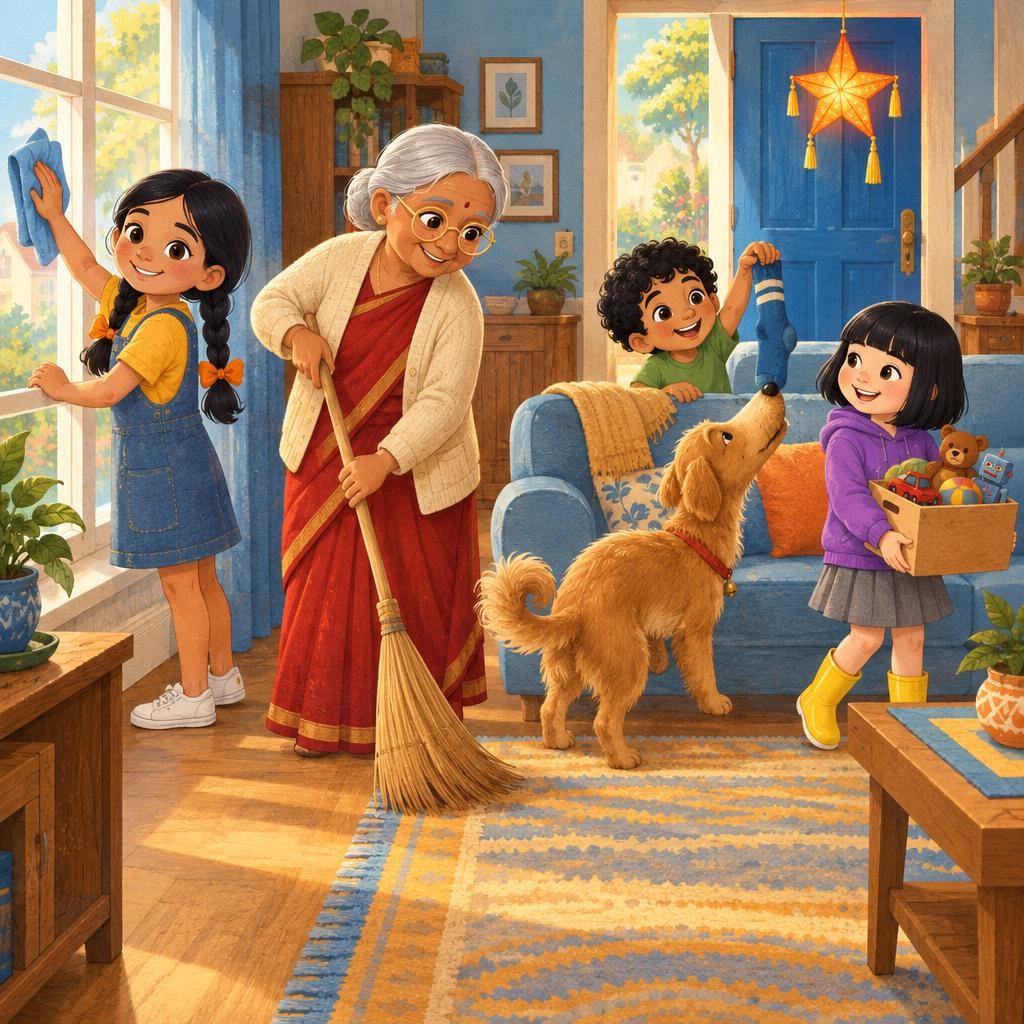
First, the whole family cleans the house, from top to bottom. They sweep the floors, wash the windows and clear out old things. Jai finds a lost sock under the sofa!
Lights everywhere
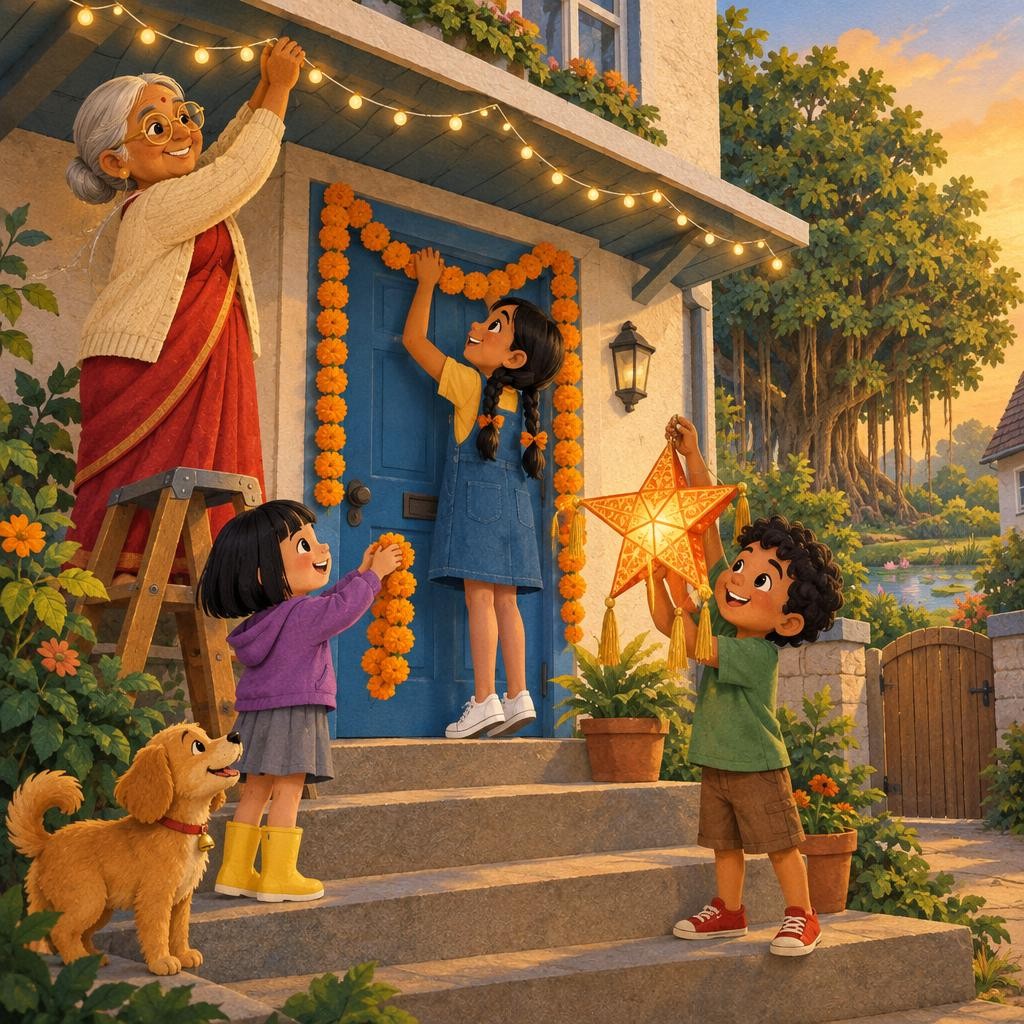
Now the home is fresh and ready for guests. Next come the lights! Jai and Asha hang the big paper star by the blue door. Nani drapes strings of little lights along the roof, and a garland of orange marigold flowers over the door.
Something new to wear
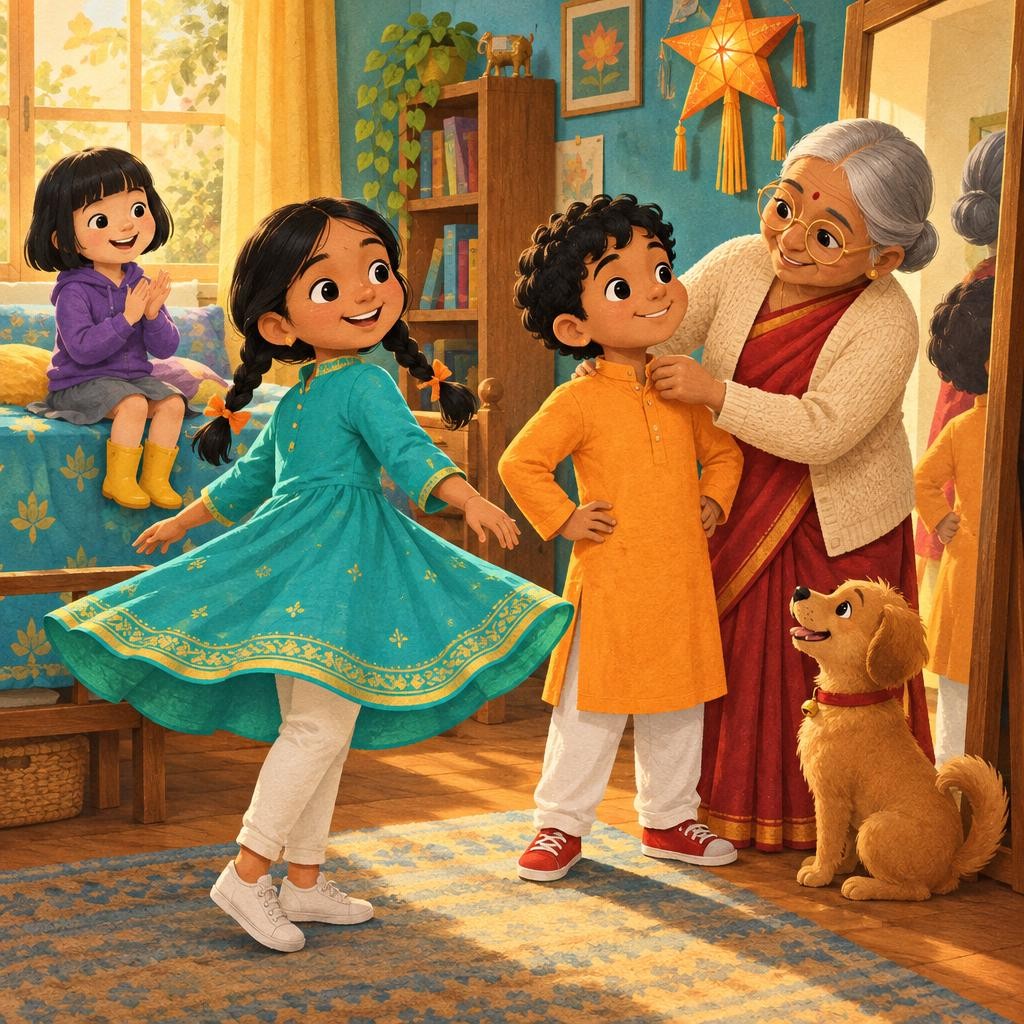
Families often buy new or special clothes for Diwali. Asha twirls in a turquoise kurta with a gold border. Jai's new kurta is bright saffron orange, like the marigolds!
Sweets in the kitchen
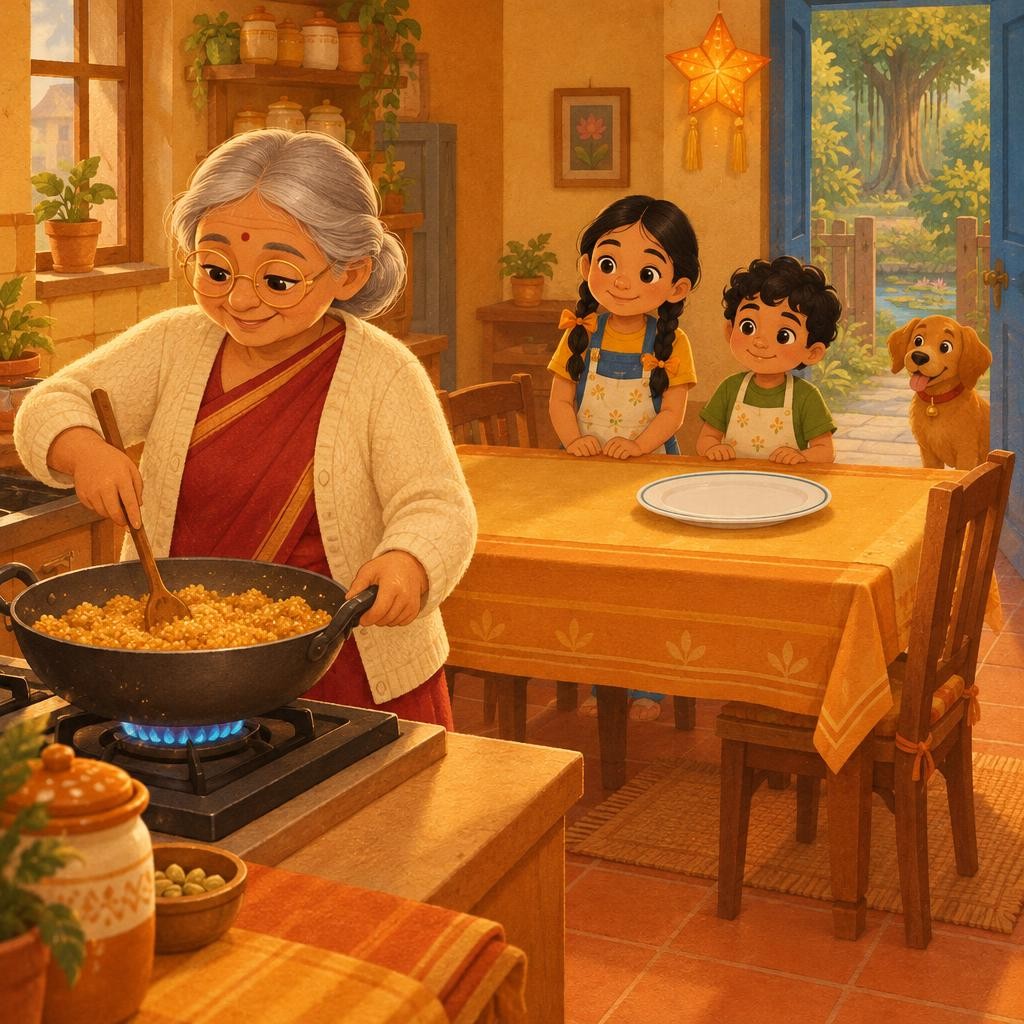
Then it is time to make sweets. Nani stirs a pan of hot, golden mixture on the stove. When it has cooled, everyone will roll it into round ladoos.
Roll, roll, roll
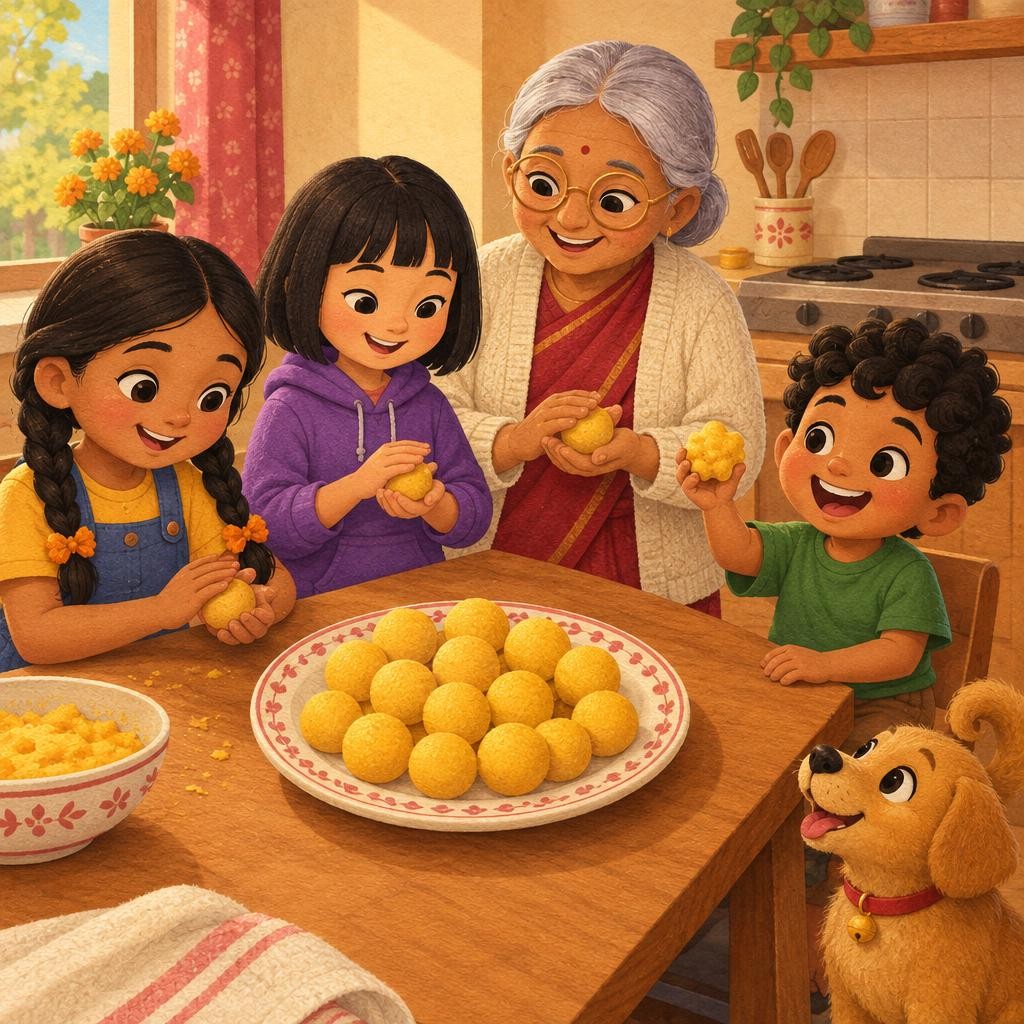
Nani the grown-up handles the hot stove. Now the mixture is cool, so everyone rolls it into balls. Roll, roll, roll! Jai's ladoo comes out a funny lumpy shape, and everybody laughs.
A pattern at the door
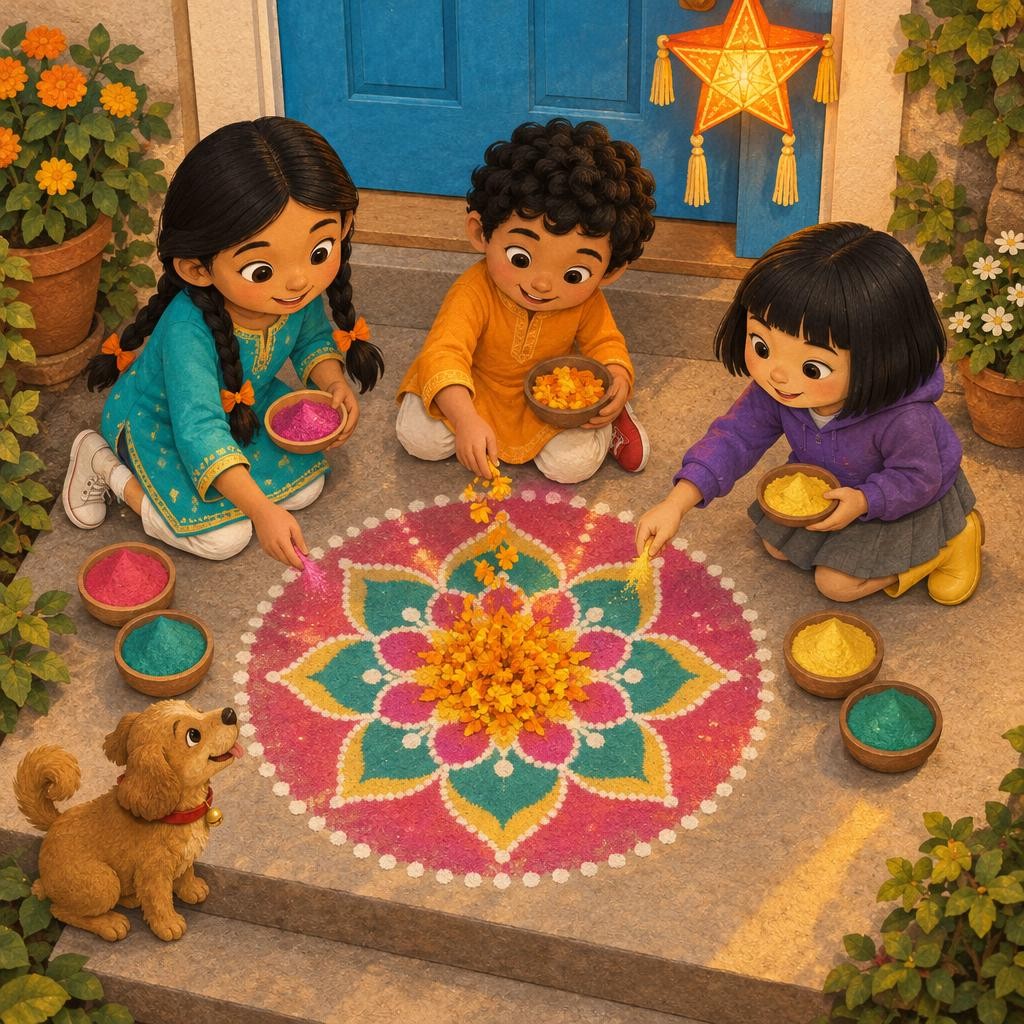
On Diwali day, Asha and Mei make a rangoli at the front door. A rangoli is a pattern made from coloured powder, rice flour or flower petals. It says welcome to everyone who comes.
Little lamps and a prayer
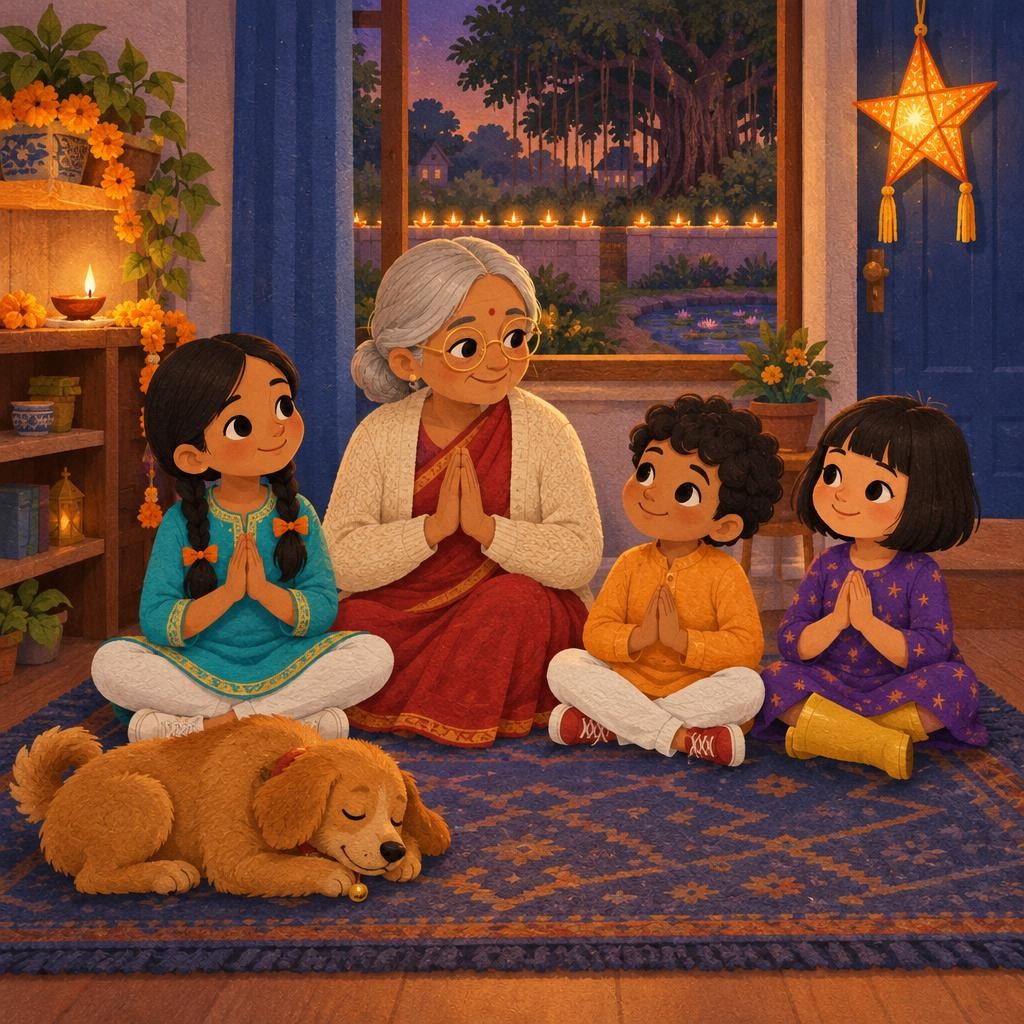
As the sky gets dark, a grown-up lights rows of little clay lamps called diyas. Then many families sit together and say a short prayer, to give thanks and wish for a happy new year.
Ready for Diwali!
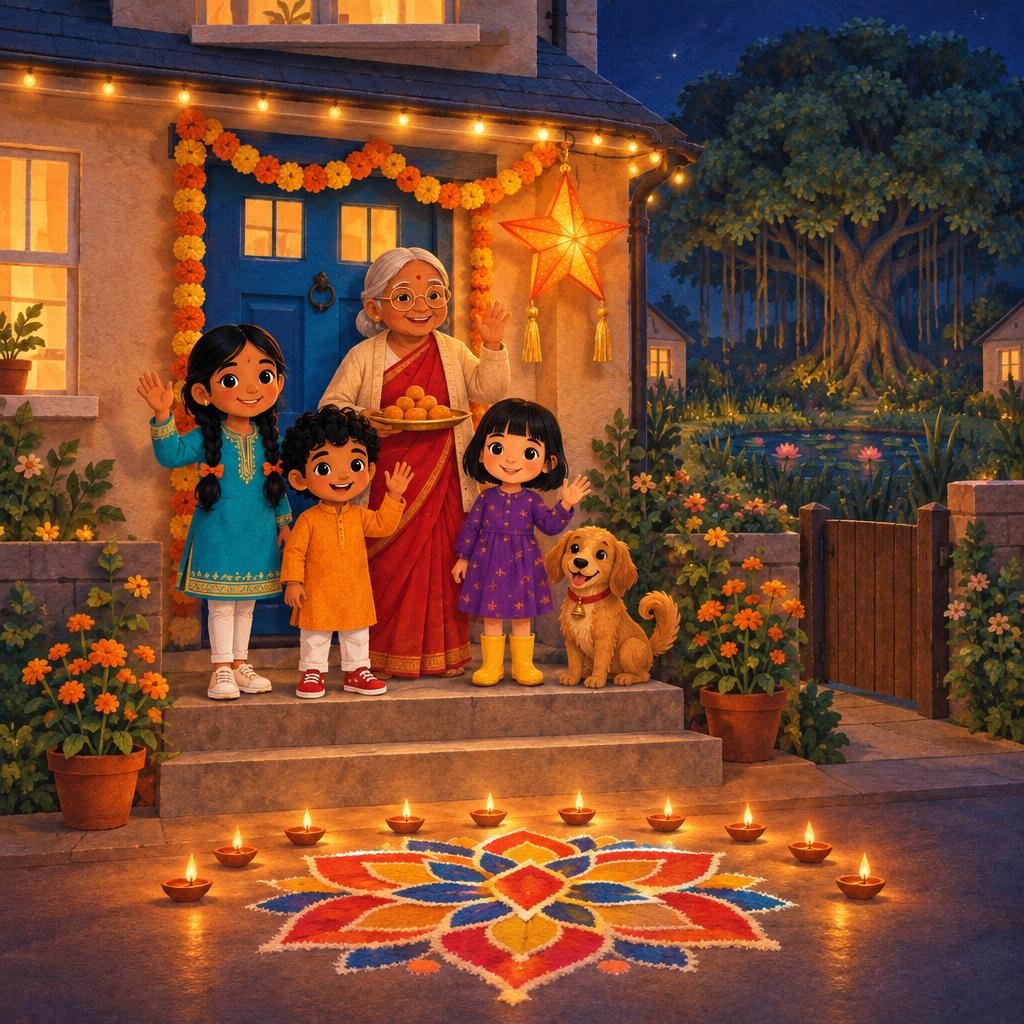
Clean and fresh, bright with lights, sweet with ladoos and together with family: now the home is ready for Diwali! Which job would you like to help with?
Key takeaways
- Families clean before Diwali so the home is fresh and welcoming.
- Homes are decorated with lights, lanterns and marigold garlands.
- Families make sweets together; a grown-up handles the hot stove.
- A rangoli by the door, made of powder or petals, says welcome.
Questions along the way
- Why do families clean before Diwali?
- What is a rangoli made from?
- Who handles the hot stove when making sweets?
Common questions
How do you celebrate Diwali with kids at home?
Clean and decorate together, hang lights, make a simple rangoli with coloured rice or petals, roll cooled sweets, and let a grown-up light the diyas while the children watch from a step away.
Why do people clean their homes before Diwali?
A clean home is fresh and ready for guests. Many families also say a clean, bright home welcomes good luck for the new year.
Read-together tip
Make a no-mess rangoli: draw a big flower in chalk on a step or on card, then fill it with rice coloured with a drop of food colouring, or with petals from the garden.