Sam and the Sun-Saving Story
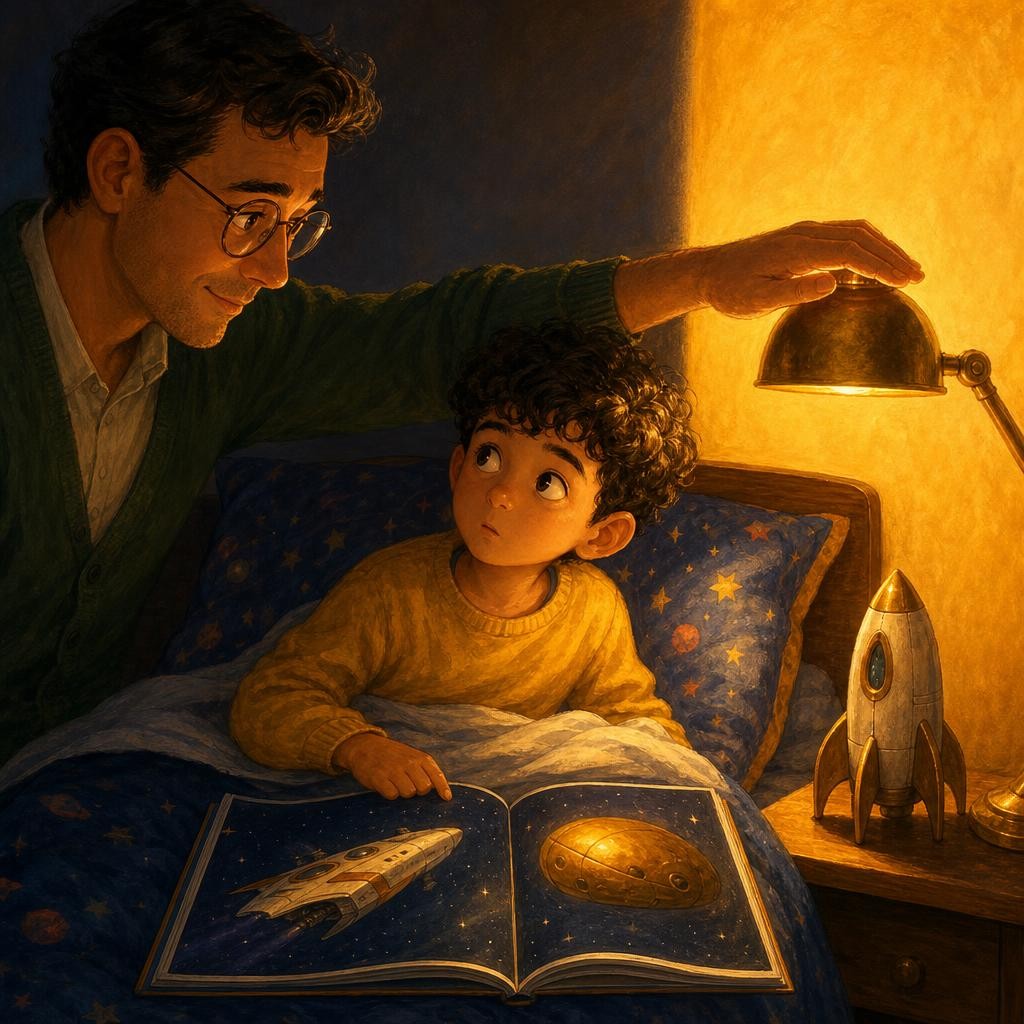
Sam clicked on the reading lamp for story time, and Dad slid a hand halfway over the bulb.
Ages 8-10 - 4 minute lesson - curious - EN
Reviewed for child-safety · gentle by design · How our stories are made
Published 2026-07-08T07:06:36.529167
Quick answer
Your child can retell the core idea of Project Hail Mary — tiny microbes called Astrophage dim a sun by sipping its light, and a scientist and an alien friend fix it with an even tinier microbe, Taumoeba, that eats the blockers.
Lesson
Sam clicked on the reading lamp for story time, and Dad slid a hand halfway over the bulb. The room went dim, and Sam frowned — the light was still on, but less of it was getting out. "That," said Dad, "is the puzzle in a famous story called Project Hail Mary. In it, our whole Sun starts going dim. What would you do about that?"
In the story, a science teacher named Ryland Grace wakes up alone on a spaceship called the Hail Mary. He was sent from Earth because scientists noticed the Sun growing dimmer, little by little — just like the lamp with Dad's hand over it. Because a dimmer Sun means a chillier Earth, Grace's job is to find out what is blocking the light and how to fix it.
Grace discovers the blocker: microbes, which are living things too tiny to see without a microscope. These space microbes are called Astrophage, and they soak up the Sun's energy the way Dad's hand caught the lamp's glow. Because millions and millions of them sip the Sun's light, less of it reaches Earth. Tiny sippers, big dimming!
So Grace flies his ship to a faraway star that is not going dim, hoping it holds the answer. When he arrives, he spots something amazing floating nearby — another spaceship, and it is not from Earth. Something inside taps on the wall, tap-tap-tap, wanting to talk. Is it a scary monster, or could it be a friend? What do you guess?
It's a friend! Out comes Rocky, an alien engineer — an engineer is someone who builds and fixes things. Rocky has five legs, breathes different air, and talks in musical notes, but his sun is being dimmed by Astrophage too. Because Grace knows science and Rocky knows building, together they solve puzzles neither could solve alone. Share your smarts, save the stars!
Then they find the real answer: near that bright star lives an even tinier microbe called Taumoeba, and Taumoeba eats Astrophage. Because the eater keeps the sippers away, that star stays bright — like wiping Dad's hand off the lamp so the full glow pours out again. The friends gather Taumoeba to send home to both their suns. And here is a true wow: the Sun's light is so far away that it takes about 8 minutes to travel to Earth — the sunshine on your face left the Sun 8 minutes ago!
You can see the whole story's big idea with a grown-up tonight. Shine a flashlight at the wall, then lay a piece of wax paper over the beam and watch the bright spot go dim — that's Astrophage sipping. Lift the paper away and the light jumps back — that's Taumoeba clearing the way. Because the blocker is gone, the full light gets through.
So now you can tell the story of Project Hail Mary yourself: a dimming sun, tiny microbes sipping its light, a scientist named Grace, a five-legged friend named Rocky, and one tiny eater that lets the light pour back — like a lamp with nothing in its way. And remember, the friend from far away wasn't scary at all; he was the other half of the answer. Say it with me: share your smarts, save the stars!
Lesson scenes
The Hand Over the Lamp
Sam clicked on the reading lamp for story time, and Dad slid a hand halfway over the bulb. The room went dim — the light was still on, but less of it was getting out. "That," said Dad, "is the puzzle in a famous story called Project Hail Mary."
A Dimming Sun, a Chillier Earth

In the story, a science teacher named Ryland Grace wakes up alone on a spaceship called the Hail Mary. Scientists noticed the Sun growing dimmer, little by little — and a dimmer Sun means a chillier Earth. Grace's job: find what is blocking the light and fix it.
Tiny Sippers, Big Dimming

Grace discovers the blocker: microbes — living things too tiny to see without a microscope. These space microbes are called Astrophage, and millions of them soak up the Sun's energy the way Dad's hand caught the lamp's glow. Tiny sippers, big dimming!
Tap-Tap-Tap
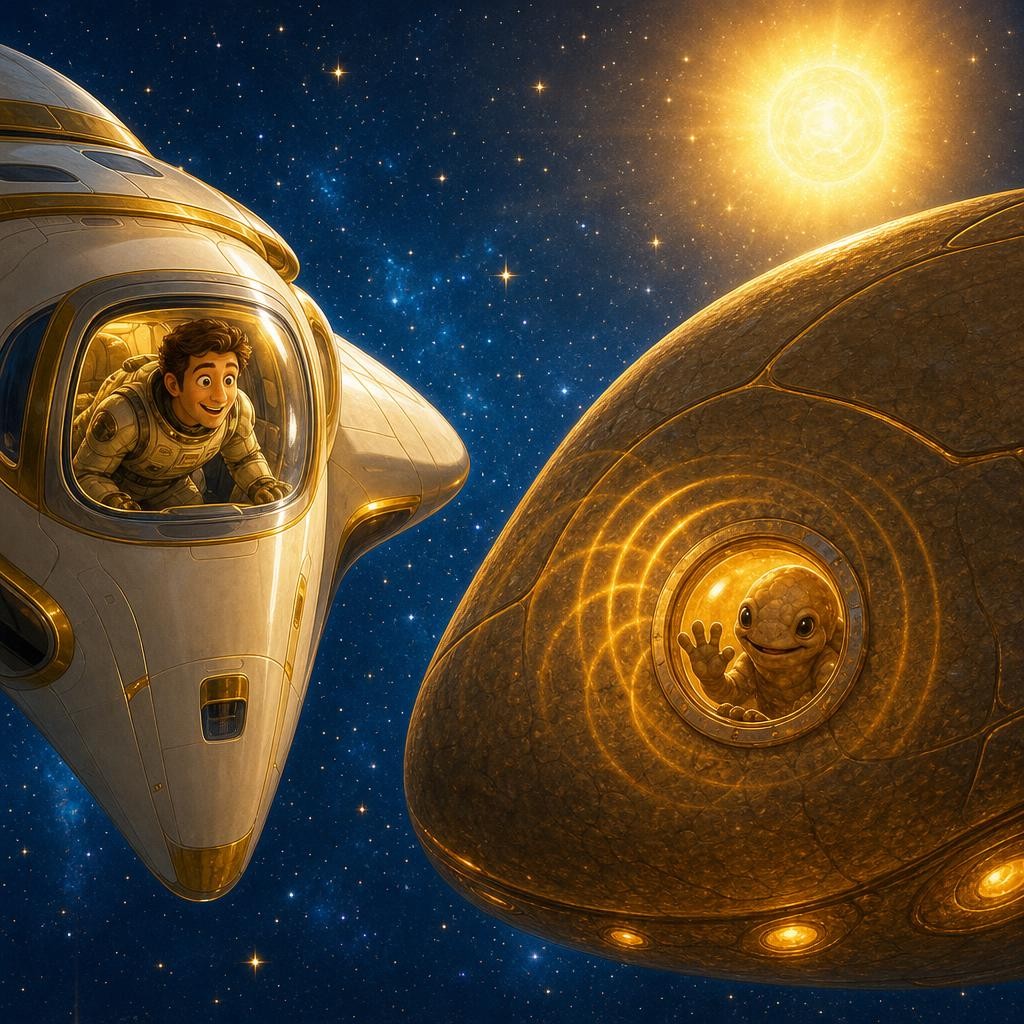
Grace flies to a faraway star that is not going dim, hoping it holds the answer. Floating nearby he spots something amazing — another spaceship, and it is not from Earth. Something inside taps on the wall, tap-tap-tap, wanting to talk. Is it a scary monster, or could it be a friend? What do you guess?
Rocky the Engineer
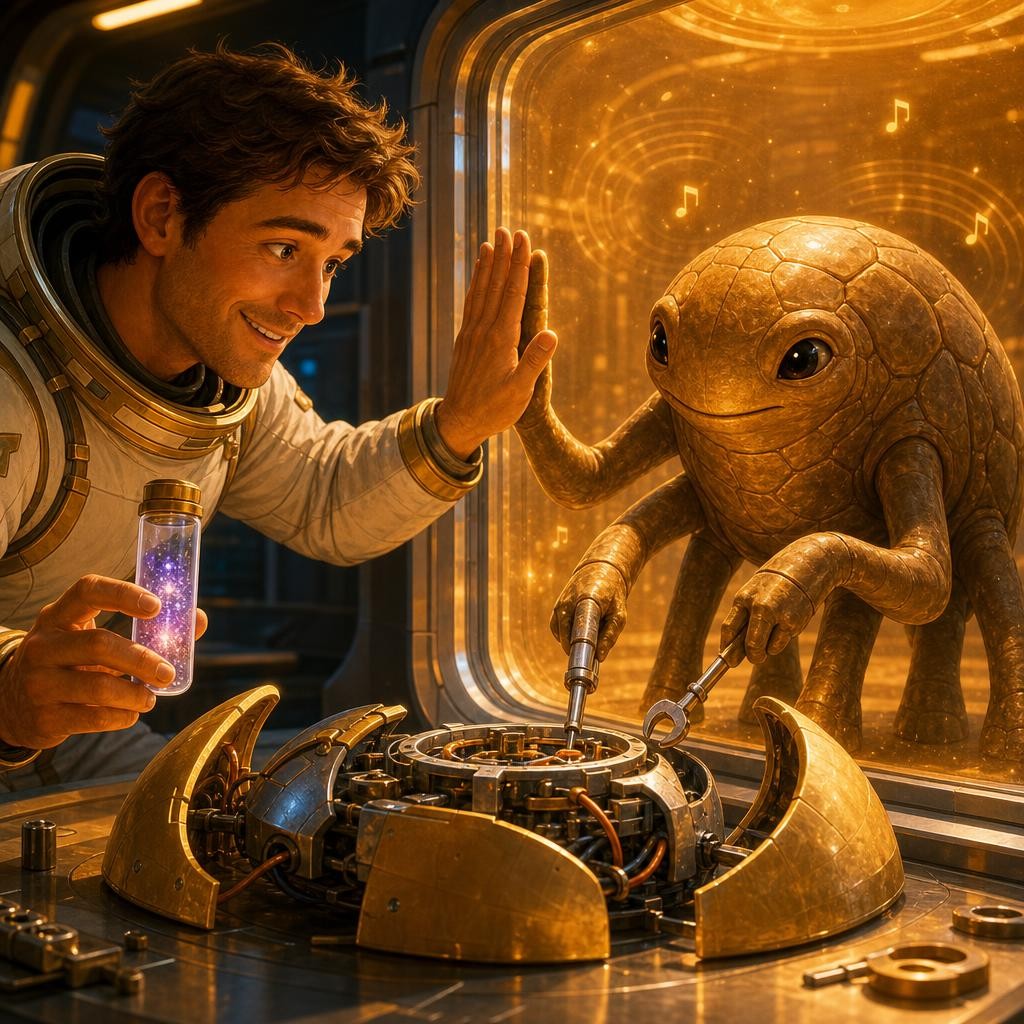
It's a friend! Out comes Rocky, an alien engineer — an engineer is someone who builds and fixes things. Rocky has five legs, breathes different air, and talks in musical notes, but his sun is being dimmed by Astrophage too. Because Grace knows science and Rocky knows building, together they solve puzzles neither could solve alone.
The Tiny Eater
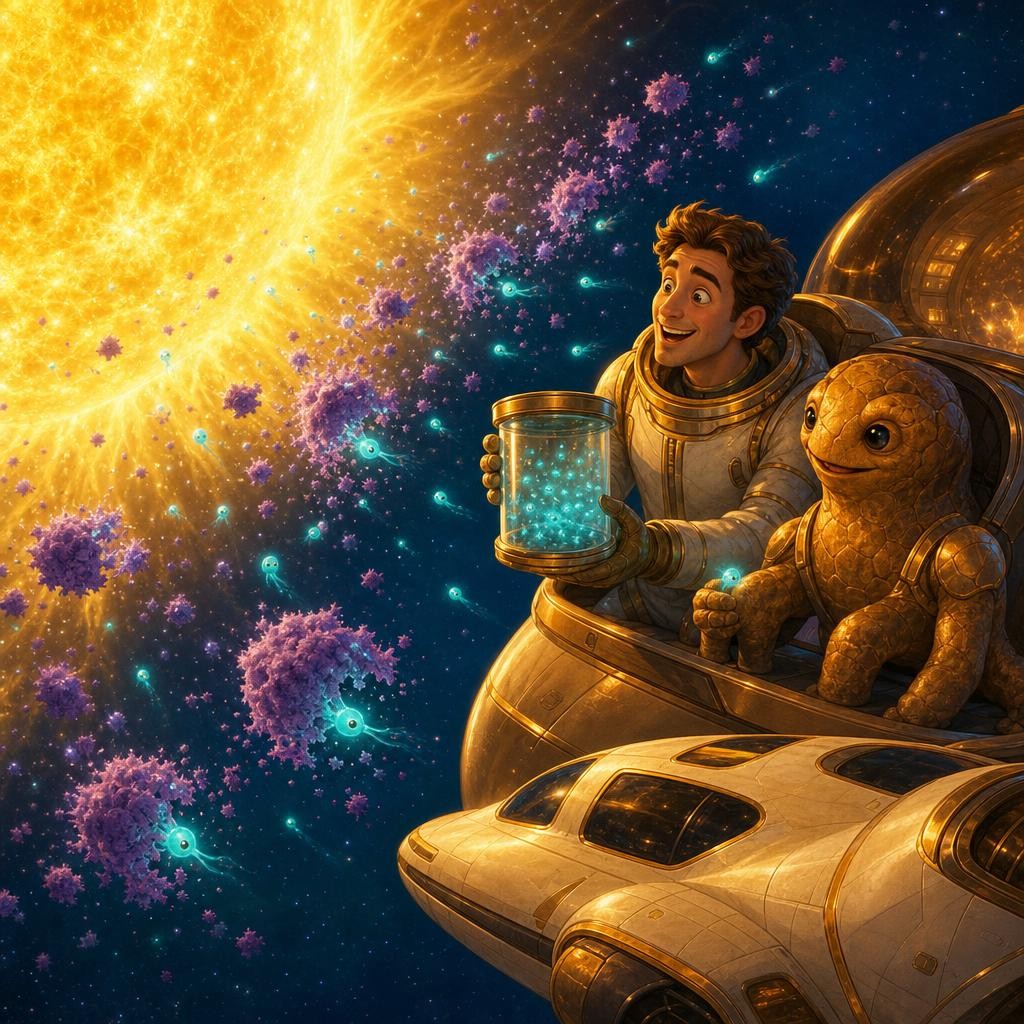
Then they find the real answer: near that bright star lives an even tinier microbe called Taumoeba — and Taumoeba eats Astrophage! Because the eater keeps the sippers away, that star stays bright, so the friends gather Taumoeba to send home to both their suns. And here's a true wow: sunlight takes about 8 minutes to travel to Earth — the sunshine on your face left the Sun 8 minutes ago!
Try It Tonight
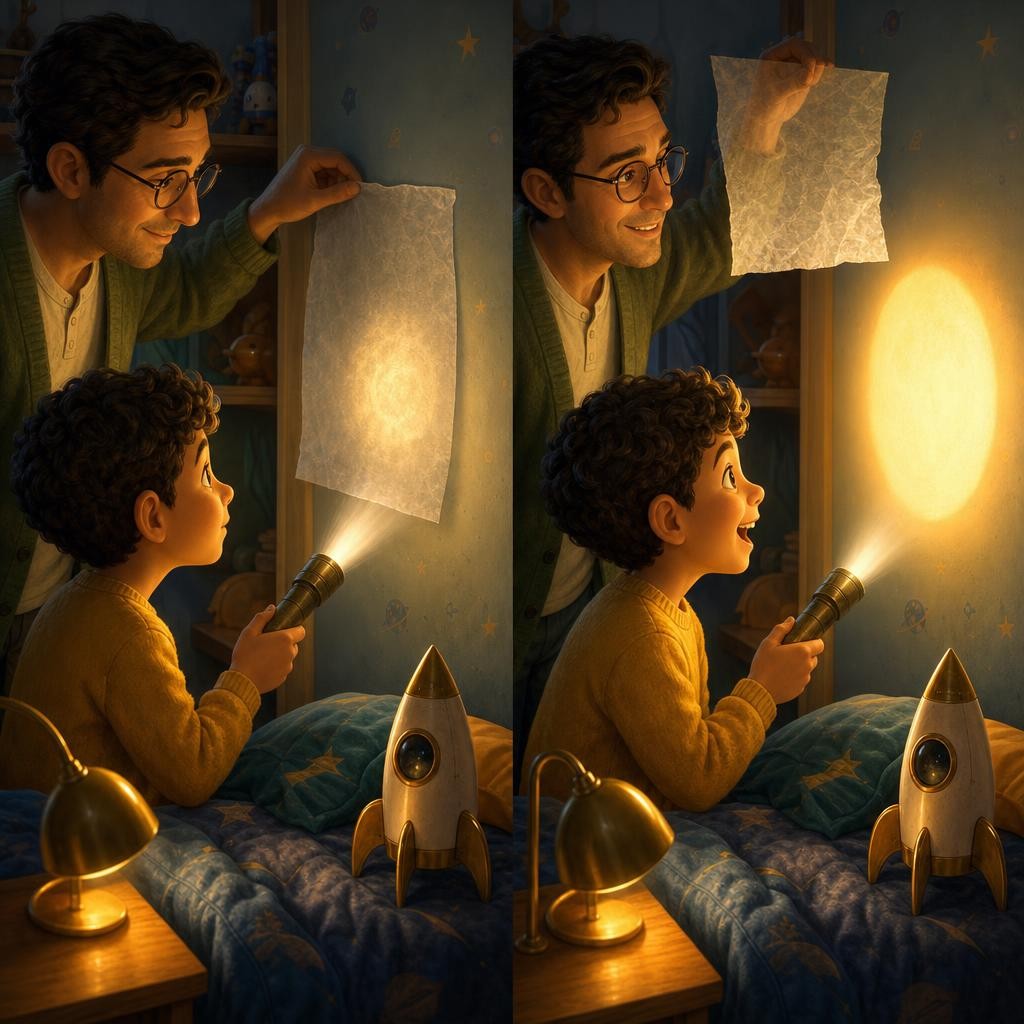
You can see the whole story's big idea with a grown-up tonight. Shine a flashlight at the wall, then lay wax paper over the beam and watch the bright spot go dim — that's Astrophage sipping. Lift the paper away and the light jumps back — that's Taumoeba clearing the way!
Key takeaways
- The Hand Over the Lamp
- A Dimming Sun, a Chillier Earth
- Tiny Sippers, Big Dimming
Mini quiz
- What was making the Sun go dim in the story?
- What lets the light pour back to a dimmed sun?
- How long does sunlight take to travel from the Sun to Earth?
Common questions
What will kids learn in Sam and the Sun-Saving Story?
Your child can retell the core idea of Project Hail Mary — tiny microbes called Astrophage dim a sun by sipping its light, and a scientist and an alien friend fix it with an even tinier microbe, Taumoeba, that eats the blockers.
Read-together tip
Space lessons should use familiar comparisons, clear scale, and bright friendly visuals without making space scary.