Why Time Slows Down in Interstellar
A kid-friendly space lesson on gravity, black holes, slow clocks, and the real science behind Interstellar and GPS satellites.
Ages 8-10 - 4 minute lesson - curious - EN
Reviewed for child-safety · gentle by design · How our stories are made
Published 2026-07-08T07:06:18.714611

Quick answer
Your child can explain that heavy objects bend space like a dip in a stretchy surface, and that clocks deep in a strong gravity dip tick slower than clocks far away — the real science behind Interstellar and GPS satellites.
Lesson
On movie night, Sam watched Interstellar with his mom. An astronaut dad flew far into space, and when he came back, his daughter had grown up more than he had! Sam paused the screen. "That can't be real... can it?" Mom smiled. "It's built on real science. Bring your soccer ball to the park tomorrow and I'll show you."
At the park, Mom set the soccer ball in the middle of the trampoline, and the stretchy surface sank into a dip. "That dip works like gravity," she said — gravity is the pull that heavy things make in space. Sam rolled an acorn along the edge, and it curled down toward the ball. A heavier ball would make a deeper dip and a stronger pull.
"In the movie," Mom said, "the astronauts fly through a wormhole — a shortcut tunnel through space — and on the other side waits a black hole." A black hole is something so heavy that it makes the deepest dip there is. Sam pictured the trampoline sinking down, down, down. The deeper the dip, the harder everything nearby gets pulled.
"Now the strange part," Mom said. "Deep in a heavy dip, it's not just balls that get pulled — time itself slows down. Scientists call this time dilation: clocks near very heavy things tick slower than clocks far away. The astronaut lands on a planet close to the black hole, so his watch ticks slow. Back on Earth, his daughter has a watch too. Guess: whose watch races ahead?"
The daughter's! Far from the deep dip, her watch ticks at normal speed, so it zooms past his slow one. In the movie, one hour on that planet equals seven whole years back home — that's why the dad returns to a grown-up girl. Sam's eyes went wide. "Big pull, slow clock!" Mom laughed. "That's exactly it."
Sam frowned. "But I thought time was the same everywhere." "Almost everyone thinks that," Mom said, "and real satellites prove it isn't. GPS satellites fly high above Earth, far from Earth's dip, so their clocks tick a tiny bit faster than clocks down here. Engineers have to correct them every single day, or your map would point to the wrong street." The dip really does change the clock.
"Want to build your own gravity dip at home?" Mom asked. That evening, with Dad's help, Sam stretched a blanket flat and tight, set the heavy ball in the middle, and rolled a marble across. It curved into the dip, circling the ball like a planet circling a star. Then Dad folded the blanket so two far corners touched. "Look — a wormhole shortcut, just like the movie."
At bedtime, Sam explained it back: heavy things make dips, a black hole makes the deepest dip, and deep in a dip, clocks run slow — so one hour for the astronaut became years for his daughter. The movie is a story, but the time science is real. Say it with him: "Big pull, slow clock!"
Lesson scenes
That can't be real... can it?
On movie night, Sam watched Interstellar with his mom. An astronaut dad flew far into space — and when he came back, his daughter had grown up more than he had! Sam paused the screen. "That can't be real... can it?"
The trampoline trick
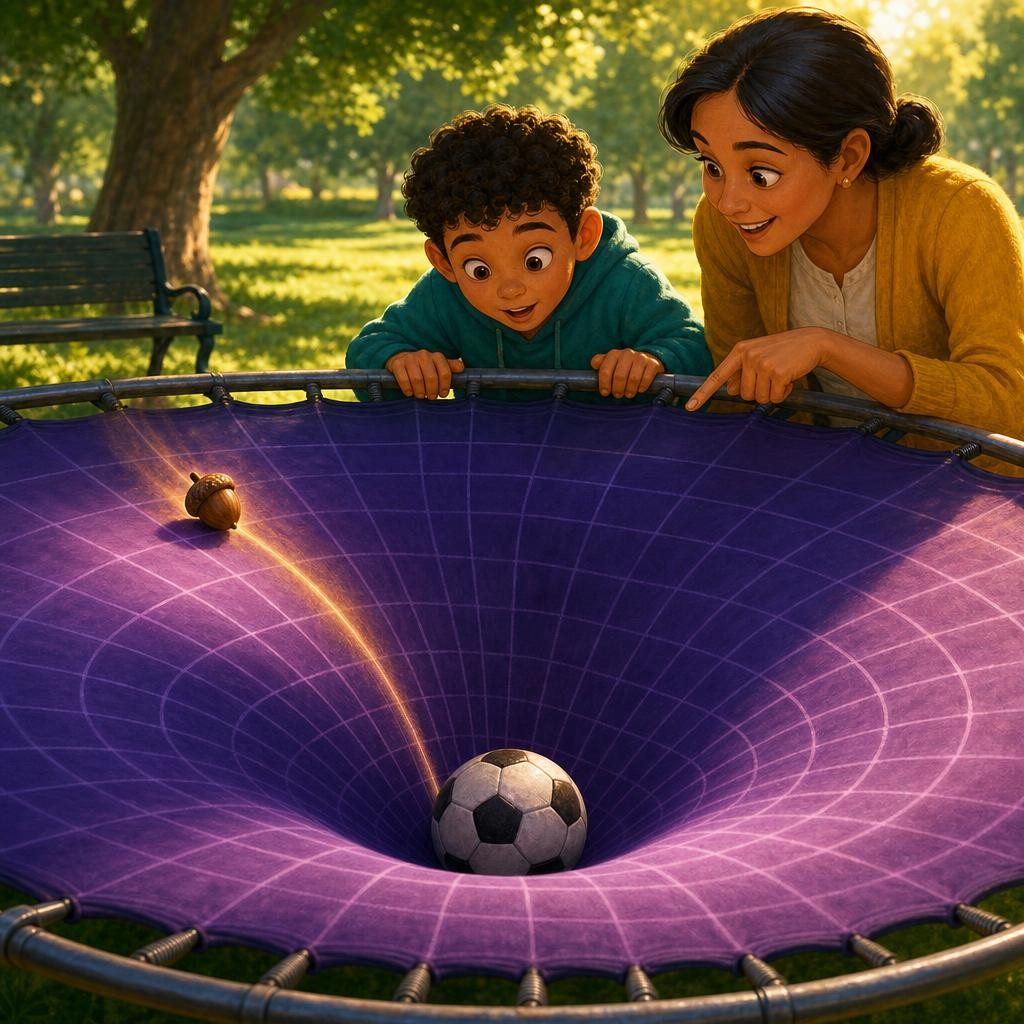
At the park, Mom set the soccer ball in the middle of the trampoline, and the stretchy surface sank into a dip. "That dip works like gravity — the pull that heavy things make in space." Sam rolled an acorn along the edge, and it curled down toward the ball.
The deepest dip there is
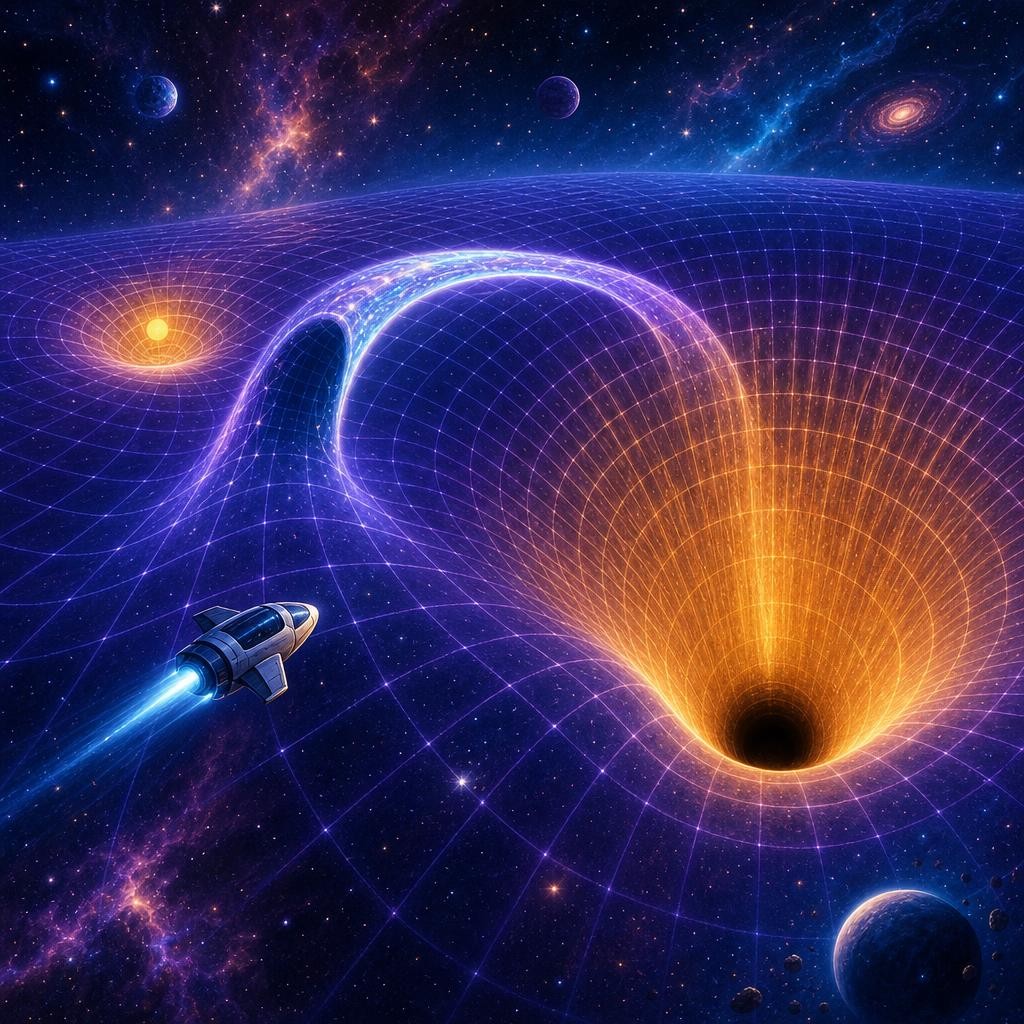
"In the movie," Mom said, "the astronauts fly through a wormhole — a shortcut tunnel through space — and on the other side waits a black hole." A black hole is so heavy it makes the deepest dip there is. The deeper the dip, the harder everything nearby gets pulled.
Whose watch races ahead?
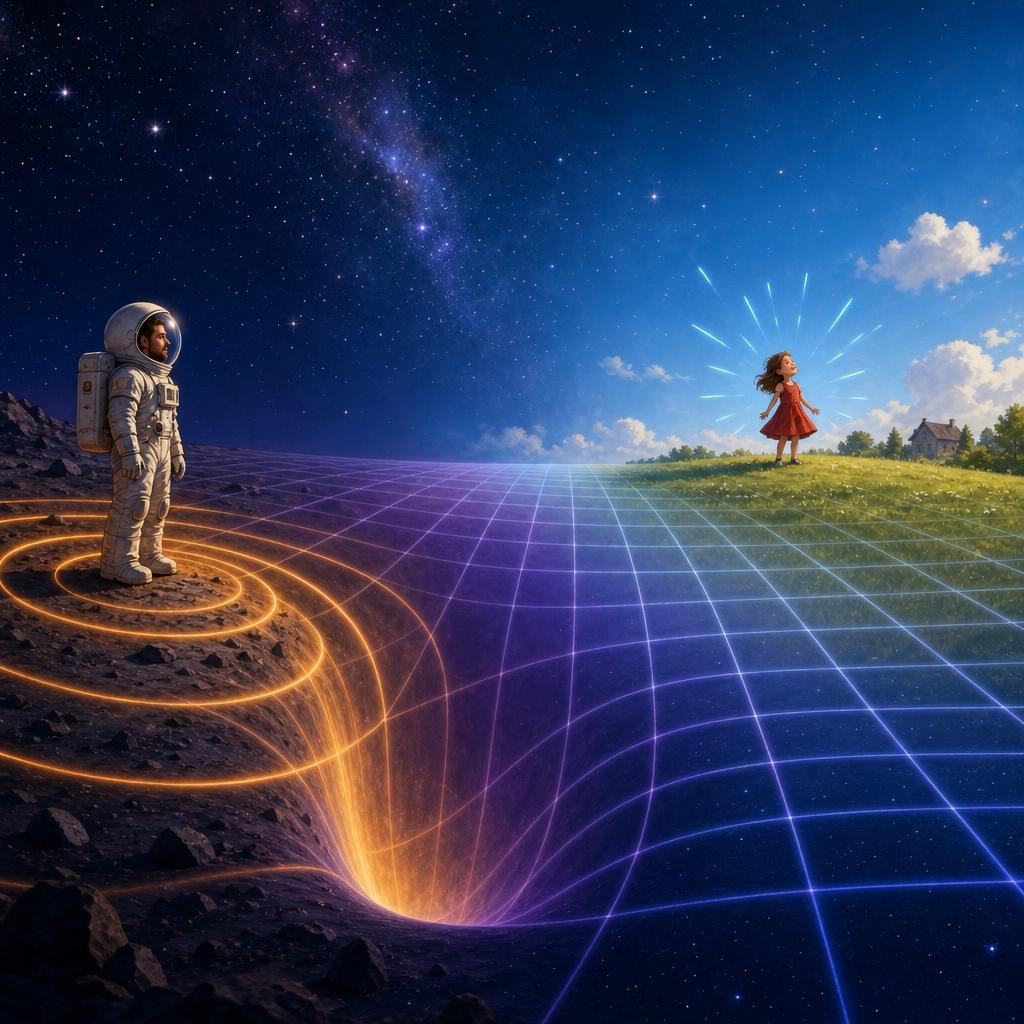
"Now the strange part," Mom said. "Deep in a heavy dip, time itself slows down — scientists call this time dilation." The astronaut lands on a planet close to the black hole, so his watch ticks slow. Back on Earth, his daughter has a watch too. Guess: whose watch races ahead?
Big pull, slow clock!

The daughter's! Far from the deep dip, her time ticks at normal speed, so it zooms past his slow one. One hour on that planet equals seven whole years back home — that's why the dad returns to a grown-up girl. Sam's eyes went wide: "Big pull, slow clock!"
Real satellites prove it
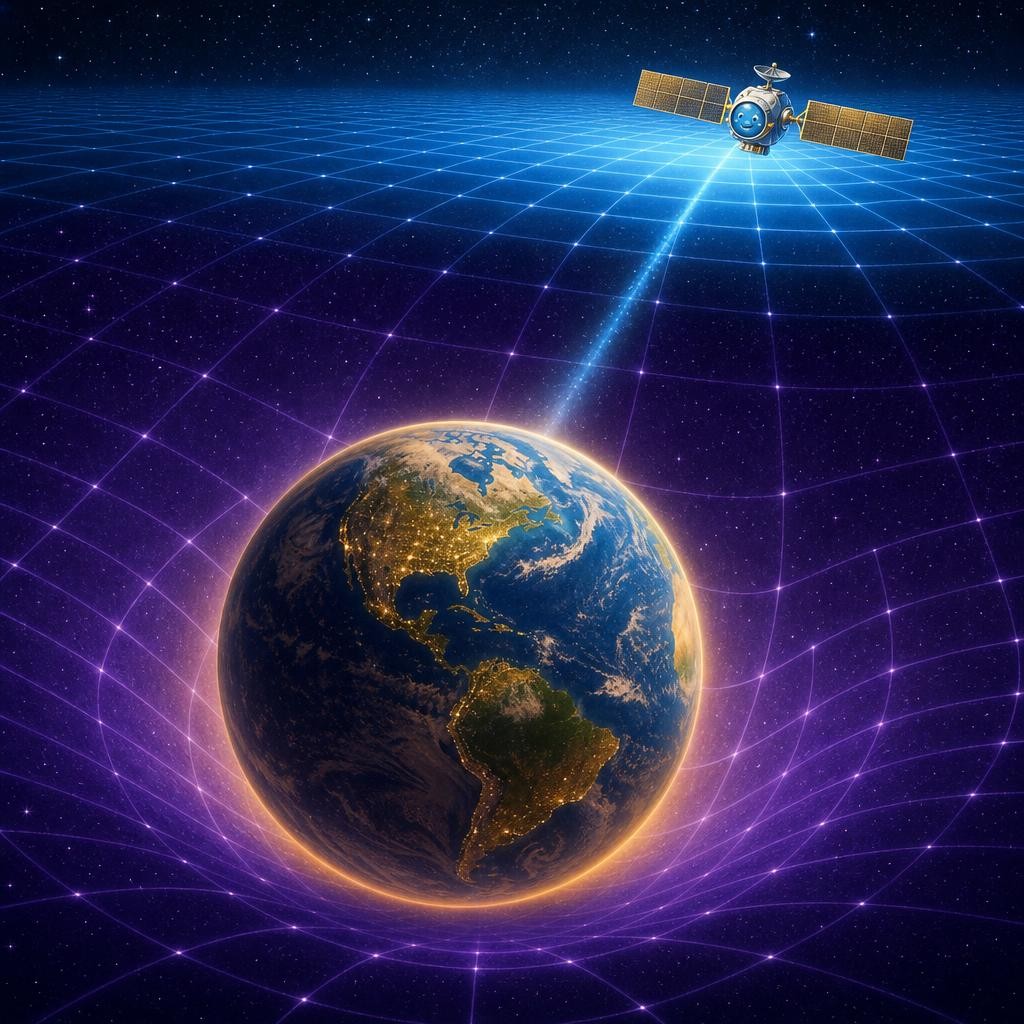
"But I thought time was the same everywhere," Sam frowned. "Almost everyone thinks that," Mom said, "and real satellites prove it isn't. GPS satellites fly far from Earth's dip, so their clocks tick a tiny bit faster — engineers correct them every single day, or your map would point to the wrong street."
Build your own gravity dip
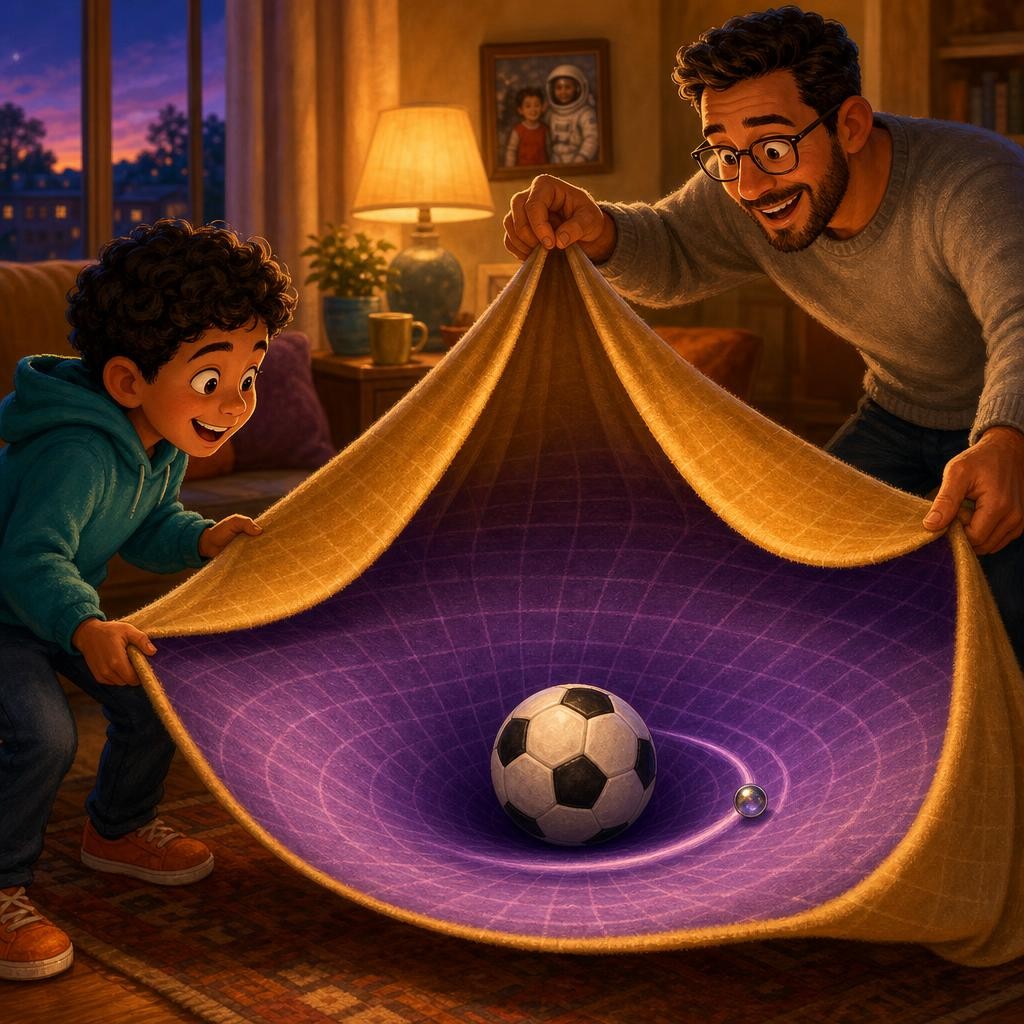
That evening, with Dad's help, Sam stretched a blanket flat and tight and set the heavy ball in the middle. He rolled a marble across — it curved into the dip, circling the ball like a planet circling a star. Then Dad folded two far corners together: "Look — a wormhole shortcut, just like the movie."
Say it with Sam
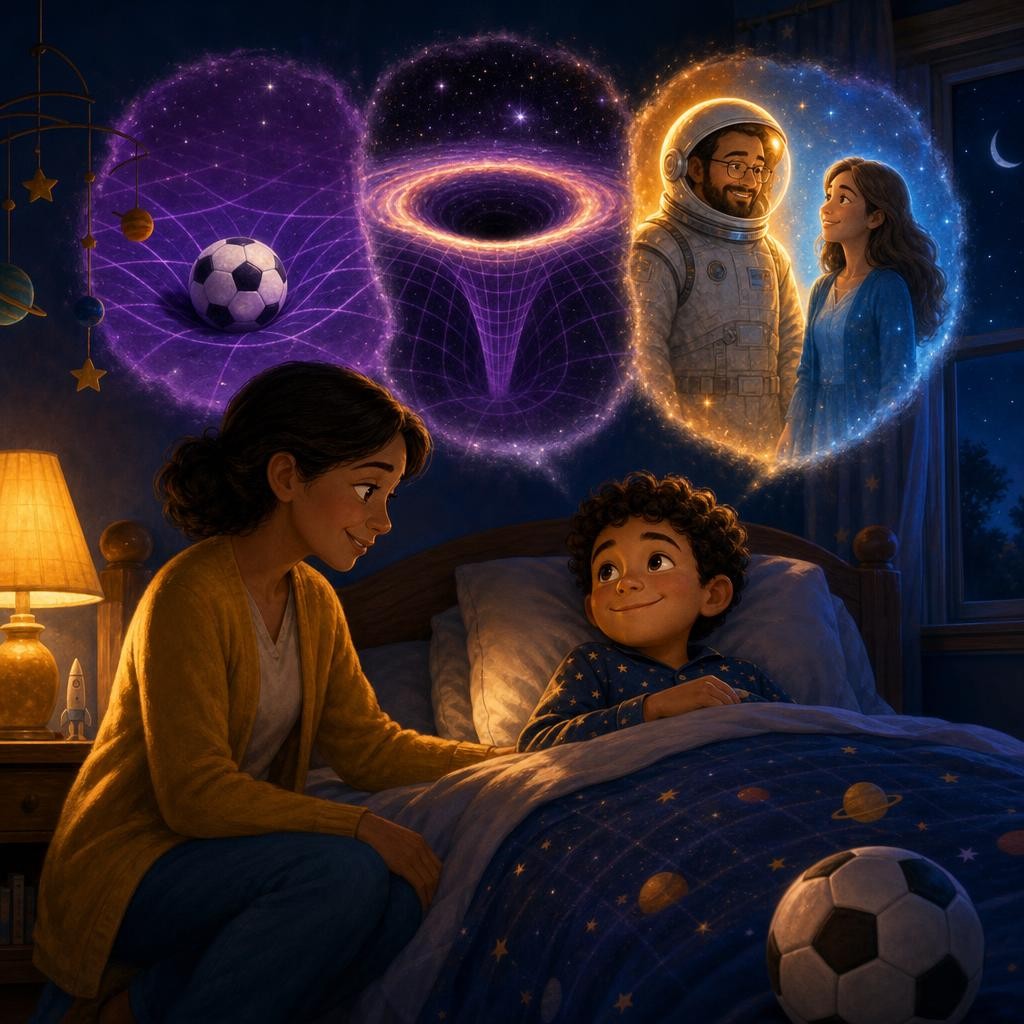
At bedtime, Sam explained it back: heavy things make dips, a black hole makes the deepest dip, and deep in a dip, clocks run slow — so one hour for the astronaut became years for his daughter. The movie is a story, but the time science is real. Say it with him: "Big pull, slow clock!"
Key takeaways
- That can't be real... can it?
- The trampoline trick
- The deepest dip there is
Mini quiz
- What happens to a clock deep in a heavy gravity dip?
- Why did the astronaut's daughter grow up more than he did?
- GPS satellites fly high above Earth, far from Earth's dip. Their clocks...
Common questions
What will kids learn in Why time slows down in Interstellar?
Your child can explain that heavy objects bend space like a dip in a stretchy surface, and that clocks deep in a strong gravity dip tick slower than clocks far away — the real science behind Interstellar and GPS satellites.
Read-together tip
Space lessons should use familiar comparisons, clear scale, and bright friendly visuals without making space scary.