What Did People Use Before Money?
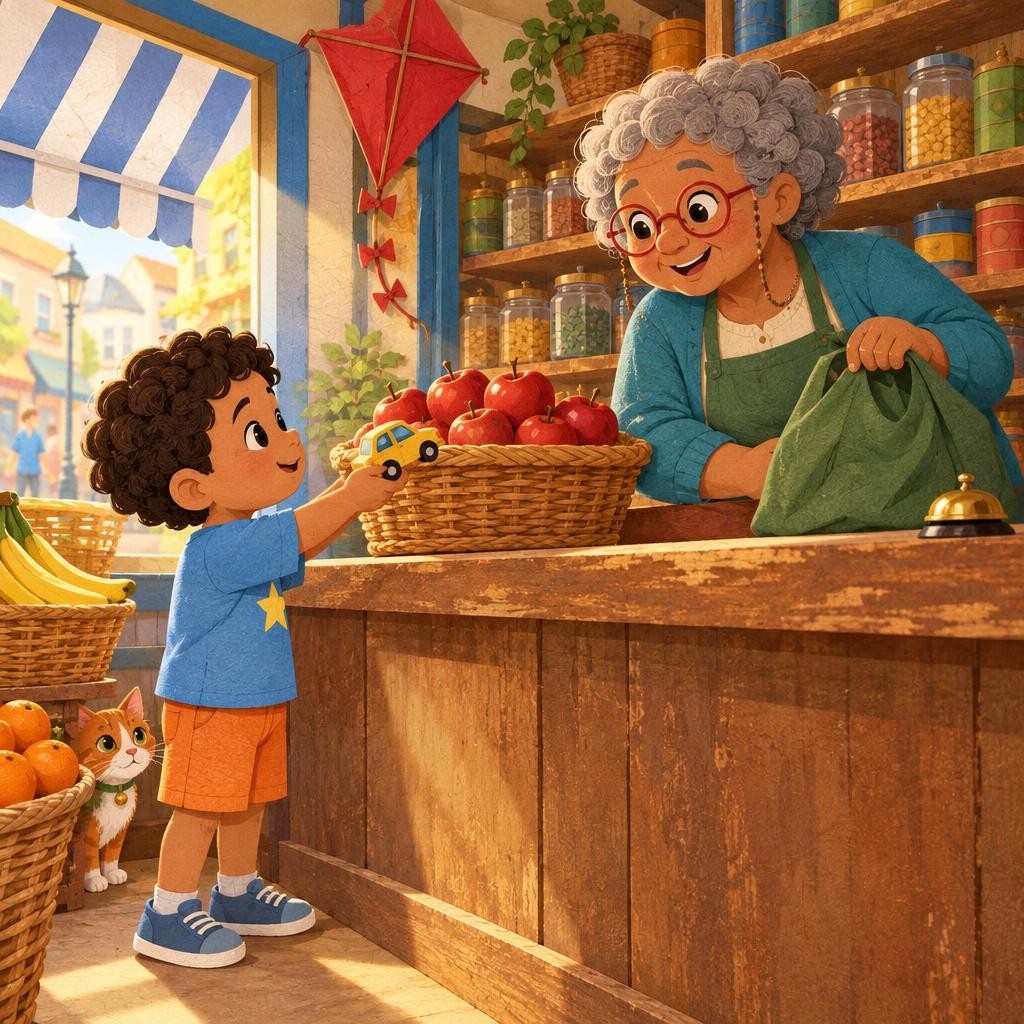
Kai wants to swap his toy car for an apple. Grandma Rosa's pop-up box takes him to a market long ago, where he finds out why people began to use money.
Understanding money · 1 of 12
about real things · asks questions · 8 pages · ages 4–5 · 2 min · English
Read · Play · Listen · PDF · Print edition · with the Storybook Pass · Make it about your child
Reviewed for child safety · gentle by design · How our storybooks are made
Published 2026-11-03T17:45:16.578878
Quick answer
Before money, people often swapped things, like cloth for grain. A swap only works when both people want what the other has, so people agreed on one thing everyone would take: money.
Inside this storybook
Kai holds up his little yellow toy car. "Grandma Rosa, can I swap my car for an apple?" Grandma Rosa smiles and pats her big green bag. "Long, long ago, people swapped all the time. Shall we go and see?"
Grandma Rosa lifts the lid of her little wooden box. Pop! Paper roofs, stalls and people spring up all around them. Now they are in a busy market from long, long ago. In this market, nobody has any money at all.
A weaver, who makes cloth, wants grain. A farmer has grain, and he wants cloth. So they swap! Both of them get just what they wanted.
The potter, who makes pots, wants a fish for her supper. So Kai carries her round clay pot all the way to the fisher. But look at the fisher. He keeps pointing at the weaver's blue cloth.
No swap! So off they go. The farmer takes the pot and gives grain. The weaver takes the grain and gives cloth. The fisher takes the cloth and gives a fish. Phew! Round and round the whole market, just for one fish.
That is why, in many places, people agreed on one thing that everybody would take. Then the potter can pay the fisher straight away, and the fisher can use it to buy cloth later. That one thing became money.
Pop! They are back in the shop. All day long, Grandma Rosa sells apples and oranges. That is her work, and her work is how she gets her money. Now Kai still wants his apple.
Kai pays with a shiny coin and keeps his toy car. Crunch! Then he opens Grandma Rosa's box and tucks in the tiny clay pot the potter gave him for helping. The next little hollow waits, empty.
The pages
Can I swap?
Kai holds up his little yellow toy car. "Grandma Rosa, can I swap my car for an apple?" Grandma Rosa smiles and pats her big green bag. "Long, long ago, people swapped all the time. Shall we go and see?"
The pop-up market
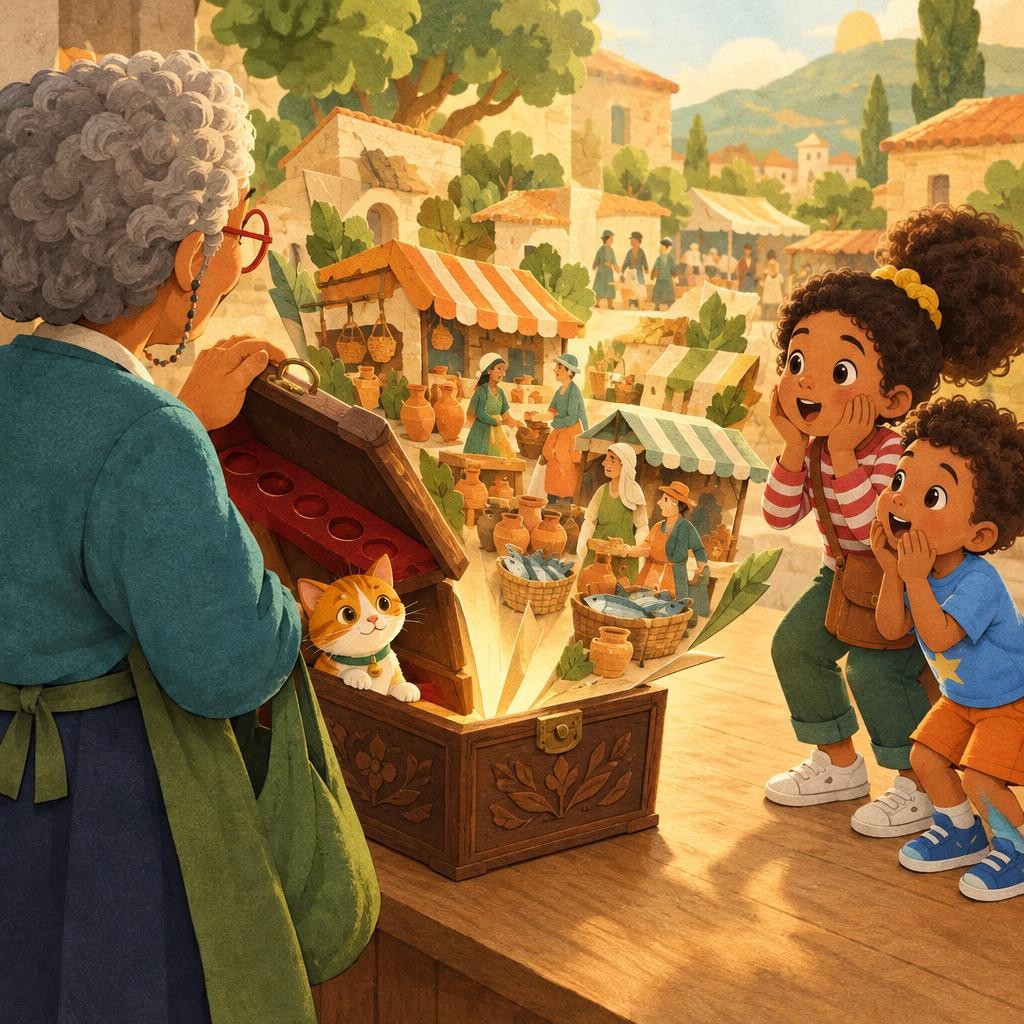
Grandma Rosa lifts the lid of her little wooden box. Pop! Paper roofs, stalls and people spring up all around them. Now they are in a busy market from long, long ago. In this market, nobody has any money at all.
A happy swap
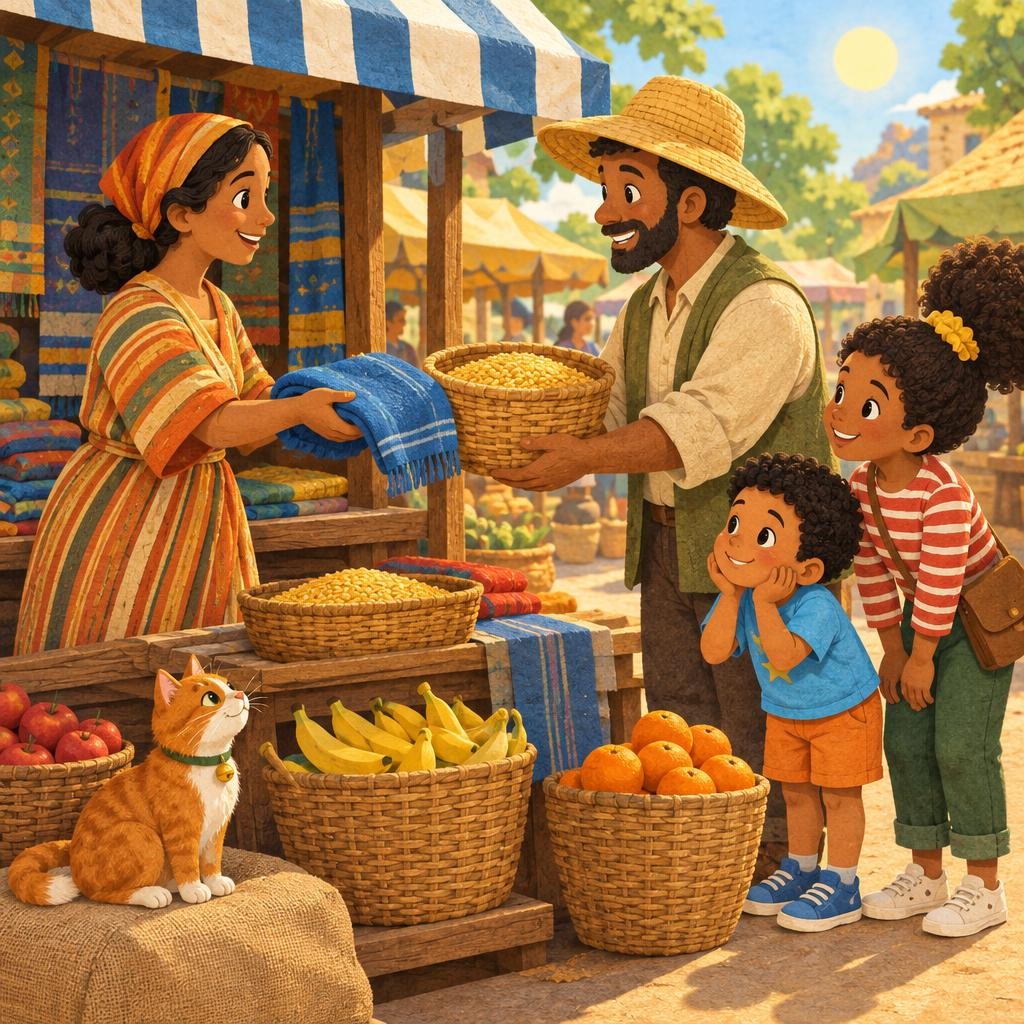
A weaver, who makes cloth, wants grain. A farmer has grain, and he wants cloth. So they swap! Both of them get just what they wanted.
Will the fisher swap?
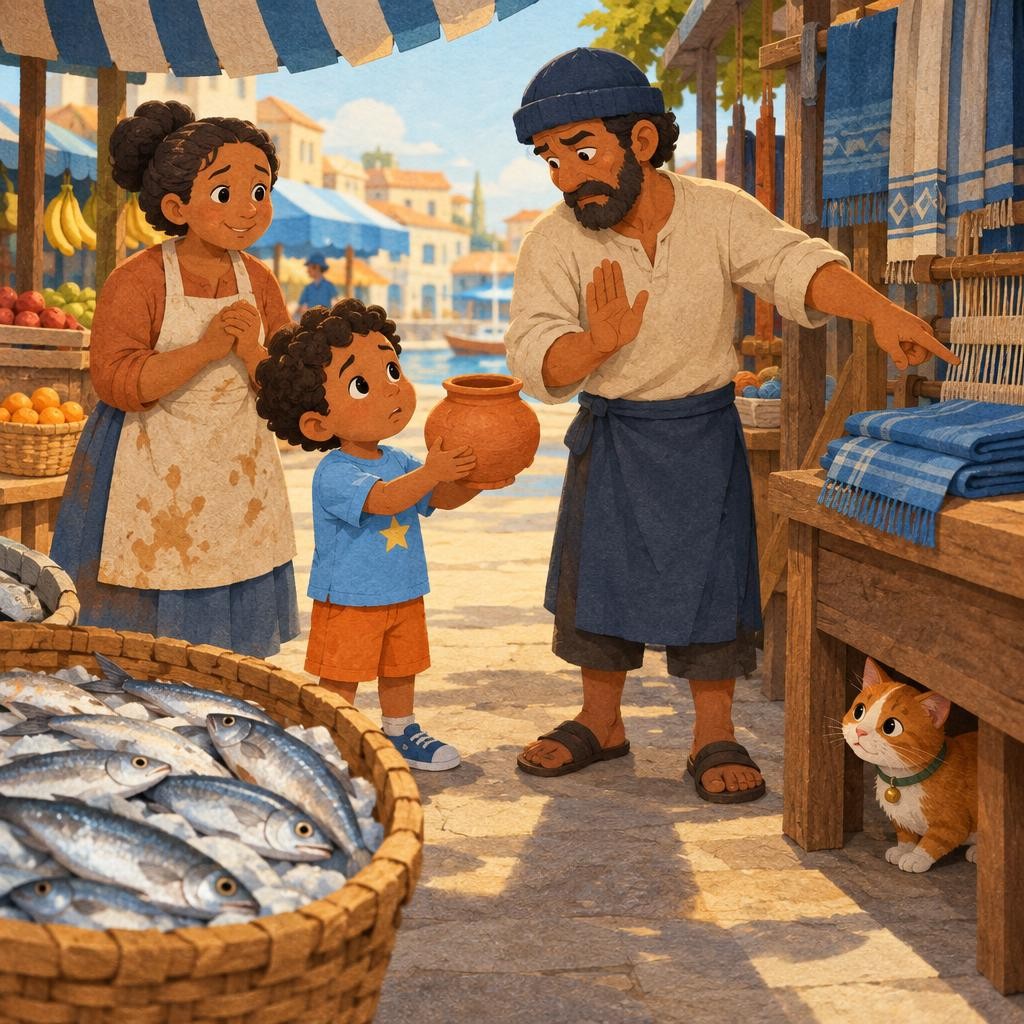
The potter, who makes pots, wants a fish for her supper. So Kai carries her round clay pot all the way to the fisher. But look at the fisher. He keeps pointing at the weaver's blue cloth.
Round and round
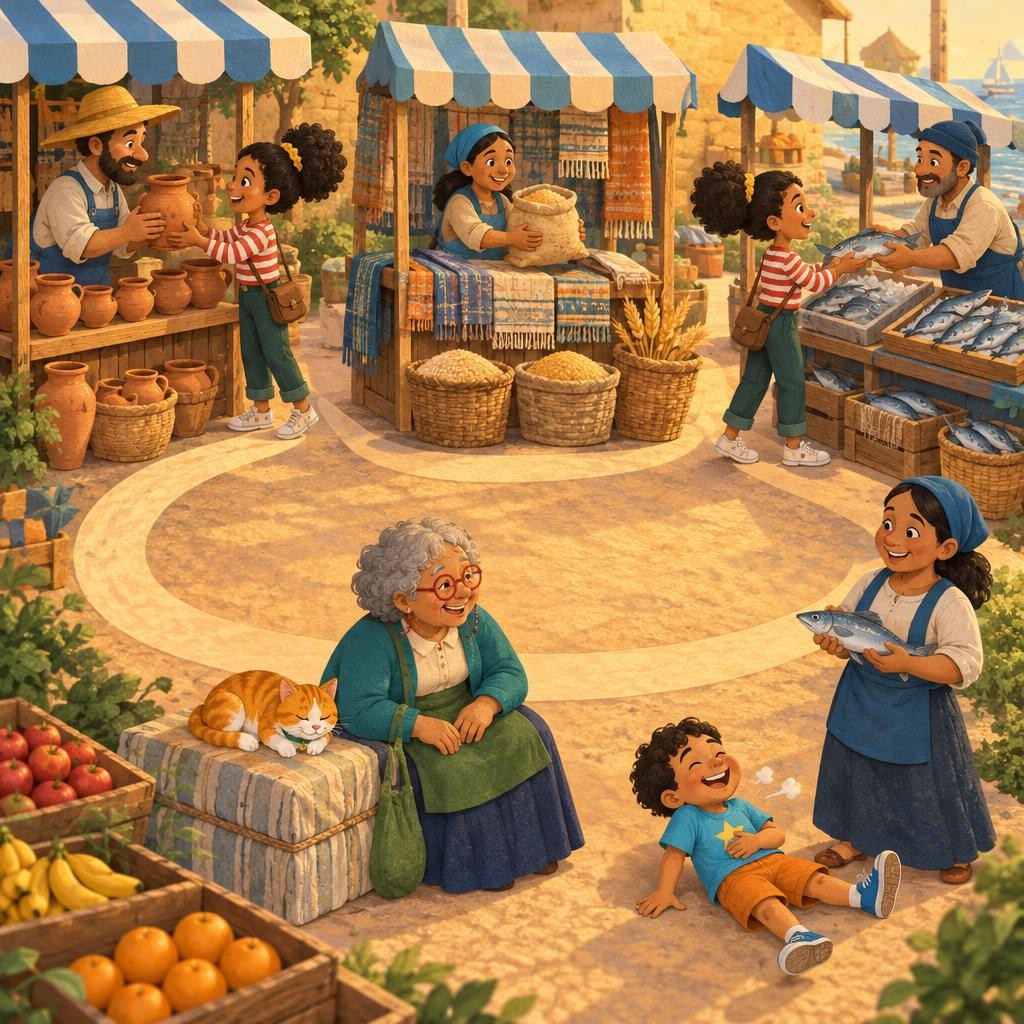
No swap! So off they go. The farmer takes the pot and gives grain. The weaver takes the grain and gives cloth. The fisher takes the cloth and gives a fish. Phew! Round and round the whole market, just for one fish.
One thing everyone takes
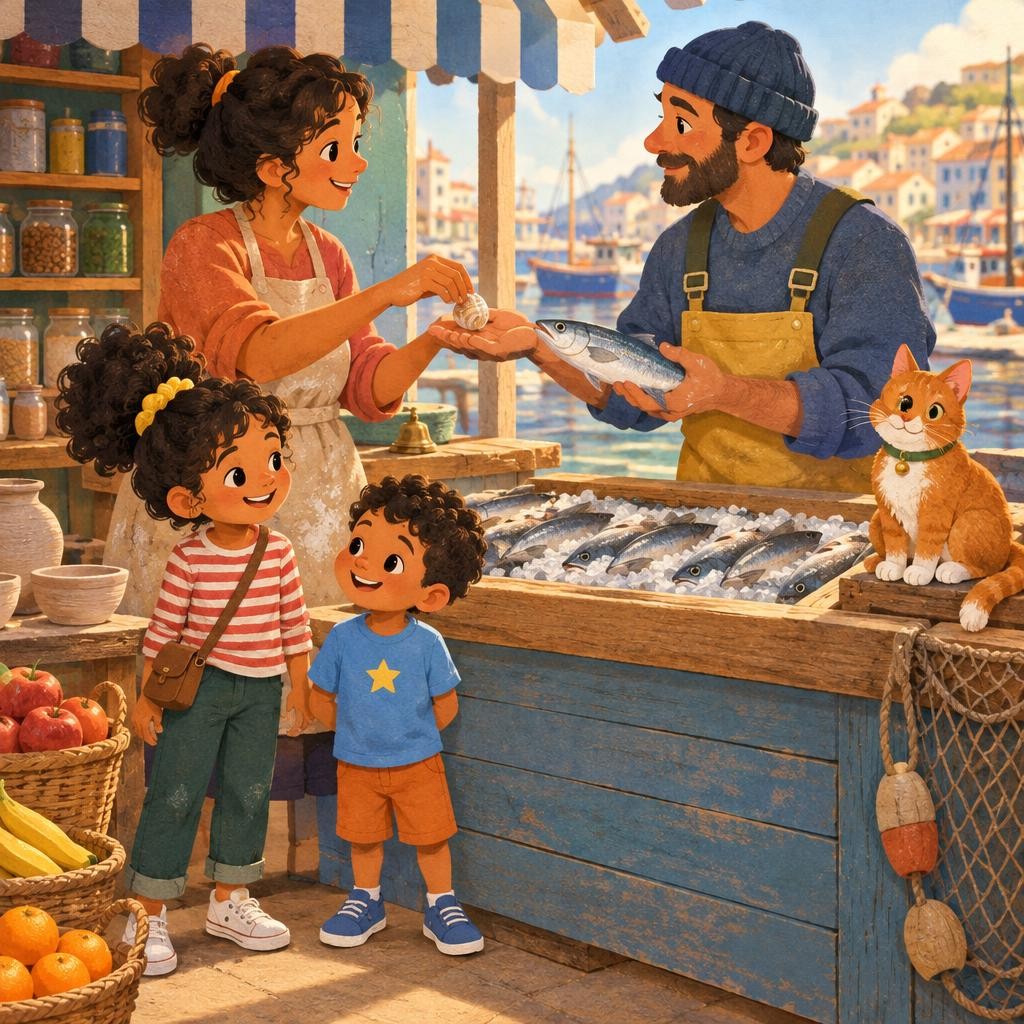
That is why, in many places, people agreed on one thing that everybody would take. Then the potter can pay the fisher straight away, and the fisher can use it to buy cloth later. That one thing became money.
Grandma Rosa's work
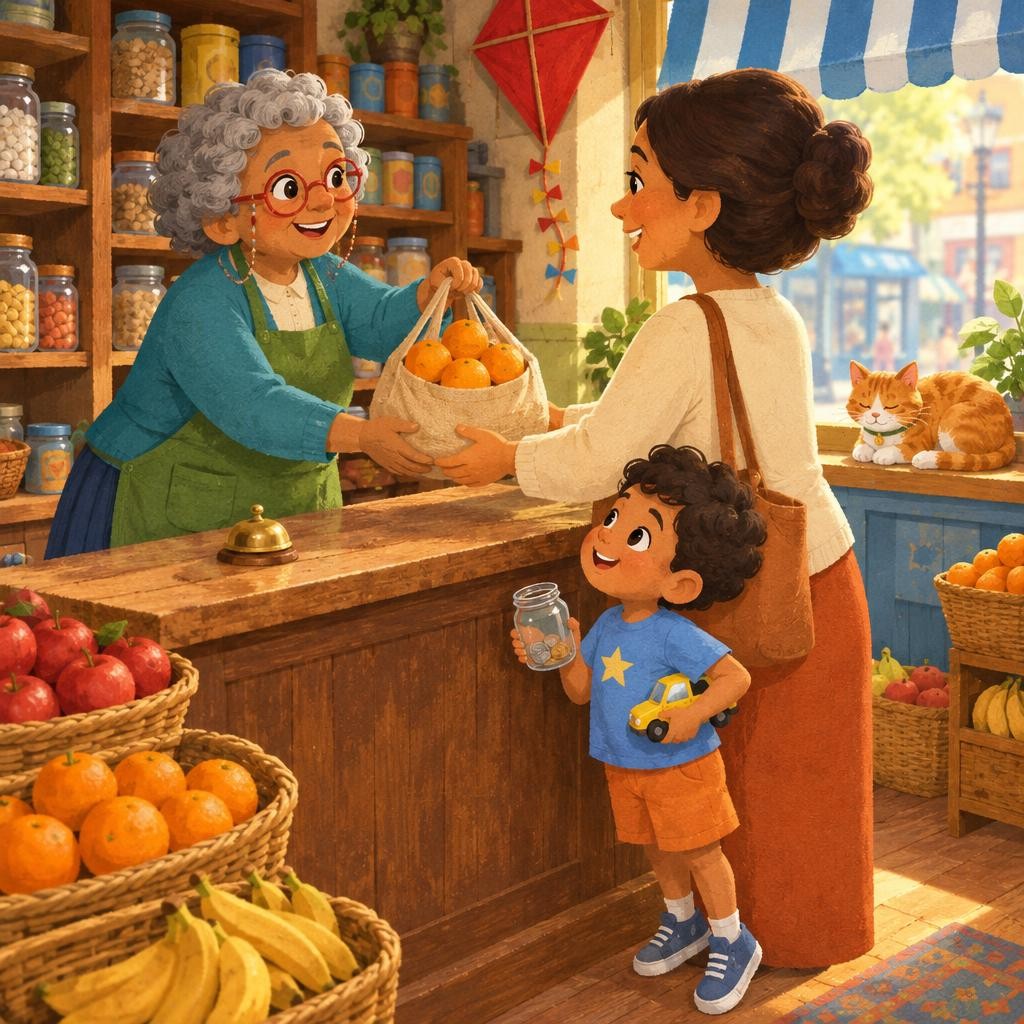
Pop! They are back in the shop. All day long, Grandma Rosa sells apples and oranges. That is her work, and her work is how she gets her money. Now Kai still wants his apple.
The first keepsake
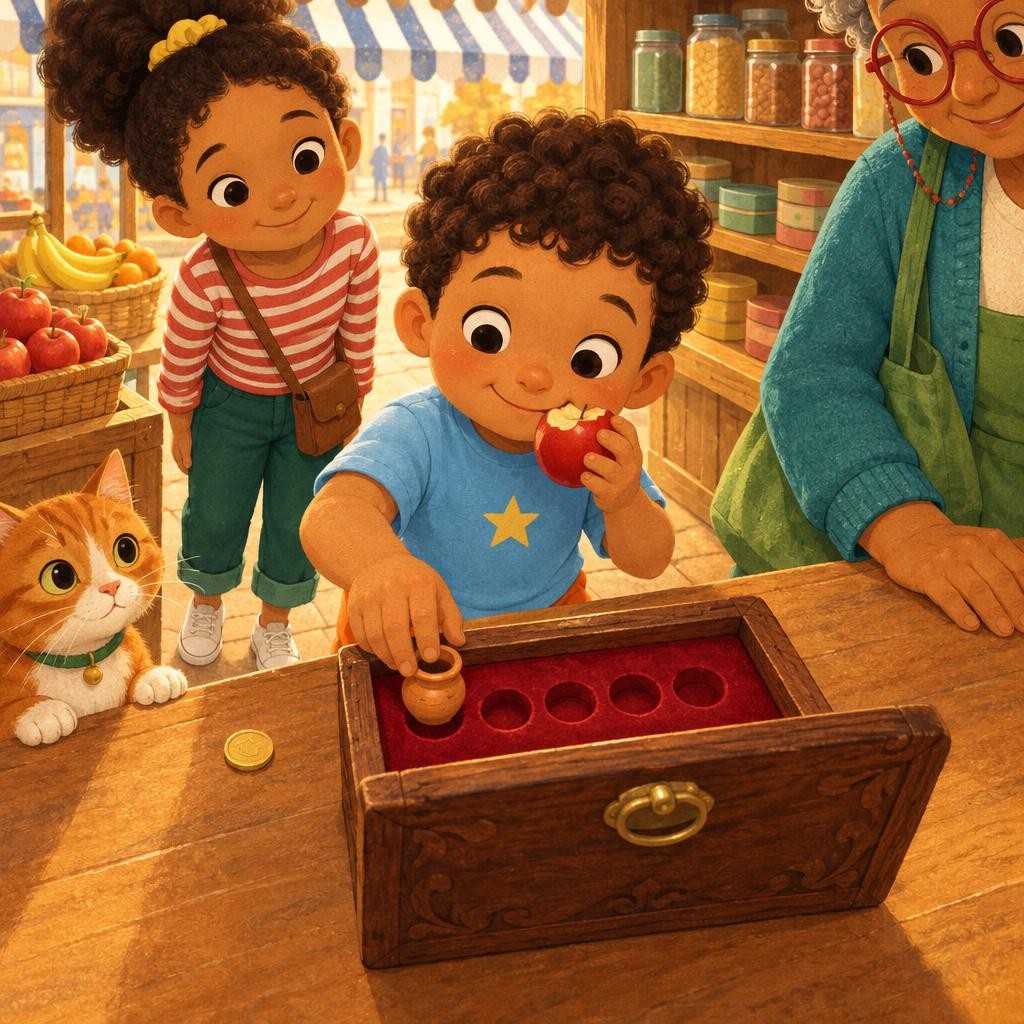
Kai pays with a shiny coin and keeps his toy car. Crunch! Then he opens Grandma Rosa's box and tucks in the tiny clay pot the potter gave him for helping. The next little hollow waits, empty.
Key takeaways
- A swap only works when both people want what the other has.
- Money is one thing that everybody agrees to take.
- Grown-ups earn money by working.
Questions along the way
- Why didn't the fisher take the pot?
- What did people agree to use, so that paying got easy?
- How does Grandma Rosa get her money?
Common questions
What did people use before money?
People swapped things, shared, and kept track of who owed whom. Later, in many places, they used shells, grain or beads as money.
Why is money easier than swapping?
With money you do not need to find someone who wants your exact thing. Everyone takes money, so you can pay straight away.
Read-together tip
Play swap shop: lay out a few toys and try to swap for what you want, then play again with pretend coins. Which game was quicker, and why?