What Does a Bank Do With Money?
Kai's coin jar is too full to close. A pop-up trip to old Italy and London shows him where banks began, and what a bank really does with money.
Understanding money · 6 of 12
about real things · asks questions · 8 pages · ages 6–7 · 2 min · English
Read · Play · Listen · PDF · Print edition · with the Storybook Pass · Make it about your child
Reviewed for child safety · gentle by design · How our storybooks are made
Published 2026-11-03T17:45:25.990515
Quick answer
A bank keeps money safe, lends some of it to people who need it, and keeps a careful record of how much belongs to each person. The word bank comes from an old Italian word for the money changer's bench.
Inside this storybook
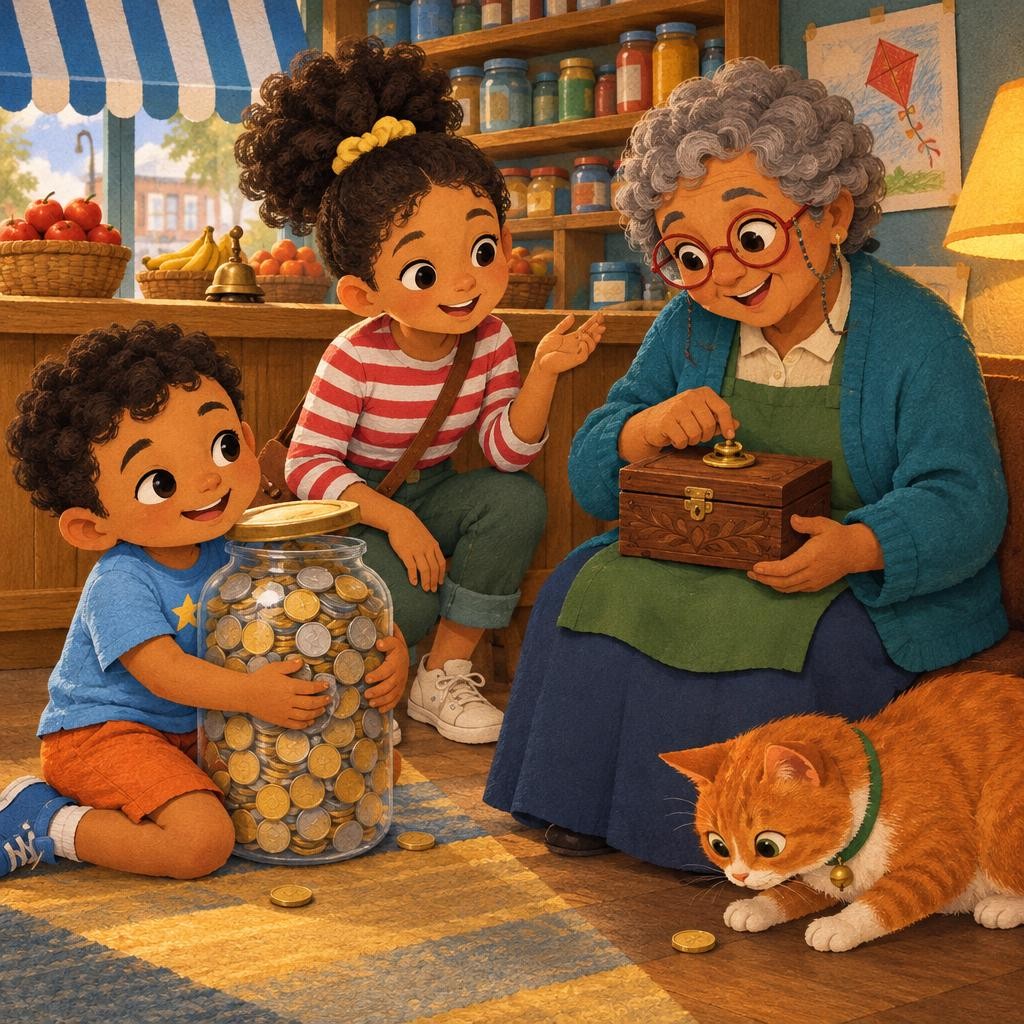
Kai's kite jar is so full of coins that the lid won't close. "Where do grown-ups keep lots of money?" asks Nia. Grandma Rosa taps her little box. "In a bank. Want to see where banks began?"
Pop! They are in an Italian town square about 600 years ago. Money changers sit at wooden benches, swapping coins from far-off lands. Kai sits on a bench. "So I'm sitting on a bank!" He's right: the word bank comes from an old Italian word for the money changer's bench.
Later, in London, people asked goldsmiths to look after their gold, because goldsmiths had strong, locked safes. For every bag of gold, the goldsmith gave them a paper slip to show how much was theirs.
Soon the goldsmith's safe is full of gold, just sitting there. At the door, a baker is waiting. He needs money to build a bigger oven.
He lends some gold to the baker, who builds a bigger oven and pays it back later. And the goldsmith writes everything in a big record book: who owns what, and who owes what. That is what a bank does.
Banks today do the same. They keep money safe, they lend some of it to people building homes and shops, and their computers keep a careful record of how much is yours.
Grandma Rosa takes Kai and his jar to the bank down the street. Kai opens his very own savings account: a place in the bank's record just for his money. The bank worker counts his coins and adds them to it.
That evening, a small brass key goes into the box, next to the folded paper note. "Your money is safe," says Grandma Rosa, "and it's still yours."
The pages
The jar won't close
Kai's kite jar is so full of coins that the lid won't close. "Where do grown-ups keep lots of money?" asks Nia. Grandma Rosa taps her little box. "In a bank. Want to see where banks began?"
Sitting on a bank
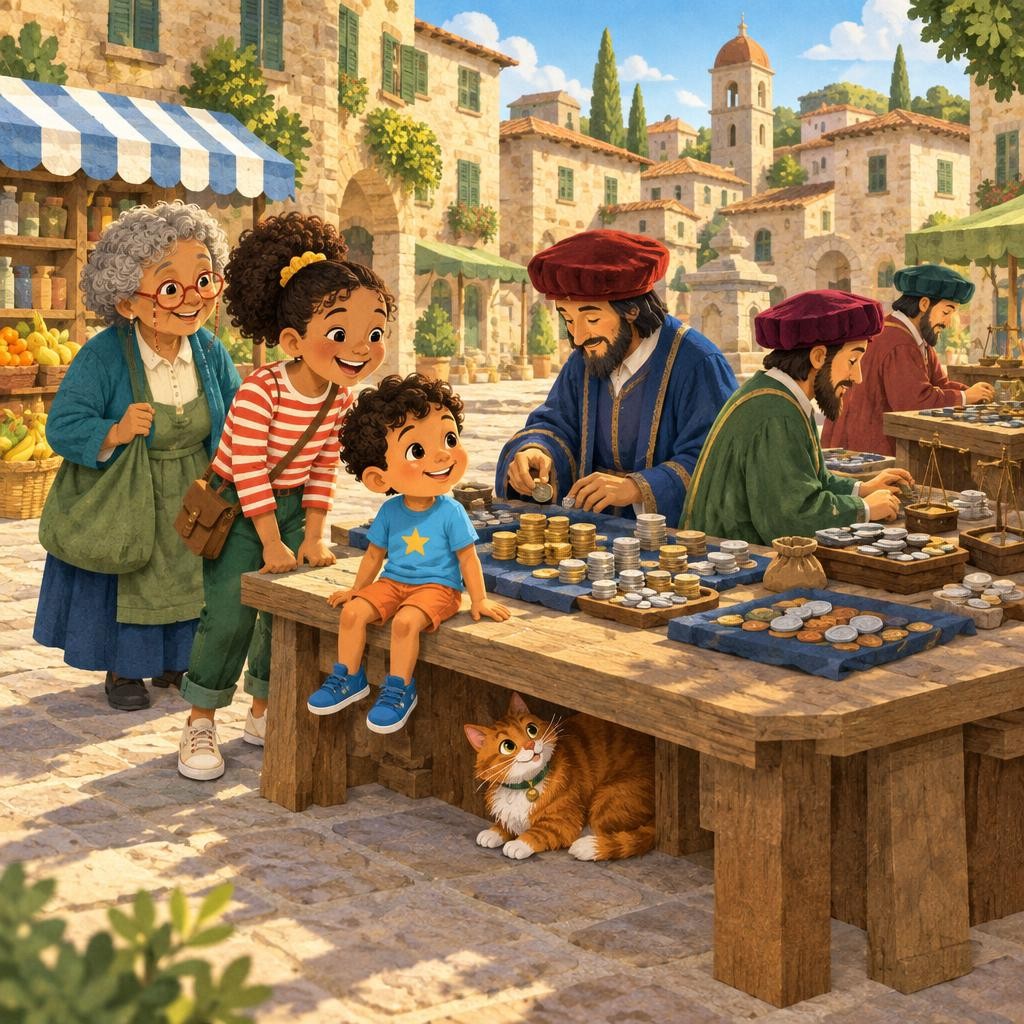
Pop! They are in an Italian town square about 600 years ago. Money changers sit at wooden benches, swapping coins from far-off lands. Kai sits on a bench. "So I'm sitting on a bank!" He's right: the word bank comes from an old Italian word for the money changer's bench.
The goldsmith's safe
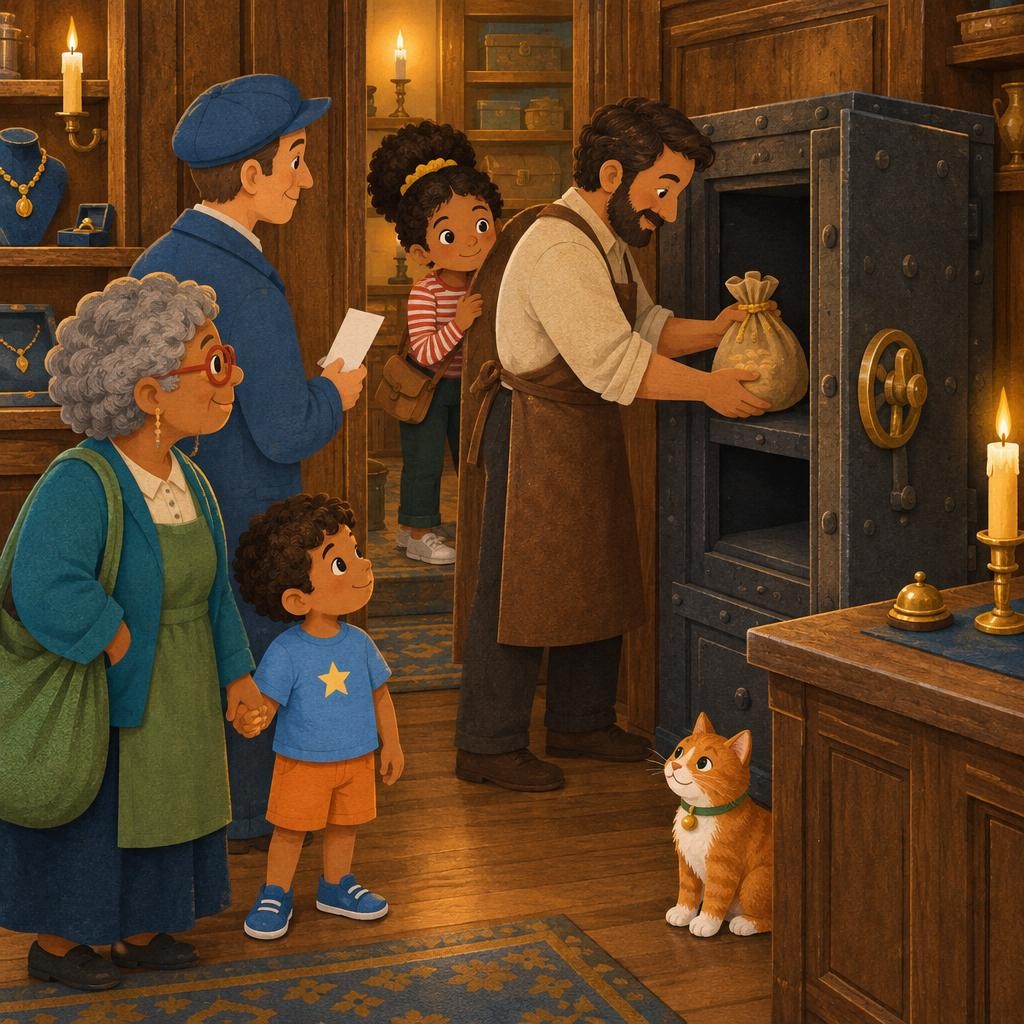
Later, in London, people asked goldsmiths to look after their gold, because goldsmiths had strong, locked safes. For every bag of gold, the goldsmith gave them a paper slip to show how much was theirs.
What about all that gold?
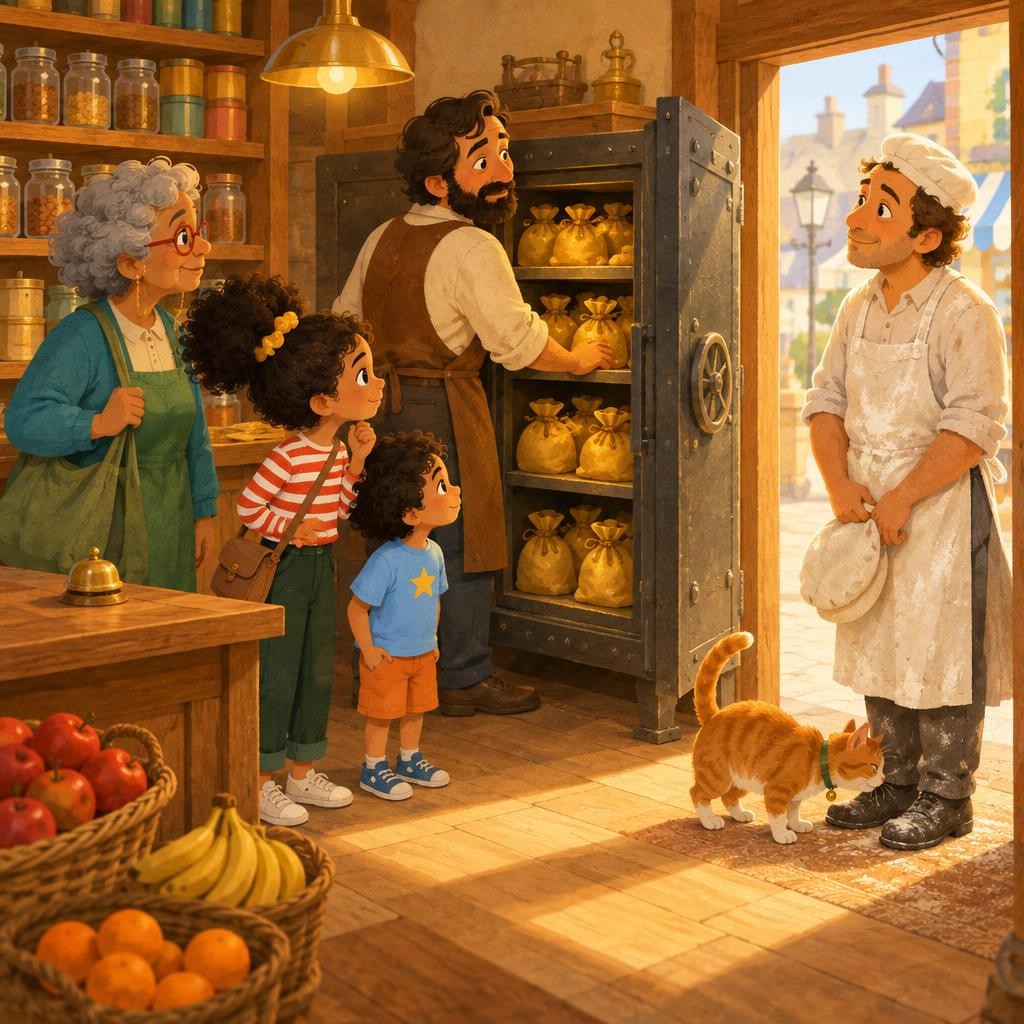
Soon the goldsmith's safe is full of gold, just sitting there. At the door, a baker is waiting. He needs money to build a bigger oven.
Lending and keeping track
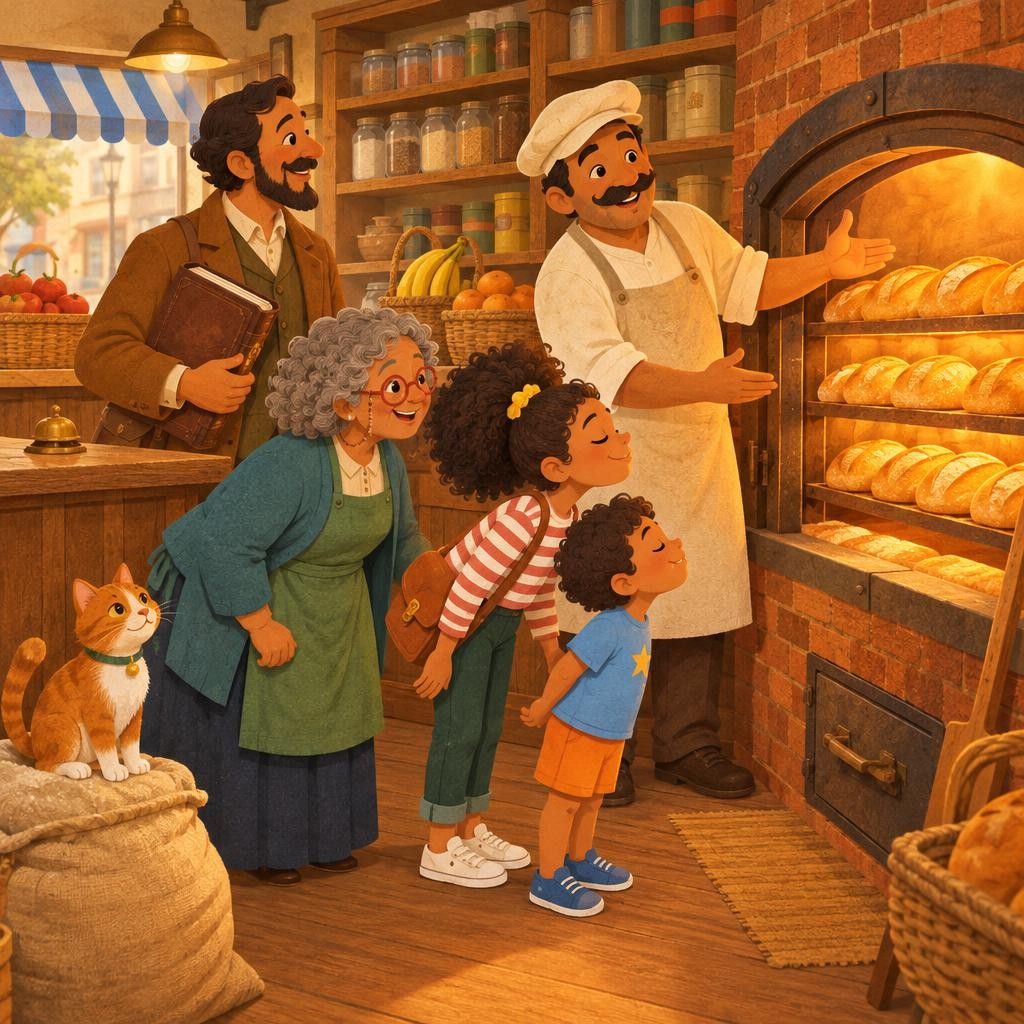
He lends some gold to the baker, who builds a bigger oven and pays it back later. And the goldsmith writes everything in a big record book: who owns what, and who owes what. That is what a bank does.
Banks today

Banks today do the same. They keep money safe, they lend some of it to people building homes and shops, and their computers keep a careful record of how much is yours.
Kai's savings
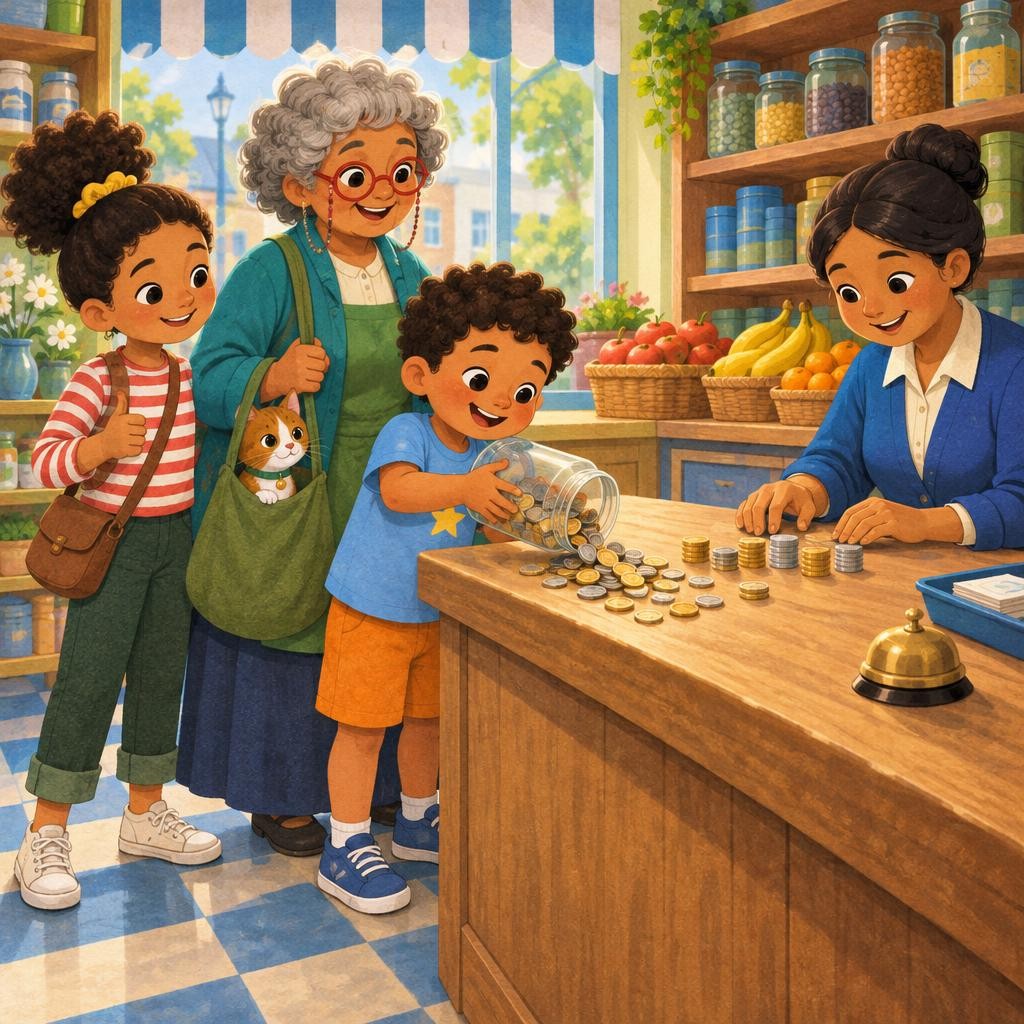
Grandma Rosa takes Kai and his jar to the bank down the street. Kai opens his very own savings account: a place in the bank's record just for his money. The bank worker counts his coins and adds them to it.
The brass key
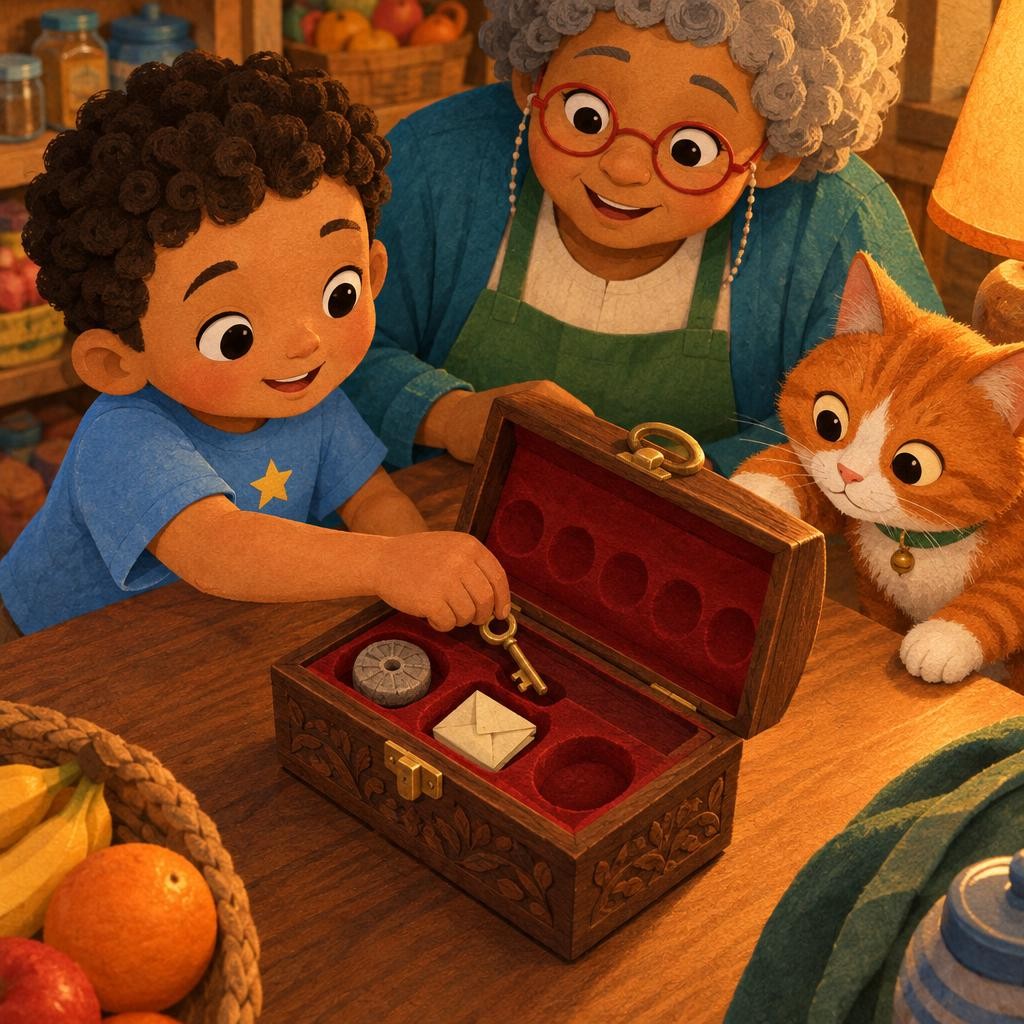
That evening, a small brass key goes into the box, next to the folded paper note. "Your money is safe," says Grandma Rosa, "and it's still yours."
Key takeaways
- A bank keeps money safe.
- A bank lends some money to people who need it.
- A bank's record shows how much is yours.
- Saving in a safe place is a good habit.
Questions along the way
- Where does the word bank come from?
- What did the goldsmith do with some of the gold?
- How does a bank know how much money is yours?
Common questions
How do you explain a bank to a child?
A bank is a safe place for money. It lends some of it to people who need it, and keeps a careful record so it always knows how much is yours.
Does the bank keep my exact coins?
No. The coins may be lent to someone else, but the bank's record shows how much money is yours.
Read-together tip
Play bank: one person is the banker who keeps everyone's coins and draws a little chart of who has how many. Then try taking some out!