What Is Thanksgiving?
Nora asks Grandpa Rafi, "What is Thanksgiving?" A warm picture lesson for kids on harvest time, the Wampanoag Three Sisters, 1621 foods, Canada's October date, and gratitude.
Thanksgiving for Kids · 1 of 7
about real things · asks questions · 8 pages · ages 4–5 · 3 min · English
Read · Play · Listen · PDF · Print edition · with the Storybook Pass · Make it about your child
Reviewed for child safety · gentle by design · How our storybooks are made
Published 2026-11-26T10:23:58.918084
Quick answer
Thanksgiving is an autumn harvest holiday for gathering together and saying thank you. It honors harvest traditions including the Wampanoag Three Sisters and the 1621 three-day gathering in Patuxet, became a US national holiday in 1863, and is celebrated in October in Canada.
Inside this storybook
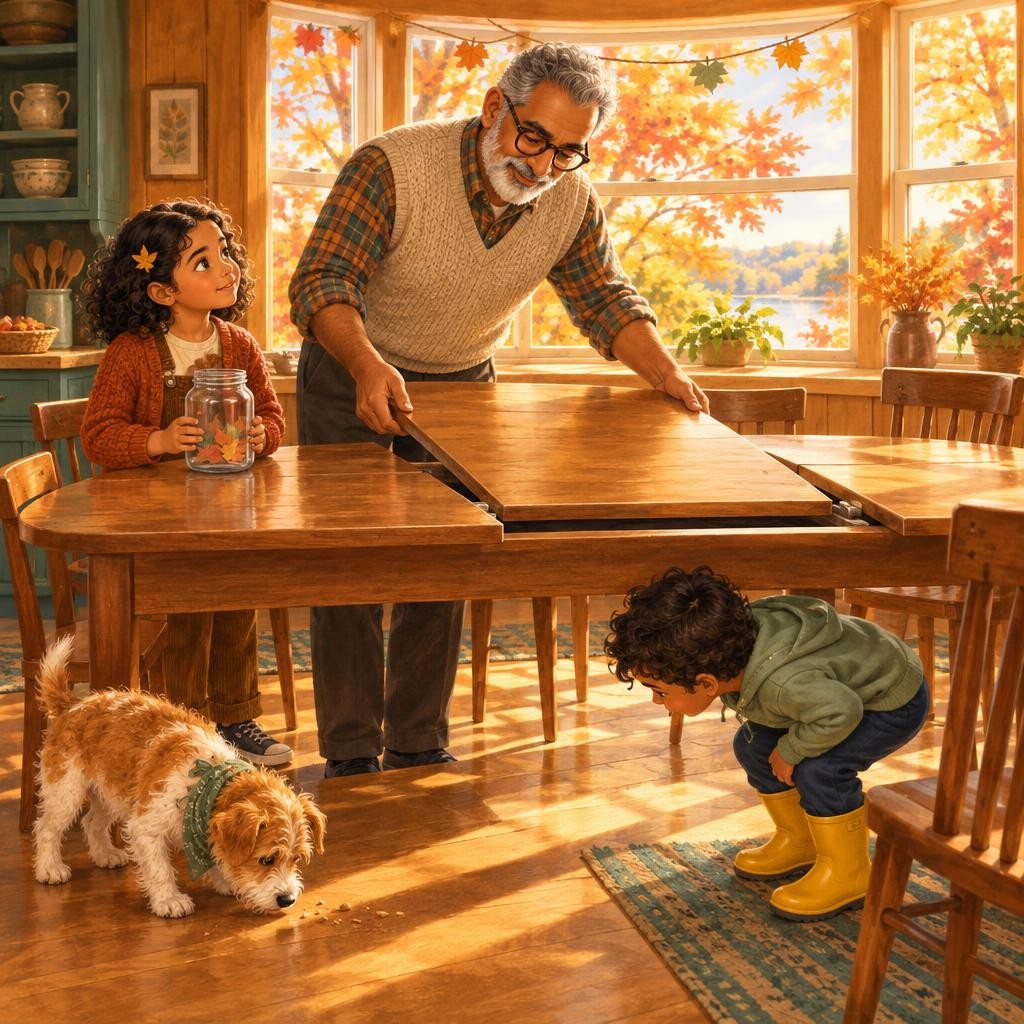
Grandpa Rafi slides a hidden wooden board right into the middle of the kitchen table. The table grows longer! Owen peeks underneath in his yellow boots. Nora holds up the empty glass jar. "Why does our table grow bigger today, Grandpa?" she asks.
"Because Thanksgiving is a day for making room and saying thank you," says Grandpa Rafi. Every autumn, farmers gather the ripe pumpkins, corn, and apples that grew all summer. Gathering ripe food is called a harvest.
Long before any European ships arrived, the Wampanoag people lived along the Massachusetts coast and gave thanks every season. They planted tall corn, beans, and squash together in one little soil hill called the Three Sisters. Look closely at the tall corn stalks!
Yes, the bean vines climb the tall corn, while wide squash leaves keep the soil cool! In autumn 1621, about ninety Wampanoag guests led by Ousamequin and the English newcomers at Plymouth shared a three-day harvest gathering. Wampanoag families still live and share their traditions today.
For a long time, different towns picked different thank-you days. Then writer Sarah Josepha Hale wrote letters for thirty-six years until President Lincoln made Thanksgiving a shared US holiday in 1863. Ding-dong! Aunt Clara arrives from Canada, where Thanksgiving happens earlier, in October!
Nora and Owen play food detective at Grandpa's kitchen counter! In 1621, people had no forks — Owen giggles, waving a shiny dinner fork like a tiny pitchfork. There was no mashed potato and no pumpkin pie either. Look carefully at the three dishes lined up on the counter!
Now it is time for the Thankful Jar! Sitting right beside Grandpa Rafi, Nora and Owen use crayons to draw one person or tiny thing they feel grateful for on colorful paper autumn leaves, then drop each leaf into the clear glass jar.
Tall candles glow safely high in the center of the long extended table as neighbors and cousins pull up chairs. Nora pulls a leaf from the jar and thanks Grandpa for his stories. Saying thank you for our food and helpers makes every single day feel warmer!
The pages
The secret leaf in the table
Grandpa Rafi slides a hidden wooden board right into the middle of the kitchen table. The table grows longer! Owen peeks underneath in his yellow boots. Nora holds up the empty glass jar. "Why does our table grow bigger today, Grandpa?" she asks.
Harvest time
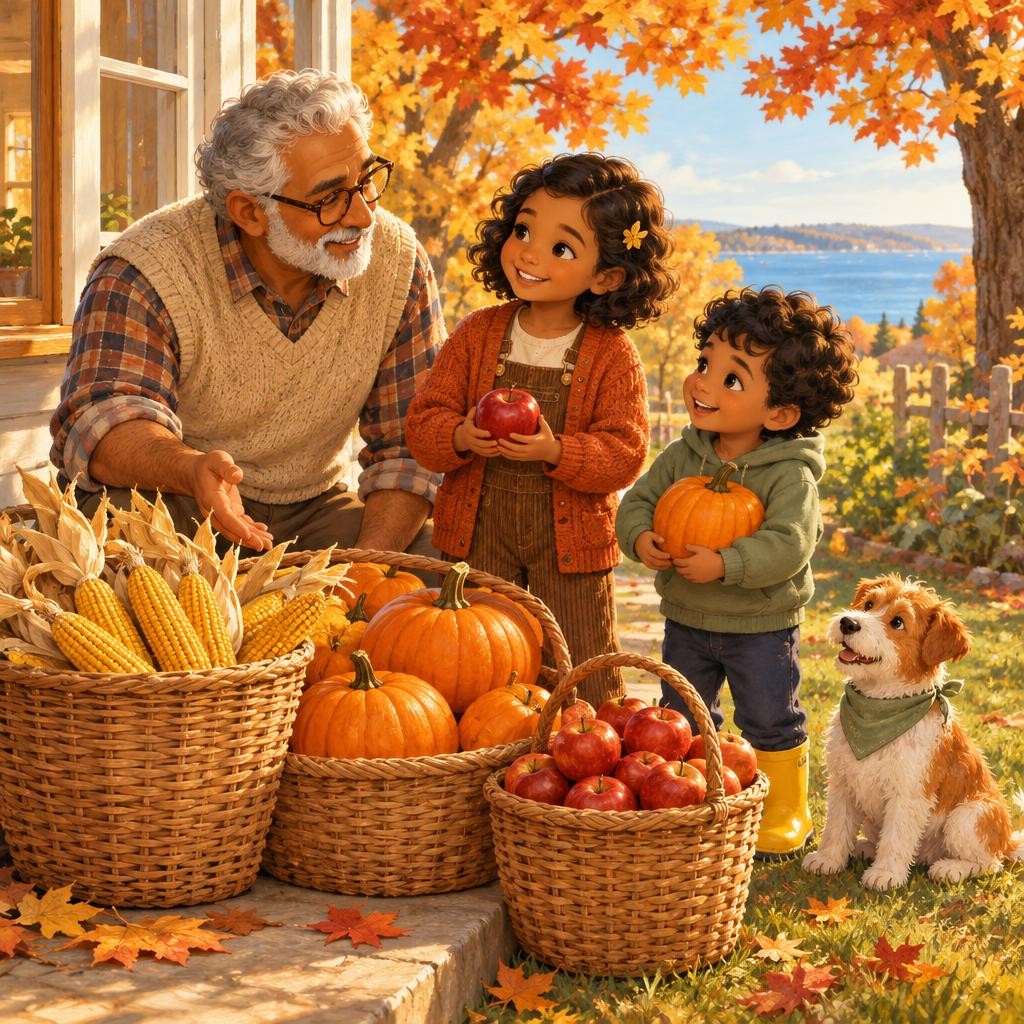
"Because Thanksgiving is a day for making room and saying thank you," says Grandpa Rafi. Every autumn, farmers gather the ripe pumpkins, corn, and apples that grew all summer. Gathering ripe food is called a harvest.
The Three Sisters garden
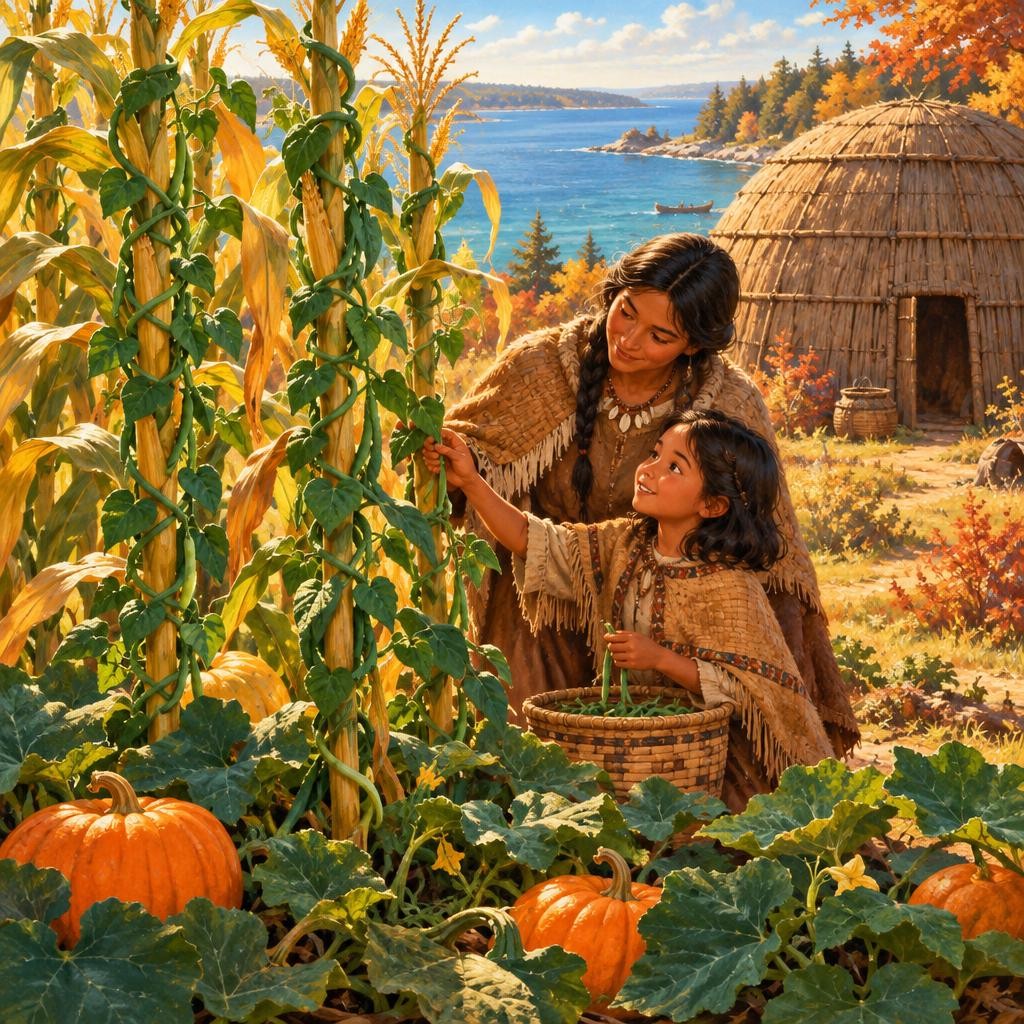
Long before any European ships arrived, the Wampanoag people lived along the Massachusetts coast and gave thanks every season. They planted tall corn, beans, and squash together in one little soil hill called the Three Sisters. Look closely at the tall corn stalks!
The three-day harvest of 1621
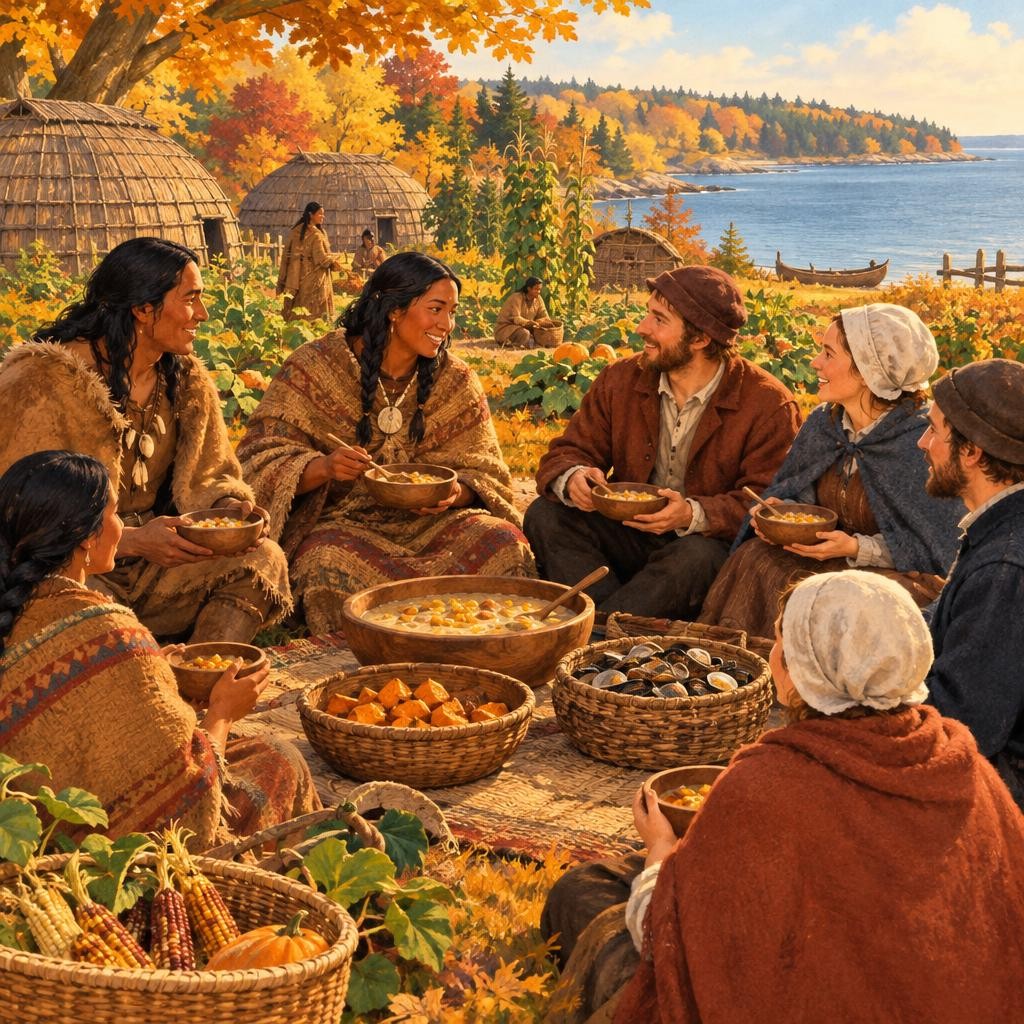
Yes, the bean vines climb the tall corn, while wide squash leaves keep the soil cool! In autumn 1621, about ninety Wampanoag guests led by Ousamequin and the English newcomers at Plymouth shared a three-day harvest gathering. Wampanoag families still live and share their traditions today.
Letters and two dates
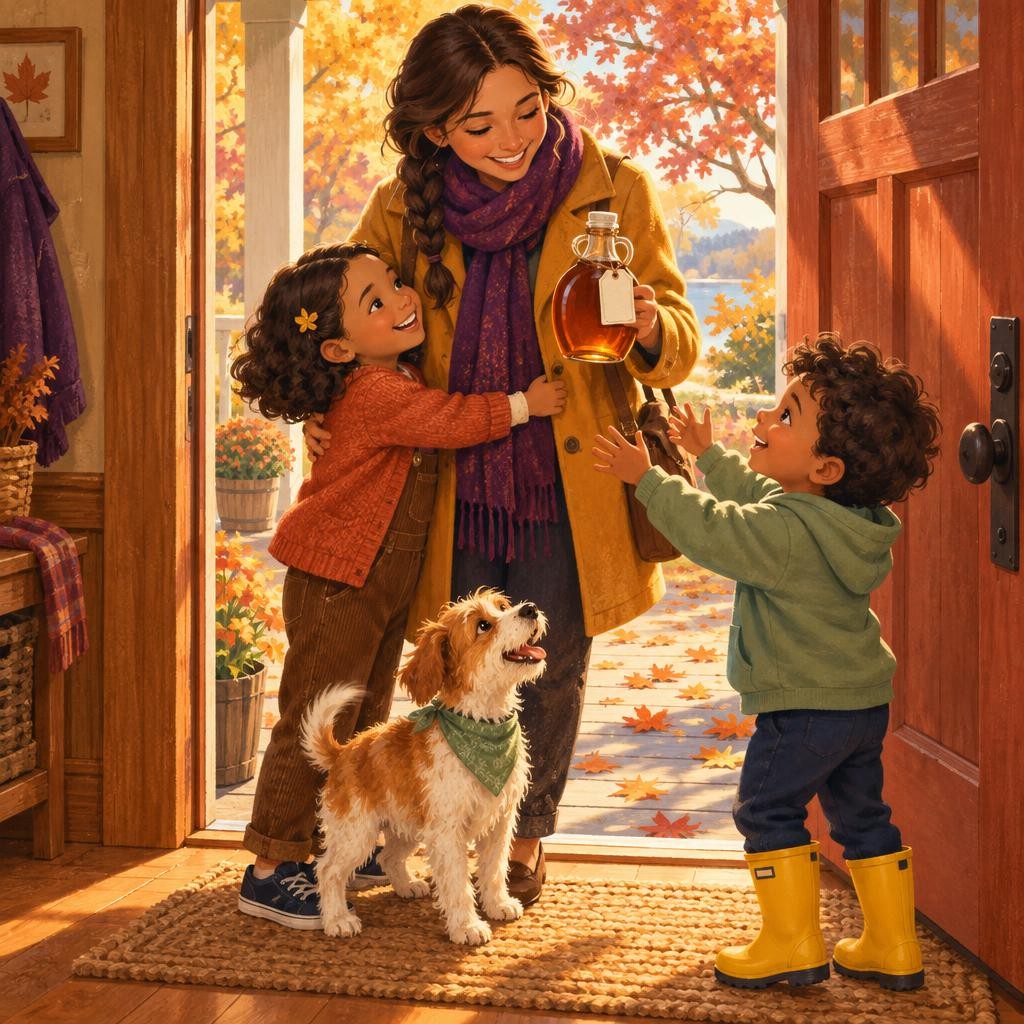
For a long time, different towns picked different thank-you days. Then writer Sarah Josepha Hale wrote letters for thirty-six years until President Lincoln made Thanksgiving a shared US holiday in 1863. Ding-dong! Aunt Clara arrives from Canada, where Thanksgiving happens earlier, in October!
Thanksgiving food detective
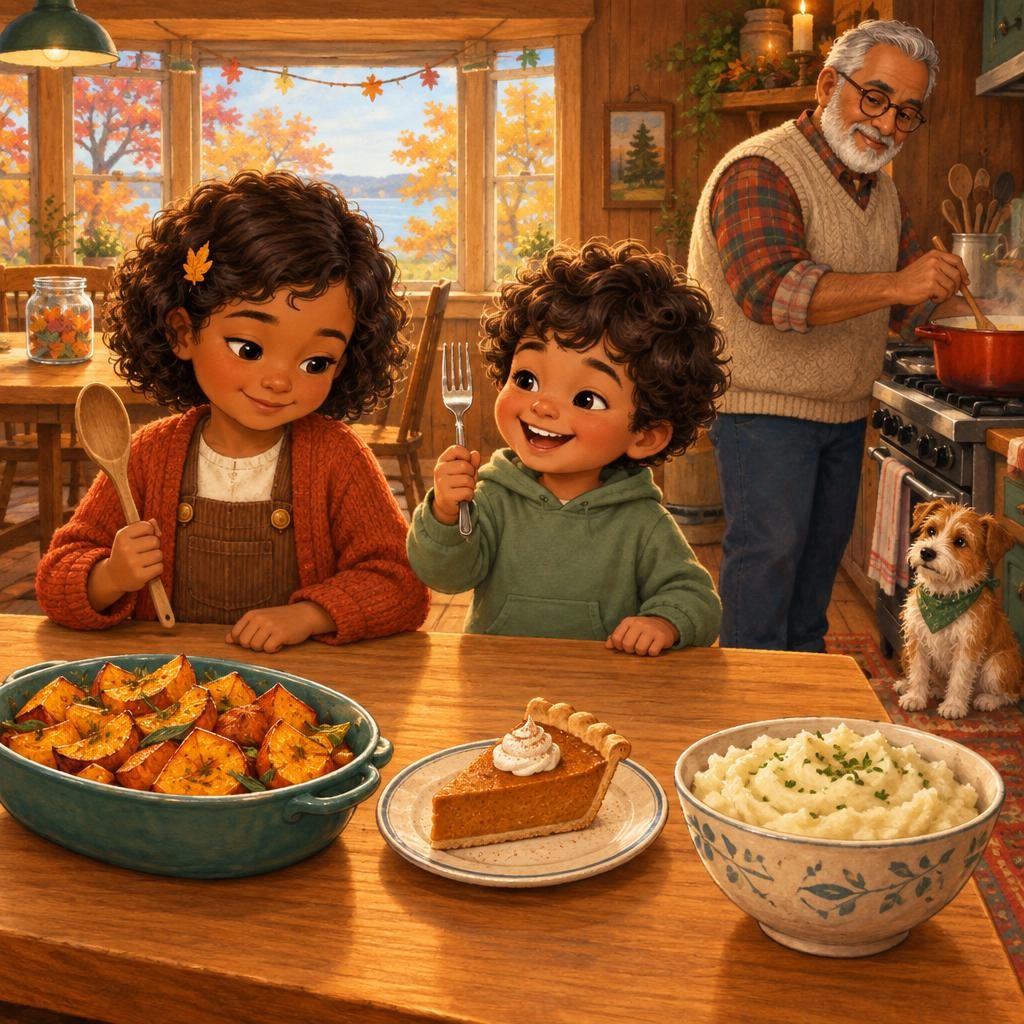
Nora and Owen play food detective at Grandpa's kitchen counter! In 1621, people had no forks — Owen giggles, waving a shiny dinner fork like a tiny pitchfork. There was no mashed potato and no pumpkin pie either. Look carefully at the three dishes lined up on the counter!
Filling the Thankful Jar
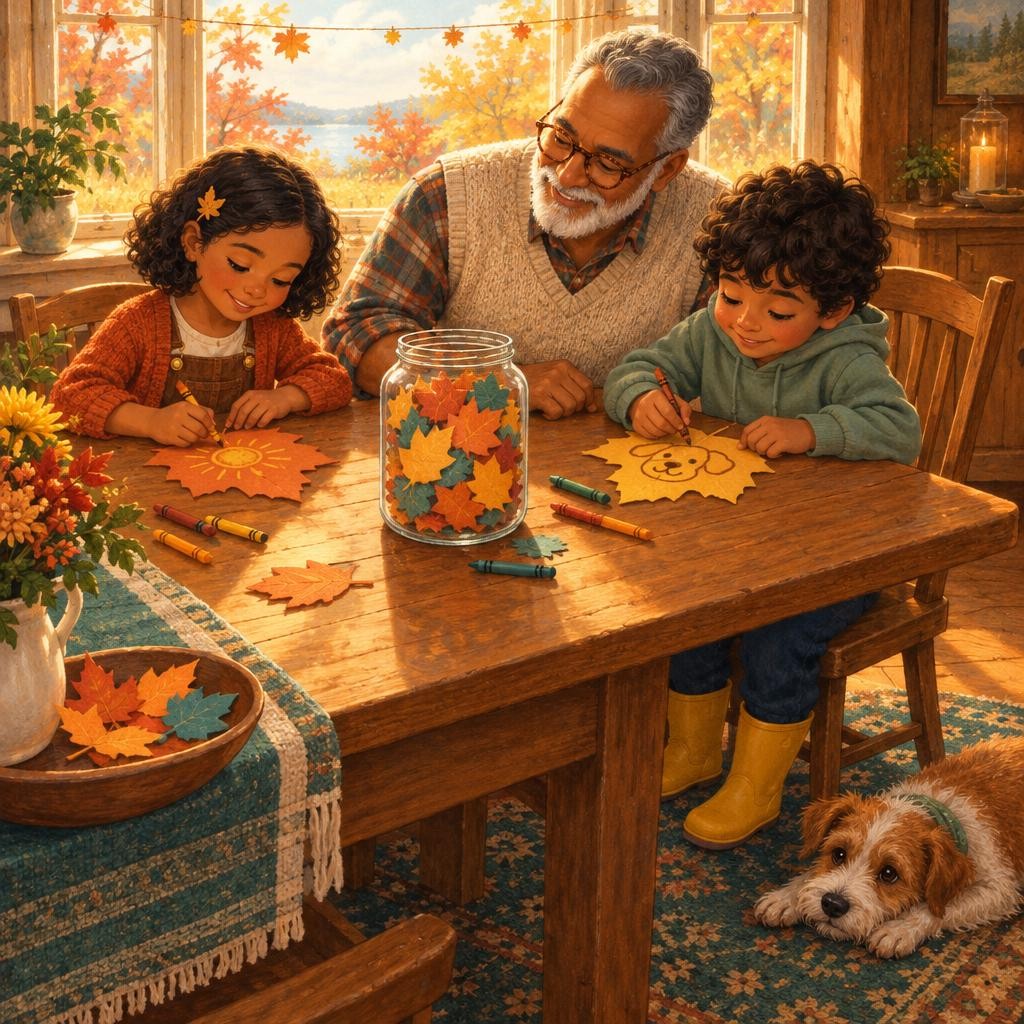
Now it is time for the Thankful Jar! Sitting right beside Grandpa Rafi, Nora and Owen use crayons to draw one person or tiny thing they feel grateful for on colorful paper autumn leaves, then drop each leaf into the clear glass jar.
Making room at the table
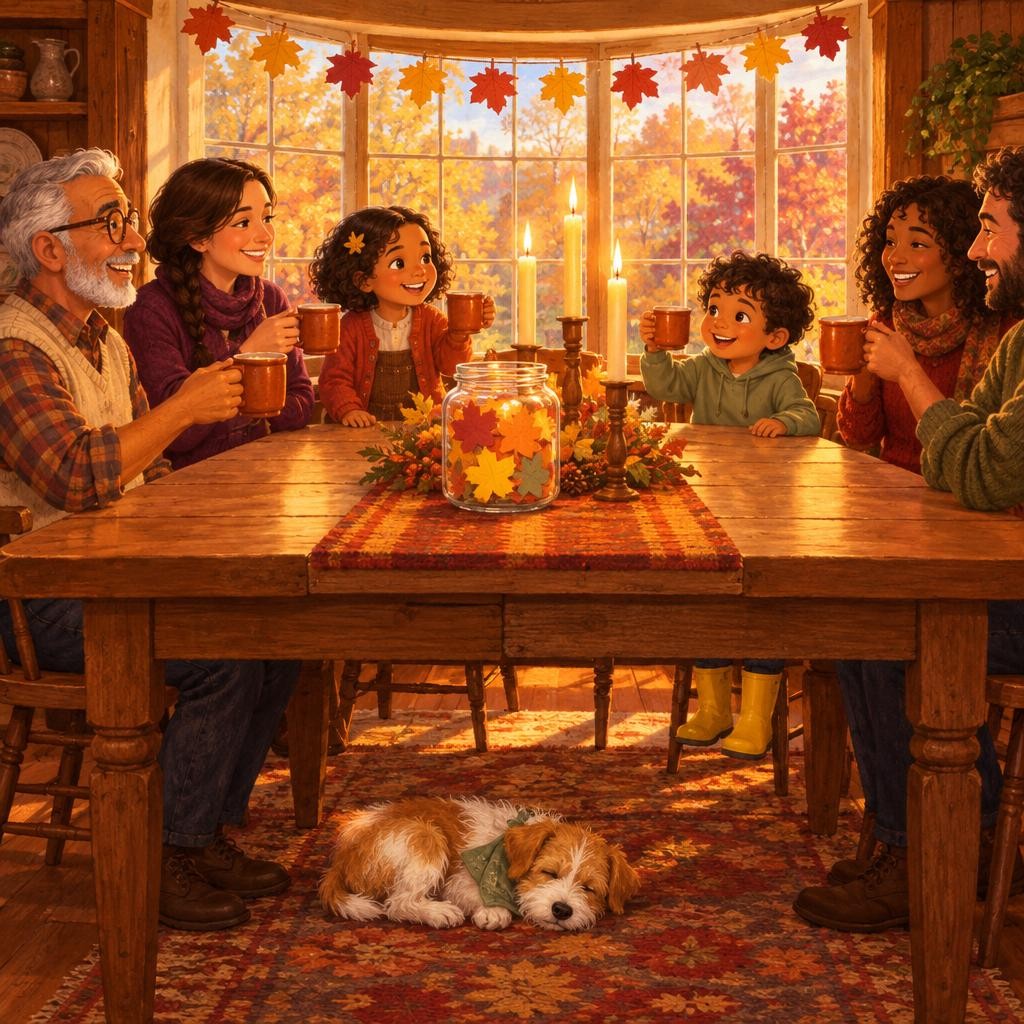
Tall candles glow safely high in the center of the long extended table as neighbors and cousins pull up chairs. Nora pulls a leaf from the jar and thanks Grandpa for his stories. Saying thank you for our food and helpers makes every single day feel warmer!
Key takeaways
- A harvest is gathering ripe food grown through the summer.
- The Wampanoag Three Sisters — corn, beans, and squash — grow together as a team.
- In 1621, about 90 Wampanoag guests and Plymouth settlers shared a three-day harvest meal, with no pumpkin pie or forks.
- Thankfulness is a warm habit we can practice every day, not only on one Thursday.
Questions along the way
- What does the word harvest mean?
- In the Three Sisters garden, which plant climbs up the tall corn stalks?
- When does Aunt Clara's family in Canada celebrate Thanksgiving?
Common questions
How do you explain Thanksgiving to a 4- or 5-year-old?
Start with harvest time and making room at the table: farmers gather food grown all summer, the Wampanoag people taught smart ways to grow corn, beans, and squash, and families pause to say thank you.
Why is Canadian Thanksgiving in October?
Canada sits farther north, so its autumn harvest wraps up earlier before winter snow arrives. Canada celebrates on the second Monday of October.
What did people really eat at the 1621 harvest gathering?
Historical accounts point to venison, waterfowl, shellfish, flint corn porridge, and roasted squash — with no pumpkin pie, no mashed potatoes, and no dinner forks.
Read-together tip
Set out a clear jar and colorful paper autumn leaves before dinner. Invite your child to draw (not write!) one tiny thing they loved today and drop it inside before dessert.