How Did Paper Become Money?
Kai can't believe paper can buy apples. In old China he pushes a cart of heavy iron coins, then sees why a light paper promise became money.
Understanding money · 5 of 12
about real things · asks questions · 8 pages · ages 6–7 · 2 min · English
Read · Play · Listen · PDF · Print edition · with the Storybook Pass · Make it about your child
Reviewed for child safety · gentle by design · How our storybooks are made
Published 2026-11-03T17:45:23.754169
Quick answer
Paper money began in China about 1,000 years ago. Merchants were tired of carrying heavy iron coins, so they used paper promises instead, and in 1024 the government began printing official notes.
Inside this storybook
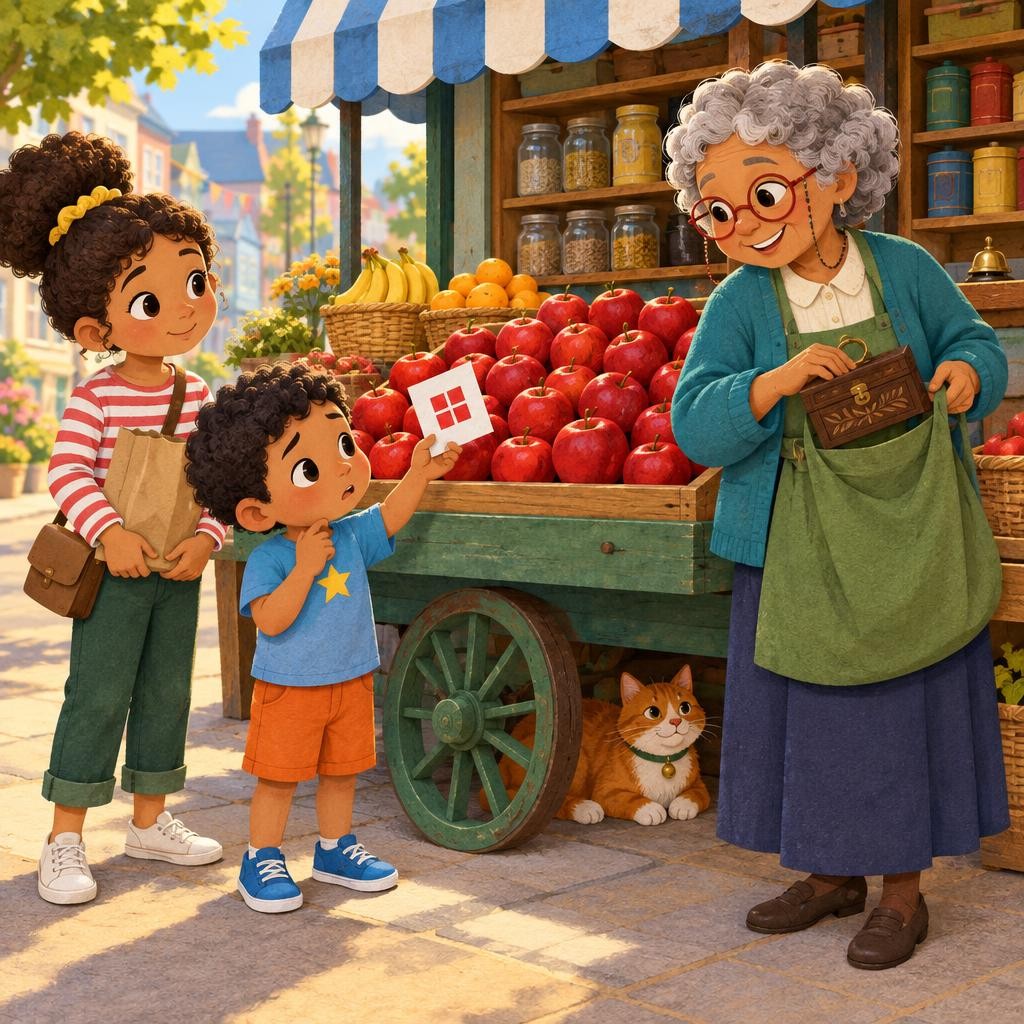
At the fruit cart, Kai waves a paper note. "It's just paper," he says. "How can it buy a whole basket of apples?" Grandma Rosa smiles and lifts her little box out of her bag.
Pop! They are in China, about 1,000 years ago. A merchant pushes a cart piled high with heavy strings of iron coins. He needs all of them just to buy some silk. Kai pushes too. The cart won't budge! Penny rides on top.
So merchants had an idea. They left their heavy coins with a shop they trusted, and the shop gave them a paper promise instead. Later, anyone holding the paper could swap it back for the coins. Nia holds a whole cartful of coins in one hand!
Kai finds two sheets of paper on the table. They are the same size and the same paper. One is blank. The other has the rulers' red seal on it.
The paper with the seal! About 1,000 years ago, the rulers of China began printing notes like this, some of the first paper money a government ever made. Travellers from far away could hardly believe a whole country paid with paper.
But there was a catch. When the rulers printed far too many notes, each one bought less. One note used to buy a sack of rice. Later, the same sack needed a thick stack of notes!
Pop! Back in their street, Kai spots the same red kite at two different stalls. One stall wants a small pile of coins for it. The other wants a much bigger pile.
Kai doesn't buy a kite yet. He is still saving. That evening, a folded paper note goes into the box, next to the tiny stone wheel. "A paper promise," says Nia. "Light as a feather."
The pages
Just paper?
At the fruit cart, Kai waves a paper note. "It's just paper," he says. "How can it buy a whole basket of apples?" Grandma Rosa smiles and lifts her little box out of her bag.
A very heavy cart
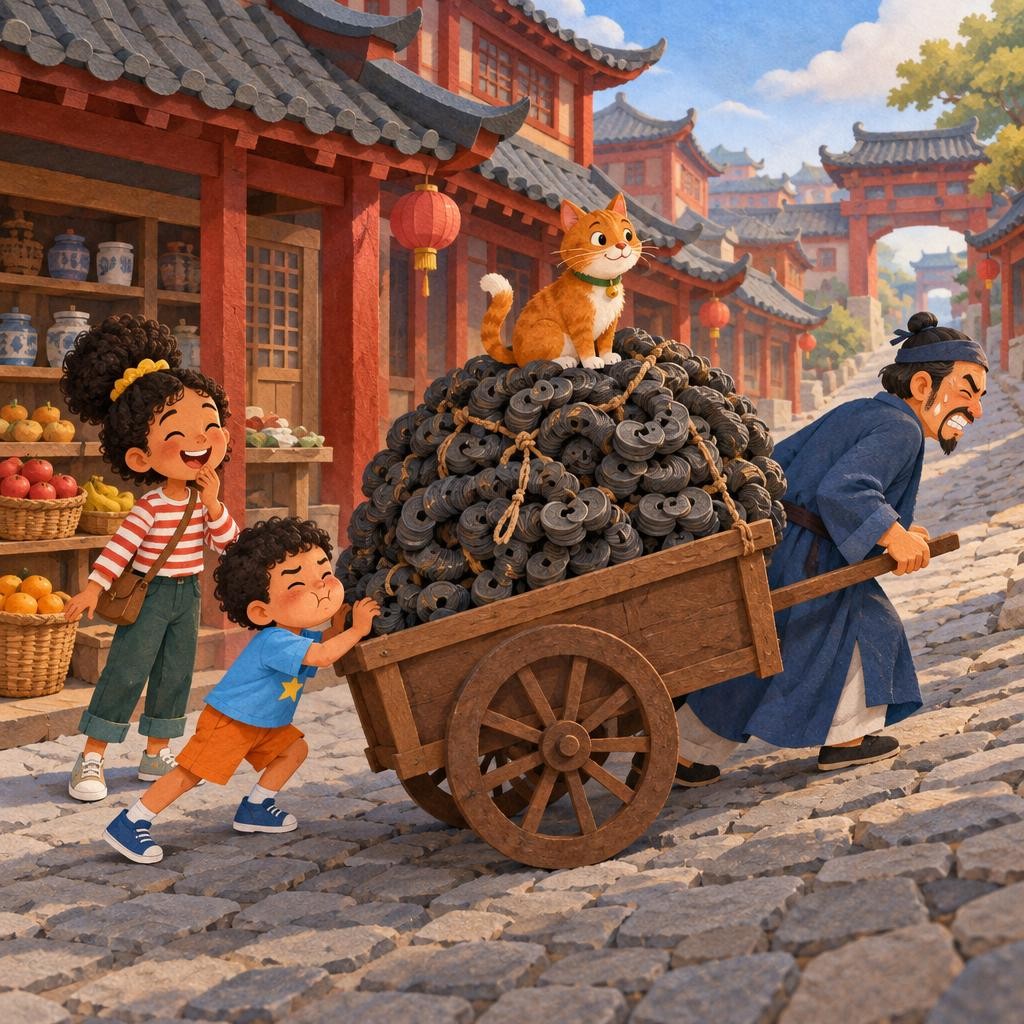
Pop! They are in China, about 1,000 years ago. A merchant pushes a cart piled high with heavy strings of iron coins. He needs all of them just to buy some silk. Kai pushes too. The cart won't budge! Penny rides on top.
Coins in, paper out
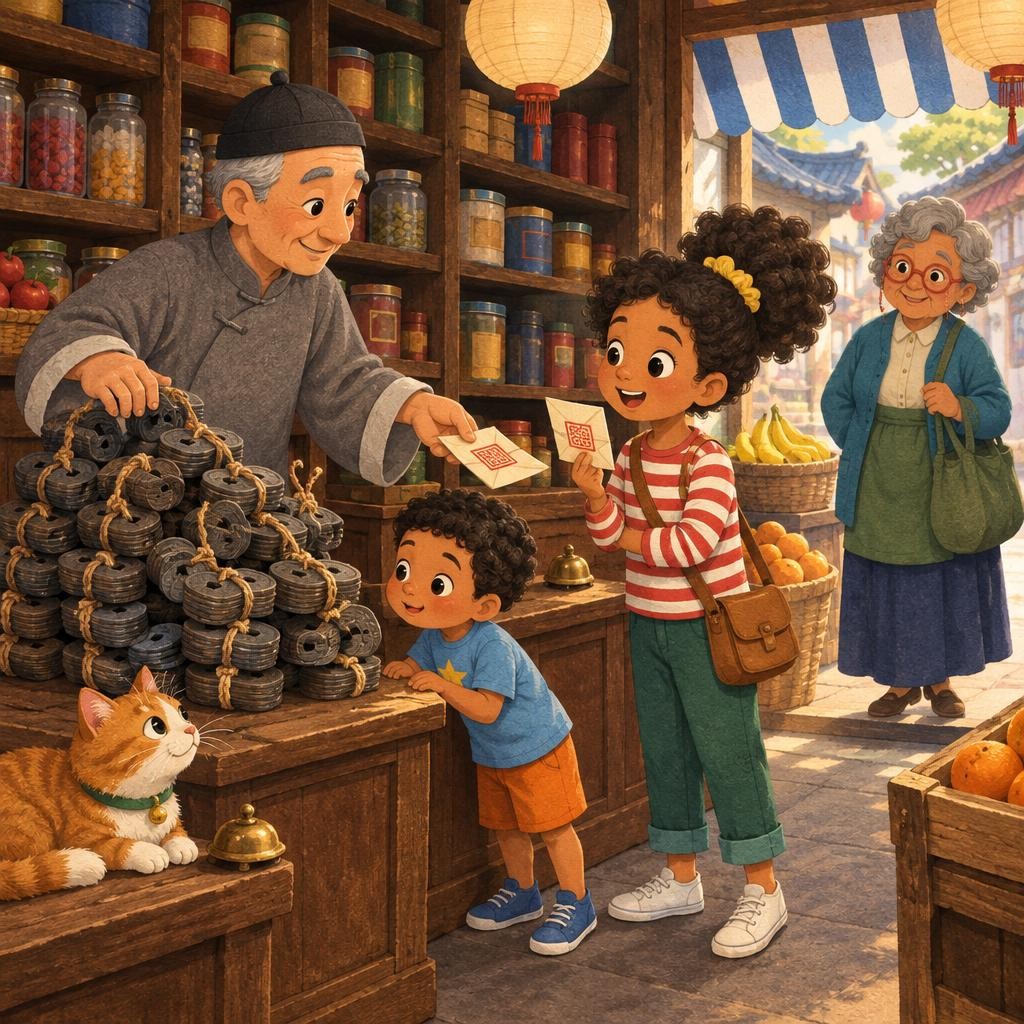
So merchants had an idea. They left their heavy coins with a shop they trusted, and the shop gave them a paper promise instead. Later, anyone holding the paper could swap it back for the coins. Nia holds a whole cartful of coins in one hand!
Which paper?
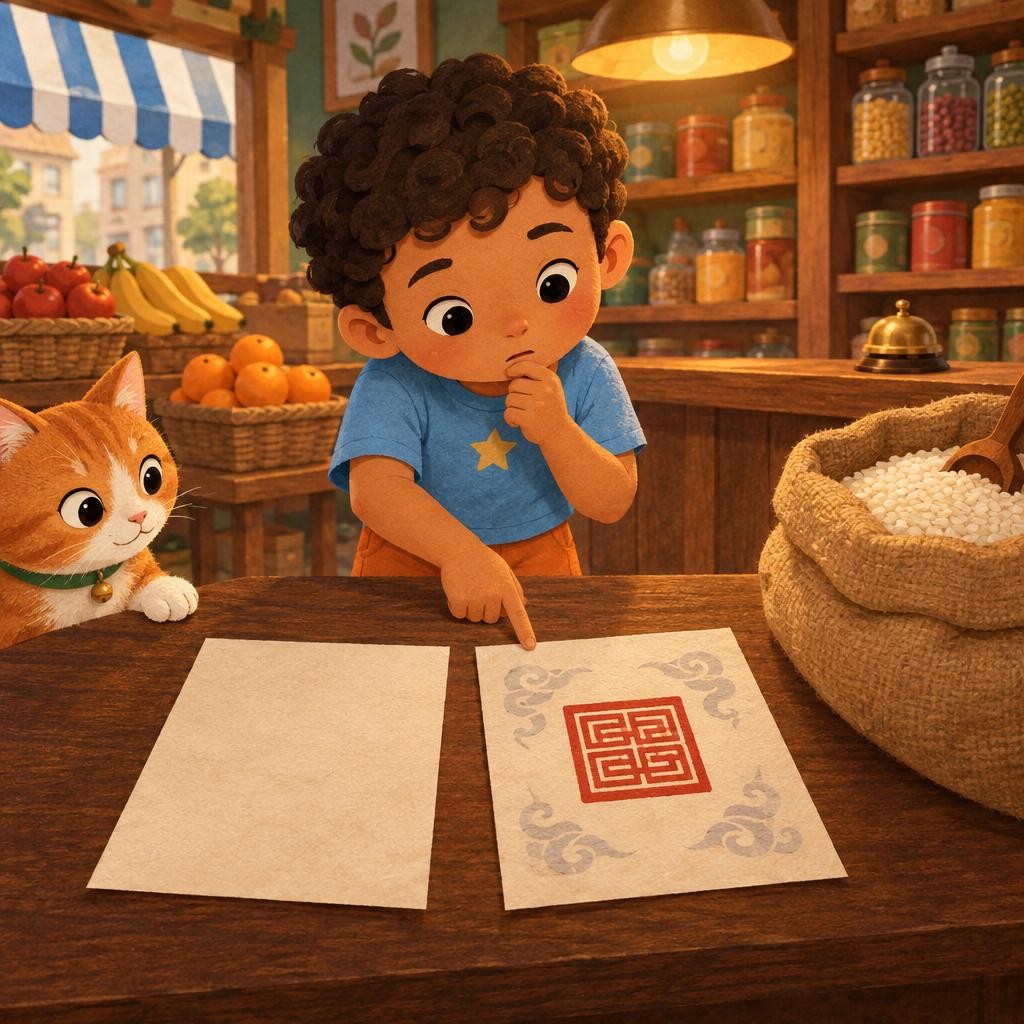
Kai finds two sheets of paper on the table. They are the same size and the same paper. One is blank. The other has the rulers' red seal on it.
The rulers' promise
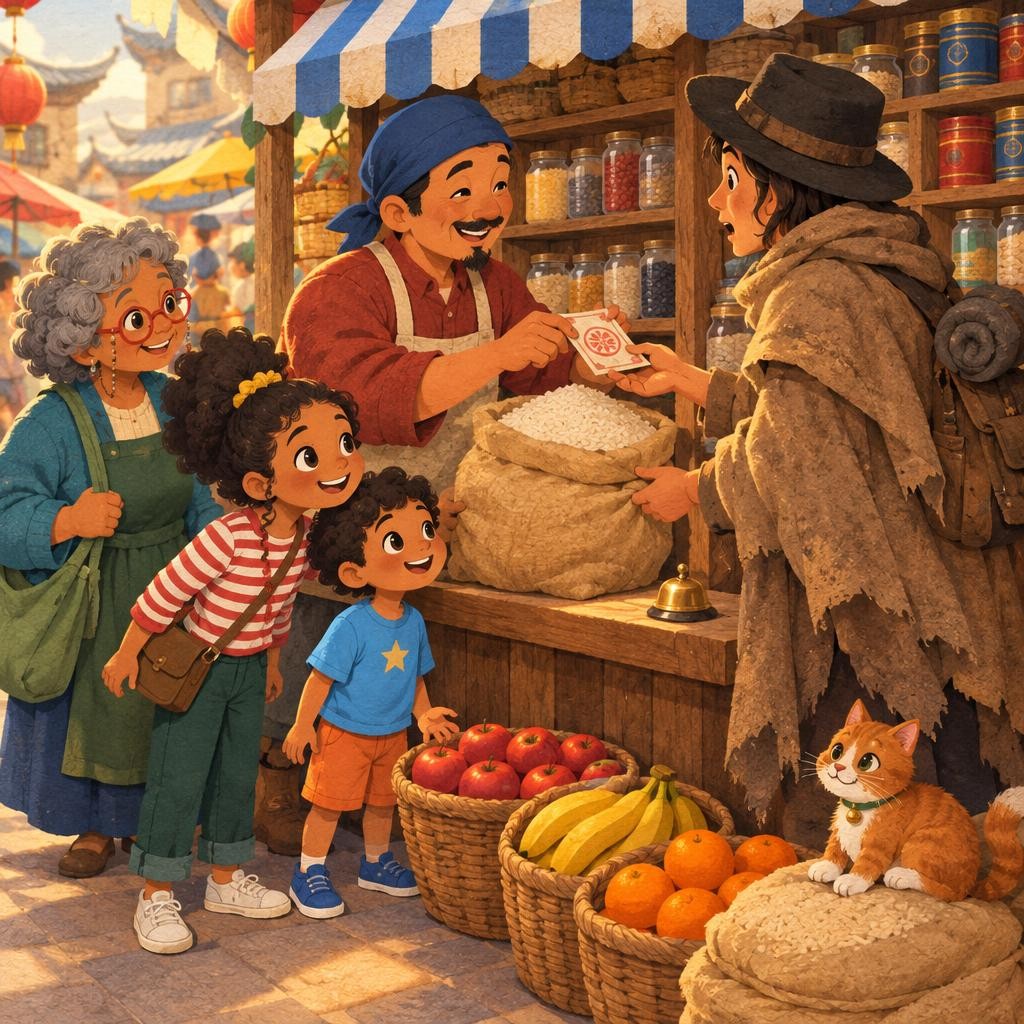
The paper with the seal! About 1,000 years ago, the rulers of China began printing notes like this, some of the first paper money a government ever made. Travellers from far away could hardly believe a whole country paid with paper.
Too many notes
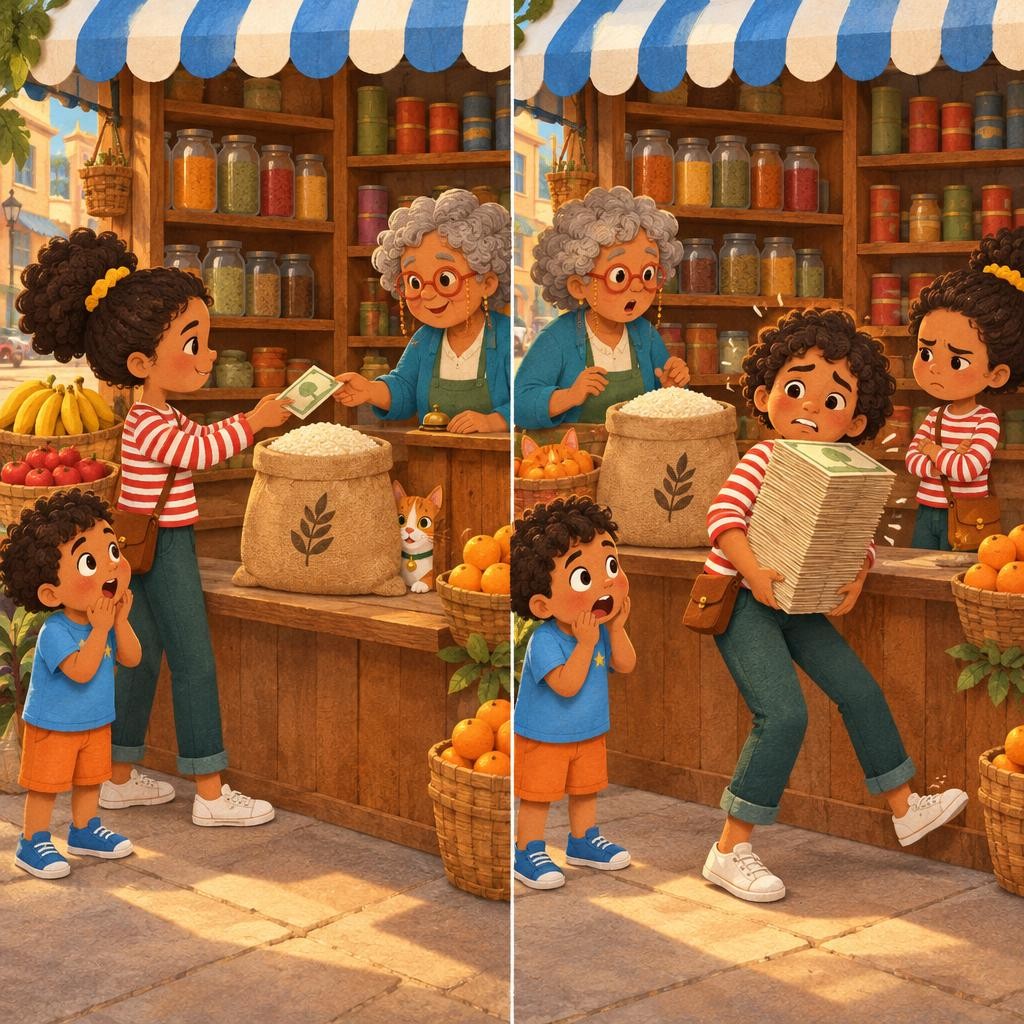
But there was a catch. When the rulers printed far too many notes, each one bought less. One note used to buy a sack of rice. Later, the same sack needed a thick stack of notes!
Two stalls, one kite
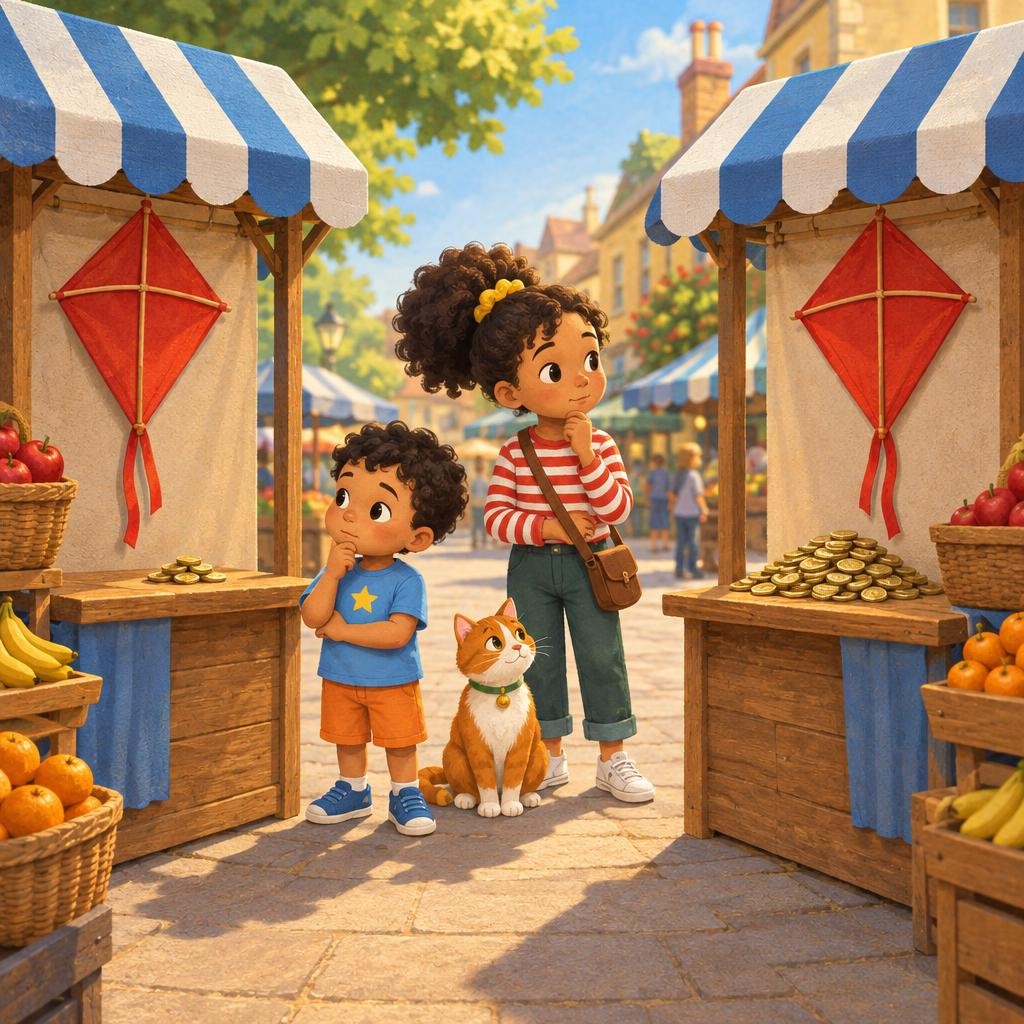
Pop! Back in their street, Kai spots the same red kite at two different stalls. One stall wants a small pile of coins for it. The other wants a much bigger pile.
A paper promise
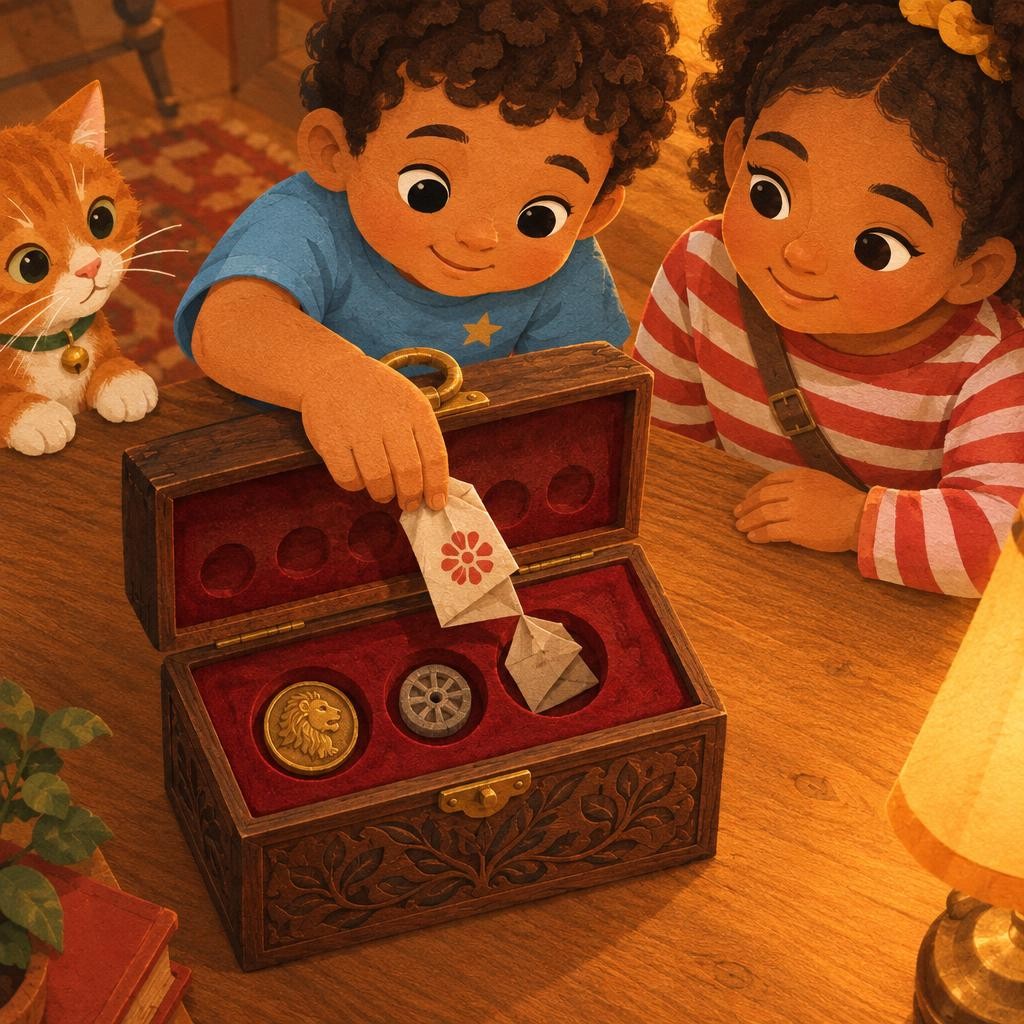
Kai doesn't buy a kite yet. He is still saving. That evening, a folded paper note goes into the box, next to the tiny stone wheel. "A paper promise," says Nia. "Light as a feather."
Key takeaways
- Paper money is a promise people trust.
- It began in China about 1,000 years ago.
- Printing too much money makes each note buy less.
- Compare prices before you buy.
Questions along the way
- Why did merchants like paper money?
- What made a paper note worth something?
- What happened when the rulers printed too many notes?
Common questions
Where was paper money invented?
In China. Merchants used paper promises first, and the government began printing official notes in 1024.
Why is paper money worth anything?
Because people trust the promise behind it and agree to accept it, not because of the paper itself.
Read-together tip
Make a paper "promise note" worth one bedtime story, decorate it, and let your child spend it. Then keep the promise!