How Do We Travel to Mars?
The child will understand that traveling to Mars requires an ordered sequence: launching from Earth, gaining speed, coasting for months with careful planetary timing, and slowing down to land.
Ages 8-10 - 2 minute lesson - gentle - EN
Reviewed for child-safety · gentle by design · How our stories are made
Published 2026-07-13T17:20:38.999094
Quick answer
The child will understand that traveling to Mars requires an ordered sequence: launching from Earth, gaining speed, coasting for months with careful planetary timing, and slowing down to land.
Lesson
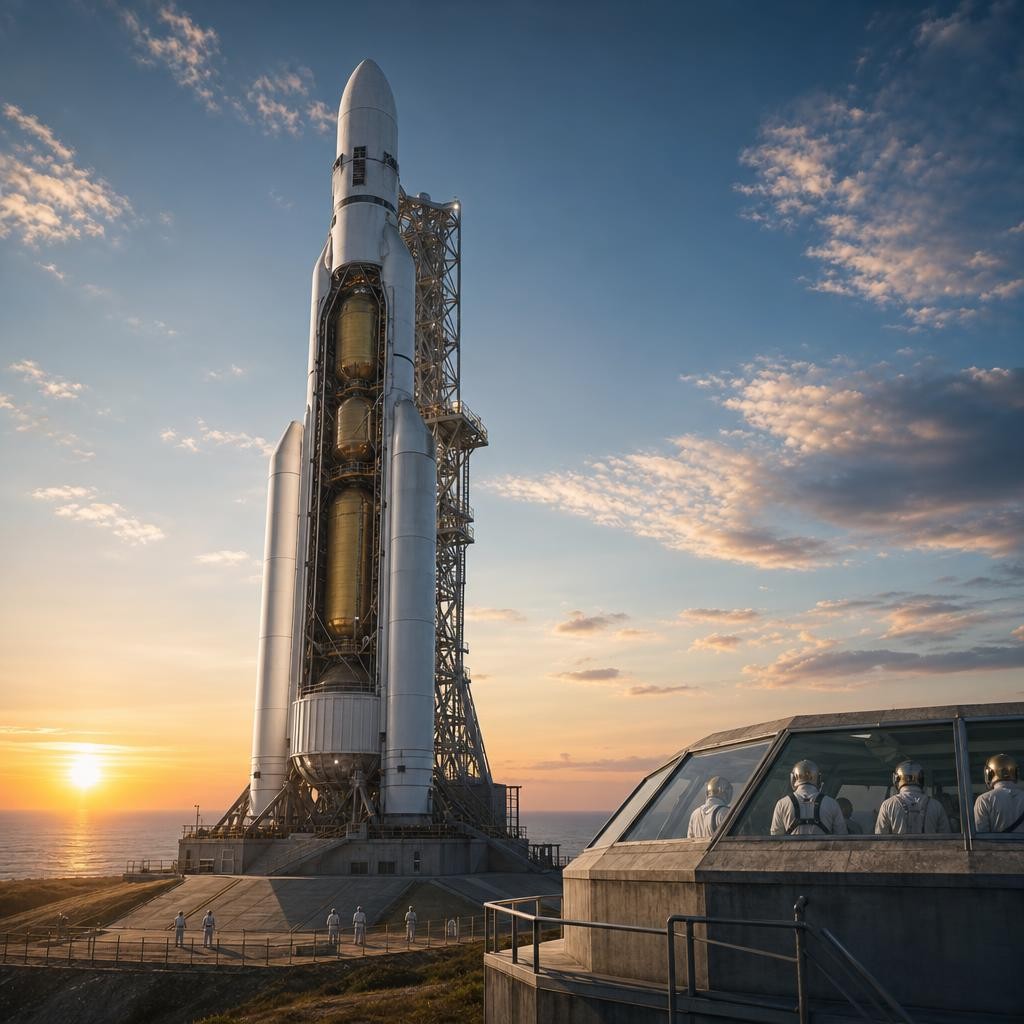
The journey begins on Earth. A Mars rocket stands on the launchpad with enormous tanks full of fuel. Earth’s gravity pulls everything toward the ground, so leaving our planet is the first great challenge.
At launch, the engines push hard and the rocket races upward. It climbs through the clouds and gains tremendous speed. When lower stages run out of fuel, they separate over protected empty areas, making the spacecraft lighter for the climb into space.
Once the spacecraft is on the right path, its main engines can rest. The craft coasts through silent space while Earth grows smaller behind it. Crossing the enormous distance to Mars takes many months, not just one quick afternoon.
Earth and Mars keep circling the Sun, and Mars follows the larger, slower path. Mission planners launch when the planets are arranged so the spacecraft and Mars can meet months later. With an adult, you can model this: use a large ball for the Sun and two smaller balls for the planets, then move them around the Sun at different speeds.
Reaching Mars is not enough—the spacecraft is moving very fast. It must slow down before landing. A parachute opens in the thin atmosphere, and landing engines control the final descent until the lander settles gently onto the red ground.
Launch, climb, coast, careful timing, and braking have all worked together. Adult explorers step beside their lander and leave the first footprints in the red dust. High above them, Earth shines like a tiny star—the distant home where their journey began.
Lesson scenes
Earth Holds On
The journey begins on Earth. A Mars rocket stands on the launchpad with enormous tanks full of fuel. Earth’s gravity pulls everything toward the ground, so leaving our planet is the first great challenge.
Climbing Away
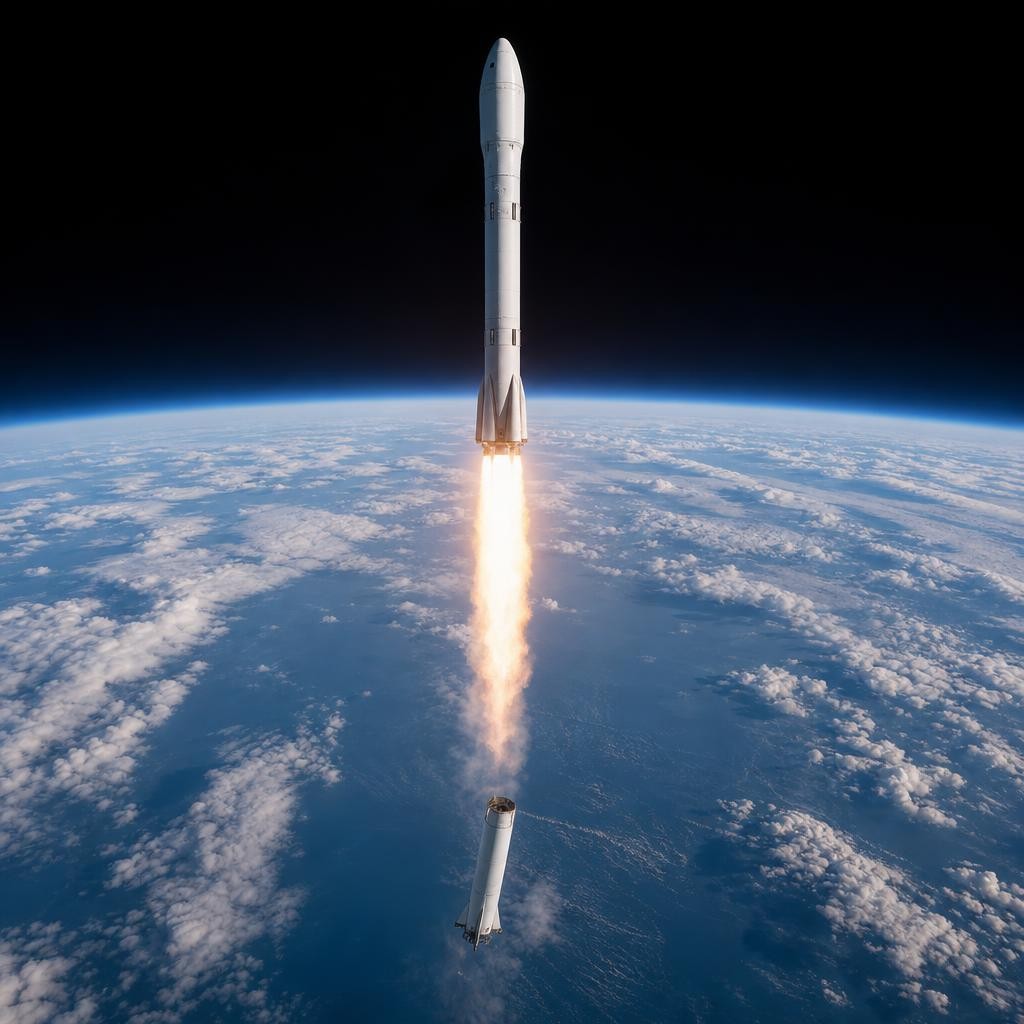
At launch, the engines push hard and the rocket races upward. It climbs through the clouds and gains tremendous speed. When lower stages run out of fuel, they separate over protected empty areas, making the spacecraft lighter for the climb into space.
The Long Coast
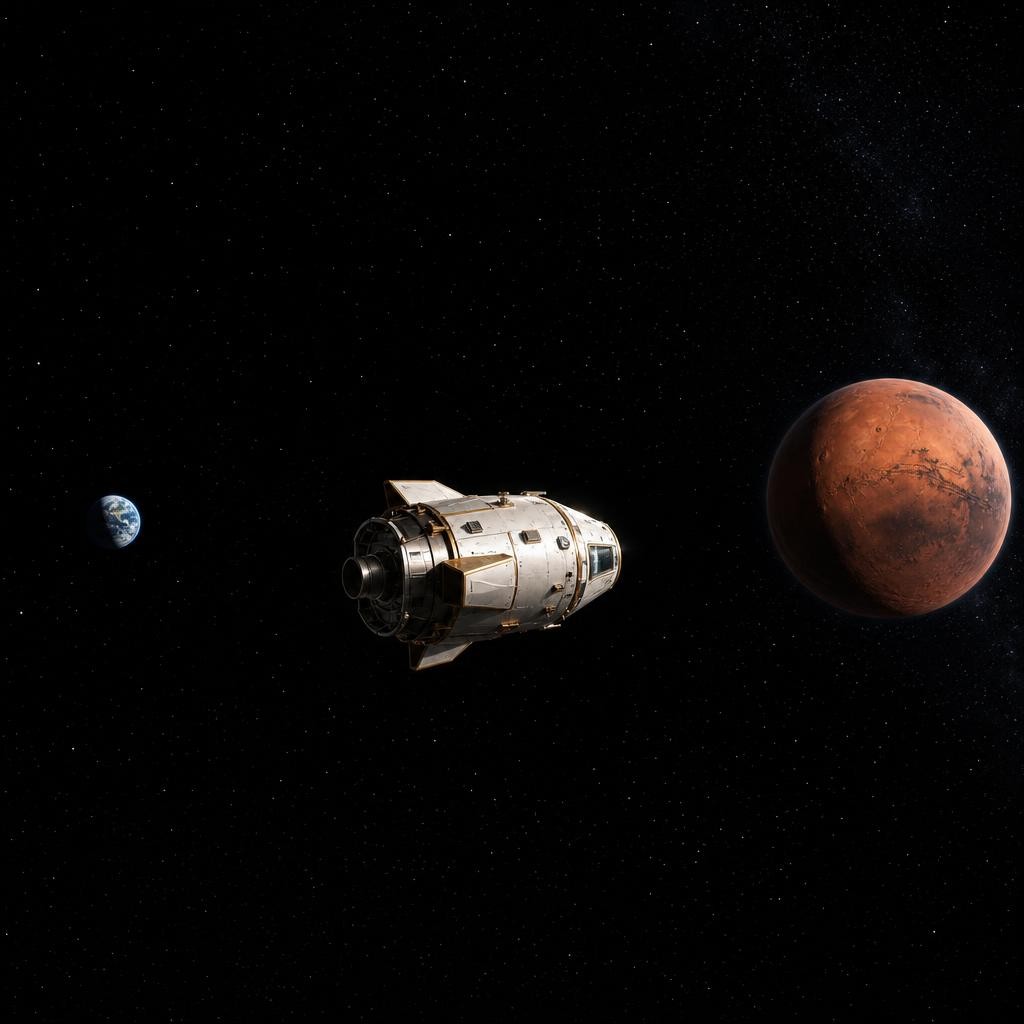
Once the spacecraft is on the right path, its main engines can rest. The craft coasts through silent space while Earth grows smaller behind it. Crossing the enormous distance to Mars takes many months, not just one quick afternoon.
Timing the Trip
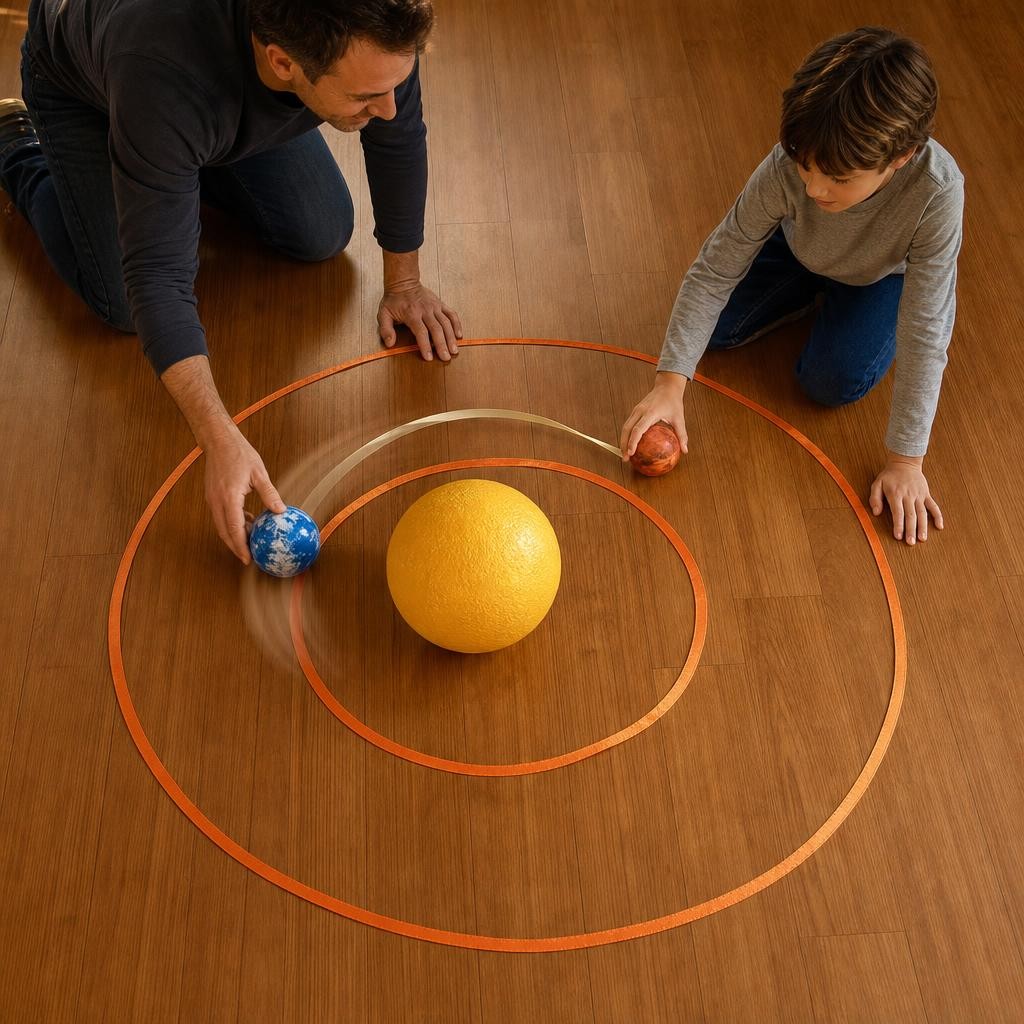
Earth and Mars keep circling the Sun, and Mars follows the larger, slower path. Mission planners launch when the planets are arranged so the spacecraft and Mars can meet months later. With an adult, you can model this: use a large ball for the Sun and two smaller balls for the planets, then move them around the Sun at different speeds.
Slowing Down
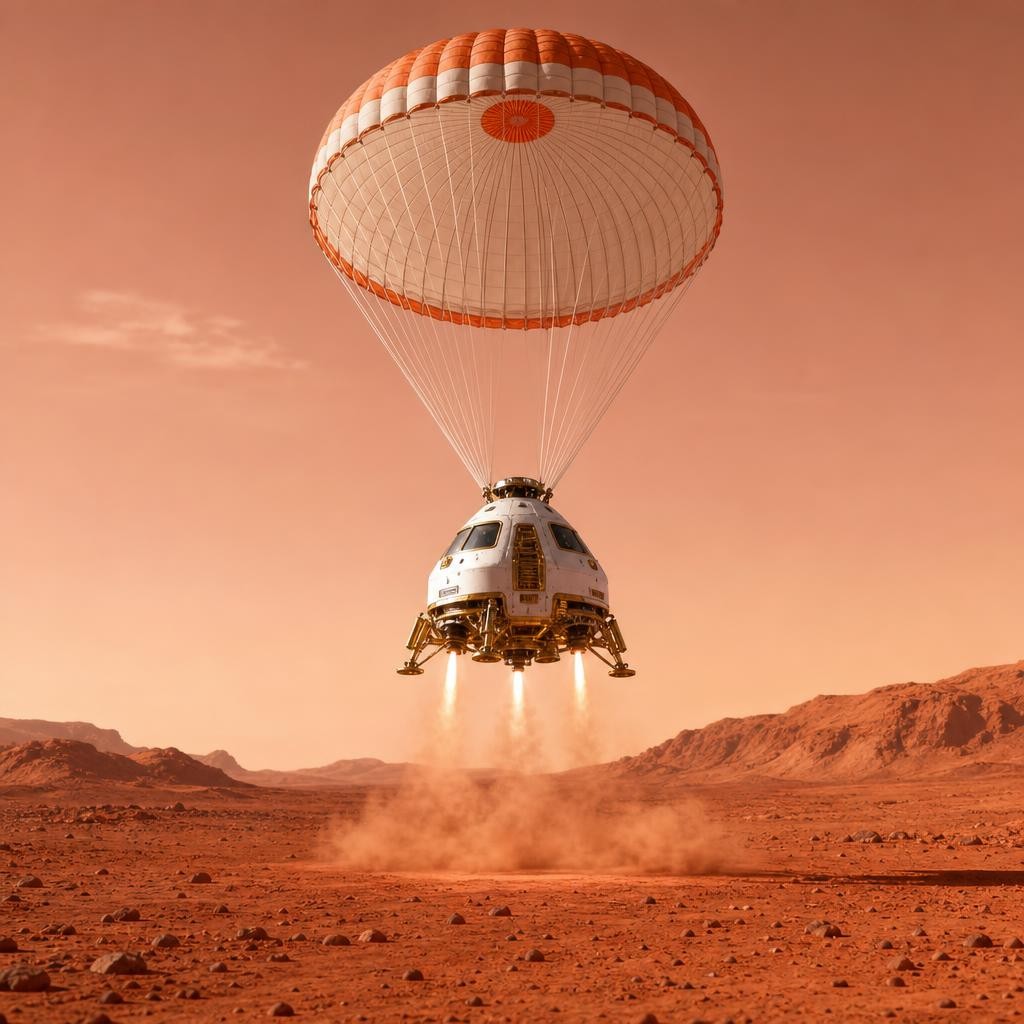
Reaching Mars is not enough—the spacecraft is moving very fast. It must slow down before landing. A parachute opens in the thin atmosphere, and landing engines control the final descent until the lander settles gently onto the red ground.
Mars at Last
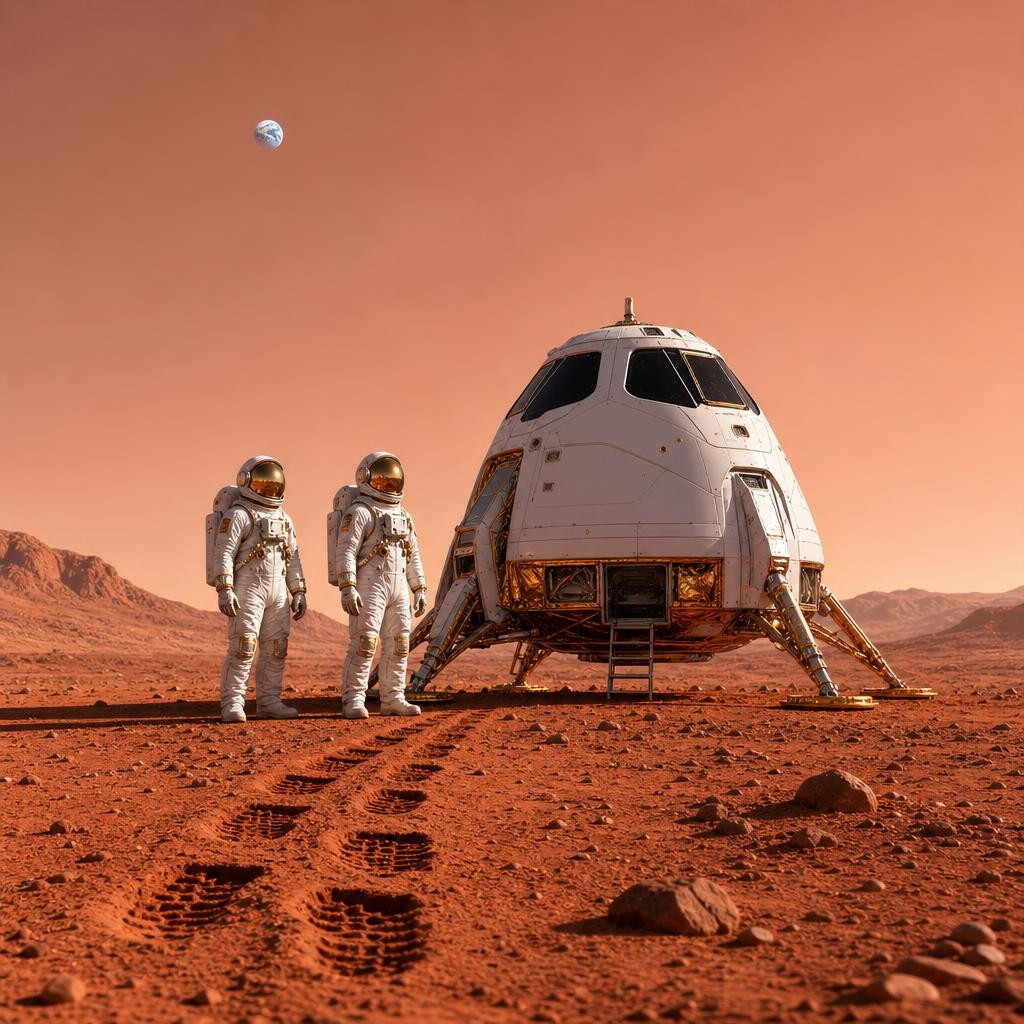
Launch, climb, coast, careful timing, and braking have all worked together. Adult explorers step beside their lander and leave the first footprints in the red dust. High above them, Earth shines like a tiny star—the distant home where their journey began.
Key takeaways
- Earth Holds On
- Climbing Away
- The Long Coast
Mini quiz
- Why does a Mars rocket need such a powerful launch?
- What happens during most of the journey to Mars?
- Why must the spacecraft slow down near Mars?
Common questions
What will kids learn in How Do We Travel to Mars??
The child will understand that traveling to Mars requires an ordered sequence: launching from Earth, gaining speed, coasting for months with careful planetary timing, and slowing down to land.
Read-together tip
Space lessons should use familiar comparisons, clear scale, and bright friendly visuals without making space scary.