Why Were Shells Once Money?
Kai finds a little shell in Grandma Rosa's bag. A pop-up beach and a market long ago show how cowrie shells, and even cacao beans, were once money.
Understanding money · 2 of 12
about real things · asks questions · 7 pages · ages 4–5 · 2 min · English
Read · Play · Listen · PDF · Print edition · with the Storybook Pass · Make it about your child
Reviewed for child safety · gentle by design · How our storybooks are made
Published 2026-11-03T17:45:18.340316
Quick answer
Long ago, cowrie shells were used as money in parts of Africa, India and China, because they were small, lasted a long time and were hard to find far from the sea. In old Mexico, people paid with cacao beans.
Inside this storybook
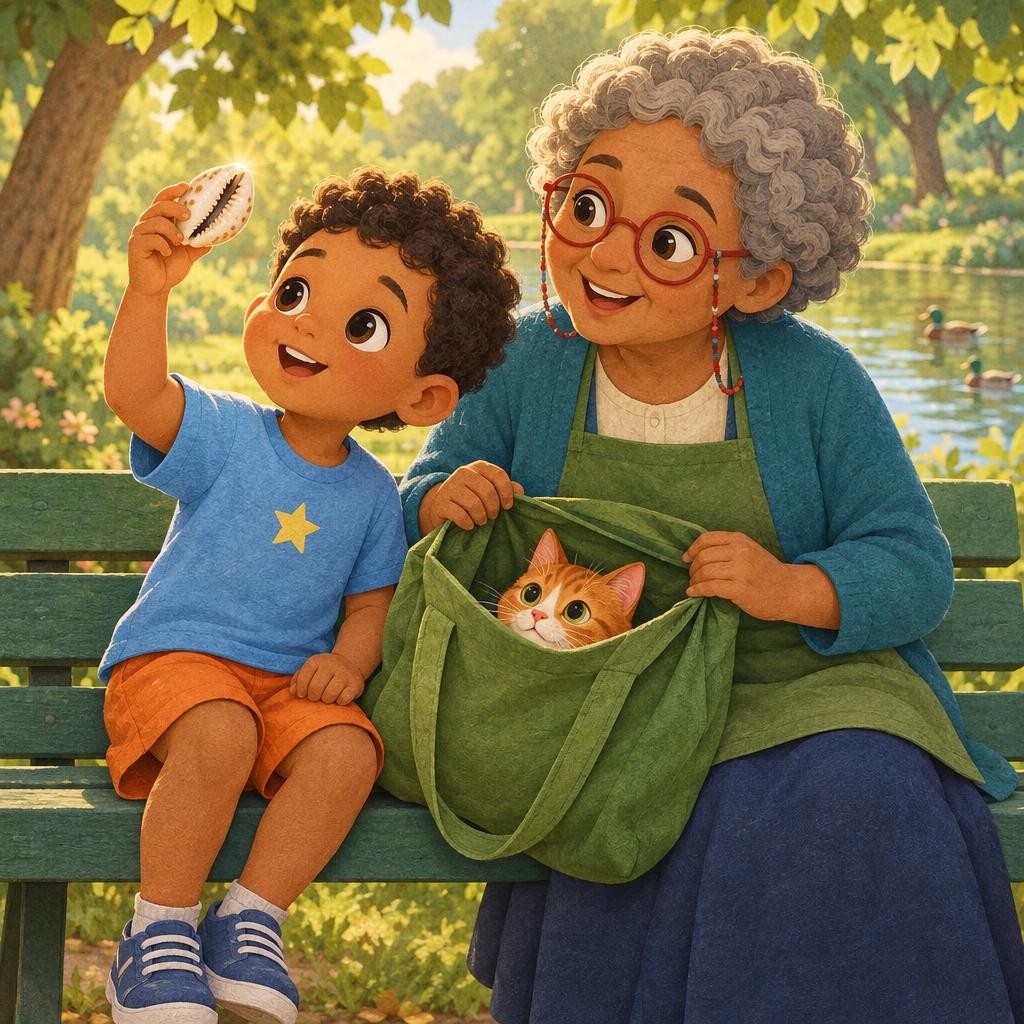
On a park bench, Kai finds something glossy at the bottom of Grandma Rosa's bag. It is a small, smooth shell. "Is this a toy?" he asks. Grandma Rosa's eyes twinkle. "Long ago, this was money!"
Grandma Rosa lifts the lid of her box. Pop! A sunny beach unfolds around them. Long ago, people here gathered these little shells, called cowries, and sent them across the sea. In markets from Africa to India to China, cowries were used as money.
Why shells? Kai has an idea. He holds a shell in one hand and a banana in the other. Which one would make better money?
A week later, the banana is brown and squishy. Yuck! But the shell is still smooth and shiny. Shells last a long, long time, so people could keep them and spend them later.
In the market, people thread cowries on a cord to carry them. Kai wears a cord like a necklace and jingles it. A rice seller smiles and holds out her hand: shells can buy rice, cloth and fish.
Far away in old Mexico, people paid with something else that was small and precious: cacao beans, the beans that chocolate is made from!
Pop! They are home again. Kai still wants the red kite from Grandma Rosa's shop, but he only has a few coins. So he drops them in his jar and waits, and saves. Then his cowrie shell goes into the box, right next to the tiny clay pot.
The pages
Is this a toy?
On a park bench, Kai finds something glossy at the bottom of Grandma Rosa's bag. It is a small, smooth shell. "Is this a toy?" he asks. Grandma Rosa's eyes twinkle. "Long ago, this was money!"
The shell island
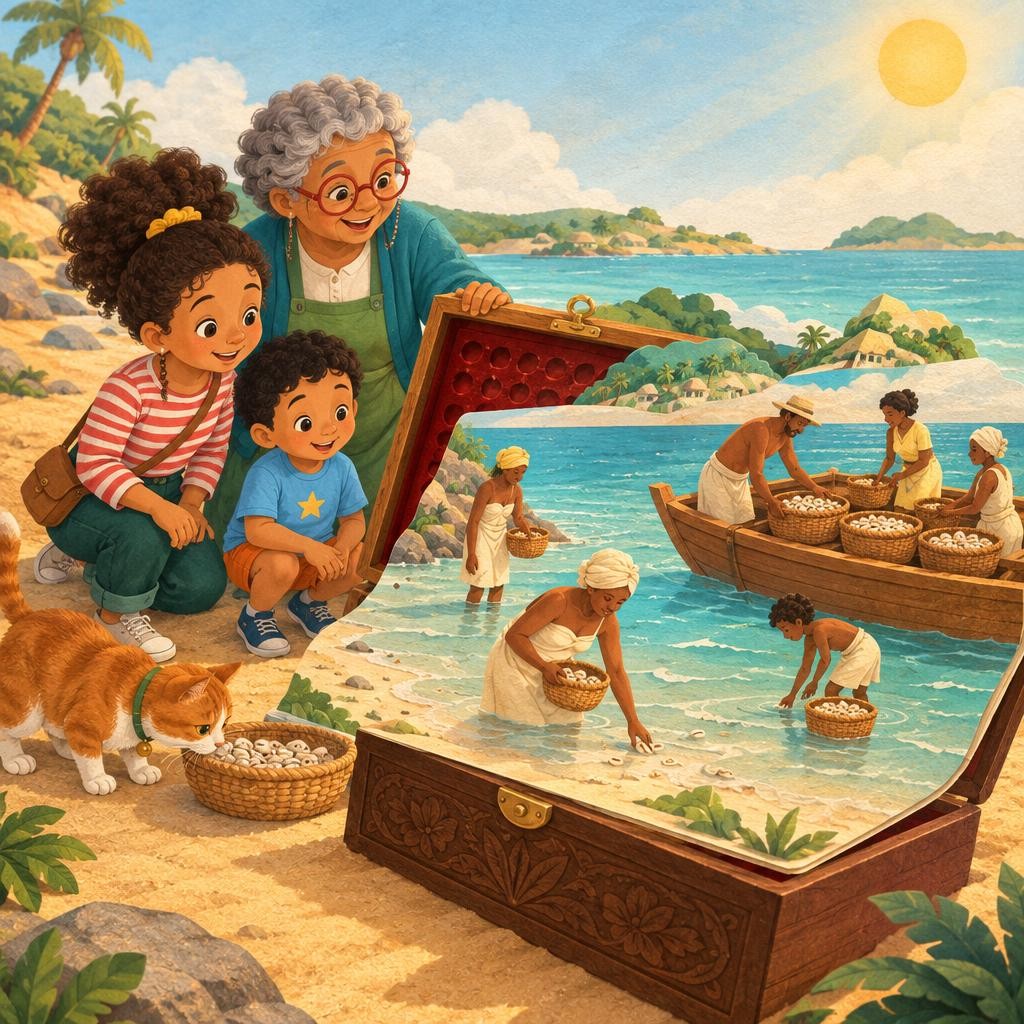
Grandma Rosa lifts the lid of her box. Pop! A sunny beach unfolds around them. Long ago, people here gathered these little shells, called cowries, and sent them across the sea. In markets from Africa to India to China, cowries were used as money.
Shell or banana?
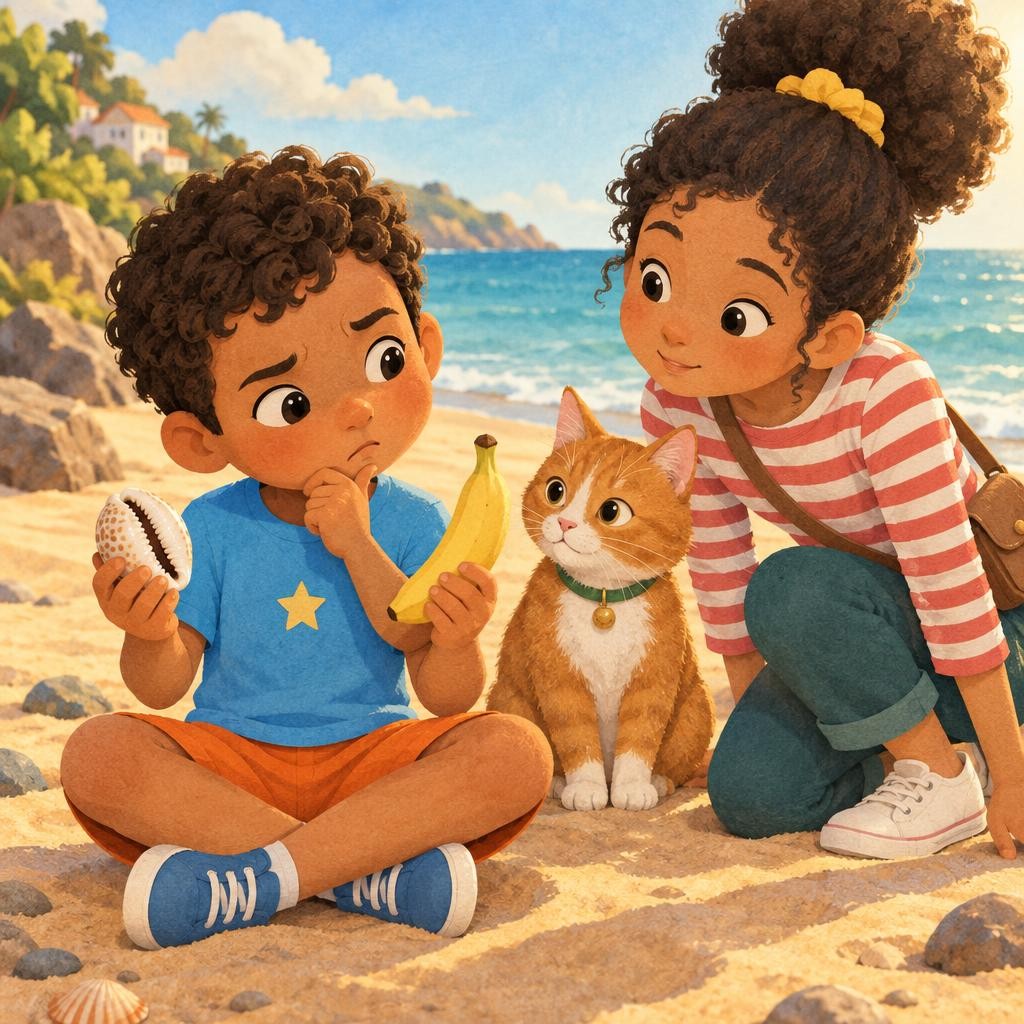
Why shells? Kai has an idea. He holds a shell in one hand and a banana in the other. Which one would make better money?
Shells last
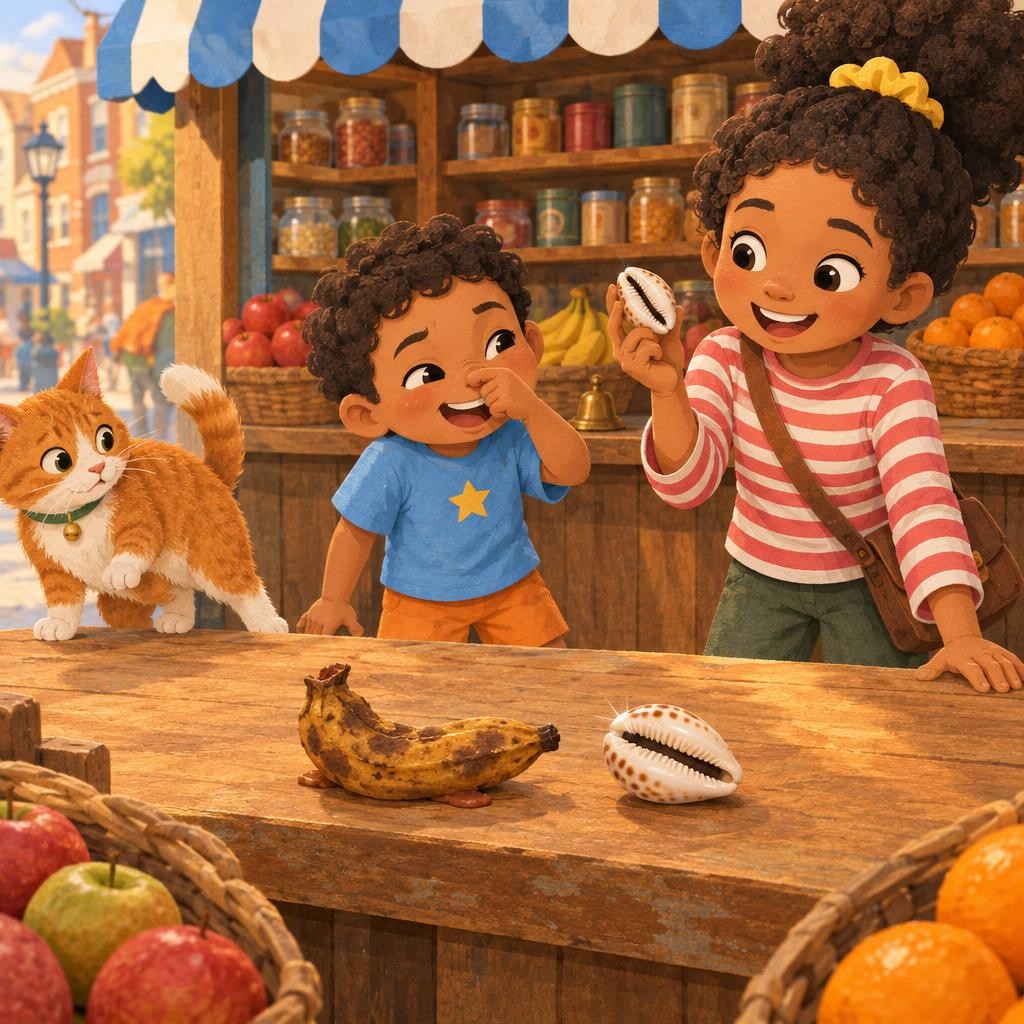
A week later, the banana is brown and squishy. Yuck! But the shell is still smooth and shiny. Shells last a long, long time, so people could keep them and spend them later.
A cord of shells
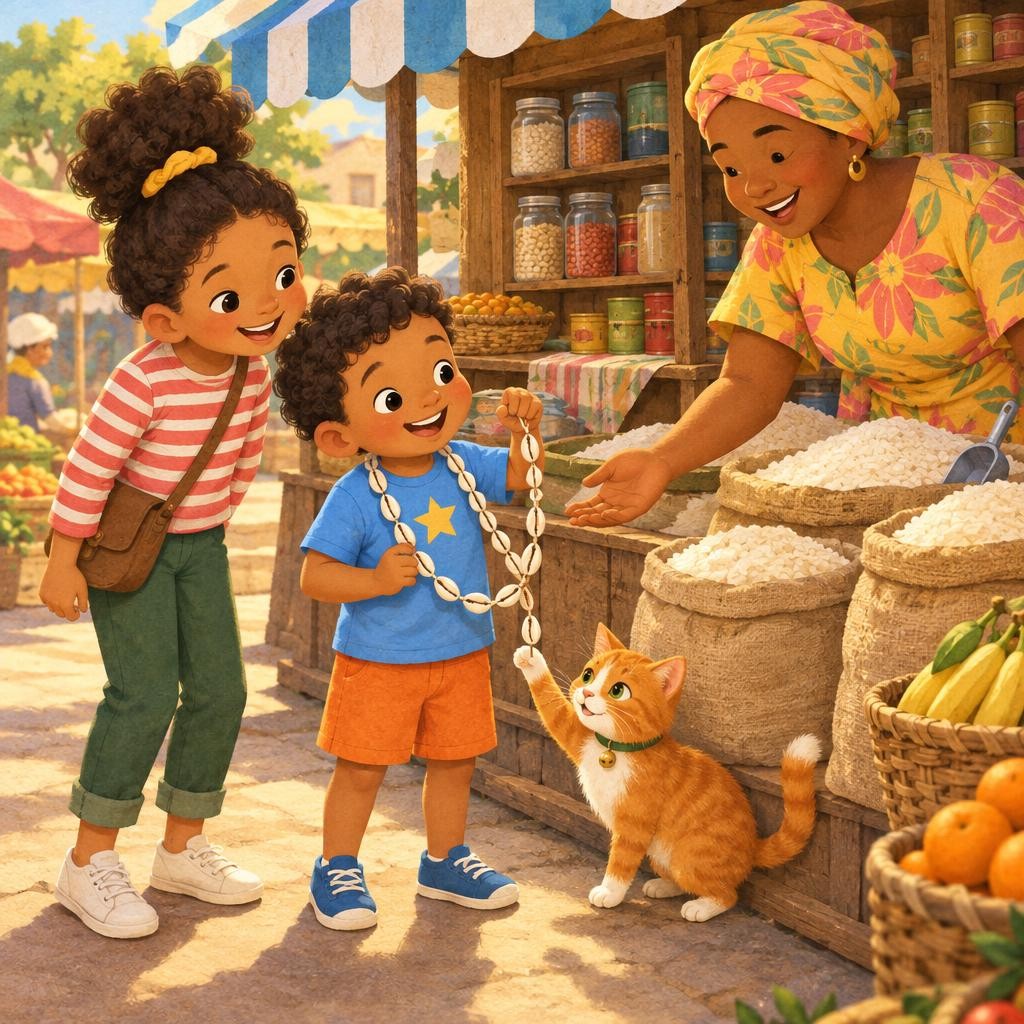
In the market, people thread cowries on a cord to carry them. Kai wears a cord like a necklace and jingles it. A rice seller smiles and holds out her hand: shells can buy rice, cloth and fish.
Money that grows on trees
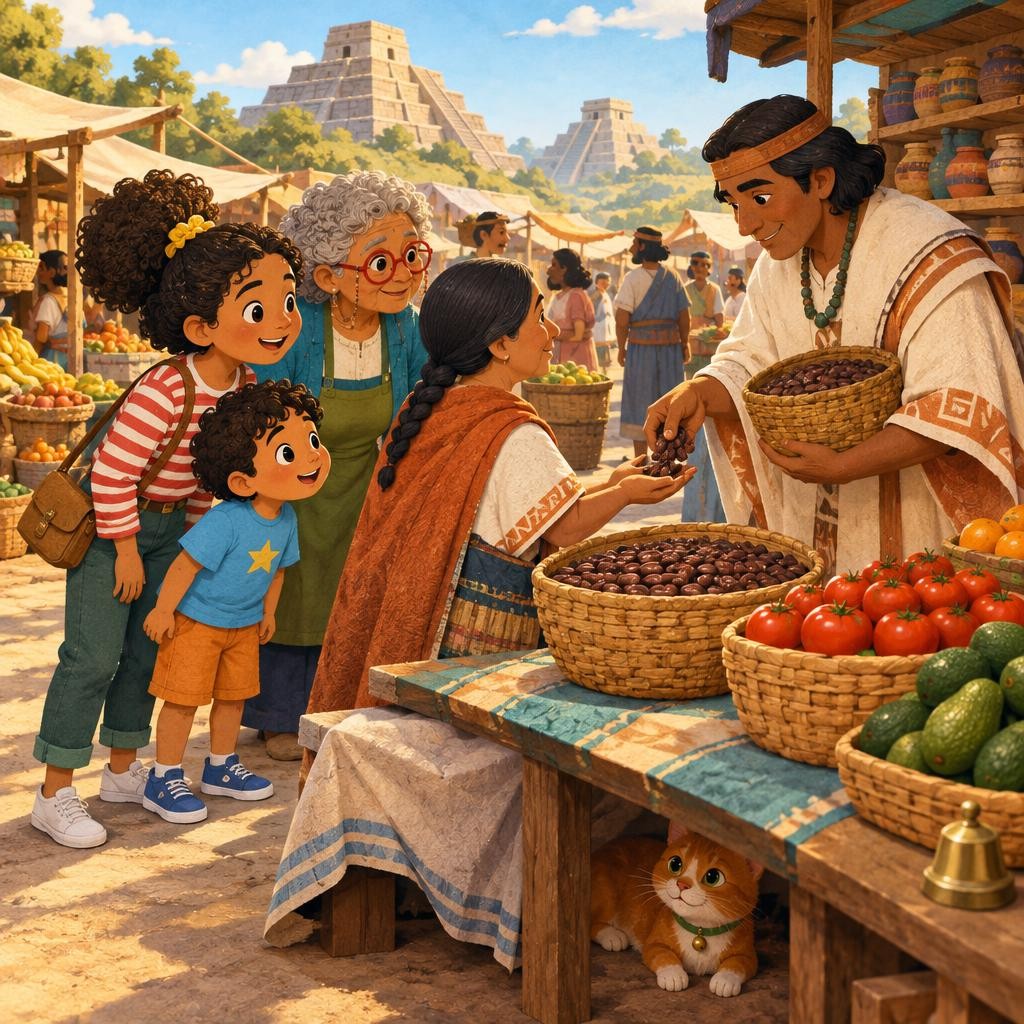
Far away in old Mexico, people paid with something else that was small and precious: cacao beans, the beans that chocolate is made from!
Saving up
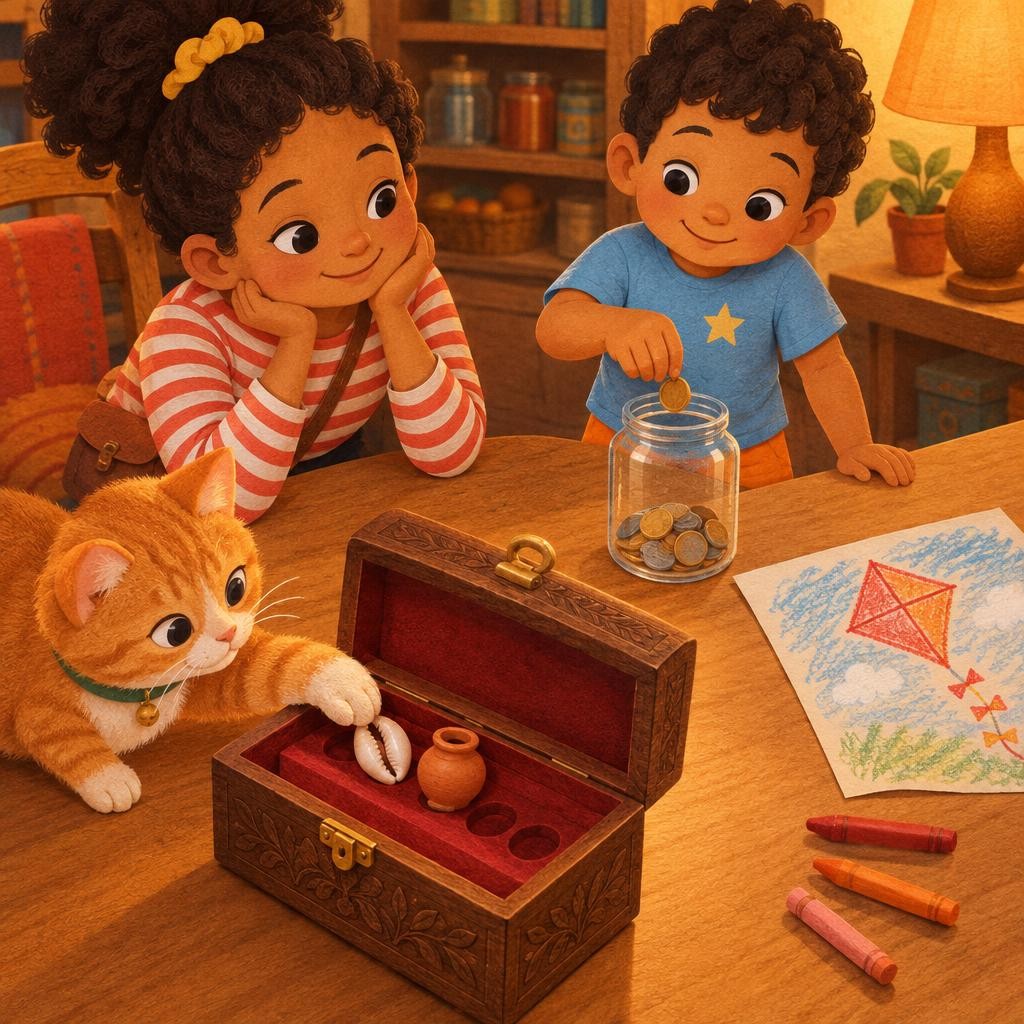
Pop! They are home again. Kai still wants the red kite from Grandma Rosa's shop, but he only has a few coins. So he drops them in his jar and waits, and saves. Then his cowrie shell goes into the box, right next to the tiny clay pot.
Key takeaways
- Money can be any small thing that everyone agrees to take.
- Cowrie shells lasted a long time, so people could keep and spend them.
- In old Mexico, cacao beans were money.
- Sometimes we wait and save up for what we want.
Questions along the way
- Why were shells good money?
- What did people in old Mexico use as money?
- Kai wants the kite but doesn't have enough. What does he do?
Common questions
Why were shells used as money?
Cowrie shells were small, strong, easy to count and hard to fake, and they lasted for years. Far from the sea they were rare, so people valued them.
What else did people use as money long ago?
Shells, grain, salt, cattle and cacao beans have all been used as money in different places.
Read-together tip
Sort a handful of shells, buttons and dry pasta together. Which would make good pretend money, and why? Then play shop with the winner.